





















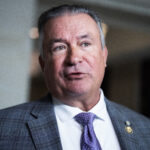






Pro-Israel spending complicating Malinowski’s path to victory in New Jersey special election
The former congressman’s advantages in fundraising and name ID may be undercut by the massive ad spend against him
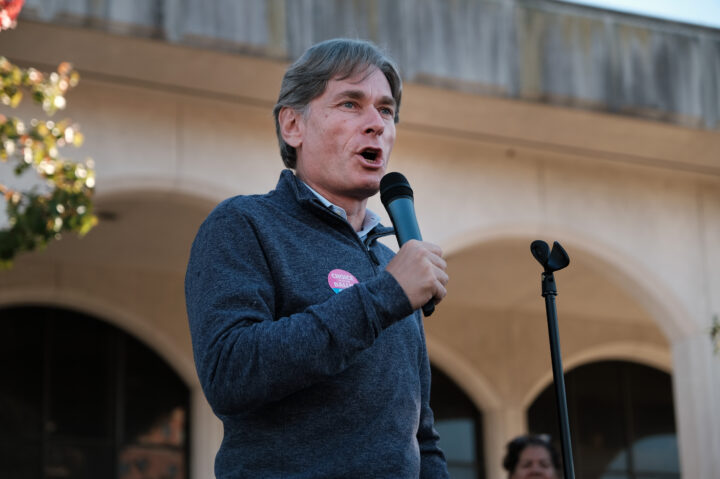
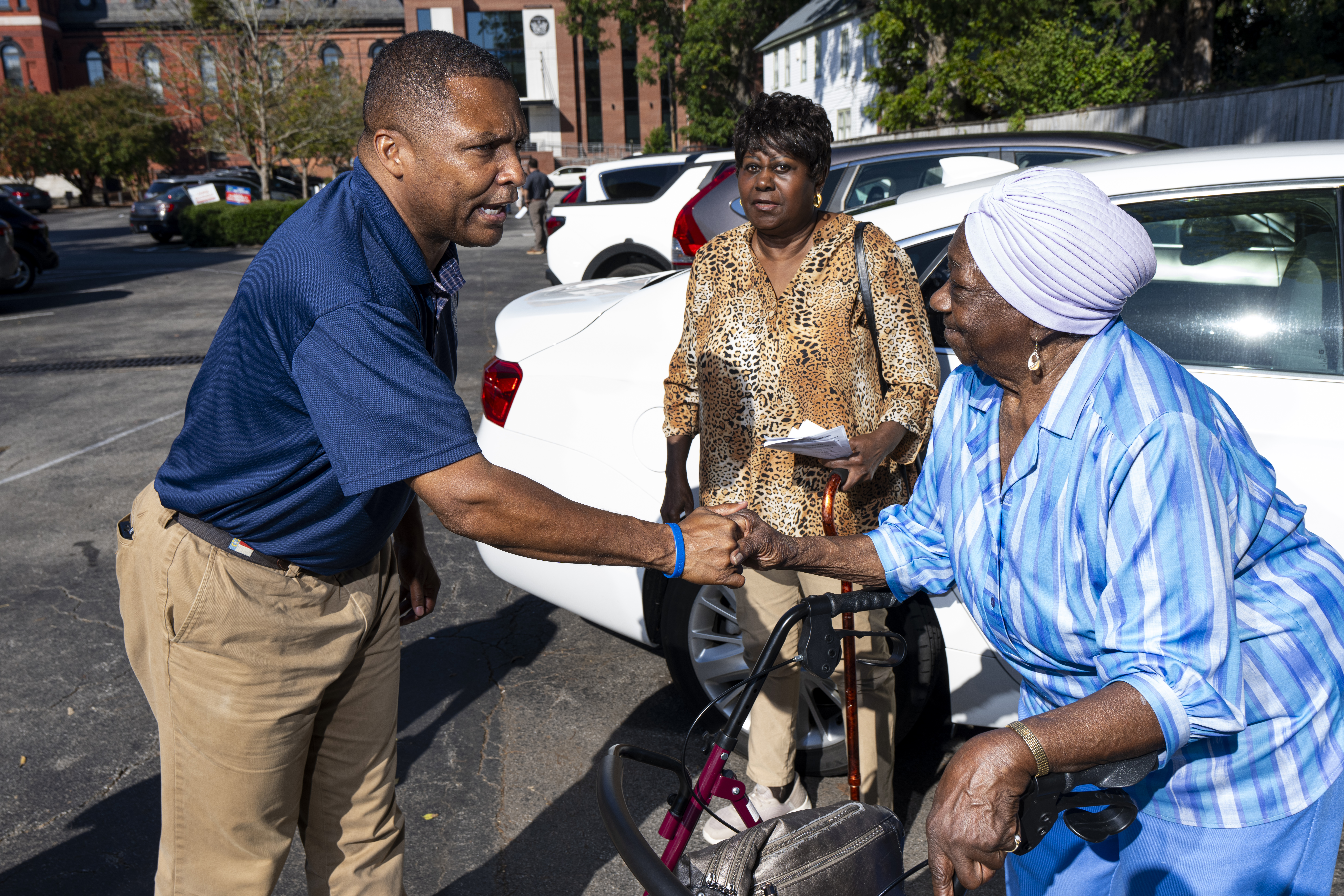
Spencer Platt/Getty Images
Former Rep. Tom Malinowski (D-NJ) participates in a get-out-the-vote event on October 29, 2022 in Rahway, New Jersey.


 Add JewishInsider on Google
A major infusion of pro-Israel funding into attack ads on former Rep. Tom Malinowski (D-NJ) has complicated Malinowski’s path to victory in the Thursday special election primary for New Jersey’s 11th Congressional District — though political analysts and members of the local Jewish community still see Malinowski as the likely favorite and say the precise impact of the anti-Malinowski attacks remains to be seen.
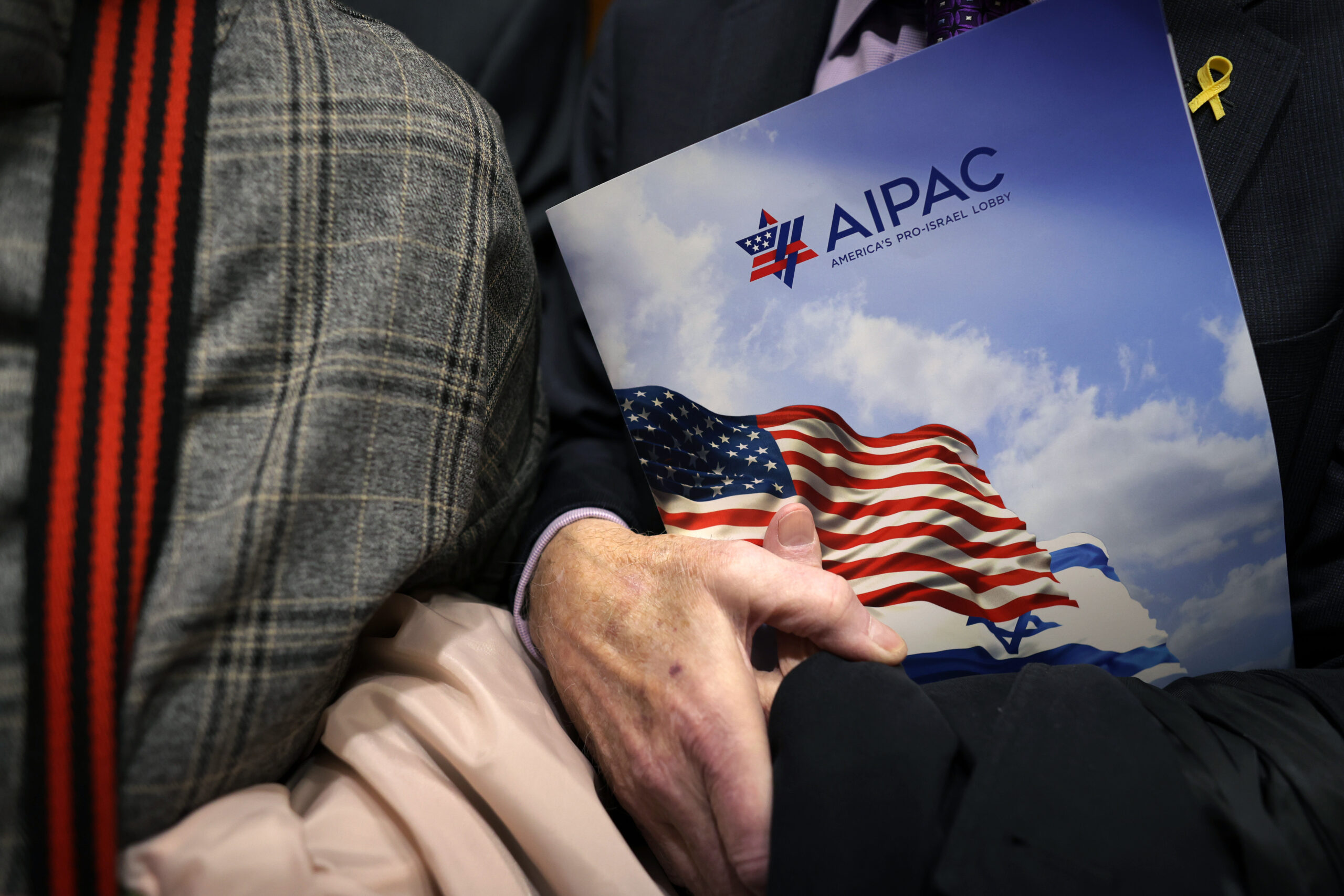
Malinowski has been the target of over $2.3 million in ads funded by the AIPAC-linked United Democracy Project, which have hit Malinowski for a 2019 vote for Immigration and Customs Enforcement funding and stock trading while in office.
Though AIPAC hasn’t formally endorsed Tahesha Way or run any messaging supporting her, the group is widely believed to be backing the former lieutenant governor, who was endorsed by Democratic Majority for Israel.
“There are several candidates in this race that are far more supportive of the U.S.-Israel relationship than Tom Malinowski,” UDP spokesperson Patrick Dorton told Jewish Insider last month.
Most local observers agreed that Essex County Commissioner Brendan Gill, who has deep institutional ties in New Jersey Democratic politics, is in the strongest position against Malinowski, but Way and progressive activist and Israel critic Analilia Mejia, who has mobilized a series of prominent national progressive endorsers, also have pathways to victory.
The AIPAC blitz against Malinowski has surprised some in the Jewish community who saw Malinowski as an ally during his time in office, especially as Mejia has been more strongly critical of the Jewish state than Malinowski. But others have noted that Malinowski has shifted left since leaving office in 2023, when he represented the neighboring 7th District, a shift that now includes expressing openness to conditions on U.S. aid to Israel.
One Jewish leader called AIPAC’s decision to intervene so strongly in the race a tactical mistake that could end up hurting pro-Israel candidates. The leader was also critical of AIPAC’s decision to back Way, rather than Gill, who has also cast himself as a supporter of Israel.
The leader argued that AIPAC’s strategy had boosted Malinowski’s credibility with progressive voters, opened a window for Mejia and undermined Gill, whom the leader argued would otherwise be the most viable pro-Israel candidate.
But others in the Jewish community harbor concerns about Gill related to his wife, a state assemblymember. Alixon Collazos-Gill has ties to and has attended various events hosted by anti-Israel groups.
Micah Rasmussen, the director of the Rebovich Institute for New Jersey Politics at Rider University, said that Malinowski has clear advantages — he leads in fundraising, and has the strongest name recognition and experience in Congress. He also has a deluge of PAC spending against him. which indicates that opponents view him as having a strong shot — but “my gut tells me … that Brendan Gill has a shot if he can get out the vote in his neck of the woods, in Essex County,” Rasmussen said.
Dan Cassino, the executive director of the Fairleigh Dickinson University poll, agreed that “Malinowski certainly has an advantage in name recognition,” but said the outside spending has been “bruising” to him.
Rasmussen called the UDP ads “one of the biggest factors in the race,” given the size of the spend, but it’s not clear, Rasmussen and Cassino agreed, how voters turned off from Malinowski by the UDP ad blitz will vote, and they may scatter in various directions.
Rasmussen noted that Gill has a higher profile than Way and might be more likely to attract defectors, emphasizing that UDP has not given any direction or push to voters toward its preferred candidate.
He also said that, among certain populations, AIPAC’s opposition could strengthen Malinowski’s standing.
“Any one of these four candidates could win. With a low-turnout election, a highly motivated group of voters can make the difference,” Rasmussen said. A surge in Essex County voters could push Gill over the top, while Way would benefit from higher turnout among Black voters and Mejia could benefit from higher turnout among progressives, he said.
“Turnout is looking to be higher than some of the low-end projections we were seeing, but there’s still not a clear sense of who, exactly, is going to be coming out to the polls,” Cassino said.
Cassino said that “it’s also possible that bringing down Malinowski’s numbers winds up helping Mejia, who’s done a reasonable job of consolidating progressive support,” he continued, while noting that her fundraising has been “anemic.”
Rasmussen added that Mejia hasn’t fully consolidated the progressive lane: she scored endorsements from national progressive leaders, but Sen. Andy Kim (D-NJ), the most influential in-state progressive figure, is backing Malinowski.
And, he added, it’s “entirely possible” with so many candidates in the race and a lack of consolidation that a wildcard candidate could come from behind and win with just 20% of the vote.
Cassino framed the race as a test of the continued power of Democratic county organizations in the state.
“There’s going to be a lot of analysis looking at the extent to which Gill and Malinowski benefit from those endorsements,” he said. “The bigger those effects, the more valuable the endorsements are going to be perceived to be, which is going to shape candidate behavior in elections coming up.”
More Stories
PRAIRIE STATE PRIORITIES
Illinois Democrats spend big for anti-Israel candidate running for state Senate
HISTORY LESSON
Brett McGurk’s fact check of former Harris advisor Phil Gordon on hostage negotiations
MAINE EVENT
Maine Senate candidate Troy Jackson says Congress should cut off funding for Iran war

PRESIDENTIAL ENDORSEMENT
Trump gives Netanyahu ‘complete and total endorsement’
RIPPLE EFFECT
New York’s suburban Dems face a Mamdani dilemma
Regional Responsibility
Amb. Tom Barrack: It’s ‘not America’s job’ to combat Iran-backed threats in the Middle East
Please log in if you already have a subscription, or subscribe to access the latest updates.
 Continue with Google
 Continue with Apple