








Qatar’s legitimacy-laundering operation
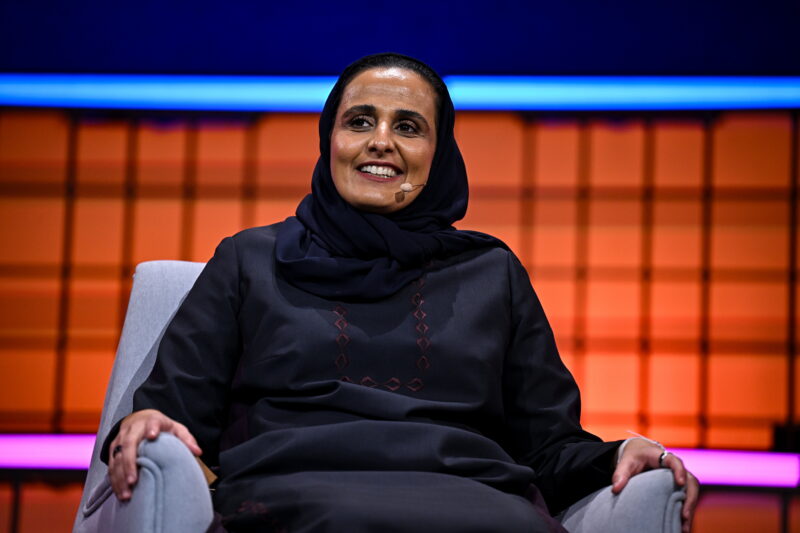
Doha’s efforts to establish itself as a critical cog in the wheel of a functioning global society were on full display at the two-day Doha Forum
Ahmet Turhan Altay/Anadolu via Getty Images
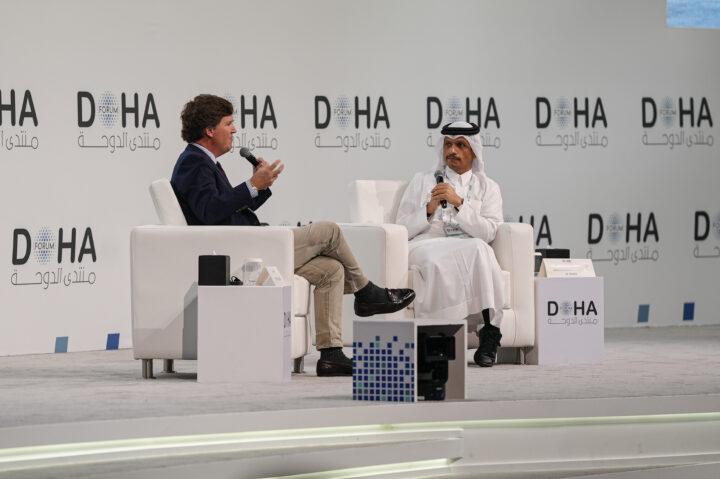
Qatari Prime Minister and Foreign Minister Mohammed bin Abdulrahman Al Thani (R) answers questions from journalist Tucker Carlson (L) during the 'Newsmaker Interview' session held as part of the Doha Forum 2025 in Doha, Qatar on December 07, 2025.


 Add JewishInsider on Google
Tucker Carlson, Rob Malley and Bill Gates walk into a Gulf hotel.
It’s not the beginning of a joke, but rather, part of the speaker lineup at the Doha Forum over the weekend in Qatar.
As we’ve written about frequently over the last year, Doha has gone to great efforts to establish itself as a critical cog in the wheel of a functioning global society. Nowhere were the fruits of that labor on display more than at the two-day Doha Forum, held at the glitzy Sheraton Grand Doha Hotel.
Alongside traditional conference-circuit speakers — among them former Secretary of State Hillary Clinton, Microsoft founder Gates, U.S. Ambassador to Turkey Tom Barrack, U.S. Ambassador to NATO Matthew Whitaker and Heritage Foundation senior fellow Victoria Coates — were more controversial voices.
Those voices include Carlson as well as Malley, the former Iran envoy who was suspended and had his clearance revoked for his alleged mishandling of classified documents; and Trita Parsi, the executive vice president of the Quincy Institute, which was a co-sponsor of the forum, who has in the past faced accusations of operating as an unregistered foreign agent for Iran.
The only public panel at the forum focused on Gaza was sponsored by Malley’s International Crisis Group, which came under fire after reports in 2023 that it had been infiltrated by an Iranian influence operation.
In Doha, Carlson, a last-minute addition to the forum’s lineup, sat in conversation with Qatari Prime Minister Sheikh Mohammed bin Abdulrahman Al Thani, a 20-minute conversation that preceded a sit-down between Donald Trump Jr. and investor Omeed Malik.
When discussing efforts to rebuild Gaza, Carlson suggested that Qatar should refrain from helping “rebuild a region that has been destroyed by a country [Israel] that has also bombed” them. Carlson also mocked Americans and lawmakers who have called out Qatar as a “terror state” or terror “financier,” despite Doha’s well-documented involvement with the Muslim Brotherhood and harboring of Hamas.
The interview with the Qatari prime minister provided Carlson with another prominent perch from which to spread falsehoods. In one instance, Carlson insisted that aside fromPresident Donald Trump, “no American president has ever sided with an Arab state over Israel.” Former U.S. Ambassador to Israel David Friedman responded on X that U.S. arms sales to Saudi Arabia during the Reagan administration and the Suez crisis during the Eisenhower administration were among examples where the U.S. sided against Israel.
In response to Carlson promoting the statement on social media, Friedman, who served in Trump’s first administration, called it “demonstrably false,” and asked Carlson, “What is it about the facts that offends you so deeply?”
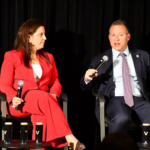
But the platforming of extreme voices at the Doha Forum went beyond Carlson. Neil Patel, co-founder and CEO of Tucker Carlson Network, who spoke during a session on “Media Power and the Search for Truth,” received very little questioning on Carlson’s promotion and platforming of antisemitism. When asked about being “under attack” for bringing in “all sorts of voices” — a subtle nod to Carlson’s platforming of neo-Nazi Nick Fuentes — Patel refrained from mentioning Fuentes by name. Instead, he encouraged open discussion, adding that there needs to be a “free market of ideas.”
Such a “free market of ideas” has allowed, in an age of digital manipulation and engagement farming, antisemitism to permeate political discourse.
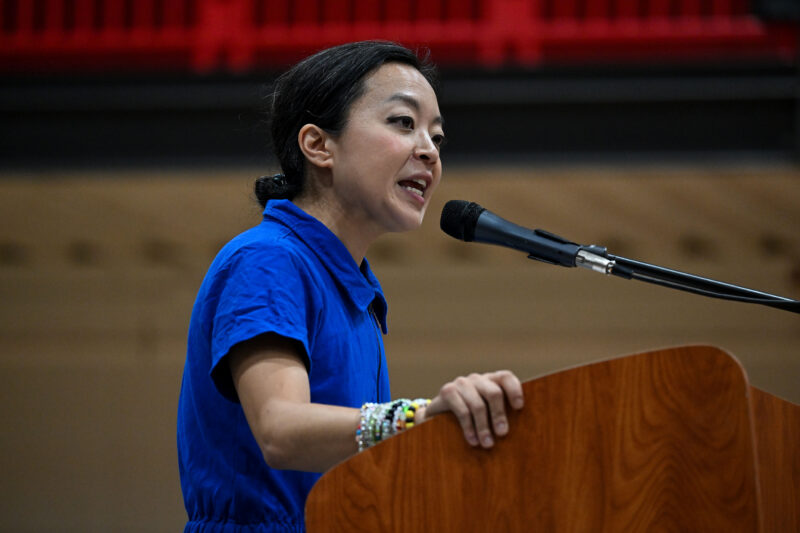
Patel shared the stage with Nika Soon-Shiong, the millennial activist and publisher of the far-left Drop Site News, which traffics in distorted claims and half-truths (one so severe that last week a Palestinian diplomat condemned its reporting as “propaganda”).
If the appearances of Carlson, Soon-Shiong, et al watered down the perceived seriousness of the conference, the decision by business executives and current and former government officials to attend gave Doha added legitimacy.
As one longtime attendee of the Forum wrote on X, “[N]ever has Qatar displayed its immense convening power more effectively than this year.”
In an era in which American political figures face blowback for appearing at conferences that also platform extremist voices — such as Rep. Ro Khanna’s (D-CA) appearance this fall at Arabcon, where other speakers downplayed the Oct. 7, 2023, Hamas terror attacks — more mainstream speakers at the Doha Forum faced no such condemnation, and legitimized the conference and its organizers in the process.
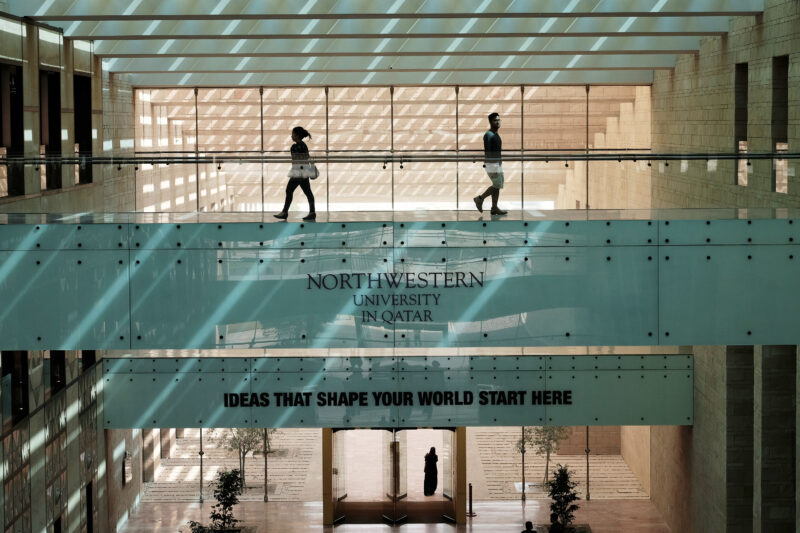
That lack of condemnation underscores the degree to which Qatar’s strategy of infiltrating virtually every element of Western society — from media to sports to academia to government — has rendered it a powerful and at times dangerous force, and one that forces for Western values and democracy are unwilling to challenge or confront.
Please log in if you already have a subscription, or subscribe to access the latest updates.
 Continue with Google
 Continue with Apple