








































UAE’s 2020 playbook faces new test as Israel revisits annexation plans
The new regional dynamics have shifted how Israel sees its role in a volatile arena

Nikos Oikonomou/Anadolu via Getty Images
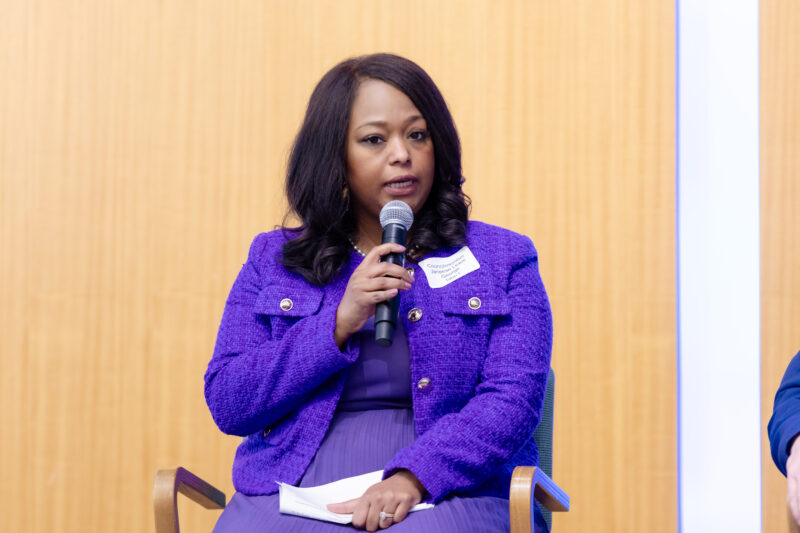
Lana Nusseibeh, Assistant Minister for Political Affairs in the Ministry of Foreign Affairs of UAE, and Ambassador and Permanent Representative of the UAE to the UN, New York (C) attends the hearings on the advisory proceedings of the International Court of Justice (ICJ) on the legal consequences of Israel's practices in the Palestinian territories in The Hague, Netherlands on February 21, 2024.


 Add JewishInsider on Google
Flashback to 2020: As Israel mulls annexation of the West Bank, a prominent Emirati official communicates to an Israeli outlet that such a move could have disastrous consequences for Israel’s positioning in the region.
“Annexation,” UAE Ambassador to the U.S. Yousef Al Otaiba wrote in a Yediot Ahronoth op-ed in June 2020, “will certainly and immediately upend Israeli aspirations for improved security, economic and cultural ties with the Arab world and with UAE.”
Al Otaiba’s op-ed was part of the groundwork laid for the Abraham Accords, announced less than two months later and signed in September 2020. With the normalization agreement in place, Israel’s annexation plans were shelved as it deepened its relations with the UAE and Bahrain, the original signatories to the landmark deal.
Five years later, senior Emirati diplomat Lana Nusseibeh, who previously served as Abu Dhabi’s envoy to the United Nations, is issuing a similar warning.
“Annexation would be a red line for my government, and that means there can be no lasting peace. It would foreclose the idea of regional integration and be the death knell of the two-state solution,” Nusseibeh told The Times of Israel earlier this week.
The five years between Al Otaiba’s op-ed and Nusseibeh’s comments have seen seismic shifts in the region: the Israel-Hamas war and the degradation of Iran’s nuclear capabilities and its regional proxy network, particularly with the collapse of the Assad regime in Syria. Israel has shown itself to be the dominant military player in the region, even as it finds itself on the receiving end of widespread criticism across the Middle East and beyond over its war against Hamas in Gaza.
But they have also seen the rise of the Israeli far right as a more significant player in the country’s politics. The ascensions of Finance Minister Bezalel Smotrich and National Security Minister Itamar Ben-Gvir have paved the way for a renewed Israeli effort to annex broad swaths of the West Bank, five years after plans to do so were derailed by peace efforts.
Smotrich, speaking at a press conference on Wednesday, announced plans to annex 82% of the West Bank and approvals of settlement expansion that are explicitly meant to thwart the creation of a Palestinian state. The issue is the focus of high-level talks in Jerusalem that are a response to a renewed global push — led by France and Saudi Arabia — for Palestinian statehood recognition.
While Nusseibeh’s warning could be intended to hold Israel back from making significant territorial claims, it’s unclear if her words will have the same impact. The new regional dynamics have shifted how Israel sees its role in a volatile arena, and Israel’s isolation on the global stage has deepened the us-against-the-world sentiment felt across Israeli society.
Israel’s annexation plans could also impact potential normalization with Saudi Arabia, with which Jerusalem was close to forging ties before Hamas’ Oct. 7, 2023, attacks. Discussions of a massive Saudi-U.S.-Israel “megadeal” that would normalize ties between Jerusalem and Riyadh have been tabled for months and appear unlikely to restart. Saudi Arabia has not weighed in on Smotrich’s most recent plans, but has expressed that normalization will not be considered while the war in Gaza rages on.
What could happen is something approaching a compromise, in which Israel makes some territorial claims — whether that’s in the Jordan Valley or in the E1 corridor — that fall short of Smotrich’s plan to annex the vast majority of the territory.
The UAE’s carrot-and-stick approach was effective in 2020. But in a new political landscape, it’s unclear if it will be as successful a second time.
More Stories

texas turnaround
Talarico, who now disavows AIPAC, attended group’s event in 2019
center stage
Mahmoud Khalil to speak at South by Southwest festival

center stage
Quincy Institute among anti-Israel sponsors of Doha Forum

doha forum dispatch
Hillary Clinton reiterates concerns about anti-Israel ‘propaganda’ targeting American youth

NEBRASKA NOS
Most Democratic candidates in key Nebraska swing seat say they’ll reject pro-Israel support
NORTHERN FRONT
Israel expands strikes in Lebanon after major Hezbollah barrage
Please log in if you already have a subscription, or subscribe to access the latest updates.
 Continue with Google
 Continue with Apple