












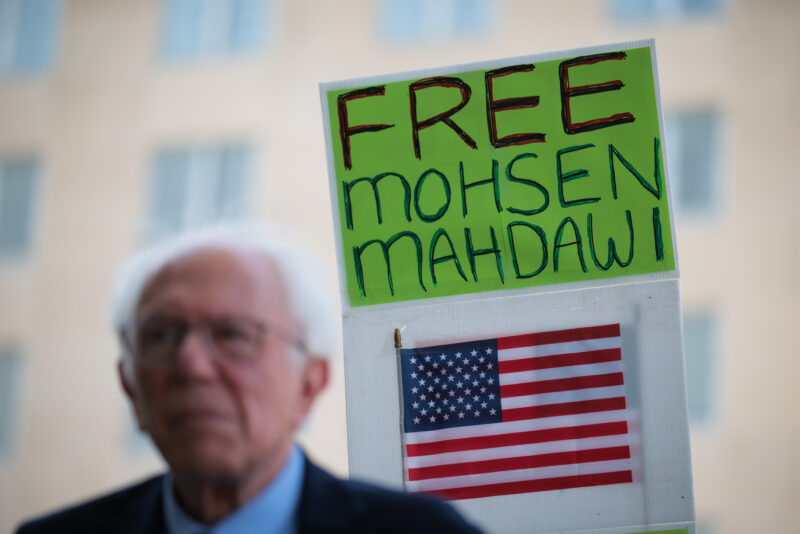











Synagogue members reportedly pushed back against the event for Mohsen Mahdawi, who has expressed sympathy for Hamas
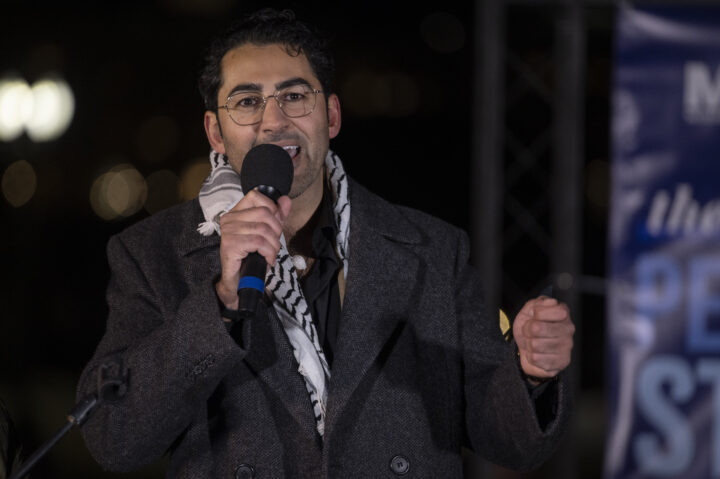
Celal Gunes/Anadolu via Getty Images
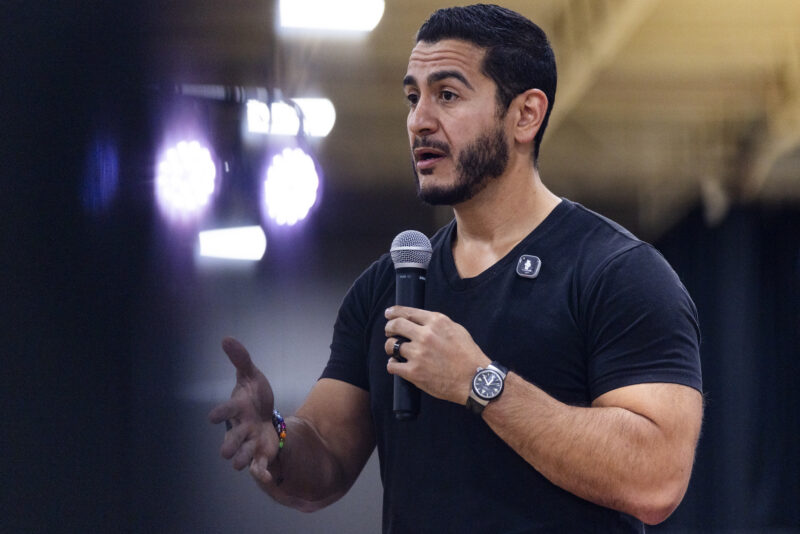
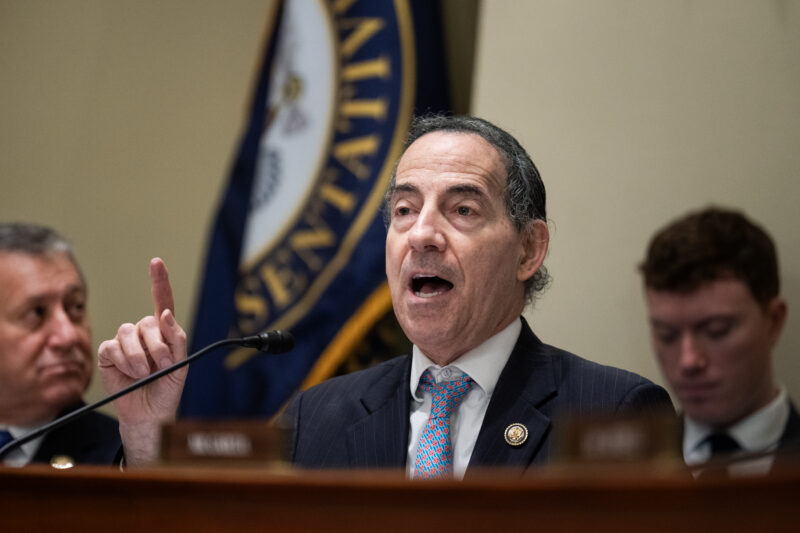
Palestinian activist Mohsen Mahdawi speaks during a rally at the National Mall in Washington, D.C. as President Donald Trump delivers his State of the Union address inside Congress on February 24, 2026.


 Add JewishInsider on Google
A synagogue in the capital of Vermont co-sponsored a fundraiser last Sunday for Mohsen Mahdawi, a former Columbia University anti-Israel activist who has voiced sympathy for Hamas, drawing sharp criticism from some congregants.
The event took place at Unitarian Church of Montpelier, which co-sponsored it with Beth Jacob Synagogue, according to a flyer posted on the synagogue’s website and distributed to all members. The congregation is unaffiliated with a denomination.
Some synagogue members reportedly pushed back against the fundraiser before it took place.
The synagogue’s board of directors declined to comment to Jewish Insider.
In a statement to JI, the Jewish Communities of Vermont said the “questions surrounding Mohsen Mahdawi, including statements and actions attributed to him, have raised concerns deserving serious and rigorous consideration and prompted strong, deeply felt disagreements. We recognize that the pain is acute.”
“At the same time, a Jewish community intending to practice tikkun olam by creating space for engagement with a specific focus does not necessarily constitute endorsement of everything that person has said or believes.”
In a separate statement, Beth Liberman, executive director of Jewish Communities of Vermont and former director of education at Beth Jacob, said she believes the synagogue “acted from a genuine desire to raise awareness and support for a struggle that has larger implications in the Vermont community and nationally.”
“I also have grave concerns about statements attributed to Mohsen Mahdawi and what that means for the Jewish community, especially at a time of tremendous pain and fear,” Liberman told JI. “Holding these truths together is an uncomfortable but necessary challenge: honoring good intentions without ignoring consequences and staying in a relationship even through profound disagreement.”
Mahdawi has been characterized by the Department of Homeland Security as a “ringleader” in anti-Israel protests at Columbia. It accused him of using “threatening rhetoric and intimidation” against Jewish students before graduating last year. He has not been charged with a crime.
In a “60 Minutes” interview in December 2023, Mahdawi said he could “empathize” with Hamas and its Oct. 7, 2023, attacks. “To empathize is to understand the root cause and to not look at any event or situation in a vacuum. This is for me that path moving forward,” he said.
Mahdawi, a 34-year-old green card holder born and raised in the West Bank, was arrested and detained by federal immigration officers in April 2025 after he appeared at a U.S. citizenship interview in Vermont, where he resides.
Last month, a federal appeals court reversed a decision that had released Mahdawi from Immigration and Customs Enforcement detention on bail last year. The ruling does not require Mahdawi to return to a detention center, but he is potentially at risk for rearrest.
The event flyer said donations will directly go to Mahdawi’s legal aid.
Several of the event’s other speakers have also been critical of Israel, including Georgetown Law professor David Cole, who last year spoke before the House Committee on Education and the Workforce in defense of First Amendment speech that “many of us find wrongheaded or deeply offensive, including anti-Israel advocacy and even antisemitic advocacy”; and Rabbi Shaul Magid, a scholar of Jewish thought who has argued that Zionism prevents full equality for all of Israel’s citizens.
The possibility of Minnesota Democrats nominating a true-blue progressive over a battle-tested moderate lawmaker, along with the likelihood suburban voters will reject a pragmatist for a left-wing candidate, may demonstrate how far left the party has swung
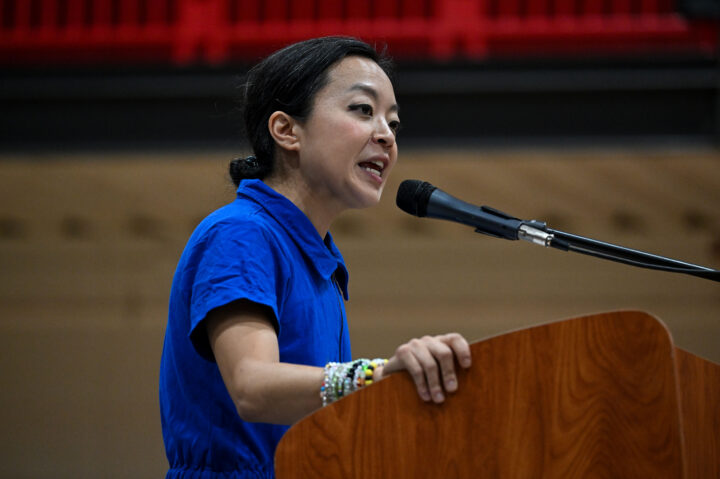
(Joshua Lott/Getty Images)
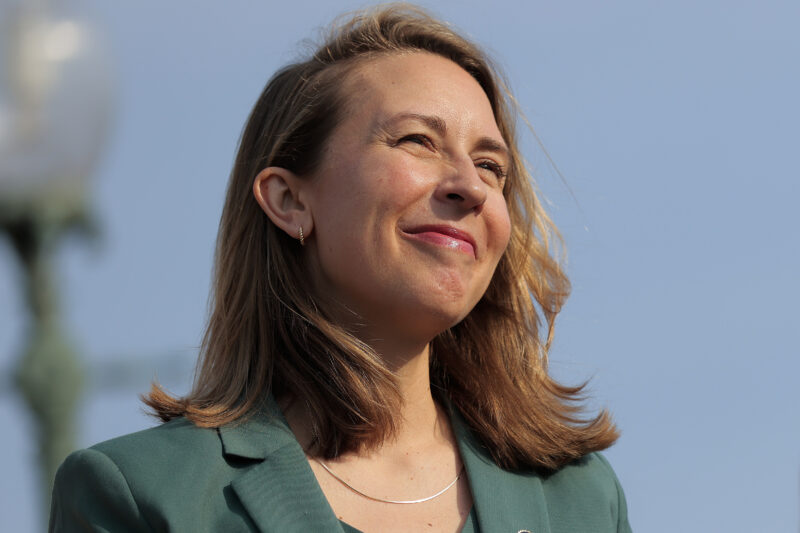
Wisconsin Democratic Gubernatorial candidate Francesca Hong speaks during a campaign rally on August 2, 2026 in Milwaukee, Wisconsin.
Today’s Democratic primaries in Connecticut, Minnesota, Vermont and Wisconsin won’t have the same shock value as previous contests that underscored the strength of the anti-establishment, anti-Israel forces within the party.
But the possibility of Minnesota Democrats nominating a true-blue progressive over a battle-tested moderate lawmaker as their Senate standard-bearer, along with the growing likelihood suburban voters will reject a pragmatist for a left-wing candidate, may well demonstrate just how far left the party has swung in the past year.
Add to that the likelihood that Democratic Socialists of America-aligned candidate Francesca Hong will emerge as the party’s gubernatorial nominee in Wisconsin — providing a spotlight for the socialist group’s governing philosophy in the biggest of battleground states — and the stakes remain awfully high for the Democratic Party tonight.
There’s also a fascinating contest in Connecticut, where Rep. John Larson (D-CT), a former member of House leadership, is facing a real threat from former Hartford Mayor Luke Bronin. The primary isn’t as neatly driven by ideological differences as it is along generational lines (Larson is 78, Bronin 47), but Larson has been a reliable supporter of Israel during his congressional career, while Bronin has tacked to his left on the issue during the campaign.
It’s very possible that the left wing of the party ends up with a clean, four-race sweep in these contests. If that’s the case, there’s no doubt that the winds of change are whipping furiously within the Democratic caucus.
The Minnesota and Wisconsin contests are expected to be competitive in the November general election, especially if Democrats end up nominating progressive slates of candidates. Privately, Democrats in the Badger State are worried that Hong is so unprepared for the national spotlight that the party could end up writing off the key contest against Rep. Tom Tiffany (R-WI), the expected GOP nominee.
And in Minnesota, Republicans are enthused about the candidacy of former NBC Sports sideline reporter Michele Tafoya, who has the party’s backing in a contested primary for the Senate seat. But Democrats, even if Lt. Gov. Peggy Flanagan emerges as the nominee, would start out in the liberal-minded state with the advantage.
In Minnesota’s suburban 2nd District, which leans Democratic but was long held by Republicans before Rep. Angie Craig’s (D-MN) victory in 2018, state Sen. Eric Pratt is running unopposed for the GOP nomination. He’ll also start out as an underdog, but against a progressive challenger, he’ll have a fighting chance to portray himself as closer to the district’s mainstream.
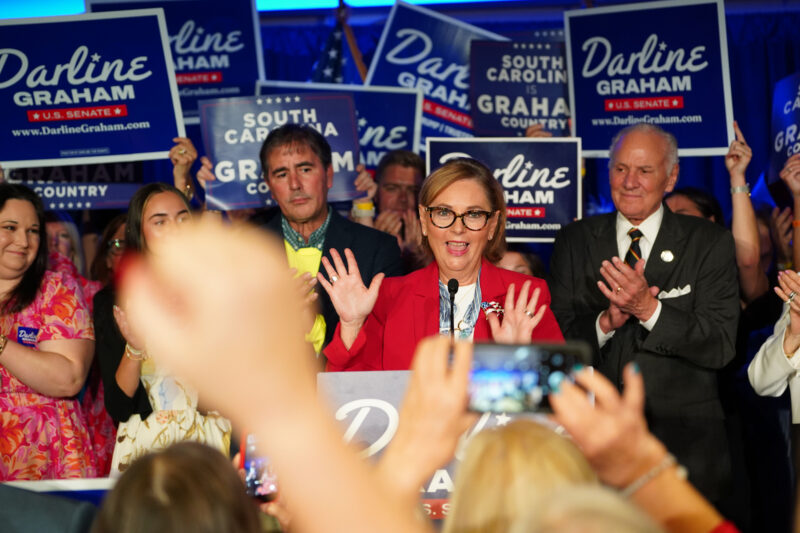
On the Republican side, Tuesday also will feature a hastily scheduled special election primary in South Carolina for the seat of the late Sen. Lindsey Graham (R-SC). The race will be a test of whether voters trust President Donald Trump’s endorsement of the late senator’s sister and want to keep the Senate seat within the Graham family, or turn to a conservative lawmaker with more legislative experience in either Reps. Ralph Norman (R-SC) or Russell Fry (R-SC).
Sen. Darline Graham (R-SC), who was appointed after her brother’s death, holds a narrow lead in most public polls, but Norman and Fry are close behind her. The race is likely headed to a runoff, with the top two finishers squaring off later this month.
Campaign spox says Booker is “focused” on strategically directing resources

Mark C. Olsen
U.S. Sen. Cory Booker addresses family, friends, elected officials, and New Jersey National Guard leadership during the farewell ceremony for more than 180 New Jersey Army National Guard Soldiers from Alpha and Charlie Companies, 2nd Battalion, 113th Infantry Regiment, at the Prudential Center, Newark, N.J., Feb. 4, 2019.
Cory Booker’s presidential campaign hit another road bump on Tuesday when the New Jersey senator failed to qualify for the ballot in Vermont.
Vermont requires candidates to gather 1,000 signatures to appear on the ballot — a relatively low threshold. In addition to Booker, Senator Michael Bennet of Colorado and former Congressman John Delaney of Maryland did not reach the threshold. Former HUD Secretary Julian Castro did not initially qualify, but was granted an extension.
The Booker campaign still has a robust ballot-access program in other states. However, Vermont presents unique political challenges. Candidates need to receive at least 15% of the vote in the state to receive delegates to the Democratic National Convention in Milwaukee.
Julie McClain Downey, a spokeswoman for the Booker campaign, told Jewish Insider, “We are focused on using our campaign’s resources in the most efficient and effective way possible to win the Democratic primary and go on to defeat Donald Trump. In this case, given Vermont’s 15% threshold requirement to receive delegates, we have decided to direct our efforts elsewhere to best achieve our goals and objectives.”
In 2016, Senator Bernie Sanders swept his home state with 86.1% of the vote and won all 16 of Vermont’s delegates. His popularity in the Green Mountain State has not diminished.In the Republican presidential primary, former Congressman Joe Walsh of Illinois also failed to qualify for the ballot.
Please log in if you already have a subscription, or subscribe to access the latest updates.
 Continue with Google
 Continue with Apple