













































Senators on both sides of the aisle again accused Colby and his office of failing to communicate with them at a nomination hearing for Colby deputy Alex Velez-Green
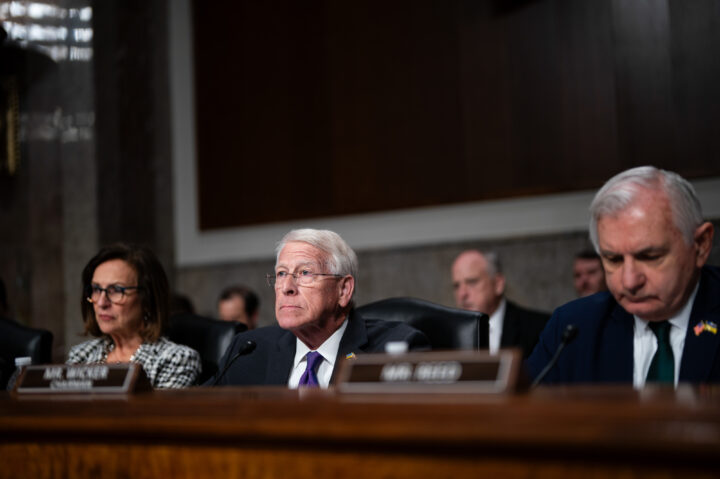
Al Drago/Bloomberg via Getty Images
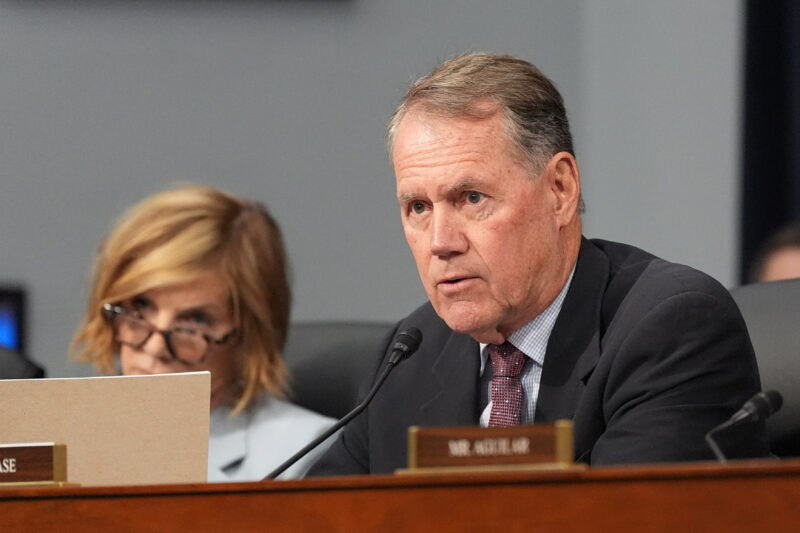
Sen. Roger Wicker (R-MS), chairman of the Senate Armed Services Committee, and Sen. Jack Reed (D-RI), ranking member of the Senate Armed Services Committee, during a confirmation hearing in Washington, DC, US, on Tuesday, April 1, 2025.


 Add JewishInsider on Google
Members of the Senate Armed Services Committee from both parties voiced concerns with Elbridge Colby, under secretary of defense for policy, and his office at the Pentagon, at a committee hearing — for the second time this week.
While Thursday’s proceedings, a confirmation hearing for Alex Velez-Green, nominated to be Colby’s top deputy and who has been a senior advisor to him in an interim capacity, were generally less heated than a Tuesday hearing with nominee Austin Dahmer, lawmakers reiterated concerns with a lack of consultation by Colby’s team and alleged rogue decision-making on a range of issues by the office.
“Many of this committee have serious concerns about the Pentagon’s policy office and how it is serving the president of the United States and the Congress,” Sen. Roger Wicker (R-MS), the chairman of the committee, said in his opening statement. “In many of these conversations, we hear that the Pentagon policy office seems to be doing what it pleases without coordinating, even inside the U.S. executive branch.”
Wicker, pushing back on a defense offered earlier this week by Dahmer — who dismissed many concerns as fallacious and based on inaccurate media reporting — said that the issues raised by committee members were based on their own conversations with other administration officials and United States allies.
“Either all of these other administration officials and senior foreign officials are deliberately misleading us or we have a problem coming from this office,” he continued.
He said that the policy office can begin to rectify those issues by meeting “its statutory requirement to consult with this committee … rather than simply informing us of a decision after the fact.”
“We need a process that works for the president and the [Congress]. Unfortunately, we do not have such a process at this moment,” Wicker said, adding that progress will require a “change in a mindset” from the policy office.
Sen. Rick Scott (R-FL) added that, “the perception is that there’s some disagreement between what has been put out [by the policy office] and what the president wants. And I think it’s pretty important that you guys figure out how to stop that.”
Velez-Green generally took a conciliatory posture, pledging to communicate and consult with lawmakers whenever possible and appropriate. He also insisted that the policy office and the entire Department of Defense have been diligent in ensuring they are fully aligned with the president’s policy.
But Velez-Green also insisted that the policy office had not directed a pause in U.S. arms transfers to Ukraine, which was later publicly overridden by President Donald Trump, who said he had not been aware of or instructed any such moves. Multiple Senate Republicans pointed to a news release from the Pentagon that specifically stated that such a pause had been implemented.
Velez-Green also denied media reports that Colby had opposed the deployment of additional U.S. forces to the Middle East during the war between Israel and Iran.
Lawmakers again raised concerns that they and U.S. allies in Romania had been notified only days ahead of time that the U.S. would be withdrawing troops from Romania, and that lawmakers were only provided a notification after the decision had been made rather than consulted ahead of time.
“Congress was not consulted about this. I think I can say with certainty about that,” Wicker said.
Sen. Eric Schmitt (R-MO) was the only lawmaker to offer an unequivocal defense of Colby and his office, accusing those criticizing Colby over both policy decisions and communication issues of attempting to block his policy preferences.
“I think much of the criticism, which is cloaked in terms of transparency and communication, really is just an effort to undermine a shift in our foreign policy orientation, which I support, which is to realism, as opposed to some of the failed points of view that have dominated permanent Washington over the last 30 years,” Schmitt said, adding that criticisms of Colby and his team reflect “resistance from those invested in maintaining the foreign policy status quo that has repeatedly failed the American people.”
Sens. Mark Kelly, Elissa Slotkin and Jack Reed broke with their party on the vote

Nathan Posner/Anadolu via Getty Images
Elbridge Colby, nominee to be Under Secretary of Defense for Policy, is seen ahead of his confirmation hearing at the Senate Committee on Armed Services in Washington, DC on March 4, 2025.
The Senate voted to advance the nomination of Elbridge Colby to be undersecretary of defense for policy on Monday, teeing up a final confirmation vote for later this week, with three Democrats crossing party lines to vote in favor of advancing to a final vote on his confirmation.
Colby’s nomination advanced in a 53-39 vote on Monday evening, with no Republicans voting against him. It was unclear going into Monday’s vote what the final whip count would be, the result of Colby’s nomination being advanced in a secret vote during a classified session of the Senate Armed Services Committee last week.
A final vote on Colby’s confirmation is scheduled for Tuesday morning.
Sen. Jack Reed (D-RI), the top Democrat on Armed Services, Sen. Mark Kelly (D-AZ) and Sen. Elissa Slotkin (D-MI) voted for the procedural motion to advance Colby’s nomination to a final vote on Monday. All three serve on Armed Services, and Slotkin worked with Colby in the past. Slotkin, who has worked for the Defense Department and the Central Intelligence Agency, told Jewish Insider in February that she was familiar with Colby’s record because he “used to be my assistant.”
Sens. Ruben Gallego (D-AZ), Cory Booker (D-NJ), John Fetterman (D-PA), Kirsten Gillibrand (D-NY), Jon Ossoff (D-GA), Bernie Sanders (I-VT) and Tim Sheehy (R-MT) did not attend Monday’s vote.
The Democratic backers of Colby come as something of a surprise given the tough questioning the nominee faced from Democrats at his confirmation hearing on his skepticism of U.S. support for Ukraine and other issues.
Colby has faced pushback from some Republican lawmakers over his past support for accommodating a nuclear Iran. He walked back some of those positions, including that the U.S. could contain a nuclear armed Iran and that it should not attack Iran to stop it from obtaining a nuclear weapon, during his confirmation hearing last month.
Several Republicans could vote against Colby on the final vote on Tuesday, but none of the potential critics previewed their plans to JI on Monday.
Colby said at the hearing that a nuclear Iran would be an “existential danger” to the United States and that he would provide the administration with military options to prevent such an outcome. He also said his past comments had been intended to push back on what he viewed as an overly hawkish public consensus at the time.
Those comments, along with a private lobbying effort by Colby and his allies to assuage concerns and distance himself from other controversial Pentagon hires, had a positive impact on skeptical senators who had been hesitant about voting to confirm him.
“Speaking for me, he did answer things the way he needed to answer them, adequate at least to my satisfaction,” one GOP senator told JI last month. “He has said the things he needed to say to the satisfaction of people who like me and maybe others — I can’t speak for any of them … and he was pretty convincing.”
Jewish Insider’s senior congressional correspondent Marc Rod contributed to this report.
Please log in if you already have a subscription, or subscribe to access the latest updates.
 Continue with Google
 Continue with Apple