

























































A cardiology fellow lamented that his union is engaging in systemic discrimination against Jews and Israelis, while he’s forced by federal law to help fund it
SCREENSHOT
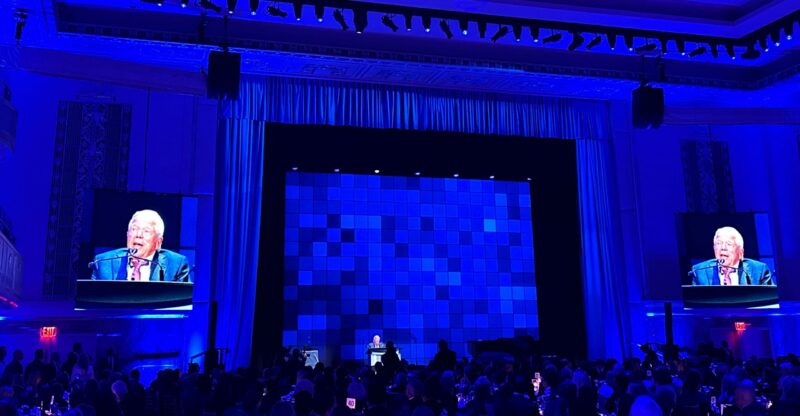
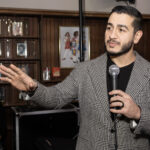
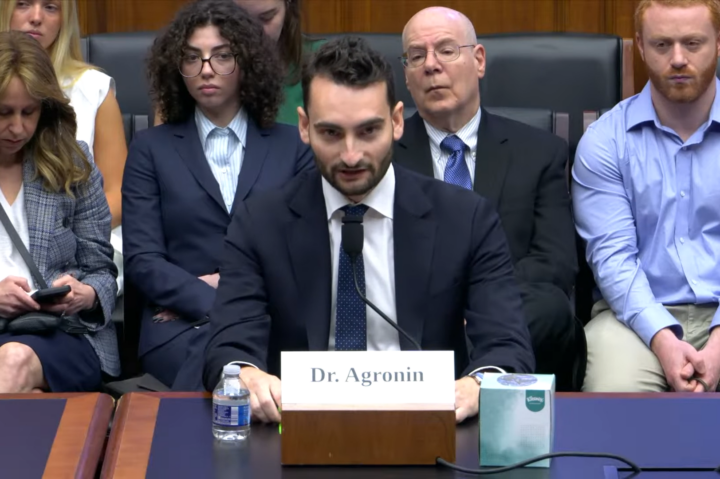
Dr. Jacob Agronin speaks at the House Education & Workforce subcommittee hearing on May 20, 2026.


 Add JewishInsider on Google
Speaking at a House Education & Workforce subcommittee hearing on Wednesday, a doctor accused his union of engaging in systemic discrimination against Jewish and Israeli health providers, supporting terrorist sympathizers and making “its obsession with a single geopolitical conflict a defining future of its identity” — all while he’ll be forced by federal law to fund it.
Dr. Jacob Agronin, a cardiology fellow at a major medical institution in Philadelphia, testified alongside several other experts on antisemitism at a hearing focused on anti-Jewish hate in the medical field — which both Jewish medical providers and patients report as a growing problem since Hamas’ Oct. 7, 2023, attacks on Israel.
The hearing focused in particular on the role of healthcare worker unions, such as the Committee of Interns and Residents, of which Agronin is set to be a member, in spreading antisemitism and their failures to stand up for Jewish union members.
CIR has adopted a series of resolutions condemning Israel for genocide and calling for divestment from Israel, including “human capital.” The organization has also offered its institutional support for a physician who expressed support for Hezbollah and for anti-Israel Columbia University activist Mahmoud Khalil.
“CIR has formally recommended that hospitals exclude my Israeli colleagues from employment, and then compels dues from those same colleagues to fund that position,” Agronin said. “If any employer in this country adopted that policy, we would call it what it is: discrimination.”
He said that members of the union feel afraid to speak out. Agronin also emphasized that his salary, which will help fund the union, comes in part from Medicare graduate medical education funding.
Eveline Shekhman, the CEO of the American Jewish Medical Association, said that her organization is encountering a new era in which “Jew hatred hides behind the guise of anti-Zionism.”
“We are seeing calls to fire Jewish doctors, the praising of terrorist groups in and outside of clinical settings, the refusal to treat patients because of their faith, national origin or Zionist identity, and the demand that Jewish colleagues renounce Israel as a condition of workplace acceptance,” Shekhman said. “This is antisemitism, this is discrimination, and it is a distraction. It has no place in medicine.”
Any disruption to the clinical environment can impact patient care, she said.
She added that employees should be able to rely on their unions to support them when their employers fail to do so in such an environment, but that many unions themselves “have created an environment where Jewish professionals no longer feel welcome” and where they are forced to fund such activities with which they disagree.
In addition to CIR, Shekhman said the National Nurses Union has also been advancing anti-Israel activity, including providing a guide for members to bring anti-Zionism into the clinical setting, where Shekhman argued such activity is irrelevant and has no place.
Deena Margolies, an attorney for the Louis D. Brandeis Center for Human Rights Under Law, said that efforts like these from healthcare unions place Jewish and Israeli professionals “in an impossible position: The union that is supposed to represent them is also helping to create the hostile work environment they must endure.”
“Antisemitism can be dressed as labor solidarity or political language, but the effect is the same. Jewish and Israeli healthcare professionals and patients are treated as morally suspect and unable to participate fully yet equally in clinical settings,” she continued.
Agronin told Jewish Insider after the hearing that there is a “fairly silent majority” that opposes the actions the union is taking but is afraid of backlash if they speak out.
Shekhman told JI that she appreciated that all of the lawmakers expressed concern about the trend of antisemitism in healthcare, and said that that is a promising sign of possibilities for progress going forward.
She said that lawmakers’ support can be helpful when working with institutions to address these issues, and said that the hearing can be the first of “a lot more conversations that need to be had.”
Agronin emphasized that “it’s not just a Jewish issue. This is really an issue that affects all Americans.”
“This is discrimination, as it would be for any other group of people by race, sexual orientation, national origin, anything,” he said. “None of us want to be forced to pay even a single dollar to this organization, especially when it … certainly doesn’t serve our interests — actually quite the opposite. So, I’d hope that there’s some solution to have an option for those that want nothing to do with unions.”
Throughout the hearing, Democrats questioned the motivation of the inquiry, accusing Republicans of weaponizing antisemitism as a cudgel against union organizing generally.
“It is irresponsible and unproductive to take the words and actions of a few and broadly categorize labor unions as fostering discrimination,” Rep. Mark DeSaulnier (D-CA), the ranking member of the subcommittee, said.
Jamie Beran, the CEO of the progressive Jewish group Bend the Arc, testified that antisemitism in the healthcare setting is “heartbreaking” and “leaves many Jews feeling isolated and unsure who to trust.” But she also attacked the Trump administration and descriptions of labor unions as institutionally antisemitic.
“The Trump administration is using Jewish safety as a pretext for policies that endanger our neighbors and our democracy, and as a Jewish leader, that angers me,” she continued. “Unions and professional organizations are engaged in the same debates happening across America. These disagreements are not inherently illegal antisemitism or harassment. … [T]o smear the institutions themselves as antisemitic because of what some members say is politically motivated. It’s gross governmental overreach to constitutionally protected speech among adults.”
Beran also condemned the administration for cutting funding for the Department of Health and Human Services’ Office of Civil Rights, and for restricting abortion access.
Shekhman and Agronin insisted to JI after the hearing that the issue should be a nonpartisan one, and that they’re not targeting unions broadly. Shekhman emphasized that it’s a “patient care crisis issue” that impacts all Americans, regardless of their background. And Agronin said he did not believe that similar behavior would be tolerated if other groups were being targeted.
Shekhman said she did not have the opportunity during the hearing to emphasize the “true impact of BDS on healthcare overall” — including a loss of access to research, technology and collaboration across a range of different areas, as well as losing the support of Israeli physicians.
She said that lawmakers and the public may not understand the scope and volume of the problem: in the past two weeks AJMA received 26 incidents of various natures, from a car being vandalized with a swastika in a hospital parking lot to a kippah being knocked off. And, she continued, most of the victims are afraid to discuss the issue publicly.
Agronin said that CIR’s protestations that it is anti-Zionist rather than antisemitic are a ruse, and that “anti-Zionism is 1940s Jew hatred that’s rebranded for the 21st century.”
Washington Institute expert witnesses argue that the U.S. should condition security assistance to Lebanon on further progress in disarming Hezbollah
Bill Clark/CQ-Roll Call, Inc via Getty Images
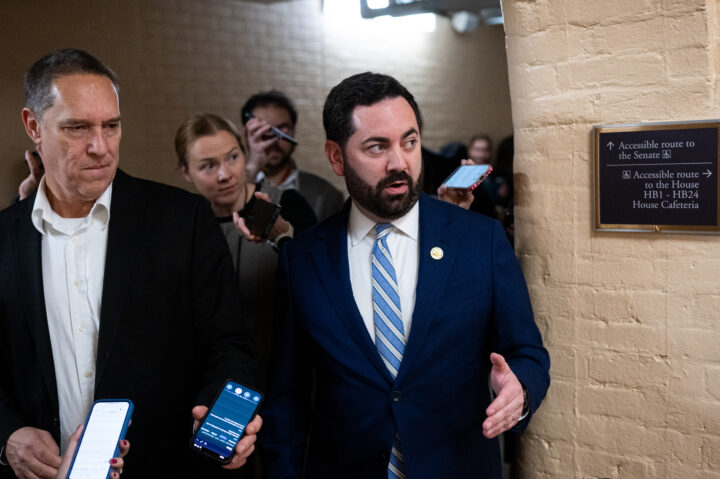
Rep. Mike Lawler (R-NY) speaks to reporters as he leaves the House Republican Conference meeting in the U.S. Capitol on December 10, 2025.
Lawmakers and expert witnesses at a House Foreign Affairs Committee subcommittee hearing on Tuesday highlighted the ongoing challenges and delays in the disarming of Hezbollah in southern Lebanon, but also argued that there is tremendous opportunity in the country if Hezbollah’s influence can be defeated — including potential moves in the near term toward normalization with Israel.
“Right now, we have the chance to help this government break free of the shackles of Iran’s malign influence. Hezbollah’s influence is vastly diminished thanks in large part to decisive Israeli action. But difficult choices now need to be made to permanently block Hezbollah’s path to power,” Rep. Mike Lawler (R-NY), the Middle East subcommittee chair, said in his opening statement.
He said that the Lebanese Armed Forces have made strides in disarming Hezbollah but the ceasefire plan’s implementation “has been haphazard at best,” also emphasizing the ongoing economic difficulties and widespread corruption that continue to plague the country and provide Hezbollah and its Iranian backers opportunities to rebuild.
Lawler also emphasized that significant reforms are needed, particularly in southern Lebanon, to ensure that the same corrupt systems that allowed Hezbollah to flourish do not return. In the long term, Lawler said that he hopes to see Lebanon become a “true partner” in the region and normalize its relationship with Israel.
Rep. Brad Sherman (D-CA), the ranking member, said that there is a “historic opportunity” in Lebanon but “[t]hat window of opportunity, however, is narrow. Hezbollah is working hard to rebuild, rearm and to reconstitute itself as a major terrorist organization.”
Sherman accused the Trump administration of a “lack of urgency and a lack of the necessary support” to groups working to counter Hezbollah in the country, particularly following cuts to foreign assistance.
He said that comments by the Trump administration “have often sent the wrong signals, particularly when Special Envoy Tom Barrack downplayed Hezbollah and described it as a political party that also has a — let me quote him exactly — ‘a political party that also has a militant aspect to it,’” Sherman continued.
During the hearing, expert witnesses, all from The Washington Institute for Near East Policy, warned that the disarmament process is not proceeding smoothly or entirely as expected. All three agreed that the U.S. should condition security assistance to Lebanon on progress in disarming Hezbollah, among other steps. And they each said the U.S. should ramp up its sanctions efforts, targeting Hezbollah and malign actors in the Lebanese government.
David Schenker, a senior fellow at The Washington Institute and former Trump administration official, emphasized that the Lebanese Armed Forces (LAF) are encountering ongoing obstacles including Hezbollah’s use of human shields, a lack of political will, ongoing Hezbollah penetration of the LAF, ongoing LAF deference to Hezbollah and threats to LAF forces’ safety.
He said the Lebanese government has not deployed as many troops to southern Lebanon to carry out the disarmament mission as it had promised.
Hanin Ghaddar, a senior fellow at The Washington Institute and longtime Lebanese journalist, said that the lack of a concrete timeline for disarmament “has produced a de facto freeze,” in which neither the LAF nor Hezbollah are moving forward. She called for outside pressure, including conditions on U.S. aid, to pressure the LAF into continuing with its obligations to disarm Hezbollah.
Dana Stroul, the research director at The Washington Institute and a former Biden administration official, said that defanging Hezbollah requires not only disarming the group but also “addressing the political, social and economic system within which Hezbollah has thrived.” She called for expanded U.S. engagement in the country outside of the security realm.
Stroul, differing from the other witnesses, argued that the U.S. should offer reconstruction assistance — in addition to military aid — to offset the unconditional aid flowing in from Qatar and Turkey and ensure oversight and safeguards. She said that waiting to contribute to reconstruction efforts until after disarmament is complete risks locking the U.S. out of the process and preventing it from enforcing its own conditions.
Schenker argued that the current “division of labor” between the LAF and Israel, which maintains positions inside Lebanon and continues to carry out strikes on Hezbollah outposts, should continue pending further LAF progress. He said that many in the LAF are quietly “very pleased” about the Israeli action, in contrast with their public protests.
In spite of the ongoing issues, the witnesses said that the new Lebanese government is an improvement over previous ones and that there are people within the Lebanese government with whom the U.S. can work and who are making real strides. The witnesses noted that other regional and global developments are also depriving Hezbollah of its key allies.
Schenker and Ghaddar said that, if the Iranian regime were to fall, Hezbollah would be significantly weakened, though Schenker warned that it would not fully disappear due to its various money-generating ventures inside Lebanon and foreign supporters.
The witnesses said that Lebanese normalization with Israel could be achievable.
“Peace between Lebanon and Israel is not separate from this effort, it is what sustains it,” Ghaddar said, adding that such an outcome is “closer than many may assume” but only with a forceful U.S. policy approach. She said that “peace is no longer taboo” and that the “Lebanese street is ready” for such a step. She said that the peace process should begin immediately.
“Peace raises the political cost of re-armament, strengthens state legitimacy, unlocks economic recovery and deprives Hezbollah of its core justification. Without a credible peace horizon, disarmament and economic reform will be temporary,” Ghaddar continued. “With one, they become structural.”
She said that the U.S. should focus on eroding the Lebanese anti-normalization law by offering incentives to not enforce the law, and sanctioning those involved in its enforcement. She also called for continued discussions on economic cooperation between Lebanon and Israel.
Stroul similarly said that a Lebanese government publicly considering normalization with Israel is “not any policy opportunity that, before Oct. 7, we could have imagined,” providing a “tremendous reason for hope,” alongside other improvements in the leadership in Beirut.
Rep. Ryan Zinke (R-MT) raised concerns about the role of the Muslim Brotherhood, backed by Turkey and Qatar, in Lebanon.
Schenker said that the Muslim Brotherhood-affiliated party in Lebanon has been “making slow but steady progress.” Ghaddar said that Turkey and Qatar “play a very bad role in Lebanon in terms of supporting the Muslim Brotherhood” and that the Muslim Brotherhood branch, which she described as “Lebanese Hamas,” is a “very dangerous phenomenon.”
Ghaddar added that the Muslim Brotherhood has been treating Hezbollah as a “strategic ally” and that they might form an alliance in the upcoming elections.
Lawmakers and experts highlighted those upcoming Lebanese elections as a potential pivot point for anti-Hezbollah efforts.
Ghaddar warned that, if Hezbollah is able to win all of the Shia seats in the next parliament and the Iranian regime does not fall, the political situation would functionally return to the pre-Oct. 7 status quo.
Stroul said the “U.S. must do more than insist that elections take place on time. Signaling U.S. interest in a parliamentary outcome that demonstrates a break with the pre-Oct. 7 governmental paralysis is critical. The worst case outcome would be a parliamentary makeup that leaves in place Hezbollah-affiliated politicians.”
Ghaddar and Schenker emphasized that the Lebanese diaspora could be a key deciding factor in the upcoming election, but it is unclear if they will be able to vote as required by Lebanese law. The millions of Lebanese citizens living abroad “will have a real impact on whether this government stays or whether we go back to business as usual,” Schenker said.
Rep. Darrell Issa (R-CA) highlighted legislation he introduced with Rep. Darin LaHood (R-IL) ahead of the hearing to authorize sanctions on any individuals involved in blocking Lebanese citizens abroad from voting in the elections or who are otherwise obstructing the Lebanese elections.
Schenker called for the U.S. to press allies to fully designate Hezbollah as a terrorist organization and repudiated Barrack’s comments about Hezbollah having political and military elements — a stance mirroring that of some European countries.
He said the U.S. needs to be clear that the entire group is a terrorist organization if it wants to see its allies agree to such a designation. But he was skeptical that France, in particular, would be willing to proceed with such a step.
Stroul argued the U.S. needs more technical experts and diplomats focused on Lebanon, noting the repeated turnover in U.S. envoys working on the portfolio. She also urged the Trump administration to welcome Lebanese President Joseph Aoun to the White House for a meeting.
The report requires additional vetting for U.S. funding abroad, targeting the BDS movement and alleged U.S. support for political activity

Kevin Carter/Getty Images
The U.S. Capitol Building is seen at sunset on May 31, 2025 in Washington, DC.
Republicans on the House Appropriations Committee’s National Security, Department of State and Related Programs subcommittee are backing a significant increase in funding for the office of the State Department’s special envoy to monitor and combat antisemitism.
The explanatory report accompanying the subcommittee’s 2026 funding bill, which it advanced last week, proposes $2.5 million for the office, up from the $1.75 million provided in 2024 and 2025. The report also includes language calling for increased full-time staff in the office. The full Appropriations Committee will meet to discuss and vote on the bill on Wednesday.
The bill also expands vetting policies for U.S. funding abroad, requiring that no funding be provided to organizations that engage in the Boycott, Divestment and Sanctions movement targeting Israel, glorify violence or target the U.S. or Israel at the International Criminal Court or International Court of Justice.
Citing unspecified allegations that the U.S. provided assistance to organizations involved in political activity — a potential reference to GOP allegations that the U.S. funded protests against the Israeli government — the report directs the Department of State to expand its vetting procedures “to include an assessment of political neutrality and a review of statements by individuals or organizations that constitute engagement in political advocacy, incitement, or support for terrorism that would cause operational and reputational risks for the United States Government.”
The legislation, as approved by the subcommittee last week, would cut off U.S. funding to various United Nations initiatives, including the U.N.’s general budget.
The report explains that the cuts were motivated in part by the U.N.’s failure to address internal antisemitism and anti-Israel bias. It requests that the State Department report to Congress on the issue, including specific instances of antisemitism and their origins, statements by U.N. agencies or officials that may violate their responsibility to maintain neutrality toward Israel and an assessment of the U.N.’s plan to improve its response to antisemitism.
It also “strongly condemns” the U.N. General Assembly for passing a resolution granting the Palestinian Authority status nearly equivalent to that of a member state, describing the decision as having “undermin[ed] peace and security between the Israeli and Palestinian peoples.”
The report states that lawmakers are concerned about the continued relationship between Hamas and Turkey, which has hosted some of the group’s leaders. It makes no mention of the similar — and deeper — relationship between Hamas and Qatar.
The report calls for accountability for the United Nations Relief and Works Agency, including demanding that the U.N. address atrocities committed by UNRWA members on Oct. 7, 2023, and UNRWA’s alleged provision of support for and partnership with terrorist groups.
It demands that the U.N. provide unredacted files on these issues, which it has allegedly declined to do thus far, and asks the State Department to present a plan for aiding the Middle East without UNRWA and a report on whether U.S. aid to UNRWA was diverted to or paid the salaries of terrorist groups and their members.
The bill would block U.S. funding to South Africa unless it meets several conditions, including ceasing its cooperation with U.S. adversaries.
It would earmark $5 million for programs in Israel designed to support archeological and cultural heritage, like the City of David. It also urges the State Department to support programs and organizations that back the U.S.-Israel relationship and directs the department to make funding available for humanitarian needs in Israel, such as medical responses to Iranian missile attacks.
It would maintain funding, $50 million annually, for the Middle East Partnership for Peace Act and would provide $50 million for the Middle East Partnership Initiative, which aims to support leadership and public-private partnerships in the Middle East; $10 million for the Middle East Regional Cooperation program, which funds scientific collaboration between Israel and Arab States; and $4 million for cooperative development programs between Israel and the United States in third countries.
The report states that freeing the remaining hostages in Gaza “is a critical United States priority and urges regional partners and allies to intensify their efforts toward achieving this objective.”
The legislation creates new oversight requirements for U.S. aid to Syria, requiring the State Department to notify Congress about aid provided to Syria, to consult with Congress before initiating a new aid program or activity and to ensure that no U.S. aid will benefit members or affiliates of the former Assad regime.
The report expresses concern about antisemitic discrimination in Latin America, “particularly instances of elected leaders fueling prejudice against Jewish communities through social media and official government channels or otherwise neglecting their responsibility,” and encourages them to condemn and work to fight antisemitism.
The report also instructs the State Department to work with U.S. allies toward implementing snapback of United Nations sanctions on Iran.
It also asks the State Department to report to Congress on foreign governments and nonstate actors that are targeting the international Jewish community and using antisemitism and antisemitic symbols.
The report requests that the State Department update Congress on the status of negotiations with the PA to end its terror payments program and expresses support for continued efforts to dismantle Hamas in Gaza, stating that the group continues to pose a threat to the U.S., Israel and other partners.
It further mandates that the State Department update Congress on the situation in southern Lebanon, including the actions of Hezbollah, the Lebanese Armed Forces and the U.N. peacekeeping force and their actions to comply with and enforce U.N. Security Council Resolution 1701 and the Israel-Lebanon ceasefire agreement, which mandates the disarmament of Hezbollah.
And it directs the State Department to present a plan for the future of the U.S.-Egypt relationship, including to consider negotiating a memorandum of understanding between the two countries on security assistance, as the U.S. has in place with Israel.
The report additionally instructs the State Department to ensure sufficient resources are provided to support the Abraham Accords and their expansion, and to work to expand membership in the Comprehensive Security Integration and Prosperity Agreement with Bahrain.
Please log in if you already have a subscription, or subscribe to access the latest updates.
 Continue with Google
 Continue with Apple