





























In 'Where We Keep the Light,' the swing-state Democrat provides the most intimate look yet at the centrality of Judaism to his understanding of the world
Amazon/Andrew Mordzynski/Icon Sportswire via Getty Images
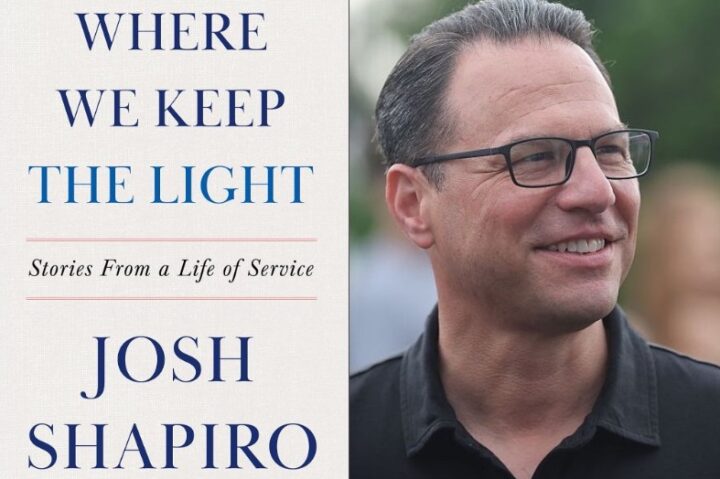
Book cover/Pennsylvania Gov. Josh Shapiro


 Add JewishInsider on Google
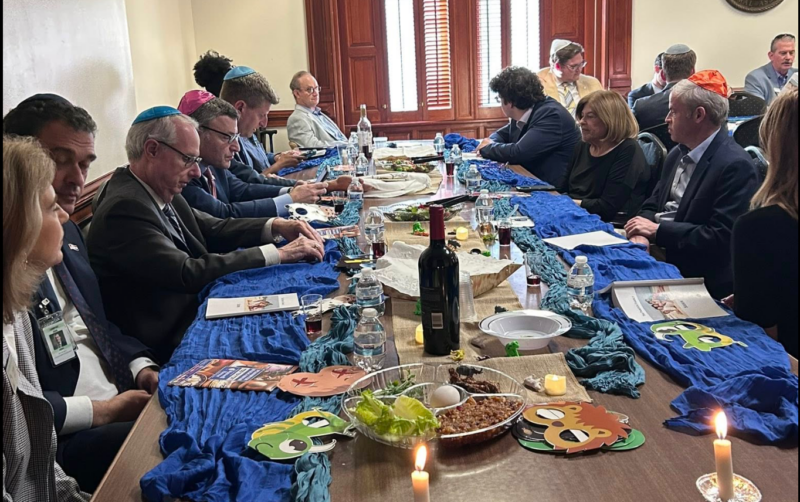
Each time Pennsylvania Gov. Josh Shapiro gets on a plane to visit different communities as he begins his reelection campaign, he’ll silently recite Judaism’s foundational prayer, the Shema, before takeoff, according to his new memoir.
Shapiro has always kept his Jewish faith at the center of his public identity. But in Where We Keep the Light, which comes out today, the swing-state Democrat provides the most intimate look yet at the centrality of Judaism to his understanding of the world. Widely expected to be eyeing a bid for the White House in 2028, Shapiro makes clear in his new book that he will not back away from his Jewish identity as his national profile grows.
“My faith has never been something I thought about doing a whole lot. Not because it’s not important. The opposite, really. It’s elemental,” Shapiro writes. “It’s why I sometimes sound a little vague when I get asked about my religion in interviews or when I try to put it into words. Kind of like when you get asked to explain how you fall asleep or blink. You just know to do it. It’s part of you, without thinking. All essence and instinct.”
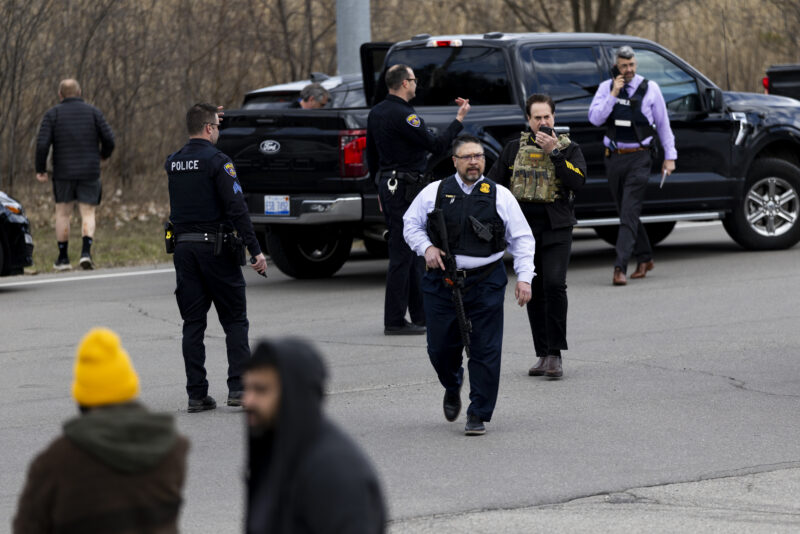
The book begins with the story of the arson attack on the governor’s residence in Harrisburg last year, hours after Shapiro hosted a Passover Seder there. It’s clear that the incident, in which the assailant said that he targeted the governor because of what Shapiro “did to the Palestinians,” impacted him deeply.
“No one will deter me or my family or any Pennsylvanian from celebrating their faith openly and proudly,” Shapiro writes.
The next night, his family began their Seder by reciting Birkat Hagomel, which he described as “a prayer expressing gratitude for surviving a dangerous situation.” Shapiro again sought comfort in those days in the Shema, and its straightforward declaration of faith in God.
Along with his deep identification with Judaism, Shapiro doesn’t shy away from his support for Israel in his memoir.
The Democratic Party has become more critical of Israel in recent years, and it is easy to imagine Shapiro deciding that the politically savvy move would be to talk less about his connection to the Jewish state.
Instead, Shapiro appears to have decided that the right move — a result, surely, of both political and moral calculations — is to reveal exactly what role Judaism and Israel have played in shaping him.
Early excerpts of the book revealed that Shapiro was asked by members of Vice President Kamala Harris’ team, during the vetting process as she chose her running mate in 2024, whether he had ever acted as a foreign agent for Israel. He was also asked by Harris why he had taken such a strong position criticizing anti-Israel encampments at the University of Pennsylvania that year, and whether he would apologize for doing so. He took offense at both questions, wondering whether a double standard was at play.
He describes his first experience with advocacy, as part of the movement to free Soviet Jewry in the 1980s. He writes evocatively of a semester spent in Israel as a teenager with his Jewish day school, detailing the transformative moment he visited the Western Wall for the first time.
“My faith in that moment was around me. I was touching it. I was breathing it. My faith was alive and its roots grew deeper under me,” Shapiro writes. “The semester in Israel flew by. I loved every minute of it.” Years later, he returned to Jerusalem with his then-girlfriend Lori to propose.
Many scenes in Shapiro’s book also play out around the Shabbat table. There was the Shabbat dinner in 2017, early in Shapiro’s first month as Pennsylvania attorney general, that was interrupted by news of President Donald Trump’s ban on travel from several Muslim-majority nations. There was the Shabbat dinner in 2024 when he and Lori discussed the meeting he would have with Harris, two days later, about whether Shapiro wanted to be her running mate. The family’s Shabbat dinner table was also pictured in his first TV ad during the 2022 general election for governor.
Shapiro said he drew this lesson of embracing his Jewish faith from his experience as attorney general working with law enforcement and the Jewish community after the 2018 Tree of Life shooting. In the years after, particularly as he ran for governor, he began to have more people express to him their fear of antisemitism and of being Jewish. The answer, Shapiro writes, is not to hide.
“There have been times when I have struggled to figure out what my responsibility is as a person so public about my faith, at a time when it is more tenuous than ever to be Jewish in America,” Shapiro writes. “In these moments, I look to the Tree of Life community as my guidepost for what it means to live our faith out loud, without fear or question.”
Whether Shapiro continues to focus more closely on his Jewish faith and the rise of antisemitism, as he does in the book — as opposed to a more universal appreciation of religion’s positive role in society — is an open question. Shapiro likes to talk in stump speeches about his “faith,” with the word “Jewish” often conspicuously absent. In his election night victory speech in 2022, he quoted the Jewish book Pirkei Avot, or “Ethics of Our Fathers.” He talked about “scripture,” and how “my family and my faith call me to service.” He did not mention Judaism.
With his new book, Shapiro appears to be betting that standing up for his values and beliefs — even if the short-term politics might not be in favor of campaigning as a proud Jewish candidate who remains supportive of Israel — will be rewarded over the long haul by voters looking for someone who is authentic to his true self, standing by a time-tested set of clear moral principles.
Frey’s success against DSA-aligned state Sen. Omar Fateh may be repeated in Seattle, where Mayor Bruce Harrell leads over socialist Katie Wilson, though results are incomplete
Stephen Maturen/Getty Images
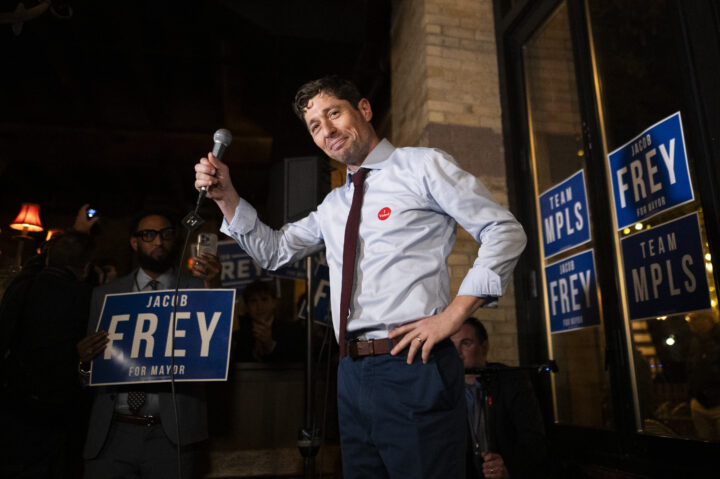
Minneapolis Mayor Jacob Frey speaks at an Election Night party on November 4, 2025 in Minneapolis, Minnesota.
Democratic Mayor Jacob Frey of Minneapolis won reelection on Wednesday over his far-left, DSA-aligned challenger, state Sen. Omar Fateh, marking a win for the more pragmatic wing of the Democratic Party.
A similar result may be emerging in Seattle, where preliminary results showed the Democratic incumbent, Mayor Bruce Harrell, leading over his socialist challenger, though many ballots remain to be counted.
Frey, who is the second Jewish mayor to preside over Minneapolis, secured his third term, winning by six percentage points, 50% to 44%, in the final round of the city’s ranked choice voting on Wednesday.
Fateh, a progressive affiliated with the Democratic Socialists of America, has accused Israel of committing “genocide,” among other anti-Israel views, and campaigned with Rep. Ilhan Omar (D-MN), who remains one of Israel’s harshest critics in Congress.
Members of Fateh’s staff had also expressed hostile views towards Israel; His communications manager, Ayana Smith-Kooiman, said in a series of now-deleted social media posts that Israel “does not have a ‘right’ to exist” and “must be dismantled,” and said she did not care about Hamas a month after the Oct. 7, 2023, terror attacks — statements that drew rebuke from Sen. Amy Klobuchar (D-MN).
Frey’s victory in Minneapolis signals a wariness of a socialist candidate in the heavily Democratic city, in contrast with Zohran Mamdani’s win in New York City’s mayoral election on Tuesday.
Meanwhile, in Seattle, the first wave of ballots counted Tuesday night found Harrell holding a seven-point lead over self-described socialist Katie Wilson, 53% to 46%.
Wilson, who has expressed hostile views towards Israel, including calling the Jewish state’s war on Hamas a “genocide,” led over Harrell in the primary. Wilson has expressed support in the past for divesting from investments in Seattle that support Israeli actions, which is in line with the BDS movement.
Additionally, some Seattle Jewish community leaders have expressed deep concern over Wilson’s candidacy and her relationships with anti-Israel activists, including Kshama Sawant, a former far-left Seattle city councilmember who has faced accusations of stoking antisemitism.
However, the race is still far from being decided. Many ballots are left to be counted, including a significant share from left-leaning parts of the city. The next tranche of ballots is set to be reported around 5 p.m. local time on Wednesday.
Individuals involved in the race told JI impediments remain to consolidating support behind Andrew Cuomo
Michael M. Santiago/Getty Images
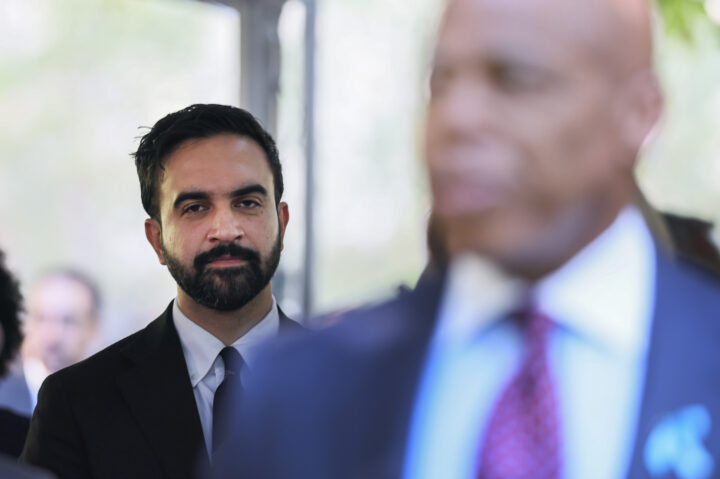
New York City Mayoral Zohran Mamdani (L) and former Mayor Eric Adams attend the annual 9/11 Commemoration Ceremony on September 11, 2025 in New York City.
New York City Mayor Eric Adams’ decision on Sunday to drop out of his race for reelection was met with a mix of tempered hope and continued resignation among political consultants and Jewish community leaders who have long been waiting for an opening to block Zohran Mamdani, the front-runner and Democratic nominee.
In choosing to suspend his campaign for a second term with just five weeks remaining until the Nov. 4 election, Adams, the scandal-scarred mayor who had been running as an independent, may not offer the escape hatch that many Mamdani critics have been hoping for.
Adams, a deeply unpopular mayor whose tenure in office had been marred by a series of damaging corruption scandals and accusations that he had become cozy with the Trump administration, will remain on the ballot. And Curtis Sliwa, the GOP nominee polling ahead of Adams, reiterated on Sunday that he will stay in the race, rejecting calls for him to step aside and help to clear the field for former New York Gov. Andrew Cuomo — who is also running as an independent after badly losing the June Democratic primary.
But some critics of Mamdani, a democratic socialist and Queens state assemblyman leading in the polls, suggested that the consolidated field could now move previously reluctant donors to invest in a late-stage effort to help bolster Cuomo — who had been casting the race as a two-man contest with Mamdani even before Adams ended his campaign.
“Sentiment among some major donors had been that unless the field started to narrow, they were going to keep their powder relatively dry,” Jake Dilemani, a Democratic strategist who was involved in Cuomo’s primary bid, told Jewish Insider. “With Adams out, that dynamic starts to change, pressure will mount on Sliwa to drop his bid, and dollars will follow.”
Hank Sheinkopf, a veteran Democratic strategist who is leading an anti-Mamdani super PAC called Protect the Protectors, said Cuomo “can win only if there are independent committees that are talking about” Mamdani’s far-left positions and “how they are dangerous to New York.”
“Failure to do that means Mamdani will win,” he told JI, while noting Cuomo’s “argument that he is more experienced isn’t working,” demonstrated by his negative voter ratings in polls.
Sheinkopf speculated that new donors could now be energized to open their checkbooks if they are convinced, as he believes, that a Cuomo victory will require outside groups, which have struggled to raise money even as they have begun to place ads in recent weeks, work on chipping away at Mamdani’s relatively favorable polling numbers.
“You can knock Mamdani to 30 or below,” Sheinkopf predicted. Recent surveys have shown Mamdani’s favorability ratings in the mid to high 40s.
Another political consultant who is involved in a separate anti-Mamdani super PAC, speaking on the condition of anonymity to address the current state of the race, said he is “hopeful that the donors who were sitting on the sidelines will now become more active,” but he had no details to share about any new movement on that front.
The consultant acknowledged that Sliwa’s choice to remain in the race, threatening to peel support from Cuomo, “is certainly an impediment, but hopefully not a major one,” suggesting that “Cuomo can get a lot of Sliwa’s vote.”
Chris Coffey, a Democratic consultant who helped to advise Cuomo’s primary campaign, said that the race had been “frozen” until Adams finally dropped out on Sunday. “Both donors and reporters spent three-plus weeks on whether Eric would drop out,” he told JI. “Now he has. It’s still going to be uphill for Cuomo but to have any shot, he needed Eric out and he’s out.”
“If donors and press now turn to Curtis, that won’t help Cuomo,” Coffey continued. “I’d expect to see national and local GOP push folks to Cuomo. That’s a double-edged sword but again, he needs it to have a meaningful shot.”
Eric Levine, a top GOP fundraiser who had been backing Adams’ bid, said that he is now supporting Cuomo and believes that Sliwa “needs to get out” if the former governor has any chance of prevailing in the race.
While he did not anticipate that Sliwa — whose campaign said in a statement on Sunday that he “is the only candidate who can defeat Mamdani” — will likely step aside, Levine called on GOP leadership in New York to urge him to drop out and help clear the field for Cuomo.
“He was a terrible governor, he’s an even worse person and will be a horrible mayor,” Levine said of Cuomo. “But compared to Mamdani,” the choice is easy, he told JI, citing the nominee’s hostile stances toward Israel that have fueled concern among many Jewish community leaders.
“The city is heading for a world of hurt, and any Republican who thinks that it’s a good idea to have Mamdani be the new face of the Democratic Party is too cynical for me,” Levine, a Republican Jewish Coalition board member, said on Sunday.
Cuomo, for his part, praised the mayor’s decision to ultimately drop out of the race, as he had called on Adams to do. “The choice Eric Adams made today was not an easy one, but I believe he is sincere in putting the well-being of New York City ahead of personal ambition,” the former governor said in a statement on Sunday. “We face destructive extremist forces that would devastate our city through incompetence or ignorance, but it is not too late to stop them.”
But while Cuomo’s campaign hopes to gain new backing from Black and Orthodox Jewish voters who were behind Adams, the mayor himself did not offer an endorsement, even if his announcement left open the possibility he could end up taking a side in the race. Adams otherwise warned, in a veiled swipe at Mamdani, that “insidious forces” are now seeking to “advance divisive agendas.”
“Major change is welcome and necessary,” Adams said in his announcement posted to social media on Sunday. “But beware of those who claim the answer is to destroy the very system we built together over generations.”
Leon Goldbenberg, an Orthodox leader in Brooklyn who is an executive board member of the Flatbush Jewish Community Coalition and had been backing Adams, said that he was encouraged by the mayor’s choice to suspend his campaign. “At this point, it’s more of a horse race,” he told JI, predicting Cuomo will see solid support in the Orthodox community as it seeks to register new voters ahead of the election.
“I think that you are going to see a tremendous turnout in the Orthodox community,” Goldenberg said. “Whether it makes a difference or not, I can’t tell you.”
Some activists in the broader organized Jewish community were less confident that the campaign shake-up on Sunday would meaningfully influence the outcome of a race that Mamdani has continued to dominate.
One Jewish leader, speaking on the condition of anonymity to address private discussions, said it was “too soon yet” to conclude if a critical mass of new donors would now be motivated to step up to help oppose Mamdani. “But new conversations are happening.”
Another Jewish leader who fears a Mamdani win, and also spoke on the condition of anonymity, was far less sanguine about Adams’ decision. “It doesn’t make a difference,” the Jewish leader told JI, while referring to such remaining obstacles as Sliwa and the mayor’s name still appearing on voters’ ballots.
A credible effort to beat Mamdani “would require about $10 to $15 million to make a difference,” the Jewish leader estimated. “I just don’t know that we have that chance.”
With that in mind, “the best thing that I’m hoping for is that we can keep him under 50%,” the Jewish leader said of Mamdani, “to make him govern from a minority position and not a mandated position.”
The pragmatic North Carolina senator was the second moderate Hill Republican this weekend to announce retirement plans amid growing polarization

Kent Nishimura/Getty Images
Sen. Thom TIllis (R-NC) speaks with reporters as he arrives for a vote at the U.S. Capitol on July 31, 2024 in Washington, DC.
Sen. Thom Tillis’ (R-NC) sudden announcement on Sunday that he won’t seek reelection is kicking off one of the most competitive Senate contests of the 2026 cycle, and underscoring the precarious standing for moderate-minded lawmakers on Capitol Hill.
Tillis, 64, who was first elected to the Senate in 2014, was already expected to face electoral headwinds from both directions in his bid for a third term. His pragmatic instincts angered right-winger Republicans back home while his willingness to ultimately support Trump’s agenda didn’t win him any goodwill with Democrats.
Tillis is the second congressional Republican with a record of winning tough races to retire over the weekend, joining Rep. Don Bacon (R-NE), who decided to leave Washington amid growing partisanship and polarization. Sen. John Cornyn (R-TX), another accomplished legislator who occasionally has antagonized his right flank, is also facing a difficult primary campaign against a right-wing opponent, Texas Attorney General Ken Paxton.
North Carolina is one of the Democrats’ strongest opportunities to flip a GOP-held Senate seat next year, and party leaders are hoping former Gov. Roy Cooper decides to run for the open seat. The Cook Political Report said on Sunday it had moved the race from Lean Republican to the “Toss Up” category.
“Cooper — who would likely clear the Democratic field if he runs — faces the prospect of a much easier open seat contest, while Republicans could have to sort out a messy primary field to succeed Tillis that is sure to produce a nominee further to the right than the outgoing GOP senator,” the Cook Political Report’s Jessica Taylot wrote.
At least four Republicans have already confirmed they are considering entering the North Carolina Senate race, including Lara Trump, the president’s daughter-in-law and a North Carolina native; Rep. Pat Harrigan (R-NC), a freshman who was elected to succeed former GOP Rep. Patrick McHenry last year; Rep. Tim Moore (R-NC), who previously served as speaker of the North Carolina House of Representatives; and Rep. Greg Murphy (R-NC), a former urologist elected to the House in 2019.
A source close to Lara Trump, who is married to the president’s son Eric, told NBC News on Monday afternoon that she is “strongly considering jumping in the race.” Asked what the odds were that Trump would get in the race, the source replied: “I’d put it as high as one could be considering it. …The race will be over before it begins.”
Lara Trump, 42, has expressed interest in joining the Senate as far back as 2021, when former Sen. Richard Burr (R-NC) retired after becoming the subject of an insider trading probe, an investigation that ultimately ended without him facing criminal charges. She also discussed the possibility of filling the Senate vacancy in Florida left by Secretary of State Marco Rubio earlier this year, though that seat ultimately went to Sen. Ashley Moody (R-FL), the state’s attorney general.
Among the other GOP names being floated in the race to replace Tillis are Rep. Richard Hudson (R-NC), who chairs the National Republican Congressional Committee, and Republican National Committee Chairman Michael Whatley, who chaired the North Carolina GOP for five years prior to assuming his current role.
In a statement responding to the news of Tillis’ announcement, Sen. Tim Scott (R-SC), chairman of the National Republican Senatorial Committee, Senate Republicans’ campaign arm, made no mention of the outgoing senator, instead restating the party’s intention to keep the seat in GOP hands.
“President Trump has won North Carolina three times, and the state’s been represented by two Republican senators for over a decade. That streak will continue in 2026 when North Carolinians elect a conservative leader committed to advancing an agenda of opportunity, prosperity, and security,” Scott said in a statement.
On the Democratic side, former Rep. Wiley Nickel (D-NC) has already launched his campaign, though major donors and national Democrats alike are urging Cooper to enter the race. The former two-term governor has told allies he expects to make a decision this summer.
“Thom Tillis’ decision not to run for reelection is another blow to Republicans’ chances as they face a midterm backlash that puts their majority at risk. Even Tillis admits the GOP plan to slash Medicaid and spike costs for families is toxic – and in 2026, Democrats will flip North Carolina’s Senate seat,” Democratic Senatorial Campaign Committee spokesperson Maeve Coyle said.
Tillis’ decision to bow out of politics also has implications for the current Congress. The North Carolina senator suggested in his retirement announcement that he intends to vote his conscience when he has policy disagreements with the president, setting him up as a key swing vote during the remainder of his tenure.
“I look forward to solely focusing on producing meaningful results without the distraction of raising money or campaigning for another election. I look forward to having the pure freedom to call the balls and strikes as I see fit and representing the great people of North Carolina to the best of my ability,” Tillis said.
Republicans still maintain a 53-47 majority in the Senate, and are still strongly favored to maintain their majority in the upper chamber after next year’s midterms. Democrats need to flip four seats next year to win back the majority.
Sen. Susan Collins (R-ME) is expected to be another top Democratic target, but Democrats don’t have a lot of other obvious pickup opportunities aside from North Carolina and Maine. Party leaders may target Texas, especially if Cornyn loses his primary, and are expected to challenge Sen. Joni Ernst (R-IA) in the now-reliably Republican state. Ohio and Florida’s Senate seats, both held by appointed Republicans, may also become competitive if Democrats recruit strong challengers.
Please log in if you already have a subscription, or subscribe to access the latest updates.
 Continue with Google
 Continue with Apple