



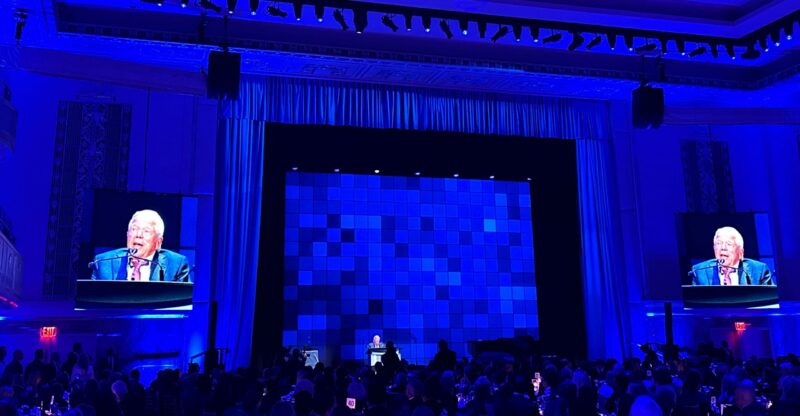
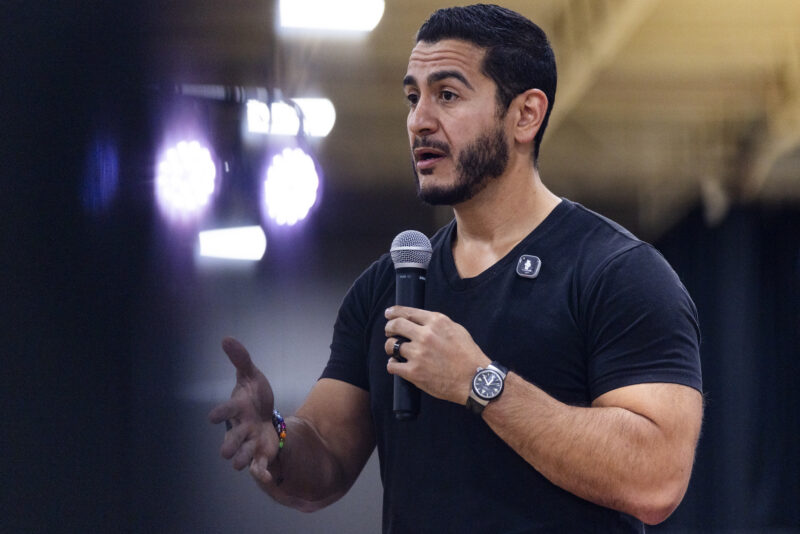
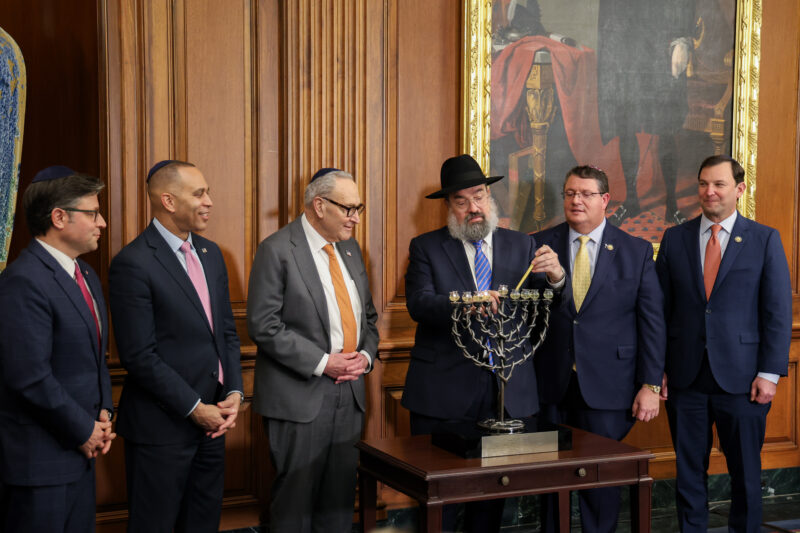














At Temple Israel, the lawmakers and the New York Times columnist discussed the rise of antisemitism and anti-Israel sentiment with the Call Me Back host
Courtesy
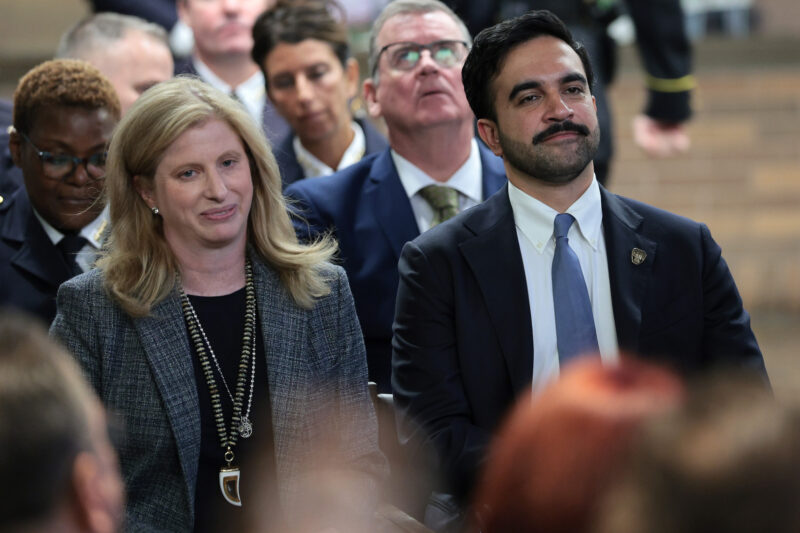
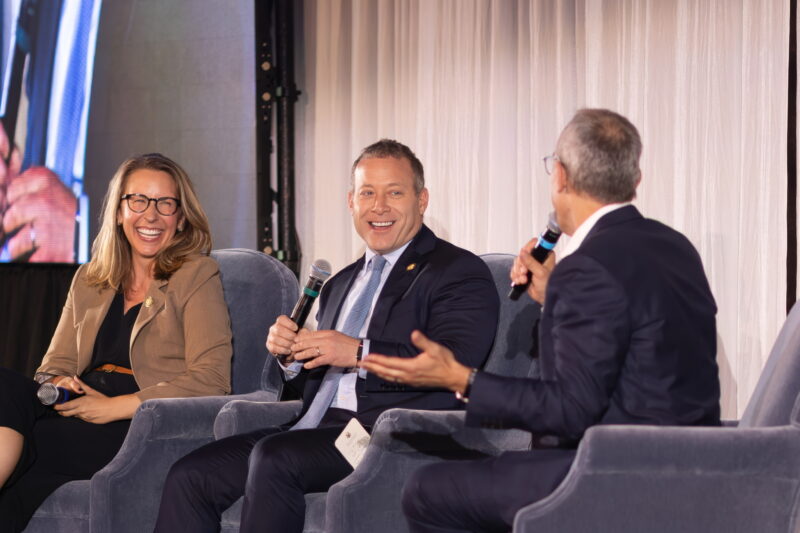
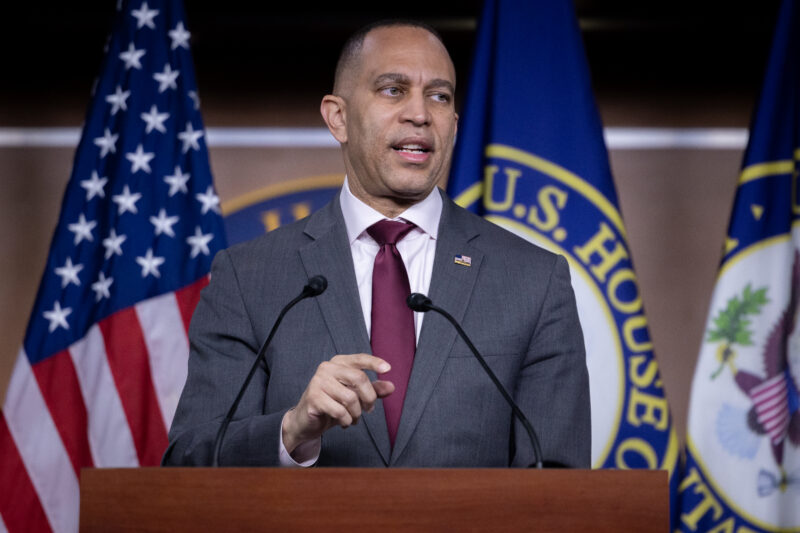
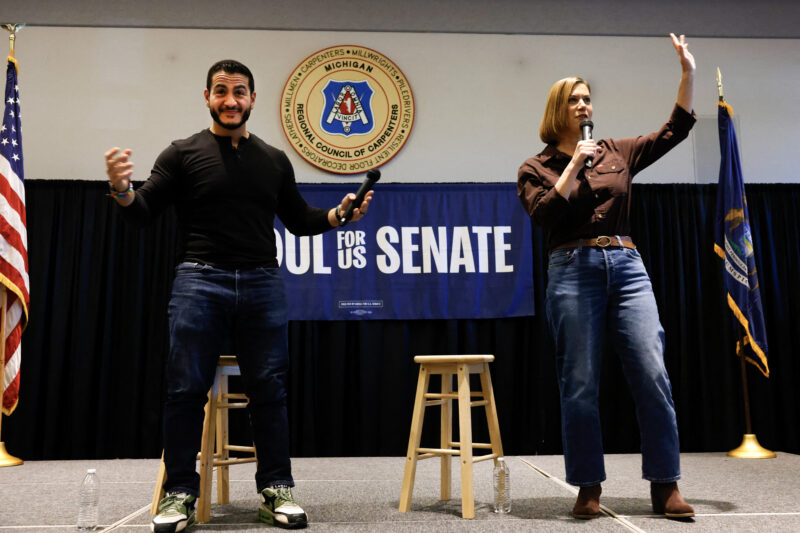
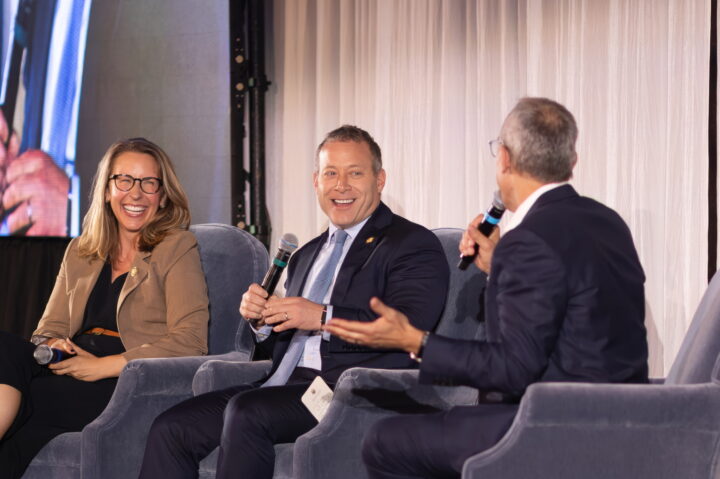
Reps. Hilary (D-MI) and Josh Gottheimer (D-NJ) speak onstage with Dan Senor at an event at Temple Israel in West Bloomfield, Mich., on Monday, Oct. 12, 2026.


 Add JewishInsider on Google
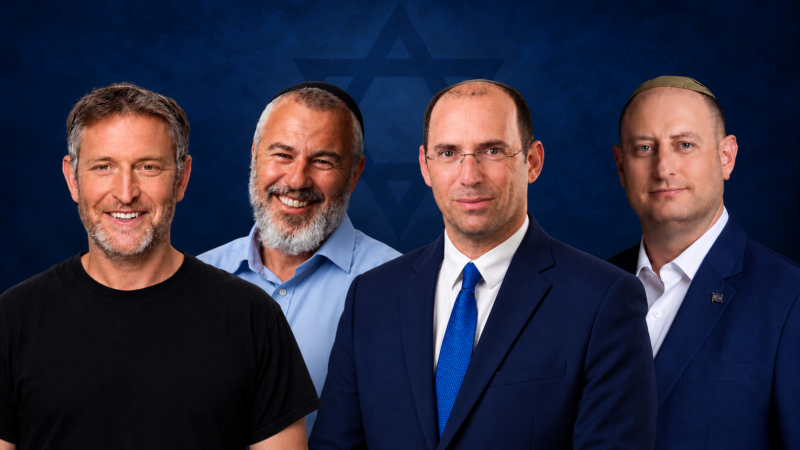
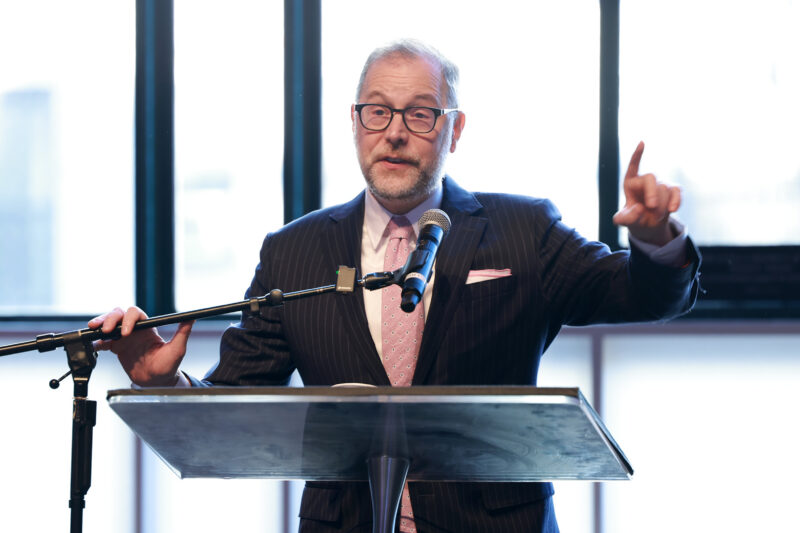
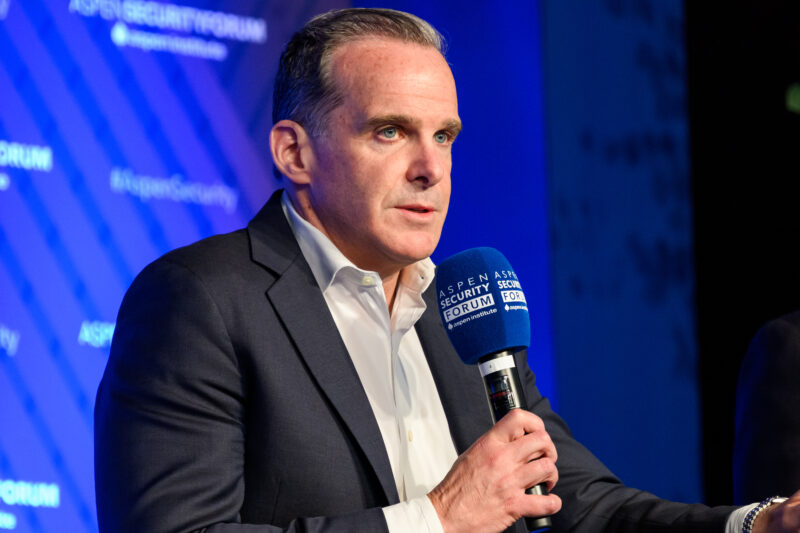
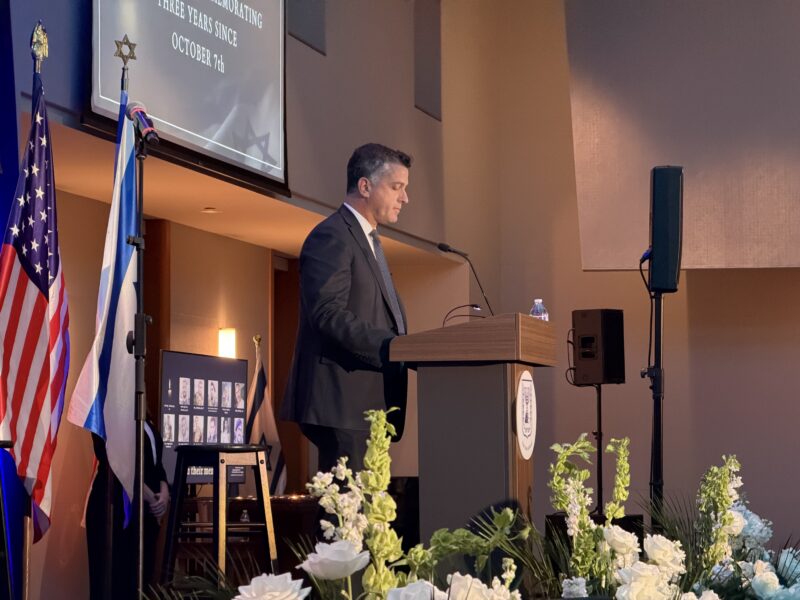
More than 1,100 people gathered Monday night at Temple Israel in West Bloomfield, Mich., for an event organized by local Jewish groups featuring Reps. Hillary Scholten (D-MI) and Josh Gottheimer (D-NJ) alongside commentators Dan Senor and Bret Stephens, discussing the rise of antisemitism and anti-Israel sentiment in political life.
Though the Michigan Senate race wasn’t directly addressed, the event came ahead of the election in less than a month, in which Israel and the Jewish community have been central topics of discussion. During the event, Scholten and Gottheimer discussed the rising antisemitic and anti-Israel trends in their party and why they’ve remained outspoken against them.
The event was jointly organized by the the Jewish Federation of Detroit, the Anti-Defamation League’s Michigan office and the local American Jewish Committee chapter, billed as exploring “some of the most urgent questions facing the Jewish people today from the rise of antisemitism and the meaning of Zionism to the increasingly challenging climate for political discourse in the United States.”
Temple Israel was the site, seven months to the day before Monday’s event, of a Hezbollah-inspired terrorist attack. Scholten told the audience, during a Q&A session alongside Gottheimer moderated by Senor, that she felt “emotional” arriving at the synagogue, according to clips of the event reviewed by Jewish Insider.
“I want to say to this Jewish community here tonight that we’re with you,” she said. “It’s so important for us to communicate to you that we are with you in this moment. … People are scared right now. I hear from our Jewish community, especially our young people who have experienced the horrors of a post-Oct. 7 moment on their college campuses.”
She said that the Jewish community feels outnumbered, “and that is one of the main reasons why I have felt so compelled to not be shy in speaking out in this moment. … I want American Jews, Michigan Jews, to feel like they have an ally and a champion.”
Scholten is the only sitting Democratic member of Michigan’s congressional delegation who hasn’t yet endorsed Democratic nominee Abdul El-Sayed.
Asked why she’s staked out such a strong position, in such a difficult political environment, Scholten said, “I’m not a radical. In fact, I am radically not radical, and it almost seems like in today’s politics, to be not radical is almost a radical position. Everyone is trying to pull you farther and farther to the extremes, but it is actually a very bold and noble position to stake out this position in the center.”
She said that she wishes there was “more respect across the board from our colleagues to say, ‘I was elected to serve my constituents with the values that I bring to this position,’ and more intellectual curiosity, instead of just an immediate rejection or retribution of the position that we have taken out.”
Scholten said she believes the Democratic Socialists of America and DSA-aligned candidates are gaining steam because they are emphasizing issues like healthcare, jobs and fighting corruption, “and people don’t even recognize the underlying current of the U.S.-Israel relationship or the antisemitism that is a part of that. I know we see that across Michigan.”
Scholten said that she sees First Lady Eleanor Roosevelt as a model for how Democrats can respond in a moment when a growing DSA bloc is set to enter Congress. Roosevelt, she said, “really took on communism” without resorting to McCarthyist tactics, staking out a position in defense of strong New Deal-era social programs while rejecting radicalism.
Scholten applauded Rep. Haley Stevens (D-MI), in whose district the event took place, and Stevens’ likely successor, state Sen. Jeremy Moss, who Scholten said was in the audience Monday evening.
Gottheimer praised Scholten for having the “courage” not to cower in the face of “major blowback” as support for Israel has become highly unpopular among the Democratic base, particularly as a lawmaker who’s not Jewish.
He attributed the shifting tides on Israel policy among Democratic elected officials in part to pressure and harassment from vocal anti-Israel activists, which can be particularly effective with lawmakers for whom the issue is not top of mind and don’t have Jewish or other constituents invested in it. Other pro-Israel colleagues have offered a similar diagnosis.
“All you had to do is say this magic word [genocide] and it would all go away,” he said. “That’s how this thing started. And then the disinformation gets out there and, of course, it’s everywhere.”
Gottheimer described socialists as a separate entity trying to hijack the Democratic Party by playing on real anxieties about the economy, and then, “in a crafty way, [they] threw the Jewish thing into there, and they kind of melded it together” — blaming economic problems on U.S. aid to Israel.
“But this is not about money to Israel when you protest outside a temple, or boycott a Democratic member of Congress from buying coffee at his coffee shop in his own district,” Gottheimer continued. “It has nothing to do with your position on Israel. That’s just finding a great scapegoat.”
Ultimately, he said, it became easier for Democrats to stay silent. “You’re kind of nuts right now in Democratic politics for running around and talking about this stuff in the way that we do. It’s not popular, right? You get harassed for it. People cancel fundraisers.”
He said that some once-dependable allies have said they’ll stick with him on key votes, but have been unwilling to speak up boldly and publicly.
He warned that the same trends are growing in the GOP.
Gottheimer emphasized the need for the Jewish community to remain strong and optimistic even in the face of hardship.
He said that the current environment has shown the community who its friends and allies are, as well as bringing the Jewish community closer together. He said that figures like himself and Scholten are “not going quietly” and intend to fight back in the face of attacks from socialists.
“We [the Jewish community] know we’ve got to look out for each other, and that only we can overcome this by working together. We got to stay focused. [Enemies of Israel and the Jewish community] spent a long time — decades — focused on how they’re going to tear it apart,” Gottheimer said. “We were a little asleep at the switch, I think, but now we’re up and we’re focused and we know what we need to do to actually overcome it — overcoming socialism and overcoming antisemitism.”
In a statement to JI, Gottheimer thanked Scholten for inviting him to the event and emphasized that “silence is not an option” in the face of antisemitism.
“This is a moment of consequence, and we all have to stand up, speak out, and say plainly that hate has no place in our country. I’ll always stand with the Jewish community against antisemitism, and I’m proud to be in the room with so many others who feel the same way,” Gottheimer said.
Prior to the Q&A with the two members of Congress, Senor delivered prepared remarks and then conducted a separate Q&A session with Stephens. In his opening remarks, Senor pushed back against the accusations of genocide against Israel, describing them as a modern iteration of the ancient blood libel.
The genocide accusation has been deployed, Senor said, to attack every Jew and Jewish institution, including the preschoolers at Temple Israel, and to declare Israel’s existence fundamentally illegitimate. And, he said, political leaders have joined in by parroting the genocide accusation.
Brian Hermelin, the president of the Detroit Federation, told JI that the idea for the event came from a conversation between himself and Senor.
“He wanted to come have a conversation with the community, not to advocate for any particular candidate, but to talk about the seriousness of the issues that we’re facing around antisemitism, around the blood libel of the genocide lie and put it in historical context for the community to understand,” Hermelin said. “This has a lot of historical precedent that hasn’t bode well for the Jewish community, and we should be paying attention.”
Hermelin said the event was “really well received” and that it was particularly poignant to host it at Temple Israel on the seven-month anniversary of the terrorist attack, marking the first time that some attendees had returned to the synagogue since the attack happened. “For the community, it was important, it was meaningful to be there,” Hermelin said.
Bringing together the Federation, AJC and ADL to host the event provided a “united front” among the major Jewish advocacy organizations and demonstrated that “everybody realizes the seriousness of the decisions that we have in front of us,” he continued.
He said that Senor and Stephens had discussed the “obsessive focus on Zionist participation in political life” in the current moment, and how that is a unique facet of the current electoral cycle.
Meanwhile, elsewhere in the state, the pro-El-Sayed coalition Michigan Jews for Democracy held an event night with Brad Lander, the progressive Jewish Israel critic expected to join the House next year, and former Rep. Andy Levin (D-MI).
Decky Alexander, the chair of the Michigan Democratic Jewish caucus and one of the hosts of that event, said that the goal of the event was to create an intimate space for traditional Democratic Jewish voters who are unsure how to vote to talk through their feelings and concerns.
The coalition, which is not formally affiliated with El-Sayed’s campaign but issued a recent petition in support of him, also recently held a similar event with Rep. Becca Balint (D-VT), another progressive Jewish House member.
One Jewish community leader said that the debate had ‘reinforced’ Jewish community members’ ‘deep concern’ about El-Sayed and his political ideology
Paul Sancya, Pool/AP
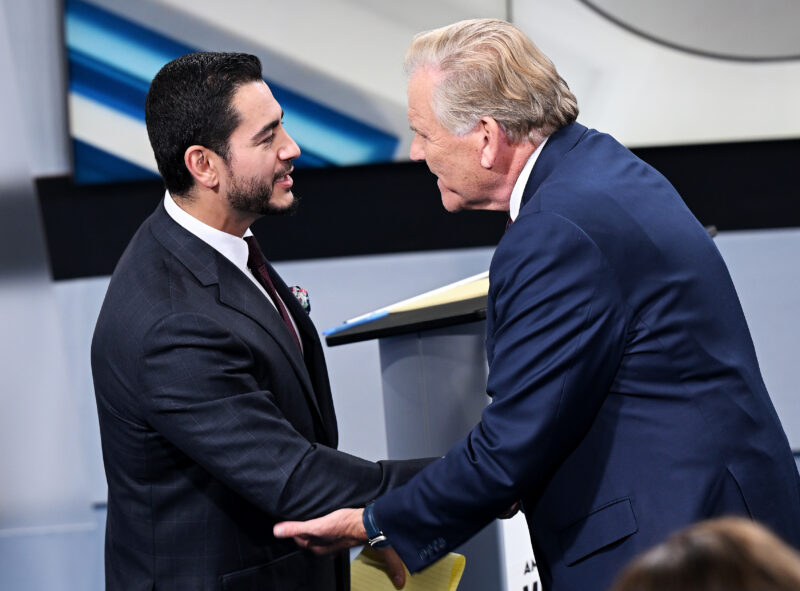
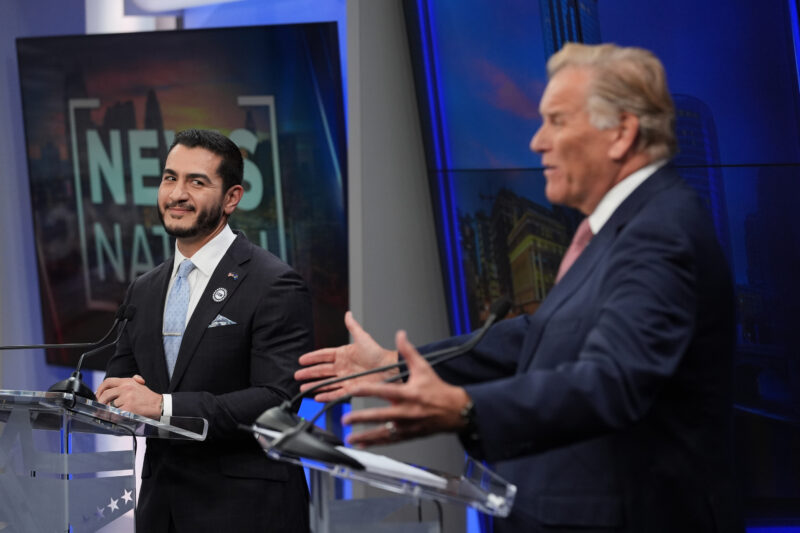
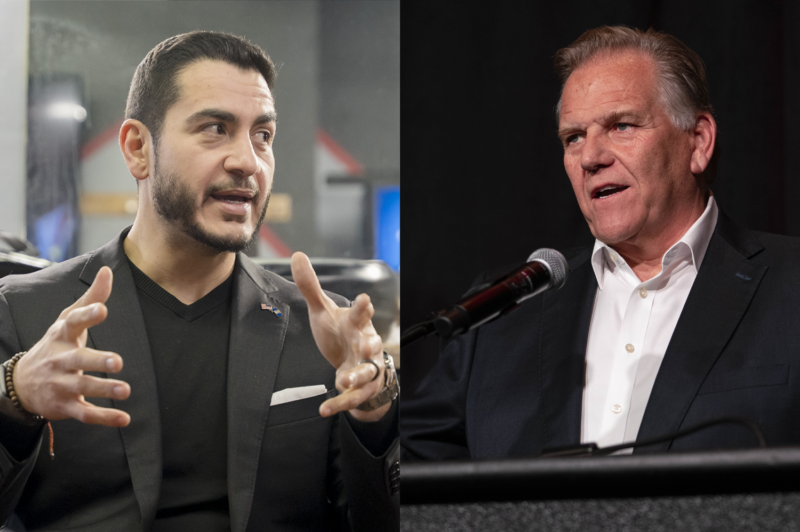
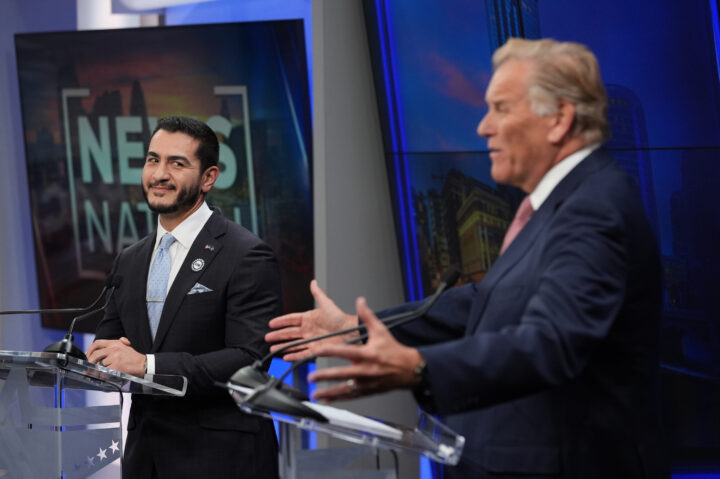
Republican nominee for U.S. Senate Mike Rogers, right, speaks during a televised debate with Democratic nominee for U.S. Senate Abdul El-Sayed on Oct. 8, 2026, in Grand Rapids, Mich.
Last Thursday’s Michigan Senate debate, where Democratic nominee Abdul El-Sayed framed Israel as a threat to the United States comparable to Iran and said he would not vote to send defensive aid to Israel even if it were under fire, proved to be a breaking point for some Jewish Democrats who were holding out hope that the Democratic nominee would moderate his views in the general election.
Community leaders said that they’re hearing from some previously undecided Jewish Democrats that, after they debate, they now plan to back Republican Mike Rogers.
“I think for a lot of pro-Israel Jewish Democrats, Abdul has made it easy. He’s not really made any accommodations whatsoever, and the debate was just the latest example,” said David Kramer, a prominent Michigan Democratic fundraiser and vice chair of the Michigan Democratic Jewish Caucus.
He told Jewish Insider he’s heard from members of his community that they felt the debate demonstrated that El-Sayed is “not giving an inch and he’s absolutely showing who he is.”
Kramer had previously said he wasn’t willing to vote for El-Sayed without changes to his rhetoric and platform.
“I’ve talked to a couple of people who were wrestling with the same choice as I am, who have said that based on the debate, that was kind of a final straw, and they are going to vote for Rogers,” Kramer told JI.
Another Michigan Jewish Democrat told JI that they are hearing similar feedback in their network.
El-Sayed’s campaign did not respond to a request for comment.
Kramer said, “I think there were well-intentioned voters and community leaders, and even elected officials, who were hoping we’d get him to a better place, and he’ll need us, and he’ll want to embrace us, and it’s quite evident, at this point, that he’s not doing anything.”
Joan Lowenstein, a member of the Michigan Democratic Party Central Committee and president of the Jewish Federation of Ann Arbor, said she’s also heard from people in her community that the debate was a turning point. “I think people who did watch the whole thing really didn’t get anything new about what El-Sayed thinks, or what he was willing to do for Jewish safety — not at all.”
Lowenstein said the debate had “confirmed what I think about El-Sayed,” describing him as evasive and lacking in substantive policy proposals. On Israel, she said that his responses show a “lack of understanding that you would expect a senator to have” about foreign policy issues.
Kramer and Lowenstein are members of the Nonnegotiable Michigan campaign that has sought to pressure El-Sayed to make commitments to supporting Israel’s right to exist as a Jewish state and to Jewish safety in the United States.
Dennis Bernard, the national chair of government relations at the Jewish Federations of North America, who supported both Rep. Haley Stevens (D-MI) and Rogers in their respective primaries, said that El-Sayed’s response on whether Israel or Iran is more dangerous to the United States was “the defining moment for our community. … It’s an astounding comment.”
“At this point, if you still haven’t decided that there is enough out there as a Democrat not to vote for him, nothing’s going to convince you,” he said. “There were still a lot holding out. … After that debate, those who will go for Rogers have made their decision. El-Sayed did not help himself in our community. It was not a good performance. He had to have a better answer.”
Anecdotally, Bernard said that there’s intense discussion in the Jewish community about the race, with his social circle unanimously questioning how any Jewish voter at this point could support El-Sayed. Bernard said that he’d spoken to six lifelong Democrats on Saturday who were all planning to vote for Rogers. Bernard also said he’s never heard so much discussion in the Jewish community about ticket splitting.
Rabbi Aaron Starr, of Congregation Shaarey Zedek in Southfield, Mich., speaking in his personal capacity, said the debate left him “frustrated and sad” with both candidates spending more time “criticizing each other with personal attacks than helping us understand how they will help us work toward a better tomorrow for our children.”
“Dr. El-Sayed’s inability to affirm my basic needs has led me, and many others in my community, to confidently decide we simply cannot vote for him,” Starr continued, referring to the Nonnegotiable campaign’s core principles. Starr is a leading organizer of the Nonnegotiable petition.
He said that El-Sayed’s comments during the debate “reinforced” Jewish community members’ “deep concern about his candidacy, and reminded us that if Dr. El-Sayed’s position takes hold in the Democratic Party, Israel’s enemies will be emboldened, American Jews will be even more vulnerable, and America will be pulled into even more war –– not less, as Dr. El-Sayed claims to want.”
Starr said that he was “horrified, though not surprised” at El-Sayed’s hostility toward Israel and “refusal to condemn the Iranian regime and its proxies.” He added that “Dr. El-Sayed gave voice to centuries-old libels against the Jewish people by suggesting Israelis somehow manipulated an otherwise innocent America into a war. In this way, he denies America’s agency in choosing to defend itself and its allies against nuclear threats and belligerency.”
Zach Nessel, the secretary of the Michigan Democratic Jewish Caucus, who spoke to JI in his personal capacity, said that he thought El-Sayed’s answer to the question about Israel and Iran showed he is “not really taking our national security seriously” and “doesn’t want to upset people who don’t have America’s national security interests top of mind.”
Nessel, the son of Michigan Attorney General Dana Nessel, who is supporting El-Sayed, said he’s still undecided and doesn’t believe in sitting out elections, but feels “unenthusiastic” about both candidates.
He said he also found El-Sayed’s frequent attacks on AIPAC and its donors to be hypocritical when he has refused to address his own donors’ and associates’ support for groups including Hamas and Hezbollah, something that Rogers repeatedly hammered him on during the debate.
El-Sayed denied Sunday that any of his family have ties to the Muslim Brotherhood, and asserted that Rogers had only raised the issue to stoke Islamophobia.
“Now, I don’t think one man is perfectly represented by his donors, but it seems to be certainly very problematic,” Nessel said.
Decky Alexander, the chair of the Michigan Democratic Jewish Caucus, who plans to vote for El-Sayed, said she was broadly disappointed by the debate, calling it “a lot of theater” rather than a substantive exchange of ideas.
She acknowledged that many in the Jewish community did not think the “rhetoric around Israel and Iran in particular was helpful in this moment, particularly for Jews that are on the fence.” She said she was also “uncomfortable” with what she heard at the debate but said that the debate does not tell the “whole story.”
She added she thinks that El-Sayed’s joint event with Sen. Elissa Slotkin (D-MI) the previous weekend was ultimately more impactful for Jewish Democratic voters than the debate. “They want to hear from somebody … that affirms their own perspectives and values,” she said, describing Slotkin as a strong “ambassador” for El-Sayed.
Alexander said she and others in the community feel that the current political moment is existential in two respects: both for the pro-Israel Jewish community and for other elements of American society.
Lowenstein also said that she had received the anti-El-Sayed mailer that AIPAC’s United Democracy Project began circulating to Michigan Jews at the end of last week, describing it as an effective and targeted message, particularly coming in tandem with the debate.
But others take a different view, and said they haven’t heard much movement — in either direction — following the debate.
“From the people that I’ve spoken to, they all said that Rogers didn’t say anything new,” said Rabbi Asher Lopatin, who said previously that he’s voting for Rogers but is no longer discussing his personal views on the race, given his nonpartisan role as director of community relations at the Jewish Federation of Greater Ann Arbor. “On the other hand, the people that have reservations about Abdul El-Sayed, they also feel he avoided questions … he didn’t change his opinion at all. So there wasn’t any real movement on either side and it really hadn’t changed anything.”
He said that people who were struggling with their votes prior to the debate are still struggling, and some are still holding out hope for a change from El-Sayed.
Several Jewish Democrats also said that El-Sayed’s explanation that he didn’t issue a statement honoring the third anniversary of the Oct. 7, 2023, Hamas attacks on Israel to avoid turning the event into “political theater” was unsatisfactory.
“It was a sorry excuse not to stand up for our community three years after the Oct. 7 attack,” Nessel said, adding that El-Sayed’s failure to speak up cast doubt on other comments asserting that he wants to protect and stand up for the Jewish community. “It’s a really simple ask, just to remember the tragedy of Oct.7 and condemn Hamas for killing 1,200 Jews and kidnapping 200 more.”
He said he thinks that El-Sayed stayed silent because “I don’t think anything he would say would have been true to his values and probably would have been inflammatory.”
Starr offered a somewhat different view.
“While at first I felt resentment at his lack of communication on Oct. 7, I actually appreciate Dr. El-Sayed’s explanation about why he chose not to address the Jewish community,” Starr said. “He recognized that because he couldn’t say anything that spoke to the anguish in Jewish hearts, he was better off not saying anything at all. That said, his inability to speak genuinely with sympathy to us on that heartbreaking day does reinforce why so many Jewish Michiganders are unable to vote for him.”
Alexander said that she called El-Sayed’s campaign to ask about the lack of a statement on Oct. 7 and said she hoped for a “recognition of the impact of this day on his Jewish constituents” but also said that it was likely a “no-win situation for him” politically.
“Is it the thing that is going to deter me from not voting for him?” she continued. “No, because I also understand he’s in this really complicated, political space that I am just not in.”
Lowenstein told reporters before the debate that she had been looking for Rogers to make commitments on civil rights and other issues she sees as tied to her Jewish values, and emerged somewhat encouraged by his responses, including his willingness to reform Immigration and Customs Enforcement and to separate from the Trump administration’s stance on tariffs.
Nessel said he was disappointed in the performance of both candidates, saying that neither had done a good job of arguing their points or explaining their policy positions. He said that the debate could have been a “productive conversation and it just simply didn’t happen,” though he credited Rogers as being more willing and able to discuss policy specifics than El-Sayed.
“I might not agree with his ultimate conclusions when it comes to certain policies, but the fact that he expresses working knowledge and being able to at least understand the issues and explain it to the public is helpful,” Nessel said.
Bernard said he felt that El-Sayed appeared off balance and unwilling to address specifics, though he said that he “also would have liked to see Mike a little more senatorial.”
Lopatin said that hearing Rogers make a clearer declaration that he will not be a “rubber stamp for Donald Trump,” particularly when it comes to defending democracy and the Supreme Court, could be helpful to Rogers in reassuring Jewish Democrats still hesitant to pull the lever for him.
The Democratic Senate nominee also said he regrets his comments about the Temple Israel attack: ‘I regret anytime if I step on somebody's grief’
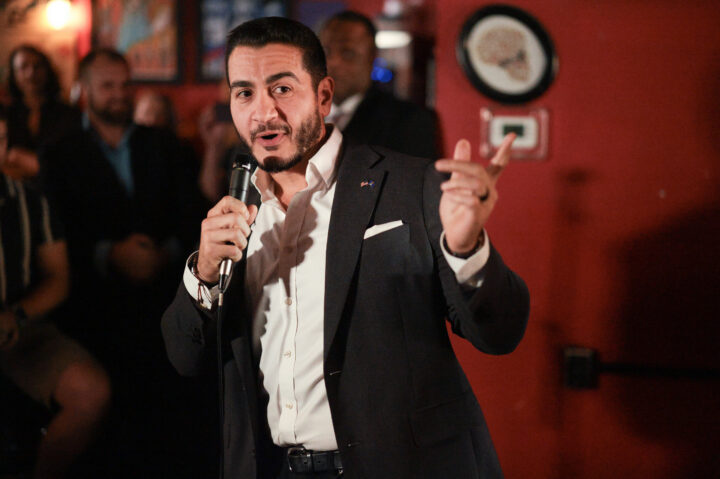
Chip Somodevilla/Getty Images
Michigan Democratic Senate candidate Abdul El-Sayed campaigns at The Meanwhile Bar on October 8, 2026 in Grand Rapids, Michigan.
Democratic Michigan Senate nominee Abdul El-Sayed on Sunday denied that he or any of his family members have ties to the Muslim Brotherhood — accusations his opponent, former Rep. Mike Rogers (R-MI), raised last week during the first Michigan Senate debate.
Asked by Kristen Welker on “Meet the Press” to respond to Rogers’ claims, El-Sayed first answered, “You know Kristen, the only reason he said those things is because he really wanted to repeat the word Muslim.”
Pressed to answer directly if he or his family have ties to the Muslim Brotherhood, El-Sayed said, “No.”
Rogers had claimed that El-Sayed received donations from groups in support of the Muslim Brotherhood and from individuals who “openly support Hamas, Hezbollah [and] al-Qaida.” El-Sayed’s mother also worked for the Islamic American Relief Agency, which was designated as a terrorist organization for supporting al-Qaida, and his sister-in-law sued to be removed from a federal terrorism watchlist, according to recent reports.
“Let me ask you though, why this is even a subject of debate,” El-Sayed said to Welker. “Because his only strategy is to point to me and my name and my faith and to say that we’re different. And that you should suspect people simply because they are different than you in how they pray.” He went on to accuse Rogers of being beholden to President Donald Trump and seeking office in order to enrich himself.
El-Sayed also reiterated in the interview that his “commitment to Jewish safety is the same as my commitment to my own kids,” a common refrain of his on the campaign trail, and said of his relationship with the Jewish community that he has “had really important conversations.”
Abdul El-Sayed denied on NBC’s “Meet the Press" that he or any of his family members has ties to the Muslim Brotherhood — accusations his opponent Mike Rogers made during the first Michigan Senate debate last week. Read @marcrod97’s full coverage: https://t.co/8I0EFZd5w9 https://t.co/Vi7gMuHy3x
— Jewish Insider (@jewishinsider) October 11, 2026
“I’ve learned a lot from the conversations I’ve had, some conversations with folks who will be colleagues, somebody like Sen. Elissa Slotkin (D-MI). And, you know, I remember sitting down with her and her sharing how she felt when she heard that ‘hurt people hurt people’ comment. And it was really important to me to hear, to understand that I had been stepping on somebody’s pain. That’s not my goal here,” El-Sayeed said, referring to his comments in the aftermath of the terror attack on Temple Israel earlier this year that critics said attempted to justify the actions of the perpetrator, a Hezbollah sympathizer.
Asked if he regretted the comment, El-Sayed said, “I regret anytime, you know, if I step on somebody’s grief, of course I regret that. And I really wish I’d thought about how somebody would have felt hearing that, and thought twice about making those comments.”
United Democracy Project spent nearly $100,000 on direct-mail advertisements against El-Sayed
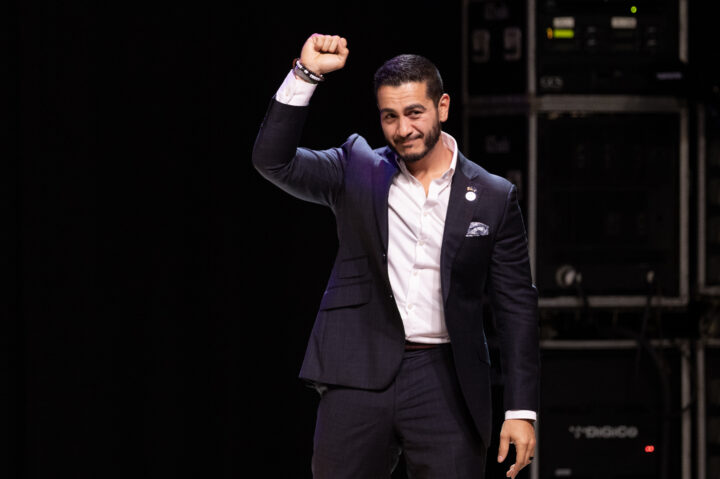
(Scott Olson/Getty Images)
Democratic candidate for U.S. Senate Abdul El-Sayed speaks to supporters at an election-night rally at the Majestic Theatre on August 04, 2026 in Detroit, Michigan.
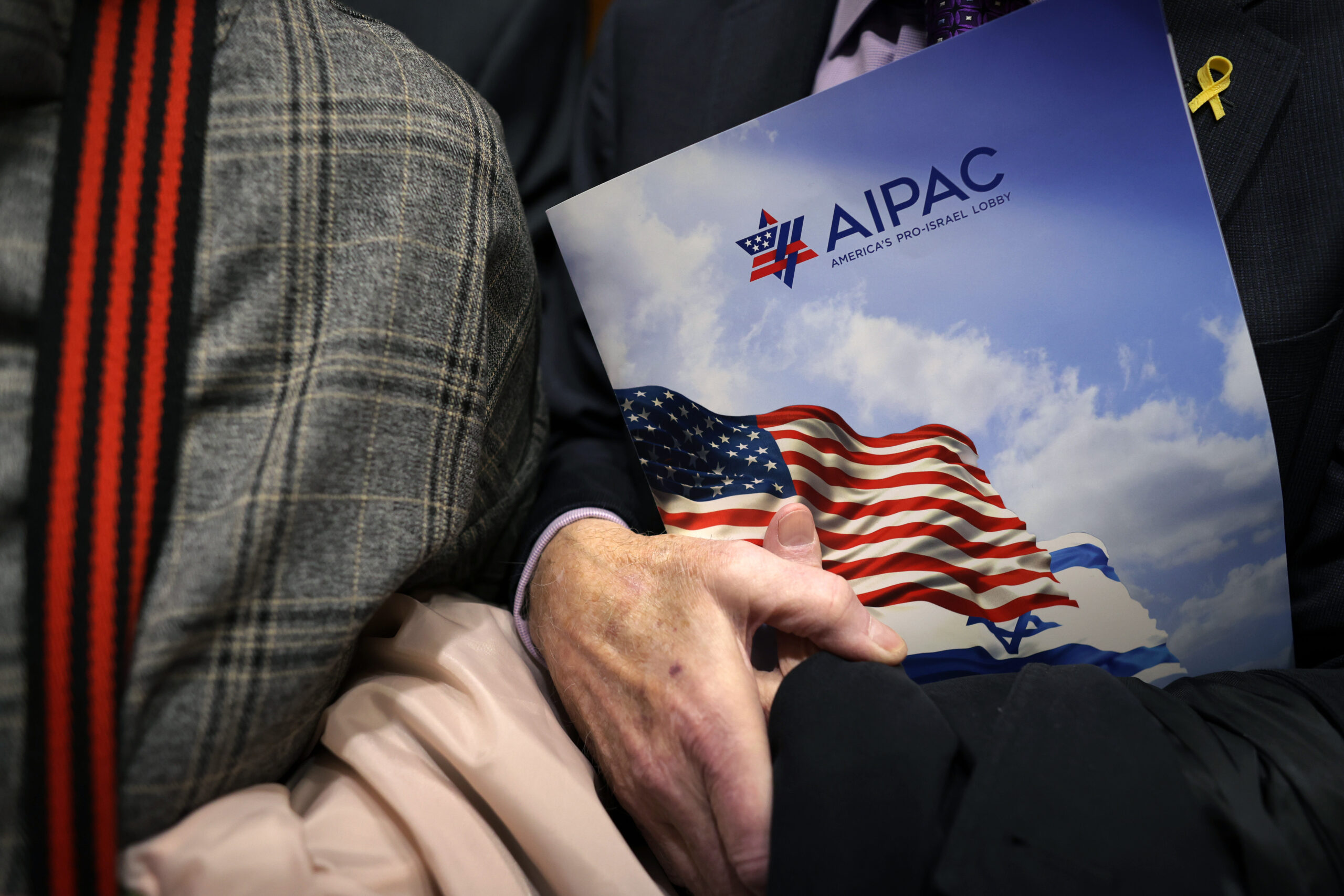
AIPAC’s super PAC, United Democracy Project, entered the Michigan Senate general election on Friday to oppose Democratic nominee Abdul El-Sayed, after reported tensions with the GOP nominee, former Rep. Mike Rogers (R-MI) over its role in the race.
Individuals affiliated with Rogers’ campaign had reportedly told AIPAC that it did not want the group to openly spend in favor of him in the general election, fearing that its controversial reputation might do harm to his campaign.
But UDP announced in a Friday filing that it had spent nearly $100,000 on direct-mail advertisements against El-Sayed.
A UDP spokesperson told Jewish Insider that the mailers were being sent to 130,000 Jewish voters in Michigan. They highlight El-Sayed’s response to the terrorist attack on Temple Israel in West Bloomfield, Mich., saying of the shooter, “Hurt people hurt people.”
The mailer highlights that the attack was a Hezbollah-inspired terrorist attack intentionally targeting the Jewish community in Michigan.
El-Sayed later apologized for the comments as he worked to appeal to Jewish voters after the primary, saying he was trying to “offer broader context” on the attack.
The group spent tens of millions in the primary election attacking El-Sayed and boosting Rep. Haley Stevens (D-MI), who ultimately fell one point short of victory.
The UDP spokesperson did not immediately respond to a request for comment on whether the group has plans for further advertising, including on television or digital in the general election race.
Asked at a Thursday night debate about whether he would accept support from AIPAC, in light of the reported tensions, Rogers did not answer directly.
Rogers said he would welcome anybody “that wants to help my campaign stop a guy who can’t condemn terrorism in our own country because he’s so close to the people who are supporting the Muslim Brotherhood.”
A newly formed super PAC, Together for Michigan, ran an ad during the debate featuring comments from Taylor Weintraub, a mother of a student at the Temple Israel preschool that was attacked by a terrorist earlier this year, directing viewers to a website for Democrats supporting Rogers’ campaign.
Asked by a student to ‘stand unequivocally against the IRGC,’ El-Sayed criticized the U.S. for trying to be the ‘world’s policeman’
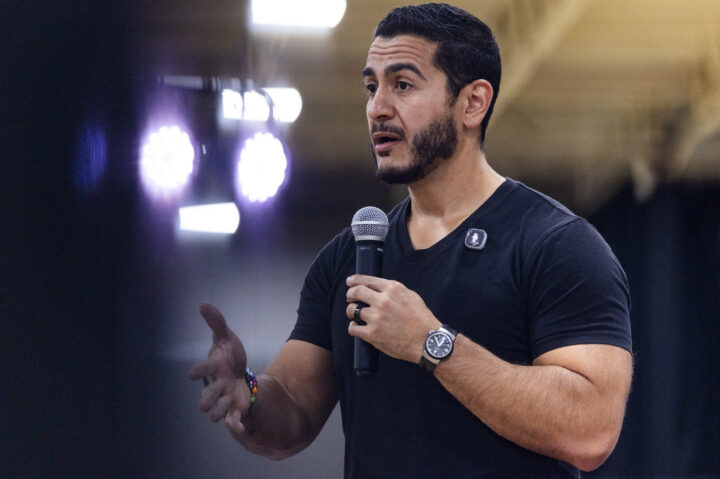
Emily Elconin/Getty Images
Democratic candidate for U.S. Senate Abdul El-Sayed answers questions from attendees during a town hall event on September 3, 2026 at the Oakland Expo Center in Waterford, Michigan.
Pressed during an event on Wednesday to condemn the Iranian regime’s massacre of tens of thousands of protesters earlier this year, Democratic Michigan Senate candidate Abdul El-Sayed sidestepped the question, focusing his answer on criticizing the U.S. war in Iran.
A Persian American student — who said that his cousin had been “hunted in the streets” by the Islamic Revolutionary Guard Corps for wearing her hijab improperly and that his uncle was “sentenced to die [and] received 50 lashings” — pressed El-Sayed to “renounce” those who supported assassinated Iranian Supreme Leader Ayatollah Ali Khamenei. The student, speaking at a town hall held at the University of Michigan, additionally called on El-Sayed to “stand unequivocally against the IRGC, against the Islamic Republic of Iran” and make some statement in support of the protesters.
El-Sayed responded by criticizing the U.S. for taking the role of the “world’s policeman.”
Asked by a Persian American student at a town hall held at the University of Michigan to "stand unequivocally against the IRGC," Abdul El-Sayed sidestepped the question and criticized the U.S. for trying to be the "world’s policeman."
— Jewish Insider (@jewishinsider) September 24, 2026
Read more: https://t.co/N2r8xS6tyt pic.twitter.com/pPTL86EtDc
“Here’s my point: one can disagree with the governance of a foreign country. One can stand in solidarity with freedom and democracy movements, but my worry is when one decides that we are going to go in and take out the leadership of a foreign government,” El-Sayed said. “Because here’s what happens: a lot of times that frustration gets used to justify corporate interests that have a real stake in the natural resources in a particular country.”
El-Sayed went on to say that he “will always stand for and with democratic movements, always” but added, “I also don’t believe that we were in the right to go to war to topple the government of Iran,” and said that it is the “responsibility of the people of Iran to decide what their leadership should look like.”
Pressed again by the student to express solidarity with the protesters who were murdered, El-Sayed repeated that he will “always stand with movements for freedom and democracy.”
The Michigan Senate candidate previously faced criticism over leaked comments in which he said he did not want to speak out publicly on Khamenei’s killing by the U.S. and Israel at the start of the Iran war because he did not want to alienate voters in Dearborn, Mich., who were upset about the ayatollah’s death.
“Abdul El-Sayed is looking a young man in the eyes and can’t even condemn a terrorist dictator murdering thousands of his own people. Pathetic,” former GOP Rep. Mike Rogers, El-Sayed’s Republican opponent, said on X in response to the exchange.
Mike Rogers, Ashley Hinson and John James have all called for an end to the war due to rising costs
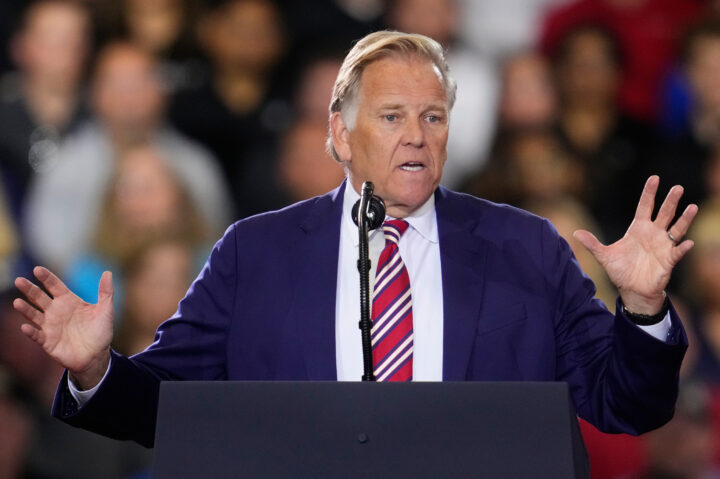
Paul Sancya/AP
Republican Senate candidate Mike Rogers speaks before President Donald Trump at an event at the General Motors Proving Ground Monday, July 27, 2026, in Milford, Mich.
Vulnerable Republican candidates in high-profile races, including Michigan Senate candidate Mike Rogers, Iowa Senate candidate Rep. Ashley Hinson (R-IA) and Michigan gubernatorial candidate Rep. John James (R-MI), are urging a prompt end to the Iran war.
“The war in Iran needs to end to bring costs down,” Rogers said on X on Monday.
Hinson said on Monday that “Iowans are being squeezed and shouldn’t have to foot the bill at the pump or the checkout line for the war in Iran” and that “the war needs to be brought to a successful and immediate end.”
Both candidates also called for other measures to bring costs down in the interim.
James joined them on Tuesday, saying in a virtual press conference, “We need to end this war quickly. Because war is terrible, and no one likes war.”
Both James and Hinson have voted repeatedly against war powers resolutions that aimed to force an end to the war.
The comments by Republicans in highly contested races are the latest sign that the war and its impact on inflation at home are becoming a serious vulnerability for swing-seat Republicans.
Last week, Reps. Zach Nunn (R-IA) and Marianette Miller-Meeks (R-IA) both voted for the first time in favor of a war resolution on Iran. Polling has shown that several races in Iowa are likely to be highly competitive in November’s midterms.
Reps. Tom Barrett (R-MI) and Brian Fitzpatrick (R-PA), both also representing swing districts, have been voting in favor of war powers efforts for months.
The far-left Senate candidate is facing off in the Aug. 4 primary against Rep. Haley Stevens
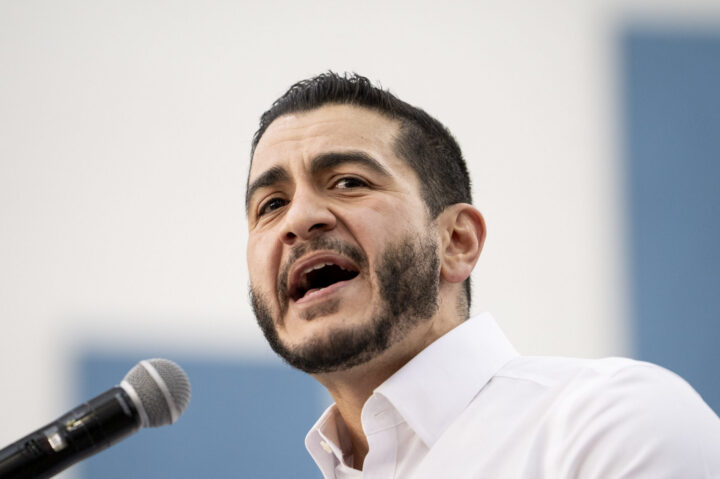
Sarah Rice/Getty Images
Abdul El-Sayed, candidate for US Senate in Michigan, speaks at Mumford High School on May 3, 2026 in Detroit, Michigan.
Abdul El-Sayed, the Democratic Senate candidate in Michigan running in the race’s far-left lane, on Sunday described Israel as a “rogue state” that has committed genocide and apartheid. El-Sayed made the comments in an interview with Manu Raju on CNN’s “Inside Politics Sunday.”
Asked whether he thought the Israeli government should be considered by the U.S. to be a foreign terrorist organization, El-Sayed answered, “It’s certainly a rogue state.”
“I mean, they did a genocide,” he continued. “What about doing a genocide is not evil in your book? At baseline they do apartheid.”
Abdul El-Sayed, the Democratic Senate candidate in Michigan running in the race’s far-left lane, on Sunday described Israel as a “rogue state” that has committed genocide and apartheid.@HaleyCohen19 reports: https://t.co/9BELSWPMXQ pic.twitter.com/vSYVTTRZJZ
— Jewish Insider (@jewishinsider) July 12, 2026
El-Sayed’s comments come as Michigan’s heated Democratic Senate primary enters its final stretch. He is facing off in the Aug. 4 primary against Rep. Haley Stevens (D-MI) — a moderate lawmaker who has been supported by AIPAC and pro-Israel donors.
Last week, El-Sayed told CNN that he did not believe that a Democratic politician’s support for Israel could be about anything other than money. Earlier in the race, El-Sayed said he struggled to answer questions about whether he believed Israel has a right to exist as a Jewish state and that he believed the Israeli government was just as “evil” as Hamas.
The move is intended to block Abdul El-Sayed’s path to victory, though a divided mainstream vote could help the anti-Israel candidate
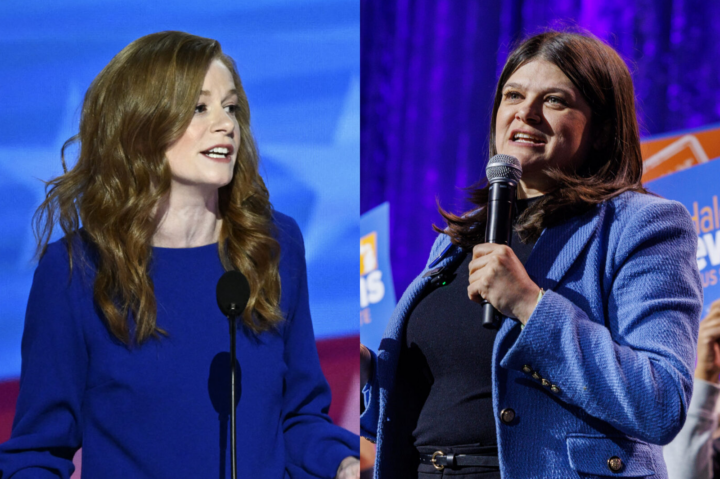
MANDEL NGAN/AFP via Getty Images & Andrew Roth/Sipa USA
Mallory McMorrow and Haley Stevens
The Jewish Democratic Council of America announced a dual endorsement on Wednesday of Rep. Haley Stevens (D-MI) and state Sen. Mallory McMorrow in Michigan’s three-way Senate Democratic primary, saying “there are two candidates who stand with our community on issues of importance to Jewish voters, and there is one who does not.”
“It is because of this stark contrast of the views and values of Haley Stevens and Mallory McMorrow, compared to those of Abdul El-Sayed,” a vocal critic of Israel who has captured the enthusiasm of the far left, “that we are taking the distinct opportunity to endorse two candidates,” Halie Soifer, JDCA’s CEO, said in a statement.
The decision to issue a dual endorsement is rare for JDCA, which has long supported Stevens, a moderate pro-Israel Democrat who is favored by establishment leaders as well as AIPAC. In recent days, Stevens has won a series of major endorsements from Sen. Chris Coons (D-DE), former Sen. Debbie Stabenow (D-MI) and former Michigan Gov. Jennifer Granholm, with under three months until the August 4 primary seen as key to reclaiming the party’s majority in the upper chamber.
McMorrow, who has backed efforts to restrict arms sales to Israel and called its military conduct in Gaza a genocide while also reaching out to Jewish voters in the state, stands to to the left of JDCA on Middle East policy, which backs continued U.S. aid to Israel “with no cuts or conditions,” its website states.
In an interview with Jewish Insider, Soifer said the group had weighed those differences and engaged in “extensive conversations with McMorrow” as it made its endorsement.
“Given the fact that her views on this issue stood in such contrast with those of Abdul El-Sayed,” who has drawn criticism for campaigning with Hasan Piker, a Twitch streamer who regularly espouses antisemitic rhetoric, “we felt that it was important to send a clear message that either Stevens or McMorrow would” be preferable, Soifer explained on Wednesday.
McMorrow and Stevens have criticized El-Sayed for appearing with Piker, whose rhetoric he has refused to denounce. El-Sayed, who has been rising in recent polls — including one earlier this month in which he held a 10-point lead over his two primary opponents — has also side-stepped questions about Israel’s right to exist and said the Israeli government is just as evil as Hamas, among other inflammatory comments that have raised alarms among Jewish voters in the state.
While Soifer acknowledged concerns that Stevens and McMorrow could end up splitting the vote and inadvertently propelling El-Sayed to the nomination, she told JI the dual endorsement was meant to reflect JDCA’s broader assessment of the stakes of the race.
El-Sayed “stands alone among the most anti-Israel candidates who are running this cycle,” Soifer said, calling him an “unacceptable choice” in a state home to a sizable Jewish community.
“We wanted to send a clear message that he is a threat both to Democrats and the chances of holding onto that Senate seat,” she added. “It is our interest to ensure he is defeated.”
Polling has indicated that the general election — where Democrats are now expected to face former Rep. Mike Rogers (R-MI) — will be competitive.
JDCA has endorsed more than 120 candidates this election cycle. The group has so far notably refrained from offering its imprimatur to Graham Platner, the presumptive Senate Democratic nominee in Maine who has faced scrutiny over a Nazi tattoo he recently covered up and other personal controversies linked to his past online statements.
According to Soifer, JDCA plans to spend “at least six figures” in the Michigan Senate race, but she said she was not yet ready to share additional details about its strategy.
In an interview with leftist podcasters Matt Bernstein and Emma Vigeland, the Michigan Senate candidate backed Israel’s access to Iron Dome systems, suggested Palestinians should also have them
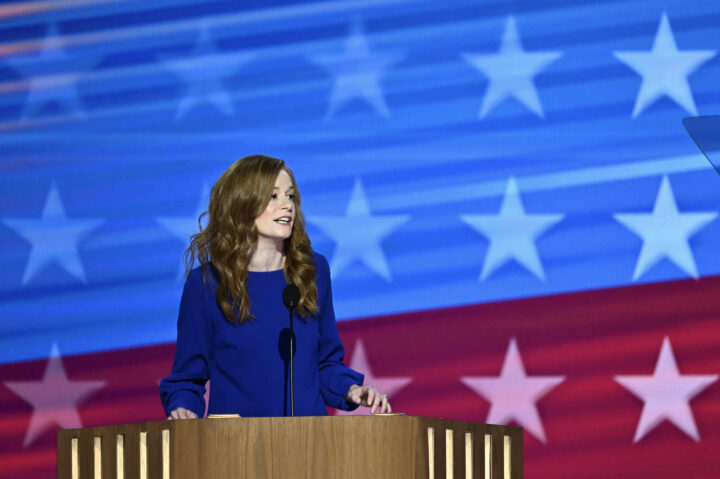
MANDEL NGAN/AFP via Getty Images
Michigan state Sen. Mallory McMorrow speaks on the first day of the Democratic National Convention (DNC) at the United Center in Chicago, Illinois, on August 19, 2024.
In the tight Michigan Senate race, state Sen. Mallory McMorrow has tried to present herself as a middle-of-the-road Democrat, ideologically situated between Abdul El-Sayed, an anti-Israel progressive, and Rep. Haley Stevens (D-MI), who has been endorsed by AIPAC.
In a recent interview with leftist podcasters Matt Bernstein and Emma Vigeland, McMorrow continued to position herself as an objective observer of the Israeli-Palestinian conflict — and said it’s worth discussing whether the Palestinians should also have access to the Israeli-developed Iron Dome missile-defense technology, which the U.S. partially funds for Israel.
Bernstein, the host of the queer political podcast “A Bit Fruity,” questioned McMorrow about why she supports Israel’s access to the life-saving Iron Dome systems, arguing that it empowers Israel to attack Palestinians without risk of harm to its own population, which is protected by the systems.
While highly effective, the Iron Dome does not provide complete protection and Israelis have continued to be killed and wounded throughout the conflict.
“I don’t think anybody should live in fear of being bombed or killed. I would look at: How do we support defensive systems for Palestinians? How would we support defensive systems for Lebanese?” McMorrow said. When Vigeland sarcastically asked if the Palestinians should get their own Iron Dome, McMorrow said maybe.
“Let’s talk about that as a conversation,” McMorrow said. “I mean, the horror of living in fear of being bombed constantly. Let’s work with the outcome of how do we end the violence, period?
Then backing away from that, how do we protect people?”
She added that she wants to get to a place where Iron Dome systems are “not needed, period, for anybody.”
McMorrow’s interview with Bernstein, which was released on Monday, was initially canceled — according to Bernstein, who said in a post on X earlier this month that her team withdrew after the podcast host told them he wanted to talk about foreign policy — but then rescheduled after Bernstein publicized the cancellation.
Bernstein’s questions to McMorrow reflected his own anti-Israel worldview. McMorrow responded by reiterating her opposition to sending financial aid to Israel, a position that she said has evolved as even Israeli Prime Minister Benjamin Netanyahu now says he wants to end U.S. aid.
“I would support Israel continuing to be able to purchase systems like the Iron Dome defensive systems, but I think it’s in the best interest of the United States in reducing that aid and allowing Israel to do that on their own,” said McMorrow. “I do not support the Netanyahu government. I think that they have continued to push well beyond what is proportionate, what is rational in response to the Oct. 7 attacks, in a way that is horrifying to watch.”
McMorrow said she would have voted with the 40 Senate Democrats who supported a measure last month that sought to block some arms sales to Israel.
“Let’s acknowledge how stunning it is that a year ago that number was significantly smaller than it is today. My views on this have evolved because the reality on the ground has evolved,” said McMorrow.
Mallory McMorrow: "I would have voted alongside the 40 out of 47 senators who voted in the past Sanders' resolution blocking arms sales" to Israel.
— Jewish Insider (@jewishinsider) May 19, 2026
"My views on this have evolved because the reality on the ground has evolved," she said.
Read more about how Michigan Senate… pic.twitter.com/og2dKQ5kIv
When Bernstein and Vigeland pressed McMorrow to describe Israel’s actions in Gaza as a genocide, she said she believes it meets “the legal definition” of the word. But she added that she doesn’t like to use it because of Jewish constituents’ “personal visceral reaction” to the word, due to family members lost in the Holocaust. And avoiding the word, McMorrow said, is a way to build consensus and not alienate voters in a swing state, even as she uses sharply critical language to describe Israel’s actions.
“There is no doubt that war crimes have been committed. There is no doubt that the pain and suffering at the vast expense of our taxpayer dollars, Matt, to your point, that we continue to pay for this, needs to end,” McMorrow said.
Bernstein: "Do you believe Israel has committed — and is committing — a genocide?"
— Jewish Insider (@jewishinsider) May 19, 2026
McMorrow: "I do believe that it meets the [legal] definition."
"What I also heard in response," the Michigan Senate candidate said, "from many of my constituents who had family that they lost in… pic.twitter.com/xCDX2WugoA
“I’m asking for the trust to represent 10 million people in a very diverse state that is a purple state that could very easily go to the Republicans,” added McMorrow, referring to “the goal that I think all of us on this call share: to keep a state like mine together and to not let this issue tear people, apart because if we let it tear us apart, we get [Republican Senate candidate] Mike Rogers. [Donald] Trump gets a win.”
Bernstein has more than 400,000 subscribers on YouTube and 2.2 million followers on Instagram.
JDCA’s top activists made clear this week that a major concern is making sure pro-Israel Jews continue to be welcome in the party
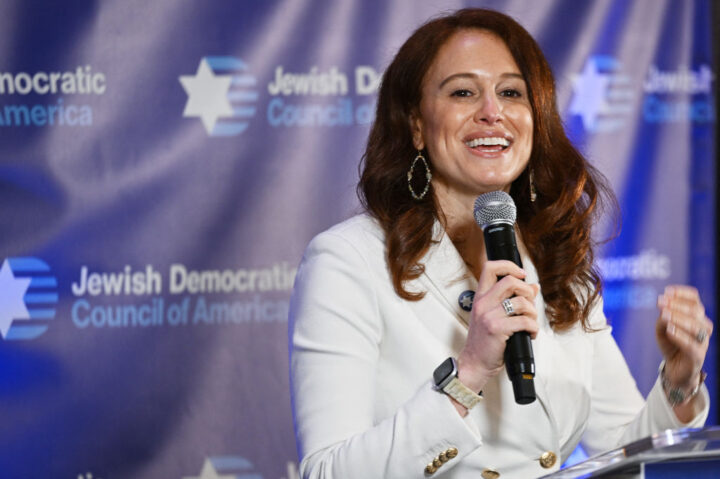
MANDEL NGAN/AFP via Getty Images
Jewish Democratic Council of America CEO Halie Soifer in Washington on May 24, 2023.
When a group of Jewish Democratic activists and donors convened in Washington this week for the annual leadership summit of the Jewish Democratic Council of America, the message seemed to be one of defiance: defiance against President Donald Trump, to be sure, but also a defiant attitude pushing back against some of the recent shifts within the party.
JDCA’s primary objective is to elect Democrats. But as more Democrats have taken positions critical of or outright hostile to Israel, JDCA’s top activists made clear this week that another major concern is making sure pro-Israel Jews continue to be welcome in the party.
“We are fighting to ensure that the views and values of Jewish Americans continue to find their political home in the Democratic Party in Michigan and beyond, and we have work to do,” Halie Soifer, the group’s CEO, said on Tuesday night. She noted that the JDCA hopes to help defeat Michigan Senate candidate Abdul El-Sayed, a far-left candidate who appears to be rising in the polls.
“It’s clear there’s one candidate whose views are antithetical to ours, and we want to ensure he’s defeated,” said Soifer, though she did not name El-Sayed directly. JDCA has not endorsed either of his opponents, state Sen. Mallory McMorrow or Rep. Haley Stevens (D-MI).
“We at JDCA only support Democrats, but we do not support them all,” Soifer told the summit. “We understand it’s not just about electing Democrats. It’s about electing Democrats who align with us, and this includes efforts to ensure that candidates who have espoused anti-Israel and/or antisemitic views are defeated before November.”
Over the two-day gathering, a parade of high-profile speakers from Democratic leadership — Senate Minority Leader Chuck Schumer (D-NY) and House Minority Leader Hakeem Jeffries (D-NY), along with Reps. Nancy Pelosi (D-CA) and Steny Hoyer (D-MD), respectively the former House speaker and majority leader — addressed the convening. Their appearances seemed designed to affirm that Democrats remain pro-Israel and committed to fighting antisemitism.
“We have to decisively confront antisemitism from wherever it comes from,” said Jeffries. “I will always hold firm in my support for the State of Israel as a Jewish and democratic state and eternal homeland for the Jewish people.”
Schumer did not specifically discuss Israel but raised concerns about the increasing use of the word “Zionist” as a slur.
“I’ve long said we must fight antisemitism wherever and whenever it appears, even if it’s in our own party. I’ll continue to do so,” said Schumer. “Today, antisemitism takes all different forms: Holocaust denialism, conspiratorial delusions of Jewish or Zionist control of the world, replacing the word ‘Jewish’ with the word ‘Zionist’ to demonize Jewish communities.”
The outgoing Democratic leaders were not as sanguine, instead offering a note of caution about how the dynamic towards Israel has shifted within the Democratic Party.
“Always, but right now, we really have to work together to make sure that support for Israel is, without question, bipartisan,” Pelosi said. “It doesn’t mean we don’t have our differences of opinion … but it should not weaken the fact that we have bipartisan support. That has always been the tradition, and we must make sure we get through this place where we are, where there may be some doubt in people’s minds as to whether that is a value.”
Pelosi is retiring at the end of this year, as is Hoyer, who was even more blunt: “How many of you have been anxious yourselves about rhetoric heard from some Democratic officials and candidates? We ought to be,” he said.
Speaking to reporters on Wednesday, Sen. Chris Coons (D-DE) said he hoped to prove that Sen. Bernie Sanders (I-VT) does not speak for the party on matters related to Israel, though he noted with worry that Sanders’ attitude — one that is deeply critical of Israel — appears to be on the rise.
“It’s clearer and clearer to me that there is real alarm about a fundamental break between Democrats as a party and Israel as a nation, and I’m going to do everything I can to resist and oppose that break, while criticizing [Benjamin] Netanyahu and his values and decisions,” said Coons. “I’m trying to be an effective and engaged voice with a perspective that you just heard and not have Bernie Sanders be the only senator whose perspective and attitude is heard across the country.”
Forty Senate Democrats voted last month for a Sanders-authored resolution attempting to block some arms sales to Israel, a record high. Coons said he knows those senators still support Israel’s right to exist, but cautioned that being too critical of Netanyahu can give cover to people who are actually anti-Israel.
“I strongly support Israel’s right to exist, its right to be a Jewish homeland and a democracy, and its value to the American people as a partner and ally,” said Coons. “I think we are at risk of some of my colleagues, in trying to send a message to Netanyahu or in opposition to his policies and stances, to be misunderstood as abandoning that commitment.”
Coons said that on the campaign trail, and on recent trips around the country, he hears “profound concern about where’s the Democratic Party going on Israel.” Some Jewish politicians who addressed the JDCA summit expressed a deeper sense of unease and discomfort about their Jewish identity, against the backdrop of rising antisemitism.
Sen. Elissa Slotkin (D-MI), who spoke at a cocktail reception Tuesday evening, talked about how challenging it is to be a Jewish elected official in the current environment.
“It has become deeply, deeply complicated to be a Jew in America,” said Slotkin. “There’s not a single day that goes by for myself representing the state of Michigan that I am not feeling torn.”
Minneapolis Mayor Jacob Frey delivered a jolt of energy to the room with an impassioned speech about his community’s support for immigrants in the face of ICE enforcement activity, which resulted in the killing of two American citizens by ICE agents in his city in January. When a JDCA member asked him for advice on how to respond to others in the Democratic Party who have made anti-Zionism a political litmus test, he expressed concern.
“It has been deeply concerning for me personally, as a proud Jew,” Frey said. “I am a great supporter of the endurance of our American Republic, a big believer that America should continue to exist, and an adamant opponent of Donald Trump. The same thing can apply to Israel.”
Ultimately, though, the gathering was a political pep rally — a chance for Democratic activists and donors to hear from politicians at all levels of government and gin up excitement ahead of this year’s midterm elections. Everyone who addressed the gathering all but guaranteed that Democrats would take back control of the House and Senate.
The conversations seemed meant to ressure Jewish Democrats about both the party’s fortunes for November and its treatment of pro-Israel Jews. One JDCA activist described the group’s work as “grasstops,” which was demonstrated by the appearances from top party leaders.
But the anti-Israel sentiment that has steadily grown within the party over the past three years is not coming from party leaders; it is driven by far-left activists. Whether JDCA has a plan to counter that grassroots energy remains to be seen — and the answer will only come at the ballot box later this year.
The Michigan Senate contender accepted $7k from the chair of Al-Awda/PRRC — and hired her son
Evan Cobb for The Washington Post via Getty Images
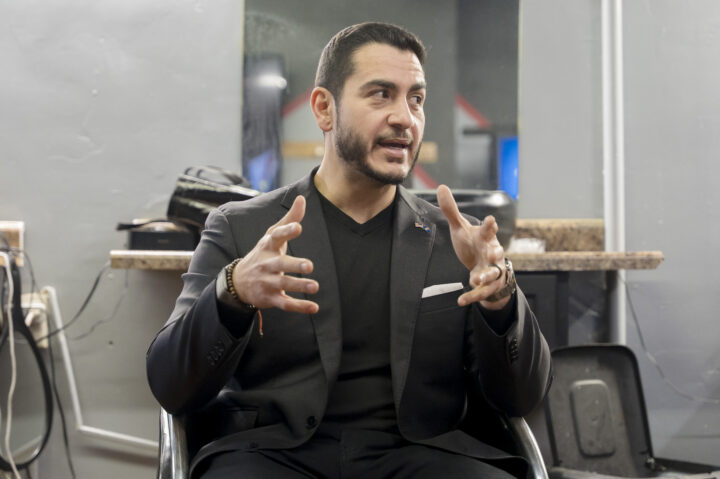
Michigan Senate candidate Abdul El-Sayed speaks with customers and barbers at Blazin Wade Cuts in Grand Rapids, Michigan, on Saturday, Feb. 21, 2026.
Democratic Michigan Senate candidate Abdul El-Sayed has taken donations from a deep-pocketed activist whose group spearheaded the pro-Hamas protests that targeted a Queens synagogue in January — while the far-left candidate has at the same time paid tens of thousands in campaign funds to her son, Jewish Insider has found.
The latest Federal Election Commission filings show El-Sayed has received a total of $7,000 from Amani Barakat, the chair of Al-Awda-Palestinian Right of Return Coalition and a promoter of antisemitic conspiracy theories linking Jewish people to the Illuminati.
It’s part of $33,550 that El-Sayed has taken in total from the Barakat family, a Palestinian-American real estate dynasty based in Southern California.
But records show the money has flowed both ways, as El-Sayed’s committee has given $10,000 a month since December to a newly formed consulting firm belonging to Barakat’s son, a philanthropy advisor with no apparent background in campaign work.
As Jewish Insider previously reported, Amani Barakat chairs the group Al-Awda, which also uses the names Palestinian Right of Return Coalition and Palestinian Assembly for Liberation.
The group greeted Hamas’ Oct. 7, 2023, attacks with a statement sending “their highest salutations to the Palestinian Resistance, the Freedom Fighters and Defenders of the indigenous Palestinian people,” and it has collaborated with numerous radical groups, including the People’s Forum, CODEPINK and Samidoun — the latter of which the Treasury Department has identified as “a sham charity that serves as an international fundraiser for the Popular Front for the Liberation of Palestine (PFLP) terrorist organization.”
Amani Barakat’s social media history is consistent with her organization’s extremism. She shared her organization’s Oct. 7 statement on her personal Facebook account, and made multiple celebratory posts on the day of the atrocities, including one in English reading, “When people are occupied, Resistance is justified” accompanied by the hashtags “#longlivetheresistance” and “#feepalestine” [sic].
Another in Arabic translates to “Hail, my people! My people, hail!” A third English language post declares, “This is a fight for freedom.”
Also on Oct. 7, Amani Barakat shared a video of since-killed Hamas political chief Ismail Haniyeh justifying the attack, and a drawing celebrating the assault as a battle between a Palestinian David and Israeli Goliath.
Amani Barakat also has an extensive history of social media posts amplifying or applauding terrorist leaders and activities: she has repeatedly shared videos by a Beirut-based TikTok user named Muhammad Kawtharani, who has served as a Hezbollah spokesman (though is distinct from the group’s commander of the same name); posted PFLP-branded content and celebrated its founders; and shared memes and material supportive of Hamas officials and fighters.
She has also repeatedly defended and applauded Khaled Barakat, the Canadian-based co-founder of Samidoun who was identified by both the U.S. and Canada as part of the leadership of the PFLP, which pioneered skyjacking in the 1970s and participated in the Oct. 7 assault, among other massacres. Amani Barakat and Khaled Barakat have exchanged greetings on Facebook, with Amani Barakat even suggesting they might meet up in the West Bank.
Since the start of the U.S.-Israeli military conflict with Iran, Amani Barakat has openly cheerleaded the regime in Tehran, posting an “I Stand with Iran” image, an image eulogizing assassinated Supreme Leader Ayatollah Ali Khamenei with a Quranic verse and news of a defiant statement from the Iranian foreign minister with emojis illustrating her support.
She has also lauded antisemitic podcaster Tucker Carlson for his “brave, principled journalism,” and signal-boosted antisemitic conspiracy theories claiming “Zionists” are responsible for wildfires in Argentina and naming “Illuminati and other secret Jewish and Zionist societies as the real powers running the world and fueling the ongoing war in Iran.”
The Al-Awda leader, who did not respond to requests for comment for this story, has also shared multiple posts from El-Sayed. Her $7,000 in contributions amounts to a small portion of the total funds the wealthy and sprawling Barakat family has mobilized for the Senate contender — a financial effort that also includes $4,300 from her son, Jamal.
But records suggest that the younger Barakat has received far more from the El-Sayed campaign than he or his mother have given. The disclosures show that El-Sayed has paid at least $40,000 since December for “political consulting” to The Commonwealth Project, a firm formed in late November 2025 in Wyoming.
State incorporation documents show that Jamal Barakat created this firm in conjunction with education technology entrepreneur John R. Hall, with whom he serves as an executive at Bayan Islamic Graduate School, a theological institution with campuses in Los Angeles and Chicago.
There is no record of any other campaign ever hiring the newly formed Commonwealth Project, and Jamal Barakat’s LinkedIn profile shows extensive background in the education and philanthropy sectors — but no experience in politics.
Jamal Barakat and Hall did not respond to emailed questions from Jewish Insider about how they came to work for the El-Sayed campaign. Hall also did not respond to any queries, while Jamal Barakat hastily said “no comment” and hung up when a JI reporter introduced himself.
El-Sayed, who has labeled both the Israeli government and Hamas as equally “evil,” did not respond to questions about his relationship with the Barakat family, or he came to hire their scion’s firm.
This contrasts with how El-Sayed reacted when JI notified him that a donor and self-identified fundraiser for his campaign posted antisemitic sentiments and shared tweets on X including denial of the Holocaust.
User @Niavaran555 described themselves as a fundraiser for El-Sayed and invited Jenin Younes, the national legal director for the Arab Anti-Discrimination Committee, to join a fundraiser for El-Sayed in Washington in the coming weeks or months. Niavaran said separately that they gave the “max” to El-Sayed.
After JI inquired to El-Sayed’s campaign about the Niavaran account, the user made his posts private.
“Abdul’s campaign had no knowledge of this person’s anonymous online account. Abdul condemns any and all antisemitic or racist comments made, no matter who or where they come from,” spokesperson Sophie Pollock told JI, and said that the campaign refunded in full a donation from the apparent owner of the account.
They shared a post that appeared to question whether the Nazis used gas chambers to kill Jews during the Holocaust. “1944 Hitler introducing a ‘gas chamber’…. (Topic forbidden to question/debate)….” the post reads, in reference to Israel’s new death penalty law for Palestinian terrorists.
They reposted an X post saying that “Jewish n***** treating genocide like New Years Eve,” referencing a countdown on an Israeli television news channel for a deadline Trump provided to Iran.
Niavaran also reposted a meme urging now-deceased Iranian Supreme Leader Ali Khamenei to “BUILD THE NUKE RETARD.”
Numerous biographical details shared by Niavaran online point to the account being owned by Sam Zia, a travel consultant based in Washington, D.C. Niavaran said they “ran a speaker series in oxford (OxSpeaks)” and Zia was a co-founder of the group in 2023. Zia is also based in Washington, D.C., based on his LinkedIn profile.
Niavaran also said he wrote his thesis on former Iranian Prime Minister Mohammed Mossadegh; Zia used a picture of Mossadegh as his Instagram profile picture. Zia had donated $2750, to El-Sayed’s campaign as of the most recent FEC filings.
Stevens is hoping to parlay her record in tough races and pro-Israel record in Congress into broad support in a crowded field

Sarah Rice/Getty Images
Rep. Haley Stevens (D-MI) speaks before Michigan Gov. Gretchen Whitmer at a rally at the Crofoot Ballroom on November 6, 2022 in Pontiac, Michigan.
Rep. Haley Stevens (D-MI) announced on Tuesday morning that she’s entering the Democratic primary for Michigan’s open Senate seat, setting up an intraparty showdown in one of the most consequential battleground states in the country.
Stevens is a leading contender for the seat of retiring Sen. Gary Peters (D-MI). She will be facing state Sen. Mallory McMorrow and Abdul El-Sayed, who led the Wayne County Department of Health, Human and Veterans Services. Former Michigan House Speaker Joe Tate, a former NFL player, is also seriously considering a run.
Stevens represents a district in the Detroit suburbs and has made supporting local manufacturing a centerpiece of her time in Congress, as well as her work in the Obama administration in supporting the auto industry recovery.
That work took center stage in Stevens’ campaign announcement video, where she also attacked President Donald Trump, accusing him of endangering Michigan jobs and driving up prices with tariffs and other policies.
“I remember being handed the keys to my first car. I’m Haley Stevens and I bet you do too,” Stevens said in her launch video, which prominently features footage of Michigan factories. “That used Oldsmobile Cutlass Supreme, it meant more to me than just freedom. It meant I had a piece of Michigan. You know, the Michigan that helped build this country. The Michigan that shaped me. It’s not just what I sound like, it’s who I am.”
In a statement, Stevens’ campaign also went after White House advisor Elon Musk, accusing him and Trump of undermining essential services and endangering citizens’ private data.
Stevens is a favorite within the state’s Jewish community for her outspoken support for Israel and condemnation of high-profile antisemitic incidents at a time when many Michigan Democrats have pandered to anti-Israel activists.
She represents a sizable Jewish community in the Detroit suburbs with which she forged a strong relationship in part during her successful primary campaign against then-Rep. Andy Levin (D-MI).
But pro-Israel groups also view McMorrow as a reliable ally, and are more concerned with blocking the candidacy of El-Sayed, a Bernie Sanders-endorsed progressive who supports cutting off aid to Israel.
Because of that dynamic, outside pro-Israel groups may not formally endorse a favorite in the Democratic primary — even as Stevens will likely benefit from widespread support from Jewish voters in the early stage of the campaign.
AIPAC and the affiliated United Democracy Project super PAC have been rumored to be planning to spend in support of Stevens despite not usually intervening in statewide races.
“Although we have not yet made a decision in this race, Rep. Stevens has emerged as a pro-Israel stalwart during her tenure in the House of Representatives,” AIPAC spokesperson Marshall Wittmann told Jewish Insider.
Stevens also boasts an electoral record that demonstrates she can win over swing voters — her district was a battleground when she was first elected in 2018 before redistricting made it more safely Democratic — along with ousting Levin, an anti-Israel Democratic incumbent, in a member-on-member primary.
McMorrow has demonstrated a knack for earning glowing national media attention — at first through a state Senate speech in which she pushed back against accusations against her by a GOP colleague of grooming and sexualizing children and her outspoken support for abortion rights after Roe v. Wade was overturned — even though she’s only been serving as a state senator in Michigan.
In a sign of McMorrow’s attentiveness to the Jewish community, she’s returned policy papers to at least one Democratic pro-Israel group underscoring her support for Israel’s security, according to a source familiar with her outreach. She also has personal ties to the Jewish community — while she’s Catholic, her husband is Jewish and they are raising their children in a mixed-faith home.
One of McMorrow’s top advisors is Lis Smith, who engineered Pete Buttigieg’s out-of-nowhere 2020 presidential campaign and who has been a prominent critic of the party’s left-wing activist class.
Adrian Hemond, a Michigan political strategist, told JI he views Stevens as holding significant institutional advantages in the hotly-contested primary.
Hemond noted that Stevens has been a strong fundraiser in her congressional seat and has proven her ability to win close elections, which Hemond said will be “paramount” to Democratic primary voters. Stevens also boasts a strong relationship with organized labor and Black voters in her district, Hemond added.
He acknowledged that McMorrow is “trying to position herself as somewhat more moderate” but argued that her base and brand remains strongest among progressives — and El-Sayed, with Sanders’ endorsement, is playing in the left-wing lane.
Hemond said that El-Sayed did not prove to be a strong fundraiser in his 2018 gubernatorial race and failed to build support statewide, only winning 30% of the vote in the primary contest. But he’s well-positioned to do well with Arab-American voters in the state, and other single-issue, anti-Israel voters.
On the Republican side, former Rep. Mike Rogers (R-MI) has already declared his second run for the seat after losing by less than 20,000 votes to Sen. Elissa Slotkin (D-MI) in 2024. He won Trump’s endorsement, giving him a critical edge against any potential GOP challengers.
Please log in if you already have a subscription, or subscribe to access the latest updates.
 Continue with Google
 Continue with Apple