








































































Advocates say the pattern — agents advising cuts to Jewish names, editors going silent on Israeli-themed submissions — deepened sharply after the Oct. 7 attacks

Getty Images
Books


 Add JewishInsider on Google
Meg Keene, an established nonfiction author who has sold more than 150,000 copies of her two books offering tips for wedding planning, couldn’t find a publisher for her first novel — not because of the writing, she said, but because it was “too Jewish.”
Keene said she was advised by one agent to cut anything Jewish from the manuscript unless it drove the plot, including changing a character’s name because Yael read as Israeli. The book, written soon after the Oct. 7, 2023, terrorist attacks in Israel, about a Jewish woman’s long-distance relationship with a boyfriend in Tel Aviv, was never published.
Keene is one of a growing number of professionals who have announced in recent weeks the launch of their own Jewish publishing companies, aimed at fulfilling a need for frustrated authors who say they’ve hit the same wall: agents advising them to cut Jewish names and references to Israel, editors going silent on submissions that once would have been fast sales and a mounting sense that the industry’s embrace of the #ownvoices storytelling trend — a hashtag used to amplify the work of diverse and minority voices — has an unspoken exception for Jewish writers.
Keene recently announced the launch of Meg Keene Books, her own imprint at Wicked Son Press, a Jewish publisher known mostly for right-leaning nonfiction. The company plans to release four to six fiction books a year, from romance to thrillers, selected by Keene and the Wicked Son founders, with the goal of elevating Jewish voices.
“Earlier this year I got to the point where I realized I didn’t have anything left to lose,” Keene told Jewish Insider. “Jews were having all these conversations behind the scenes but it felt like whoever came forward was going to destroy their career. I felt like I was in a position — because of my past in digital publishing and connection to editors, I knew how to do it. So many authors couldn’t sell their first book. At least I had a track record, I could say I was a successful author and be taken seriously.”
“PEN America’s recent blog post about the targeted harassment of Jewish and Israeli authors and literary institutions is an important acknowledgment of this problem,” Ari Ingel, executive director of Creative Community For Peace, told JI. “At the same time, many in our community believe that acknowledgement came only after a long period in which prominent incidents involving Jewish and Israeli writers did not receive the kind of timely and forceful public defense expected from a leading free-expression organization.”
While discrimination against Jewish authors has been reported for years, industry professionals say it became more apparent and accepted after Oct. 7 and the ensuing Israel-Hamas war.
In 2024, the Palestinian Festival of Literature published a petition signed by Irish author Sally Rooney and more than 1,000 others, which stated that, “We cannot in good conscience engage with Israeli institutions without interrogating their relationship to apartheid and displacement.” More recently, the free speech organization PEN America published a report detailing interviews with more than 30 Israeli and Jewish writers and literary professionals describing a widening cultural isolation.
“PEN America’s recent blog post about the targeted harassment of Jewish and Israeli authors and literary institutions is an important acknowledgment of this problem,” Ari Ingel, executive director of Creative Community For Peace, told JI. “At the same time, many in our community believe that acknowledgement came only after a long period in which prominent incidents involving Jewish and Israeli writers did not receive the kind of timely and forceful public defense expected from a leading free-expression organization.”
There is no reliable industry-wide figure showing what percentage of Zionist or Jewish authors have been dropped, although Keene has collected data specifically on Jewish fiction publishing, which found that between 2023 and 2024, there was a 76% decline in fiction deal announcements to large presses that mentioned Jews, Judaism or Israel. “Publishing decisions are generally confidential and are rarely explained to involved parties,” said Ingel. “But the evidence points to a recurring and increasingly documented pattern rather than a handful of isolated cases.”
“What we are seeing is a form of a silent boycott set in, with authors being dropped or their projects not being picked up by editors, publishers, agents and publicists, sometimes not because of anything they had said about Israel, but because they were told that it was not the right time for a Jewish-themed book,” Ingel said. “[New] publishing ventures of this kind are necessary in the current climate.”
Howard Lovy with Canary Publishing and Jessica Kasmer-Jacobs with Blueprint Literary are among several others also launching new literary agencies for Jewish and Israeli authors.
Lovy, a former editor at Jewish Telegraphic Agency, said he started noticing Jewish exclusion in the industry before Oct. 7, with a novel he wrote several years ago.
“A publisher and agent kept saying, ‘We value diversity and we want under-represented voices,’ and it didn’t take me long to figure out that they did not mean Jews. We were not considered marginalized voices and it becomes a self fulfilling prophecy: We become marginalized because of this perception that we’re over-represented,” he told JI.
“Then Oct. 7 happened and in my work as a book editor and as a Jewish author and advocate, people came to me telling me their stories about how they were canceled or their agents suddenly wouldn’t return their calls. They’ve been asked to take the Jewish content out, or if there’s an Israeli character make it something else.
“No one publisher can pick up the slack for canceled and excluded authors; it’s literally going to require building an entire new industry,” said David Bernstein. “So we’re doing everything we can to not only encourage new entrants, but also to leverage our decades of publishing expertise to give them a leg up and to help build sustainable businesses. We’ve got a lot of things in the works behind the scenes that will change the game entirely.”
“It’s hard to prove a negative, to say because they’re Jewish this happened. But I have a lot of anecdotal evidence,” he said.
Lovy said the mission of Canary “is going to be finding the books that have been rejected elsewhere because of their Jewish or Zionist content,” though the press has not signed any authors yet.
“That doesn’t mean explicitly Zionist, it could mean anything,” he continued. “The criteria I’m looking for right now is whether this is something the mainstream literary world rejected that otherwise has literary merit. That’s going to be top of my list. We’re on a mission to amplify these voices that have been silenced.”
The new companies follow the 2020 launch of publishing company Wicked Son, co-founded by David Bernstein and Adam Bellow.
“We were operating out of a sense of civic responsibility to rebuild the Jewish reading public; for Jewish authors, opportunities to publish were widespread and often lucrative,” Bernstein told JI. “Obviously all of that changed in the last couple of years as we’ve all seen the rising antisemitism in publishing and other arts and media. What’s heartening is that, mirroring our own renewed energy to build a thriving, independent Jewish publishing world, so many others are joining the fight as well.
“No one publisher can pick up the slack for canceled and excluded authors; it’s literally going to require building an entire new industry,” said Bernstein. “So we’re doing everything we can to not only encourage new entrants, but also to leverage our decades of publishing expertise to give them a leg up and to help build sustainable businesses. We’ve got a lot of things in the works behind the scenes that will change the game entirely.”
“It’s not just a matter of publishers, it’s a matter of the entire pipeline,” Jewish literary consultant and advocate Erika Dreifus said. “It’s a matter of writers feeling empowered to attend conferences and classes and to write their Jewish stories in supportive spaces. Then it’s a matter of agents being willing to look at those stories and take them on. Then it’s a matter of the books being covered in pre-publication trade reviews, which I have noticed are not necessarily including certain narratives and certain authors. That’s how reviewers find out about books. Everything has a drip-down effect.”
Jewish literary consultant and advocate Erika Dreifus described the wave of new ventures as “wonderful,” but cautioned against reading it as a comprehensive fix for what ails Jewish authors.
“There’s certainly more writers out there who would love to be published than there are going to be slots, even with these new publishing houses. I welcome the developments and I’m eager to see what they’ll all be doing,” she told JI.
The deeper problem, she said, extends beyond the number of publishers willing to take a chance on Jewish stories.
“It’s not just a matter of publishers, it’s a matter of the entire pipeline,” Dreifus said. “It’s a matter of writers feeling empowered to attend conferences and classes and to write their Jewish stories in supportive spaces. Then it’s a matter of agents being willing to look at those stories and take them on. Then it’s a matter of the books being covered in pre-publication trade reviews, which I have noticed are not necessarily including certain narratives and certain authors. That’s how reviewers find out about books. Everything has a drip-down effect.”
She also called on the Jewish philanthropic world to “take a look” at helping to build the ecosystem “even beyond these publishers.” (Lovy declined to provide details on how his company will be funded, but said it has a funder who gave enough seed money to get it going.)
“Already within the Jewish philanthropic world, a miniscule fraction of funding goes to arts and culture to begin with. How much of that goes to individual initiatives?” said Dreifus.
“It’s all a big problem and challenge. We need to do a lot more,” she added. “This is an encouraging step, but if it’s just going to be publishers shouting into the wilderness, that may not be ultimately as positive a development as one would hope.”
Citing Rabbi Diana Fersko’s framework for how Jews have historically responded to antisemitism — stay and fight; leave and build something new; or do nothing — Dreifus said after witnessing this for two decades, she is personally worn out by the “stay and fight” approach. She’s now focused on supporting new, welcoming spaces for Jewish stories rather than fighting within existing institutions, although she credited groups like the Jewish Book Council for trying to work both the “stay and fight” and “build something new” angles at once.
Naomi Firestone-Teeter, CEO of JBC, told JI that “Jewish authors thrive when publishers are willing to take a chance on them. Publishers thrive when their books can reach readers. And the Jewish community thrives when it has access to high-quality Jewish literature with diverse voices and perspectives.”
“Authors need opportunities across the full spectrum of publishing, from major houses to independent presses. We believe that the existence of a wide range of publishers promotes a healthy ecosystem for Jewish literary excellence,” she said. “Part of our role is to demonstrate to publishers that there is a real, engaged audience for Jewish books and ideas.”
Jews in the industry have noted a double standard as major publishing houses continue to publish authors with viewpoints hostile to Israel or Jews.
Publishing giant Simon & Schuster, Ingel noted, recently published prominent Palestinian-American author Susan Abulhawa, who has repeatedly used terms such as “parasites,” “demons,” “ghouls” and “monsters” to describe Jews.
“The point is not that Abulhawa’s books should be banned or she should be silenced. The point is that an industry willing to platform such extremism is not showing the same courage when it comes to merely platforming Jewish, Israeli and Zionist writers telling any story,” said Ingel.
There’s another part of the equation that’s equally critical — sales after a book is published.
Firestone-Teeter pointed to her group’s program called Nu Reads, a bi-monthly book subscription service. “In less than a year, Nu Reads has grown to nearly 2,500 subscribers; this is significant, when, by some accounts, close to 90% of titles released by major publishing houses sell fewer than 2,000 copies,” said Firestone-Teeter.
But for authors who want their books on store shelves, “that’s gonna be an issue,” said Lovy.
Lovy edited a Judith Magazine April report that found many independent bookstores refuse to include Jewish and Zionist authors. Last week, Nashville indie bookstore Bell Bird Books canceled a planned book launch event for Jewish author Alyssa Rosenheck’s memoir, White. Blonde. Jew.: A Call to End Extremism, Speak Up, and Reclaim Center, after an online pressure campaign accused the store of promoting Zionism, according to statements from the author and the store’s owner.
“It’s ironic because that pushes readers to Amazon to get the books,” said Lovy. “Everybody wants to support the local indie bookstore but that’s hard to do when they’re silencing Jewish and Zionist voices. I don’t see that as an impediment but more that we can work around it to make them still become best-sellers.”
Even as she champions the new wave of Jewish-focused press, Keene said she still hopes there’s room for Jewish authors within mainstream publishing houses.
“Jews have a long history of founding companies when we’re shut out and then turning them into serious businesses, so I don’t think this is ghettoization,” she said. “I think this is the beginning of businesses starting that will be very significant. That said, should we still be pursuing publishing and representation with the big five [Penguin Random House, HarperCollins, Macmillan Publishers, Hachette Book Group and Simon & Schuster]?”
“Yes. I want them to change. I haven’t seen proof they will, but I don’t think we should stop trying.”
The Jewish Book Council launched a new subscription service, Nu Reads, which provides six Jewish books per year, modeled on the success of PJ Library
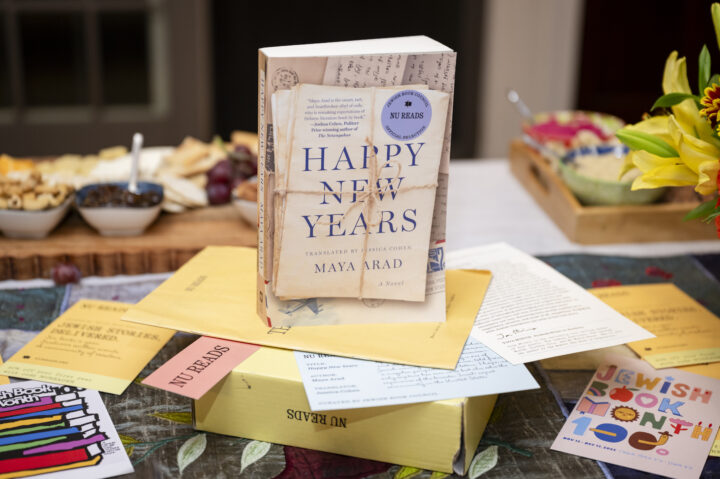
For Jewish and Israeli authors and the people who enjoy their books, the publishing industry has been a decidedly depressing place over the last two years.
A spreadsheet titled “Is Your Fav Author a Zionist?” went viral on social media and called for readers to boycott so-called “Zionist” authors, a label extended even to some who merely spoke to Jewish audiences. The literary magazine Guernica retracted an essay by an Israeli author in response to protests from staff. LitHub, the preeminent news site dedicated to the publishing industry, has adopted a stridently anti-Israel stance since Hamas’ Oct. 7 attacks two years ago. “A litmus test has emerged across wide swaths of the literary world effectively excluding Jews from full participation unless they denounce Israel,” the author Jamie Kirchick wrote in The New York Times last year.
A new initiative from the Jewish Book Council, a 100-year-old nonprofit dedicated to promoting Jewish literature, aims to fight back against the torrent of bad news for Jewish writers. This month, JBC unveiled Nu Reads, a subscription service that will deliver selected Jewish books to subscribers bimonthly. The first book, Happy New Years by the Israeli author Maya Arad, has already shipped to Nu Reads’ inaugural subscribers.
“There’s a chill for our community across the industry,” JBC CEO Naomi Firestone-Teeter told Jewish Insider in an interview this month. “If we care about Jewish literature and we care about these authors and ideas, we need to buy these books. We need to invest in them and support them.”
Curated book subscription services have soared in popularity in recent years. A reinvigorated Book of the Month Club launched in 2016, an homage to the ubiquitous brand of the 1950s and 1960s that helped curious readers find new titles; the new iteration has a reported 400,000 members. More than 230,000 Jewish families in the U.S. and Canada receive children’s books each month through PJ Library, a program modeled on Dolly Parton’s Imagination Library. It was PJ Library — which has transformed young Jews’ experience with Jewish books in the two decades it has existed — that served as an inspiration to JBC.
“I very jokingly suggested that I wish that there was a PJ Library for grown-ups,” said Tova Mirvis, the author of five books and Nu Reads’ writer-in-residence, who helps curate the book selections. “It was just an idea, and I began to think about it. I spent a lot of time thinking about my own experience of reading Jewish books, and how who I am as a person and as a writer is so shaped by my love of Jewish fiction.”
Unlike PJ Library, Nu Reads is not a charity project. It asks consumers to choose to spend their money on hardcover copies of new Jewish books. The founding subscriber rate of $154 includes six books delivered over the course of a year, along with invitations to community gatherings and author talks. Several hundred people have become subscribers in the two weeks since Nu Reads was announced.
At a time when Jewish writers face growing challenges in the publishing industry, JBC hopes Nu Reads will herald Jewish readers’ purchasing power to remind publishers that Jewish books are a good investment, because publishing is, ultimately, a business.
“It’s much harder to get published because there are fewer venues. There are fewer places that review books. We have so many other distractions we use aside from reading books. There are fewer bookstores — all the ways that, I think, the literary world has shrunk, and so of course that affects Jewish writers as well,” Mirvis told JI.
Nu Reads, Mirvis hopes, will serve as “a reminder to the literary world, to publishers and editors, that there are so many people within the Jewish community who love these books. I think it’s a way to galvanize readers to say, ‘I want to read the next generation of these writers.’”
In early 2024, JBC created an online resource for Jewish writers and publishing industry professionals to report instances of antisemitism they had experienced. The organization, which is best known for presenting the annual National Jewish Book Awards, also launched a virtual support group for Jews in the literary world that still meets regularly.
“This is such a competitive industry,” said JBC CEO Naomi Firestone-Teeter. “We’re holding all of that together to try to not be sensationalist about anything, but at the same time, these are real concerns that are valid.”
So far, JBC has received more than 400 reports of antisemitism, with examples including digital harassment and abuse, students kicked out of literary journals because of their views on Israel and writers asked by publishers or marketers to discuss their Judaism only in a particular way.
Still, it’s nearly always impossible to attribute a decision in the literary world purely to antisemitic motives. A book may be dropped by a publisher because of the author’s attitude toward Israel or the Jewish themes it portrays. But it could also be dropped for a near-infinite number of other reasons: limited demand, fewer books being published overall or the book simply not being very good.
“This is such a competitive industry,” said Firestone-Teeter. “We’re holding all of that together to try to not be sensationalist about anything, but at the same time, these are real concerns that are valid.”
Nu Reads’ second selection is Sam Sussman’s Boy From the North Country, a novel about a boy in upstate New York who grows up with a nagging sense that he is Bob Dylan’s illegitimate child. (The book is based on Sussman’s own life, and a glance at a photo of the author reveals more than a passable resemblance to the folk icon.)
As a child in the Hudson Valley, far from other Jews, Sussman had formative encounters with stories by Jewish writers such as Chaim Potok, Philip Roth and Tony Kushner. When he moved to New York City, Jewish book events were how he tapped into the Jewish community.
“We only have so much control over how the wider world receives Jewish literature,” author Sam Sussman told JI. “But I think it’s very important that within the Jewish world, we’re open to stories from Jews of all backgrounds and with all political and cultural perspectives.”
“I really grew up in a part of the world where there weren’t a significant number of other Jews, and literature was a really important way for me to connect to a broader sense of Jewish community,” Sussman told JI.
Sussman has not experienced the kind of pushback or stigmatizing that some other Jewish writers have reported since Oct. 7. Instead, he urged Jewish readers to think about how to ensure that the full diversity of Jewish voices and stories are told and respected.
“We only have so much control over how the wider world receives Jewish literature,” Sussman told JI. “But I think it’s very important that within the Jewish world, we’re open to stories from Jews of all backgrounds and with all political and cultural perspectives.”
Sussman’s story, and the growing positive acclaim for his debut novel, is a reminder that despite the steady drip of negative headlines for Jewish authors, the literary world — an industry Jewish authors and intellectuals helped shape over decades — is not a monolith, and the story of American Jewish literature has not yet reached its conclusion.
“How do we respond to the urgent needs of our community and raise awareness about them and create written documentation around them, but also, how do we find ways that we can just really celebrate our Jewishness and have that propel us forward?” asked Firestone-Teeter. “The ability to hold all these things at once is incredibly inspiring.”
The Jewish text-sharing platform has developed a prototype for applying its model globally

Homepage for Sefaria 'Democracy' Project
The Mishnah meets the American Revolution?
Sefaria, a non-profit that provides public domain access to Jewish texts and commentary, has developed a prototype of its highly praised model to bring its technology to other bodies of work — starting with the U.S. Constitution.
In addition to providing primary source material, Sefaria, founded in 2013 by Google developer Brett Lockspeiser and author Joshua Foer, maintains a user-friendly interface and software to highlight interlinking references and citations throughout Jewish scripture.
“I think we were really inspired by the shape of Torah itself. The Torah tradition has this texture and shape that the printed ‘Vilna Shas,’ the printed Talmud, really has this visual sense of,” Lockspeiser, who serves as the organization’s chief technology officer, explained to Jewish Insider.
“All along, we’ve had in the back of our heads that the software that we’re building isn’t necessarily specifically about Jewish content,” he continued. “It’s something that applies to any body of text where you have lots of voices kind of in communication and dialogue with one another.”
Sefaria, working with a grant from the Lippman Kanfer Foundation, developed a prototype of its model with texts related to the birth of American democracy. The group chose the United States Constitution as an example, partly for its robust links to other noted texts but also because the Constitution and related texts already existed in the public domain. Lockspeiser emphasized this was only an initial example, mentioning the works of Shakespeare, Greek and Roman literature, medical texts, and texts of other religions as potential future projects.
Just as with its original platform, the goal of Sefaria will remain the same: to promote learning by providing free access to primary and secondary sources. Lockspeiser said he and others on the team have already spoken to experts about the unlimited future potential.
Tamara Mann Tweel, a professor in Columbia University’s American Studies Program, spoke glowingly of Sefaria’s new direction.
“The project will benefit teachers and students across the country by allowing them to access their rich democratic inheritance and converse with the great political and literary minds who have helped build that inheritance,” Tweel told JI. ”Sefaria took the infrastructure built for our Jewish textual tradition and gave it to our democratic one.”
Currently, the prototype website — which also lists works including the Declaration of Independence, Madison’s notes from the Federal Convention, the Magna Carta and important Supreme Court decisions — appears bare-bones, especially in comparison to the complexity of its mother site.
Still, the possibilities for future development are immediately apparent. While Lockspeiser admits there remain “a million steps,” before the site is ready for mass use, the Google alum is enthusiastic about the progress.
“I think we’re being really successful right now at the initial demo moment,” he said. “You look at it and you’re just like, ‘This is interesting. This is cool. There’s something here.’ And that’s the seed of a project being successful.”
Please log in if you already have a subscription, or subscribe to access the latest updates.
 Continue with Google
 Continue with Apple