






































The American Eagle CEO is building a legacy in business — and in Jewish giving
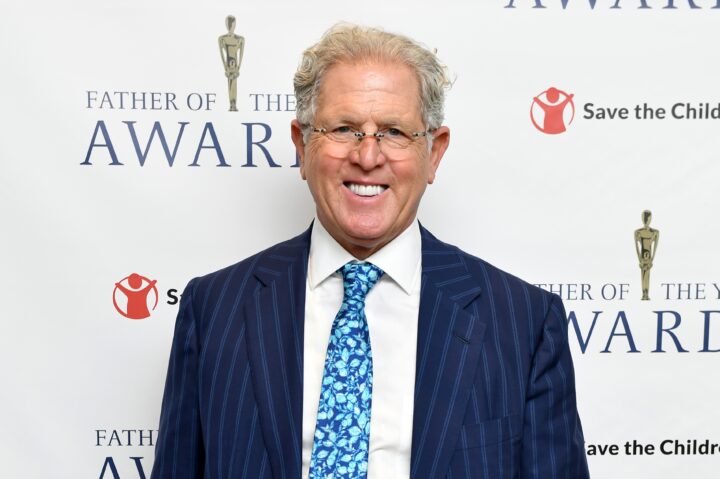
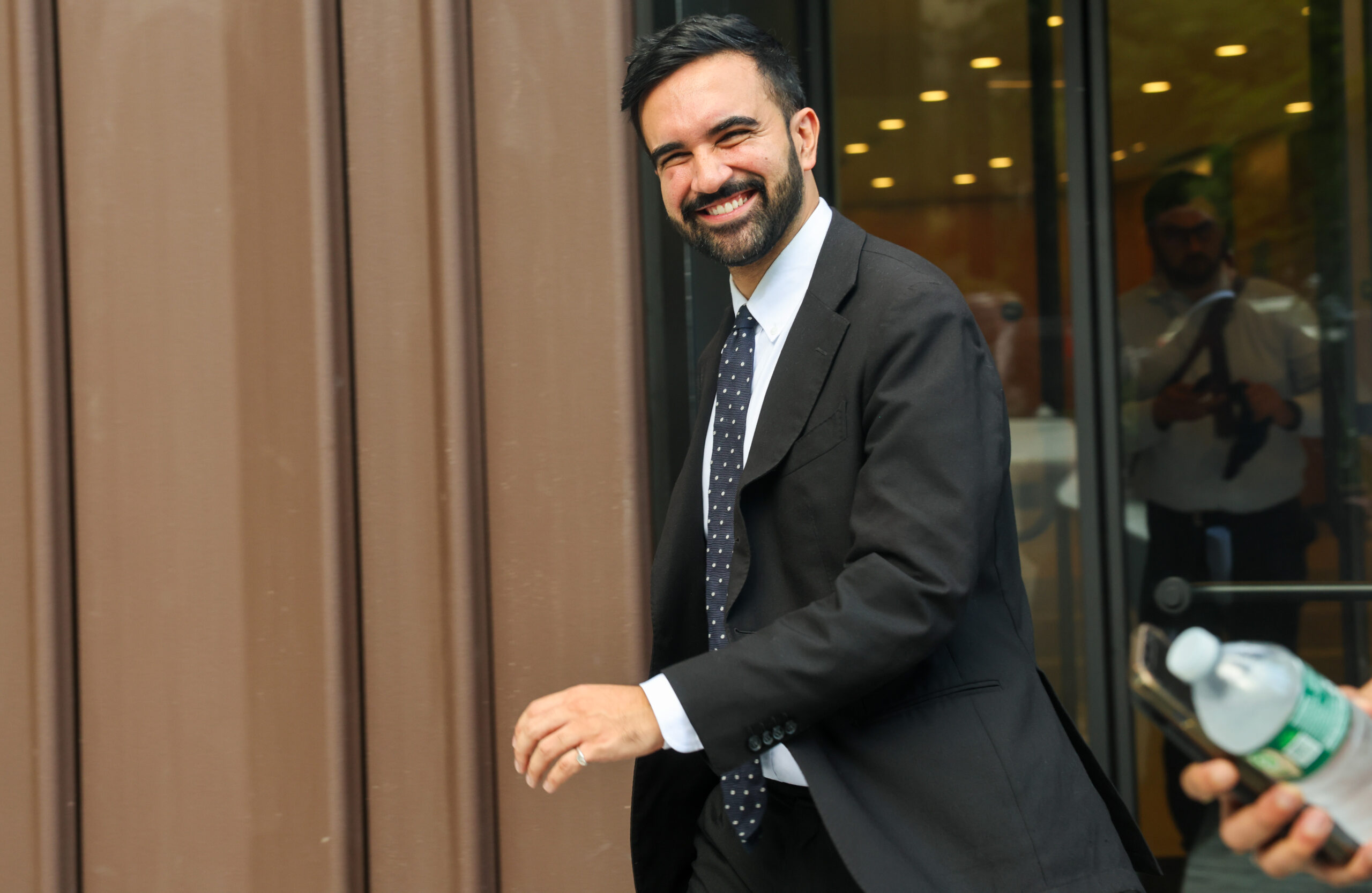
NEW YORK, NEW YORK - JUNE 14: Jay Schottenstein attends the 80th Annual Father of the Year Awards on June 14, 2022 in New York City. (Photo by Noam Galai/Getty Images)


 Add JewishInsider on Google
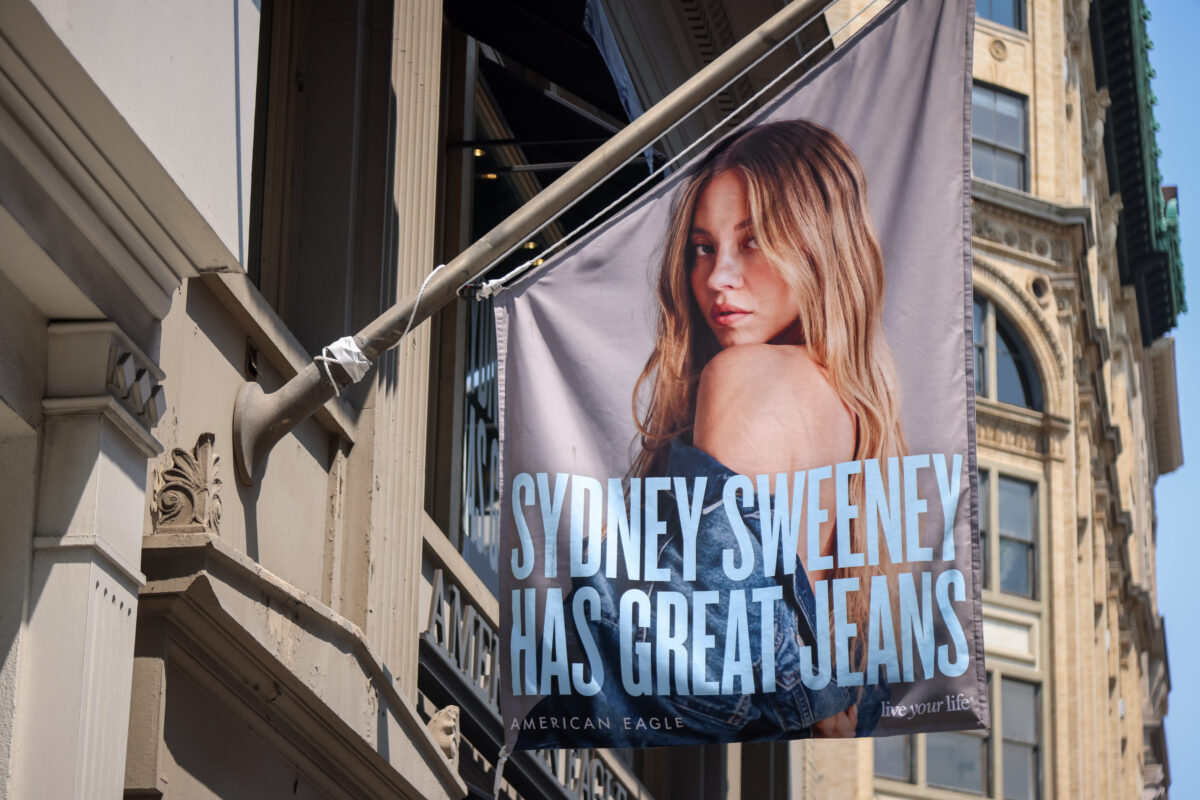
In the recent viral debate surrounding American Eagle’s “great jeans” ad campaign with Sydney Sweeney, which used a double entendre that drew accusations of promoting eugenics, it seemed many critics overlooked that the clothing retailer’s chief executive is a leading Jewish philanthropist who has long been committed to fighting antisemitism.
It was the sort of irony befitting Jay Schottenstein, 71, a mild-mannered billionaire entrepreneur from Columbus, Ohio, who oversees a sprawling business network that, in addition to American Eagle, includes DSW, the designer shoe chain he leads as executive chairman, among other holdings in wine, real estate and furniture.
But outside of philanthropic circles — where he is widely recognized as one of the most consequential sponsors of Jewish causes in the United States and Israel — his relatively private lifestyle has otherwise obscured his long-standing dedication to a range of issues including educational efforts, archeological research and translations of ancient Jewish texts.
“I think most people really don’t know who he is,” said Brad Kastan, a Jewish Republican donor who lives in Columbus and has long been friendly with Schottenstein. “He kind of keeps a low profile.”
Still, Schottenstein, who is Modern Orthodox, remains “accessible,” according to Kastan. The retail mogul, he told Jewish Insider, often can be seen walking to synagogue on Shabbat from his home in Bexley, a Columbus suburb, to attend Congregation Torat Emet, which he has endowed. “Because he’s a proud observant Jew,” Kastan added, Schottenstein “literally walks from Bexley to Ohio State, which has got to be six or seven miles, to go to football games on Shabbos.”
Meanwhile, Schottenstein, whose family is friendly with President Donald Trump, is a major player in Ohio politics, contributing to candidates from both parties, even as he largely favors Republicans. Most recently, he has donated to Vivek Ramaswamy, who is the likely GOP nominee in next year’s Ohio governor’s race.
For years, Schottenstein, who was instrumental in lobbying for legislation to allow Ohio to buy Israel bonds, has been a go-to resource among pro-Israel candidates looking for guidance on key issues about the Middle East. “If you support Israel and you’re running for office and you’re looking for advice or support in the Jewish community in central Ohio,” said Kastan, “you’re going to find your way to Jay’s office.”
The Ohio benefactor has built deep ties to Israel, where the National Campus for the Archaeology of Israel, which is under construction, bears his name. Ehud Olmert, the former Israeli prime minister, has called him a friend, and he was a top contributor to Israeli Prime Minister Benjamin Netanyahu’s 2015 reelection bid. American Eagle also operates dozens of stores in Israel.
Schottenstein, who has said he was in Israel during the Oct. 7, 2023, Hamas attacks, has stepped up his efforts to support the Jewish state in the aftermath of the incursion. He has led donations to victims of the attacks and co-founded a fund to lend financial support to families of IDF soldiers killed in the war in Gaza, among other things.
“You watch what’s going on in Israel, how everyone’s pulling together, and there’s a lot of pain,” Schottenstein said in a podcast interview last year. “I mean, this is real pain to the Jewish people. In my lifetime, I don’t think we’ve ever experienced a war like this — never experienced a time like this. But thank God, we have a strong Israel. We have a strong sense of being.”
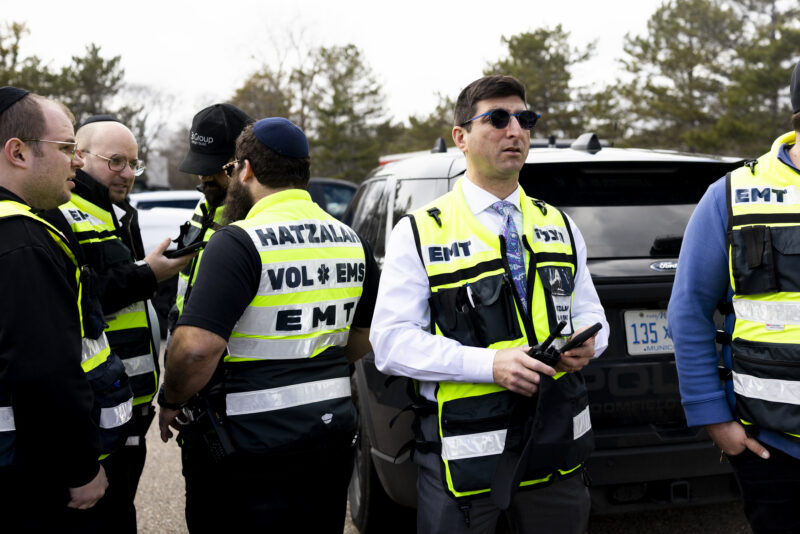
Through his foundation, which he leads with his wife, Jeanie, whom he met at Hillel as an undergrad at Indiana University, Schottenstein has supported a growing number of Jewish institutions. These include Chabad, Agudath Israel, Hillel, Hadassah, Yeshiva University and United Hatzalah, the latter of which honored him with a humanitarian award last year.
Howie Beigelman, president and CEO of Ohio Jewish Communities, which represents the state’s eight Jewish Federations and affiliated nonprofit agencies, said that the “Schottensteins broadly are among the most generous and committed givers today,” adding that “their giving also now includes their children and grandchildren in an unmatched dedication to Jewish causes close to home and across the globe.”
Eli Beer, the founder of United Hatzalah, an Israeli emergency medical services volunteer organization, told JI that he has known Schottenstein and his wife for 18 years.
“I can say with certainty that the most important value for them is tikkun olam, repairing the world and making it a better place,” Beer explained. “Eighty percent of our conversations and time together, whether at their home for a weekend or just visiting, revolve around charity and how they can help more people in education, health and even sports, especially those who are underprivileged.”
Howie Beigelman, president and CEO of Ohio Jewish Communities, which represents the state’s eight Jewish Federations and affiliated nonprofit agencies, said that the “Schottensteins broadly are among the most generous and committed givers today,” adding that “their giving also now includes their children and grandchildren in an unmatched dedication to Jewish causes close to home and across the globe.”
“Where they stand out, of course, is in transformation projects that are charitable moonshots,” Beigelman told JI. “But they also work to find leaders they believe in and work with them to ensure the mission and the cause they champion has what it needs to succeed. And despite the reach of their generosity, and the significant amounts, they also remain deeply connected to each cause and each organization.”
Schottenstein, a descendant of Lithuanian immigrants who inherited his family’s retail business in the early 1990s, credits his late father, Jerome, a prominent supporter of Jewish causes, with fueling his continued devotion to philanthropy.
For some religious Jews, the Schottenstein name is all but synonymous with the eponymous, 73-book English translation of the Babylonian Talmud that the family sponsored over 15 years at an estimated cost of $250,000 to produce each volume.
“I think the Schottenstein name, the tradition established by his father and his grandfather, they have established a worldwide brand not just in their stores, but in Torah learning,” Malcolm Hoenlein, executive vice chairman emeritus of the Conference of Presidents of Major American Jewish Organizations, told JI. “In many cases they are models of philanthropy — and really exemplify impact giving.”
Schottenstein, who calls the translation one of his proudest achievements, took over the project from his father when he died in 1992. Published by ArtScroll, it was completed in 2005 and has since “revolutionized the study of the texts,” Malcolm Hoenlein, executive vice chairman emeritus of the Conference of Presidents of Major American Jewish Organizations, told JI recently.
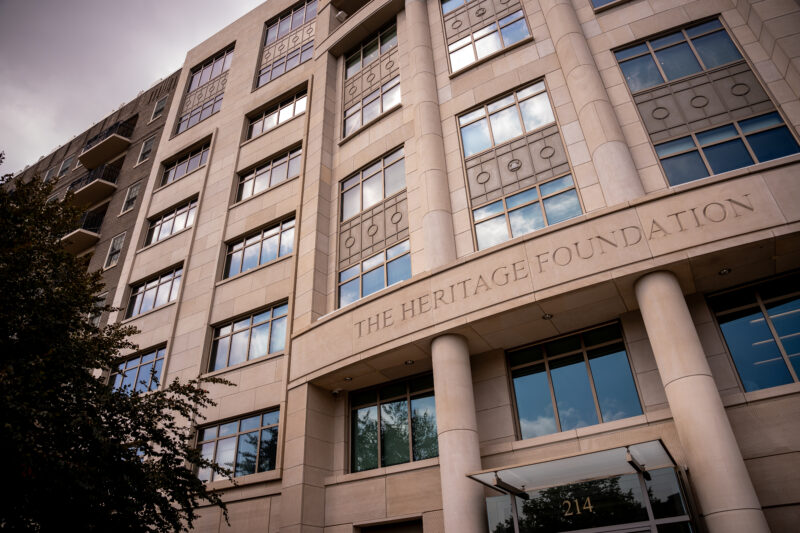
Earlier this year, Schottenstein, speaking at a gathering of the Mesorah Heritage Foundation, which supports ArtScroll, said the organization, where he serves as board chair, had distributed paperback copies of the Talmud to Israeli soldiers fighting in the war. “Nobody could have imagined how the Gemaras would be used, on the battlefield, in tanks, in bunkers, in buildings,” he said in a speech in February. “Every rest period, you’d see guys studying.”
“I think the Schottenstein name, the tradition established by his father and his grandfather, they have established a worldwide brand not just in their stores, but in Torah learning,” Hoenlein told JI. “In many cases they are models of philanthropy — and really exemplify impact giving.”
Schottenstein’s passion for Jewish causes has on occasion intersected with his business. In 2024, for instance, he chose to mark the 30-year anniversary of American Eagle as a publicly traded company on the New York Stock Exchange by blowing a shofar rather than ringing the opening bell. Months before the Oct. 7 attacks, meanwhile, American Eagle placed a mezuzah on the front door of its flagship location in Times Square.
And the fashion company itself has partnered with the Anti-Defamation League on initiatives to help raise awareness about rising antisemitism, an American Eagle spokesperson confirmed to JI.
“My affinity for philanthropy is guided by faith, family and caring for others,” Schottenstein said in a statement to JI on Monday. “One’s value is not determined by possessions, rather by the number of people we have positively impacted. Of all the accomplishments in my life, the most rewarding have been giving back to those who need it most.”
He declined to comment on his company’s recent jeans ads.
Good Tuesday afternoon,
This P.M. briefing is reserved for our premium subscribers like you — offering a forward-focused read on what we’re tracking now and what’s coming next.
I’m Danielle Cohen-Kanik, U.S. editor at Jewish Insider. I’ll be curating the Daily Overtime for you, along with assists from my colleagues. We hope you enjoy the inaugural edition and would love to hear your thoughts and feedback. Please don’t hesitate to drop us a line by replying to this email.
📡On Our Radar
Notable developments and interesting tidbits we’re tracking
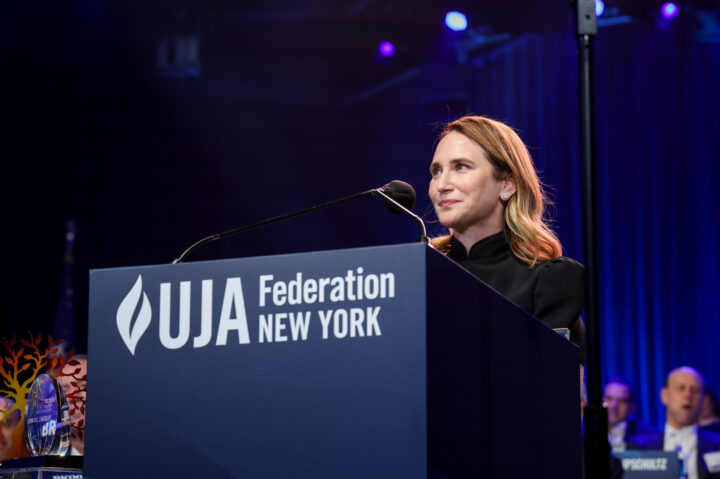
Today, we remember Wesley LePatner, a Jewish philanthropist and Blackstone executive killed in Monday’s shooting at the firm’s Manhattan headquarters. LePatner, 43, served on the boards of the pluralistic Abraham Joshua Heschel School and the UJA-Federation of New York. The federation called LePatner “extraordinary in every way” in a statement, saying she “lived with courage and conviction, instilling in her two children a deep love for Judaism and the Jewish people.” Hindy Poupko, deputy chief planning officer at UJA, said in remarks at the Israel on Campus Coalition’s National Leadership Summit in Washington today that there was a second Jewish victim of the shooting, Julia Hyman. Hyman, a Cornell graduate, worked for Rudin Management in the Midtown skyscraper…
Concerns among Democrats about the humanitarian situation in Gaza and Israel’s role in it are intensifying. On Capitol Hill, the majority of Senate Democrats, led by a group including Senate Minority Leader Chuck Schumer (D-NY) and Sen. Jacky Rosen (D-NV), sent a letter to Secretary of State Marco Rubio and Middle East envoy Steve Witkoff calling the humanitarian crisis in Gaza “unsustainable” and saying that the Israeli- and American-backed Gaza Humanitarian Foundation has “failed” to properly deliver aid…
One Democrat standing up for Israel is Rep. Ritchie Torres (D-NY), who said at the ICC summit today, “We have to remind the world that, despite the amnesia, Hamas was the central cause of the war in Gaza. … Hamas is morally responsible, principally responsible for the war in Gaza.” Read more on Torres’ speech in JI’s Daily Kickoff tomorrow…
Sen. Bernie Sanders (I-VT), who did not sign the Senate Democrats’ letter, jumped into the fray by introducing another resolution to block an arms transfer to Israel — his third since November 2024. In a novel twist, this resolution would block the sale of $1 million worth of assault rifles to Israel’s police force overseen by far-right Minister of National Security Itamar Ben-Gvir, potentially opening the door for more Democrats to vote in favor, given Ben-Gvir’s less-than-favorable reputation within the party…
British Prime Minister Keir Starmer, applying pressure of his own, announced today that the U.K. will recognize a Palestinian state at the U.N. General Assembly in September — matching France’s timeline, announced last week — unless Israel takes “substantive steps to end the appalling situation” in Gaza, reaches a ceasefire with Hamas and commits to reviving the possibility of a two-state solution and not annexing the West Bank. President Donald Trump, who met with Starmer in Scotland yesterday, told reporters that the British PM didn’t discuss the move with him and that he has no view on it, but that the U.S. is “not in that camp”…
On the home front, UCLA settled a lawsuit with Jewish students who alleged that the university permitted antisemitic conduct during the campus’ anti-Israel encampments in spring 2024. According to the agreement announced today, the university cannot allow or facilitate the exclusion of Jewish students, faculty or staff from UCLA programs or campus areas. Notably, the agreement specifies that Jews cannot be excluded “based on religious beliefs concerning the Jewish state of Israel.” Also getting a windfall in the settlement: UCLA agreed to pay over $2.3 million combined to UCLA Hillel and Chabad, the Anti-Defamation League, the Academic Engagement Network and other Jewish organizations combating antisemitism on campus…
⏩ Tomorrow’s Agenda, Today
An early look at tomorrow’s storylines and schedule to keep you a step ahead
Keep an eye on Jewish Insider later this week where we’ll feature an interview with Jeanine Pirro, interim U.S. attorney for D.C., who spoke with JI about the ongoing prosecution of the assailant responsible for the deadly May shooting at the Capital Jewish Museum. We’ll also cover Rep. Mike Collins’ (R-GA) record on antisemitism as he jumps in the race to challenge Sen. Jon Ossoff (D-GA), and report on Harvard’s overtures to the Jewish community while it gears up for a settlement with the federal government.
We’re staying tuned for how President Donald Trump may react as some of the U.S.’ closest allies gear up to recognize a Palestinian state, a policy the U.S. has rejected as unhelpful to peace efforts for decades. Though he said today he has “no view” on the matter, as the U.N. General Assembly nears, will Trump take a tougher line on his European partners?
Stories You May Have Missed
WAIT-AND-SEE APPROACH
New York Jewish leaders reluctant to fight against Mamdani
One Jewish political leader: ‘No one thinks it’s going to be good for the Jewish community to be hostile and to be in constant war with the next mayor’
PODCAST POLITICS
Former Obama staffers turned podcasters reemerge to lead anti-Israel chorus

Ben Rhodes and Tommy Vietor shaped the story of the Iran nuclear deal. Now they’re trying to turn Democrats away from Israel
Paul Moshe Reichmann, the Orthodox Jewish real estate developer who made and lost billions of dollars while transforming the skylines of Toronto, New York and London, died on Friday in Toronto. He was 83.
From the New York Times
Mr. Reichmann and his brothers, Albert and Ralph, led Olympia & York, their family’s real estate development firm, which counted among its greatest projects the World Financial Center in Lower Manhattan and Canary Wharf in London’s East End. At their apex in 1990, the Reichmanns held about 8 percent of New York City’s commercial office space, more than twice as much as their closest rival, the Rockefellers.
Paul Reichmann, a tall, soft-spoken man who dressed in black suits, white shirts and dark ties, was clearly the family business strategist and chief decision-maker. He and his family were lavish contributors, mostly to Orthodox Jewish causes; they donated up to $50 million a year to yeshivas, synagogues and hospitals around the world.
The strains of commerce and religious orthodoxy were often inseparable in the family’s ventures. For example, Olympia & York closed its construction sites on the Jewish Sabbath, paying overtime for Sunday labor, and during the Jewish religious holidays, as well as Christian ones.
At the height of his business career, Mr. Reichmann sometimes spoke wistfully of the Talmudic studies and religious school building projects he undertook as a young man.
Paul Reichmann was born in Vienna on Sept. 27, 1930, the fifth of six siblings. His parents, Samuel and Rene, were Orthodox Jews who had moved from rural Hungary to Vienna, where they owned a prosperous egg export business. But Nazi Germany’s annexation of Austria in 1938 forced the family to flee to Paris.
Two years later, when the Nazis overran France, the Reichmanns fled to Tangier, Morocco, where Samuel Reichmann became a successful currency trader.
When anti-Jewish riots broke out across the Middle East after the 1956 Arab-Israeli War, the Reichmanns uprooted themselves again, this time going to Canada. The family settled in North York, a suburb of Toronto, where Samuel and his sons, Paul, Albert and Ralph, started a small company producing tiles and other building material, which they called Olympia Tile. In 1958, it became the springboard for Olympia & York, which would erect close to 100 buildings in the Toronto area over the next 15 years.
From Bloomberg
In 1949, Paul Reichmann devoted himself to studying the Talmud in the U.K. and Israel. In 1952 in Israel he met Lea Feldman, who later became his wife.
From 1953 to 1956, he worked in Casablanca as the unpaid educational director of Ozar Hatorah, an American-sponsored group that runs schools for Orthodox Jews, according to Bianco. Reichmann later called that time “the most interesting years of my life.”
From the Toronto Star
Paul Reichmann was among the greatest land developers in history. Reichmann, who died Friday morning in Toronto at 83, was also among this country’s outstanding philanthropists.
It is unlikely that those of my generation, raised in Toronto in the 1960s and 1970s, will see Reichmann’s like again. With uncommon audacity, persistence and real estate acumen, Reichmann reshaped the skylines of Toronto, New York and London.
Faith and Fortune: The Reichmann Story from Handel Productions on Vimeo.
Please log in if you already have a subscription, or subscribe to access the latest updates.
 Continue with Google
 Continue with Apple