
















































On a call with concerned Pennsylvania parents, the GOP senator said he’d raise the issue at the federal level and look into the state Education Department’s definition of antisemitism

Israel on Campus Coalition/X
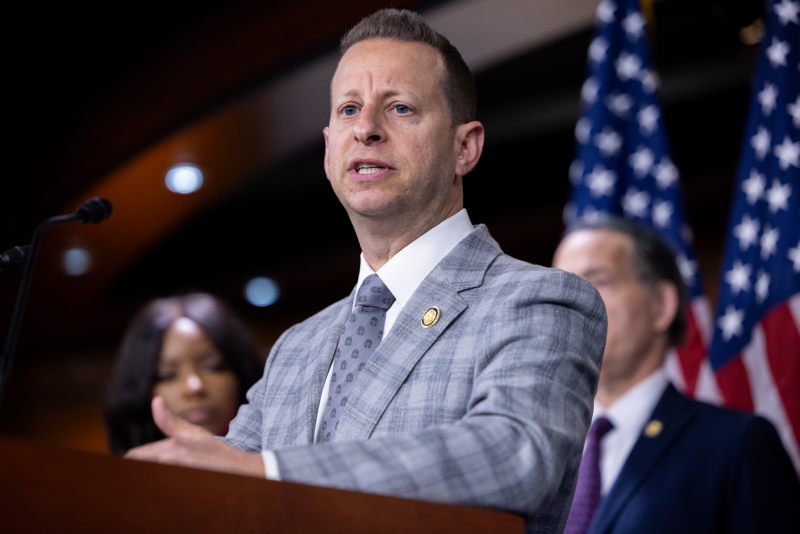
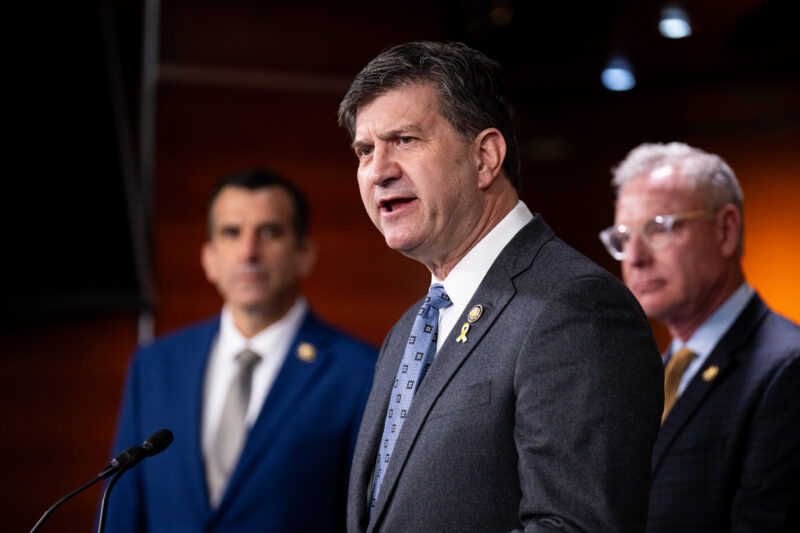
Rep. Dave McCormick (R-PA) speaks at the ICC National Leadership Summit in Washington on July 29, 2025.


 Add JewishInsider on Google
A group of Jewish parents from across Pennsylvania arrived at a virtual meeting with Sen. Dave McCormick (R-PA) with a plea: take note of antisemitism happening not just on college campuses but also in K-12 schools, and do something about it.
The Tuesday evening conversation, organized by the North American Values Institute, brought together four parents who, since Hamas’ Oct. 7, 2023, attacks on Israel and the ensuing war in Gaza, have devoted their attention to antisemitism in their kids’ public schools.
“They’re just looking for help,” Steve Rosenberg, NAVI’s Philadelphia regional director, told McCormick in the call, attended by Jewish Insider. “They need life preservers. They’re writing emails, they’re sending texts, they’re doing everything they can, and they are getting very little, if any, response from their local politicians, from their state level people.”
McCormick discussed his bona fides in combating campus antisemitism, pointing out that he was one of the first political figures to call for University of Pennsylvania President Liz Magill to resign after her testimony on Capitol Hill in December 2023. But, he told the parents, he was eager to learn about the challenges that their children faced in Pennsylvania’s K-12 schools.
“When I heard about this issue, that many parents were feeling various indications of antisemitism in the public schools in and around Philadelphia, it certainly caught my attention,” said McCormick. “I wanted to tell you [that] I’d like to be a strong voice in trying to combat this, and I wanted every opportunity to hear from parents about what they’re experiencing.”
The 45-minute meeting over Zoom did not come after any particular antisemitic incident. The parents all had created local branches of the Jewish Families Association, a network of grassroots hyperlocal advocacy groups that formed after Oct. 7. They wanted to express to McCormick what they saw over the last three years — that antisemitic rhetoric, and language targeting Israel and Zionists, had become commonplace at their local schools. They felt teachers and administrators often were not prepared to handle the issues.
“What’s been most concerning to me is not just the incidents themselves, but how increasingly normalized and socially acceptable antisemitic behavior has become, and how often the faculty and admin generally are not equipped to recognize the antisemitism, understand how it manifests today or respond to it effectively,” said Caren Lowrey, who works in drug education and prevention and is running as a Republican for a statehouse seat.
Ed Kovler, a parent and activist from Upper Dublin, outside of Philadelphia, asked McCormick for advice on codifying antisemitism policies and educational materials so that school board members and superintendents have resources available, even after leadership transitions. Kovler pointed out that he disagrees with the definition of antisemitism used in the state Department of Education’s glossary of equity, inclusion and belonging terms, which says that opposing Zionism is not, “on the face of it, antisemitic.” McCormick promised to look into it.
“I obviously am not a state official, but as a federal official, I’ll make an inquiry to the Department of Education and the governor and say this definition seems inconsistent with what we all would accept is antisemitism, and can you make the necessary judgment,” said McCormick. “That’ll be a takeaway from this call.”
Mark Isakowitz, McCormick’s chief of staff, urged the parents to document every instance of antisemitism that they see.
“There are things we can do as policymakers, but please double down on cataloging the examples,” Isakowitz said. “I know there’s been a ton about Philadelphia, and I’ve seen it all, but we need more of that, because there are people who are still gaslighting the whole issue.”
McCormick told the parents that he would not stay silent.
“I think part of the problem we’re seeing is people who aren’t antisemitic in public life are tolerating antisemitism,” said McCormick. “It’s not that they’re antisemitic themselves. It’s just that they haven’t shown the courage and the moral clarity to fight it.”
Nysmith School for the Gifted will adopt the IHRA definition of antisemitism and will provide students and staff with antisemitism education

Lexey Swall/GRAIN for The Washington Post via Getty Images
Nysmith School for the Gifted opened in 1983 with 55 children, they now teach more than 600 students ranging from Pre-K to eighth grade.
A private K-8 school in Northern Virginia reached a settlement on Tuesday with the parents of an 11-year-old Jewish student who say their daughter faced months of antisemitic harassment that went unaddressed by school officials.
According to the complaint, filed in July with the Office for Civil Rights in the Virginia Attorney General’s Office by the Louis D. Brandeis Center for Human Rights under Law and Washington-based firm Dillon PLLC, the student faced several antisemitic incidents while a student at Nysmith School for the Gifted in Herndon, Va., including a history class where students were asked to work together to create a large drawing featuring the attributes of “strong historical leaders.”
The students collaborated on a large artistic rendering featuring Adolf Hitler’s face. The parents learned of the project only after Nysmith School posted a photo of the children holding up their project, which is reproduced in the complaint. The student was also told that Jews are “baby killers” and that they deserved to die because of the Israel-Hamas war.
Kenneth Nysmith, the headmaster and owner of Nysmith, told the parents to tell their daughter to “toughen up” when they asked the school to take steps to address the bullying, according to the complaint.
Two days later, on March 13, the headmaster sent the parents an email stating all three of their children — a son in the second grade and two daughters in the sixth grade — were expelled effective that same day. The complaint does not address any reason that Nysmith provided for the expulsions but noted that the children had no disciplinary record.
In addition to the harassment, the complaint notes that Nysmith canceled an event featuring a Holocaust survivor due to concerns that the event might exacerbate tensions within the school community related to the Israel-Hamas war.
Under the terms of the settlement, in addition to monetary relief to the family, Nysmith School agreed to establish a committee to review and investigate discrimination complaints — with an independent monitor evaluating the committee’s work. It also agreed to adopt the International Holocaust Remembrance Alliance’s working definition of antisemitism and to provide staff with annual antisemitism training and students with annual education on antisemitism and the Holocaust for the next five years.
The training will be led by the Jewish Community Relations Council of Greater Washington. Nysmith, headmaster of Nysmith School, agreed to issue a public statement apologizing for expelling the children and making them feel unwelcome based on religious identity.
Kenneth Marcus, chairman of the Brandeis Center, said that the settlement sends “a clear message, one that demonstrates accountability and willingness to improve. It is our hope that other schools and universities around the country will follow suit.”
In ‘Don’t Feed the Lion,’ protagonist Theo Kaplan helps middle school readers navigate antisemitism

Long before the Oct. 7, 2023, Hamas terror attacks, parents — especially Jewish parents — wondered and at times struggled with how to speak to their children about antisemitism.
In the midst of the antisemitism that exploded in the wake of the attack on southern Israel and continued to rise through the ensuing war between Israel and Hamas, journalists Bianna Golodryga and Yonit Levi found themselves navigating that challenge — and found no help to guide them.
“The fact that our kids are talking about it, [it’s] something I’m dealing and grappling with in New York City in 2023 at the time,” Golodryga, a CNN news anchor, told Jewish Insider in a recent interview. “I never thought that we’d be having to address [it] so directly. But there were no resources on this issue. I asked my kid’s school about it, [saying], ‘What are you doing to address antisemitism?’ And in a longly worded statement, it was clear that there were no resources. They weren’t really doing anything.”
In Israel, Levi, an anchor on Israel’s Channel 12, was asked about antisemitism by her pre-teen son. “And I was sort of floored by it,” she told JI. “I didn’t even know how to begin answering because I wasn’t planning to answer that question, explaining and answering a lot of other questions that Oct. 7 brought to the table.”
As a result, Golodryga said, “Yonit and I decided to try to write the book we couldn’t find.” The result was their debut book, Don’t Feed the Lion, released on Tuesday.
After the Oct. 7 attacks, Golodryga and Levi spent much of their professional bandwidth reporting on the war. The weekly writing and brainstorming sessions for the book, Golodryga explained, were “cathartic” and provided an opportunity to “step aside and away from all of the breaking news and the heartache of the day.” For Levi, having that support system and the experience of writing the book amid so much turmoil at home was “like a ray of light inside this darkness of the last two years.”
Don’t Feed the Lion is a novel targeted to middle school students, but with lessons, scenarios and parables that anyone who has experienced or witnessed discrimination — in any of its forms — will recognize.
The book’s main plot point revolves around a pair of Jewish siblings in Chicago. The older of the two, Theo Kaplan, a soccer enthusiast and co-captain of his school’s team, is shaken when prominent soccer player Wes Mitchell goes on an antisemitic rant. Days later, the eighth grader’s teammates vandalize his gym locker with a swastika. Theo, who is weeks away from his bar mitzvah, faces inner turmoil as he grapples with the fallout of Mitchell’s comments and the responses to the incident by his friends, teammates and school administrators. (Spoiler alert: the school is more than happy to sweep the incident under the rug.)
Meanwhile, Theo’s younger sister, Annie, sneakily creates an account on a social media platform in an effort to get concert tickets, but ends up falling into a Reddit-esque black hole of antisemitic drivel, which she attempts to fight despite being far outnumbered by anonymous online trolls.
Theo finds himself an ally in Gabe, a new student who moved to Chicago after his mother’s death from COVID-19. Gabe, although an outside observer, becomes the readers’ eyes and ears into the Kaplan family when he is paired with Theo for a family heritage project that sees the two spotlight Theo’s grandparents, Ezra and Talia.
“It’s obviously a fictional book, but there are several real-life experiences that we’ve encountered, that I’ve encountered with some family members, going back several years ago, where antisemitism not only wasn’t really addressed, but when it was facing students and faculty members at schools, it wasn’t treated or given the prioritization that that other forms of hate were given,” Golodryga said.
But whereas many stories and fiction novels about Jewish families settle into tired tropes, Don’t Feed the Lion takes a more realistic approach to the American Jewish experience: Ezra and Talia are a mixed Ashkenazi-Mizrahi couple — a rarity in the world of Jewish literature. The family dynamic is challenging, with estrangement between Theo and Annie’s grandparents and their aunt’s family. And Theo faces the relatable social pressures that many young assimilated Jews encounter as they feel torn between spending Friday nights socializing with friends during a time traditionally set aside for Shabbat meals with family.
Beyond capturing the zeitgeist of the modern American Jewish family, Theo is a relatable protagonist — owing in part to Golodryga and Levi’s own children, who inspired elements of Theo’s personality, backstory and experiences. Golodryga recalled her son’s reaction to the response, in 2022, to antisemitic social media posts made by then-Brooklyn Nets star Kyrie Irving.
“It seemed like everyone was apologizing for him but him, and he was allowed to play,” she explained. Irving was ultimately suspended for eight games, more than a week after the initial social media post, after repeated opportunities in which he had refused to distance himself from the content of the post. NBA heavyweights, including LeBron James and Jaylen Brown, a vice president in the NBA’s players’ union, defended Irving at the time.
Golodryga said her son didn’t know how to approach the situation. “As a New Yorker, he even said, ‘So can I not go to games? Or can that mean that I shouldn’t be a fan, or I can’t watch him anymore? He doesn’t want me to.’ So that’s always sat in the back of my mind.”
Where art perhaps most imitates life is in how administrators in the story respond to the swastika incident — not by addressing it head-on, but by hoping to sweep it under the rug, thereby avoiding the need for disciplinary action that could keep Theo’s soccer team from advancing to the state-level competition.
At the heart of the book, Levi said, is “that the kids really get what’s wrong and what’s right” — even when the adults in the room do not. “At the end of the day, it’s like the grown ups [in the book] and in reality too, sort of obfuscate … and say, ‘Maybe I shouldn’t stand up because it’s not good for my workplace, or it’s too much bureaucracy,’ or all the other things that are said in this book, and the kids at the end of the day, they know, they get what is wrong and what is right.”
The book imparts the lesson of teaching children there are consequences for taking things that don’t belong to them
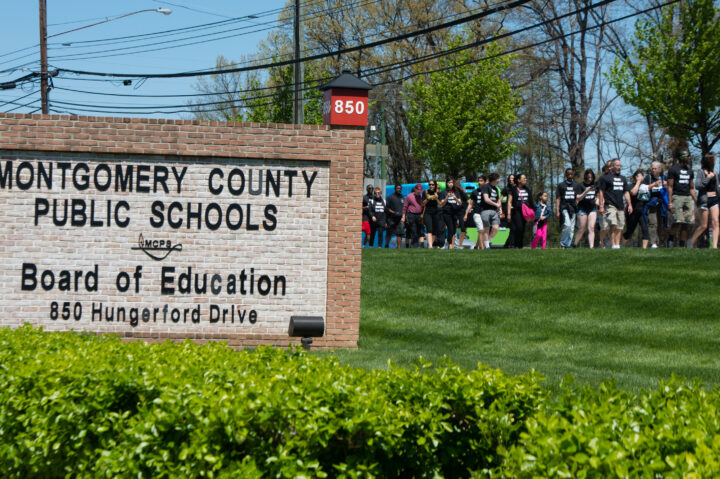
Sarah L. Voisin/The Washington Post via Getty Images
Montgomery County Public Schools building on April 27, 2014.
A book that centers on Palestinian identity is drawing controversy from some Jewish parents in the Montgomery County, Md., public school system after it was assigned to first grade students as required classroom reading, Jewish Insider has learned.
The book,“Tunjur! Tunjur! Tunjur! A Palestinian Folktale,” written by Margaret Read MacDonald, aims to convey a message to children that there are consequences for taking things that don’t belong to them. It tells the story of a woman who “prayed to Allah” for a child and received a pot as her child. The pot, too young to know right from wrong, had a tendency to steal honey from the marketplace and jewels from the king — until she got caught. As punishment, she was filled with muck. “I hope you’ve learned your lesson,” the pot’s mother tells her. “You cannot take things that do not belong to you.”
While the book does not mention Israel, local Jewish leaders and parents voiced concern that the required book’s subtext sends an anti-Israel message to elementary schoolers and that the reference to “Allah” does not belong in a public school setting.
A syllabus notes that students can receive supplemental reading materials if “any instructional material conflicts with your family’s sincerely held religious beliefs.”
The book’s lesson that “‘you cannot take things that do not belong to you’ echoes activist rhetoric that falsely casts Israel as an oppressor and the Jewish people as imperialist rather than indigenous,” Dana Stangel-Plowe, chief program officer at the North American Values Institute, a nonprofit that monitors antisemitism in K-12 schools, told JI.
“It reinforces a false narrative that erases the historic Jewish connection to Israel. It sends a troubling message to Jewish families during a time of rising antisemitism,” Stangel-Plowe told JI.
Not all Jewish communal leaders agreed that the book was problematic. Guila Franklin Siegel, chief operating officer of the Jewish Community Relations Council of Greater Washington, argued that Jewish families should embrace the book.
“If the only complaint about this book is that it’s sharing a Palestinian folktale that teaches children not to take things that don’t belong to them, I can’t see what the problem with the book is,” Franklin Siegel told JI. “It will be a shame if Jewish people wind up objecting to books only because they have protagonists who happen to be Palestinian.”
“There may well be books and materials that do misinform students about the Israeli-Palestinian conflict, and we always monitor that work,” said Franklin Siegel. “If we turn this into a back and forth where parents are requesting opt-outs for any material that they don’t see eye-to-eye with, we’ll wind up in a situation where we’re seeing a significant number of students whose parents are requesting opt-outs for things like Holocaust speakers.”
Meanwhile, Margery Smelkinson, a parent of four MCPS students, told JI that she would have preferred the district find a children’s book that teaches not to steal “without causing controversy.”
“The real problem is that MCPS chose a book that even requires an opt-out form — why not just pick another book?”
Smelkinson called on the school district to prioritize helping students get up to speed in reading, math and science instead of “creating more barriers to learning.”
“I’m concerned and curious if my child was introduced to [similar rhetoric] last year,” Diana Tung, the parent of an MCPS second grader and kindergartener, told JI. “I assume in a public school setting there’s going to be pretty diverse spiritual beliefs [but] the context of the tale itself [concerns me]. The themes should be taught using a different folktale, I’m pretty confident there are plenty.”
“Books and materials approved to be available for use in classrooms, beyond being in alignment with curriculum standards, are selected to be representative of our very diverse community,” Christopher Cram, a spokesperson for the suburban Washington school system, which is the 15th-largest school district in the country and educates a significant number of Jewish students, told JI. “Students and families expect to be able to see themselves in the materials we use.”
The school system has faced several antisemitic incidents since Hamas’ Oct. 7, 2023, terrorist attacks, leading to the school board president, Karla Silvestre, being subpoenaed to testify at a congressional hearing in May 2024. Weeks after the hearing, at least six MCPS school buildings — including three elementary schools — were vandalized with antisemitic graffiti.
The assignment of the Palestinian folktale as required reading comes two months after the Supreme Court ruled in Mahmoud v. Taylor that MCPS must allow parents to opt their children out of lessons and books that feature LGBTQ+ themes if the material conflicts with their religious beliefs.
Please log in if you already have a subscription, or subscribe to access the latest updates.
 Continue with Google
 Continue with Apple