













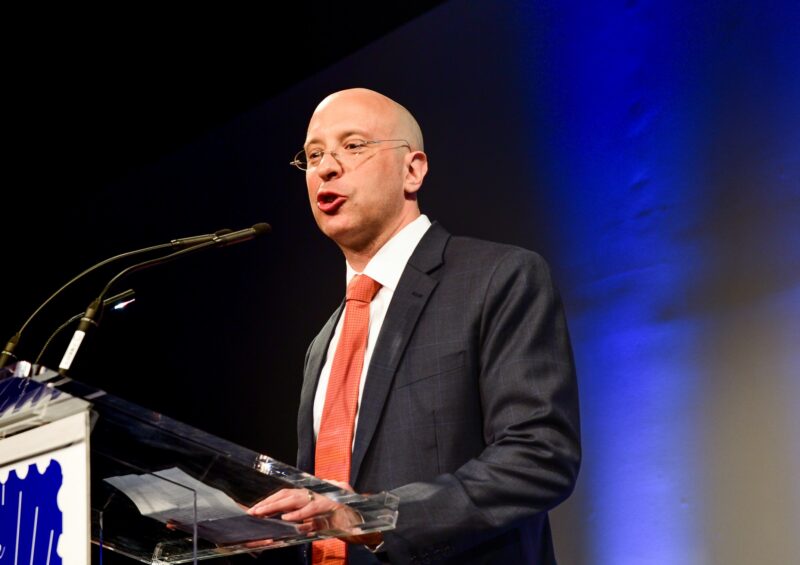



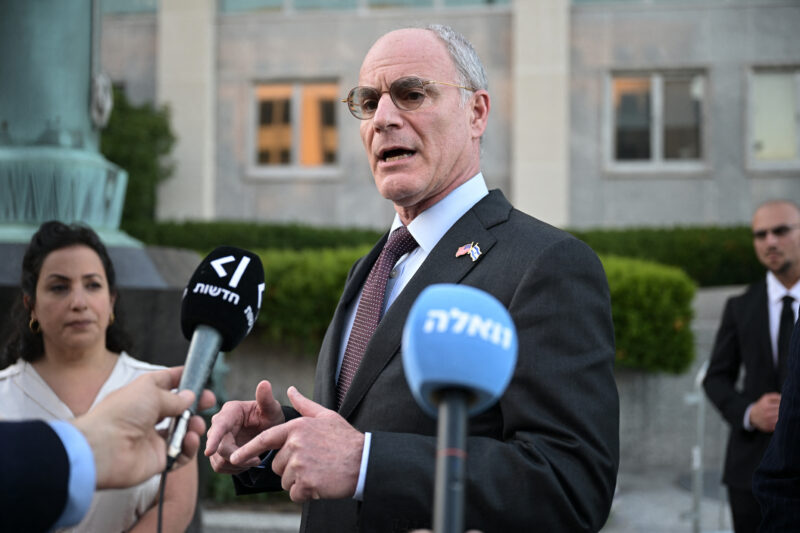







Rabbi Noah Farkas, CEO of Jewish Federation Los Angeles: ‘California has a special obligation to … protect the people who power this industry from antisemitism’
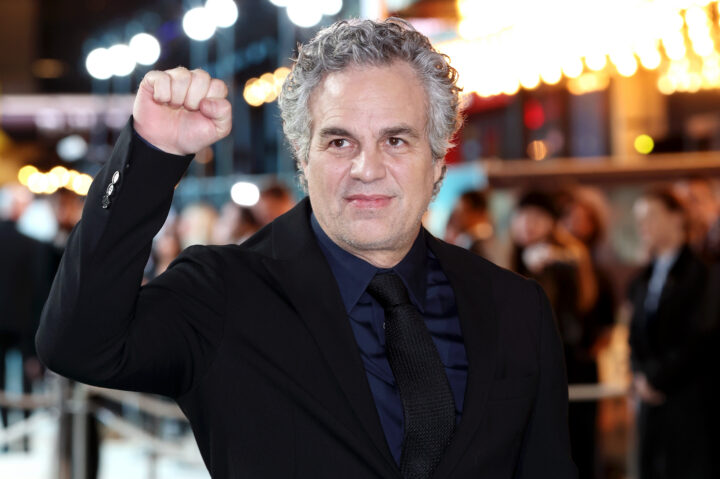
Hoda Davaine/Getty Images
Mark Ruffalo attends a screening at Odeon Luxe Leicester Square on Jan. 28, 2026 in London, England.


 Add JewishInsider on Google
Several leading Jewish and pro-Israel organizations condemned actor Mark Ruffalo for using what they deemed antisemitic rhetoric in his social media commentary targeting the Ellison family amid the pending merger of Paramount with Warner Bros. Discovery.
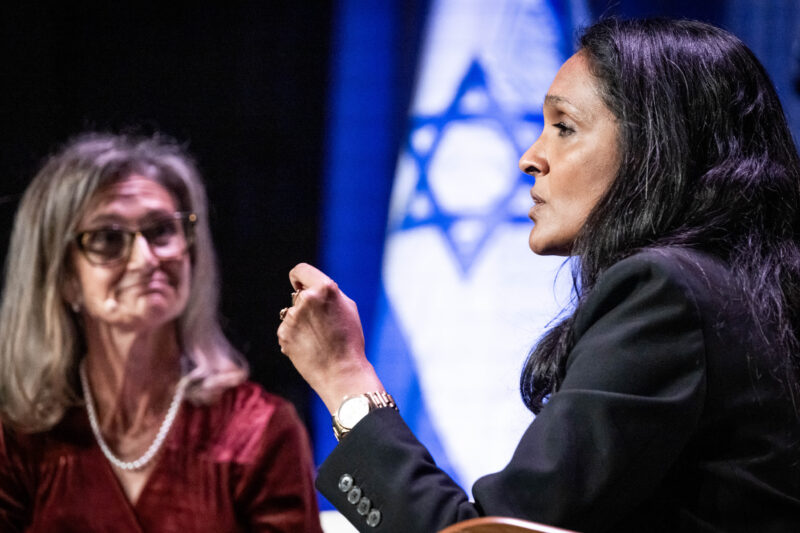
Ruffalo posted an Instagram story last week featuring footage of Safra Catz, the executive vice chair of Oracle and a Paramount board member, discussing the company’s engagement in Israel following the Oct. 7, 2023, Hamas terrorist attacks. In the post, Ruffalo called Larry Ellison, Oracle’s co-founder and executive chairman, a “classic oligarch,” accusing him and his son, Paramount Skydance chairman and CEO David Ellison, of “powering some of the most destructive and inhuman forces in the world.”
Pointing to Catz, who is Israeli American, Ruffalo wrote that she “revels in what we now have come to see as a genocide, which was built on an apartheid system of oppression powered by Oracle.”
Paramount condemned Ruffalo on Friday, saying it was “troubled when antisemitic tropes are invoked in purported service of a business dispute. Words like ‘genocide’ and ‘apartheid,’ applied to a corporate transaction, aren’t just wrong — they’re a bridge too far, and they cheapen the very real suffering those words are meant to describe. This doesn’t deserve a response in kind — and to be clear, we don’t tolerate prejudice of any kind, against anyone.”
The studio said Ruffalo’s remarks “expose the true motive of some of those who have acted against the deal” and urged those involved to “lower the temperature, not raise it.”
The “Avengers” star fired back on Paramount’s accusations of antisemitism, calling it “appalling and fundamentally dishonest,” and stating that “everything I know about acting, activism, and humanism has been profoundly shaped by the Jewish friends, colleagues, and loved ones.”
On Monday, Rabbi Noah Farkas, president and CEO of Jewish Federation Los Angeles — which serves the epicenter of the entertainment industry — said Ruffalo’s “unhinged rant, which combined Jewish wealth, media control, secret technology and sinister global power, is not legitimate criticism. It draws on recognizable antisemitic tropes with a long and dangerous history.”
Farkas called on California Attorney General Rob Bonta — who told Ruffalo in February “Mark, I hear you,” regarding earlier criticism of the deal and said the state has a “special interest in protecting competition” — to clarify his comments. On Sunday night, Bonta canceled planned settlement talks with Paramount after accusing the company of acting in bad faith by misrepresenting details from an earlier meeting.
“We agree that California has a special obligation to protect Hollywood, but not only from anticompetitive conduct. It must also protect the people who power this industry from antisemitism and every form of hate,” Farkas said.
“Bonta has done the right thing on some issues, but his record with Jewish Californians remains mixed. In some important moments, he has failed to stand up with the clarity and urgency our community deserved. This is why it is so important that Bonta clarify what ‘Mark, I hear you’ means. Hearing legitimate antitrust concerns cannot mean excusing rhetoric that invokes age-old tropes about Jewish wealth, media control and sinister power.”
Several other Jewish leaders condemned Ruffalo over the weekend, stating that his comments repeat old antisemitic tropes and could put Jewish people in danger. Since the Oct. 7 attacks and ensuing war in Gaza, Ruffalo, a four-time Oscar nominated actor, has frequently pushed accusations of Israeli-led “genocide,” “apartheid” and “famine” to his millions of followers.
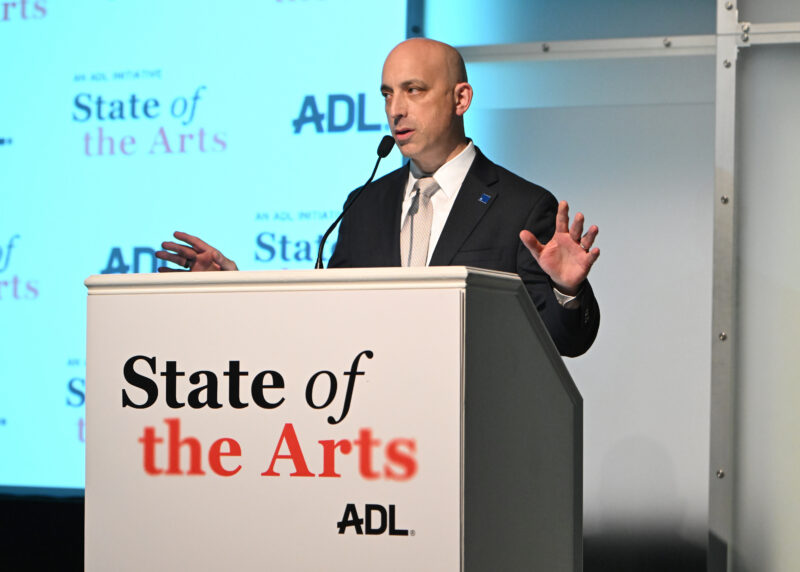
“Oppose the Paramount merger on the merits, find arguments grounded in facts, and draw on what you know about the industry without engaging in antisemitic rhetoric,” Jonathan Greenblatt, CEO of the Anti-Defamation League, wrote on X.
“Introducing the Jewish state out of the blue when it’s entirely unrelated, making baseless claims about Israel, and then trying to avoid accountability by essentially claiming that ‘some of my best friends are Jewish’ is gaslighting 101,” Greenblatt wrote, asserting that Ruffalo’s words “continue to put Jewish communities around the world at risk while antisemitic incidents are far too common.”
Simon Wiesenthal Center CEO Jim Berk said, “Invoking Israel in an issue where it is completely irrelevant is a textbook case of obsession and demonization.”
Ari Ingel, executive director of Creative Community for Peace, said Ruffalo’s statements “echo some of the oldest antisemitic conspiracy theories in history, depicting Jews as a wealthy and sinister elite who accumulate control over media, money and power, then use that control against society.”
CCFP, an organization that works to counter anti-Israel sentiment in the entertainment industry, called for Hollywood to boycott Ruffalo until he retracts the remarks and apologizes.
Two progressive groups took a different approach, defending Ruffalo by stating that his criticism of a corporation and the Israeli government is not antisemitic.
“What is antisemitism? Blaming Jewish people for the actions of the Israeli government. Hatred or discrimination directed at people because they are Jewish,” the Israel advocacy group J Street wrote Monday on X. “What isn’t? Criticism of a corporation’s monopolistic actions and investments. Criticism of Israel’s government. We cheapen the fight against antisemitism when we blur that distinction.”
The Nexus Project wrote Sunday on X that claiming Ruffalo is antisemitic is “misguided.”
“He expressed his opinion about a corporation’s actions and investments, not an executive’s religion,” the group said. “Whether you agree with him or not, he did not cross the line into antisemitic speech. The same is true of his longstanding opposition to Israel’s actions in Gaza.”
Ruffalo was among more than 20 Hollywood actors known for their roles in Marvel films who on Friday reportedly signed a petition calling for the release of Marwan Barghouti, an imprisoned Palestinian terrorist serving five life sentences in Israel, according to an Instagram post published by the group.
In recent weeks, prominent Saudi social media figures and media outlets have amplified sharply critical and often inflammatory rhetoric aimed at countries that joined the Abraham Accords
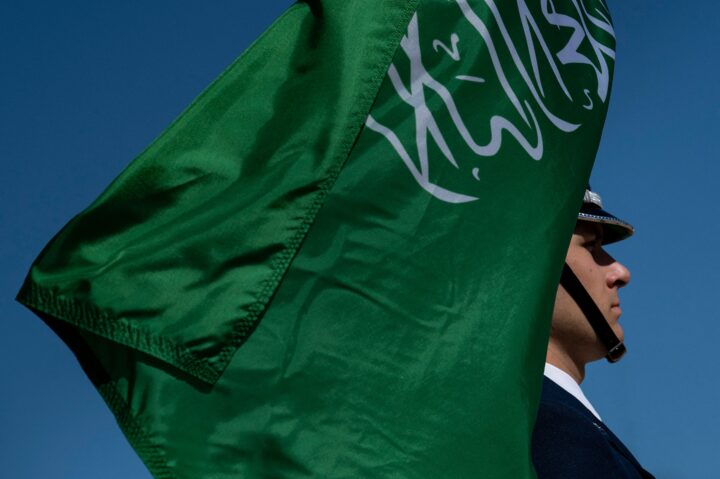
BRENDAN SMIALOWSKI/AFP via Getty Images
A color guard holds Saudi Arabia's flag while waiting for Saudi Vice Minister of Defense Prince Khalid bin Salman arrival for an honor cordon at the Pentagon August 29, 2019, in Washington, DC.
Jewish and pro-Israel organizations that have celebrated the Abraham Accords in recent years appear slow to recognize the role they could be playing within the Abrahamic coalition — particularly by leveraging their Washington clout and decades of experience engaging Congress — as countries in the accords face increasing criticism for their participation in the normalization framework.
In recent weeks, prominent Saudi social media figures and media outlets have amplified sharply critical and often inflammatory rhetoric aimed at countries that joined the Abraham Accords, particularly the United Arab Emirates, portraying normalization with Israel as a betrayal of regional interests and casting Abu Dhabi as a proxy for Israeli power.
Countries that joined the Abraham Accords do not have comparable grassroots advocacy in Washington, making the role of established Jewish and pro-Israel organizations potentially consequential to the broader normalization effort. Yet despite those longstanding relationships, the groups have mounted little effort to inform the conversation in Washington as the Abraham Accords and their signatories face growing attacks. This was evident from Jewish Insider’s reporting earlier in January, when pro-Israel lawmakers from both parties largely downplayed concerns about Saudi Arabia’s shift when asked for comment.
Several of the groups have voiced growing discomfort with the kingdom’s pivot away from what was perceived as its moderating force in the region. But their relatively cautious responses, particularly around Riyadh’s increasingly hostile posture toward Israel and traditional alliances, have also highlighted an awkward tension as they seek to maintain support for the long-sought but elusive goal of bringing Saudi Arabia into the Abraham Accords.
That dynamic has come into sharper focus as a few major Jewish and pro-Israel organizations prepare to attend a sensitive meeting in Washington on Friday with Saudi Arabia’s defense minister, raising questions about how — or whether — the groups will more forcefully confront the growing rhetoric against the Abraham Accords.
Among the groups invited to the meeting were the American Jewish Committee, the Anti-Defamation League, the Conference of Presidents of Major American Jewish Organizations and the Zionist Organization of America, multiple sources familiar with the situation told Jewish Insider on Thursday, though it remains unclear which will attend. The Foundation for Defense of Democracies confirmed it would be attending a separate sit-down with the defense minister in the morning.
Notably, representatives from the pro-Israel lobbying group AIPAC weren’t set to attend, according to some sources familiar with the dynamics, hinting at some possible internal debate in the community regarding the wisdom of engaging with Saudi Arabia in spite of its troubling recent behavior. AIPAC declined to comment on the meeting when reached by JI on Thursday afternoon.
The AJC and ADL also declined to comment, and the Conference of Presidents did not respond to a request for comment. The Republican Jewish Coalition was invited to the meeting, one informed source told JI, but the group would not confirm its involvement.
The varying approaches suggest that Jewish organizations are strategically sensitive to alienating Saudi Arabia — as they hope for a change of heart on normalization with Israel. In turn, many groups haven’t directly confronted the antisemitic vitriol among influential figures in the kingdom.
Even as these organizations champion the advantages of joining the Abraham Accords, their responses appear to neglect a key regional signatory, the UAE; a prominent Saudi columnist recently called the UAE “an Israeli Trojan horse in the Arab world” in one of the latest public attacks now regularly targeting their neighboring country, as Riyadh reportedly turns away from its traditional moderate alliances and towards Islamist countries hostile to Israel, including Qatar and Turkey.
None of the organizations had publicly commented on Saudi Arabia’s new direction until reached by JI late last week, reflecting a possible early blind spot concerning a major regional shift that threatens to have far-reaching consequences not only for Israel but Jewish safety more broadly in the Middle East.
The largely reactive tenor of the engagement so far indicates that Jewish advocacy groups have yet to formalize a strategy for preemptively tackling such challenges and raising awareness among legislators and other policymakers to build an infrastructure to help advance the Abraham Accords amid dwindling Saudi support.
Jonathan Schanzer, FDD’s executive director, said the “worsening” rhetoric on Jews and Israel “has left U.S. organizations that previously advocated for warmer engagement with Saudis at an interesting crossroads.”
“Some will double down and attempt to embrace the Saudis with a bear hug,” he told JI on Tuesday. “Others will begin to criticize the kingdom sharply. This natural dichotomy may actually be healthy, showing the regime that there are two paths it can take. One will obviously be more advantageous to the regime than the other.”
“The priority now must be rapid de-escalation between Saudi Arabia and Israel, two close American allies, whose widening rift is being aggressively exploited by Muslim Brotherhood governments in Turkey and Qatar, as well as the Islamists in Iran,” FDD CEO Mark Dubowitz said. “Allowing this crisis to bleed into the Saudi-Israeli normalization process — and incitement against Israel and Jews — would be a strategic setback, particularly given its central importance to President Trump’s regional agenda.”
In addressing the shift, some Jewish groups have pushed back on Riyadh’s problematic language. The ADL, for example, condemned state-aligned media channels and regime mouthpieces for promoting “openly antisemitic dog whistles” while opposing the Abraham Accords, rhetoric it called “harmful” to “the prospect of peaceful coexistence in the region.”
AIPAC, meanwhile, struck a more diplomatic note in a statement to JI that made no explicit mention of Riyadh’s turn to open antisemitism, saying that “America would be stronger and our interests would be better served if more nations, including Saudi Arabia,” normalized ties with Israel.
That view was echoed by Democratic Majority for Israel, which glancingly alluded to “recent political frictions and unhelpful rhetoric” from Saudi voices, while characterizing normalization as “an enduring strategic imperative,” even as the kingdom has been increasingly hostile to a rapprochement with Israel.
For its part, the American Jewish Committee, which has actively pushed for normalization, has refrained from publicly commenting on the issue, only noting that it is “keeping a close eye on any developments.”
The COP, which in 2020 led a historic delegation to Saudi Arabia in what was then interpreted as a sign of warming ties with Israel, has likewise declined to publicly weigh in on the situation, in advance of the meeting on Friday.
Mort Klein, the national president of the conservative Zionist Organization of America, said he was also invited to the meeting on Friday by a caller “with an Arabic name,” but was unable to join due to a scheduling conflict. “I received a strange phone call asking me to attend,” he told JI on Thursday. He would not elaborate on the conversation or why another ZOA official would not be participating.
The ZOA has sharply criticized Saudi Arabia’s evolution as a “dangerous” development, urging the Trump administration to reconsider its plans to sell F-35 fighter jets to Riyadh, among other policies.
Some Middle East analysts familiar with Saudi Arabia’s recent maneuvering have raised doubts about whether the meeting will amount to more than a PR stunt for the kingdom. Both Qatar and Turkey have similarly engaged in past discussions with Jewish leaders that have done little to change their approaches to Israel or ties to Islamist groups.
“This meeting will be complete window dressing,” one expert told JI on Thursday. “The Saudis may try and rationalize their way out of their new alignment with Pakistan, Qatar and Turkey and say everything is fine with the UAE when evidence says otherwise.”
Daniel Shapiro, a U.S. ambassador to Israel in the Obama administration who served as a top defense official in the Biden administration, said that it was “wise and understandable” for Jewish organizations “to keep the door open to normalization” with Saudi Arabia, while stressing a need to “draw some bright lines about what’s not acceptable” with regard to its rhetoric and policies.
Citing the unpredictability of the situation, Shapiro also suggested that Jewish groups should seek to engage in proactive outreach “to get members of Congress and other officials focused on trying to figure out” Saudi Arabia’s motivations. That could result in “direct and frank conversations with” Riyadh to better understand its new thinking and potentially “draw some red lines.”
“People are really still making an adjustment to it,” Shapiro told JI in an interview on Wednesday. “It’s wise to use diplomacy, in real time, to try to put up some guardrails.”
In some ways, the hesitant manner in which some Jewish groups have contended with Saudi Arabia shows how the kingdom’s sudden realignment has confounded even the most seasoned Gulf watchers.
“The thoughts coming from Saudis are horrific and apparently at total odds with the public messages of the last few years,” Simon Henderson, a Middle East expert at the Washington Institute for Near East Policy, told JI. “Without a corrective comment from a senior Saudi figure, they should be taken seriously. Put simply, forget normalization anytime soon. Analysts are in a state of shock trying to work out the why and how permanent the damage may be.”
Still, Abe Foxman, the former longtime national director of the ADL, stressed that efforts to court Saudi involvement in a diplomatic agreement with Israel need not obscure a broader commitment to strenuously denouncing the kingdom’s “anti-Israel expressions and antisemitism.”
“As much as we may want Saudi Arabia to join the Abraham Accords, that hope and desire should not inhibit our ability to criticize” its recent policies, Foxman told JI on Tuesday. “I recall that during the years we pursued peace between Israel and Egypt and Israel and Jordan, we did not refrain from being critical of their anti-Israel policies or their embrace of antisemitism.”
Brian Katulis, a senior fellow at the Middle East Institute, cast the differing positions from Jewish groups as a “reflection of the wide diversity of views inside of the Jewish American community,” arguing that some of their responses are a demonstration of their “proximity” to Saudi Arabia or the rival UAE.
The invitation comes amid a sharp rise in antisemitic and anti-Israel rhetoric from the Kingdom
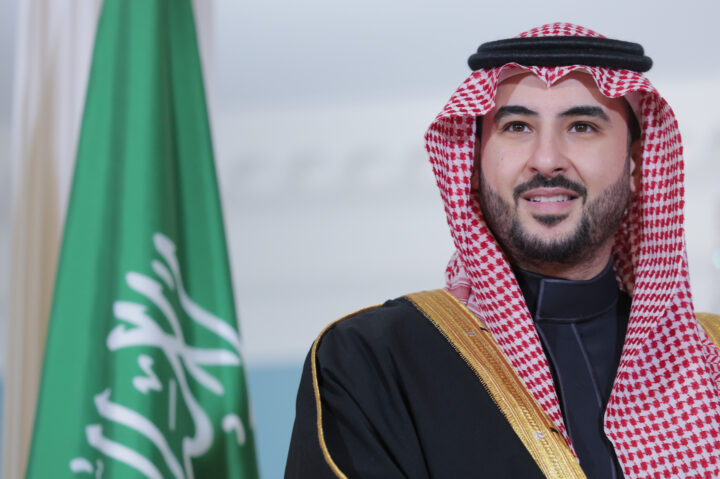
Anna Moneymaker/Getty Images
Saudi Arabia Defense Minister Prince Khalid bin Salman ahead of a meeting with Secretary of State Marco Rubio in the State Department Building on February 25, 2025 in Washington, DC.
Jewish and pro-Israel organizations were invited to a meeting with the Saudi defense minister in Washington on Friday afternoon, four sources familiar with the invitation confirmed to Jewish Insider.
Invited groups included the American Jewish Committee, Anti-Defamation League, Conference of Presidents of Major American Jewish Organizations and Republican Jewish Coalition, though as of Thursday morning it was not clear which invitees would be accepting the invitation.
Foundation for Defense of Democracies is meeting with the defense minister in a separate sit-down Friday morning, FDD CEO Mark Dubowitz confirmed to JI.
Saudi Defense Minister Khalid bin Salman, the brother of Crown Prince Mohammed bin Salman, is in Washington holding meetings with U.S. officials including Secretary of State Marco Rubio and White House Special Envoy Steve Witkoff on Thursday and Friday.
The invitation comes as some Jewish organizations have expressed concerns about the recent rise in antisemitic and Islamist rhetoric out of Saudi Arabia, but they’ve been relatively cautious in their language as they seek to maintain their support for the long-sought but elusive goal of bringing Riyadh into the Abraham Accords.
“This meeting will be complete window dressing,” one Middle East analyst familiar with the invitation and with the larger Saudi pivot in the region told JI. “The Saudis may try and rationalize their way out of their new alignment with Pakistan, Qatar and Turkey and say everything is fine with the UAE when evidence says otherwise.”
“They may also want to send a message to Jewish organizations with absolute clarity that they will not be joining the Abraham Accords until there’s a Palestinian state, especially ahead of a rumored visit by [Israeli Prime Minister Benjamin] Netanyahu to Washington in the next 30 days,” the analyst added.
“If these Jewish organizations do attend the meeting, they should give a stern message to Saudi leadership that their new strategic alliances and promoting antisemitism and being destructive in the region regarding Israel are not helpful.”
A new report from NGO Monitor describes the ‘workaround’ used by international aid groups to continue flow of aid to Gaza despite Hamas involvement

Ali Jadallah/Anadolu via Getty Images
Members of the Al-Qassam Brigades, the military wing of Hamas as the bodies of hostages' are handed over to the Red Cross teams as part of the Hamas-Israel prisoner-hostage swap agreement in Khan Yunis, Gaza on February 20, 2025.
Amid an international outcry over the humanitarian conditions in Gaza, Israel and the Gaza Humanitarian Foundation have repeatedly pointed to Hamas’ practice of diverting and disrupting the distribution of aid that officials say has entered Gaza unimpeded as one of the culprits behind the crisis.
NGO Monitor, which tracks the funding of anti-Israel organizations, wrote a new report given exclusively to Jewish Insider, which claims to show evidence of Hamas controlling the destination of humanitarian aid given in cash for years before and during the Gaza war, including money coming from U.N. agencies and NGOs funded by European governments.
The report alleges that the groups distributed cash and vouchers to beneficiaries selected by the Hamas-run Gaza Ministry of Social Development (MoSD), which since 2019 has been led by Ghazi Hamad, a member of the Hamas politburo who was designated a terrorist by the U.S. last year and who, weeks after Hamas’ Oct. 7, 2023 attacks, vowed that “there will be a second, a third, a fourth … one-millionth” Oct.7-style attack on Israel.
Hamad made headlines in Israel earlier this week with his assertion that the commitments of 11 countries to recognize a Palestinian state is an “achievement” stemming from Hamas’ attacks on Israel.
In 2023, the EU provided $19.6 million, France donated $9.34 million and Spain $1.75 million “for the payment of social allowances to poor Palestinian families.” The EU stated that since 2008, it “has been a steadfast supporter of the Palestinian Authority’s Ministry of Social Development, collaborating to ensure that basic social allowances are extended to the most vulnerable families residing in the West Bank and Gaza.”
In August 2024, according to the report, the EU and Spain provided 15.5 million Euros of aid for Gaza, saying they were partnering with the PA MoSD to deliver it. The EU also gave UNICEF over 4 million Euros in 2023 for a project in which the MoSD was the “main partner.”
Among the governments funding programs involving the MoSD is the U.K., even though its Foreign Office had been made aware of the matter and expressed concern over possible “severe” reputational damage that could come from its involvement.
Other countries funding programs working with the MoSD, according to the NGO Monitor report, include Germany, Switzerland and Norway.
The EU and others say that they are working with the MoSD in Ramallah, controlled by the Palestinian Authority, as opposed to the Gaza MoSD, controlled by Hamas.
However, the NGO Monitor report argues that the Ramallah MoSD was used to circumvent Western countries’ rules against contact with Hamas, a proscribed terrorist organization, while the beneficiaries were still chosen by the Hamas-controlled MoSD in Gaza.
A 2022 Oxfam International analysis of its cash-assistance programs in Gaza described “workarounds needed for the no-contact policy” with Hamas, by way of “the interface between humanitarian agencies and the MoSD in Ramallah, and the local authorities in Gaza,” otherwise known as Hamas.
The Oxfam analysis notes that there is “collaboration between the de-facto government in Gaza and the official Ramallah government,” and that “in the MoSD in Gaza, most of the staff are from the de-facto government,” meaning Hamas.
The organization called for more work with Arab humanitarian aid groups, “capitalizing on the fact that the latter are not restricted by no-contact policies,” meaning that they work directly with Hamas.
Hamas also takes a cut of the cash that aid organizations transfer into Gaza.
The minutes from a Oct. 8, 2024, meeting of the Gaza Cash Working Group, a U.N.-led coordination mechanism for U.N. agencies and international NGOs, state that the Hamas-controlled government in Gaza charged “withdrawal fees up to 20% … these fees are not limited to multipurpose cash assistance, but apply across the entire market.”
NGO Monitor also highlighted a 2022 Mercy Corps Gaza project as an example of Hamas control of humanitarian funding. A description of the project from the U.N. repeatedly referred to the MoSD’s central role.
“Through unconditional cash assistance, this project will identify and select the most vulnerable HHs [households] … from the Ministry of Social Development (MoSD) unserved waiting lists of Social Safety Net (SSN),” the U.N. description states. At another point, it says that the project will be undertaken with “full coordination and engagement with the MoSD.”
Oxfam responded to inquiries from JI that the organization “operates under a strict and clear no-contact policy with de facto authorities in Gaza. We do not work or communicate with the Ministry of Social Development (MoSD) in Gaza. In line with this, our work in Gaza is coordinated through the MoSD’s PA focal point based in Ramallah.”
“The reference in the 2022 study is not an admission of direct engagement,” the organization continued. “It describes sector-wide challenges … We have robust safeguards in place to prevent any misuse or manipulation of our aid programs and adhere to the highest standards of humanitarian principles and accountability.”
Mercy Corps also told JI it has a strict no-contact policy against engaging with sanctioned entities and that allegations that it worked with the MoSD in Gaza is “false and inaccurate.” Their aid recipient lists came from the MoSD in Ramallah, managed by the PA, the organization stated.
“We do not and have not coordinated with Hamas in Gaza to implement our aid programs, and allegations that we work with Hamas are false,” the group stated. “We are confident in our processes and policies, including a rigorous verification process for program participants, which ensures we help the most vulnerable families, while avoiding those with affiliation or contact with sanctioned groups. We have decades of experience delivering humanitarian assistance in high-risk environments like Gaza.”
The BBC reported on Wednesday that Hamas has continued to pay 30,000 salaries throughout the war in Gaza using “a secret cash-based payment system” even as Israel attempts to block the terrorist group from making payments.
Hamas employees receive encrypted messages inviting them to “meet a friend for tea” at a specific time and place. When they arrive, someone hands them an envelope of cash and then walks away.
Hamas has stockpiled about $700m in cash, according to the BBC, but has only paid $7m in salaries since the war began in Oct. 2023. Employees reportedly only receive about 20% of their wages, and the BBC quoted employees claiming to have non-combat roles who were frustrated with the insufficient payments and the dangers in having to travel to collect the cash amid Israeli airstrikes.
In addition, Hamas has reportedly distributed food packages to its members, angering Gazans who accuse the terrorists of not aiding others, according to the BBC.
Please log in if you already have a subscription, or subscribe to access the latest updates.
 Continue with Google

 Continue with Apple