












































Dermer: ‘I would love to live in a world where it’s values that drive international relations … That is not the world we live in’
Courtesy ICC
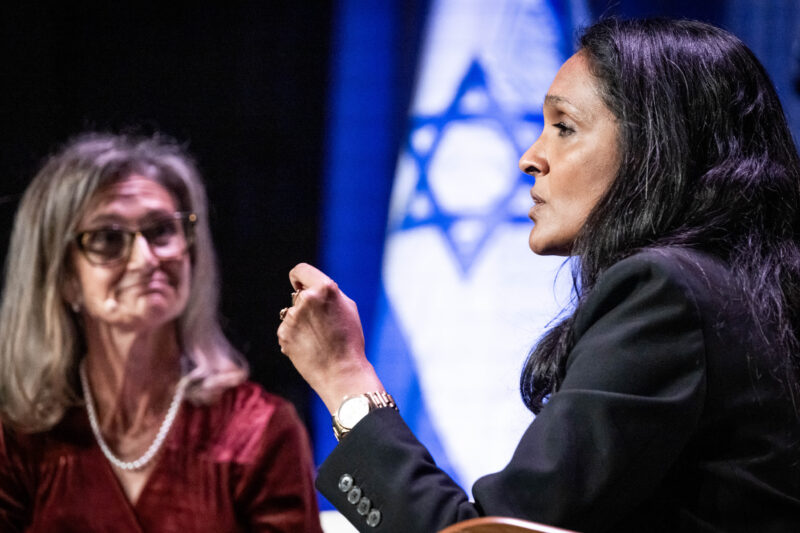
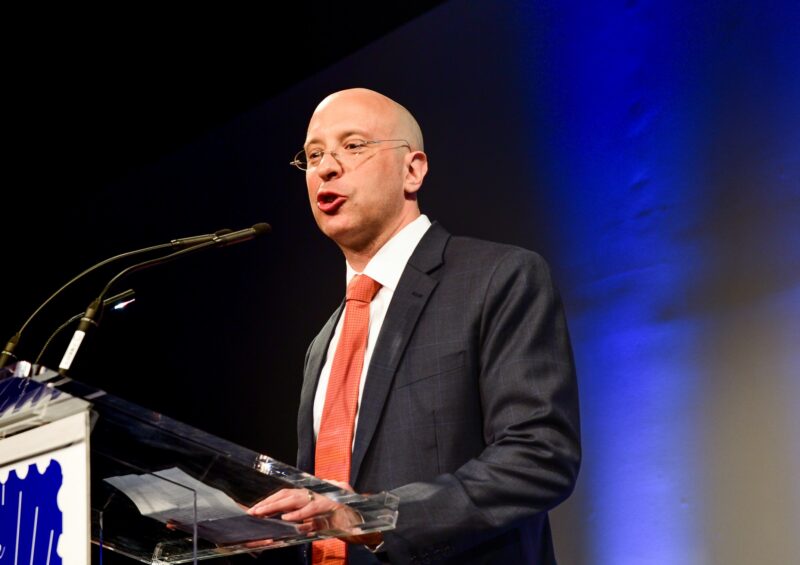
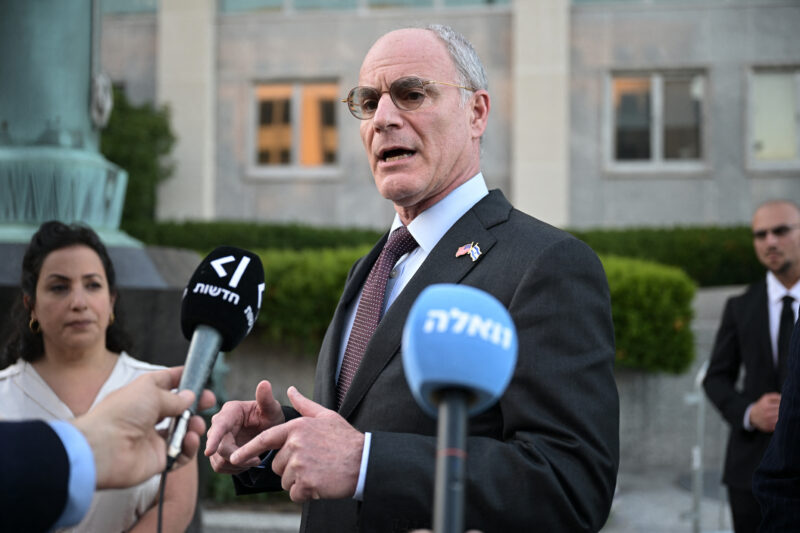
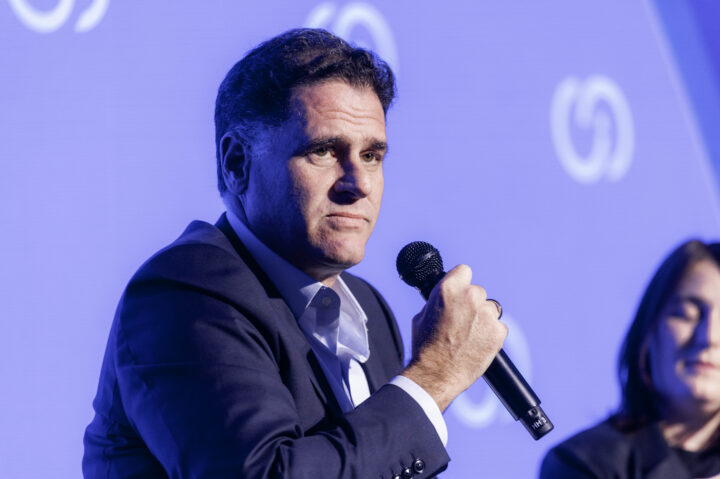
Ron Dermer, Israel’s former minister of strategic affairs, speaks at the Israel on Campus Coalition’s conference in Washington, August 3, 2026


 Add JewishInsider on Google
Israel’s relationship with the U.S. depends on mutual interests, not shared values, Ron Dermer, Israel’s former minister of strategic affairs, said on Monday at the Israel on Campus Coalition’s conference in Washington.
“The problem people have is they romanticize the U.S.-Israel relationship. People think the U.S. has always been a strategic ally from day one,” Dermer said. “Israel’s main strategic ally for its first 15 years was France.”
“I would love to live in a world where it’s values that drive international relations. I believe Israel would be the world’s superpower, no doubt,” Dermer told a crowd of some 1,000 pro-Israel college students. “That is not the world we live in and it’s not the world anybody has ever lived in.”
Rather than the shared democratic values and ideological alignment that Israeli leaders have frequently cited to define the U.S.-Israel partnership, Dermer asserted that “it’s actually generated interest” that aligns counties long term, such as security cooperation or economic benefit.
“Interest is what drives stakes over time,” he said.
“It’s always good to have good public opinion, they can be shock absorbers when problems arise, but ultimately being important to that country becomes more critical than whether or not they think they have shared values,” continued Dermer.
“Don’t get me wrong, Israel has shared values with the United States. But that’s not what drives relations between states,” said Dermer.
“So you ask me, ‘What’s going to be with the U.S.-Israel alliance long-term?’ Values is not what drives the alliance — It’s actually the interests that make the difference,” Dermer said.
In his comments, Dermer also urged “every pro-Israel Jewish organization” to “draw a line in the sand that anybody who says that Israel perpetrated a genocide in Gaza has to be completely shunned.”
He argued that those hostile to the Jewish state — including New York City Mayor Zohran Mamdani — are making accusations of Israeli genocide a loyalty test for left-wing politics.
“The enemies of Israel and the enemies of Jews — and right now you’ve got both in Gracie Mansion in New York — they want to turn this into the litmus test of progressive politics,” said Dermer.
“If you don’t say Israel perpetrated genocide, [they] want nothing to do with you. Let them do what they’re gonna do. We have to in the Jewish community, and pro-Israel community, do what we have to do. We have to say, ‘If you say those words, we are done.’ It’s a threat not just to Israel, it’s a threat and a clear and present danger to Jews everywhere.”
Jewish and pro-Israel groups seem at pains to clarify how they are now assessing an issue that has long been key to their advocacy — particularly as the conversation around funding and the possibility for a new MOU has rapidly evolved in recent months
Joe Raedle/Getty Images
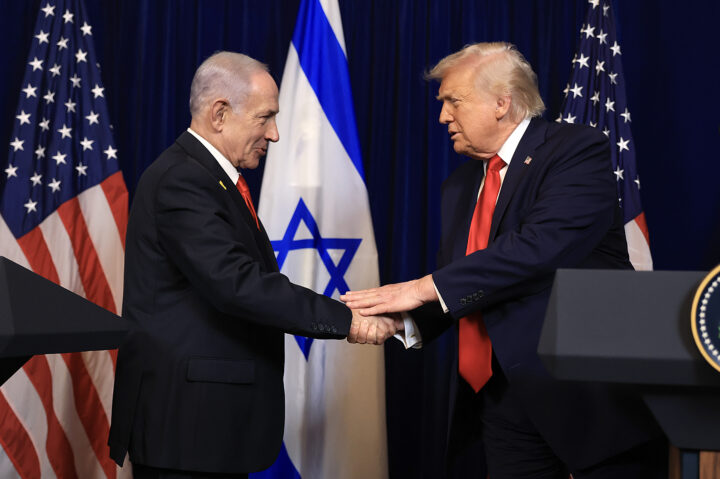
President Donald Trump shakes hands with Israeli Prime Minister Benjamin Netanyahu during a press conference at his Mar-a-Lago club on December 29, 2025 in Palm Beach, Florida.
Late last month, AIPAC circulated what seemed at first glance like a relatively anodyne memo stressing its support for the current 10-year memorandum of understanding between the United States and Israel, which guarantees $3.8 billion in annual military aid and missile-defense funding to Israel through 2028.
“Congress must fulfill America’s commitment by providing full security assistance and missile defense funding to Israel for the remainder of the MOU,” the group wrote in its missive published on April 28.
The memo was notable, however, for what it left out: calling to negotiate a follow-up MOU — the future of which has been a topic of ongoing speculation among analysts and lawmakers beginning to think about the contours of a potential new agreement in a changing political landscape.
That AIPAC had only urged the implementation of the final two years of the current deal was in many ways a tacit acknowledgement of shifting attitudes against U.S. military aid even among supporters of Israel.
The omission, intentional or not, was otherwise reflective of uncertainty around an agreement that has drawn scrutiny not only among Israel critics on the far left and right but also moderate defenders of Israel in both parties who are openly questioning the necessity of U.S. military assistance to a longstanding Middle East ally.
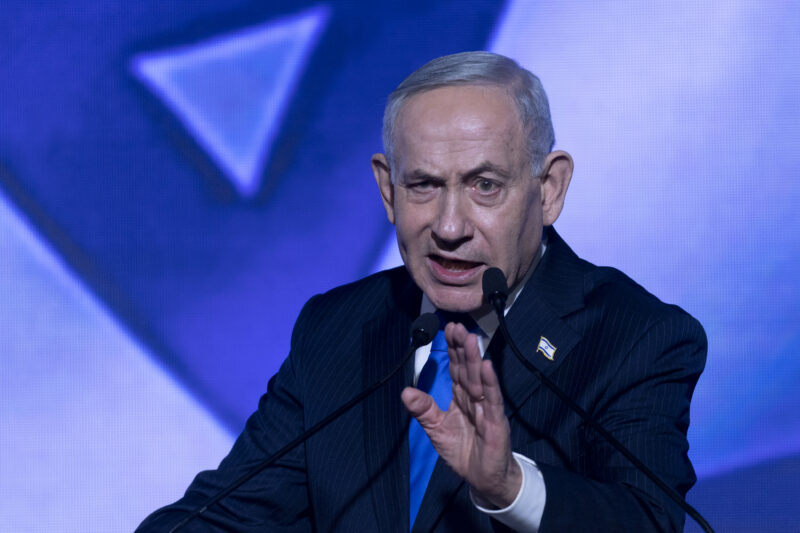
Meanwhile, Israeli Prime Minister Benjamin Netanyahu has called for winding down U.S. financial aid over the next decade, saying that the Jewish state has “come of age” and matured economically to continue on its own. In an interview with CBS’ “60 Minutes” earlier this month, he confirmed that he wanted to immediately begin the process of weaning Israel off of U.S. aid, noting the future of the U.S.-Israel alliance should be focused on joint projects equally funded by Israel and the United States.
“Each U.S.-Israel MOU to date — negotiated by Presidents Clinton, Bush and Obama — has laid the framework for the decade ahead, strengthening an alliance that advances American interests, supports a strong and capable ally in an unstable region, and drives a remarkable ecosystem of joint development and cooperation between two reliable allies,” Deryn Sousa, a spokesperson for AIPAC, told Jewish Insider in a recent statement.
Some pro-Israel Republican lawmakers — including Sens. Lindsey Graham (R-SC), John Thune (R-SD), the Senate majority leader, and Roger Wicker (R-MS) — have welcomed the idea, even as the GOP has long touted its staunch support for such funding. Rahm Emanuel, the former Chicago mayor and Democratic presidential prospect who holds close personal ties to Israel, has advocated for immediately ending military aid to Israel, arguing it is not worth expending the “political capital” to promote spending that is facing mounting opposition in Congress and among voters.
But Jewish and pro-Israel groups seem at pains to clarify how they are now assessing an issue that has long been key to their advocacy — particularly as the conversation around such funding and the possibility for a new MOU, which remains an open question, has rapidly evolved in recent months.
“Each U.S.-Israel MOU to date — negotiated by Presidents Clinton, Bush and Obama — has laid the framework for the decade ahead, strengthening an alliance that advances American interests, supports a strong and capable ally in an unstable region, and drives a remarkable ecosystem of joint development and cooperation between two reliable allies,” Deryn Sousa, a spokesperson for AIPAC, told Jewish Insider in a recent statement.
She added, “We appreciate the Trump administration working closely with the Israeli government toward a new agreement that will strengthen and define the mutually beneficial partnership in the years ahead.”
“We’re figuring it out ourselves,” said Michael Makovsky, the president and CEO of the Jewish Institute for National Security of America, adding that he believed Israel “made a mistake” in choosing to forgo U.S. financial aid. He suggested that the U.S. sign “one more” MOU with Israel to cover the next 10 years and help Israel replenish its munitions stocks amid the war against Iran, which he believes is key to advancing American interests in the region. “It zeroes down at the very end,” he explained to JI.
In lieu of an agreement, Makovsky floated “non-monetary” alternatives, for instance, a U.S.-Israel mutual defense treaty — though he questioned whether such a pact could gain enough support in the Senate, where most Democrats recently voted in favor of resolutions to block arms sales to Israel.
Former U.S. and Israeli officials have also recently called for building closer technological ties between the two countries, in anticipation of an era in which financial aid is not a defining feature of the alliance.
“The model in which Israel is assisted by the United States and receives aid has a very small chance of continuing under any future administration,” former IDF intelligence chief Amos Yadlin said this month while promoting a new strategic technology alliance with Tom Nides, a former U.S. ambassador to Israel. “And perhaps even under the Trump administration, so we need to find a new basis for the relationship that is a transition from aid to partnership.”
Even as analysts had indicated last year that the U.S. should begin considering what the next MOU entails, it is unclear if the process is now seriously underway, as Netanyahu’s remarks have complicated the effort. One Hill staffer to a pro-Israel House member told JI he had no knowledge of discussions at the moment.
President Donald Trump was initially surprised when Netanyahu first proposed winding down U.S. funding late last year and did not immediately lend support to the move, JI has previously reported.
A White House spokesperson declined to comment on the prospects for a future MOU, the framework for which first went into effect in 1998 during the Clinton administration. The current agreement was finalized in 2016 near the end of the Obama administration — which touted the deal as “the largest single pledge of military assistance in U.S. history” at the time.
Tal Naim, a spokesperson for the Israeli Embassy in Washington, referred JI to Netanyahu’s comments to “60 Minutes” this month.
Looking ahead, Brian Romick, the president of Democratic Majority for Israel, said “there can and should be a discussion about how the U.S.-Israeli security relationship should change with the times, how our partnership must evolve as Israel’s own capabilities grow and its security needs change, and how we can align on a long-term vision for the region.”
“While a new MOU should reflect that Israel’s economy has grown, it should also recognize that Israel’s defense requirements have too, and Israel may struggle to fill the gap in its defense budget that the loss of FMF would create,” Justin Leopold-Cohen, a senior research analyst at the Foundation for Defense of Democracies’ Center on Military and Political Power who specializes in U.S.-Israel security cooperation, said.
But, he added, “that debate must bring a serious analysis grounded in prioritizing America’s interests and Israel’s security. It cannot shift with political changes or in the middle of a war, especially when American troops are actively deployed in the region. Ultimately this will be a negotiated agreement between two democratically elected governments.”
A spokesperson for the American Jewish Committee likewise used broad strokes to discuss a future MOU, saying it is “far more than a financial commitment.”
The agreement “is a cornerstone of a broader strategic relationship that advances both U.S. and Israeli national security interests, strengthens deterrence against shared adversaries, and reinforces America’s commitment to the security of its closest ally in the Middle East,” the spokesperson told JI. “At a time of growing regional volatility and evolving security threats, maintaining strong and sustained U.S.-Israel security cooperation remains critically important.”
Justin Leopold-Cohen, a senior research analyst at the Foundation for Defense of Democracies’ Center on Military and Political Power who specializes in U.S.-Israel security cooperation, said that “there will likely be a new, heavily modified MOU following the current agreement’s expiration.”
Netanyahu, he told JI, “already revealed his desire to phase out American military aid, granted primarily as Foreign Military Financing,” which typically must be used to purchase U.S. defense products and services.
“While a new MOU should reflect that Israel’s economy has grown, it should also recognize that Israel’s defense requirements have too, and Israel may struggle to fill the gap in its defense budget that the loss of FMF would create,” Leopold-Cohen said.
Dan Shapiro, a U.S. ambassador to Israel in the Obama administration who served as a top defense official in the Biden administration, speculated that “the next MOU — if there is an MOU — will look very different from the current one.”
“It will likely phase out FMF, which both Prime Minister Netanyahu and Americans from the left and right are calling for,” Shapiro added. “It will likely emphasize joint research and development, sharing technological advances, and expanded co-production to answer President Trump’s question of what’s in it for the United States. To garner bipartisan support, it should include a consultative mechanism to ensure U.S. weapons are only used in ways consistent with American laws and values and that minimize civilian casualties.”
Daniel Silverberg, a former top foreign policy advisor to Rep. Steny Hoyer (D-MD), characterized the MOU as “mutually beneficial,” saying that “it does not need to be exclusively assistance-based.”
“There are many ways to expand cooperation that involve more than giving aid,” he said. “The MOU is a key framework to do so, and it’s crucial to spell that out for a skeptical U.S. audience.”
But, he emphasized to JI, “We can’t want the MOU more than the Israelis want it.”
In an interview with Jewish Insider, Emanuel outlines his views amid changing winds in a Democratic Party increasingly antagonistic to the pro-Israel perspective that had long been central to his identity
Jewish Federations of North America
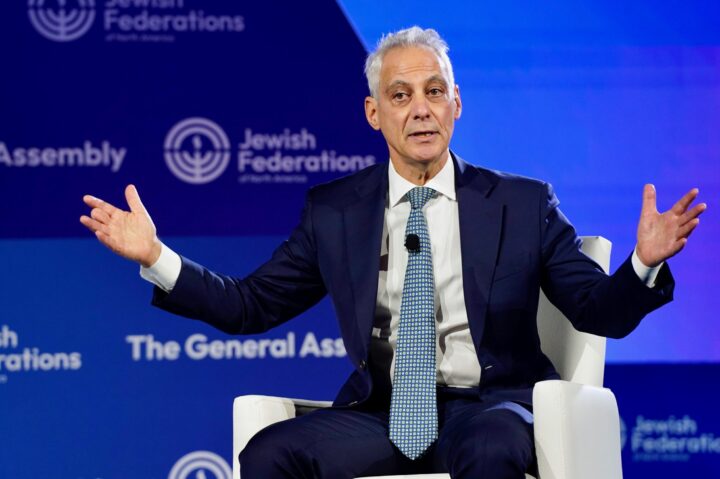
Rahm Emanuel speaks at the Jewish Federations of North America's 2025 General Assembly opening plenary on Nov. 16, 2025.
Last November, Rahm Emanuel, the tough-talking Democratic operative and prospective presidential candidate, took the stage of the Jewish Federations of North America’s annual conference in Washington to deliver a blunt word of warning about Israel’s declining reputation in the United States and around the globe.
“I don’t mean to be the party pooper, but look, this is not going to be helpful if we’re not going to be honest with each other,” he said on an opening panel, urging the crowd to reckon with a marked downturn in support for the Jewish state over its war in Gaza, particularly among younger voters. “Israel is extremely unpopular.”
Emanuel, a veteran Jewish politician and party official who had recently concluded a tour as U.S. ambassador to Japan in the Biden administration, acknowledged his message might not ingratiate him to the thousands of Jewish communal leaders in the audience who were no doubt deeply familiar with the issue he was highlighting.
“This may be the last time I’m asked to speak to you. I get it,” he said with a hint of indifference. “But we have to be honest about the task we have” for those “who believe that there is something special” to the U.S.-Israel relationship. “We have our work cut out, and it’s not here to get applause,” he told the crowd.
In hindsight, Emanuel’s frankly worded comments marked something of a turning point in his approach to Israel and the Jewish community, foreshadowing more recent remarks in which he has voiced harsh criticism of the country’s military tactics in the wake of Hamas’ Oct. 7 terror attacks and championed new policy proposals against American military aid to Israel.
Yet even as he builds a profile as a potential candidate willing to tell the Democratic Party hard truths and challenge orthodoxy on a range of issues from trans rights to child social media bans to age limits for politicians, Emanuel, 66, was reticent in exploring his views on Israel in more depth during an interview with Jewish Insider, which he had resisted for nearly a month.
“What I said couldn’t have been clearer,” he told JI last Thursday, referring to his recent comments on “Real Time With Bill Maher” calling for an end to U.S. military aid to Israel that raised eyebrows in the Jewish community. “There will no longer be U.S. taxpayer subsidies for the purchase of U.S. military equipment. Israel will be like every other ally. They can buy what they want, and they have to live within the restrictions.”
“You can decide to slice it, dice it, but that’s what it is,” he said.
While U.S. military funding to Israel has increasingly faced pushback in the Democratic Party, particularly on the far left, Emanuel’s argument that Israel no longer needs the sort of special treatment that he helped promote in the Obama White House has been striking to watch precisely because he has long been a staunch defender of the Jewish state and its founding ideals.
Emanuel, whose middle name is Israel and who speaks fluent Hebrew, holds a uniquely personal connection to the Jewish state. His late father, an Israeli immigrant born in Jerusalem, served in the Irgun, the Zionist paramilitary force that fought for Israeli independence. As a child, he spent summers in Israel and later volunteered as a civilian assistant to the Israel Defense Forces during the Gulf War. His son celebrated his bar mitzvah in Israel.

Emanuel, a moderate former congressman and mayor of Chicago, pointed out in the interview that Israeli Prime Minister Benjamin Netanyahu had himself proposed winding down U.S. military aid over the next 10 years, saying in January that the country had “come of age” and “developed incredible capacity” to continue on its own.
Emanuel, however, said that he would instead suspend the assistance “immediately,” characterizing his position as “part of an overall policy” tied to Israel’s strategically secure position in the region as well as its political isolation on the world stage — both of which he argued have never been greater than now.
“If you or anybody thinks you’re going to continue the American taxpayers paying for this, good luck passing that in the U.S. Congress. You’re asking a president of the United States to spend X amount of political capital to do something that even Israel’s own prime minister acknowledged isn’t going to happen,” he said, referring to continued U.S. military aid.
The Jewish state “has made a decision to only lean on its defense and not lean on its diplomatic front,” he told JI, adding that Netanyahu had chosen to “walk away” from pursuing a two-state solution, support for which has declined in Israel since the Oct. 7 attacks and ensuing war in Gaza.
In his view, the U.S. should continue to stand with Israel only if its efforts in the region help contribute to peace. “Every risk you will take, the State of Israel takes, for peace, then America will stand by you,” he said. “We understand there’s risks. We have stood by Israel through thick and thin.”
“But,” he said, “when one friend in that relationship abandoned something that’s contrary to our interests and contrary, in my view, also to Israel’s interests,” it is reasonable, he suggested, to rethink that alliance.
“There will no longer be U.S. taxpayer subsidies for the purchase of U.S. military equipment. Israel will be like every other ally. They can buy what they want, and they have to live within the restrictions,” Emanuel said of his vision of the future of military aid to Israel.
His comments indicate that he is now embracing a fundamental reassessment of the U.S.-Israel alliance, abandoning even the pretense of tough love that once characterized his approach, among other moderate voices in the Democratic Party.
For example, Pennsylvania Gov. Josh Shapiro, a centrist Jewish Democrat who is also weighing a presidential campaign in 2028, recently reiterated his support for continued U.S. aid to Israel but said that it should be seen as “leverage” to exert pressure over the country’s use of American-made weapons.
“Rahm’s move tells you a lot about the politics of the Democratic Party on Israel now. And that is a sign of how Israel’s image has changed in the country,” said Dennis Ross, a former U.S. diplomat and Middle East negotiator who overlapped with Emanuel in the Obama administration.
Despite his strong attachment to Israel, Emanuel is reckoning with a changing party no longer broadly sympathetic to the pro-Israel perspective that had long been central to his political identity, even as he has tussled with Israeli leadership during his time as a public figure.
Last Friday, for example, Emanuel signaled he would back Graham Platner, the far-left Senate candidate in Maine now poised to become the Democratic nominee, even as the Marine veteran has called to block U.S. military aid to Israel while facing controversy over a Nazi tattoo he recently covered up.
“Whether it’s people chanting ‘Jews will not replace us’” in Charlottesville, “or somebody bombing Gov. Shapiro’s home, or somebody painting Nazi insignia on my fence, or the candidate saying ‘I did not know that was a Nazi’” insignia on his chest, “we’re going to have to confront this,” Emanuel told JI the day before announcing his support for Platner, while touting his record of fighting antisemitism.
“I’ve dealt with it when I ran for Congress,” he said on the phone from Chicago, noting that he was outside an Anne Frank exhibition opening in his home city. “And I’ve also been upfront when I think a decision is going to lead to the strategic and diplomatic isolation of, not only the State of Israel, but, more importantly, the Jewish people.”
Still, Emanuel seemed reluctant and even somewhat frustrated to answer further questions seeking clarity on the implications of his new approach to Israel and how he arrived at his position. He refused to confirm explicitly, for example, if he would back defensive aid for Israel’s Iron Dome missile defense system, which has recently emerged as a subject of intense debate in some corners of the Democratic Party.
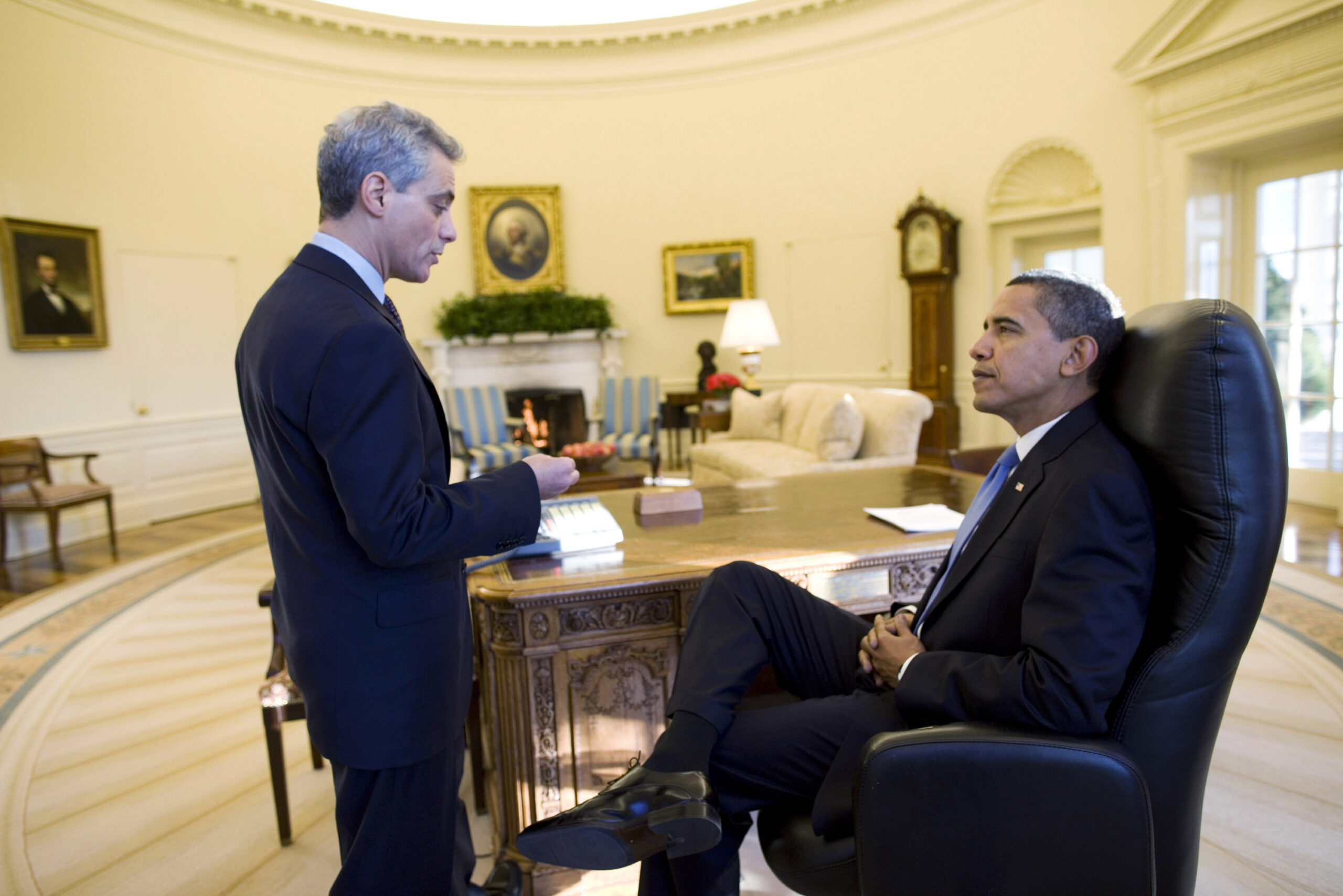
It is a significant contrast with where Emanuel stood during his time as Obama’s chief of staff. In the White House from 2009-2010, Emanuel was one of Obama’s top consiglieres on policies relating to Israel. He was involved in initial funding to boost Israel’s Iron Dome system, an effort that culminated in a 10-year memorandum of understanding between the two countries that provides $3.8 billion in annual aid through 2028, which the White House touted, at the time, as “the largest single pledge of military assistance in U.S. history.”
In 2009, Emanuel shared more reassuring words in his address to the JFNA’s annual gathering, praising Netanyahu while citing his own familial ties to Israel as well as what he had called the “privileged point of view” from understanding the Jewish state’s “value as a homeland.”
“Those who have questioned” whether the Obama administration’s opposition to Israeli settlement building in the West Bank and outreach to the Arab world “implies diminished support for Israel, that is not the intent,” he said, filling in for his boss. “It is not the case and it never will be. The truth is the opposite. Only through dialogue will Israel achieve the peace it seeks.”
Emanuel now takes a more jaundiced view of Israeli diplomacy, fueling his calls for an end to U.S. aid. “Under Prime Minister Netanyahu, in the last three years, you’ve lost Europe, you’ve lost the American public, and you picked up Somaliland,” he scoffed to JI, referring to Israel’s decision to formally recognize the secessionist region in the Horn of Africa last year. “As my grandmother would say, ‘Such a deal.’ That is your only diplomatic achievement.”
Julie Fishman Rayman, senior vice president of policy and political affairs at the American Jewish Committee, called Emanuel’s views “disappointing and worrying,” arguing that U.S. security assistance to Israel “is not just vital to deterring further attacks and ensuring the survival of the state of Israel, but is integrally tied to safeguarding American interests in the region.”
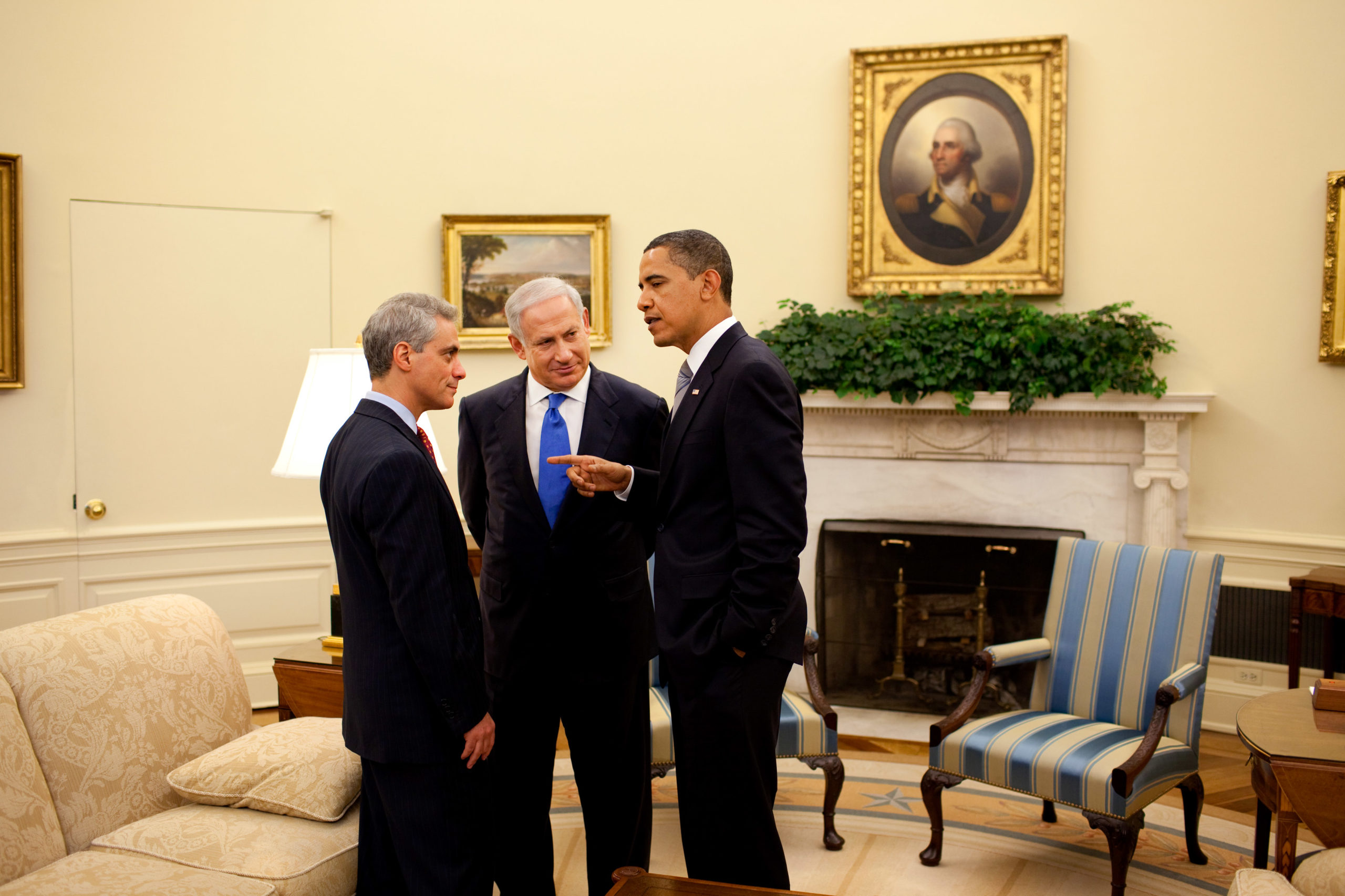
Emanuel argued that his position on U.S. aid is a logical extension of sentiments he had conveyed in 2009 while in the Obama administration, when he repeatedly clashed with Netanyahu over settlement expansion in the West Bank, which the White House cautioned would jeopardize prospects for achieving a two-state solution.
“I went straight to the prime minister to his face and said, ‘What you’re doing is going to lead to the great isolation of Israel,’” Emanuel recalled, noting, as he often does, that Netanyahu called him a “self-hating Jew,” underscoring the highly personal tenor of their long-testy relationship. “Look, I have a longstanding relationship,” he explained. “I’m honest about it.”
But even as he argues that Israel is today “a different country from a sense of wealth and capacity,” he has strained to harmonize the motives now animating his current approach. He has dismissed speculation over the sincerity of his stance and whether it is rooted in a good-faith view of Israel’s economic standing or if it is instead a more cynical political calculation tailored to a rising anti-Israel faction in the Democratic Party.
Though in contrast with high-profile voices on the far left, Emanuel has shied away from charged rhetoric about genocide in Gaza, saying it is a legal question, as well accusations that Israel had tricked President Donald Trump into war with Iran, which he says ignores U.S. agency in the conflict. He has said it is a “mistake” to restrict arms sales to Israel, suggesting that he is not aligned with related resolutions that were introduced by Sen. Bernie Sanders (I-VT) last month and notably drew backing from most Senate Democrats.
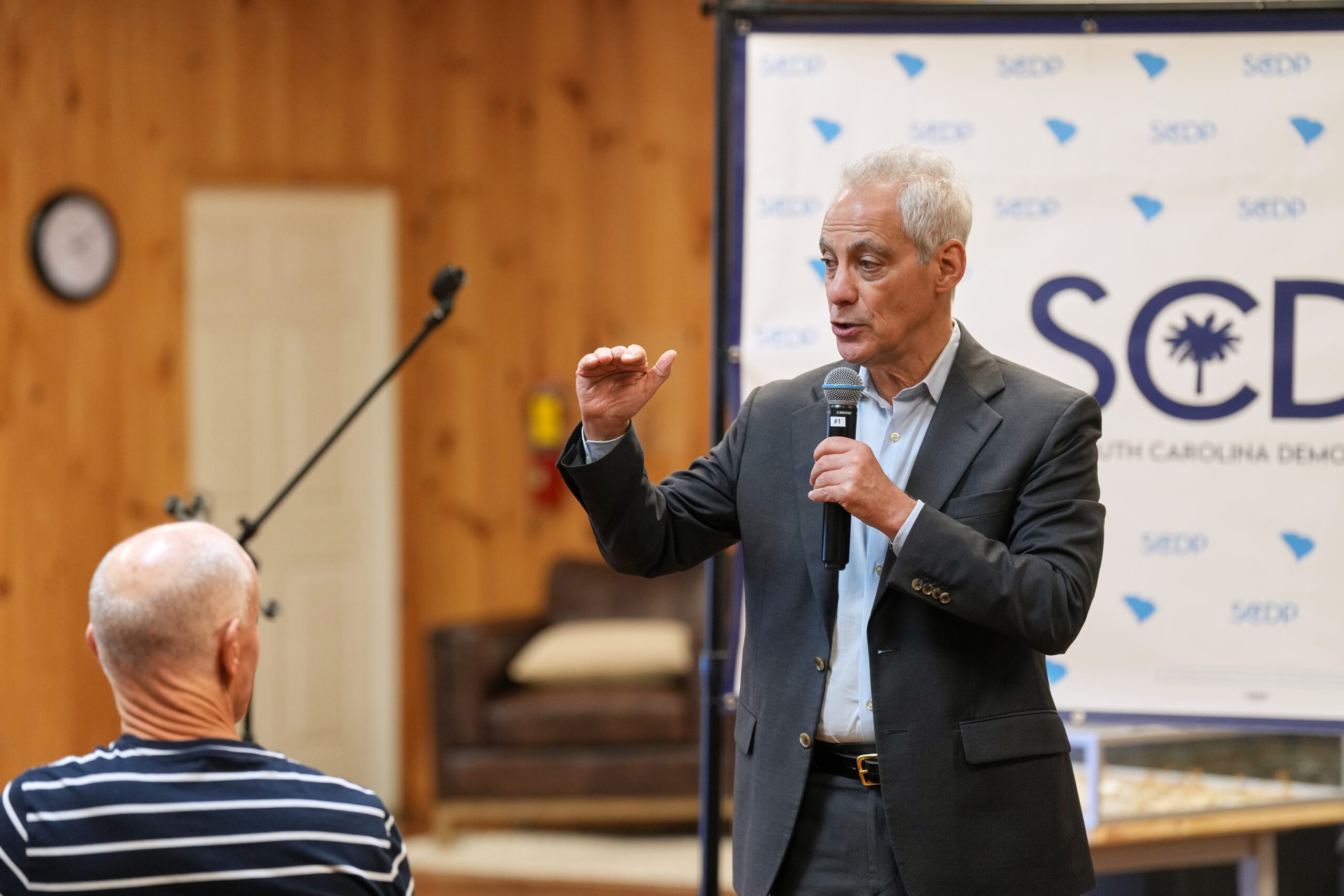
Emanuel’s allies said in recent interviews that they were not surprised with his approach, saying that he has been building to this moment for some time. “Do I agree with him? Not necessarily,” former Rep. Steve Israel (D-NY), who served with Emanuel in Congress, told JI. “But this is not a breakthrough position. He’s expressed those concerns for years.”
David Axelrod, a former chief strategist to Obama, likewise agreed in a text message to JI that “Rahm’s basic concerns about where Bibi is leading are not new,” using Netanyahu’s nickname. “Rahm, like a lot of us, has always believed a two-state solution was the only road to peace and Bibi has been deeply, irretrievably opposed and actively hostile to the notion.”
“You ask these questions like somehow I’ve changed. The prime minister used to articulate a two-state solution. He was for it. He’s the one that’s changed,” Emanuel said of Israeli Prime Minister Benjamin Netanyahu.
One prominent Jewish Democrat, who asked to remain anonymous to discuss a charged issue, called Emanuel’s stance a practical response that “takes the wind out of the sails of the far left and the far right,” which have politicized funding for Israel. “As long as we’re giving aid to Israel, Americans will feel like they have a say in Israeli policy and how that investment is managed.”
But if that is Emanuel’s aim, he has not made it clear. In conversation with JI, he was hesitant to clarify his own positions when pressed. Asked if he would back Iron Dome funding, he said he had been “part of the financing” for a “joint project” that he called “key for Israel’s security” when it was first developed with the United States.
He declined to elaborate further about such aid. “U.S. taxpayers should not be in the position of subsidizing a country,” he reiterated. “You know my history with the Iron Dome,” he said. “I’m done. I’ve answered it.”
Though some allies of Emanuel are willing to indulge his views more favorably than other 2028 prospects with thinner resumes related to Middle East policy, a range of Jewish and pro-Israel organizations are now pushing back on his recent turn against U.S. military aid.
“It’s in America’s interests to keep our word and help a democratic partner shield innocent civilians from missiles,” Deryn Sousa, a spokesperson for AIPAC, told JI, referring to the Iron Dome. “Reneging on the Obama administration’s signed agreement with our closest ally in the Middle East would send a devastating message to our allies, empower our enemies and do nothing to advance peace.”
Brian Romick, president of Democratic Majority for Israel, said that “Israel’s situation is not comparable to our other close allies.”
“Unlike Japan, South Korea and Germany, Israel does not have permanent U.S. troops on the ground,” he told JI recently. “It’s also surrounded by enemies who actively want to wipe it off the face of the earth. U.S. security assistance reflects that reality and the significant strategic benefits the aid provides.”
Michael Makovsky, president and CEO of the Jewish Institute for National Security of America, told JI in a recent interview that he disagreed with Emanuel, even as he acknowledged the sentiment as a “legitimate view.” Still, he added that it is “in the U.S. interest” to continue providing military aid to Israel, “which anyway all goes to buying U.S. weaponry.”
Even some pro-Israel Democrats sympathetic to Emanuel and his perspective said his comments on military aid raise more questions than they answer. One influential Jewish Democrat who has long been acquainted with Emanuel, speaking on the condition of anonymity to address a sensitive topic, expressed concerns that ending aid to Israel could stoke further calls from the far left to condition military funding or block future weapons sales outright.
For his part, Emanuel avoided commenting on the question of Israel’s qualitative military edge, which the U.S. is legally obligated to ensure but allies say could suffer without military aid. “I feel like we’re taking the same question from 50 angles,” Emanuel told JI. “I want Israel to fight for peace the way it’s proven that it’s fought in the last three years. That’s what’s missing,” he said last week.
“You ask these questions like somehow I’ve changed,” Emanuel said earlier in the call. “The prime minister used to articulate a two-state solution. He was for it. He’s the one that’s changed.”
Duss, a former foreign policy advisor to Bernie Sanders, is an outspoken critic of the U.S.-Israel alliance

Tom Williams/CQ-Roll Call, Inc via Getty Images
Rep. Alexandria Ocasio-Cortez, D-N.Y., makes her way to House votes in the U.S. Capitol on Wednesday, June 5, 2024.
Rep. Alexandria Ocasio-Cortez (D-NY) has been receiving briefings from Matt Duss, an outspoken critic of the U.S.-Israel alliance and former foreign policy advisor to Sen. Bernie Sanders (I-VT), as she prepares for a high-profile appearance at the Munich Security Conference next week, The New York Times reported on Friday.
Duss, who is now executive vice president at the Center for International Policy, a left-wing think tank, has long been a prominent detractor of U.S. relations with Israel. He has called for blocking aid to Israel and has expressed opposition to renewing the 10-year memorandum of understanding, which is set to expire in 2028 and currently provides $3.8 billion in military funding to Israel annually.
He has also cast doubt on the Abraham Accords, accusing the normalization agreements between Israel and several Arab countries of using “racist logic” that is “premised on the perpetual repression of Palestinians” and helping to fuel Hamas’ Oct. 7, 2023, terror attacks. Duss has frequently called Israel’s resulting war in Gaza a genocide.
“I don’t think a Democrat can be nominated in ‘28 without acknowledging that it is a genocide,” Duss suggested in an interview with The Financial Times last September.
While it is no secret that Ocasio-Cortez largely shares such views, her decision to seek guidance from Duss and others at his organization, as the Times reported, provides insight into her efforts to burnish her progressive foreign policy credentials amid speculation that she could run for higher office in 2028.
The congresswoman, who was first elected in 2018, has struggled to articulate her views on the Middle East, even as she has positioned herself as a leading opponent of U.S. aid to Israel in response to the war in Gaza.
In an interview shortly before she assumed office, Ocasio-Cortez faced scrutiny for stumbling through responses about Israel, acknowledging she was “not the expert on geopolitics on this issue.” In 2021, she likewise strained to clarify her own positions on the region during a rare instance of public engagement with a mainstream Jewish group in New York City.
Months later, she was seen weeping on the House floor while switching her vote from “no” to “present” on a widely approved measure to provide Israel with $1 billion in supplemental funding for its Iron Dome missile-defense system — a decision for which she later voiced regret.
In Munich next week, Ocasio-Cortez is expected to speak about populist political movements and the United States’ role on the global stage, according to the Times.
“She is someone who is engaged with parts of the world that are often not represented in Munich,” Duss told the publication.
The Center for International Policy, founded in 1975, says on its website that it seeks to “advance a more peaceful, just, and sustainable U.S. approach to foreign policy.” The organization has previously transferred grant funds to the Quincy Institute for Responsible Statecraft, an isolationist think tank that has promoted sympathetic positions on Iran, according to 2022 tax filings.
Duss did not respond to a request for comment on Friday, nor did a spokesperson for Ocasio-Cortez.

Phil Roeder/Flickr
Sen. Kirsten Gillibrand (D-NY)
Sen. Kirsten Gillibrand (D-NY) questioned the Israeli government’s commitment to the U.S.-Israel alliance on Sunday following its decision last week to bar entry to two members of Congress.
“Congress has a duty to make decisions about whether we give aid, how we protect allies such as Israel with qualitative military edge. I don’t know why Netanyahu would want to deny members of Congress to come to Israel if they expect us to be that never-ending partner and friend,” Gillibrand said in an interview on ABC’s “This Week” with Martha Raddatz.
The 2020 presidential candidate also indicated that she would hold Israel “accountable” for its decision if she was president, although she didn’t illustrate what that meant. “I think our obligation, as an ally and as a friend is to hold them accountable when they’re wrong,” Gillbrand explained. “And I think any time you are undermining basic free speech rights and human rights you’re going in the wrong direction.”
Gillibrand said it was unfortunate that Netanyahu’s government had passed a law to prevent supporters of the BDS movement from entering Israel “because in this country, we believe in free speech.”
Read Gillibrand’s comments in full below:
Raddatz: I want to turn to Israel. Congressman Tlaib has said she will no longer travel there, even though Israel had said they would allow her to do that on humanitarian basis to visit her grandmother. She says she won’t do that now because of some of the demands that were put on her. Is that a mistake? Should she have gone because she wanted to originally go see her grandmother?
Gillibrand: “So, the tradition is for members of Congress — I have been to Israel several times as a member of Congress, and I brought a CODEL of Republicans and Democrats — Lindsey Graham was on my trip, Senator Hoeven, Amy Klobuchar. And we met with Netanyahu. And the point is, Congress has a duty to make decisions about whether we give aid, how we protect allies such as Israel with qualitative military edge. I don’t know why Netanyahu would want to deny members of Congress to come to Israel if they expect us to be that never-ending partner and friend.”
Raddatz: Well, they talk about the BDS movement…
Gillibrand: “Agreed. I understand…”
Raddatz: You don’t support that, so why is that enough?
Gillibrand: “Because in this country, we believe in free speech. In this country, we don’t deny people the right to participate in conversations about their views and their values. Unfortunately, Netanyahu has allowed a very conservative government to have a law that says if you support the BDS movement they can prevent you.”
Raddatz: Should there be repercussions for Israel?
Gillibrand: “I think our obligation, as an ally and as a friend is to hold them accountable when they’re wrong. And I think any time you are undermining basic free speech rights and human rights you’re going in the wrong direction.”
Raddatz: And how do you hold them accountable?
Gillibrand: “That’s what you do as president. President Trump is unwilling to hold anyone accountable. He’s unwilling to stand up to other world leaders. You’ve seen it with this instance of Israel, you’ve seen it with China, you’ve seen it with Russia. And he has really shrunk in the face of his responsibilities, unwilling to actually lead and to ask other world leaders to support and protect human rights.”
Please log in if you already have a subscription, or subscribe to access the latest updates.
 Continue with Google

 Continue with Apple