









































Scott Eisen/Getty Images
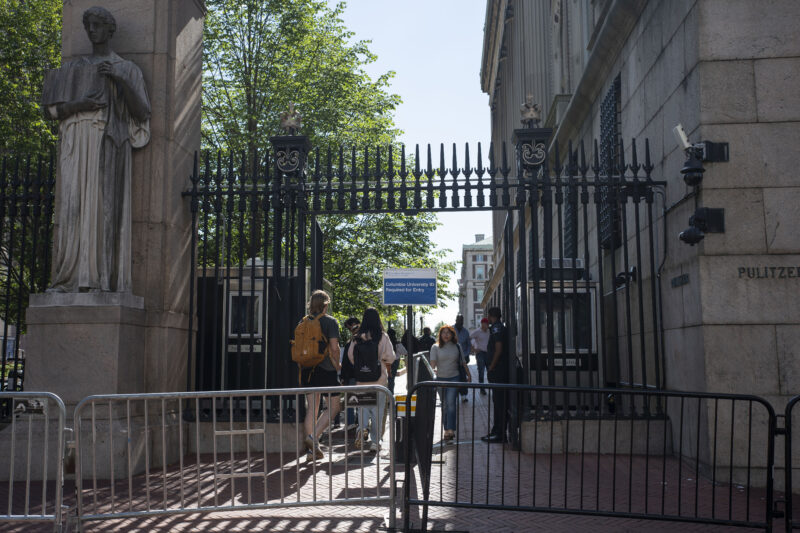
An entrance gate on Harvard Yard at the Harvard University campus on June 29, 2023 in Cambridge, Massachusetts.


 Add JewishInsider on Google
Good Tuesday morning.
In today’s edition of the Daily Kickoff, we look at the apparent failure of Israel’s security establishment to thwart last weekend’s Hamas attacks in southern Israel, and report on potential fissures within the Democratic Party over the response to the tragedy in Israel. Also in today’s Daily Kickoff: Natan Sharansky, Israeli President Isaac Herzog and Sen. Elizabeth Warren.
Israeli Prime Minister Benjamin Netanyahu, in an address on Monday to the nation about the “war on our homes…forced on us by a despicable enemy,” vowed that Israel will emerge victorious, Jewish Insider’s Lahav Harkov reports. “We always knew who Hamas was, and now the world knows: Hamas is ISIS, and we will defeat them just as the enlightened world did to ISIS,” Netanyahu said.
Israel will first make sure to “purify” its territory of terrorists, and then move on to attack Hamas “with force we haven’t seen before,” which has already begun, Netanyahu said. Israel will also move to bolster forces on the northern border, in the West Bank and the rest of Israel.
Netanyahu also called for a unity government: “The divisions between us are over…The leadership must also be united.”
The prime minister thanked President Joe Biden for his support for Israel “in words and actions,” and noted that a U.S. aircraft carrier – the world’s largest – is being sent to the region. “Our shared enemies understand what this step means,” Netanyahu said.
Earlier Monday, Netanyahu appointed Brig.-Gen. (Res.) Gal Hirsch to be the point person for the captives and missing. Hirsch said he is working on a full assessment of the situation and to create a point of contact for all families whose loved ones are missing. “Our hearts are in great pain…I am with you in the campaign to bring the captives and the missing back home to Israel.” The FBI is assisting Israeli security agencies in identifying Americans among the hostages.
Israeli Foreign Minister Eli Cohen spoke to journalists on Monday, saying, “Hamas executed a massacre the world will not forget. We want to thank the international community for their solidarity and their firm support of Israel. We trust this support will continue as we meet the challenge of fighting terror…It will take a long time. We cannot allow it for ourselves and for the region for such inhumanity to remain. The people who did this should pay the price, and it will be a high price.”
And in Washington, Biden is slated to deliver an address on the events in Israel at 1 p.m. ET today. Biden on Monday united with Washington’s closest allies to unequivocally condemn Hamas’ deadly attacks on Israel and offer further support to Israel as the country defends itself, JI’s Gabby Deutch reports.
Biden, along with the leaders of France, Germany, Italy and the United Kingdom, wrote that they “express our steadfast and united support to the State of Israel, and our unequivocal condemnation of Hamas and its appalling acts of terrorism,” in a rare joint statement. “Our countries will support Israel in its efforts to defend itself and its people against such atrocities.”
Former President Barack Obama issued a statement on Monday afternoon addressing the attacks. “All Americans should be horrified and outraged by the brazen terrorist attacks on Israel and the slaughter of innocent civilians,” Obama wrote on X. “We grieve for those who died, pray for the safe return of those who’ve been held hostage, and stand squarely alongside our ally, Israel, as it dismantles Hamas. As we support Israel’s right to defend itself against terror, we must keep striving for a just and lasting peace for Israelis and Palestinians alike.”
An hour later, former President Bill Clinton said that he condemned “the horrific terrorist assault carried out by Hamas in Israel, and mourn the senseless loss of life. My heart is with all those affected by the violence, including American families. Now is a time for the world to rally against terrorism and to support Israeli democracy. I stand with the government of Israel and all Israelis, and urge them to stand together. This is a moment to focus on purpose over politics.”
A senior Department of Defense official outlined American efforts to support Israel in its response to “ISIS level savagery,” telling reporters that Washington is “working as fast as possible to provide critically needed munitions of various types and other equipment.”
The White House also released further information on Monday about Americans affected by the attacks, although details remained unclear. At least 11 Americans have been killed in the attacks, and many more are unaccounted for. John Kirby, a spokesperson for the National Security Council, said that the White House is still working to confirm if Americans are indeed among the hostages in Gaza. Meanwhile in Tel Aviv, a press conference is set for later today with families of American hostages believed to be held in Gaza.
military briefing
After securing the border, Israel’s military turns to destroying terrorist infrastructure in Gaza

After finally securing its southern border, the Israeli military is now turning its attention to destroying critical points belonging to Hamas and other terrorist groups inside the Palestinian enclave, IDF international spokesman Lt. Col. Richard Hecht told journalists on Tuesday morning. Hecht said that a total of 34 army battalions — four divisions — had already been fully deployed to the area and were in the process of building infrastructure for future operations. Some 300,000 reservist soldiers have been called up so far. In addition, he said, the evacuation of the remaining civilian residents from Israeli communities around the Gaza border had nearly been completed, Jewish Insider’s Ruth Marks Eglash reports.
Overnight: Dozens of IDF fighter jets struck more than 200 targets belonging to terrorist groups in the Gaza Strip, with a focus on the neighborhoods of Rimal and Khan Yunis, which are “used as terror hubs for the Hamas terrorist organization” and are where many of the terror attacks against Israel originated, the army said in a statement.
Terror targets: Among the targets were sites belonging to Palestinian Islamic Jihad in Khan Yunis, a Hamas weapons storage site that was located inside a mosque and operational terror infrastructure used by Hamas operatives, the army said. A residence belonging to a Hamas operative and buildings used by the terrorist group’s senior officials, including a multi-story building in the Al-Furqan area, were also destroyed. In Gaza, the Palestinian Health Information Center reported that some 687 people have been killed, and that there are severe shortages of critical medications, disposable medical equipment and fuel.
looking for answers
Israel’s intel failure: ‘How did this happen?’

As Israel readies for a possible ground invasion of the Gaza Strip following the massive surprise attack last Saturday that killed some 900 Israelis and left the country reeling, Israelis are grappling with how the soldiers in the south were left so unprotected, and how the intelligence lapse — one that carries an eerie echo of the Yom Kippur War surprise attack almost 50 years ago to the day that Hamas brazenly struck southern Israel — was so glaring. The full picture will likely become clearer when the fog of war dissipates and a commission of inquiry investigates, as has become the custom in Israel after wars in the past 50 years. In the short term, as Israelis ask themselves, “How did this happen?” several possible explanations have already come to light, Jewish Insider’s Lahav Harkov reports.
The conceptzia: After the Yom Kippur War, one of the answers to how Israel was surprised by an attack from Egypt and Syria was the “conceptzia.” The word literally translates to “preconception,” and it refers to groupthink or an idea that captivated the whole cabinet, without consideration of the alternatives. “We were apparently dependent on a conceptzia that Hamas wanted money from Qatar and was deterred,” former IDF Military Intelligence Directorate head Maj.-Gen. (res.) Amos Yadlin told JI. “For every surprise, the surprisers come up with a distraction, and that is what we saw.” Israel built its defense plans “on the idea that Hamas was not interested in a war. They distracted us and kept us busy with other violations on the [border] fence,” Yadlin said.
Blinded lookouts: Another element of Hamas’ attack that delayed Israel’s ability to respond effectively was its targeting of bases in the south where tatzpitaniyot, who watch cameras and other feeds of the border, are stationed. One tatzpitanit who finished her service earlier this year told JI that she was going back to her old base, because there was no one left who knew how to do the lookouts’ job. Some of the tatzpitanyiot on bases attacked by Hamas told harrowing stories on social media. “In my worst dreams, I could not have imagined something like this,” one wrote. “I woke up for a 4 a.m. shift that turned out to be a nightmare. I never thought I’d see something like this from my lookout point in my life. I did the best I can, until a sniper shot my camera.”
seeing crimson
Harvard administration slammed by lawmakers, alums for response to pro-Hamas student letter

One day after 31 student organizations at Harvard University published a letter on social media claiming Israel is “entirely responsible” for Hamas terrorists’ murder of 900 Israelis, Jewish student leaders and alumni condemned the university’s handling of the incident and called for a stronger response from Harvard’s administration, eJewishPhilanthropy’s Haley Cohen and Jewish Insider’s Gabby Deutch report.
‘Weak statement’: Harvard President Claudine Gay and other university leaders said in a Monday night statement that the school is “heartbroken by the death and destruction unleashed by the attack by Hamas.” But Jacob Miller, the president of the student board at Harvard Hillel, called Harvard’s response a “weak statement [that] fails to capture the gravity of the moment.” He called for the university to “unequivocally condemn these terror attacks, a step they have been unwilling to take thus far.”
Writing back: Two letters from Harvard students and alumni directly call on the university’s leadership to condemn the anti-Israel statement released by the student organizations, who called themselves the Harvard Palestine Solidarity Groups (PSG). One, organized by Harvard Hillel and Harvard Chabad, was signed by more than 2,000 people as of Monday night. “The statement signed by the Palestine Solidarity Committee and dozens of other student groups blaming Israel for the aforementioned attacks is completely wrong and deeply offensive,” the letter states. “There are no justifications for acts of terror as we have seen in the past days. We call on all the student groups who co-signed the statement to retract their signatures from the offensive letter.”
markey’s mixed message
Pro-Israel rally in Boston hints at Democratic divide on war in Gaza

A pro-Israel rally on the Boston Common on Monday signaled a potential schism within the Democratic Party over how best to respond to the ongoing war between Israel and Hamas, as Sen. Ed Markey (D-MA) was booed for calling for de-escalation between Israel and Hamas, Jewish Insider’s Marc Rod reports.
De-escalation: “Hamas wants continued instability, not normalization. They are violent extremists. They gain support when there is a crisis,” Markey said. “That is why the United States and the international community must keep pushing for diplomacy and the ending of civilian casualties on all sides. There must be a de-escalation of the current violence.” Markey’s call for de-escalation prompted loud boos from the crowd, including a chant of “it’s not equal” from someone in the crowd.
Rejection: Rep. Jake Auchincloss (D-MA), who spoke minutes after Markey, elicited loud cheers from the crowd for comments explicitly rejecting de-escalation — an apparent repudiation of Markey’s remarks. “This will be a hard war. Israel needs the support of its most important ally, the United States,” Auchincloss said. “Israel needs moral support from Americans. Now is not the time for equivocation. Hamas is an internationally recognized terrorist organization that is executing and raping civilians. Israel is a liberal democracy with the right and responsibility to defend itself and its citizens. De-escalation is not possible when [Hamas] are taking hostages.”
Strong support: But in a sign of the strong support that Israel continues to see across the political spectrum in the U.S., Sen. Elizabeth Warren (D-MA), a staunch progressive who has in the past floated the possibility of restricting aid to Israel, delivered a tearful speech offering strong support for the Jewish state. “I’m here today to say unequivocally, there is no justification for terrorism ever,” Warren said. “I am here to grieve with you. I am here to stand in solidarity. But standing in solidarity does not mean standing still. Standing in solidarity means action. It means shouldering the obligations of a strong and faithful ally.”
30,000-foot view: Nearly every member of Congress has issued a statement on the situation in Israel, including every member of the Senate, almost all offering support for Israel. The only ones who’ve been silent: Reps. Raúl Grijalva (D-AZ), Thomas Massie (R-KY), Melanie Stansbury (D-NM) and Maxine Waters (D-CA).
diaspora aid
American Jewish leaders visit southern Israel as they direct assistance after unprecedented terror attacks

A delegation of top officials from the Jewish Federations of North America, UJA-Federation of New York and the Jewish Agency for Israel toured Israel’s war-torn south on Monday, visiting a hospital in the city of Ashkelon that has treated hundreds of casualties since Saturday morning, eJewishPhilanthropy‘s Judah Ari Gross reports from Ashkelon.
Hearing from victims: During their tour of Barzilai Medical Center, JFNA President and CEO Eric Fingerhut, director general of JFNA’s Israel office Rebecca Caspi, UJA-Federation CEO Eric Goldstein, chair of the Jewish Agency’s Budget and Finance Committee Bruce Sholk and the director of the Jewish Agency’s Fund for Victims of Terror, Ayelet Nahmias-Verbin, met with hospital staff, spoke with victims and families of victims and saw new casualties coming in as a rocket directly struck a car a few blocks away from the hospital during their visit. eJP accompanied them on the tour. (Fingerhut, Goldstein and Sholk were already in the country when the war broke out; Caspi and Nahmias-Verbin live in Israel.)
Millions pledged: The visit came as the Jewish Agency prepares to distribute grants to victims of the war — both the initial assaults and continued rocket fire — through its Fund for Victims of Terror. Each survivor or their family is entitled to an immediate NIS 4,000 ($1,014) grant and up to NIS 25,000 ($6,340) in payments for up to three years. In the 21 years that the fund has been in existence, it has given grants to roughly 9,000 victims; after Saturday alone, it will have to distribute grants to well over 3,000 victims, with numbers expected to rise as fighting continues. Fingerhut told eJP that JFNA, which is the prime donor to the fund, will ensure that everyone entitled to a grant, receives one. “There are millions that have already been pledged to the Fund for Victims of Terror,” he said.
Read the full story here and sign up for eJewishPhilanthropy’s Your Daily Phil newsletter here.
Worthy Reads
Time to Speak Out: Israeli President Isaac Herzog pens an essay in Time magazine calling for the international community to stand with Israel in its darkest hours. “History will judge Hamas for its crimes against humanity, along with all those who fail to stand against them. I urge all the international community, those who have always stood by us, and those who have traditionally taken a different stance. Now is the time to speak out. Now is the time to take action in support of Israel by word and deed — at home and in the international institutions. To our Muslim neighbors and friends in the region who represent a different face of Islam — I say now is the time to show that we all share an inalienable and mutual respect for human life.” [Time]
Having Israel’s Back: In The Wall Street Journal, Senate Minority Leader Mitch McConnell (R-KY) lays out a series of steps the U.S. can take to support Israel. “The civilized world must impose real costs on terrorists and those who support or condone them. There should be no haven for Iran’s agents of death. The West should reimpose extensive multilateral sanctions on Tehran and deny Iranian planes overflight rights. Impound the shipping vessels Iran uses to circumvent sanctions. Close Iranian banks with access to the West, and cease the Iranian operations of European businesses. Treat Iranian officials like pariahs and sink Iranian naval boats that threaten international shipping. In the days and weeks ahead, the brave people of Israel will continue to reclaim their territory, rescue their countrymen, and mourn the innocent men, women and children the terrorists have slaughtered. They deserve the support of the free world, in both word and deed.” [WSJ]
Bracing for Shift of Opinion: In the Washington Post, former Jewish Agency chair and Soviet refusenik Natan Sharansky cautions that world opinion could shift against Israel in the coming days, as it has in previous conflicts between Israel and Hamas. “Right now, we have to destroy the organization that seeks to destroy us, and for that we must fight a war. Today, the world seems to understand this. World leaders have denounced Hamas’s barbarism and affirmed the legitimacy of Israel’s right to self-defense. But what about tomorrow? What will happen as the Palestinian death toll rises? At that point, I fear, the same leaders will forget that Israel and Hamas are fighting on radically different terms and focus their efforts on restraining Israel instead of condemning Hamas. The reason this will happen — as it always does — is that Hamas has a powerful unconventional weapon, one far more sophisticated and effective than missiles and drones: Palestinian civilians, used as human shields. The more Palestinians who die because Hamas terrorists cynically hide behind them, the more the free world will turn against Israel. It is only a matter of weeks, or days, or even hours, until articles will appear in major publications depicting the Israeli government as indiscriminately targeting innocent Palestinians. Human Rights Watch will yet again vilify Israel as an international outlaw, and the United Nations will pass resolutions demanding that we cease our war of self-defense.” [WashPost]
An IDF Unprepared: In The Atlantic, Andrew Exum, former deputy assistant secretary of defense for Middle East policy, assesses the Israeli military’s training and readiness to handle armed conflict. “Israel does an excellent job — arguably better than the U.S. military — of learning from its tactical and operational failures. But the country’s semiprofessional military relies heavily on conscripts and reservists, which places it at a disadvantage in many respects. Full-time, professional militaries can dedicate themselves to rehearsing collective tasks that high-intensity combat situations often require: reacting to ambushes, conducting raids, incorporating artillery and airpower into maneuvers. Conscript militaries, by contrast, are forever bringing on and training new people. The turnover is often too high to allow units to develop proficiency in the most complicated military tasks. Israel’s conventional forces, moreover, seem to spend less time rehearsing combined arms operations than they do policing the occupied territories. Indeed, what few active-duty battalions Israel has appear to have been deployed away from the south and to the West Bank to safeguard settlers during the holiday. Such policing operations, in addition to pulling needed units away from other priorities, are poor practice for more high-intensity combat.” [TheAtlantic]
The Enemy Within: In The New York Times, Shimrit Meir, a former senior advisor to then-Israeli Prime Minister Naftali Bennett, considers how years of political infighting has left Israel vulnerable to outside threats. “As a nation, Israelis acted as if we could afford the luxury of a vicious internal fight, the kind in which your political rival becomes your enemy. We let animosity, demagogy and the poisonous discourse of social media take over our society, rip apart the only Jewish army in the world. This is our tragedy. And it carries a lesson for other polarized democracies: There is someone out there waiting to gain from your self-made weakness. This someone is your enemy. If there can be one conciliation after this darkest of days, it will be Israel returning to its senses, ending the political crisis and forming a unity government. There are many hard decisions that await us after the funerals, chief among them how to bring back home the young children and many others taken hostage by Hamas’s terrorists.” [NYTimes]
Around the Web
Moving on Lew: The White House is working to expedite the nomination of former Treasury Secretary Jack Lew to be ambassador to Israel.
Speaker Saga: Former House Speaker Kevin McCarthy (R-CA) didn’t rule out the possibility of being reelected to his former office on Monday at a press conference responding to the war in Israel.
Deep Freeze: Former U.S. Ambassador to the U.N. Nikki Haley suggested the refreezing of Iran’s access to $6 billion in funds being held in Qatar.
Dropping Out: Former Rep. Will Hurd (R-TX) ended his presidential bid and endorsed Nikki Haley for the GOP nomination.
Campus Conundrum: Less than two weeks ago, the Biden administration awarded a grant of $100,000 to Al-Quds Open University, which praised the weekend attacks in Israel and referred to the Hamas terrorists as “righteous martyrs.”
Joint Measure: The White House and top Democratic and Republican officials are considering linking aid to Israel to funding for Ukraine, as a way to push both through Congress.
Photo Gallery: The Atlanticpublished photos of Israelis being kidnapped during the Tribe of Nova music festival.
TV Talk: Anti-Defamation League CEO Jonathan Greenblatt blasted MSNBC while a guest on the network’s “Morning Joe” program over its framing of the Israeli-Palestinian conflict.
Administration Angle: In The Wall Street Journal, Walter Russell Mead considers the options facing President Joe Biden as the conflict between Israel and Hamas shows no signs of stopping.
Call for Unity: The New York Times editorial board calls for elected officials in both the U.S. and Israel to put aside partisan politics in the interest of Israel’s safety.
Watching With Caution: The Washington Postspotlights concerns by American Jewish communities that they might be targeted by an uptick in antisemitism as a result of the Israel-Hamas conflict.
End Game: The Wall Street Journal’s Gerard Baker suggests that Hamas’ end goal “is truly indiscriminate destruction.”
A Father Speaks Out: Brandeis professor emeritus Ilan Troen called Saturday’s attack on Jewish communities, in which his daughter and son-in-law were killed, a “pogrom.”
Pitch Perfect: Baltimore Orioles pitcher Dean Kremer, whose parents are Israeli and who holds Israeli citizenship, will make his playoff debut tonight against the Texas Rangers.
Sunak’s Synagogue Speech: U.K. Prime Minister Rishi Sunak expressed “unequivocal” support for Israel in an address last night at the Finchley United Synagogue in North London.
Across the Pond: U.K. Home Secretary Suella Braverman plans to renew efforts to designate Iran’s Islamic Revolutionary Guard Corps as a terrorist organization.
Xi on Israel: Chinese President Xi Jinping released an updated statement taking a stronger position on the situation in Israel and Gaza after facing criticism from Senate Majority Leader Chuck Schumer (D-NY) over Beijing’s top diplomat showing “no sympathy or support for Israel during these tough, troubled times.”
Abu Dhabi Warning: The United Arab Emirates cautioned Syria against getting involved in the war between Israel and Hamas.
Oil Woes: Crude oil prices spiked following Hamas’ invasion of Israel, amid concerns over the broader regional implications of the conflict.
Catching Flights: Russian businessman Mikhail Fridman left Israel for Moscow a week after arriving from the U.K., but said he plans to return to Israel once the conflict winds down.
DNA Dilemma: Genetic testing company 23andMe confirmed that its system had been broken into, after an internet hacker attempted to sell leaked information about Ashkenazi Jewish users.
Remembering: Celebrity photographer Henri Dauman, who escaped Nazi persecution in Vichy France as a child, died at 90. Pianist Russell Sherman died at 93.
Pic of the Day

The White House is illuminated in the blue and white colors of the Israeli flag on Monday night.
Birthdays

Israel resident and op-ed contributor for The New York Times, he is the author of four acclaimed books, Matti Friedman turns 46…
Professor emeritus of constitutional law at Harvard Law School, he has argued 35 cases at the U.S. Supreme Court, Laurence Tribe turns 82… Past chairman and CEO of KB Home, Bruce Karatz turns 78… Physician, philanthropist and the majority owner of the Las Vegas Sands Corporation, Miriam Adelson turns 78… Director of the Center for Information and Documentation Israel in The Hague, promoting a positive view of Israel within Dutch society, Ronald Maurice (Ronny) Naftaniel turns 75… Former member of the Knesset for 30 years on behalf of three political parties, he has served in six ministerial roles, Meir Sheetrit turns 75… Long-time IDF Chaplain, Yedidya Atlas… Award-winning writer and photographer based in Albuquerque, N.M., Diane Joy Schmidt… Vocalist and songwriter best known as the lead singer of Van Halen, he is a member of the Rock and Roll Hall of Fame, David Lee Roth turns 69… Co-chairman and chief investment officer of Oaktree Capital Management, Bruce Karsh turns 68… Former NASA astronaut who flew on five Space Shuttle missions, he has held many positions at NASA including chief scientist, John M. Grunsfeld turns 65… Shareholder at the Bethesda, Maryland law firm of Selzer Gurvitch, Neil Gurvitch… Founder and principal of two Los Angeles-based real estate firms, Freeman Group and Metro Properties, Rodney Freeman… Governmental relations and strategic communications principal at BMWL Public Affairs, Sam Lauter… Governor of California since 2019, Gavin Newsom turns 56… Israeli comedian and actor, twice voted as the funniest Israeli, Asi Cohen turns 49… Former Jewish liaison in the Obama and Biden administrations, now the director of The Sapir Institute, Chanan Weissman… President at the Alliance to Combat Extremism Fund, Ian Sugar… Head of U.S. government relations and corporate affairs at Glencore, Seth Levey… VP in the Chicago office of Goldman Sachs, Avi Davidoff… Rabbi of Congregation Bnai Yeshurun in Teaneck, N.J., Elliot Schrier turns 34… North American campus director at CAMERA, Hali Haber Spiegel… Winner of Israel’s National Bible Quiz as a teen and then a soldier in the IDF’s Combat Intelligence Collection Corps, he is a son of PM Benjamin Netanyahu, Avner Netanyahu turns 29… Adviser for human rights at Israel’s Mission at the United Nations, Or Shaked…
Rep. Seth Moulton, a Harvard graduate: ‘I cannot recall a moment when I’ve been more embarrassed by my alma mater’
Scott Eisen/Getty Images
An entrance gate on Harvard Yard at the Harvard University campus on June 29, 2023 in Cambridge, Massachusetts.
One day after 31 student organizations at Harvard University published a letter on social media claiming Israel is “entirely responsible” for Hamas terrorists’ murder of 900 Israelis, Jewish student leaders and alumni condemned the university’s handling of the incident and called for a stronger response from Harvard’s administration.
Harvard President Claudine Gay and other university leaders said in a Monday night statement that the school is “heartbroken by the death and destruction unleashed by the attack by Hamas.” But Jacob Miller, the president of the student board at Harvard Hillel and a former editorial fellow at Jewish Insider, called Harvard’s response a “weak statement [that] fails to capture the gravity of the moment.” He called for the university to “unequivocally condemn these terror attacks, a step they have been unwilling to take thus far.”
“It’s completely wrong to blame Israel for these types of attacks,” Miller told JI on Monday afternoon. “Clearly Israel is not responsible for attacks against its own civilians and it’s also deeply offensive to the Jewish community. I would say it’s antisemitic to blame Israel.”
Two letters from Harvard students and alumni directly call on the university’s leadership to condemn the anti-Israel statement released by the student organizations, who called themselves the Harvard Palestine Solidarity Groups (PSG).
One, organized by Harvard Hillel and Harvard Chabad, was signed by more than 2,000 people as of Monday night. “The statement signed by the Palestine Solidarity Committee and dozens of other student groups blaming Israel for the aforementioned attacks is completely wrong and deeply offensive,” the letter states. “There are no justifications for acts of terror as we have seen in the past days. We call on all the student groups who co-signed the statement to retract their signatures from the offensive letter.”
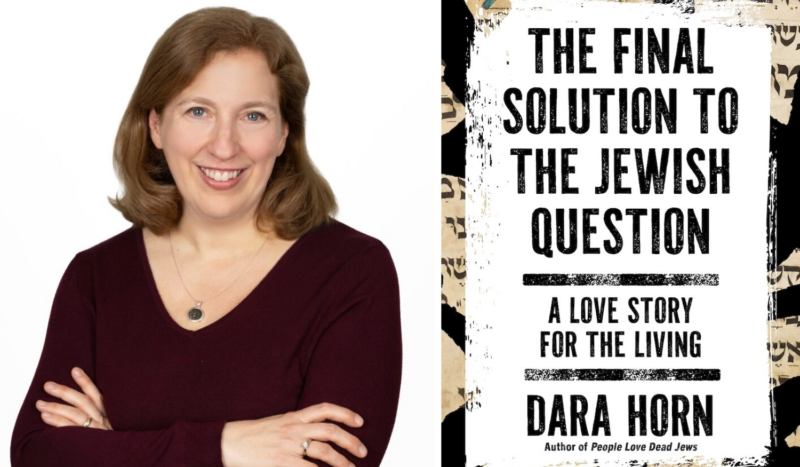
Signatories include former NBC Universal President Noah Oppenheim, businessman and philanthropist George Rohr, former Harvard Law professor Alan Dershowitz, former U.S. solicitor general Seth Waxman, Rep. Ritchie Torres (D-NY), Hadar President Ethan Tucker and novelists Dara Horn and Allegra Goodman.
The Harvard chapter of alumni group Alums for Campus Fairness (ACF), is demanding in a letter set to be released today that the school’s leadership directly condemn the anti-Israel statement released by the student organizations.
“It’s time for the administration to step up and make a statement,” Naomi Steinberg, a 1988 Harvard graduate who spearheaded the counter letter through ACF, told JI. “Our strategy is completely alum-based to put pressure on the administration.”
Steinberg’s daughter, Alana, who graduated from Harvard in 2018, added, “The silence is deafening. In not saying anything they are making a statement.”
The alumni letter, which is addressed to President Gay, states that “ACF-Harvard holds Hamas and Iran fully responsible for this premeditated day of savagery, which will live in infamy. More Jews were murdered on October 7, 2023, than on any single day since the Holocaust. Hamas has killed and kidnapped babies, raped women, and paraded mutilated bodies of Israelis through the streets of Gaza, often accompanied by celebrations.”
The letter, a copy of which was obtained by JI, goes on to call the joint statement from Harvard student groups “shameful and replete with lies and should be rejected by fair-minded and informed people.” A Harvard spokesperson did not respond to a request for comment on Monday.
“As pro-Israel alumni, ACF stands with Jewish students and faculty on Harvard’s campus during this difficult time. We call on President Gay, the Board of Overseers, and all Harvard administration and faculty to unequivocally support the Jewish and Israeli members of the Harvard community during the difficult days ahead.”
“We believe that now is the time for the university to adopt the International Holocaust Remembrance Alliance (IHRA) definition of antisemitism, which would place the Harvard Palestine Solidarity Groups’ statement well within the definition of antisemitism, and would give the university even more grounds for condemnation,” the statement concludes.
The statement from Harvard’s administration, which came after pressure from several prominent alumni, including members of the U.S. House and Senate, did not condemn or mention the letter from the student groups.
The student letter, titled “Joint Statement by Harvard Palestine Solidarity Groups on the Situation in Palestine,” was signed by 31 student organizations, including the Ivy League’s affiliate of Amnesty International. It condemned Israel, claiming Hamas’ attack “did not happen in a vacuum,” and that the Israeli government has forced Palestinians to live in an “open-air prison for over two decades.”
“We, the undersigned student organizations, hold the Israeli regime entirely responsible for all unfolding violence,” the letter reads. “The apartheid regime is the only one to blame.”
The letter continued, “Today, the Palestinian ordeal enters into uncharted territory. The coming days will require a firm stand against retaliation. We call on the Harvard community to take action to stop the ongoing annihilation of Palestinians.”
Signatories to the letter include the African American Resistance Organization, the Harvard Islamic Society and Harvard Jews for Liberation.
The statement from Harvard’s administration, which came more than 24 hours after the student letter, said the university has “heard an interest from many in understanding more clearly what has been happening in Israel and Gaza.”
It also said the school has “no illusion that Harvard alone can readily bridge the widely different views of the Israeli-Palestinian conflict, but we are hopeful that, as a community devoted to learning, we can take steps that will draw on our common humanity and shared values in order to modulate rather than amplify the deep-seated divisions and animosities so distressingly evident in the wider world.”
Naomi Steinberg told JI that “ACF-Harvard rejects the equivocating statement made by the Harvard administration, which attempts to draw a moral equivalency between Hamas terrorism and Israel’s defensive operations. The statement blatantly ignores and fails to condemn simple facts, among which are: that Hamas has slaughtered, raped, and taken innocent civilians hostage and is using them as pawns on the international stage.”
“The administration must clearly and unequivocally condemn Hamas as an antisemitic terrorist organization in order to protect Harvard’s Jewish and pro-Israel students, as well as denounce the statement made by PSG,” Steinberg said.
On Sunday night, more than 100 students gathered at Harvard Hillel to mourn Israeli victims.
A vigil for “all civilian lives lost and in solidarity with Palestine” is planned for Tuesday night at the university.
The letter from the student groups sparked almost immediate scrutiny, including from Lawrence Summers, who served as Harvard president from 2001-2006. “In nearly 50 years of @Harvard affiliation, I have never been as disillusioned and alienated as I am today,” Summers wrote on X on Monday.
Summers, who was the Treasury secretary under President Bill Clinton and advised former President Barack Obama, wrote, “The silence from Harvard’s leadership, so far, coupled with a vocal and widely reported student groups’ statement blaming Israel solely, has allowed Harvard to appear at best neutral towards acts of terror against the Jewish state of Israel.”
“Instead, Harvard is being defined by the morally unconscionable statement apparently coming from two dozen student groups blaming all the violence on Israel,” he wrote, adding, “I am sickened.”
Lawmakers who attended Harvard also expressed disappointment in the school’s lack of response.
Immediately after the Harvard administration released its statement, Rep. Jake Auchincloss (D-MA) tweeted, “Harvard’s leadership has failed. The president and deans refuse to denounce the antisemitism of Harvard student groups. Instead of moral clarity and courage, they offer word salad approved by committee. I am ashamed of my alma mater.”
Rep. Seth Moulton (D-MA) wrote on X, “Terrorism is never justified nor someone else’s fault. As hundreds of Israelis and others, including several Americans, remain kidnapped, injured, or dead, the 31 Harvard organizations that signed a letter holding Israel ‘entirely responsible’ for Hamas’ barbarous terrorism should be condemned, as should Harvard leadership for whom silence is complicity.” He added, “I cannot recall a moment when I’ve been more embarrassed by my alma mater.”
Republican Conference Chair Rep. Elise Stefanik (R-NY), who graduated from Harvard in 2006, also condemned the letter and called on Harvard to respond.
“It is abhorrent and heinous that Harvard student groups are blaming Israel for Hamas’ barbaric terrorist attacks that have killed over 700 Israelis,” Stefanik tweeted. “Any voice that excuses the slaughter of innocent women and children has chosen the side of evil and terrorism.
“I am calling on the leadership of Harvard to immediately publicly condemn these vile anti-Semitic statements.”
Jason Furman, head of the U.S. National Economic Council under the Obama administration, wrote on X that the letter is “getting global attention and the sentiments it expresses are egregious.”
“Blaming the victims for the slaughter of hundreds of civilians,” Furman continued. “Absolving the perpetrators of any agency. This is morally ignorant and painful for other members of the community.”
Political scientist Ian Bremmer posted on X that he “can’t imagine who would want to identify with such a group.” “Harvard parents — talk to your educated kids about this.”
Sen. Ted Cruz (R-TX), who attended Harvard Law School, wrote, “What the hell is wrong with Harvard?”
At a Monday pro-Israel rally on the Boston Common, former Harvard Hillel director Rabbi Jonah Steinberg called out his former workplace. “We do not want to see crimson in this city become blood on the hands of those student groups who have signed on to such a despicable letter,” said Steinebrg, who is now the regional director of the Anti-Defamation League in New England.
At universities around the U.S., Students for Justice in Palestine (SJP) chapters released statements similar to the Harvard student group letter, but with far fewer student groups signing on. National SJP called for a Day of Resistance on Thursday at colleges including Penn State, New York University and University of Virginia The group also praised Hamas’ “surprise operation against the Zionist enemy which disrupted the very foundation of Zionist settler society.”
Jewish Insider’s Capitol Hill reporter Marc Rod contributed reporting.
Speaking to Harvard Law students, the ex-NYC mayor seeks to dispel 'horrible stereotype' that progressives don't support Israel, even as he fears for the 'future of democracy in Israel'

Andrew Burton/Getty Images
New York City Mayor Bill de Blasio speaks at a press conference after witnessing police being retrained with new guidelines at the Police Academy on December 4, 2014, in in New York City.
Bill de Blasio, the former mayor of New York City, wasn’t sure what to expect when, a week ago, he met with a diverse group of students at Harvard Law School to defend his long-held belief that progressive values are compatible with, if not contingent upon, maintaining support for Israel.
The topic of the event was sure to be met with at least some resistance, particularly on a campus like that of Harvard University, where instances of anti-Israel activism have drawn national scrutiny in recent months.
But de Blasio said he was largely encouraged by the response to his talk, billed as “The Progressive Case for Israel” and held in a classroom at Harvard’s Wasserstein Hall on Tuesday, Feb. 28. “We had a real dialogue, and folks were struck by that,” de Blasio told Jewish Insider in a recent interview. “There was actually a sustained discussion.”
Even as the tenor of the discussion “was at times heated” and “at times a little tense,” he acknowledged, “it was still civil in the scheme of things.”
“I heard views I would call left-wing, views I would call right-wing, views I would call pro-Israel and views I would call pro-Palestine,” de Blasio recounted. “I heard a range in the course of an hour, and no one left the room, no one walked out. People stuck with it. I actually saw some hope in that.”
De Blasio, who recently concluded a semester-long fellowship at Harvard, was asked to speak at the university by the Alliance for Israel at Harvard and the Harvard Jewish Law Students Association, which co-hosted the event.
“Bill de Blasio served for two terms as mayor of New York City, which has the highest Jewish population of any city across the globe,” Marc Heinrich and Ari Spitzer, co-presidents of the Harvard Jewish Law Students Association, wrote in a joint email to JI. “We were honored to co-host Mayor de Blasio and hear him speak to the greater Harvard Law School community about how New York’s Jewish community impacted his core values as a public servant.”
As a veteran Democrat who built strong relationships with Orthodox Jewish leaders in Brooklyn while in office, de Blasio, 61, said he was eager to reflect on such experiences at the Harvard event. “I talked about meeting Holocaust survivors, and, very powerfully, one woman who showed me and my family the tattoo on her arm from Auschwitz,” he said, recalling “a shock of recognition that the violence associated with antisemitism was so real and so recent and, horribly, continuing all over the world.”
“That’s one of the reasons that, to me, we cannot underestimate for a moment the challenges Jewish people face in this world, and why the State of Israel is absolutely needed as a refuge,” de Blasio insisted. “That does not negate other legitimate issues that need to be addressed, and it certainly doesn’t negate the valid concerns of Palestinians. But my central thesis is, progressives are supposed to stand up for oppressed peoples.”
The invitation to speak at Harvard, de Blasio elaborated, was also an opportunity to “dispel” what he described as “a horrible stereotype that suggests that some vast number of progressives are not supportive of the State of Israel.”
“I think that’s just absolutely inaccurate and based on no evidence, and I think it’s important to bear witness,” he added. “There’s a lot of us who support the State of Israel. Many of us don’t agree with the Netanyahu government, but we support the State of Israel.”
Speaking with JI, de Blasio emphasized that he is troubled by the direction of Israel’s right-wing governing coalition led by Prime Minister Benjamin Netanyahu, whose effort to advance a controversial judicial overhaul has drawn mass protests across the Jewish state. “I think the actions of the Netanyahu government are extremely worrisome,” he said. “I am worried about the future of democracy in Israel.”
He clarified, however, that such concerns, which have recently been echoed by a growing number of Democratic leaders, are consistent with a pro-Israel outlook. “You can still love Israel and support the State of Israel but acknowledge it has a democracy problem,” he said, “just like I love America and acknowledge my own country has a democracy problem.”
“The notion that sometimes people are accused of antisemitism if they disagree with the current Israeli government is obviously outlandish and needs to be called out,” de Blasio added. “That came up in the dialogue, and I said, ‘I know so many leaders who are deeply respectful of the Jewish experience and happen to disagree with the Israeli government, and there’s no contradiction.’ I think that has to be understood better.”
Last summer, de Blasio raised some eyebrows when he dropped his support for AIPAC during a brief run for an open congressional seat in Lower Manhattan and parts of Brooklyn. His objection to the pro-Israel lobbying group, which he had long defended, was that its political arm had recently targeted a fellow progressive Democrat, Nina Turner, in a Cleveland-area House primary.
During that election, Jewish voters in Cleveland had expressed reservations over Turner’s approach to Israel, which drew attack ads from pro-Israel groups including a super PAC affiliated with AIPAC.
In an interview with JI last June, de Blasio defended his decision to denounce AIPAC, noting that he did not agree with all of Turner’s Middle East policy positions but remained loyal to her as a friend. The New York Democrat, who visited Israel during his second year as mayor, maintained that he “can simultaneously be a very proud progressive and a very proud supporter of Israel,” adding, “I don’t see any contradiction.”
The recent event at Harvard was, in many ways, a continuation of that argument, as he reiterated his support for a two-state solution to the Israeli-Palestinian conflict and underscored his opposition to the Boycott, Divestment and Sanctions movement against Israel, among other things.
His remarks came days before Harvard’s Arab Conference, where an outspoken supporter of BDS who has been accused of antisemitism, the former Women’s March leader Linda Sarsour, delivered a keynote address in which she exhorted students to protest “apartheid” Israel. The consulting giant McKinsey & Company, which sponsored the event, announced on Monday that it had “stepped away” from the conference after learning that one speaker, whom it did not identify by name, “had a history of antisemitic comments.”
The weekend speech from Sarsour followed other examples in which debates over Israel have stirred controversy at Harvard. Last year, the editorial board of its student newspaper, the Harvard Crimson, endorsed the BDS movement, drawing a sharp rebuke from the student president of Harvard Hillel, among others. (The paper’s news team covered the Blasio event last week.) In 2016, third-year law student Husam El-Qoulaq, invoked an antisemitism trope during a question-and-answer period at an event with former Israeli Foreign Minister Tzipi Livni.
In January, meanwhile, the Harvard Kennedy School said it would grant a fellowship to the former executive director of Human Rights Watch, Kenneth Roth, after the school’s dean had reportedly vetoed its initial offer amid concerns over Roth’s apparent hostility to Israel.
“I think, in academia, it’s important to respect and hear a diversity of voices,” de Blasio said of the Roth dustup. “That’s my only comment on that.”
As a visiting fellow at the Institute of Politics at the Harvard Kennedy School and the Harvard T.H. Chan School of Public Health this past semester, de Blasio said he had been invited to speak with Jewish and Muslim groups but never had the chance to engage with students together, as he did last week.
“It’s great to speak to people of different viewpoints separately, but it’s especially powerful to bring everyone in the room and be like, ‘let’s hash it out,’” he told JI. “I don’t mean that’s like, you know, kumbaya. I don’t mean it’s going to be easy. But if we’re not devoted to that kind of open dialogue and having the tough conversations, then we are accepting of an absolutely unacceptable status quo.”
During the question-and-answer session of the discussion, de Blasio, who is now a visiting fellow at New York University and American University in Washington, D.C., said he heard from both Palestinian and Muslim students who voiced what he characterized as “very real concerns” about the content of his argument.
“What I tried to do was listen and give them the chance to get their whole statement or question out, even if I disagreed with some elements of it, and answer as someone who respects the Muslim community,” he explained. “Beginning with the atmosphere of, I believe, respect and willingness to listen, doesn’t mean watering down my views. But I do think encouraging dialogue, being willing to take tough questions, is valuable unto itself.”
One student attendee, Ben, a second-year law student at Harvard who declined to share his last name, affirmed the former mayor’s assessment in an email shared with JI. “I couldn’t get over the diverse perspectives that we got to hear from: Israelis, Jewish progressives, right-wing evangelicals, pro-Palestine activists,” he said in a message sent to the Harvard Jewish Law Students Association after the event. “It was intense, exciting and thought-provoking.”
De Blasio, for his part, said he considers it a minor if ultimately meaningful achievement that the conversation did not devolve into a shouting match or result in a walk-out.
“This is a microcosm of what we have to do for our country and for the Middle Eastern region in general,” he suggested. “It was a very, very small, localized first step at Harvard, but it was better than never being in the room together.”
Please log in if you already have a subscription, or subscribe to access the latest updates.
 Continue with Google
 Continue with Apple