


















































Piker has previously urged his followers to kill the Florida senator, who spoke at Yale Political Union last year

Kevin Dietsch/Getty Images
Sen. Rick Scott (R-FL) speaks on government funding during a press conference at the U.S. Capitol on March 06, 2024 in Washington, DC.


 Add JewishInsider on Google
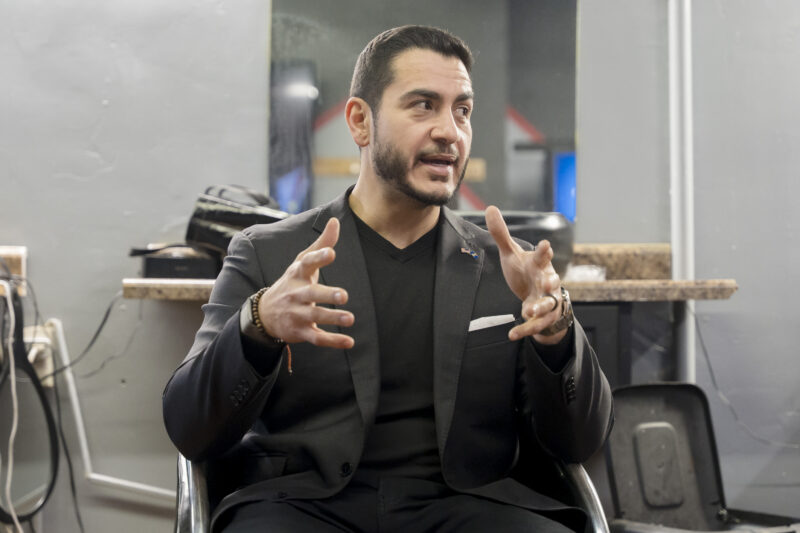
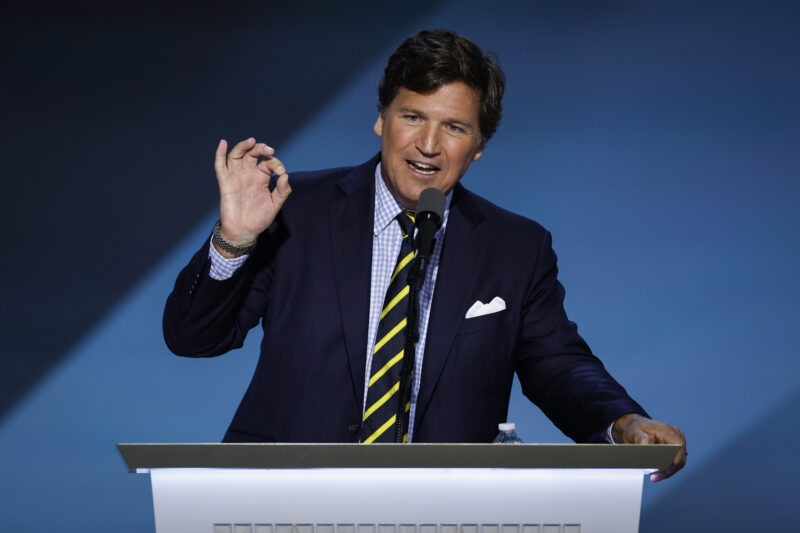
Sen. Rick Scott (R-FL) called for the federal government to “immediately” pull funding from Yale University over Yale Political Union’s decision to host Hasan Piker, an antisemitic streamer who previously suggested that the senator should be killed. Piker is scheduled to speak on campus Tuesday for a debate titled “Resolved: End the American Empire.”
Scott, who spoke last year at YPU, a storied debate society at the Ivy League university, wrote on X on Friday that “Yale receives billions from the federal government — President Trump and Congress need to IMMEDIATELY revoke it.”
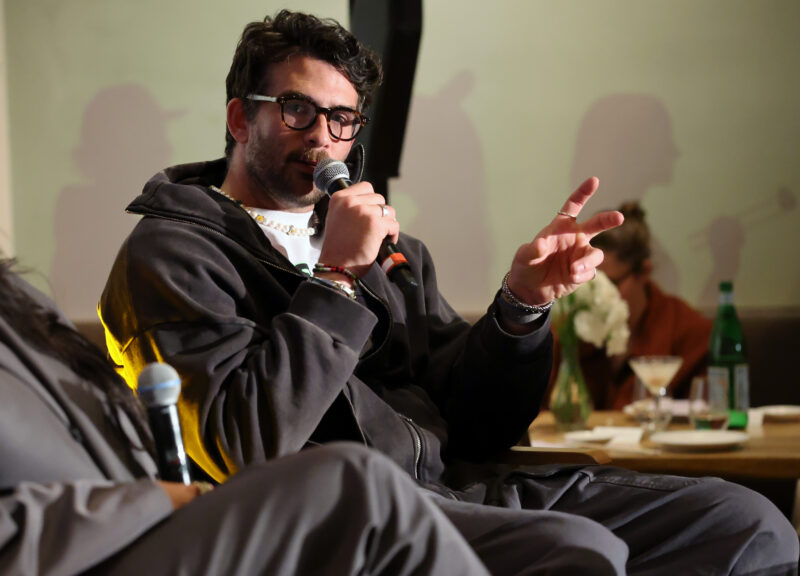
Piker, a far-left Twitch streamer, has recently been invited to speak at several high-profile events, despite a laundry list of antisemitic, anti-American and terror-supporting rhetoric, which includes justifying Hamas’ Oct. 7, 2023, terror attacks in Israel. He has also called Orthodox Jews “inbred” and claimed America deserved 9/11.
For Scott, Piker’s incendiary language is personal; the streamer was briefly suspended from Twitch last year after urging followers to “kill Rick Scott.”
“An elite private university that hosts an antisemite who says a Senator should be killed, capitalists should be killed, and the U.S. deserved 9/11, shouldn’t get ONE CENT from taxpayers,” Scott wrote.
Asked about YPU hosting Piker, a spokesperson for Yale told Jewish Insider last week that “student organizations are responsible for issuing their own invitations to speakers.”
“At the same time, Yale is committed to maintaining a diverse, vibrant, and respectful community in which free expression is a fundamental value and a shared responsibility. The university is dedicated to providing a space where differing views can be expressed and heard respectfully,” the spokesperson said.
Unlike several Ivy League counterparts, including Harvard and Columbia, the Trump administration has not slashed Yale’s federal funding over antisemitism concerns.
The storied debate society at Yale University has previously hosted former presidents and intellectuals as featured guests

Noushad Variyattiyakkal/SOPA Images/LightRocket via Getty Images
Hasan Piker attends Web Summit Qatar 2026 at the Doha Exhibition and Convention Center.
The Yale Political Union, a storied debate society at the Ivy League university, is slated to host antisemitic streamer Hasan Piker on campus on Tuesday for a debate titled “Resolved: End the American Empire,” according to the organization’s social media.
YPU — a registered student-run group, which is the oldest and largest collegiate debate society in America, according to its website — has hosted a range of elite figures such as former Presidents Ronald Reagan, Joe Biden and Jimmy Carter; media figures like Walter Cronkite and George Stephanopoulos; and leading intellectuals including economist Milton Friedman and Margaret Mead.
Several alumni of the institution have held prestigious roles in politics, media and law, including former U.S. National Security Advisor McGeorge Bundy and former Secretary of State John Kerry.
A spokesperson for Yale University told Jewish Insider that “student organizations are responsible for issuing their own invitations to speakers.”
“At the same time, Yale is committed to maintaining a diverse, vibrant, and respectful community in which free expression is a fundamental value and a shared responsibility. The university is dedicated to providing a space where differing views can be expressed and heard respectfully,” the spokesperson said.
Piker, a far-left Twitch streamer, has recently been invited to speak at several high-profile events, despite a laundry list of antisemitic, anti-American and terror-supporting rhetoric, which includes justifying Hamas’ Oct. 7, 2023, terror attacks in Israel. He has also called Orthodox Jews “inbred” and claimed America deserved 9/11.
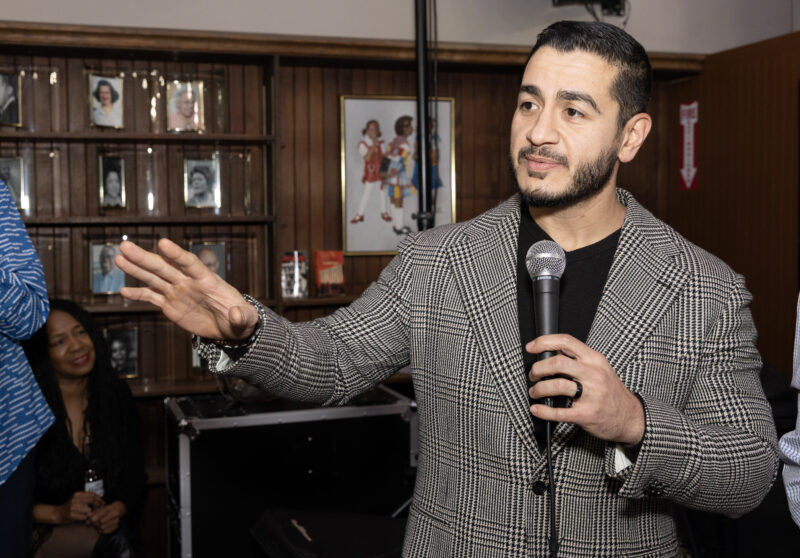
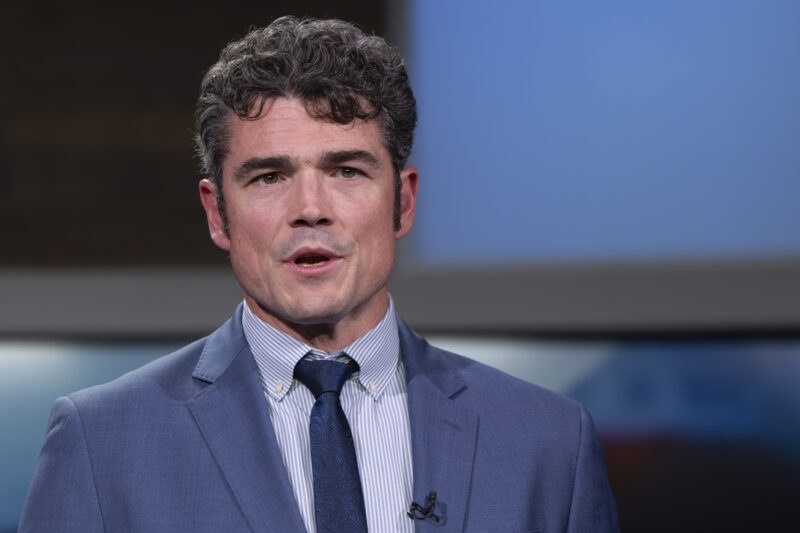
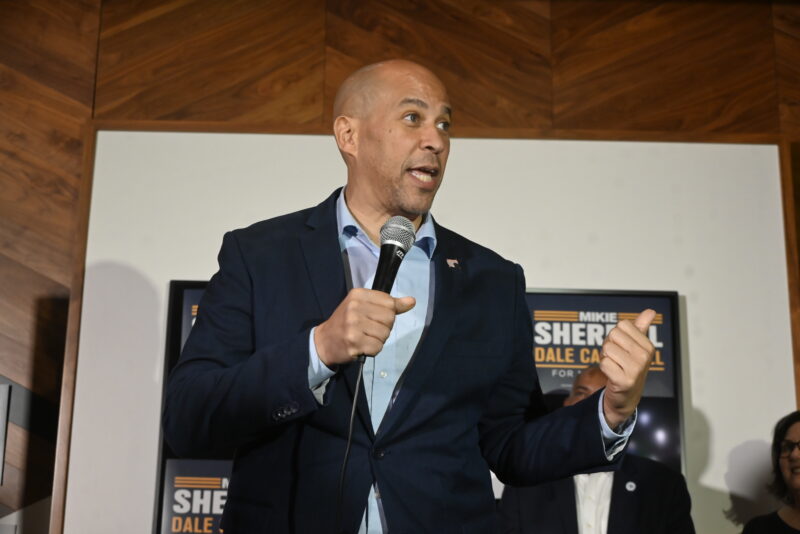
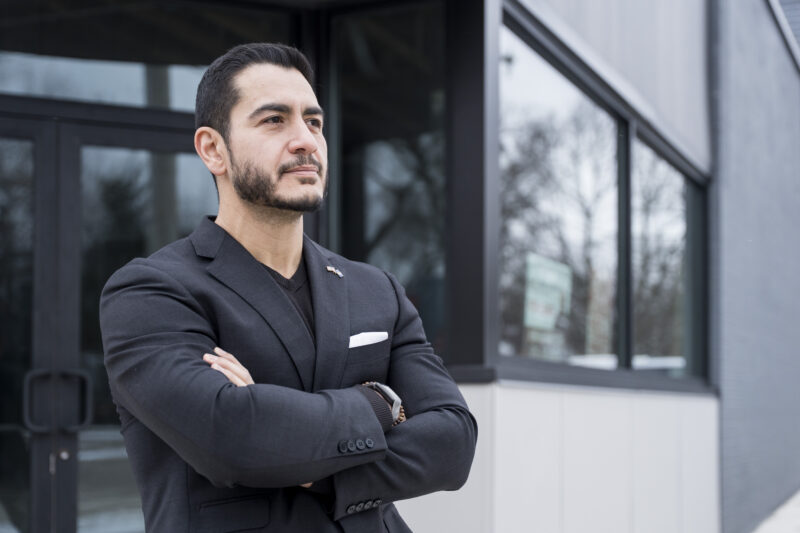
Michigan Senate candidate Abdul El-Sayed is facing criticism from fellow Democrats and Jewish leaders for hosting rallies with Piker at two Michigan universities last week.
Uri Cohen, executive director of the Slifka Center, Yale’s Hillel, told JI that “as an organization that holds foundational commitments to the free exchange of ideas — even those with which we deeply disagree — Slifka maintains that there must be a clear line between engaging with difference and platforming hate speech. We expect that Yale will continue to enforce applicable university policies to make sure that line gets reinforced for the good of Yale’s Jewish community and the larger campus as a whole.”
YPU did not respond to a request for comment from JI about its decision to host Piker.
Rabbi Yosef Hamra, the brother of the last chief rabbi of Syria, says ‘lifting the Caesar sanctions is essential to restore synagogues and cemeteries [and] safeguard irreplaceable Jewish heritage’
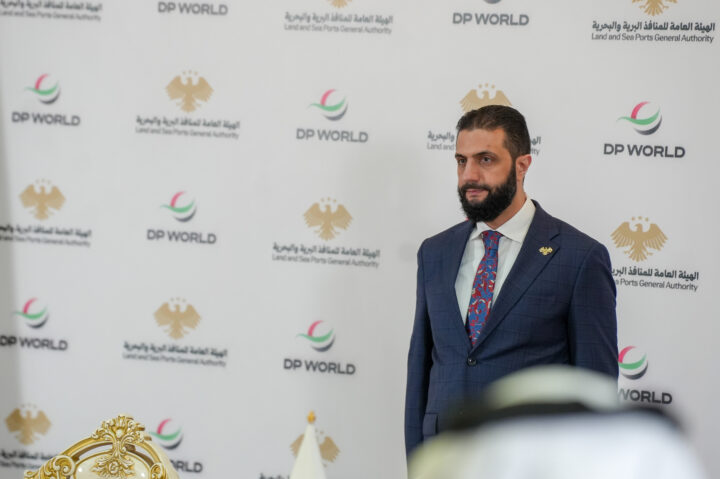
Rami Alsayed/NurPhoto via Getty Images
Syrian President Ahmad Al-Sharaa attends the signing ceremony of a strategic agreement to develop Tartus Port in Damascus, Syria, on July 13, 2025.
A debate is quietly simmering in Washington over the prospect of repealing congressionally mandated sanctions on Syria, an effort that has bipartisan support — but is not without its opponents.
As part of the Senate’s ongoing consideration of the 2026 National Defense Authorization Act, a provision was included in a bipartisan consensus package of amendments that would fully repeal the Caesar Act, a strict sanctions framework imposed in response to the Assad regime’s human rights violations. Should the NDAA move forward on the Senate floor, the amendment is almost certain to pass.
The sanctions are currently being waived by the Trump administration, but can only be permanently repealed, before their 2029 expiration date, by Congress.
Some on Capitol Hill are pushing for a more cautious approach, keeping the sanctions on the books, at least in the short term, while pushing for the Syrian government, led by former Al-Qaida commander Ahmad al-Sharaa, to abide by a series of conditions in exchange for continued waiving of the sanctions.
Sens. Lindsey Graham (R-SC) and Chris Van Hollen (D-MD) introduced a series of amendments to the Senate NDAA taking such an approach. The first would suspend the sanctions but keep them sanctions on the books indefinitely, past 2029, and require compliance with a series of conditions to keep the sanctions paused.
A second, updated amendment would keep the sanctions on the books for the next four years and would recommend but not require the reimposition of sanctions if the conditions in question are not met.
The Graham-Van Hollen amendment is unlikely to have sufficient support to pass the Senate.
A similar debate is playing out in the House, where the Financial Services Committee voted to advance a bill, led by Rep. Mike Lawler (R-NY), that would condition the lifting of sanctions, over the objections of lawmakers who have called for immediate and unconditional relief.
Activists in the Syrian-American diaspora community, including Rabbi Yosef Hamra, the brother of the last chief rabbi of Syria, who now resides in Brooklyn, are calling for Congress to reject efforts to condition sanctions relief, and want lawmakers to fully repeal the Caesar Act as quickly as possible.
Hamra, in a letter to congressional offices on behalf of the Jewish Heritage in Syria Foundation that was shared with Jewish Insider, expressed “grave concern” about the original Graham proposal, saying it would endanger Syrian Jews and prevent their ability to rebuild their community.
“This measure would put in place snapback provisions which would extend the Caesar Syria Civilian Protection Act indefinitely, including provisions harsher than those applied during the Assad regime’s worst atrocities,” Hamra wrote. “Lifting the Caesar sanctions is essential to restore synagogues and cemeteries, safeguard irreplaceable Jewish heritage and re-establish a mutli-faith community in Syria after more than 30 years in exile. Simply put, this amendment would be devastating to the Jewish community in Syria.”
Hamra noted that members of the Syrian Jewish community have begun to return to the country and work to rebuild and restore Jewish sites and artifacts, which he said requires “a stable, predictable policy environment that encourages investment, cultural preservation, and the safe return of refugees.”
He argued that the sanctions “should be completely repealed with no risk of snapping back. Any attempt to prevent this law from being completely repealed without risk of snapback would be a disaster” by discouraging support for projects inside the country, which he said would halt efforts to rebuild.
Henry Hamra, the son of the rabbi, told JI he also rejects the updated Graham-Van Hollen amendment.
“A watered down amendment by Senator Graham has the same chilling effect and damage of any amendment that requires conditions and threatens snapback sanctions of any kind,” Henry Hamra said in a statement to JI. “That’s why the Jewish Syrian community in the United States supports a clean repeal of the Caesar Act with no conditions it is the right and moral thing to do.”
Henry Hamra told JI that extensive work is needed to restore old synagogues, Torah scrolls and other artifacts that have been long neglected and added, “We need all the sanctions to be lifted to help us out.”
A source supporting the repeal effort said Treasury officials told Congress that keeping the Caesar Act — which includes mandatory secondary sanctions provisions on individuals doing business with those sanctioned — on the books in any form, even if the sanctions are being waived, has created an environment of uncertainty that has made foreign countries and businesses unwilling to invest in long-term development and reconstruction efforts in Syria.
“This is more than a two-year or a short-term thing to rebuild the whole neighborhood, [it] would take years. American companies, too, by the way, are interested in working in Syria. As long as Caesar is an authority, and there’s snapback for it, people will be wary to do that,” Mouaz Moustafa, the executive director of the Syrian Emergency Task Force, told JI. “And the progress, including on some of the conditions that are being placed, itself, would be stifled if [the] Caesar Act remains in perpetuity.”
Moustafa’s group is also opposing any action short of full Caesar repeal, and argues that anything less would be a punishment to the Syrian people.
A spokesperson for AIPAC told JI that the organization “do[es] not oppose the lifting of the Caesar sanctions but believe[s] Congress should make clear its expectations for the new Syrian government and lay out the conditions under which sanctions could be reimposed.”
John Hannah, a senior fellow at the Jewish Institute for National Security of America and a national security advisor to former Vice President Dick Cheney told JI he opposes the sanctions repeal, and that he favors a conditional approach like that outlined in the Lawler bill.
Hannah said that there is “some significant evidence” that Syrian President Ahmad al-Sharaa is willing to engage on U.S. security priorities which justifies some easing of sanctions, “but our big concern is that the administration has had kind of a blind spot on internal matters in Syria with regards to governance and particularly with the relationship of Damascus to the key minority groups, some of them quite well armed.”
He warned that Syria’s future is being “undermined” by internal governance issues, including what he described as an “Islamist, Sunni-supremacist” and “highly centralized, authoritarian” approach to statebuilding by al-Sharaa, and by the two high-profile massacres of religious minority groups in recent months.
“[Al-Sharaa] has shown himself to be a ruthless pragmatist and I think the U.S. has just got to use the significant leverage it does have and continues to have, which is primarily wrapped in Caesar — to apply that equally as effectively as we have on the security priority to a set of priorities about the process of internal governance in Syria,” Hannah said. He argued that the U.S. should not “just surrender that prematurely, particularly after these extraordinary levels of violence we’ve seen inside of Syria that are completely undermining the possibility of a stable, cooperative Syrian partner to the United States.”
He warned that al-Sharaa’s “particular vision of Syria” is the greatest risk and potential driver of another collapse and devolution back into civil war in Syria — more so than the potential impacts of sanctions, as argued by proponents of sanctions relief. “We can’t tolerate another 1,500-person massacre of some minority inside of Syria. I think it’ll break the country,” Hannah added.
He said the U.S. should condition sanctions relief on legitimate dialogue and efforts to include and protect minorities, including Druze and Alawites, Western involvement in training and professionalizing the Syrian military and the expulsion of foreign jihadists from the Syrian government. Under such conditions, he said he’d be supportive of repealing Caesar in two years, ahead of its current expiration in 2029.
Hannah said that by making clear the U.S. is “fully committed to continuing to issue waivers,” as long as “we see a sustained level of progress here,” it should provide “sufficient green lights” to wealthy Arab states and others to begin ramping up investments.
He also urged the U.S. to work with regional and European allies to develop a joint approach and outreach strategy for Syria, and said that the time is not right for the U.S. to remove its remaining military forces from the country and surrender the leverage those troops provide.
Correction: Rabbi Yosef Hamra is the brother of the last chief rabbi of Syria. A previous version of the story identified Hamra as his nephew.
Please log in if you already have a subscription, or subscribe to access the latest updates.
 Continue with Google
 Continue with Apple