



















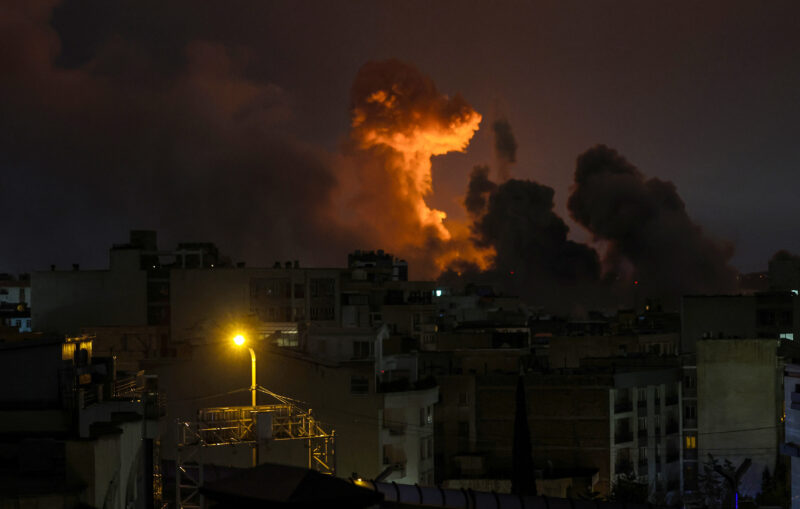












The unanimous decision came after several countries including France and Italy removed their objections due to Iran’s violent crackdown on protesters
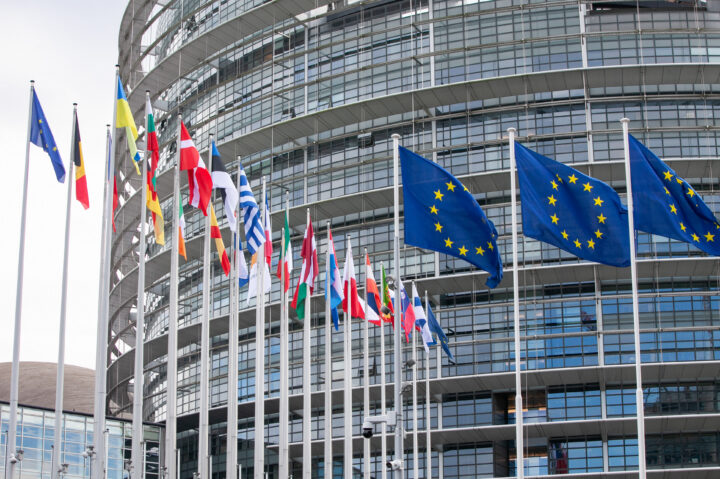
Siavosh Hosseini/SOPA Images/LightRocket via Getty Images
EU Flag and 27 members of European countries at the European Parliament building.


 Add JewishInsider on Google
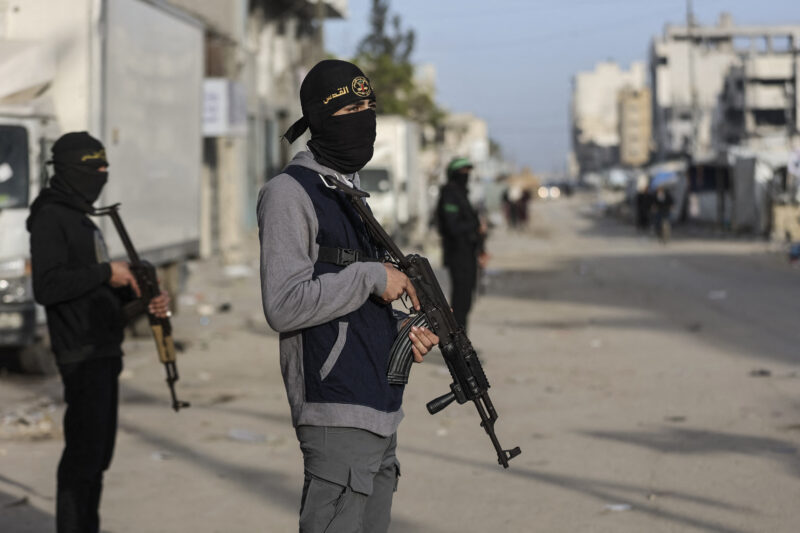
The European Union designated Iran’s Islamic Revolutionary Guard Corps as a terrorist organization on Thursday, marking a significant shift in policy for European countries that had long been wary of irreparably harming ties with Tehran.
The 27 European Union foreign ministers convened in Brussels, Belgium where they voted unanimously to make the designation as a response to Iran’s violent suppression of nationwide protests. The decision puts the IRGC among the likes of al-Qaida, Hamas and the Islamic State on the EU terror list. The bloc also imposed new sanctions on 15 Iranian officials, including top commanders of the Revolutionary Guard, in addition to existing stringent sanctions.
“Repression cannot go unanswered,” Kaja Kallas, the EU’s high representative for foreign affairs and security policy, wrote on X on Thursday following the decision. “EU Foreign Ministers just took the decisive step of designating Iran’s Revolutionary Guard as a terrorist organisation. Any regime that kills thousands of its own people is working toward its own demise.”
Anne-Sophie Sebban-Bécache, vice president of Europe at the American Jewish Committee, told Jewish Insider the declaration was a “historical political decision.”
“It’s a very key political decision that will also have concrete consequences, because as soon as it is considered a terrorist organization, it will have legal implications,” said Sebban-Bécache. “It means that all the counter-terrorist authorities and organizations in Europe … will now be in charge of also tackling IRGC networks in Europe.”
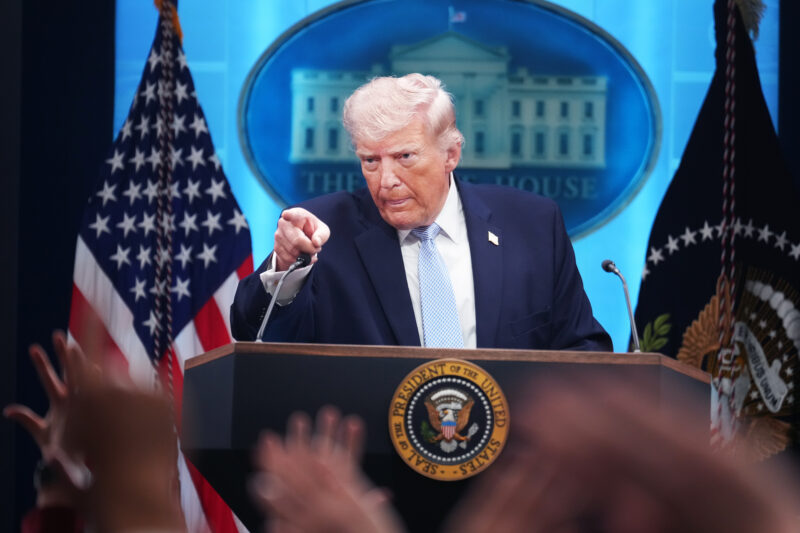
The United States has long regarded the IRGC, an elite military force separate from the country’s regular army, as a terrorist organization; The State Department proscribed the group, along with its Quds Force, in April 2019 during President Donald Trump’s first term. Canada and Australia have also recognized the IRGC as a terrorist group, among other countries.
However, the issue had remained stalled in the EU for years, as designation requires unanimous consent of all member states. Germany and the Netherlands are among the countries that have repeatedly urged for the EU to follow suit of the U.S. Others, such as France, Italy and Spain, remained opposed, citing concerns over diplomatic ties, negotiations over European nationals being held in Iran, lack of a legal basis and ability for the bloc to reach unanimity on the issue.
“It’s a question that was on the table for many, many years,” said Sebban-Bécache. “Some countries were in favor of it, some were reluctant to do it, and because there is a need for unanimity, the discussion never really took place at the EU Council level.”
In January 2023, the European Parliament, one of two legislative bodies of the EU, voted overwhelmingly — 598 to 9 — to call for the union to make such a designation, but the issue remained unresolved.
It was not until Iran’s violent crackdown on protesters earlier this month that the conversation was reignited, sparking holdout countries to reverse course and signal newfound support for such a move. The U.S.-based Human Rights Activists News Agency (HRANA) said it had confirmed at least 6,126 deaths since the start of the protests earlier this month, adding it was investigating over 17,000 more potential deaths.
“The dramatic events that we’ve witnessed in Iran in the past month have shifted many countries’ positions, and there was some political pressure also mounting,” said Sebban-Bécache, who noted that the designation is the “best tool” for Europe to “isolate” the regime. “I think Europeans also came to the conclusion that that regime can fall and that we all have a role to play to isolate it and to make it accountable.”
On Monday, Italian Foreign Minister Antonio Tajani announced that Italy would be withdrawing its objections, stating that it is his country’s “highest priority” to protect Iranian citizens. On Wednesday, France followed suit.
Sebban-Bécache noted that the new decision is a way for Europe to further take a stand “against terror” and finally recognize an organization that poses a threat “not just for the Iranian people and the Middle East, but also for international and European security itself.” She noted that the IRGC has tried to develop financial networks in Europe.
“We’ve had proof now for many years that the IRGC has developed an international network … and also has already tried to conduct terrorist attacks around the world and especially in Europe,” said Sebban-Bécache. “We know that IRGC is the organ that is orchestrating all the terror and oppression of the Iranian population inside Iran, but it’s also the organ that is coordinating the financing and support of Iran’s proxies and conducting terrorist activities across the Middle East.”
Gideon Sa’ar, Israel’s minister of foreign affairs, welcomed the decision, calling it “important and historic.”
“The number one actor in spreading terror and undermining regional stability has now been called by its name,” Sa’ar wrote on X. “Designating the IRGC as a terrorist organization will thwart and criminalize their activities in Europe. It will deal a significant economic blow to an organization that controls a vast share of the Iranian regime’s economy, and it sends an important message to the brave men and women of Iran who are fighting for their freedom.”
The House Foreign Affairs Committee Majority also lauded the move, stating that Europe is “waking up to the truth.”
“The IRGC must not be given a free pass to export terror and brutality throughout the globe on behalf of the Ayatollah,” the post read.
Emmanuel Nahshon, the coordinator for combatting academic boycotts on behalf of the Israeli Association of Universities, speaks to JI about the challenges Israeli academia is facing in the shadow of the Gaza war
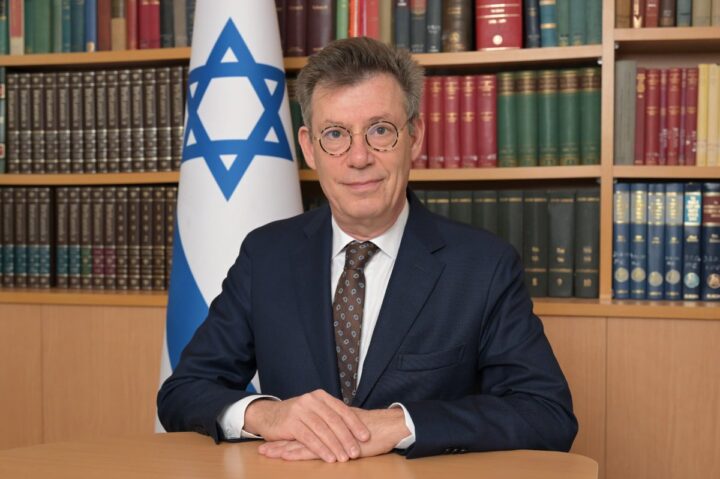
Shlomi Amsalem/GPO
Emmanuel Nahshon
As nearly a dozen countries announced plans to recognize a Palestinian state in the last week, the European Union debated exerting an additional form of leverage on Israel, in the form of suspending its participation in Brussels’ flagship scientific research and innovation program.
Earlier last week, the European Commission proposed a partial suspension of Israel’s participation in Horizon Europe — a 95.5 billion Euro ($109.2 billion) program that covers all areas of science and technology and has contributed significantly to Israeli academia and its tech sector — in response to what Brussels called a “severe” humanitarian situation in Gaza, which it views as having been insufficiently addressed by the daily humanitarian pauses this week.
The commission proposed to no longer allow Israeli entities to work with the European Innovation Council’s accelerator, which an Israeli diplomatic source estimated would lead to damages of about 10 million Euros ($11.4 mn.) to Israeli startups in the program, but none to research projects.
The motion did not receive the qualified majority in the European Union Council, and therefore Israel remains a full partner in Horizon Europe. Germany and Italy reportedly blocked the suspension, and Tuesday’s meeting on the matter ended without a decision. The European Council presidency said after the meeting that it plans to continue talks about the matter. The Israeli diplomatic source said some countries wanted to continue monitoring the humanitarian situation in Gaza before reaching a decision.
The scare from Brussels came at a difficult time for Israeli academia, which has been facing overt and more subtle forms of boycotts, Emmanuel Nahshon, the coordinator for combatting academic boycotts on behalf of the Israeli Association of Universities, told Jewish Insider in an interview on Wednesday.
Nahshon, a former ambassador and deputy director of Israel’s Foreign Ministry, who resigned last year in protest against the government, spoke about the challenges Israeli academia is facing in the shadow of the war in Gaza.
The interview has been condensed and edited for clarity.
Jewish Insider: What did you think about the outcome of the European Council’s discussion on partially suspending Israel from Horizon Europe?
Emmanuel Nahshon: They decided not to decide at the EU level, because we still have Germany and Italy blocking a possible majority against Israel, but even the Germans are telling us that this cannot go on. It’s an expression of the increasing isolation of Israel, given the unending war in Gaza, which has become more and more difficult to explain … It creates a bleak picture.
I’m very happy that sanctions on Israel in Horizon Europe did not work out this time, but unfortunately, it will happen next time.
JI: Can you explain why Horizon Europe is so important?
EN: It’s a fund budgeted by the EU and its member states, a multi-year fund for six to seven years, and its purpose is to fund joint research and development projects. Israel is one of the few non-EU countries that have been invited to participate … starting in the mid-1990s. It has been extremely successful.
European funds are extremely important because they create partnerships and networks and this is part of what has made Israel the innovation hub that it is.
Israel has one of the highest rates of return on investment and are welcome partners in top-level projects of the EU. By cutting us out of those projects, it will really punish Israeli innovation and the Israeli economy.
It’s not only about academic cooperation — it goes way beyond that. These are projects that are translated into concrete innovations for the welfare of humanity.
JI: What kinds of challenges is Israeli academia facing from anti-Israel elements abroad?
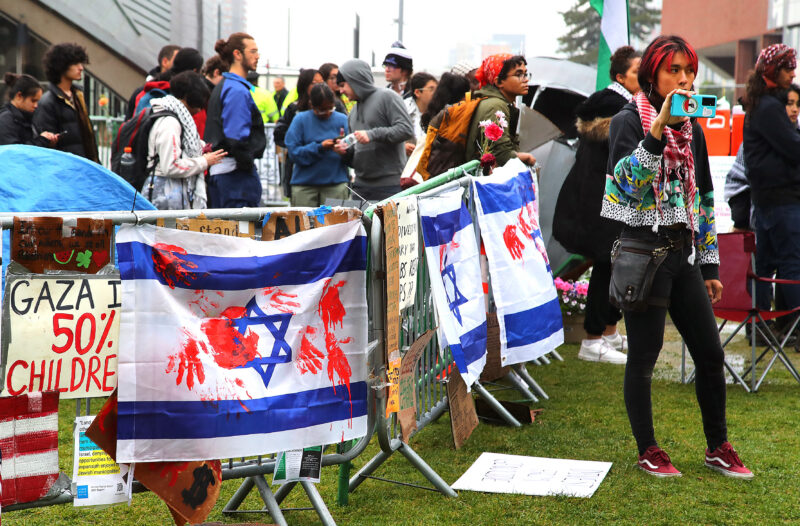
EN: Immediately after Oct. 7 [2023 Hamas attacks on Israel], there were mostly student protests, encampments, violent protests – those are almost non-existent now. It has shifted in the last year to something else, institutional boycotts.
Universities have decided to cut ties with Israel, as have professional associations – medical, psychology, historians, mathematicians. It’s much more dangerous. We now have countries in which the majority of universities have no contact with Israel. In Belgium and the Netherlands over 80% of universities have severed all contacts with Israeli universities, as have most in Spain and Italy. It’s beginning in Switzerland, in Geneva and Lausanne.
It’s a slippery slope. The more it happens, the more it is bound to happen. Universities copy one another.
On top of that, we have the silent, covert boycott. It’s like Voldemort [from Harry Potter], no one is saying its name, but it is there and we feel it all the bloody time. Israeli lecturers are not invited to international events anymore; articles are rejected; Israelis are not invited to take part in science and research consortia, etc.
If it continues for a year or two, we may face dire consequences.
JI: What would those consequences be?
EN: It’s the slow strangling of the Israeli academic world. We cannot function without contact with the outside world. Israel is too small a country to be able to have its own, internal academic world. We need contact with …the Ivy League and Western European universities.
On top of it, there is a phenomenon that began before the war, because of the so-called judicial reform, and that is Israeli academics leaving Israel. This is a brain drain that is noticeable and catastrophic. We are talking about tens of thousands of Israeli academics choosing to make their lives elsewhere. It began in early 2023 and the war made it worse.
JI: The Israeli Association of Universities (known in Israel by the Hebrew acronym VERA) hired you about a year ago to combat the academic boycott. What have you been doing?
EN: We have been working very hard on two levels. The first was to create internal coordination between different Israeli universities so we can speak the same language in the fight together. We did one thing that has been extremely useful, which is to create a common database. Now, on a regular basis, we have information coming from all the Israeli universities regarding boycott attempts and events. This is super useful, because now we know how many took place.
JI: How many?
EN: By last count there were over 800 boycott events since last summer. Some are smaller, some are bigger.
[Nahshon provided JI with a presentation given by VERA to the Knesset Education Committee in May, which said that this year they received an average of 50 boycott reports per month — double that of the previous year. Broken down by country, the number of reports about the U.S., Canada and Holland more than doubled, Spain went up 125% and England increased by 55%. A third of the complaints from North America were about the suspension of individual collaborations between Israeli scientists and their colleagues, while 18% were about difficulty in publishing, and 18% were about not being invited to lecture or participate in conferences. In Europe, nearly a third of the complaints were about institutions ending their cooperation with Israelis.]
Boycotts are complex. It’s a bit like sexual harassment. People do not always want to say they’ve been the victim, so we have to encourage people. Now, more and more [academics] are reporting and we have a fuller picture of the situation.
JI: What do you do after receiving the reports?
EN: We do work all over the world on the legal, political and public relations fronts. We emply the services of a law firm in Brussels that is helping us tremendously, because a lot of institutional boycott cases violate European laws.
For example, if universities want to kick Israeli researchers out of Horizon Europe [grantee] projects, that is against European law … We have had many successes in which they immediately stop the boycott.
Politically, we want to encourage our friends to pass legislation against boycotts, like the ones that exist in the U.S.
There are so many lies directed at Israeli universities that have nothing to do with reality, such as calling them apartheid or saying that Israeli academia teaches the military how to occupy or how to kill.
This effort is very new, very young. We need more budgets to function; it’s challenging. I have addressed the government without much success. We are looking for partners and funds, and we do the best we can with the limited means we have.
JI: The Weizmann Institute, one of Israel’s leading scientific institutions, was hit by an Iranian missile last month, which destroyed 45 labs. Are they going to have a hard time recovering because of international boycotts?
EN: I don’t think it will be a problem [raising funds for the recovery] because so many have expressed solidarity with the Weizmann Institute. They have so many friends around the world.
The problem is that the government is not fulfilling its mission. It should be the role of the Israeli government to commit to financing it, instead of fundraising … Israeli academia is not a priority for this government because it is identified with the more liberal wing of Israeli politics.
Weizmann will be fine, but the problem is of a more general nature. I quote the head of VERA Daniel Chamovitz, who said that “you can see that the Iranians put higher education and Israeli research at the center of their launch map” — apparently the Iranians understand better than the Israeli government that academia is a top priority. They aimed at Weizmann and the Soroka Hospital [in Beersheba, a teaching hospital] for exactly that reason.
Please log in if you already have a subscription, or subscribe to access the latest updates.
 Continue with Google
 Continue with Apple