

























































What to watch on Israel’s Election Day
As of 12 p.m., 31.5% of Israelis had voted, the highest turnout since 1973
(Jewel SAMAD / AFP via Getty Images)
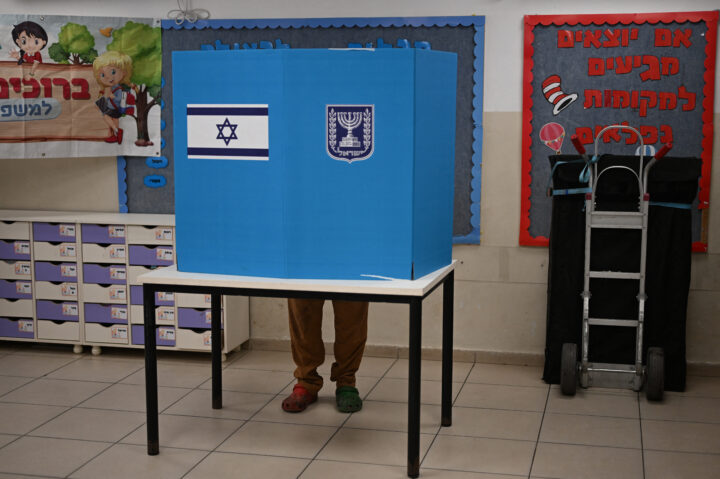
A voter fills out their ballot at a polling station in Jerusalem on October 27, 2026, on the day of Israel's legislative election.


 Add JewishInsider on Google
Israelis going to the polls today are choosing one of over 30 parties running, placing a white slip of paper into a blue envelope, then emerging from behind a screen to drop the envelope into a blue ballot box in front of the polling station committee. At 10 p.m. — 4 p.m. ET — voting will end and exit polls will be released on six television channels.
The exit polls, however, may not really tell us who won. In 1996, Israelis famously “went to bed with Peres and woke up with Bibi”; the final results, which had Benjamin Netanyahu beating Shimon Peres, were radically different from what the exit polls suggested.
We’ll have a good idea of the makeup of the next Knesset by Wednesday morning. Depending on how close parties are to the threshold, a few Knesset seats can still shift as final votes are counted over the following day — or longer, if any parties demand a recount.
Even then, we still may not know who won. As in 2021, an entirely unexpected candidate may take the premiership weeks later.
Election Day is only the beginning of a long process in Israel, which starts with parties recommending a candidate for prime minister to President Isaac Herzog, and continues with negotiations between the parties. It will be weeks before a governing coalition is formed — if one is formed at all.
However, there may be clues as to where things are headed even before the polls close, beginning with what percentage of the roughly 7.3 million eligible voters goes to the polls. As of 12 p.m., 31.5% of Israelis had voted, the highest turnout since 1973.
High Arab turnout on Election Day has been a possibility raised by many Israeli analysts in recent weeks. The vast majority of Israeli Arab voters traditionally choose Arab parties — the Joint List and Ra’am in this election. If their factions are large enough in the next Knesset, they could prevent either major bloc from reaching a majority.
However, they are separate parties with a key difference: The parties making up the Joint List have traditionally refused to join any coalition for ideological reasons, while Ra’am has not only said it would work with Zionist parties, but brought in Yoav Segalovich, the former head of Lahav 433, Israel’s FBI, as a senior candidate. But given Ra’am’s ties with the Muslim Brotherhood, both sides of Israel’s partisan divide have said they will not allow the Arab party to serve in their government.
Following the high 10 a.m. turnout numbers, Netanyahu posted a graphic on X showing that the turnout was twice as high in Bedouin city Rahat as in Likud stronghold Bat Yam, reminiscent of his 2015 Election Day warning that Arab voters were being “bused to the polling stations by left-wing NGOs” and “voting in droves.”
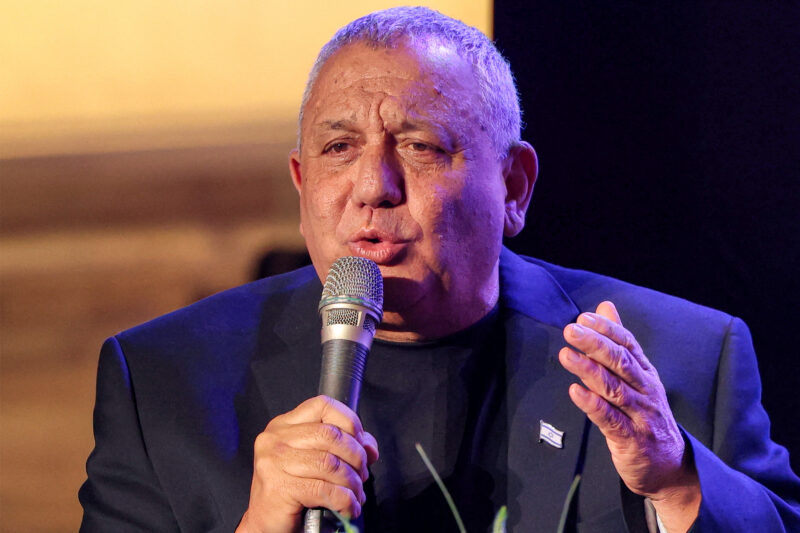
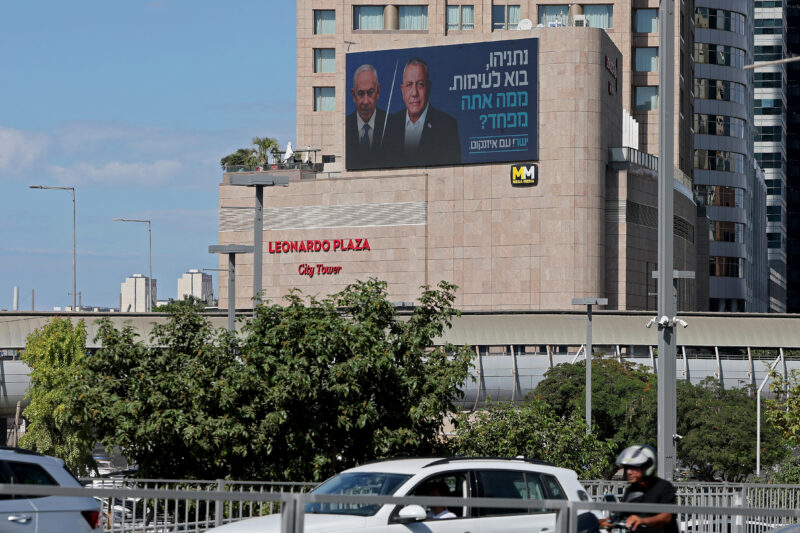
Gadi Eisenkot’s bloc appears to have little room to grow: turnout among its core voters — secular, largely central-Israel residents — has been notably stable, between 64% and 67% across the last five elections. That makes Arab turnout the variable most likely to move the math in his favor. Even with Ra’am out of a formal coalition, a surge of Arab votes would shrink the Netanyahu bloc’s share of the Knesset and could leave Eisenkot, the former IDF chief of staff who is Prime Minister Benjamin Netanyahu’s main rival, dependent on Ra’am’s support to govern.
Another possible wild card in the election is voters who live outside of Israel. The American-Israel Democracy Coalition, based in Pennsylvania, has estimated that some 67,000 Israelis, or roughly two seats in the Knesset by the last election’s numbers, returned to vote.
Netanyahu has used those voters, who he claims will support his opponents, as a get-out-the-vote tactic to rally his own supporters. In a video sent to right-wing voters on Monday, he said: “We’re in danger because the left is flying thousands of its supporters thousands of kilometers to the polls.”
Turnout in all sectors could determine whether parties hovering around the electoral threshold — such as Amcha Yisrael and Reservists and Economy — make it into the Knesset. The threshold for a party to enter the Knesset is 3.25% of the vote, roughly four Knesset seats, and the more Israelis vote, the higher the number of votes needed to clear it.
If turnout is low, then those parties have the potential to be kingmakers — if their supporters turn out and others stay home — determining what kind of coalition governs Israel in the coming year; if turnout is high, they will likely be nonentities.
The threshold may also be a threat to parties that were polling safely above it. Parties in the opposition bloc have criticized Eisenkot in recent days in light of the Yashar campaign pushing the message that it is important for it to be the largest party. Democrats leader Yair Golan, B’Yachad leader Naftali Bennett and Yisrael Beytenu leader Avigdor Liberman have all said some version of “the largest party campaign is a dangerous lie” in recent days.
While the head of the largest party is usually tasked with forming a government, sometimes the head of the second-largest gets more recommendations from his bloc and gets a chance at the premiership, and technically, any Knesset member can be prime minister, regardless of party size.
Eisenkot’s Yashar party has been banking on being the largest party atop the largest bloc, such that even if neither he nor Netanyahu is recommended by a majority of the Knesset, he will likely be the first with a chance to build a coalition.
But as anyone who observed Israeli politics in 2019-2021 knows, being tasked with forming a coalition doesn’t mean one actually succeeds. The possibilities, at that point, are myriad.
More Stories
SCOOP
Ro Khanna to urge negotiators to pull U.S.-Israel cooperation provisions from defense bill

Daily Overtime
Cleanup on aisle El-Sayed
THREAT THWARTED
Man arrested in Boca Raton for making death threat against Rep. Jared Moskowitz

Daily Overtime
Syria’s new textbooks demonize Jews, report finds
CHAIN REACTION
Bank of Israel rejects Netanyahu’s suggestion to circumvent sanctions with cryptocurrency
Daily Overtime
Deadlocked dash to Israeli elections
Please log in if you already have a subscription, or subscribe to access the latest updates.
 Continue with Google

 Continue with Apple