




















































Judge Amul Thapar, short-listed for Supreme Court, pushes back on Israel genocide charges
Thapar joined an esteemed group of conservative judges to speak out against antisemitism at a Federalist Society conference
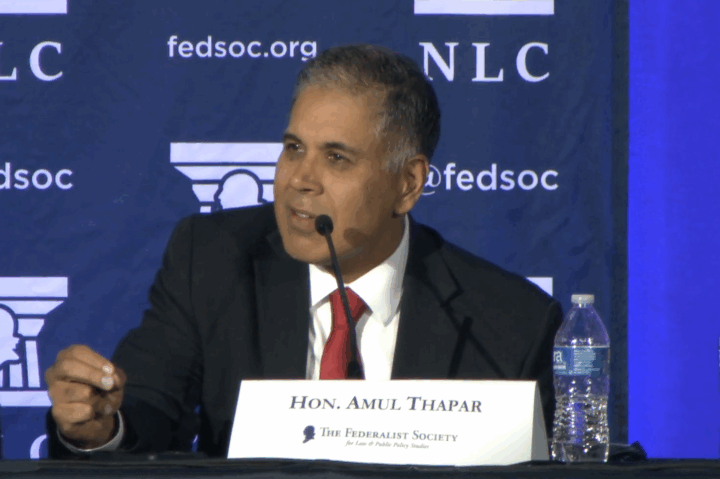
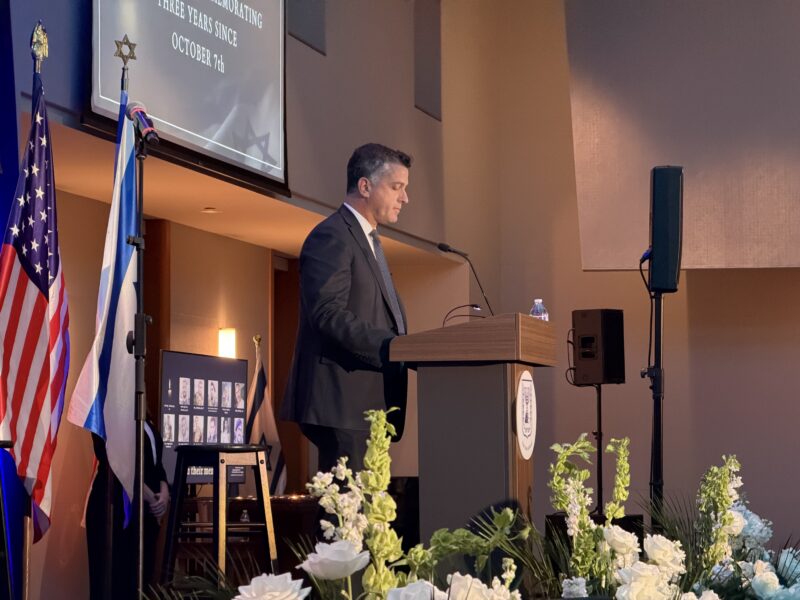
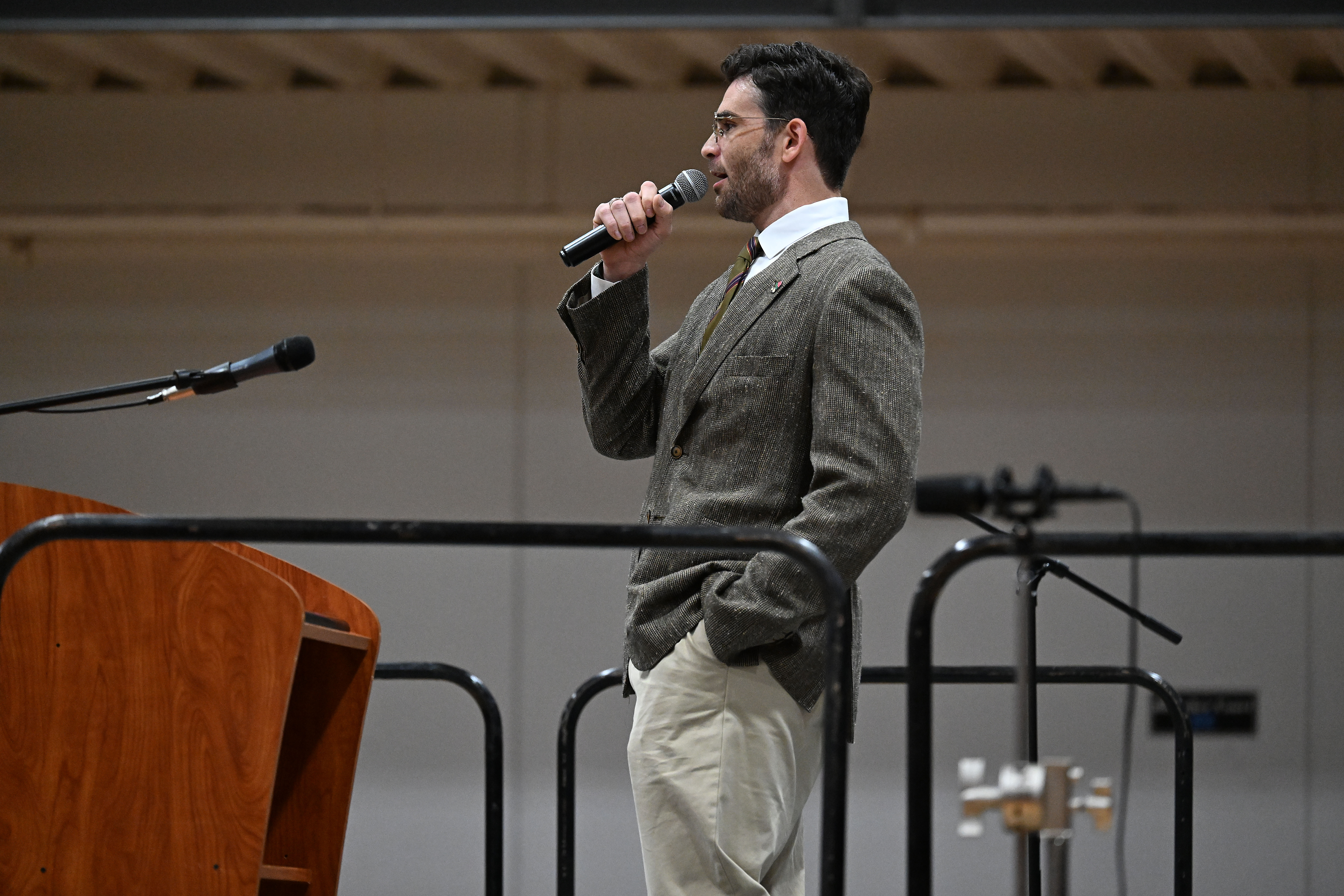
Judge Amul Thapar (Screenshot: Federalist Society)


 Add JewishInsider on Google
Judge Amul Thapar, a member of the 6th Circuit Court of Appeals and a member of President Donald Trump’s short-list for a Supreme Court nomination in his first term, pushed back on accusations of genocide against Israel at a Federalist Society conference on antisemitism on Friday.
The conference, at which a series of judges from the high-profile conservative legal group offered forceful rejections of antisemitism, is particularly notable given the discussions over antisemitism roiling the conservative movement in the wake of Heritage Foundation President Kevin Roberts’ video last week defending Tucker Carlson and rejecting the cancellation of neo-Nazi Nick Fuentes.
Thapar, who traveled to Israel after Oct. 7, 2023, with the Federalist Society, said on a panel about religious freedom and antisemitism that he had extensively researched the charges of genocide against Israel prior to the trip, and aimed to ask hard questions of Israeli officials during his visit.
“What I found is, if that accusation was the one they were trying to prove, Israel was historically bad at accomplishing that task,” Thapar said. “For it to be genocide, it has to be a specific and deliberate aim to bring about destruction of the group. If that’s your goal, why would you drop leaflets and tell people to leave? Why would you set up safe zones? Why would you send texts and warn people? That’s some of the things Israel does that no other country has done before.”
He said that the Federalist Society group found that “from the purely objective evidence, this is the furthest thing from the genocide possible. In fact, if this is a genocide, every war in the history is a genocide of multiple proportions, of what’s gone on in Israel.”
In order to preserve the status of genocide as a “uniquely horrific crime,” then it must not be used in the context of the war in Gaza, Thapar continued.
Thapar said that, because opponents of Israel lack the evidence to prove genocidal intent, they have pointed to other evidence of destruction in Gaza, “but that, we know, isn’t how international law works.”
And, he continued, Hamas’ extensive use of human shields, putting civilians in harm’s way while its fighters hide in tunnels, are ultimately responsible for those civilian casualties. And he argued that Israel has provided unprecedented levels of humanitarian assistance to the civilian population in Gaza.
During his time in Israel, Thapar said he also heard from Israeli military leaders about how military lawyers call off strikes to prevent civilian casualties.
Thapar argued that the true intent of the accusations of genocide is to “equate modern Israel with Nazi Germany” and “harass Jewish students in America.”
“For any of us that don’t stand up to that type of harassment and that type of religious [intolerance], shame on us,” Thapar said.
On the same panel, Justice Evan Young, of the Texas Supreme Court, said that, in his youth, Holocaust denial and support for Adolf Hitler were considered instantly disqualifying in reasonable conversation.
“But now we’re not in that situation. Now we have people insisting on the rest of us listening, and if we don’t, then we’re accused of cancelling,” Young said. “It’s listening to things that are attempting to invoke power to harm our Jewish brothers and sisters, based upon that very fundamental part of their identity in the United States of America. And these signs of cancer in our republic are, I think, a threat to the rule of law.”
The comments are particularly notable in the context of Roberts’ video, in which he argued against canceling Fuentes.
Young said that, in the post-Oct. 7 world, “I’ll never make the mistake again, thinking that we are done with antisemitism.”
Judge Lisa Branch, a member of the 11th Circuit, discussed her surprise and anger that the world did not step up to unite around and protect the Jewish community following the Oct. 7 Hamas attacks, but instead many have used the attacks as an impetus to target Jews.
“On podcasts and on YouTube videos, we’ve heard the disgusting comments directed at Jews. Others are more subtle, disguising their hate behind sophisticated criticisms. And the criticisms come not only from those lined up against us but sometimes from those among us,” Branch said.
She said she feels an obligation to take a more active role against antisemitism and protect her Jewish friends, adding that she has had to apologize to Jewish friends for failing to understand or underestimating the depth of modern antisemitism.
Judge David Stras, of the 8th Circuit, spoke about his grandparents, who both survived the Holocaust, and their stories with which he grew up.
He emphasized that antisemitism in Nazi Germany did not begin with attempts to exterminate the Jews, but with smaller acts of intolerance and discrimination. He said he sees parallels to and echoes of such behavior in modern day America.
Stras also emphasized the stories of those who, on various occasions, saved his grandfather’s life in the concentration camps: friends captured plotting an escape attempt who refused to disclose to the guards his grandfather’s role in the effort and nurses in a concentration camp hospital who, while he was sick, prevented him from being executed.
Judge Lee Rudofsky, of the District Court of the Eastern District of Arkansas, recounted the story of Haym Solomon, a Polish Jew who moved to the colonies before the founding of the United States and, despite illness and imprisonment, spent his fortune bankrolling the American Revolution and the founding fathers.
Judge Raymond Gruender, of the 8th Circuit, said on the panel that, given his German ancestry, he grew up interested in the Holocaust and made many visits to Nazi concentration camps and death camps in Europe. He said that he found a similar feeling when visiting the sites of the Hamas massacres on Oct. 7 as he has during his visits to the sites of Nazi atrocities.
Judge Ryan Nelson, of the 9th Circuit, highlighted the the connections he feels to the Jewish community as a member of the Church of Jesus Christ of Latter Day Saints — a Mormon — and the religious persecution that both groups have faced. He said it’s critical for both groups, and all others to work together to fight against such evil.
Judge Andrew Oldham, of the 5th Circuit, said, also shared his concerns about spreading antisemitism on campuses.
“To see these other campuses where people are so filled with such hate and such illiberal intolerance is so scary because this is the future. This is the future of our country,” Oldham said. “We have to recognize it for what it is, and we have to have an absolute moral clarity in the way that we talk about it, because it is very scary. We’ve seen where it goes if we’re not quite clear about it.”
More Stories
exclusive
Second local Jewish Democratic official endorses Republican Lawler, citing Israel and antisemitism
PLAYING DEFENSE
Zohran Mamdani defends his plan to combat antisemitism amid criticism

CAMPUS DIVIDE
University of Texas Jewish groups host former Israeli hostage to counter Piker program

BREAKING
Israel-bound FlyDubai flight makes emergency landing in Saudi Arabia after suspected terror attack by co-pilot

PHOTO OP
Letitia James opponent met with Black Hebrew Israelite group

exclusive
Gottheimer urges DOJ to investigate N.J. city for antisemitic discrimination
Please log in if you already have a subscription, or subscribe to access the latest updates.
 Continue with Google
 Continue with Apple