





































'We care a lot about the ability of the public to determine the authenticity of content … we just don't think that there should be a centralized thumb on the scale,’ Rogers said at the Hudson Institute
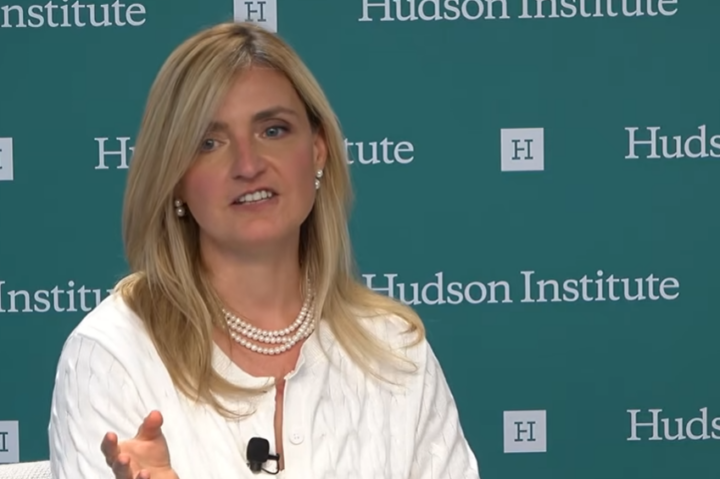
Screenshot
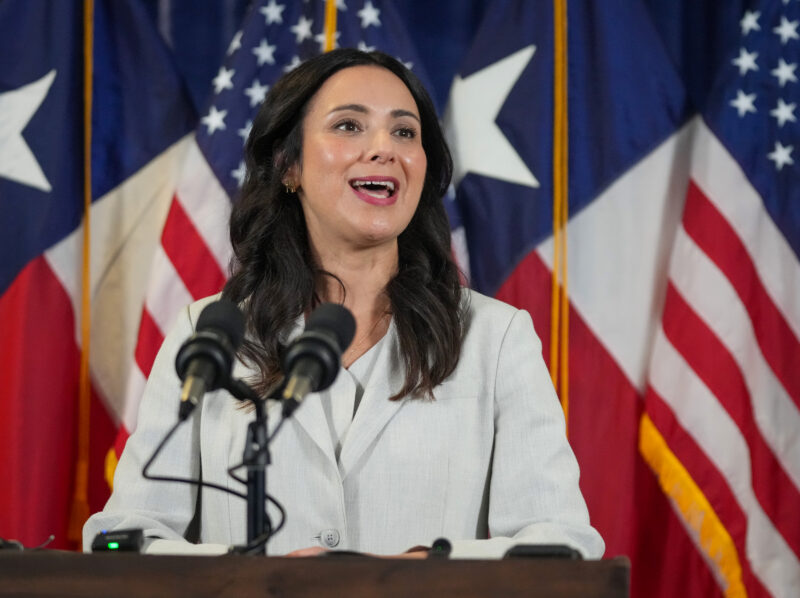
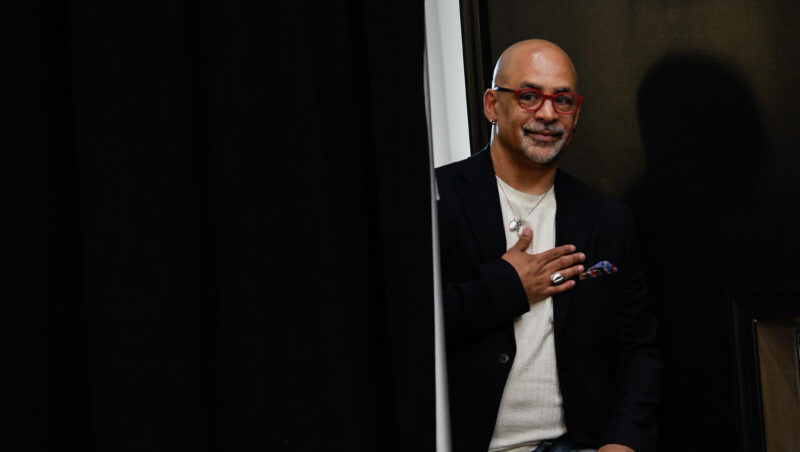
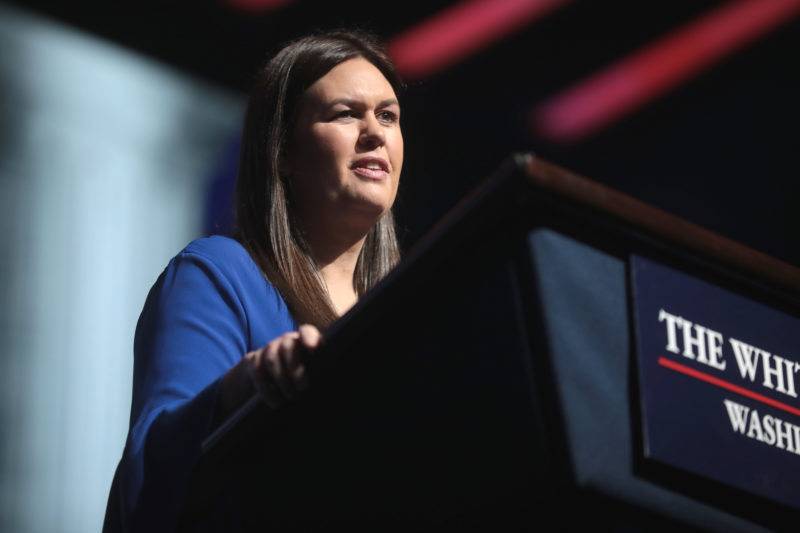
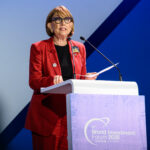
Sarah Rogers, under secretary of state for public diplomacy, speaks at the Hudson Institute on May 20, 2026.


 Add JewishInsider on Google
Sarah Rogers, the under secretary of state for public diplomacy, refuted accusations that the Trump administration has been ineffective in combating the spread of misinformation and hateful content on social media, arguing that free speech protections and efforts to combat disinformation are not mutually exclusive.
Rogers made the comments while appearing at the Hudson Institute on Tuesday for a discussion on how the United States can modernize its public diplomacy strategy to advance American interests in a complex geopolitical environment without curtailing free speech.
“We are sometimes disingenuously accused of being nihilists about the health of the information ecosystem. ‘You guys don’t want to censor the Internet, so that must mean that you want spam and bots and foreign propaganda to proliferate,’” Rogers said. “That’s not true. We care a lot about the ability of the public to determine the authenticity of content, to determine the veracity of content, to have the kinds of conversations they want to have. We just don’t think that there should be a centralized thumb on the scale, certainly not any government one, telling people what opinions are allowed.”
Asked by Zineb Riboua, a research fellow at Hudson, how the U.S. could “strike that balance” between censorship and disinformation, the under secretary said the best solution was “to give people tools that they can deploy or interact with that help them determine authenticity and veracity” of the content they’re consuming.
Rogers noted that the U.S. is “using AI and other resources to trace what we do believe to be foreign propaganda,” without implementing measures to prevent that content from being accessible to the broader public. She specifically mentioned a disinformation effort targeting the U.S. after President Donald Trump launched the war in Iran earlier this year, during which an old map of American military assets in the Middle East “was proliferated online increasingly by Western journalists and by inauthentic accounts that are probably controlled by a foreign adversary.”
“They were proliferating this false information because there had been attacks on civilian population centers in a bunch of Gulf countries that were just totally unjustified, and the argument was, ‘No, look, there were American military assets on these countries.’ False,” Rogers said. “You saw Western leftists eagerly retweeting, for an adversary, fake propaganda.”
While noting that her office has a portfolio ranging from the upcoming U.S. World Cup and the series of celebrations honoring the nation’s 250th birthday,to tech policy matters concerning free speech issues, Rogers said the two subjects were intertwined in her view.
“I don’t see the free speech tech policy stuff and the America 250 sports and arts stuff as being that divergent,” she said. “I see them as a part of a combined stream of effort, which is to tell the American story you need the freedom to speak.”
Sen. Eric Schmitt (R-MO) delivered introductory remarks at the gathering where he criticized what he described as “a deeply troubling assault on free speech and democratic self-government” across “much of Europe.”
Schmitt said that Rogers “has been at the forefront of the effort to restore seriousness, sovereignty and strategic clarity to America’s statecraft, and we’re fortunate to have her with us today.”
The State Department official told lawmakers that ‘a new road toward normalization’ could be ‘built not on the same ideology, but on shared supply chains’
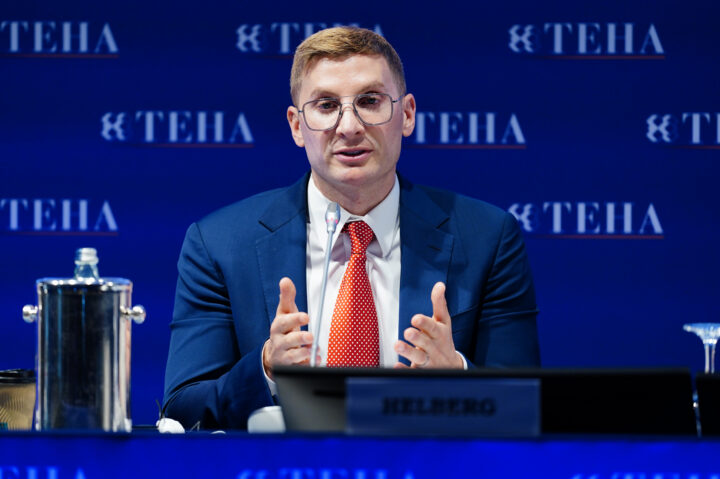
Pier Marco Tacca/Getty Images
Jacob Helberg, advisor to the White House Council of Economic Advisers and U.S. Under Secretary of State designate for Economic Growth, Energy, and the Environment, attends the 51st Edition of TEHA 'Cernobbio Forum Takes Place In Italy on September 05, 2025 in Como, Italy.
Jacob Helberg, the under secretary of state for economic growth, energy and environment, told House lawmakers on Tuesday that the administration’s Pax Silica initiative could help pave a path toward normalization between Israel and Qatar.
The initiative, which has become the State Department’s flagship effort on AI and supply chain security, currently includes 10 signatories and five non-signatory participants. Israel joined the framework in December 2025, with Qatar signing on the following month.
“Consider what this coalition has already accomplished that traditional diplomacy could not. Qatar and Israel now sit inside the same economic framework,” Helberg said during a House Foreign Affairs Committee hearing on advancing national security through diplomacy. “A new road toward normalization built not on the same ideology, but on shared supply chains.”
During his testimony, Helberg also pointed to the United Arab Emirates’ early participation in the Abraham Accords, saying the UAE joined “incredibly early at great political cost to itself,” as evidence that economic and security frameworks can reshape regional relationships.
Helberg told Jewish Insider similarly upon returning from Doha for the Pax Silica signing, “My trip to the Middle East was actually incredibly significant, because this is the first time that Israel and Qatar have been brought under the same framework and signed the same document to actually agree that shared supply chains are more important than shared ideologies.”
“When people do business together, when people focus on shared goals, you inherently create, identify and focus on things that people agree on. It’s certainly my hope that this will pave the way for peace and economic integration of the region,” he continued.
But despite Helberg’s optimism, relations between Jerusalem and Doha remain deeply strained, and formal normalization appears distant.
Israel and Qatar do not maintain diplomatic ties, and Israeli and U.S. officials and policy experts remain wary of Doha’s support of anti-Western movements such as the Muslim Brotherhood and hosting of Hamas officials.
During the war in Gaza, Doha served as a key intermediary between Israel and Hamas, helping broker temporary ceasefires and hostage-release agreements. That role was disrupted on Sept. 9, 2025, when Israeli aircraft struck Hamas figures in Doha, killing a Qatari security guard and prompting the Gulf state to scale back its mediation efforts.At the urging of the Trump administration, Israeli Prime Minister Benjamin Netanyahu later spoke with Qatari Prime Minister Sheikh Mohammed bin Abdulrahman Al Thani to express regret over the strike.
Please log in if you already have a subscription, or subscribe to access the latest updates.
 Continue with Google

 Continue with Apple