

























































Ad maker Morris Katz has been instrumental in elevating Israel antagonists into office as part of a move to reshape the Democratic Party

David Dee Delgado/Getty Images
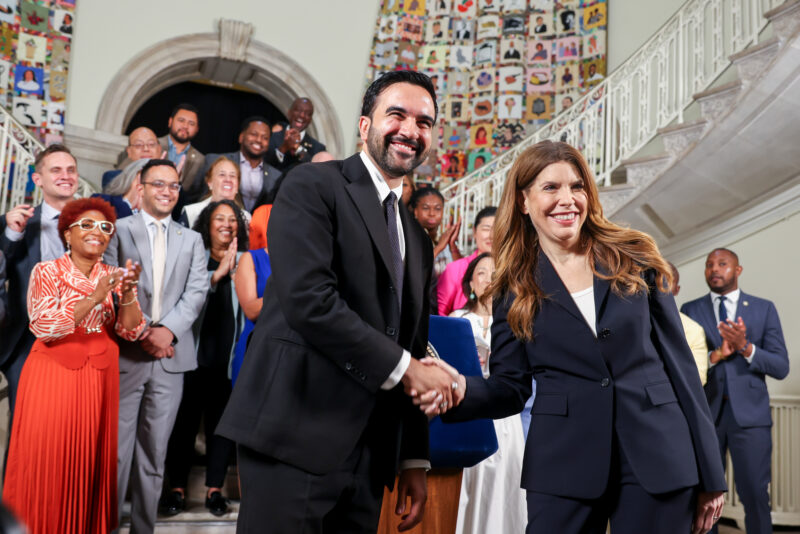
Morris Katz attends Zohran Mamdani 's inauguration as the 112th mayor at City Hall on Thursday January 1, 2026 in New York, NY.


 Add JewishInsider on Google
As the Democratic Party debates how to improve its brand and sharpen its messaging ahead of the midterm elections, one progressive strategist is emerging as an influential behind-the-scenes casting agent pushing a style of unvarnished left-wing populism, notably combined with aggressive criticism of Israel and its standing as a U.S. ally.
Morris Katz, an ad maker in his mid-20s widely seen as a political wunderkind on the far left, has been instrumental in helping to elevate outspoken detractors of Israel in a range of key congressional contests — serving as a sort of anti-Israel whisperer for candidates seeking to fine-tune their messaging about one of the most potent sources of Democratic division in the current election cycle.
Katz, who is Jewish and grew up in a wealthy neighborhood of Lower Manhattan, has attributed his jaundiced view of Israel to the pro-Israel group AIPAC, which he called “the main accelerator that radicalized me” in an interview with Haaretz last November. In 2022, he worked on the House campaign of Erica Smith in North Carolina, where she was defeated thanks in part to outside spending from AIPAC’s super PAC, an effort Katz characterized as “sinister and bad faith.”
“I started to see what was happening with clear eyes. My eyes were open to the realities of apartheid in Israel,” Katz told Haaretz, arguing AIPAC “poses the single biggest existential threat to democracy in America out of any group.”
Since then, Katz has advised, among others, the insurgent Senate campaign of Graham Platner, the scandal-plagued Maine Democrat whose masculine image, gravelly voice and status as a Marine veteran aptly embodies the sort of rough-hewn features that Katz insists are well suited to energize voter turnout — even for swing seats crucial to the party’s strategy to reclaim majorities in both chambers.
But Platner, who has drawn scrutiny in recent months for promoting extremist content online as well as a freshly covered tattoo on his chest whose Nazi symbolism he claims to have not been aware of, has otherwise gained prominence for his strident opposition to Israel, a marked contrast with rhetoric traditionally heard from candidates in battleground states. Platner, 41, has accused Israel of commiting genocide in Gaza, vowed to block U.S. arms sales to Israel and pledged to reject donations from AIPAC.
Earlier this week, Platner notched a high-profile endorsement from Sen. Ruben Gallego (D-AZ), who called the Maine oyster farmer “the only candidate” capable of defeating Sen. Susan Collins (R-ME), even as Platner faces Maine’s Democratic governor, Janet Mills, in the primary. For his part, Gallego, also a former Marine, stirred some controversy this week after suggesting the U.S. had only gone to war with Iran at the behest of Israeli Prime Minister Benjamin Netanyahu. “So much for America First,” he wrote on social media, stoking accusations he invoked an antisemitic trope while referencing partial comments made by Secretary of State Marco Rubio.
Gallego, who had previously demonstrated a broadly pro-Israel record during his time as a congressman, is seen as a potential presidential contender in 2028. He was elected to the Senate in 2024 with the help of Rebecca Katz, a progressive strategist who recently launched a new consulting firm, called Fight Agency, that also employs Morris Katz (no relation).
The consultancy has signed on as clients several far-left candidates who have made Israel a central focus of their campaigns, including Platner; Abdul El-Sayed, running for Senate in Michigan; and New York City Mayor Zohran Mamdani, a close friend of Morris Katz. It is also working with one unexpected candidate, Tom Steyer, the billionaire businessman and former presidential contender now seeking the Democratic nomination in California’s crowded race for governor.
While Steyer said at a recent forum that he is committed to deepening California’s partnership with Israel and fighting boycotts of the Jewish state, he also sat for a lengthy interview this week with the far-left streamer Hasan Piker, whose popularity has remained strong among progressives even as he has frequently voiced antisemitic views and pro-Hamas sentiments.
Fight Agency did not respond to a request for comment.
Morris Katz rose to political fame last year as a top advisor to Mamdani, who drew some criticism for speaking with Piker — and whose disinterest in visiting Israel is a notable exception to every New York City mayor over the past 75 years, who all traveled to the Jewish state .
During the mayoral campaign, Katz also reportedly served as an unofficial liaison to Jewish leaders who were suspicious of Mamdani’s anti-Israel record — though one well-placed Jewish community activist familiar with such outreach said he did not interact with the strategist and was not aware of others who had.
His own views on Israel would have been unlikely to reassure Jewish leaders. Katz has called Netanyahu “the existential threat to Israel’s existence” and said AIPAC is “spending hundreds of millions of dollars defending a fascist in Israel,” among other things.
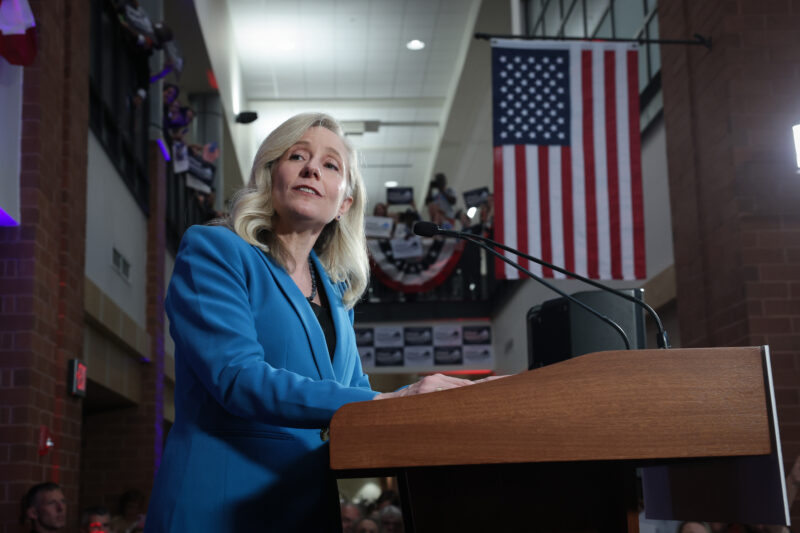
More recently, Katz has worked for Brad Lander, the former New York City comptroller challenging Rep. Dan Goldman (D-NY), a pro-Israel Democrat who is defending a heavily Jewish House seat that includes parts of Brooklyn and Manhattan. Lander, a critic of Israel, is echoing other left-wing primary candidates in seeking to highlight Goldman’s ties to AIPAC as a sign he is not aligned with Democratic sentiment on Middle East policy.
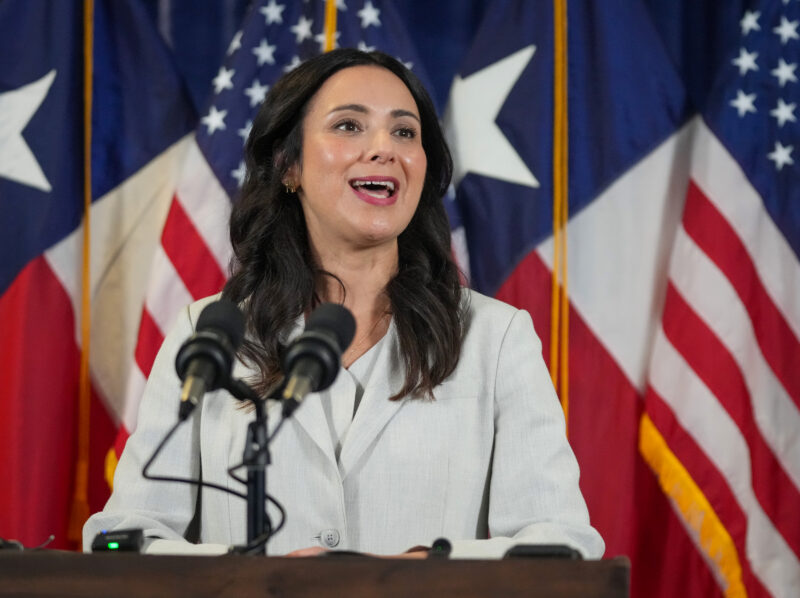
In addition to Lander, Katz is now advising Claire Valdez, an anti-Israel state assemblywoman who is competing in a hotly contested Democratic primary to succeed retiring Rep. Nydia Velázquez (D-NY) in a safely blue district covering Brooklyn and Queens.
Meanwhile, he is also reportedly working to help consolidate progressive backing for Micah Lasher, a Jewish state assemblyman with a record of support for Israel, who is running in a crowded Democratic primary for the House seat being vacated by retiring Rep. Jerry Nadler (D-NY) in Manhattan. Lasher had endorsed Mamdani during the general election, in a move that sparked blowback from some Jewish leaders.
Until Mamdani, Katz’s most consequential work had included advising on the Senate campaigns of Dan Osborne, an independent from Nebraska who lost his race, and Sen. John Fetterman (D-PA), who has disappointed his former progressive backers for promoting staunchly pro-Israel stances since taking office. Fetterman recently dismissed Platner as “the guy with the Nazi tattoo,” after the Maine candidate had said the senator should lose his seat for backing the war with Iran.
Not all of Katz’s clients have become stars of one sort or the other. Earlier this month, for instance, one of his clients, Nathan Sage, a scruffy Democrat who was competing for an open Senate seat in Iowa, announced that he was ending his campaign, citing a lack of fundraising.
Still, some of his better-known clients have gained momentum in their respective races, most notably including Platner, who has continued to maintain a commanding lead over Mills — in spite of controversies that have engulfed his campaign in the past weeks.
In a sharply worded social media post this week, Katz accused Republicans as well as Democrats of “lying about” Platner’s background “to uphold an oligarchy, and the military industrial complex it rests on.”
The Anti-Defamation League said it is ‘alarmed’ by leading Saudi voices using openly antisemitic dog whistles while peddling conspiracy theories
NATHAN HOWARD/POOL/AFP via Getty Images
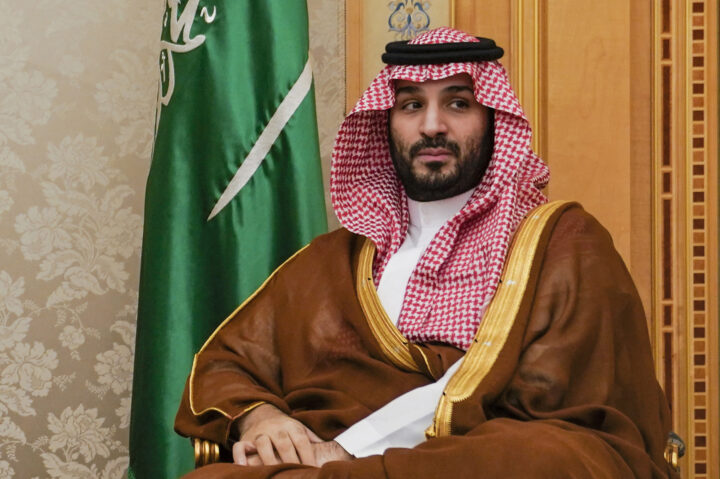
Saudi Arabia's Crown Prince Mohammed bin Salman looks on during his meeting with the US Secretary of State in Riyadh on October 23, 2024.
Several leading Jewish and pro-Israel advocacy groups are expressing concerns about the impact of the recent rise in antisemitic and Islamist messaging out of Saudi Arabia, as the Gulf kingdom’s rhetoric is increasingly raising questions about its standing as a reliable U.S. ally in the region.
In recent weeks, Saudi Arabia has ratcheted up its anti-Israel rhetoric through state-sanctioned media and other regime mouthpieces, amid a widening rift with the United Arab Emirates and closer alignment with Islamist-oriented forces that are hostile toward Israel, such as Turkey and Qatar.
The new posturing, part of a broader pivot from what national security experts had seen as Saudi Arabia’s moderating influence in the region, has fueled surprise and frustration among Jewish American advocacy organizations that have pushed for the kingdom to normalize relations with Israel, an objective now regarded in some circles as unlikely for the foreseeable future.
Last week, the Anti-Defamation League said in a sharply worded social media statement that it was “alarmed by the increasing frequency and volume of prominent Saudi voices — analysts, journalists and preachers — using openly antisemitic dog whistles and aggressively pushing anti-Abraham Accords rhetoric, often while peddling conspiracy theories about ‘Zionist plots.’”
“This is harmful on many levels, diminishing the prospect of peaceful coexistence in the region and weakening regional initiatives promoting tolerance, understanding and prosperity,” the ADL added.
The pro-Israel lobbying group AIPAC, for its part, amplified a recent X post by Barak Ravid, a global affairs correspondent for Axios, who flagged what he called Saudi Arabia’s “information war against the UAE” and said “the Saudi press is full of articles that include anti-Israeli conspiracies, anti-Abraham Accords rhetoric and even antisemitic language.”
In a statement to Jewish Insider on Monday, Deryn Sousa, a spokesperson for AIPAC, emphasized that “America would be stronger and our interests would be better served if more nations, including Saudi Arabia, joined the Abraham Accords and worked together with our democratic ally Israel to promote regional peace, security and prosperity.”
Brian Romick, the president and CEO of Democratic Majority for Israel, echoed that sentiment, calling the Abraham Accords “a landmark diplomatic achievement” whose expansion, “especially through Saudi-Israeli normalization, should be a bipartisan pillar of U.S. policy.”
“A breakthrough between Israel and Saudi Arabia would be the most consequential step the region can take toward lasting peace, security, and prosperity, and the Trump administration should pursue it relentlessly while linking any upgrade in the relationship to measurable progress toward Saudi-Israeli normalization,” Romick said in a statement to JI. “Despite recent political frictions and unhelpful rhetoric, deep mutual interests in security, economic integration and technology make normalization an enduring strategic imperative.”
The American Jewish Committee, which has also promoted Saudi participation in the Accords, said it is “keeping a close eye on any developments” tied to the kingdom’s shift, but declined further comment.
While experts have linked Saudi Arabia’s recent animus toward Israel to such issues as the war in Gaza, Israeli recognition of Somaliland and unrest in Iran, Michael Makovsky, the president and CEO of the Jewish Institute for National Security of America, suggested that one unexplored motivating factor may be the Trump administration’s friendly relations with Islamist leaders in Turkey, Qatar and Syria.
“It sends a signal to the Saudis that you could take more Islamist positions, and it won’t hurt you with the United States,” Makovsky said in an interview with JI on Monday, arguing the administration will need to “reorient” its engagement in the region if it wants to help shape Saudi policies to align more closely with American interests.
But Makovsky said he has not seen interest among Trump officials in pursuing that path — even as the administration has long encouraged Saudi Arabia to join the Abraham Accords.
“I think the administration needs to step back and reflect on the fact that, if the Saudis are acting like this now, and they’ve been more of a moderating influence,” he said, “it should lead to a rethink of how they’re approaching all these other countries.”
Please log in if you already have a subscription, or subscribe to access the latest updates.
 Continue with Google

 Continue with Apple