























Former Defense Minister Liberman warns clan is affiliated with ISIS and can turn on Israel; Netanyahu did not bring decision to security cabinet

BASHAR TALEB/AFP via Getty Images
A Palestinian Hamas fighter carries a rifle as terrorists and people gather at the site of the handing over of Israeli hostages at the Nuseirat refugee camp in the central Gaza Strip on February 22, 2025.


 Add JewishInsider on Google
Israel is providing weapons to an armed militia opposing Hamas, a defense source confirmed on Thursday.
Following reports in recent weeks that Israel was working with a gang led by Yasser Abu Shabab based in Rafah in southern Gaza, Avigdor Liberman, the former defense minister and current opposition lawmaker, said on Kan radio that “Israel provided assault rifles and light arms to crime families in Gaza, on [Israeli Prime Minister Benjamin] Netanyahu’s orders … These are the equivalent of ISIS in Gaza.”
Liberman said Israel’s security cabinet was not involved in or informed of the decision to give the Al Shabab clan guns, but the Shin Bet was aware of it.
“No one can ensure that these weapons will not be turned against Israel,” he added. “We have no way of supervising or following [where they go].”
Netanyahu’s office did not deny the allegation and responded that “Israel is acting to defeat Hamas in various ways upon the recommendation of the heads of the security establishment.”
Israel is providing the Al Shabab gang with Kalashnikov rifles, some of which were confiscated from Hamas during fighting in the past 20 months.
Liberman compared giving the Al Shabab militia guns to Netanyahu allowing Qatar to send aid to Gaza, based on an idea that keeping Palestinians divided is better for Israel.
“The prime minister of Oct. 7 hasn’t learned anything and is still continuing with the same idea that led us to the greatest massacre in the history of the state,” Liberman posted on X. “For years, Netanyahu nurtured Hamas and refused to listen to me when I said that he is severely damaging Israel’s national security.”
“Now he is making the exact same mistake and sending weapons to clans identified with ISIS in Gaza,” Liberman stated.
Israeli Defense Minister Israel Katz’s office did not respond to Jewish Insider’s request for comment, and National Security Minister Itamar Ben-Gvir declined to comment. Ben-Gvir began his career in political activism opposing the Oslo Accords; one of the Israeli right’s leading slogans against the accords was “don’t give [the Palestinians] guns.”
Hamas posted videos online of its members targeting the militia in Rafah, a city which the IDF controls. Hamas called Abu Shabab “the Israeli Robin Hood” in a social media post on Thursday, and other members of his clan distanced themselves from him.
Michael Milshtein, head of the Palestinian Studies Forum at Tel Aviv University, noted on X that Palestinian media have reported on Israeli cooperation with clan-based militias in recent weeks to secure humanitarian aid distribution in Gaza by the U.S.-backed Gaza Humanitarian Foundation. The Abu Shabab militia has a few hundred members who came together since the IDF entered Rafah in mid-2024.
Milshtein told JI that he does not know of any ties between ISIS and Yasser Abu Shabab, whose gang he called “psychopaths.”
Yasser Abu Shabab spent years in Hamas prisons, mostly for smuggling, theft and selling drugs, and was freed after Oct. 7, 2023, Milshtein said.
After Eli Sharvit’s writings about Trump resurfaced, Sen. Lindsey Graham called his appointment ‘beyond problematic’

ANDREW CABALLERO-REYNOLDS/AFP via Getty Images
President Donald Trump (R) meets with Israel's Prime Minister Benjamin Netanyahu in the Oval Office of the White House in Washington, DC, on February 4, 2025.
Israeli Prime Minister Benjamin Netanyahu announced on Tuesday that he was withdrawing the appointment of former Israeli Navy commander Eli Sharvit as the next chief of the Shin Bet, following pushback in the governing coalition as well as a public rebuke from Sen. Lindsey Graham (R-SC) over Sharvit’s past comments criticizing President Donald Trump.
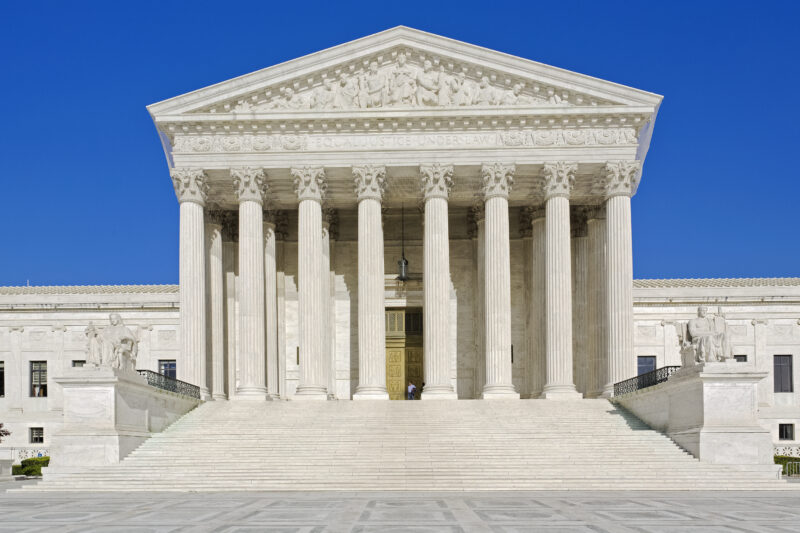
Netanyahu announced early Monday that Sharvit was his choice to head the internal security agency — pending a Supreme Court case relating to the prime minister’s firing of Shin Bet head Ronen Bar.
The following morning, the prime minister released a statement that he had told Sharvit that “after further consideration, he intends to consider other candidates.”
Within hours of Sharvit’s appointment being announced, Cabinet ministers and Likud Knesset members came out against Sharvit, because, after his retirement from the military, Sharvit had participated in protests against Netanyahu’s policies.
Israeli Heritage Minister Amichay Eliyahu wrote in a post on X that “the main difficulty with Ronen Bar’s conduct is not the persona but the Kaplanist [anti-Netanyahu protester] worldview … Replacing a person with a Kaplanist worldview with another person with a similar worldview does not solve the problem but only perpetuates it.”
Hours later, Graham provided Netanyahu’s base with another reason to oppose Sharvit: He once recently spoke out against Trump.
Sharvit published an op-ed in January lambasting the 47th president’s environmental policies as short-sighted and profit-driven rather than focused on addressing climate change. “We live in an era where the public demands more accountability from governments and corporations. Trump’s choice to ignore these demands sends a message to the world that the United States is shirking its global leadership,” Sharvit wrote in the Jan. 23 piece, published in Calcalist.
“American leadership on climate and the environment failed under the previous Trump administration, and now it is our responsibility to ensure that it does not fail again,” Sharvit continued.
Graham wrote on X on Monday morning that Israeli leaders should rethink Sharvit’s hiring, which he described as “beyond problematic” because of the former naval commander’s past criticism of Trump.
“While it is undeniably true that America has no better friend than Israel, the appointment of Eli Sharvit to be the new leader of the Shin Bet is beyond problematic. There has never been a better supporter for the State of Israel than President Trump. The statements made by Eli Sharvit about President Trump and his policies will create unnecessary stress at a critical time,” Graham said.
“My advice to my Israeli friends is change course and do better vetting,” he continued.
Soon after, political analysts speculated on Israeli evening news that Graham was doing Netanyahu a favor that was likely coordinated, giving the prime minister a reason to reverse Sharvit’s appointment — because it may offend Trump — that would be more broadly accepted than doing so because of the former naval commander’s participation in protests against Netanyahu.
Responding to that chatter, the South Carolina senator wrote on X later Monday, “To my friends in the political punditry world in Israel: If you think the over the top criticism levied against President Trump’s energy policy by the Shin Bet nominee is no big deal, you have missed a lot.”
The post contained a screenshot from Sharvit’s Calcalist piece alleging Trump had “chosen to abandon critical net-zero emission targets for 2050 and focus on promoting polluting fuels, driven by a short-term conservative perspective aimed at maximizing immediate profits.”
“I believe that this policy is not just misguided but dangerous. Trump’s shortsightedness sends a shocking message of disregard for scientific reality, human well-being, and responsibility toward future generations. This approach is essentially a political version of ‘eat and drink, for tomorrow we die’ – an attempt to evade global consequences by prioritizing the immediate interests of polluting fuel industries,” Sharvit wrote.
Netanyahu fired Shin Bet chief Bar earlier this month, citing a lack of trust, while opposition figures accused the prime minister of pushing Bar out for political reasons.
There have been several petitions to the Supreme Court against the firing, and the court plans to hold a hearing on April 8. In the meantime, the dismissal is frozen, but Netanyahu has still been allowed to interview potential successors to Bar.
The prime minister said on Monday morning that he chose Sharvit out of seven candidates and that he was “convinced that Vice-Admiral Sharvit is the right person to lead the Shin Bet on a path that will continue the organization’s glorious legacy.”
This story was updated at 1:48 a.m. E.T.
“Examining your own aggression prevents the next victim,” said filmmaker Joseph Cedar.
RAN MENDELSON/HBO
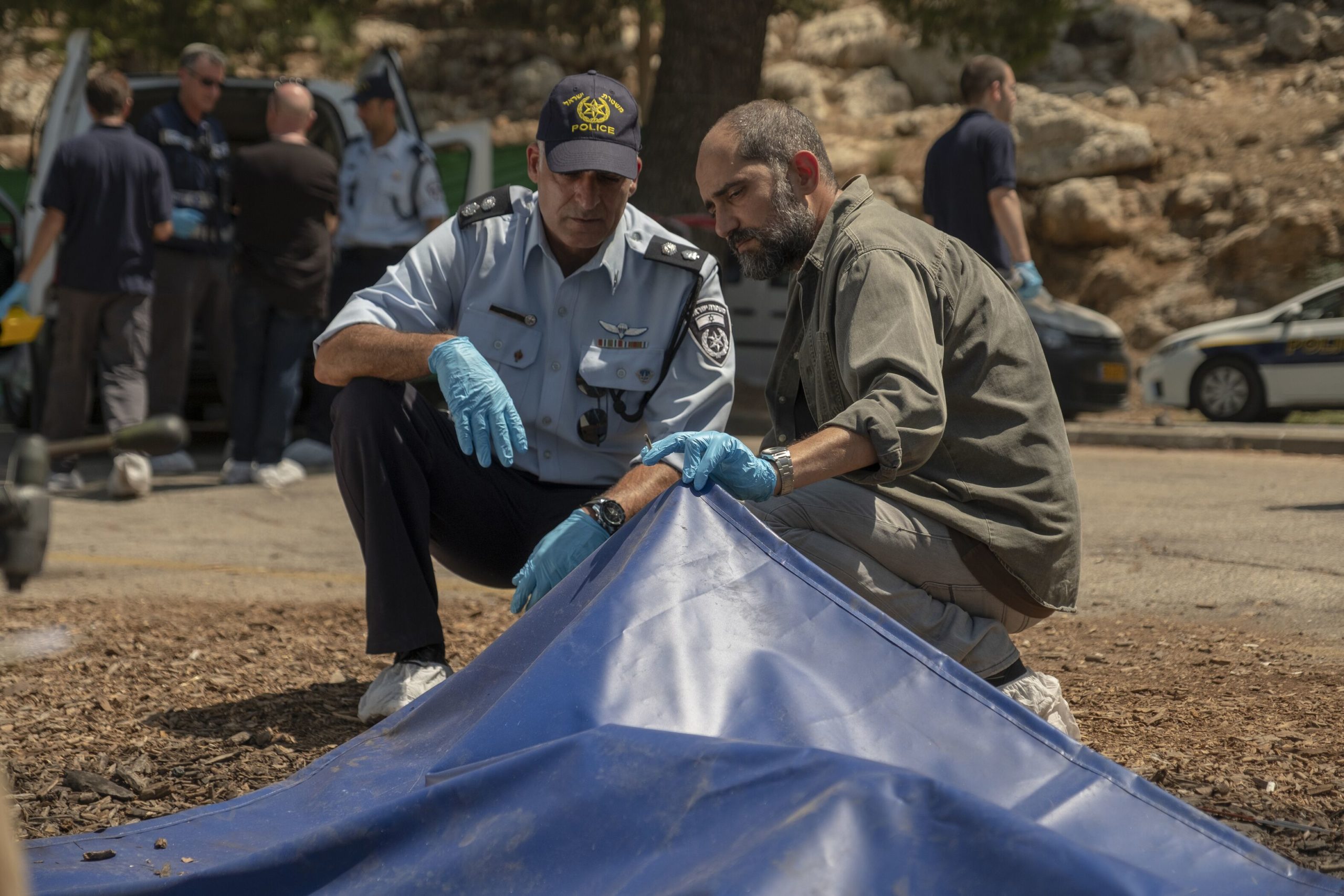
The contentious, dramatic events that marred the summer of 2014 in Israel will be dramatized in the HBO series “Our Boys,” which premieres a week from today on August 12.
On June 12, 2014, three Israeli teenagers — Eyal Yifrach, Gilad Sha’ear and Naftali Fraenkel — were kidnapped by Hamas terrorists. After a nationwide search of more than two weeks that left the country on edge, their bodies were found dumped in a field. Two days later, the burned body of Palestinian teenager Mohammed Abu Khdeir was discovered in a western Jerusalem forest. “Our Boys” follows the Shin Bet’s investigation into Abu Khdeir’s murder, revealing an unexpected story that the show’s creators believe is worth retelling — for both dramatic and political reasons.
While “Our Boys” begins with the kidnapping of the three Israeli teenagers, neither the boys nor their families appear as actual characters in the show. Viewers are instead brought up to speed courtesy of news footage from 2014. In contrast, Abu Khdeir and his family are introduced as well-developed characters with whom the audience can sympathize.
Hagai Levi, one of the show’s Israeli creators, explained the decision to Jewish Insider: “It’s much more interesting to deal with my own soul searching than why ‘the other’ would do something to me,” he said.
Levi, along with co-creators Joseph Cedar (who previously directed “Norman”) and Palestinian filmmaker Tawfik Abu Wael, visited New York City last week to promote the show. Joined by actor Shlomi Elkabetz (who plays Shin Bet operative Simon), the three filmmakers sat down with JI in the reading room of The Whitby Hotel in midtown Manhattan to share what drew them to the project.
“We’re on this wheel,” notes Cedar, who was born in New York but immigrated to Jerusalem at age six, regarding the Israeli-Palestinian conflict. “A cycle of where some kind of violent act creates victimhood, suffering, pain that then creates rage, that turns into a violent act that creates pain, suffering, victimhood and so on.” In Cedar’s view, “aggression is more interesting than victimhood and so dramatically that’s probably the reason.”
Cedar said the decision to focus on Khdeir also had political motivations. “There’s also a political reason for us focusing on the aggression and not the victimhood,” he said. “Holding onto victimhood creates more aggression. Examining your own aggression prevents the next victim. We’re not interested in our own victimhood, not because we don’t sympathize with the pain but, because we have an interest in stopping the cycle.”
For a show about a region with competing narratives, the creators embraced their own differences and didn’t shy away from the challenge of syncing those views into a single series.
Abu Wael, who directed the Palestinian scenes for “Our Boys,” said the series is written from an Israeli point of view, which created a challenge for him. “It is very difficult because from a Palestinian point of view, the first thing they will say is ‘but the occupation didn’t start with the kidnapping of the three boys. The killers of the three boys were living under apartheid.’”
Cedar, who argued that there are both Israeli and Palestinian points of view in the miniseries, conceded that for Abu Wael, even if the three Israeli boys aren’t characters in the show, “the decision to start the cycle with our victimhood is a cop-out on our side.”
It remains to be seen how the average HBO viewer will react to a show diving deep into the murky waters of the Israeli-Palestinian conflict. The Shin Bet’s investigation into Abu Khdeir’s murder leads them to a pair of Mizrahi yeshiva students in the West Jerusalem neighborhood of Har Nof, a group not typically associated with acts of extremism. “For us it was very important to show the hidden currents in society and not the obvious ones,” Levi said.

A scene from the upcoming miniseries “Our Boys.”
Cedar said the identity of Khdeir’s murderers reverberated through Israel in a unique way.
“One of the interesting things that happened when the identity of the killers became known is that all Israelis had a sigh of relief,” Cedar recalls. “They’re not one of us. It’s either an insane man who forces his young nephews to take part in this or they’re in some weird group that has no larger institutionalized base, or no belonging to something that reflects on us. It’s extremely rare and it probably will never happen again because it’s so rare.”
For Cedar, the series demonstrates how that perception is wrong, and in his view, there is no way for Israeli Jews to distance themselves from the murder.
Elkabetz, whose character leads the Shin Bet investigation on the show, said there might not have been an organization behind the murder, but “if individuals decide to do an act, you understand there are bigger influences. It’s in the air and they get permission from it.”
For fans of “Fauda” and “Shtisel,” “Our Boys” incorporates both similar dynamics and even several cast members from the two shows. Shadi Mar’i, who plays Walid on “Fauda,” appears on “Our Boys” as Abu Khdeir’s older brother, while Michael Aloni, who plays Akiva on “Shtisel,” is a Shin Bet investigator.
Abu Wael points out that there are only so many actors in Israel, but says there’s a key difference between “Fauda” and “Our Boys.”
“On Fauda, Palestinians are either terrorists or traitors,” he said. “This show is different because you have a very normal Palestinian family with dreams like everyone else.”
Please log in if you already have a subscription, or subscribe to access the latest updates.
 Continue with Google
 Continue with Apple