


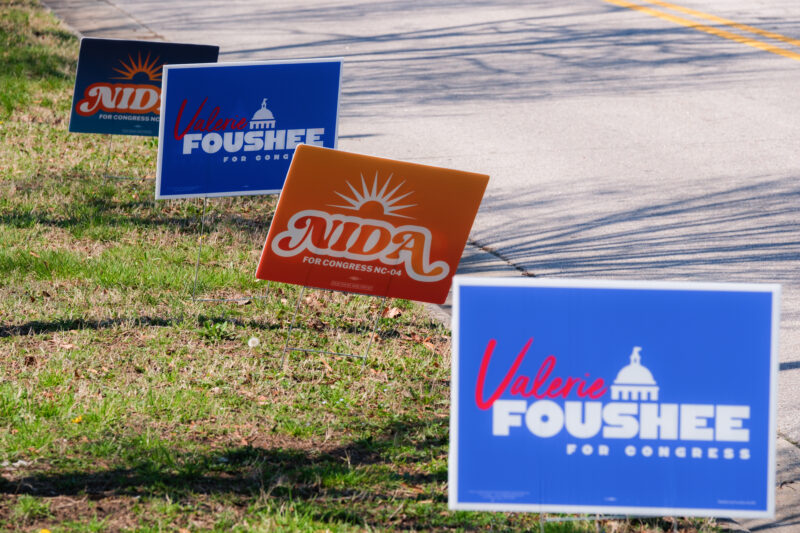
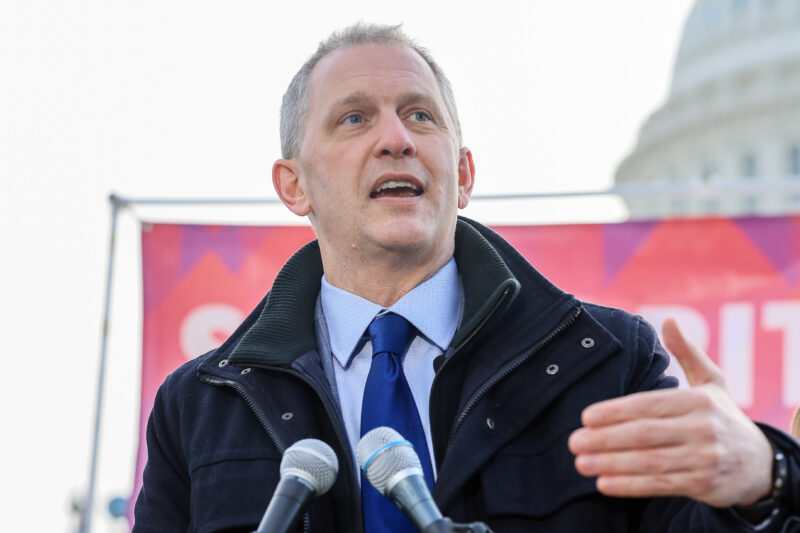
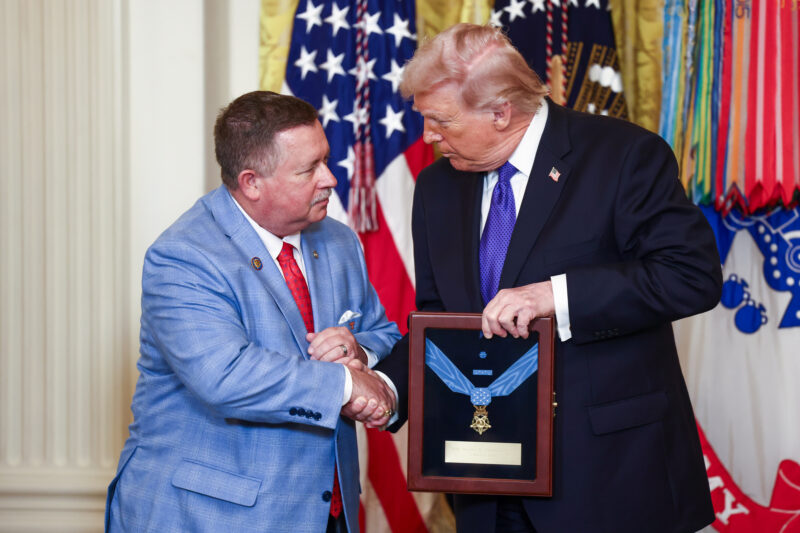






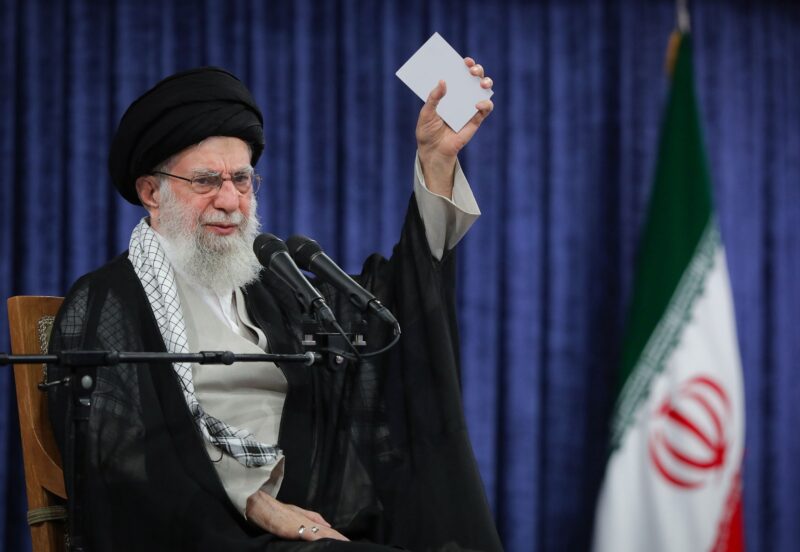






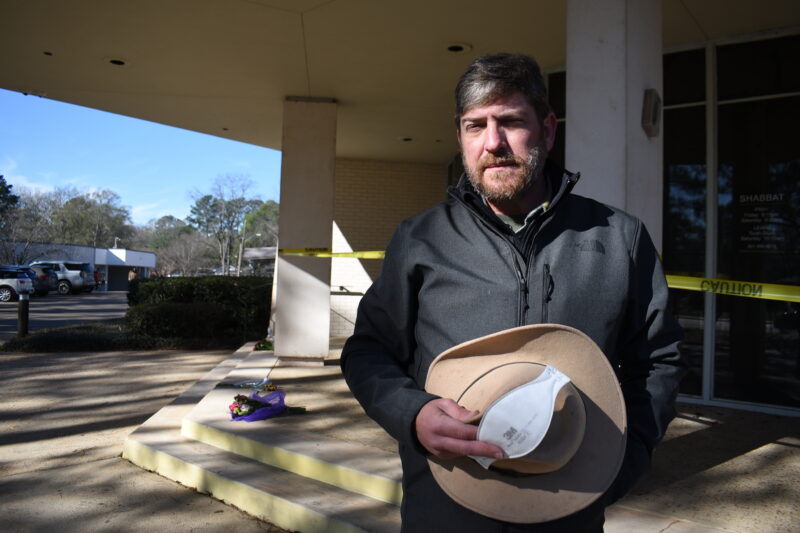
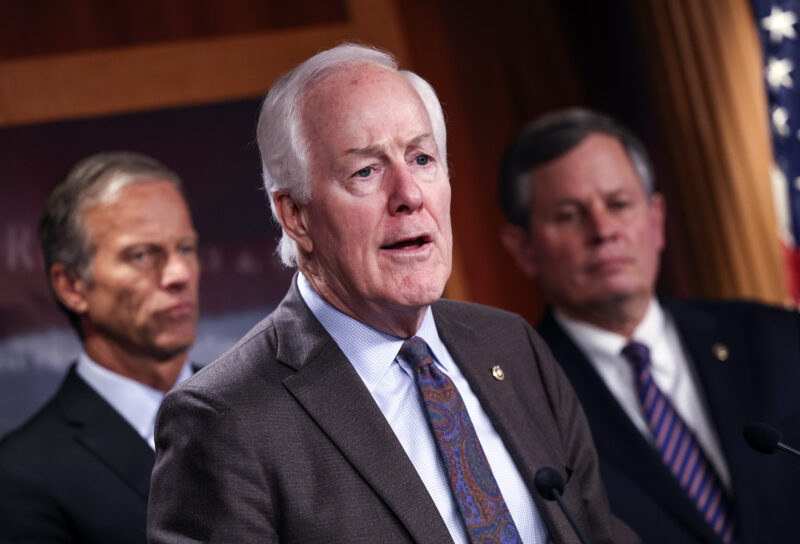
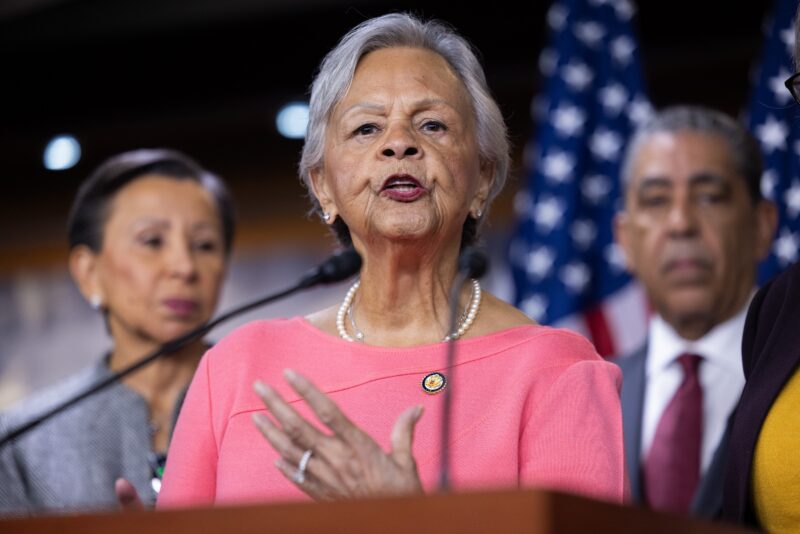
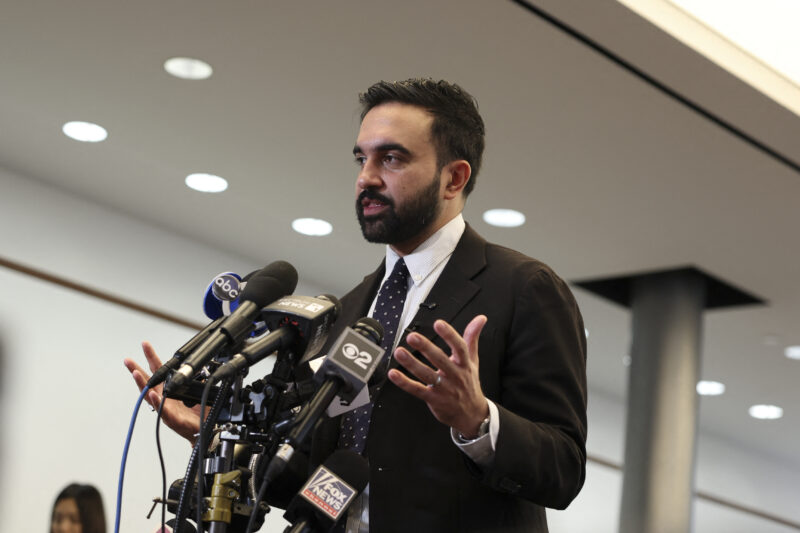





















The Maine Senate candidate quickly deleted his post, in which he approved of a message by neo-Nazi radio host Stew Peters
Sophie Park/Getty Images
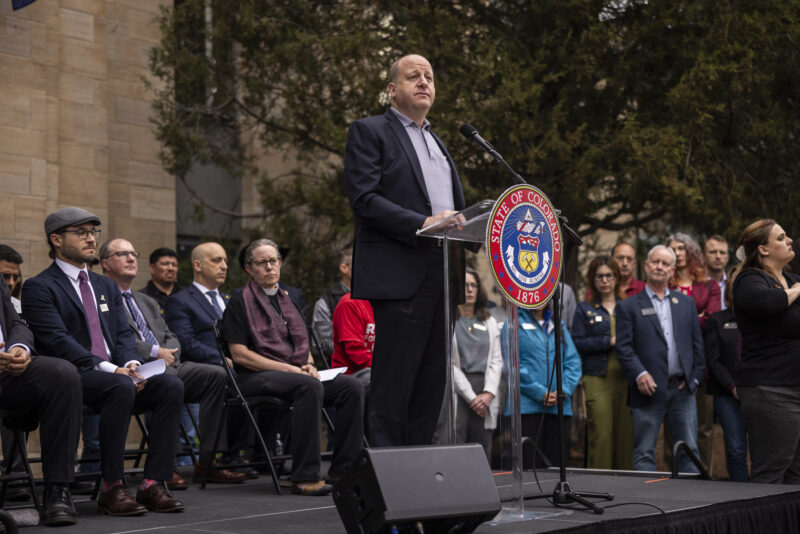
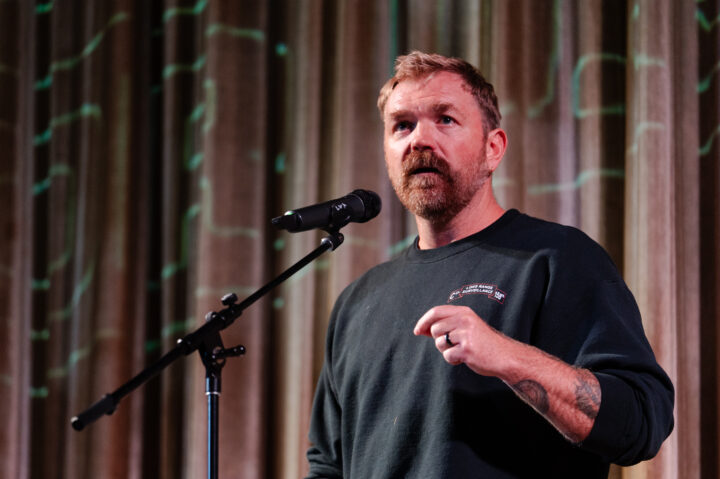
U.S. senatorial candidate from Maine Graham Platner speaks at a town hall at the Leavitt Theater on October 22, 2025 in Ogunquit, Maine.


 Add JewishInsider on Google
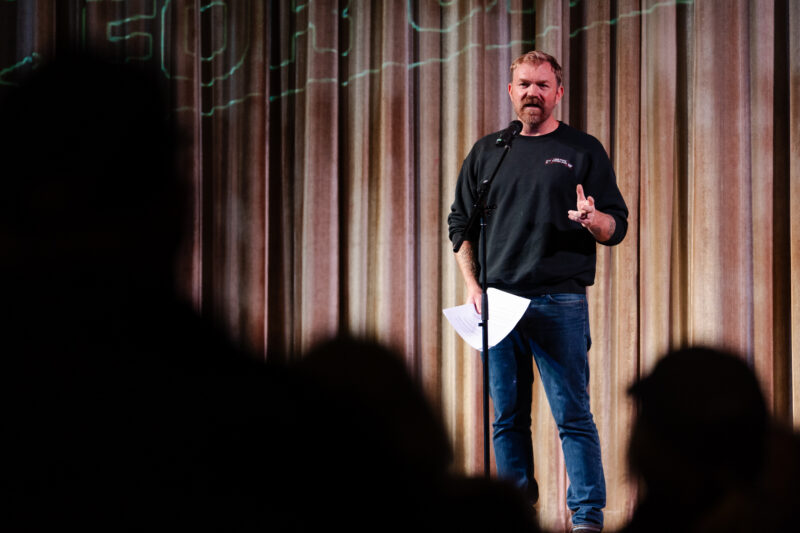
Graham Platner, a far-left Senate candidate in Maine, amplified a social media post on Thursday from a far-right conspiracy theorist well-known for viciously antisemitic commentary — before quickly deleting the statement.
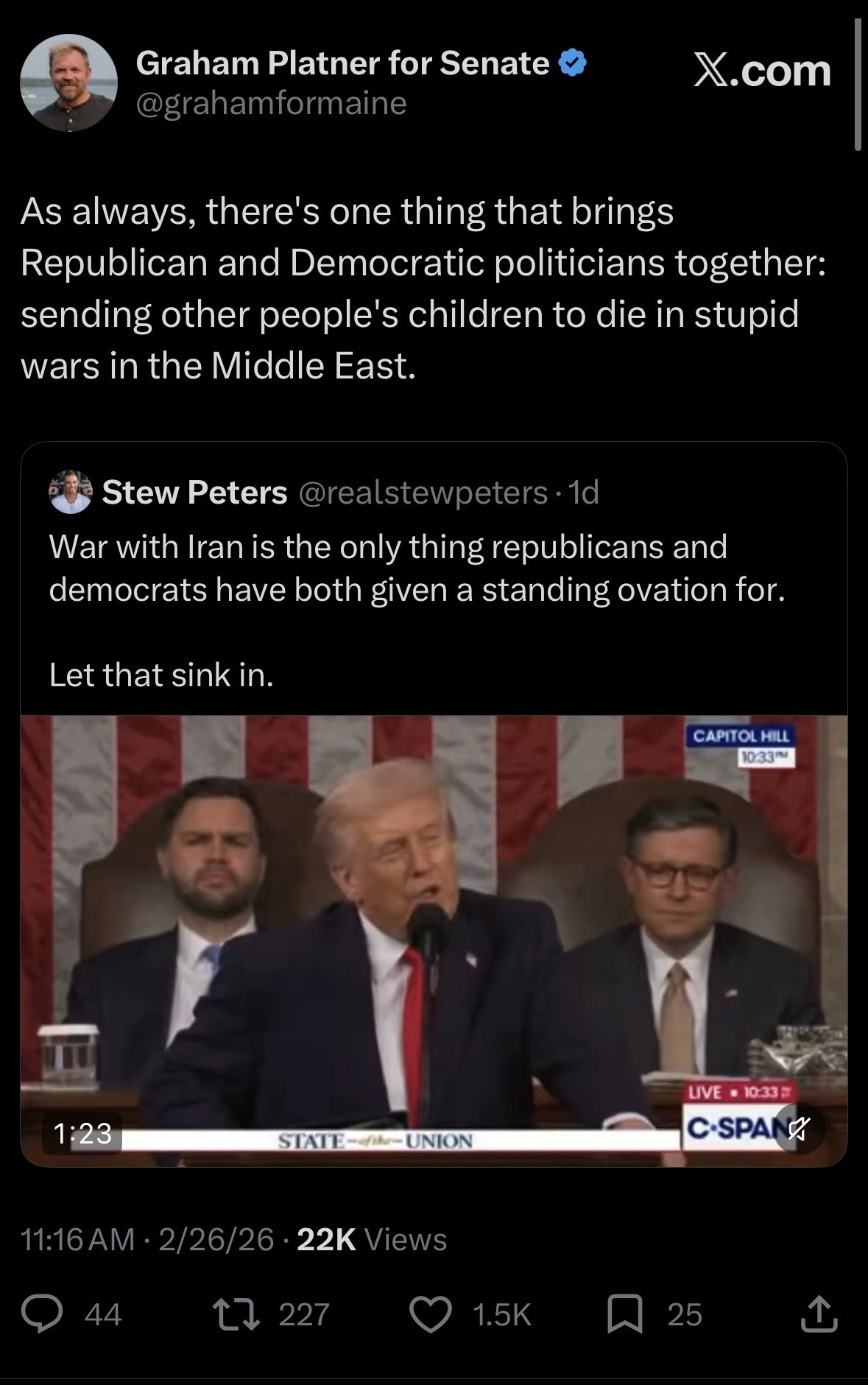
In a comment to X late Thursday morning, Platner approvingly boosted a remark from Stew Peters, an extremist radio host who has frequently promoted antisemitic tropes and engaged in Holocaust denial, calling a war with Iran “the only thing Republicans and Democrats have both given a standing ovation for.”
“As always, there’s one thing that brings Republican and Democratic politicians together: sending other people’s children to die in stupid wars in the Middle East,” Platner, a 41-year-old Marine veteran turned oyster farmer who has sharply criticized U.S. military engagement abroad, wrote in his own post.
He deleted the post an hour or so after it had been flagged by online observers who noted that he was elevating a problematic figure with a long record of hostile rhetoric toward Jews.
The Anti-Defamation League has described Peters as a “prolific antisemite” who blames “‘the Jews’ for everything he believes is wrong with society,” while the Southern Poverty Law Center has said his radio show has “become a central hub for antisemitic and conspiratorial content.”
He has said Judaism is “satanic” and a “death cult,” promoted blood libels, called for a “final solution” to mass-deport American Jews and questioned the existence of gas chambers that exterminated Jews during the Holocaust, among other conspiratorial assertions.
In a statement to Jewish Insider, a spokesperson for Platner said the post had been published due to an oversight. “We were reposting a C-Span clip of Trump speaking about the potential war with Iran and didn’t realize that the video had been posted by a despicable account,” the spokesperson said. “When we learned who the poster was we immediately deleted the post.”
The social media blunder is a particularly sensitive issue for Platner, who earlier in his campaign faced scrutiny over a Nazi tattoo on his chest, which he had covered up last October. He has insisted he was not aware the tattoo closely mirrored a Totenkopf, a skull-and-crossbones icon used by an infamous Nazi SS unit, even as a former acquaintance told JI that he had years ago specifically identified it as such. He has denied such claims.
“I am not a secret Nazi,” Platner said in a podcast interview last year, while calling himself “a lifelong opponent” of “Nazism and antisemitism and racism in general.”
Despite such baggage, polling has shown Platner holds a commanding lead in the Maine Democratic primary race, where he is facing Gov. Janet Mills to challenge Sen. Susan Collins (R-ME), who is one of the most vulnerable Republican incumbents up for reelection in the midterms.
El-Sayed: ‘I always wonder why nobody asks me why Palestine doesn’t have a right to exist’
Bill Pugliano/Getty Images
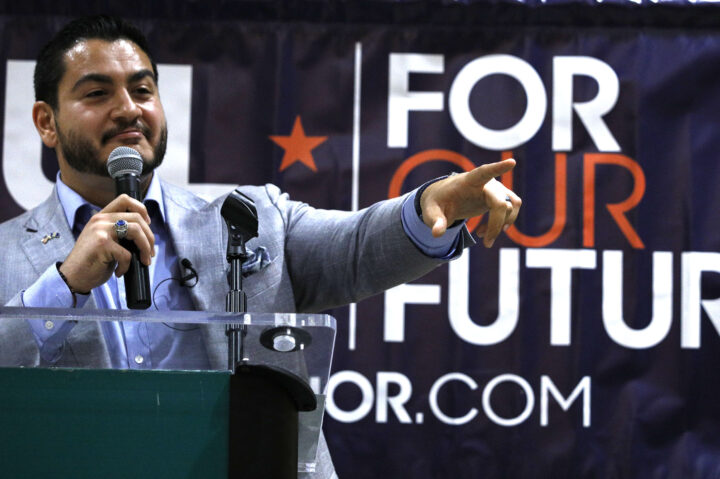
Michigan Senate candidate Abdul El-Sayed, in a 2018 campaign appearance with Rep. Alexandria Ocasio-Cortez at a rally on the campus of Wayne State University July 28, 2018 in Detroit, Michigan.
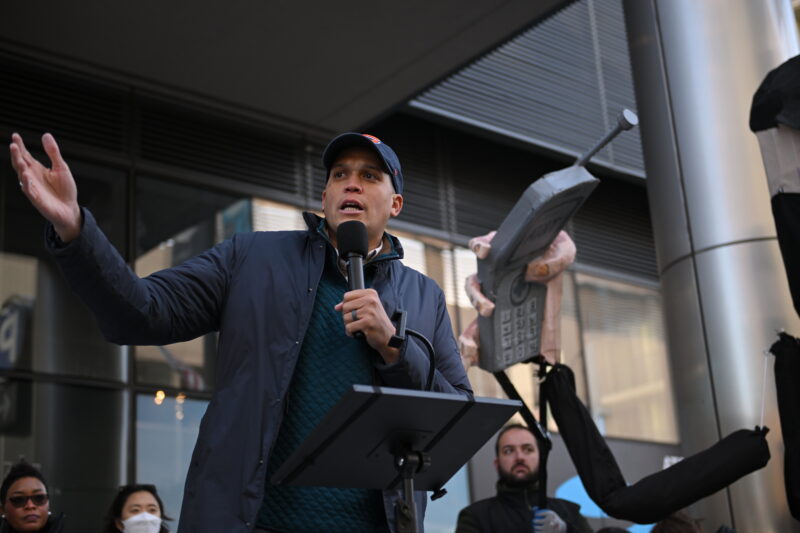
Michigan Democratic Senate candidate Abdul El-Sayed sidestepped a question about Israel’s right to exist during an interview with the anti-Israel media outlet Zeteo last week.
Zeteo founder Mehdi Hasan asked El-Sayed how he would respond if and when he faces questions on the campaign trail about whether he supports Israel’s right to exist as a Jewish state. El-Sayed initially responded by calling the question hypocritical and again dodged when pressed.
He said that most U.S. presidents have expressed support for a two-state solution, and “Israel exists. Palestine doesn’t. And so I always wonder why nobody asks me why Palestine doesn’t have a right to exist.”
El-Sayed accused the U.S. of supporting “the very people in Israel who want to foreclose on the possibility of Palestine existing.”
“And so to me, frankly, it is about our principles and how we apply them evenly. If you believe in a two-state solution, then what are you doing to make it possible?” he continued.
He went on to note his own childhood experiences in Egypt, which is the second largest recipient of U.S. military aid, and said that aid hasn’t benefited the Egyptian people, suggesting the U.S. should not be providing any foreign military aid anywhere.
“My position on this has always been … it’s not about conditioning aid. I think under no condition should we be sending the money that should be buying our kids’ schools or healthcare or infrastructure to a foreign military to buy them tanks,” he continued. “And that we can start with Egypt. We go to Pakistan, we can go to Jordan, we go to Saudi Arabia and we go to Israel. I just think it’s about principle.”
El-Sayed also dismissed AIPAC donors as “MAGA billionaires throwing their money around to try to dictate the outcome for a Democratic primary.”
“I think Michiganders are sick and tired of being told who they can and cannot vote for in Michigan,” he said.
In an interview with JI, the wealthy businessman declined to weigh in on Tucker Carlson but said Republicans ‘shouldn't be in the business of canceling anyone’
AP Photo/Mark Humphrey
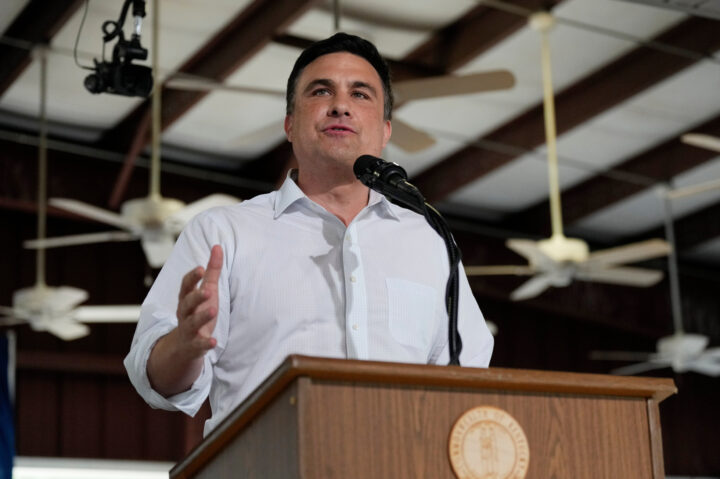
Lexington tech entrepreneur Nate Morris speaks at the annual Fancy Farm picnic, Aug. 2, 2025, in Fancy Farm, Ky.
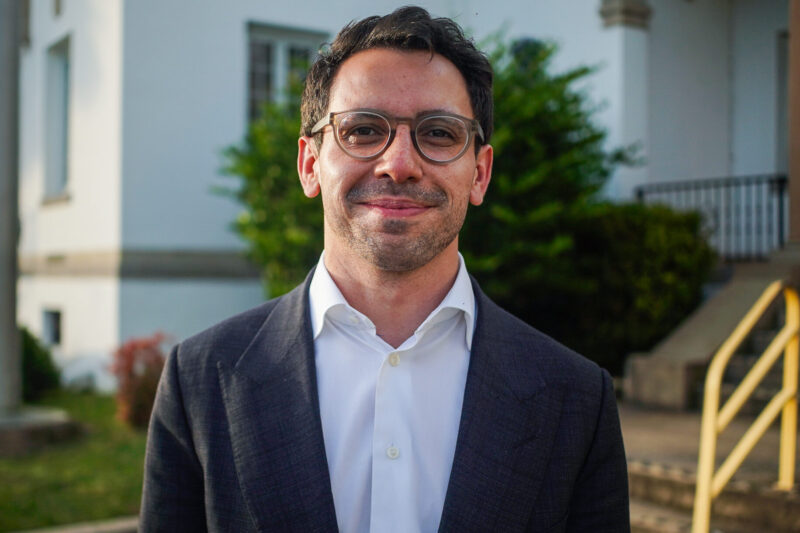
As the GOP uneasily contends with rising hostility to Israel among younger right-wing voters, Nate Morris, a 45-year-old Republican Senate candidate in Kentucky who is courting the populist right with an anti-establishment message, emphasizes there is at least one long-standing party axiom he will never abandon: unwavering support for the Jewish state.
Morris, the wealthy founder of a successful waste management company who calls himself a “Trump America-First conservative,” said his commitment to upholding a strong U.S.-Israel alliance extends from his alignment with President Donald Trump’s vision for the Middle East.
“I think he’s been the most pro-Israel president we’ve had in our country’s history, and I want to continue that kind of leadership on the issue in the United States Senate, on behalf of Kentucky and the country,” Morris told Jewish Insider in an interview last Friday during the Republican Jewish Coalition’s annual summit in Las Vegas, where he met privately with members to pitch his campaign to succeed retiring Sen. Mitch McConnell (R-KY).
Trump, he added, “has gotten it right, and obviously the success speaks for itself.”
But Morris also cited a more personal reason for what he described as his unequivocally pro-Israel worldview, explaining that, as a “proud” evangelical Christian, he has “always believed Israel is the land that was given to the Jews by God.”
“My views on Israel are never going to change,” he pledged. “They’re in my bones. That’s the way I was raised. That’s what my faith teaches me.”
“Look, all our differences here and the different positions that are out there, we’ve got to have more education, we’ve got to have more conversations as a party,” Morris said, without referring to Carlson or Roberts directly. “I want to discuss these things as a party, get on the same page as a party.”
His comments, while hardly unusual in a deeply evangelical state like Kentucky, come at a fraught moment for conservative Christian supporters of Israel, in the immediate wake of Tucker Carlson’s friendly interview with the neo-Nazi streamer Nick Fuentes, a source of sustained criticism throughout the RJC’s three-day summit attended by elected officials, conservative activists, media personalities and other political candidates.
But even as Carlson had expressed his disdain for Christian Zionists, claiming they had been seized by a “brain virus,” Morris was relatively cautious when addressing the interview with Fuentes as well as the backlash toward the Heritage Foundation, the conservative think tank whose president, Kevin Roberts, has continued to stand behind Carlson.
“Look, all our differences here and the different positions that are out there, we’ve got to have more education, we’ve got to have more conversations as a party,” he said diplomatically, without referring to Carlson or Roberts directly. “I want to discuss these things as a party, get on the same page as a party.”
Morris also stressed that “we shouldn’t be in the business of canceling anyone, but educating them and making sure they understand the full context and what’s at stake here.”
“That’s the way we’re going to win as a party,” he said, “and I think that is what’s going to tamp out any differences that we have and that we shouldn’t be having.”
The hesitance to offer a forthright condemnation speaks not only to Carlson’s strong influence in the MAGA movement but also to how his fan base likely overlaps with the right-wing coalition that Morris is hoping to activate in a competitive primary with two more-established rivals.
Morris, a friend of Vice President JD Vance who launched his campaign in June, is facing Daniel Cameron, the former state attorney general, and Rep. Andy Barr (R-KY), both of whom are strong supporters of Israel. Morris described the race as a “proxy war between Mitch McConnell and Donald Trump,” as the outgoing senator has become one of the most vocal Republican critics of the president in the upper chamber and frequently warns of growing isolationism in the GOP.
Even as he worked as an intern for McConnell early in his career, Morris, who attended graduate school at the Princeton School of Public and International Affairs as well as Oxford, has sought to tie his rivals to the retiring senator, arguing that Kentucky voters are “ready for change” and that Congress is in need of “new perspectives.”
To underscore his point, Morris noted that Zach Witkoff, the son of Trump’s special envoy, Steve Witkoff, recently hosted an event for his Senate campaign, where Morris got the chance to “hear firsthand a lot of the inside details” about how the ceasefire deal between Israel and Hamas “came together.”
“What I love about the president is he uses tools of diplomacy, the same tools he uses as a negotiator and as a business leader, and he has applied those to his foreign policy to be able to get things done,” Morris said.
Trump’s approach “shows that when you have outsiders and business people negotiating, you can get great outcomes,” he added. “That’s one of the big reasons why I’m running for the U.S. Senate. I think that we need more people coming from the outside.”
“The thing is, unless you go there and see it, you don’t understand that every day, you don’t know what’s going to happen,” Morris told JI. “You’re under constant threat and potential for assault when you live there and when you’re a citizen of Israel.”
He also called Vance, who encouraged him to run for the open seat, a fellow “outsider” who “wasn’t a career politician” before he launched his own bid for Senate in Ohio just a few years ago. Morris said that they had talked about foreign policy “in the context of” their “general worldview,” but did not elaborate.
Morris was previously a fundraiser for Sen. Rand Paul (R-KY), the libertarian Republican, with whom he traveled to Israel in 2013 on a trip that included evangelical leaders. He said the visit instilled in him a heightened sensitivity to Israel’s ongoing security concerns. (Paul has regularly voted against military aid to Israel and opposed Trump’s attack against Iran’s nuclear program, as part of his overall opposition to foreign aid and military engagement overseas.)
“The thing is, unless you go there and see it, you don’t understand that every day, you don’t know what’s going to happen,” he told JI. “You’re under constant threat and potential for assault when you live there and when you’re a citizen of Israel.”
The first-time candidate acknowledged waning support for Israel in younger Republican circles, even as he declined to criticize Carlson and others for stoking anti-Israel sentiment on the far right.
He expressed concern about students who posed a series of antisemitic questions to Vance at a recent Turning Point USA campus event, but stopped short of addressing the backlash the vice president subsequently faced for choosing not to challenge the students’ hostile remarks about Jews and Israel.
While his evangelical faith primarily drives his own support for Israel, Morris said he also believes that “it makes the most sense for the United States,” and skeptical younger conservatives could be persuaded simply on the basis of that argument. “Even looking at it economically,” he said, “I could sell that all day long to any American, to say you’re going to prosper more by this relationship.”
“I think that these are the kind of tools that we can use to get over any hatred, any disagreement — any of the discourse that has been disgusting we’ve seen online,” Morris told JI. “These are the kind of things that can help change hearts and minds.”
In a recent conversation at a fundraising event, the Maine Senate candidate claimed the Israeli government funded Hamas and also revealed he is related to Israeli author and analyst Seth Frantzman
Sophie Park/Getty Images
U.S. senatorial candidate from Maine Graham Platner speaks at a town hall at the Leavitt Theater on October 22, 2025 in Ogunquit, Maine.
Like many progressives now running for Congress, Graham Platner, a Democratic Senate candidate in Maine, has made opposition to Israel a central part of his messaging.
He frequently accuses Israel of genocide in Gaza, advocates for blocking U.S. aid to Israel and is an outspoken critic of AIPAC. During a campaign event last month, Platner, a 41-year-old former Marine who runs an oyster farm, also said he believes that Israel is a terrorist state.
But more so than many candidates, the political newcomer seems particularly invested in engaging on Middle East policy, even if his views have drawn scrutiny, according to audio of a recent private discussion in which he debated about Israel with some attendees at a fundraising event in Maine for nearly 20 minutes.
Speaking at the August fundraiser, Platner defended his stances on Israel and shared previously undisclosed details about his personal ties to the region, according to the audio, recently shared with Jewish Insider.
Despite his hostile criticism of Israel, Platner said he believed that the country “has the same right to exist that every nation has to exist,” though he did not confirm whether he recognizes Israel’s right to exist as a Jewish state.
While he said he agreed that Hamas is a terrorist organization, Platner claimed that Netanyahu had “publicly stated that” Israel was “funding Hamas to make sure that there was going to be no non-radical leadership within Gaza in order to keep a Palestinian state from happening.”
While members of Netanyahu’s coalition have made this argument — Finance Minister Bezalel Smotrich referred to the terrorist organization as “an asset” as it serves as an obstacle to Palestinian statehood — the prime minister has never personally made such a claim. New York Times reporting from shortly after the Oct. 7 attacks alleged that the Israeli prime minister had allowed the Qatari government to send money into the Gaza Strip for several years in order to “maintain peace in Gaza.” Netanyahu called allegations that he was empowering Hamas “ridiculous.”
“It is difficult for me to lay the onus of everything only at the feet of the Palestinians,” he explained, “and not include the Netanyahu government.”
Platner also quibbled with an attendee who said that 1,200 Israeli civilians had been killed during the attacks, noting that a percentage of those who had died on Oct. 7 were soldiers in the Israeli military.
“It wasn’t 1,200 civilians. It was 600 military members,” Platner countered, using a number that far exceeded the approximately 300 soldiers who were killed in the attacks.
“Who were taken sleeping, unarmed, out of their beds, I’ve met families,” the attendee responded, likely referring to the tatzpitaniot, unarmed female observer soldiers, and others, who were famously killed and kidnapped in their pajamas.
“When you are wearing a uniform and carrying a gun in the service of a cause, it is difficult for me to feel that you can be called a civilian,” said Platner, who fought in Iraq and Afghanistan. “There is a one-way street on this,” he continued, “that I find to be disingenuous.”
The private comments suggest that Platner is not merely paying lip service to such issues on the trail, as he runs in a competitive primary against Maine Gov. Janet Mills for the Democratic nomination to unseat Sen. Susan Collins (R-ME).
Platner’s campaign did not respond to a request for comment.
Platner’s views on Israel and Gaza have received limited attention in recent weeks as his campaign has weathered controversy over his past incendiary Reddit posts and faced questions over when he first became aware that a skull tattoo on his chest he had for nearly 20 years resembled a Nazi symbol known as a Totenkopf.
Platner, who covered the tattoo this month, has insisted he did not know what the skull signified until recently, though reporting from JI and CNN has contradicted that claim.
He has also argued that members of his family are Jewish and never objected to the skull tattoo when he took his shirt off around them. “Eighteen years,” he told The Atlantic recently. “It’s never come up.”
In the conversation about Israel at the fundraiser, which took place before controversy ensnared his campaign, Platner noted his stepbrother is Seth Frantzman, an Israeli author, journalist and security analyst who has long worked for The Jerusalem Post and lives in Jerusalem, saying they are “very close,” according to the audio.
Frantzman, who has previously written admiringly about Platner without mention of their familial ties, did not respond to an email seeking comment.
Platner also said that he had “multiple friends in B’Tselem,” the left-wing Israeli human rights group that has described Israel as an apartheid regime and accused Israel of committing genocide in Gaza — as he argued that Israel is not fully a democracy.
He cited his friends from B’Tselem “who have showed me videos, who have introduced me to former soldiers, who have introduced me to Palestinians, who have laid out a very clear and, frankly, well-sourced case that Palestinians living within the borders of the occupied territories do not live in a democracy, that they do not have equal rights, that they do not have equal access to areas.”
He said that, “as an American taxpayer,” he was uncomfortable with sending continued U.S. aid to support Israel’s military.
But even as he has been deployed to the Middle East, Platner confirmed that he had never visited Israel.
Michigan state Rep. Noah Arbit, a Democrat, said El-Sayed ‘demonstrated that he has a complete disregard not only for Israeli lives but for Jewish life, and completely disqualified himself from serving as U.S. Senator’
Bill Pugliano/Getty Images
Michigan Senate candidate Abdul El-Sayed, in a 2018 campaign appearance with Rep. Alexandria Ocasio-Cortez at a rally on the campus of Wayne State University July 28, 2018 in Detroit, Michigan.
On the second anniversary of the Oct. 7, 2023, Hamas terror attacks on Israel, Michigan Senate candidate Abdul El-Sayed, a Democrat, sent a fundraising email to supporters that criticized Israel’s ground invasion of Gaza while ignoring the Hamas attack that precipitated it.
“Two years ago this month, Netanyahu’s military launched a ground invasion of Gaza,” the email begins. It does not mention Hamas, the Oct. 7 attacks or the ongoing hostage situation in any capacity, despite the date on which it was sent and the fact that the Israeli invasion of Gaza took place weeks after Oct. 7.
The email goes on to blame pro-Israel financial support to politicians for the continuation of the war.
“It has continued because politicians in both parties have chosen to send billions of our tax dollars to fund this senseless war — instead of demanding an immediate ceasefire,” the email continues. “And If you’re asking yourself, “Why on Earth are politicians in Washington continuing to add fuel to the fire?” the answer is money. AIPAC is funneling millions into campaigns in exchange for loyalty.”
El-Sayed issued a separate statement from his campaign account earlier in the day.
“All children deserve lives unburdened by hate, war, guns, bombs, kidnapping, or murder. All people deserve equal rights to peace, dignity, and self-determination,” the statement reads. “Hamas violated these principles in its heinous attack on October 7th. They killed 1,200 people and took dozens of hostages, many of whom have yet to be released. I condemned it then, and I condemn it now.”
The statement goes on to condemn Israel for committing “genocide on Gaza with our tax dollars” and demand that “international law must be enforced and those who have broken it must be brought to justice. And our government must stop sending blank checks to foreign militaries who violate it.”
An El-Sayed spokesperson said Wednesday that the Tuesday email “mistakenly went out yesterday” and that El-Sayed “has been clear and consistent: he holds equally valuable the lives of all innocent people and condemns violence against them.”
Michigan state Rep. Noah Arbit, a Jewish Democrat, said that the comments were “repugnant.”
“Abdul El-Sayed has demonstrated that he has a complete disregard not only for Israeli lives but for Jewish life, and completely disqualified himself from serving as U.S. Senator for MI. As a State Representative, I call on Michiganders to reject this bigoted campaign,” he said. “Fundraising off the anniversary of the worst massacre of Jews since the Holocaust, while 48 Jews are still captive in the bowels of hell in Gaza is akin to dancing in the gas chambers of Auschwitz.”
Arbit demanded an “an unconditional, immediate apology” to Michigan’s Jewish community. He said that the campaign’s assertion that the email had gone out mistakenly was insufficient.
“Mistakenly, but not accidentally,” he said Wednesday. “[El Sayed] owes an apology to Michigan’s Jewish community. This has nothing to do with legitimate criticisms of a country’s government or military and everything to do with dancing on the anniversary of a massacre.
El-Sayed is running in a hotly-contested Democratic primary for the Senate seat of retiring Sen. Gary Peters (D-MI). He is facing Rep. Haley Stevens (D-MI), the favorite of party leaders who has been a supporter of Israel and outspoken voice against antisemitism during her Congressional career.
Also running is state Sen. Mallory McMorrow, who has sounded increasingly hostile towards the Jewish state as her campaign has progressed. On Monday, she said she considered Israel’s war in Gaza as a “genocide” — comments her campaign immediately promoted to Politico.
McMorrow condemned El-Sayed’s fundraising email.
“To send a fundraising pitch on October 7th without mentioning, much less condemning, Hamas and their horrific terrorist attack is beyond tone deaf,” McMorrow said. “It is fair to be critical of the Israeli government’s actions in Gaza. I have been. But sending a fundraising email on the two year anniversary that completely ignores the atrocities committed by Hamas was wrong and brings us no closer to a goal we all should share: releasing the hostages and ending the violence.”
Republicans view the Michigan Senate race as one of their top pickup opportunities, and have coalesced behind former GOP Rep. Mike Rogers, who narrowly lost to Sen. Elissa Slotkin (D-MI) in last year’s Senate contest.
Sen. Tim Scott (R-SC), the chair of the National Republican Senatorial Committee, responded to the news by saying, “Abdul El-Sayed doesn’t just oppose Chuck Schumer as Senate Democrats’ leader, he opposes Schumer’s right to exist,” presumably referring to the fact that Schumer is Jewish.
The former NC governor: He ‘generally does not believe we should withhold aid from a critical ally like Israel when they have to defend themselves against countries like Iran’

Allison Joyce/Getty Images
Former North Carolina Governor Roy Cooper
North Carolina Democratic Senate candidate Roy Cooper, the state’s former governor, rejected efforts to withhold U.S. aid to Israel, days after the Senate voted on legislation to block certain U.S. arms sales to Israel, his campaign told Jewish Insider.
“The Governor believes it’s urgent for the United States to use other means of pressure on the Israeli government to step up now and find ways to get food to people who desperately need it and return the hostages,” a Cooper campaign aide said. “He would consider the specific text of any bills that came before the Senate, but generally does not believe we should withhold aid from a critical ally like Israel when they have to defend themselves against countries like Iran.”
Cooper, a moderate Democrat, has taken other steps in recent days to distance himself from anti-Israel elements of the Democratic Party, including rejecting a series of anti-Israel resolutions passed by state Democratic Party leadership. But it wasn’t until he entered the Senate race that he weighed in against the anti-Israel turn of the North Carolina Democratic party.
The Senate’s Israel votes are proving to be a sensitive issue among Democratic Senate candidates across the country — and is emerging as a dividing line between the party’s moderates and progressives.
Please log in if you already have a subscription, or subscribe to access the latest updates.