






















At J Street, Chris Murphy argues Jewish history demands resistance to Trump
Murphy: ‘Not a single one of us is safe from a future that mirrors the thousands of years of persecution that the Jewish people, with no self-determination, suffered under’

Jemal Countess/Getty Images for Fair Share America
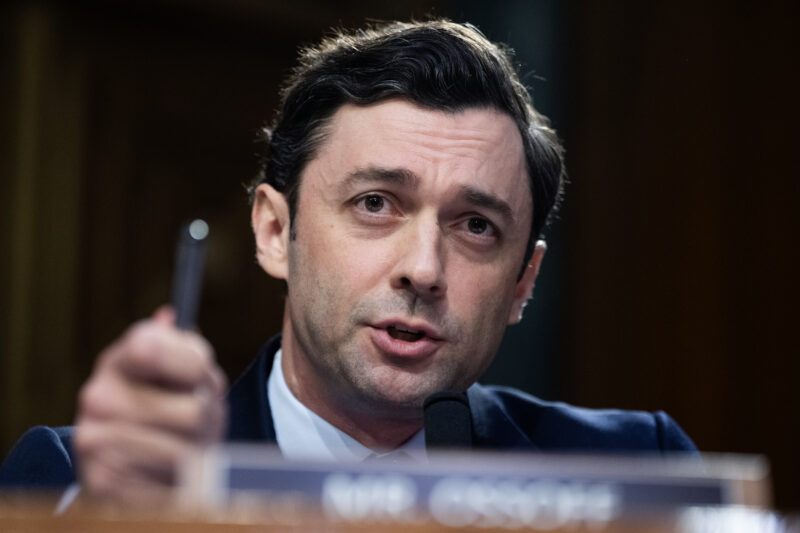
Sen. Chris Murphy (D-CT) speaks at the U.S. Capitol on April 10, 2025 in Washington, DC.


 Add JewishInsider on Google
Since the beginning of President Donald Trump’s second term, Sen. Chris Murphy (D-CT) has routinely adopted the argument that Trump poses a unique threat to American democracy. In an address on Monday at the J Street conference in Washington, Murphy leaned on Jewish history to tailor his case to fight Trump specifically to American Jews.
Murphy, who is considered a possible 2028 presidential candidate, invoked three pivotal moments in Jewish history that he said should inspire American Jews to speak out against what he described as Trump’s efforts to undercut democratic norms and procedures: the Bar Kokhba revolt against the Roman empire that led to the displacement of the Jewish diaspora; the Spanish Inquisition in 1492 that saw Jews flee Spain rather than face conversion or death; and pogroms under imperial Russia in which Jews had no recourse against state-sanctioned violence.
If American Jewry doesn’t stand up to Trump, Murphy said, they risk facing a similar fate in the United States.
“We are here today because we believe that this tragic history requires our world to make a home for the Jewish people in the Holy Land. That place is Israel. That place will always be Israel,” said Murphy, who has taken a harsher stance toward Israel in recent years. “When we criticize the government of Israel, when we speak up against its policies in places like Gaza or the West Bank, it is because we love Israel. It is out of our love for Israel and our belief that its current leaders are jeopardizing the future survival of that state.”
Yet he argued that the existence of a Jewish state should not preclude American Jews from fighting for the future of their own country.
“The answer to thousands of years of the Jewish people’s faith being decided by emperors and queens and czars is not and cannot simply be the State of Israel. No, the rest of the answer is simple. It’s democracy,” said Murphy. “In a working democracy, Jewish citizens are not subjects. They are not petitioners. They’re not guests to be expelled at the whim of a monarch. They are, you are, we are citizens.”
In the speech, Murphy criticized the U.S. attacks on Iran, saying Trump “launched an illegal war that the American people do not want” and that it amounts to “his most grievous assault on democracy.” But Murphy mostly used the stage to raise the alarm about democracy generally, saying America is “in the middle” of “a totalitarian takeover” and rallying J Street’s attendees to work to save it.
“You are here at maybe the most pivotal moment of all of our lifetimes when it comes to the preservation of self-determination, essential to the American project, essential to the future of the Jewish people all over the country,” said Murphy.
He closed by using a story about former Israeli Prime Minister Golda Meir as a call to action. Murphy described her attendance at the 1938 Evian Conference on the shores of Lake Geneva, where 32 nations — led by President Franklin Delano Roosevelt — discussed the plight of Jews in Europe. Meir attended as a Zionist representative of British Mandatory Palestine.
“She was assigned the status of observer, forced to watch in silence as one by one the representatives of 32 nations rose to express their deepest sympathy for the Jewish people in Europe, and then one by one explained why their countries could not take them in,” said Murphy. “Years later, reflecting on what her experience at that pivotal conference had taught her, she put it simply. The Jews should not be dependent on anyone giving them permission to stay alive.”
But where Meir used that sentiment to justify her support for Zionism, Murphy argued that it should also apply to American Jews living in the diaspora.
“Today, Jews in America and a multitude of other groups that are still facing discrimination and bias are not observers like Golda Meir was in the late 1930s. In our democracy, however imperfect, we have self-determination,” said Murphy.
“What a gift to be alive,” Murphy offered in closing, “when our mission is to save a country and to remember that without self-governance and self-determination, not a single one of us is safe from a future that mirrors the thousands of years of persecution that the Jewish people, with no self-determination, suffered under.”
More Stories
IN THEIR MEMORY
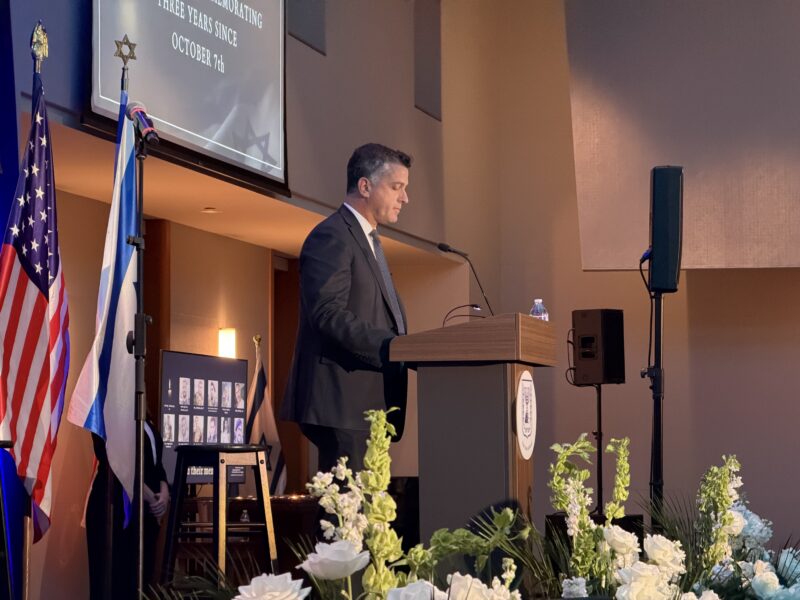
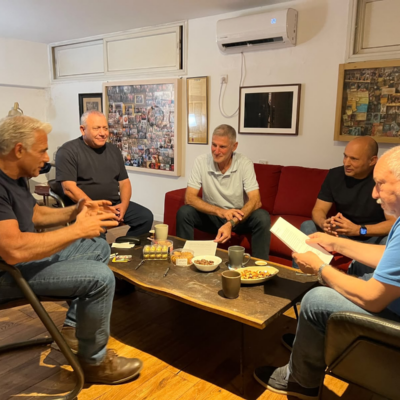
Administration officials join bereaved families for Oct. 7 commemoration event
analysis
Is Israel’s anti-Netanyahu bloc fracturing?
DFL DISCORD
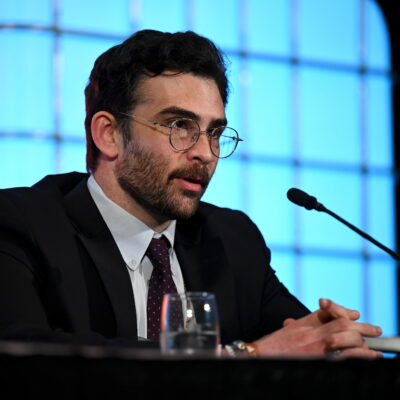
Amy Klobuchar, Angie Craig condemn Hasan Piker ahead of Minneapolis event with Ilhan Omar

EXCLUSIVE
JDCA launches streaming and digital ads supporting Cait Conley, attacking Lawler
NUCLEAR NEWS
Senate expected to vote on Saudi nuclear deal before end of year
VEEP'S VIEW
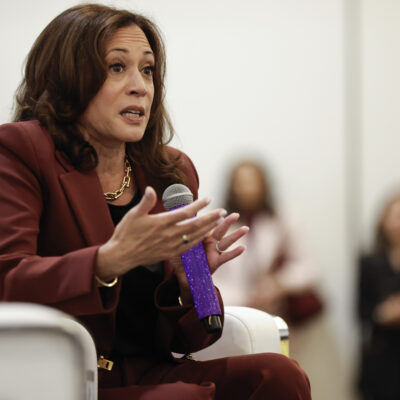
Harris says Biden should have done more to stop Israel’s ‘horrific conduct’ in Gaza
Please log in if you already have a subscription, or subscribe to access the latest updates.
 Continue with Google
 Continue with Apple