









































































‘The Nazis may have the right to post, but also the Nazis are bad and sick and stupid,’ Rogers told JI
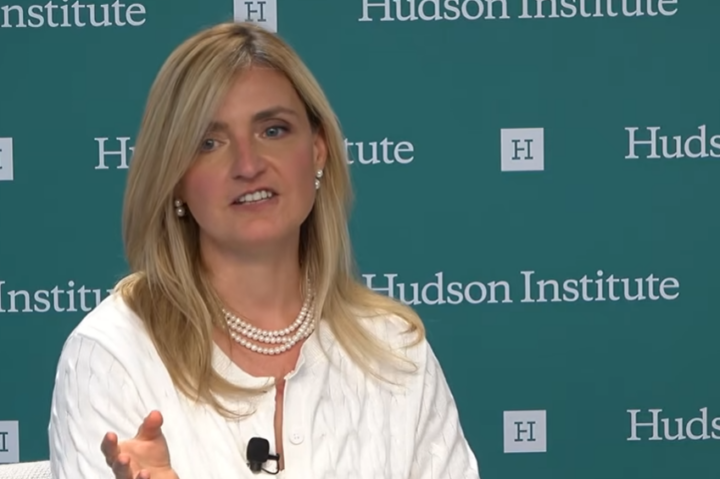
Screenshot
Sarah Rogers, under secretary of state for public diplomacy, speaks at the Hudson Institute on May 20, 2026.


 Add JewishInsider on Google
Sarah Rogers, the under secretary of state for public diplomacy, maintained that the Trump administration’s commitment to free speech, including for extreme views, does not take away from its opposition to antisemitism, telling Jewish Insider in a wide-ranging interview that “the Nazis may have the right to post, but also the Nazis are bad and sick and stupid.”
The senior U.S. diplomat acknowledged the tension between allowing hateful views on social platforms and concerns about rising rates of antisemitism globally, though she maintained that the path to successfully responding to Jew hatred requires support for free speech protections, and said that she looks forward to visiting Israel in the future.
This interview has been condensed and edited for clarity.
Jewish Insider: You have been unequivocal in your public statements about the rise of antisemitism globally being a serious problem, while also maintaining your position on free speech protections. How do you draw that line between promoting free speech culture while ensuring you have the tools to fight antisemitism?
Sarah Rogers: I don’t see this as a line-drawing exercise between opposed priorities. There’s really no conflict between opposing antisemitism on the one hand and opposing censorship on the other. America has a proud history of opposing both. Censorship has not kept antisemites out of power, it has been deployed by antisemites who gain power.
[Supreme Court Justice] Oliver Wendell Holmes was the first to say that freedom of speech really means freedom for the thought that we hate. You can guard that principle while still saying, “Okay, there are some thoughts that we hate, and we’re going to speak against them, and we’re going to explain why these people are wrong, and we’re going to fight that battle in the marketplace of ideas.” I think every free speech advocate makes normative judgments about the speech that’s on offer, and a normative judgment I’ve always made is that the Nazis may have the right to post, but also the Nazis are bad and sick and stupid.
JI: How do you, or the State Department more broadly, view efforts to counter foreign operations and propaganda campaigns, especially with regard to media where the location of origin is often hidden?
SR: Countering what is called in the [State Department] statute “foreign malign influence” is part of my statutory mandate, and we take it seriously. There are a whole bunch of tools in what you might call the counter-propaganda toolbox.
This is an information environment where legitimacy and trust are more important than ever. Right now, we’re in this liminal zone. I think technology will refine this landscape a bit, but we’re in a zone where any image or any video can be fake, and so it is more important than ever if we were trying to persuade the global public that they can trust us.
What I’m looking for ways to do now, and what the State Department wants to do now, is to counter these kinds of influence operations chiefly through exposure and through counter speech. We can expose the foreign providence of a lot of information and the inauthentic nature of some of the behavior. That doesn’t mean we have to reach out behind closed doors to Twitter or Facebook and urge them to censor anyone concurring with a particular narrative. We don’t have to do that. It is not my job to dictate what Americans can say or see online, but I can tell Americans what we and our partners are seeing online and let them make up their own minds.
One thing that my office has done in the past also is try to promote technologies that improve the information environment and make that environment one in which we can more easily communicate about American priorities.
I don’t want to fund tools that put a centralized thumb on the scale of permissible opinion, or that try to choke off permissible opinion before it gets to the public sphere. What I’d rather do is prospect and promote tools that respect and empower the audience to discern true and authentic information and have the kinds of conversations they want to have.
Both X, formerly Twitter, and Meta have started rolling out the “Grok, is this true?” feature. It’s kind of interesting. Everyone knows the LLMs are trained on a consensus model of available opinion. A lot of them have gobbled up like most books ever written. They’ve scoured social media. When these models first debuted, they were pretty clunky. There was a whole genre of AI discourse that just consisted of people making their LLM say insane, woke, Kafkaesque things, but the models have gotten better. They’ve gotten better to the point where most people, even people with unpopular opinions, trust them to kind of collate facts.
There are now some early scientific studies showing that, as a result, interacting with AI chatbots depolarizes people politically. It is conducive to lessened political extremism, and I think making that kind of tool available is an example of something we can do that doesn’t make people feel coerced or condescended to, it doesn’t spark that kind of oppositional, anti-institutional reflex, because you’re just letting them have access to something that they want and they enjoy. We’ve also seen those exact tools used to push back on antisemitic propaganda online.
JI: Can you speak to how private industry and social media companies have responded to your engagement on these issues?
SR: I’ve had a lot of congenial interactions with the tech sector. I’ve been accused by critics, including in Europe, of essentially being too staunch an advocate for the tech sector, which is ironic because I started my free speech activism career as a thorn on the side of Big Tech. When we’re advocating for the freedom of our companies not to censor, then of course they’re grateful. I also think, though, that within Silicon Valley, within the investor class and the executive class, and then the user bases of these companies, there is a real organic demand for ways to harness the powers of invention to make the information environment better.
I have intentionally avoided having any interactions with tech companies that could reasonably be expected to result in the removal of content. If I ever had reason to do that, like if there was a tweet with the nuclear codes in it or something like that, I would try to make sure that I disclosed that to the public, but I avoid it as a matter of practice. Still, I have conversations all the time with people in the tech industry who are interested in how we discern content provenance, how we can help people integrate AI in ways that are less conducive to kind of AI psychosis type outcomes, how we can promote truthful information.
The only reason the information environment feels so new and different is because Americans are so good at innovating things that spread like wildfire and change the world. That’s fundamentally good. Now we’re in this new information environment, and you’ve probably heard me say this before, that this is on par with the invention of the telegraph or the film strip, and so there’s going to be some shudders and spasms as we adjust, but we can use the power of innovation and invention to make our environment better, not worse. I think tech is very receptive to that, especially because there’s all this kind of almost superstitious anti-tech discourse right now, and so there’s a natural appetite to prove that chorus wrong.
JI: With that in mind, how would you describe your role in terms of responding to this growing threat of foreign disinformation and the outgrowth of antisemitism that such propaganda efforts cause? Do you see your role as more of a behind the scenes dealmaker or something else?
SR: I would not say my role principally consists of brokering informal understandings with tech companies. I think because my role has a tech component of its portfolio, it’s just natural that I have some conversations and relationships with tech companies, but zooming out, my role is public diplomacy. That includes civil society grant making, it includes a lot of public advocacy, it oversees educational and cultural affairs, so I have a really broad umbrella of stuff I can do to interact with the information environment generally.
On antisemitism, we have funded interfaith cultural restoration projects and educational projects to promote cross-cultural understanding and diffuse hatred. We are trying to promote tools like AI to rationalize and depolarize the information environment. We’re doing all that stuff, but the information environment part is only part of it.
We are looking for more opportunities to publicly and candidly communicate on trends we’re seeing in the information environment, and we want to do it in a way where it doesn’t sound like we’re scolding the audience and telling them what not to believe. We just want to credibly share aggregated statistics and facts about what we’ve observed, and I want to make sure that we get that right.
That means number one, I’ve actually instructed my staff, like whenever we operate on this issue, we need to literally or figuratively make a commitment to not censor American speech or censor anybody. We want to do the counter speech and exposure, and I think you’re going to see more of that.
I’ve collaborated a lot on the antisemitism issue with Rabbi [Yehuda] Kaploun, who’s our special envoy to monitor and combat antisemitism. We have participated in the Shabbat dinners with him. We had Rabbi Kaploun organize a Shabbat with officials from Saudi Arabia and the Emirates, and with a bunch of members of the administration. It was a really powerful coming together around this issue, and I think you’re gonna see more of those kinds of activities that my office is proud to be involved with, too.
JI: Do you coordinate with other agencies and other departments to ensure that these efforts don’t overlap or contradict each other, be it about antisemitism or free speech or anything else that you’re doing?
SR: So one thing that I’ve done is I’ve encouraged my public diplomacy staff, who do kind of overt messaging for the State Department, to make sure that they are coordinated with other parts of the government, including, for example, the Department of War, who are engaged in messaging activities of overlapping topics in the same region. That’s just common sense, so we want to make sure that all of our messaging activities are aligned, or at least not at odds with each other.
I think a great thing about this administration compared to the first one is that when President Trump staffed his first administration, he was kind of newly triumphant and his coalition was still consolidating, so there wasn’t this existing infrastructure and existing talent pool of people who were aligned with the administration’s foreign policy vision, and now there are. Because of that, I have great relationships with counterparts at other agencies, and it’s very easy for us to have these conversations, though all conversations you have in the government take longer and are more kind of bureaucratically ritualized than they should be.
JI: Have you made any efforts in your role promoting public diplomacy to highlight the U.S.-Israel relationship?
SR: The answer is yes. I was actually just in close touch with the Israeli Embassy about some America 250 commemorative activities that we were going to undertake, including “America Day” celebrations at three university campuses in Israel. We’ve done a lot of interfaith and church restoration activities in the Middle East that Israel is very supportive of.
I also hope to visit Israel when scheduling considerations permit.
JI: Looking toward Europe, you and Sen. Eric Schmitt (R-MO) both spoke at the Hudson Institute last week about the free speech conversations we’re seeing across the Atlantic. What we’re also seeing are sharp rises in antisemitism across the continent. Do you connect the two? And if so, what do you see as the prescription for solving both issues?
SR: I absolutely connect the two. It’s interesting, another thing I always say when people ask me about this sort of tension between antisemitism and free speech is that I had my staff run numbers on this. When it comes to actual antisemitic hate crimes, not speech crimes, but crimes where someone gets hit or synagogues vandalized, the per capita rate of those in continental Europe and elsewhere in the Anglosphere is much higher by orders of magnitude than it is the United States, even though we have open season free speech, and they all reportedly have laws against antisemitism.
There was this incident in London a few years ago where a caravan of pro-Palestine protesters drove through a reputedly Jewish neighborhood in London, screaming through a megaphone, “F*** Jews. Rape their daughters. Free Palestine.” There were no hate crime charges. I think London police claimed there wasn’t enough evidence that they’d done it, even though it’s on video. So who does get prosecuted under these hate crime laws?
There is this famous Nazi hunter in France, Serge Klarsfeld. He’s one of the most famous Nazi hunters. He has a son, Arno Klarsfeld, who’s a well-regarded French jurist who actually helped prosecute some of the Nazi collaborators. Arno Klarsfeld was pursued by French authorities under French hate speech laws for basically saying that France should do mass deportations of people who’d already had their asylum hearings and were adjudicated as deportable. He was basically advocating for the same kind of policy that President Trump has tried to use to mitigate antisemitism in the United States.
You have this decorated French Jewish antisemitism jurist being threatened with legal punishment just for advocating a deportation policy, so that’s an obvious nexus, and I’m not saying it’s the only one, but it’s an obvious nexus between censorship law and antisemitism.
After the Bondi Beach massacre in Australia, you had a proposed hate speech law in response that would have had an exemption for any speech that’s religious. Well, if you were an ISIS jihadist, your speech was religious, so you’re basically carving out the exact ideology that appeared to have motivated that attack. So that’s how I see these issues in relation to one another.
JI: Is there anything else about Europe’s broader handling of antisemitism that concerns you?
SR: I think often there’s a sense that if you ban antisemitism legally then you have done the work required to oppose it, and I don’t think that is the story that the crime statistics tell. I don’t think it is the story that the political landscape tells. I’ve had many conversations with earnest European interlocutors who genuinely oppose antisemitism and want the best for the Jewish people in their countries, and so I don’t think bad faith is to blame. I just think that these laws are not the answer.
JI: One last question. I want to ask about Germany, specifically the far-right Alternative for Germany party. You’ve met with some of their officials and praised them specifically on free speech issues. AfD is a far-right ultra-nationalist party whose leaders have espoused antisemitic and pro-Nazi sentiments. Do you see these parties as antisemitic, and do you think the same free speech principles should apply to them despite their historical legacy?
SR: I had one meeting with one AfD official and immediately was lambasted for purportedly being pro-Russia. The point I made at the time was that if this guy were really a Russian asset, he’s a pretty bad Russian asset, because he condemned censorship in that meeting and Russia’s a big fan of censorship. I also stand by what I also said at the Hudson Institute, which is that European policymakers don’t need to give right-wing parties a monopoly on common sense when it comes to mass migration or things like internet regulation. In fact, it would be healthy to have a democracy where multiple parties are against destructive mass migration, for example.
In terms of Germany and its specific legacy on Holocaust denial laws, what I would say is this: I come from an American First Amendment tradition, so I would not want to see laws in the United States like that, but if the only thing these European countries were prohibiting was actual Holocaust denial or actual rank incitement of genocide against Jews, then I don’t think you’d be seeing as many arguments between, for example, European authorities and American internet platforms.
We didn’t sanction [Former European Commissioner] Thierry Breton for asking that X take down a Holocaust denial post — that post would be protected under the First Amendment, but that didn’t lead to the sanctions. What we sanctioned Thierry Breton for doing was threatening an American company with European regulatory penalties for allowing an American politician, President Trump, to speak on an American platform, so our laws do differ there, but if that were the only difference, I don’t think you’d be seeing these flare-ups. The differences are far greater than that.
Plus, Track AIPAC retracts

U.S. House of Representatives
Reps. Josh Gottheimer (D-NJ) and Jared Moskowitz (D-FL)
Good Thursday morning.
In today’s Daily Kickoff, we look at the diverging opinions in Jerusalem and Washington on restarting the war with Iran, and report on how the Obama Presidential Library is framing the 2015 Iran nuclear deal. We report on the criticism faced by Track AIPAC over its since-revoked endorsement of a Democratic congressional candidate in Texas who suggested imprisoning “American Zionists” in ICE facilities, and cover yesterday’s Capitol Hill hearing on antisemitism in the healthcare field. Also in today’s Daily Kickoff: Sarah Rogers, Michael Bay and Shay Shwartz.
Ed note: In observance of Shavuot and Memorial Day, the next Daily Kickoff will arrive on Tuesday, May 26. Check out JewishInsider.com for breaking news over the long weekend. Chag sameach!
Today’s Daily Kickoff was curated by JI Executive Editor Melissa Weiss and Israel Editor Tamara Zieve, with assists from Danielle Cohen-Kanik and Marc Rod. Have a tip? Email us here.
What We’re Watching
- Today is the one-year anniversary of the terror attack at the Capital Jewish Museum in which two Israeli Embassy staffers were killed outside of an American Jewish Committee event taking place inside the venue. In marking the day, the museum announced that it will be open to the public today “as a space of reflection and remembrance.”
- The House of Representatives is expected to hold a vote on an Iran war powers resolution today, after House GOP leadership postponed the vote, which was to take place yesterday, over Republican attendance issues.
- The Jewish Community Relations Council of Greater Washington is holding candidate forums today with D.C. mayoral candidates Kenyan McDuffie and Janeese Lewis George.
What You Should Know
A QUICK WORD WITH JI’S MELISSA WEISS
In Tel Aviv and Jerusalem, Netanya and Beersheva, the conversations are the same: When will the war with Iran resume? What contingency plans are in place? Do we need to temporarily rent an apartment with a shelter?
All over Israel, there is a looming feeling that the next round of fighting is just around the corner. The Israel Democracy Institute’s latest polling, conducted earlier this month, found that 62% of Israelis think that the war’s renewal is likely.
But in the U.S., a resumption of war appears increasingly unlikely. With gas prices rising and the midterms approaching, the White House has little appetite for prolonged conflict. A New York Times/Siena poll released earlier this week found that nearly two-thirds of Americans think that going to war against Iran in the first place was a bad idea. Though fresh off a series of primary and state-level wins, President Donald Trump appears cognizant of the uphill battle that comes with resuming an unpopular war, even as he told reporters earlier this week he didn’t factor “Americans’ financial situation” in his approach to the war.
There is also a question of funding. Rep. Tom Cole (R-OK), the chair of the House Appropriations Committee, said this week that the Pentagon would “probably” be out of money to fund the Iran war by August.
Those are key factors that have not penetrated the discourse in Israel. Across the U.S., gas prices are sky high. The midterms are less than six months away. And on Capitol Hill, even some of the president’s staunchest backers are signaling opposition to a resumption of the war.
“Generally speaking, Israelis are not really attuned to internal politics in the U.S. that could be affecting President Trump’s decisions,” Tamar Hermann, director of IDI’s Viterbi Center for Public Opinion, told Jewish Insider this morning. “Recent coverage in the Israeli media has tended to obscure the domestic political constraints Trump faces, creating the impression that he is operating without meaningful checks and is effectively able to do as he pleases.”
LIBRARY LOOK
The Barack Obama Presidential Center, slated to open in Chicago in mid-June, will feature an exhibit highlighting the former president’s “patient and principled diplomacy” and “strategic engagement with adversaries” in the lead-up to the 2015 Iran nuclear deal, asserting that he prevented Iran from developing a nuclear weapon, Jewish Insider’s Haley Cohen reports.
What it says: “Through diplomacy, the US forged a new treaty with Russia to reduce both countries’ nuclear stockpiles,” the exhibit reads, according to images obtained during the museum’s soft launch reviewed by JI. “The Obama administration prevented Iran from developing a nuclear weapon.” A dedication ceremony for the Obama Presidential Center is scheduled for June 18 followed by its opening to the public the next day.
Bonus: The Wall Street Journal does a deep dive into “how Iran got to the nuclear threshold on the watch of three U.S. presidents,” noting that the Obama administration’s 2015 Joint Comprehensive Plan of Action “delayed but didn’t shut the door on Iran’s potential pathway to a bomb.”
FACING THE HEAT
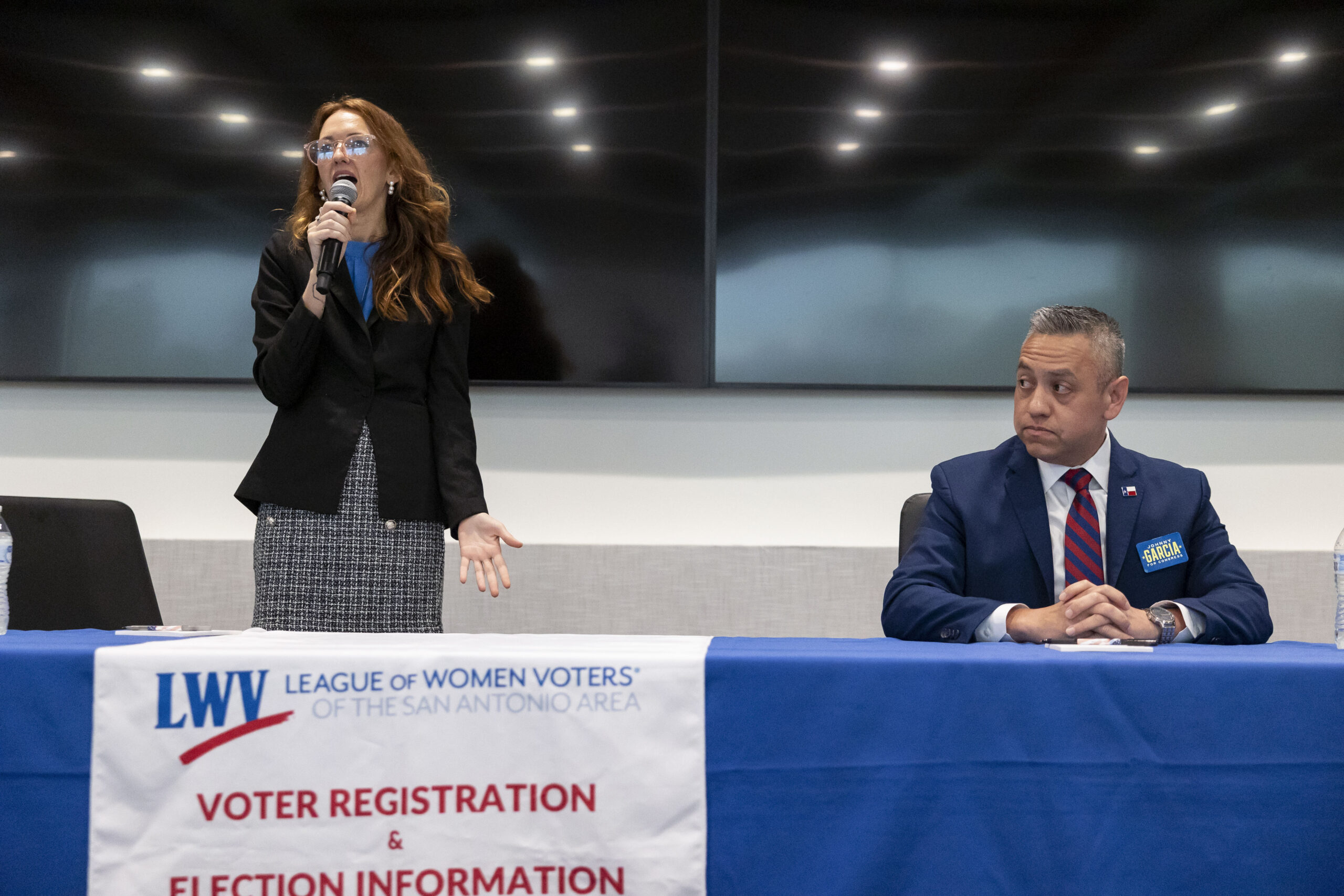
Track AIPAC, the social media account that has gained a growing audience among anti-Israel activists in recent years, found itself in an embarrassing position this week when a candidate it had championed for Congress faced bipartisan backlash over extreme antisemitic comments calling to imprison and castrate “American Zionists,” whom she accused of pedophilia, Jewish Insider’s Matthew Kassel reports. The account said on Tuesday it was “immediately revoking” its endorsement of Maureen Galindo, a San Antonio activist competing for an open swing seat in Texas next week.
Yes, but: The point at which Track AIPAC finally chose to draw a line over Galindo’s rhetoric underscored how the account’s ostensibly narrow focus on opposition to what it calls the “Israel lobby” has often obscured an indulgence of extreme views and positions. Brian Romick, the president of DMFI PAC, which is backing Galindo’s runoff opponent, Johnny Garcia, argued that “Track AIPAC embodies the very-online activist fringe: large social-media following, minimal real-world influence, and a political strategy based on vibes.”
Read the full story here.Dems denounce: Reps. Josh Gottheimer (D-NJ) and Jared Moskowitz (D-FL) said on Wednesday that they would seek to expel Galindo if she is elected — forcing daily votes if necessary. Their comments mark an escalation among Democrats condemning Galindo since her comment gained widespread attention, JI’s Marc Rod reports.
SPLITSCREEN
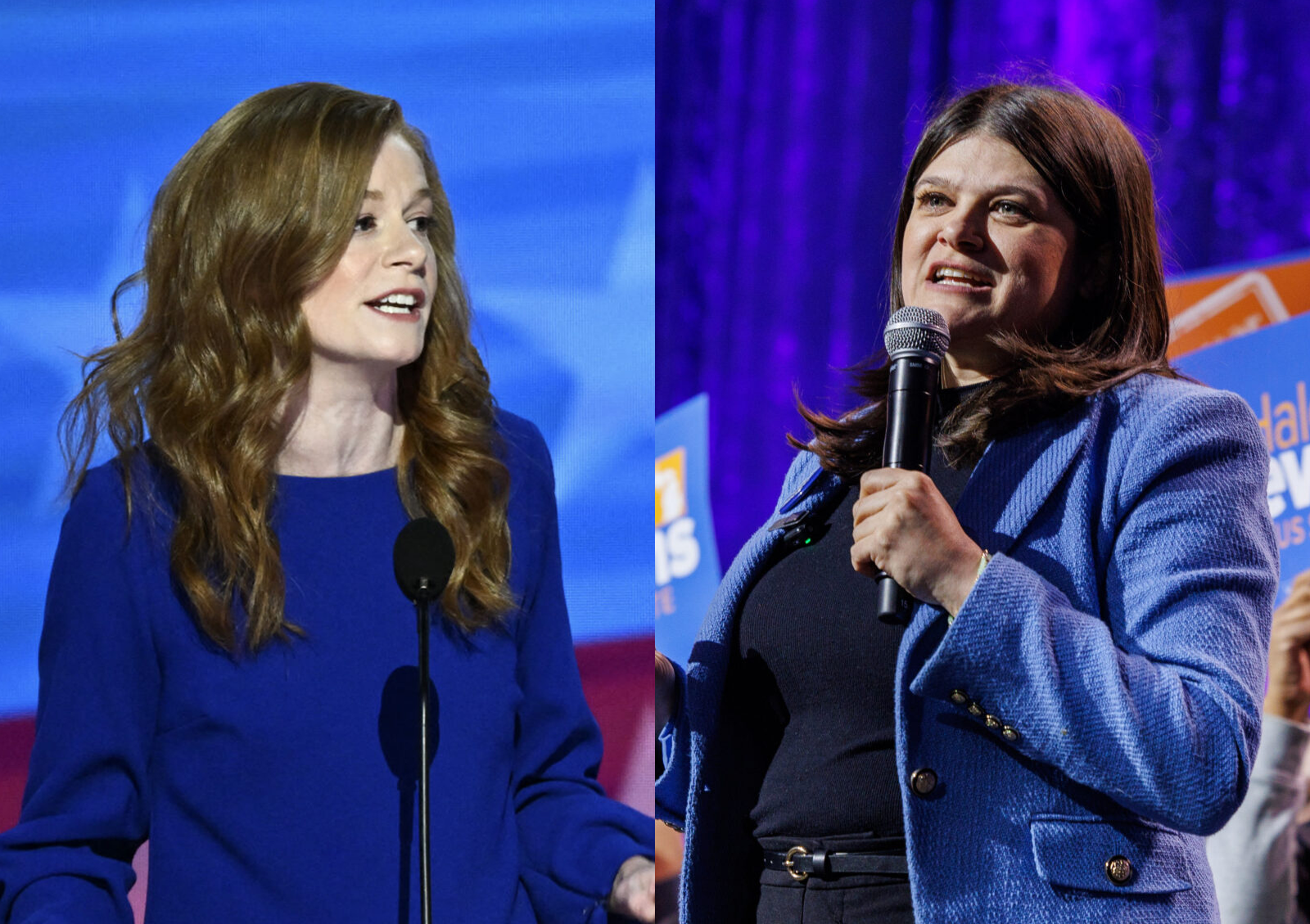
The Jewish Democratic Council of America announced a dual endorsement on Wednesday of Rep. Haley Stevens (D-MI) and state Sen. Mallory McMorrow in Michigan’s three-way Senate Democratic primary, saying “there are two candidates who stand with our community on issues of importance to Jewish voters, and there is one who does not,” Jewish Insider’s Matthew Kassel reports.
Reasoning: “It is because of this stark contrast of the views and values of Haley Stevens and Mallory McMorrow, compared to those of Abdul El-Sayed,” a vocal critic of Israel who has captured the enthusiasm of the far left, “that we are taking the distinct opportunity to endorse two candidates,” Halie Soifer, JDCA’s CEO, said in a statement.
Michigan matchup: In Michigan’s statewide election for two seats on the University of Michigan Board of Regents, Republican nominees Lena Epstein and Michael Schostak, who both identify as Jewish, told JI’s Gabby Deutch they’re campaigning on fighting antisemitism at the school.
ON THE HILL
Speaking at a House Education & Workforce subcommittee hearing on Wednesday, a doctor accused his union of engaging in systemic discrimination against Jewish and Israeli health providers, supporting terrorist sympathizers and making “its obsession with a single geopolitical conflict a defining future of its identity” — all while he’ll be forced by federal law to fund it, Jewish Insider’s Marc Rod reports.
Healthcare havoc: Jacob Agronin, a cardiology fellow at a major medical institution in Philadelphia, testified alongside several other experts on antisemitism at a hearing focused on anti-Jewish hate in the medical field — which both Jewish medical providers and patients report as a growing problem since Hamas’ Oct. 7, 2023, attacks on Israel. The hearing focused in particular on the role of healthcare worker unions, like the Committee of Interns and Residents, of which Agronin is set to be a member, in spreading antisemitism and their failures to stand up for Jewish union members.
Parents’ night: A group of Jewish parents from across Pennsylvania arrived at a virtual meeting with Sen. Dave McCormick (R-PA) with a plea: take note of antisemitism happening not just on college campuses but also in K-12 schools, and do something about it, JI’s Gabby Deutch reports.
BUFFER BATTLE
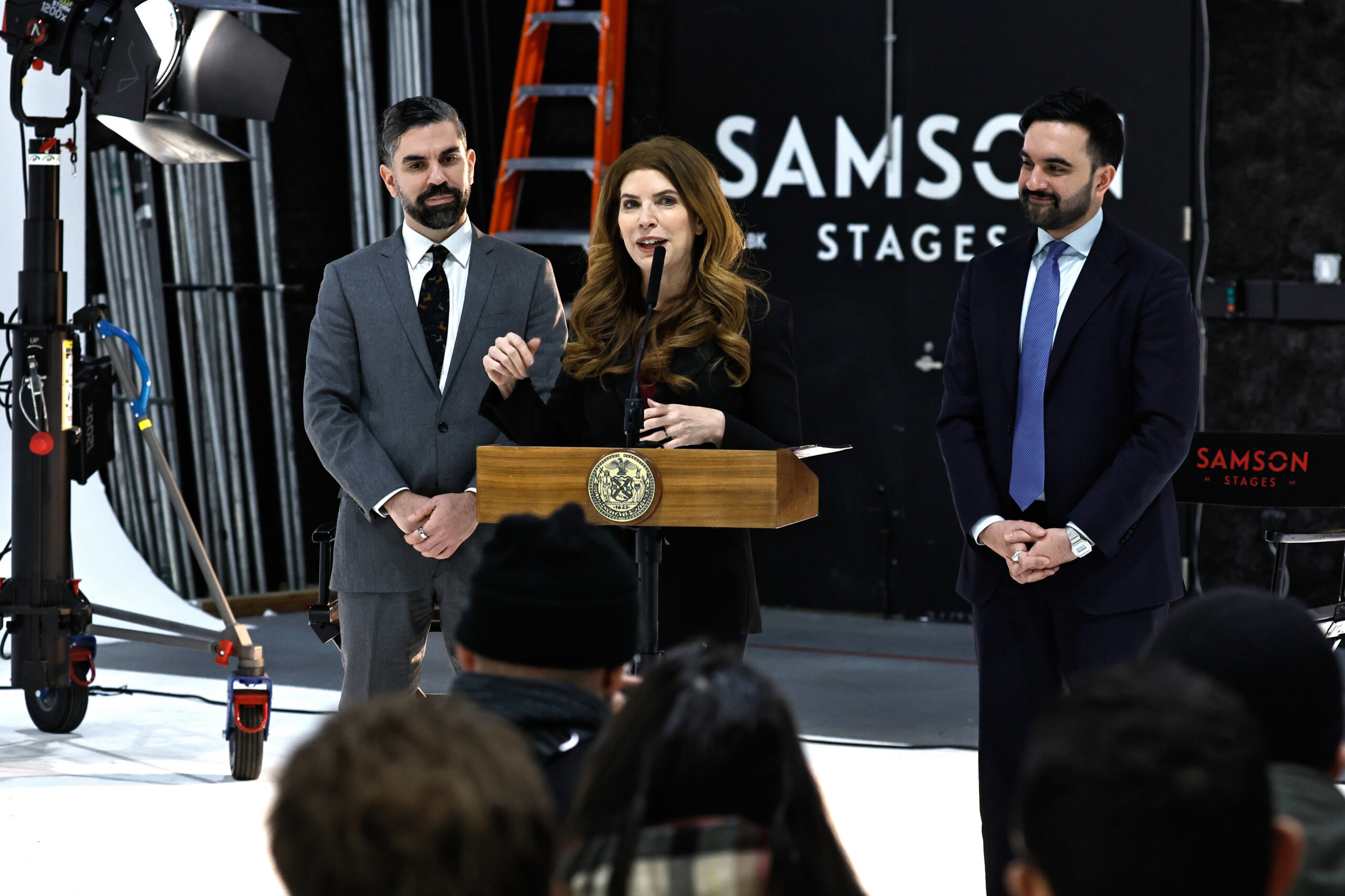
New York City Council Speaker Julie Menin will back fresh legislation to compel the NYPD to establish formal protocols for deploying buffer zones around schools during protests — a push Menin said will sail through the council with more than enough votes to beat any effort from Mayor Zohran Mamdani to block it, Jewish Insider’s Will Bredderman reports.
Bridging the gap: The move comes a month after Mamdani exercised his veto power in order to stop a similar bill from becoming law, citing concerns from unions that the blocked measure could interfere with their demonstrations around college facilities, even though the proposal contained an explicit labor carveout. In a press conference on Wednesday, Menin characterized this as a misunderstanding — one the new legislation will rectify by applying exclusively to early childhood education facilities and “most K-12 schools.”
Moreno moves: Sen. Bernie Moreno (R-OH) said Wednesday that he plans to call on the Senate to pass the SACRED Act, legislation imposing restrictions on protests around synagogues and other religious institutions, by unanimous consent, JI’s Marc Rod reports.
IN MEMORIAM
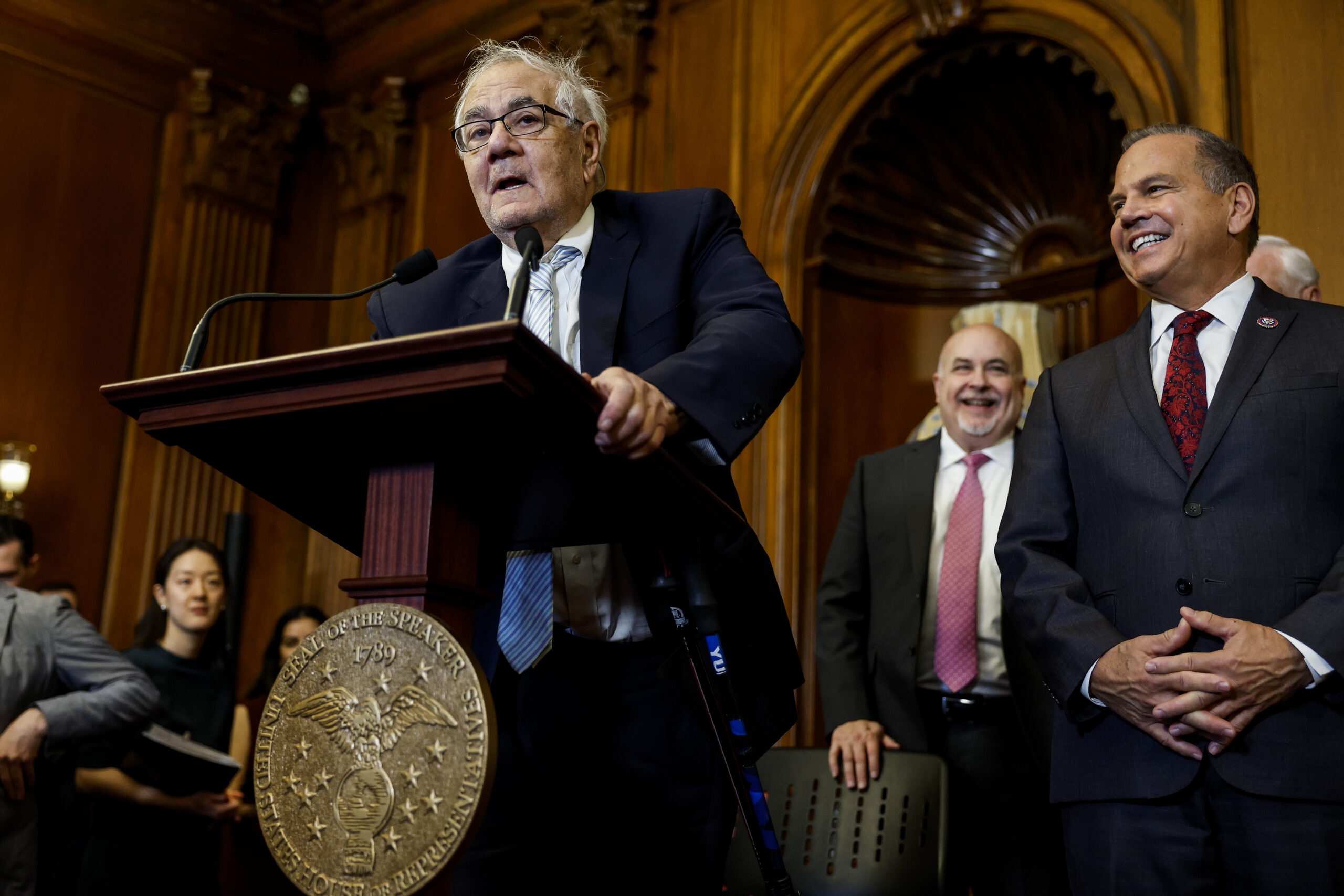
Known as a liberal firebrand, Frank’s most high-profile act in politics was drafting the legislation that tightened financial regulations in response to the 2008 financial crisis, a bill known as the Dodd-Frank Wall Street Reform and Consumer Protection Act, Jewish Insider’s Gabby Deutch reports.
Paving the way: Frank was widely considered a pioneer for the LGBTQ community after coming out publicly as gay in 1987. Frank grew up in a working-class Jewish family in Bayonne, N.J. His sister, Ann Lewis, also worked in politics, holding senior roles in the Clinton administration and later on Hillary Clinton’s presidential campaign. Frank said he was drawn to public service early, feeling in some way that he was an outsider who could challenge how things were done. “I’m a left-handed gay Jew,” Frank said. “I’ve never felt, automatically, a member of any majority.”
Worthy Reads
American Jews Under Siege: In The Atlantic, Israel Policy Forum co-founder Michael Sonnenfeldt considers the “untenable position” that many American Jews find themselves in amid rising domestic antisemitism alongside decreasing support among Americans for Israel. “Anti-Semitism is rising sharply in the United States at the same time that traditional alliances with progressive organizations are weakening, political identities are being reshuffled, and emotional ties to Israel are strained by policies that clash with deeply held democratic and ethical commitments. The simultaneity of these pressures — political, moral, and psychological — is what makes the present moment feel so destabilizing.” [TheAtlantic]
Middle Man: In The Wall Street Journal, Sadanand Dhume questions Pakistan’s ability to operate as a fair intermediary as it seeks to play a central role in U.S.-Iran talks. “Pakistan has attributes that make it a useful intermediary, but America shouldn’t forget that when it comes to Iran, Pakistan’s interests aren’t the same as those of the U.S. On the face of it, Pakistan might seem like an odd choice for mediator. During the war in Afghanistan, Pakistan was widely castigated for playing a ‘double game,’ accepting U.S. aid to fight terrorism while at the same time secretly aiding and abetting the Afghan Taliban.” [WSJ]
A Convert’s Burden: In Moment Magazine, JoJo Kalin, a convert to Judaism who organized the event at the Capital Jewish Museum in which two Israeli Embassy staffers were killed, reflects on her faith as she considers her interaction with the suspected assailant, to whom she offered water after the attack. “There is a version of the future in which my future children would not have to carry this particular kind of fear. I am aware of that. And I am choosing this one anyway. I choose it because what they would inherit is not only fear. It is also peoplehood, memory and a stubborn, enduring joy. … I still think about that glass of water, about the instinct to give it, about the fact that I did not hesitate. I don’t know what it means, fully. I’m not sure it resolves into something clean or instructive. But I know this: That moment belongs to my humanity, not to his violence.” [Moment]
Word on the Street
Jewish Insider’s Emily Jacobs talks to Leo Terrell, the senior counsel to the assistant attorney general for civil rights and chair of the Department of Justice’s antisemitism task force, about the creation of the DOJ’s Antisemitism Advisory Committee, which Terrell will oversee…
The Justice Department announced its indictment against a New Jersey man charged with making interstate threats to a Jewish institution in New York…
Sarah Rogers, the under secretary of state for public diplomacy, refuted accusations that the Trump administration has been ineffective in combating the spread of misinformation and hateful content on social media, arguing that free speech protections and efforts to combat disinformation are not mutually exclusive, in comments at the Hudson Institute on Tuesday, JI’s Emily Jacobs reports…
Reps. Frank Pallone (D-NJ), Debbie Wasserman Schultz (D-FL) and Steve Cohen (D-TN) introduced a resolution honoring the 130th anniversary of the Jewish War Veterans organization…
During a House hearing on Wednesday, Rep. Jared Moskowitz (D-FL) engaged in a heated back-and-forth with a witness, Carol Swain, an author and commentator, as Swain repeatedly dodged his question about whether neo-Nazis are a supremacist group. Two other witnesses answered the question with a simple “yes”…
Director Michael Bay is working with Universal Pictures to develop a feature-length film about the rescue of two American pilots who were shot down in Iran last month; the film will be based off an upcoming book on the event by Mitchell Zuckoff…
TechCrunch profiles Ocean founder Shay Shwartz, whose email security platform protects against AI-powered attacks and recently exited stealth mode with $28 million in a funding round led by Lightspeed Venture Partners that included an investment from Wiz’s Assaf Rappaport…
eJewishPhilanthropy’s Jay Deitcher looks at how Jewish groups are approaching the use of AI for Torah study…
Israeli Prime Minister Benjamin Netanyahu, along with other Israeli officials, issued a sharp condemnation of far-right National Security Minister Itamar Ben-Gvir after he released a video showing himself taunting detained flotilla activists, JI’s Matthew Shea reports…
Israeli prosecutors filed charges against a Jewish man accused of taking part in at least three attacks on Palestinians in the West Bank since February, including an April attack in which a poultry farm employee was hospitalized and remains in a coma…
The Wall Street Journal looks at Israeli efforts to track down all terrorists who took part in the Oct. 7, 2023, Hamas terror attacks…
The U.S. is pressuring Palestinian officials to drop an effort by the Palestinian Authority’s representative at the U.N. to seek the vice presidency of the U.N. General Assembly, warning that the State Department could revoke the visas of the Palestinian delegation should the bid proceed…
The Associated Press profiles Iranian Brig. Gen. Ahmad Vahidi, the head of the Islamic Revolutionary Guard Corps, describing the senior military official as a “longtime veteran of the ruling system” involved with the 1994 bombing of a Jewish community center in Argentina, who is believed to be one of few Iranian officials in contact with Iranian Supreme Leader Ayatollah Mojtaba Khamenei…
The New York Times spotlights the “intelligence fraternity” of former and current IRGC officials, including many with links to the country’s new supreme leader, positing that the group’s “shared backgrounds, careers and ideological outlook” are “one reason the war has neither collapsed the government nor paralyzed it”…
Wine of the Week

JI wine columnist Yitz Applbaum reviews the Warneke Valley Cabernet Sauvignon and the Gen VIII 2019 Cabernet:
After a 250th National Shabbat celebration at the White House, where candles were lit in the Indian Treaty Room, we walked over to nearby Decatur House, the historic 1818 mansion on Lafayette Square, for a meaningful and memorable Shabbat dinner. Kiddush was made over a cup recovered from one of the communities destroyed on Oct. 7, and each guest was given a challah cover embroidered with the presidential seal. For such a special and historic moment, my dear friend Pauly treated me to two of the finest and most important kosher wines from the Herzog family: The Warneke Valley Cabernet Sauvignon and the Gen VIII 2019 Cabernet. These wines perfectly matched the severity and grandeur of the dinner.
The 2023 Warneke Valley is a cab of remarkable poise, carrying a subtle maturity that belies its youth. The opening is pure silk, the mid-palate carries the traditional Herzog vanilla and the finish lingers with notes of parve dark chocolate. The Gen VIII, by contrast, is bold and brash, fruit-forward, with rough-and-tumble tannins that would not let me sleep at night. It has long been one of my favorites, but this vintage will surely overtake its predecessors as one of the greatest ever made. To drink them side by side was a true privilege. Not an inexpensive luxury, but one I would gladly forgo most other pleasures to repeat. Enjoy both alongside a juicy steak, and lay a few bottles down for a future milestone worth celebrating.
Pic of the Day
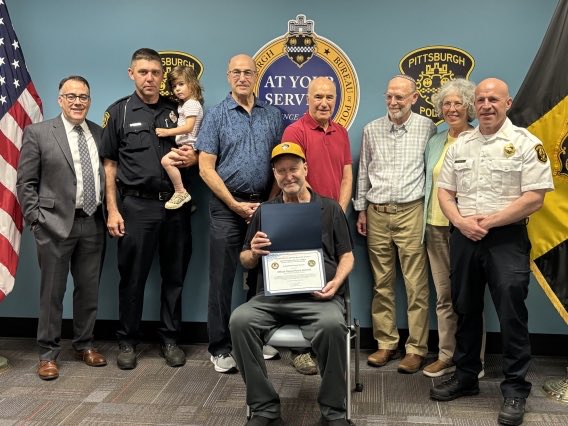
Former Pittsburgh police officer Daniel Mead, who was injured while responding to the October 2018 Tree of Life shooting, on Wednesday received the Justice Department’s Hometown Hero Award.
Birthdays
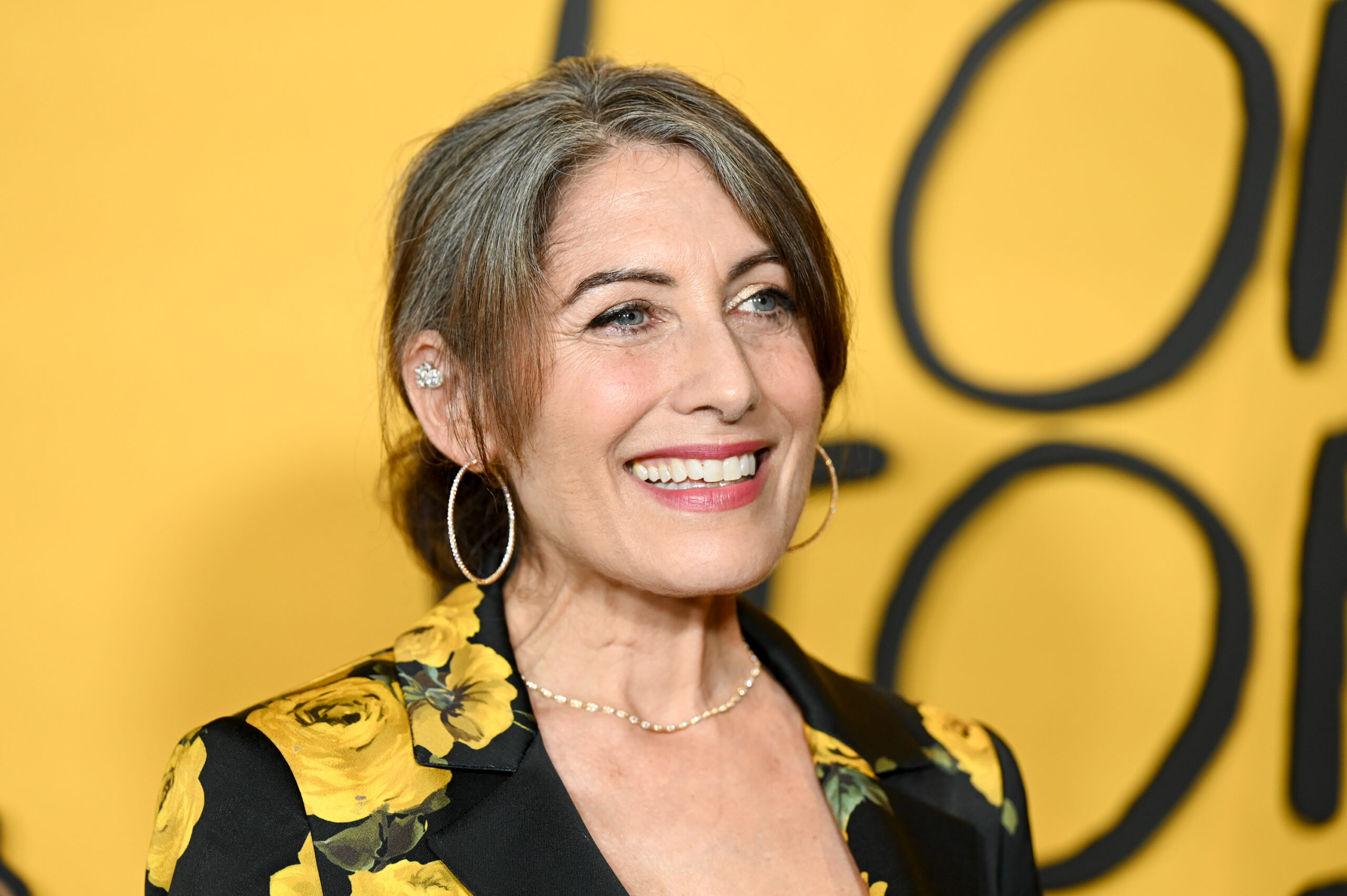
Actor, artist and playwright, Lisa Edelstein turns 60…
Former U.S. senator from Minnesota, he was previously a comedian, actor and writer, Al Franken turns 75… VP of the Swiss Federation of Jewish Communities, Ralph Lewin turns 73… Guitarist and composer, Marc Ribot turns 72… EVP of American Friends of Bar-Ilan University, Ron Solomon… Chief rabbi of Mitzpe Yericho (a yishuv located in the Judean desert) and dean of Hara’ayon Hayehudi yeshiva in Jerusalem, Rabbi Yehuda Kroizer turns 71… CEO of the Boston-based hedge fund Baupost Group, he is co-founder of Times of Israel, Seth Klarman turns 69… Northern California-based comedian, he celebrated his bar mitzvah at 52 in Israel, Josh Kornbluth turns 67… New York Times contributing Opinion writer, Jeffrey Toobin turns 66… Founder and publisher of City & State NY, Thomas Allon turns 64… Director of antisemitism education and associate director of the Israel Action Program, both at Hillel International, Tina Malka… Former head of Dewey Square’s sports business practice, now a freelance writer, Frederic J. Frommer… Author and journalist, she was a reporter with The New York Times for eight years, Amy Waldman turns 57… U.S. cyclist at the 2000 Summer Olympics in Sydney, she is now the executive director of the New England Mountain Bike Association, Nicole Freedman turns 54… President and CEO of the Michigan-based William Davidson Foundation, Darin McKeever… University chaplain for NYU and executive director of NYU’s Bronfman Center for Jewish Life, Rabbi Yehuda Sarna turns 48… Founder of Agora Global Advisory, Brandon Pollak… EVP and chief legal officer at Sinclair Inc., David Gibber… Professor of computer science at the University of Texas at Austin, Scott Joel Aaronson turns 45… President of Mo Digital, Mosheh Oinounou… Los Angeles-born, raised in Israel, international fashion model for Versace, Sharon Ganish turns 43… CEO of CreoStrat, Steve Miller… Windsurfer who represented Israel in the Olympics, she is now an energy management program manager at SolarEdge, Maayan Davidovich turns 38… Player on the USC team that won the 2016 NCAA National Soccer Championship, she is now an associate in the L.A. office of Foley & Lardner, Savannah Levin turns 31… Comedian, actor and writer, known for starring in the HBO Max series “Hacks,” Hannah Marie Einbinder turns 31… COO at the Yael Foundation, Naomi Kovitz…
'We care a lot about the ability of the public to determine the authenticity of content … we just don't think that there should be a centralized thumb on the scale,’ Rogers said at the Hudson Institute
Screenshot
Sarah Rogers, under secretary of state for public diplomacy, speaks at the Hudson Institute on May 20, 2026.
Sarah Rogers, the under secretary of state for public diplomacy, refuted accusations that the Trump administration has been ineffective in combating the spread of misinformation and hateful content on social media, arguing that free speech protections and efforts to combat disinformation are not mutually exclusive.
Rogers made the comments while appearing at the Hudson Institute on Tuesday for a discussion on how the United States can modernize its public diplomacy strategy to advance American interests in a complex geopolitical environment without curtailing free speech.
“We are sometimes disingenuously accused of being nihilists about the health of the information ecosystem. ‘You guys don’t want to censor the Internet, so that must mean that you want spam and bots and foreign propaganda to proliferate,’” Rogers said. “That’s not true. We care a lot about the ability of the public to determine the authenticity of content, to determine the veracity of content, to have the kinds of conversations they want to have. We just don’t think that there should be a centralized thumb on the scale, certainly not any government one, telling people what opinions are allowed.”
Asked by Zineb Riboua, a research fellow at Hudson, how the U.S. could “strike that balance” between censorship and disinformation, the under secretary said the best solution was “to give people tools that they can deploy or interact with that help them determine authenticity and veracity” of the content they’re consuming.
Rogers noted that the U.S. is “using AI and other resources to trace what we do believe to be foreign propaganda,” without implementing measures to prevent that content from being accessible to the broader public. She specifically mentioned a disinformation effort targeting the U.S. after President Donald Trump launched the war in Iran earlier this year, during which an old map of American military assets in the Middle East “was proliferated online increasingly by Western journalists and by inauthentic accounts that are probably controlled by a foreign adversary.”
“They were proliferating this false information because there had been attacks on civilian population centers in a bunch of Gulf countries that were just totally unjustified, and the argument was, ‘No, look, there were American military assets on these countries.’ False,” Rogers said. “You saw Western leftists eagerly retweeting, for an adversary, fake propaganda.”
While noting that her office has a portfolio ranging from the upcoming U.S. World Cup and the series of celebrations honoring the nation’s 250th birthday,to tech policy matters concerning free speech issues, Rogers said the two subjects were intertwined in her view.
“I don’t see the free speech tech policy stuff and the America 250 sports and arts stuff as being that divergent,” she said. “I see them as a part of a combined stream of effort, which is to tell the American story you need the freedom to speak.”
Sen. Eric Schmitt (R-MO) delivered introductory remarks at the gathering where he criticized what he described as “a deeply troubling assault on free speech and democratic self-government” across “much of Europe.”
Schmitt said that Rogers “has been at the forefront of the effort to restore seriousness, sovereignty and strategic clarity to America’s statecraft, and we’re fortunate to have her with us today.”
Please log in if you already have a subscription, or subscribe to access the latest updates.
 Continue with Google

 Continue with Apple