







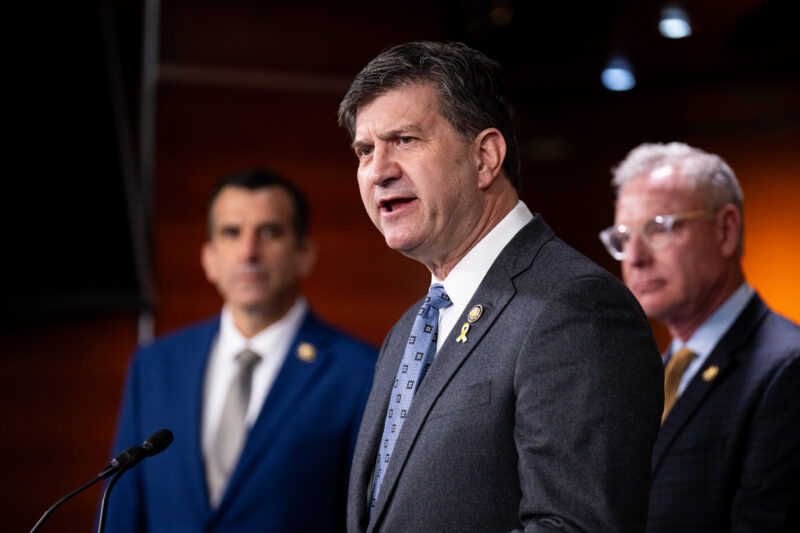







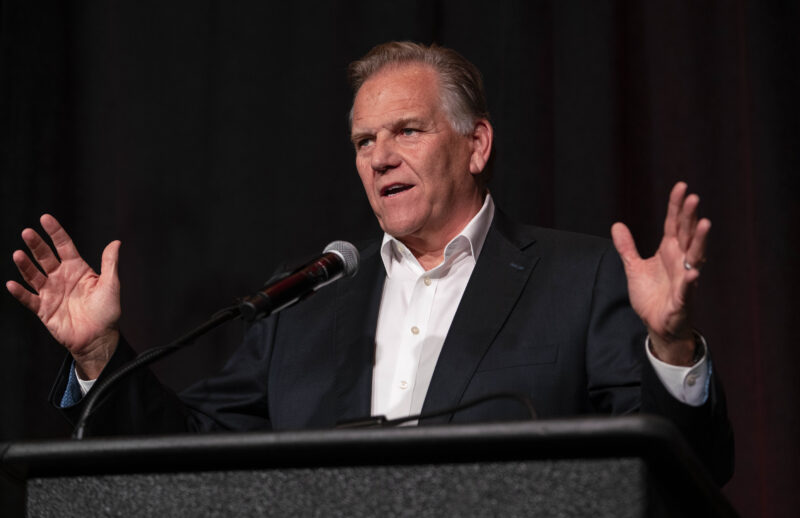


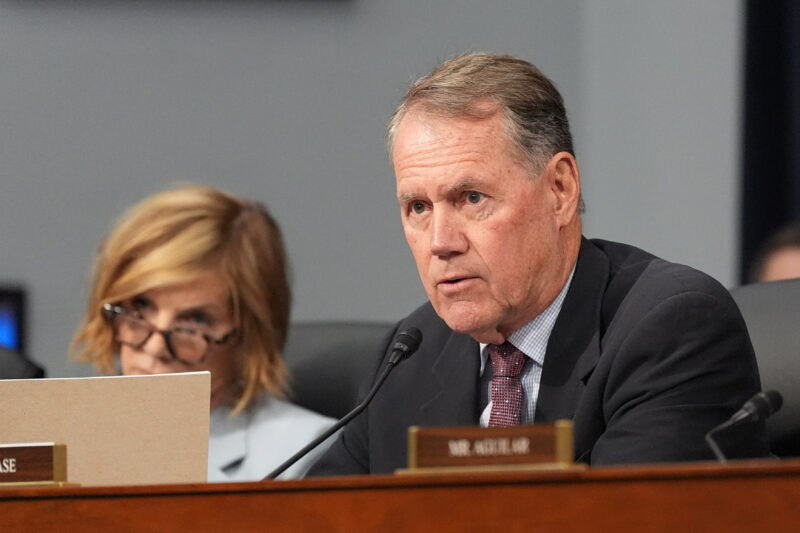









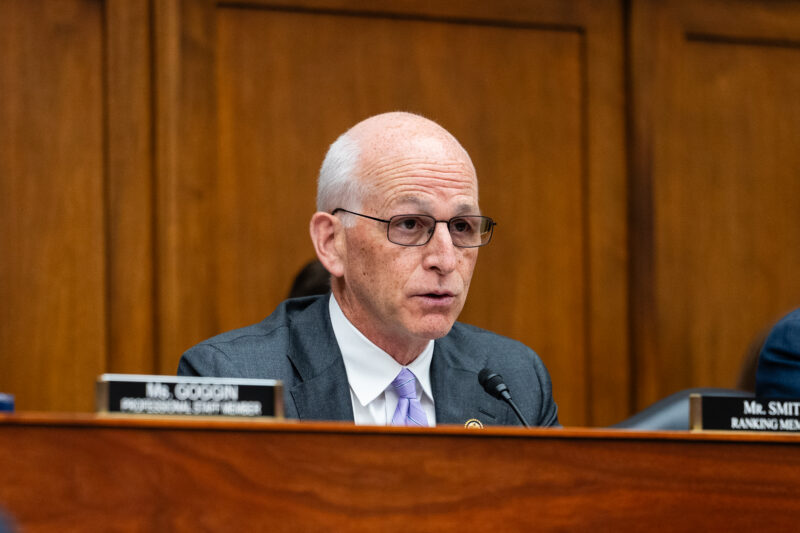











Rep. Brad Sherman warned that nuclear enrichment technology could fall into the hands of a malign regime
Kevin Carter/Getty Images
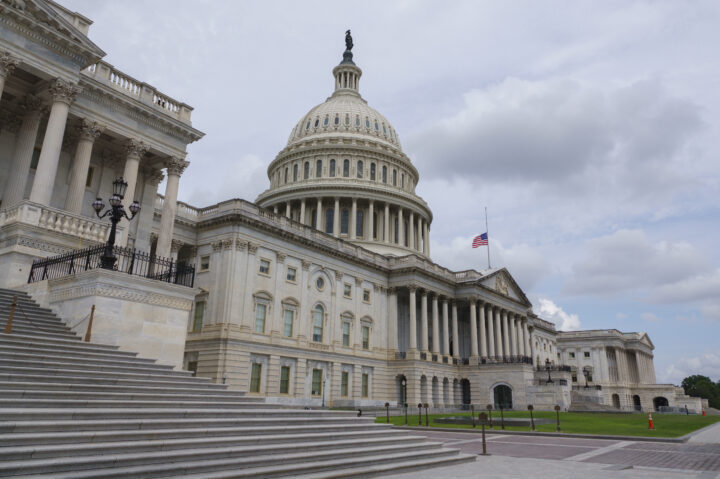
U.S. Capitol building on July 12, 2026 in Washington, DC.


 Add JewishInsider on Google
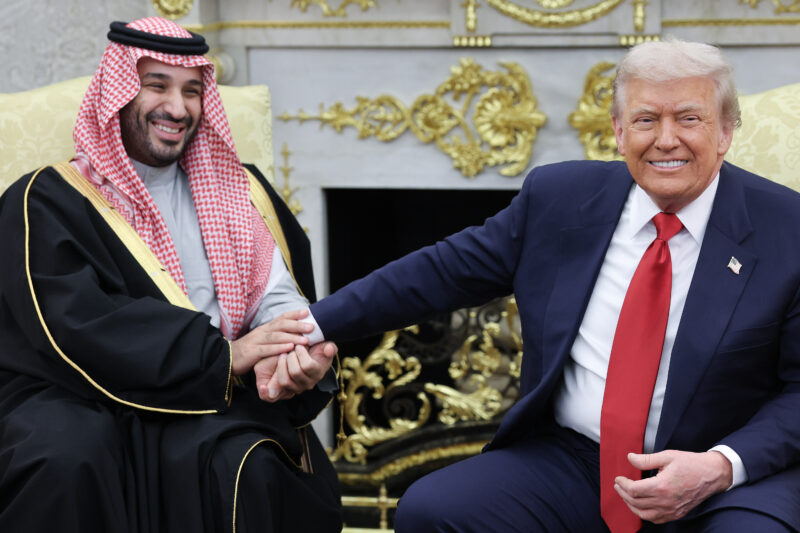
Congressional Democrats are lining up in opposition to the Trump administration’s reported nuclear agreement with Saudi Arabia that could allow Riyadh to enrich uranium for civilian purposes, while Republicans are mostly supportive of the effort.
Critics have long warned that any civilian nuclear enrichment in Saudi Arabia could open the path for the country to obtain nuclear weapons at a later date and that it runs the risk of a nuclear enrichment race in the Middle East.
The reported deal would allow the construction, by U.S. companies, of an enrichment facility in Saudi Arabia, insulating the enrichment to some degree from the Saudi government, though that is unlikely to placate skeptics who worry that the technology could fall into malign hands in the event of a change in regime, or be used by the Saudi government for weaponization purposes.
It does not require Saudi Arabia to agree to enhanced oversight and inspections under an International Atomic Energy Agency “additional protocol,” which other U.S. nuclear deals such as the one with the United Arab Emirates have mandated.
“I have talked to Crown Prince Mohammed bin Salman about this on a number of occasions and both of us have been in agreement that an appropriate nuclear agreement would be in the best interest of both of our countries. Idaho is the birthplace of nuclear energy, so this matters deeply to me,” Sen. Jim Risch (R-ID), the chairman of the Senate Foreign Relations Committee, said in a statement to Jewish Insider. “I look forward to seeing the details of the agreement and working with the Administration to review it.”
Sen. James Lankford (R-OK) emphasized that, if the deal emerges as reported, the enrichment would be carried out by an American company.
“Saudi Arabia has been going after nuclear power for a while, there’s a big difference between nuclear power and nuclear weapons, with the amount of enrichment with the technology,” Lankford told JI. “Most countries that actually have nuclear power don’t enrich their own uranium, but the opportunity to be able to have our companies and entities doing it is significant.”
Sen. Mike Rounds (R-SD) told JI that he would be concerned if Saudi Arabia were to enrich to levels higher than necessary for civilian nuclear power uses, “but if they’re talking about just enriching it to the point where you can use it for nuclear power plant, I don’t have a problem with that. Somebody needs to do that, and it would be better to be us than anybody else.”
Rounds’ logic echoes concerns that if the U.S. did not agree to allow Saudi Arabia to enrich, it would instead pursue a deal with China or Russia.
Sen. Chuck Grassley (R-IA) told reporters, “as long as they’re a friend of the United States, [the deal is] OK.”
Sen. John Cornyn (R-TX) said he’s not sure “what to make of [the deal] yet” but argued that Saudi Arabia would not “necessarily … ask our permission” if it ultimately decided it wanted to enrich uranium or pursue a nuclear weapon.
“If Iran is trying to get a nuclear weapon, they’re going to do what they need to do to defend themselves,” Cornyn told JI. “But I know this is civilian nuclear for energy purposes, which generally we’ve encouraged and condoned with India, with a number of other countries, if they want to do it strictly for that. But I would think that would require some inspections and transparency by the IAEA and others.”
Sen. John Kennedy (R-LA) was the most skeptical of the Senate Republicans who spoke to JI but said he wasn’t sure at this point where he lands on the deal, expressing worries about global nuclear proliferation.
He said that he’s concerned that American allies and enemies will, as a result of rising tensions around the world, conclude they need to develop nuclear weapons of their own.
“I worry about nuclear proliferation in the Middle East, Japan, South Korea. The leaders of those countries love their countries and they love their people, and they wouldn’t be doing their job if they didn’t at least think about it,” Kennedy said. “That’s why we need to get this Middle East situation under control, as well as the war between Russia and Ukraine.”
Democrats, meanwhile, are largely opposed to the deal as publicly reported. Under the law governing nuclear agreements with foreign countries, Congress can pass a resolution to block such deals, though even if such a resolution were to pass, it would be subject to a presidential veto.
Sen. Richard Blumenthal (D-CT) told JI that he remains opposed to any nuclear deal with Saudi Arabia separated from the normalization of relations with Israel, an arrangement that the Biden administration had been pursuing.
“It should be part of normalization of relations, a broader agreement, rather than an isolated one-off,” Blumenthal said. “I have yet to see any of the details. I haven’t been informed officially, but my feeling continues to be that the paramount goal should be normalization of relations, recognition of Israel, the peace and stability of the region, and that aid to Saudi Arabia in establishing nuclear power should be included in that larger deal.”
Asked whether he would support a legislative effort to block the agreement, Blumenthal said that he would “pretty surely oppose the deal” — pending details — because of the lack of a broader normalization agreement.
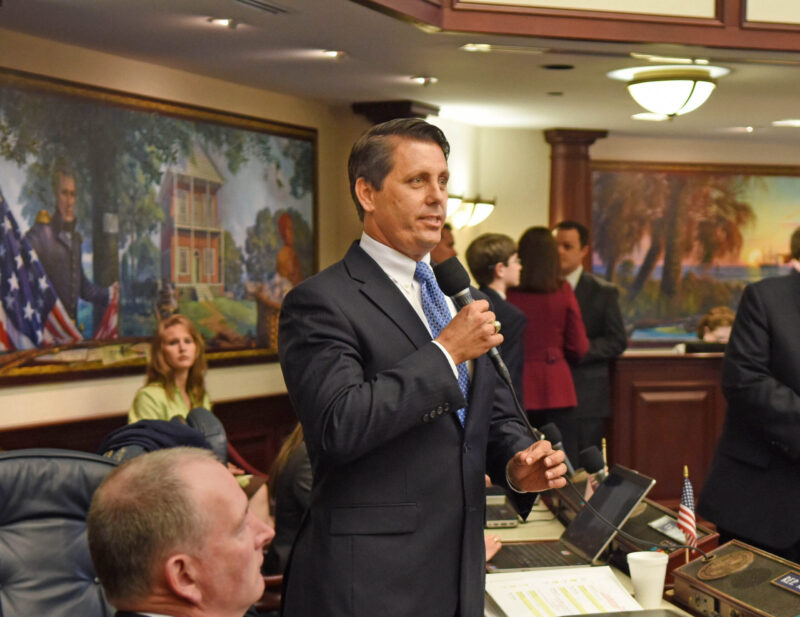
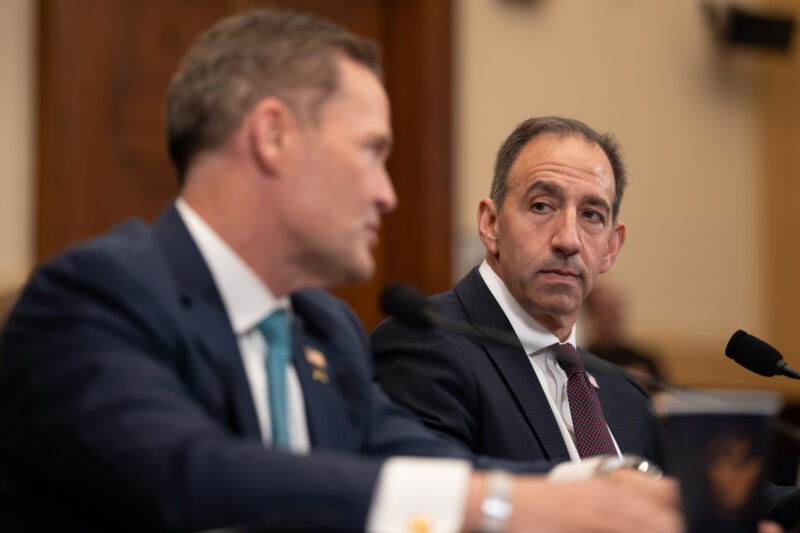
Rep. Brad Sherman (D-CA), a longtime critic and skeptic of the prospect of Saudi nuclear enrichment, demanded prompt congressional hearings on the issue at a House Foreign Affairs Committee hearing on Wednesday morning.
He warned, as he has in the past, that nuclear enrichment technology could fall into the hands of a malign regime — as U.S. weapons did with the fall of the shah in Iran in 1979. “We have no idea who’s going to be running Saudi Arabia ten years from now,” Sherman said.
Sherman argued that Saudi Arabia should not be allowed to enrich if the U.S. is going to war to prevent Iranian enrichment, suggesting that the deal is being driven by a financial windfall for an American company.
He urged Congress to advance a resolution of disapproval, and noted that he worked with Secretary of State Marco Rubio when he was a senator to advocate for legislation that would have required affirmative congressional approval for a nuclear deal with Riyadh.
Sen. Mark Kelly (D-AZ) told JI that he has “some issues” with the deal as presented, relating to the enrichment provisions.
“Their own ability in the future to possibly enrich uranium is something we put guardrails in place for other countries. UAE being considered the gold standard that took a long time to work through,” Kelly said. The U.S.-UAE deal prevents Abu Dhabi from enriching and reprocessing uranium and includes a series of strict oversight provisions.
Asked about a potential resolution of disapproval, Kelly reiterated his concerns about the deal but also emphasized the importance of maintaining the U.S.-Saudi relationship.
“I also recognize that specifically with regard to Saudi Arabia, we want to make sure that we’ve got a positive relationship with them,” he said. “But on this thing, with enriched uranium, I’ve got problems.”
Sen. Tim Kaine (D-VA) told JI that Saudi Arabia’s failure, as part of the agreement, to agree to the IAEA additional protocol raises questions.
“My question is, why wouldn’t they? If it’s all going to be peaceful and all that, why wouldn’t you? Iran agreed to the additional protocol and the [2015 Joint Comprehensive Plan of Action], so why wouldn’t the Saudis?” Kaine said.
“We’ll see about congressional action on it, but I have said if you’re going to do this [you should be required to agree to] no enrichment and reprocessing, and you got to agree to inspections,” Kaine continued. “My understanding, from what I’ve read about the announcement, is that neither of those are in place, and then that really raises the issue of intent and proliferation.”
Sen. Chris Coons (D-DE) said he hadn’t seen the deal or the reporting, but, when informed by JI and a staff member that the deal would allow for Saudi Arabia’s nuclear enrichment, indicated he was skeptical.
The Pennsylvania senator told JI his ‘views aren't controversial, or they shouldn't be. What should be controversial is the trash that's coming out from many Democrats and out of J Street’
Tom Williams/CQ-Roll Call, Inc via Getty Images
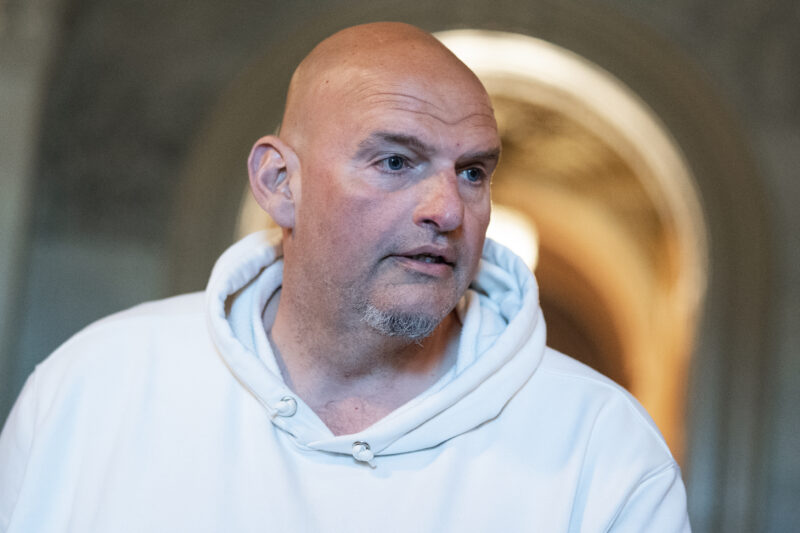
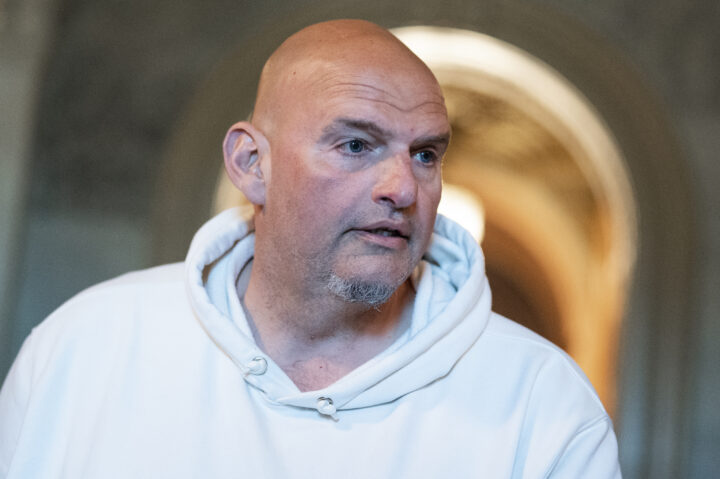
Sen. John Fetterman (D-PA) is seen after the Senate luncheons in the U.S. Capitol on Tuesday, April 14, 2026.
Sen. John Fetterman (D-PA) said on Monday that the votes by more than 100 House Democrats last week in favor of an effort to end all U.S. aid to Israel indicates the party is “flirting with” making opposition to Israel the official party stance, something he said would lead him to leave the caucus.
Fetterman, who has dismissed discussions about him leaving the party in recent years despite his increasing isolation from Democratic colleagues on Capitol Hill, said in a series of media appearances last week that he would leave the Democratic Party if it called for opposing offensive or defensive aid to Israel or ending the U.S.-Israel relationship in its official platform.
“It’s very clear, if the Democratic Party becomes the official anti-Israel party, then that forces me to rethink my membership in that party,” Fetterman told Jewish Insider in an interview on Monday. “Candidates run on the platform, on whatever the platform is, any one member of it effectively agrees with it. If they put that in the platform that we will never vote for aid for Israel, or we describe Israel as a genocidal or apartheid state, then yes, you have to rethink it.”
The Pennsylvania senator said that the move by nearly half of the House Democratic caucus to vote for Rep. Thomas Massie (R-KY)’s measure indicates the party is “flirting with” the idea of shifting its platform.
“It’s absurd. The Democratic Party are increasingly voting not to support the only Democratic state in the entire region,” Fetterman told JI. “I’m saying, effectively, you are flirting with it. You are increasingly making it more official. Inculcate it into our platform, then that’s a fundamental betrayal of the Democratic Party’s core morality.”
“I’ve been warning — I have been. Maybe two years ago I said I’ll be the last man standing if it’s what’s necessary,” he continued. “In July of ‘24, [Israeli Prime Minister Benjamin] Netanyahu had a joint address [to Congress]. I was the only Democrat that would engage him, shake his hand, get a photo with him, support the decision when every other Democrat was pushing for a ceasefire [in Gaza]. I mean, the Democratic Party was entirely wrong with that approach, and imagine what the security situation would be if Israel was pushed into a ceasefire.”
Fetterman referenced an Axios article published earlier Monday that credited the letter House Minority Leader Hakeem Jeffries (D-NY) sent to all House Democrats urging them to oppose the amendment with keeping 30 to 40 additional lawmakers from voting for the measure.
“It could have been 150 Democrats to vote against that,” Fetterman said. “I mean, that’s the direction the party’s going. … My views aren’t controversial, or they shouldn’t be. What should be controversial is the trash that’s coming out from many Democrats and out of J Street.”
The Pennsylvania senator took pointed aim at J Street, referring to the progressive Israel advocacy organization as “the embodiment of the suicidal empathy against the Jewish state of Israel” and criticizing the group for associating with Hasan Piker, the far-left streamer who has a record of antisemitic remarks.
“Nothing embodies suicidal empathy like J Street,” Fetterman said. “I wouldn’t describe them as cancer, but it’s vile the views that they are adopting, and they are becoming the useful idiots for the Hamas and Iranian propaganda machine. Are they gonna invite Hasan Piker to be on their board?”
“J Street is the group that said and gave political cover for Democrats so they don’t have to vote for Iron Dome [funding]. That’s a fact,” he continued. “They were trying to provide political cover for Democrats to say, ‘Well, J Street said it, so that seems pretty reasonable.’”
Fetterman had previously brushed off reports that efforts to recruit him to the GOP would be successful, writing in a Washington Post op-ed in May that he would “be a terrible Republican who still votes overwhelmingly with Democrats.”
Questions about Fetterman’s future political plans began circulating again earlier this month, however, when he and Sen. Dave McCormick (R-PA) launched Common Ground PA, a joint fundraising committee combining two of each senator’s PACs and allowing them to fundraise together.
Fetterman warned last week that he could become a deciding swing vote in the next Congress if the Democratic Party wins control of the Senate in November, which Democrats need to flip four seats to accomplish.
“If we flip those four seats, then I would be 51,” Fetterman said Wednesday at The Hill Nation Summit. “Watch what I do.”
Several Democrats considering presidential bids have cast the Iran agreement as evidence of weak leadership, arguing that Trump has been outmaneuvered by Tehran
Meg Kinnard/AP
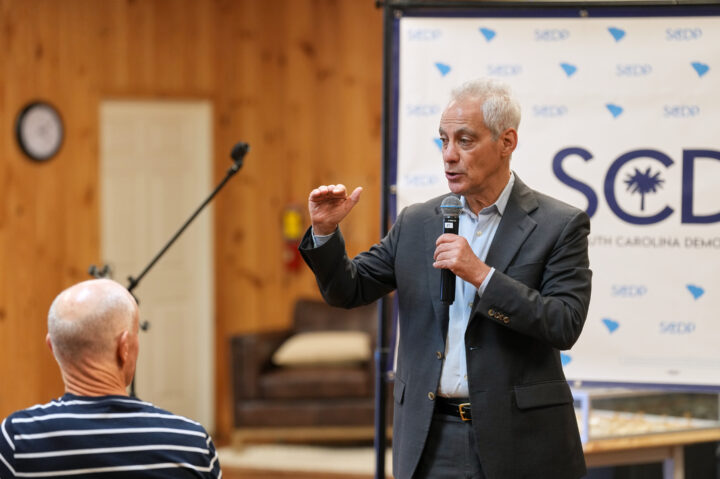
Former U.S. ambassador to Japan Rahm Emanuel speaks to voters as he participates in the South Carolina Democratic Party's "On the Road" series on Thursday, April 2, 2026, in Abbeville, S.C.
Among the Democrats mulling a presidential run in 2028 — a group that is ideologically divided, each with their own diagnosis about what’s wrong with the Democratic Party and how to fix it — there was a unified reaction in February when President Donald Trump decided to attack Iran: opposition to a war they viewed as reckless and unconstitutional.
As those Democrats respond to the U.S.-Iran memorandum of understanding that Trump announced last week, another consensus is emerging, which holds that the deal is just another example of Trump’s ineffectual leadership — yet another instance, these Democrats argue, of Trump getting taken advantage of and undermining the American people.
“They’re negotiating a deal that, truthfully, every single detail we continue to hear just looks like the Iranians continue to do better than us. I think they should have been the one to write The Art of the Deal, not Donald Trump,” Maryland Gov. Wes Moore said in a TV interview on Tuesday.
Rahm Emanuel, the former U.S. ambassador to Japan, member of Congress and chief of staff to President Barack Obama, offered a similar quip at a recent Financial Times event after describing the deal as “the memorandum of misunderstanding.”
“While the president thinks he wrote a book called The Art of the Deal, they’re going to teach him a lesson, which is the Persian lesson: the art of the negotiation,” Emanuel said. “And he just got schooled, unbelievably.” He called the war with Iran “the single worst — and there’s a lot of competition for it — American national security mess that I’ve ever seen.”
The MOU offered immediate sanctions relief for the Islamic Republic and launched a 60-day window for nuclear negotiations.
The 2028 contenders who have commented on the deal have generally done so without much detail. Pennsylvania Gov. Josh Shapiro criticized the agreement in an interview with CNBC on Monday, though he shared little in the way of specific critiques or concerns.
“I think what’s clear is the Trump administration, the president, specifically chose to enter this war and had absolutely no plan when he went in, and that’s why he’s got no idea how to get out,” said Shapiro. “The president created a mess, and now he’s dispatched JD Vance … to try and figure out a way out of it, and seemingly both of them are getting played by the Iranians.”
A spokesperson for Shapiro declined to comment further.
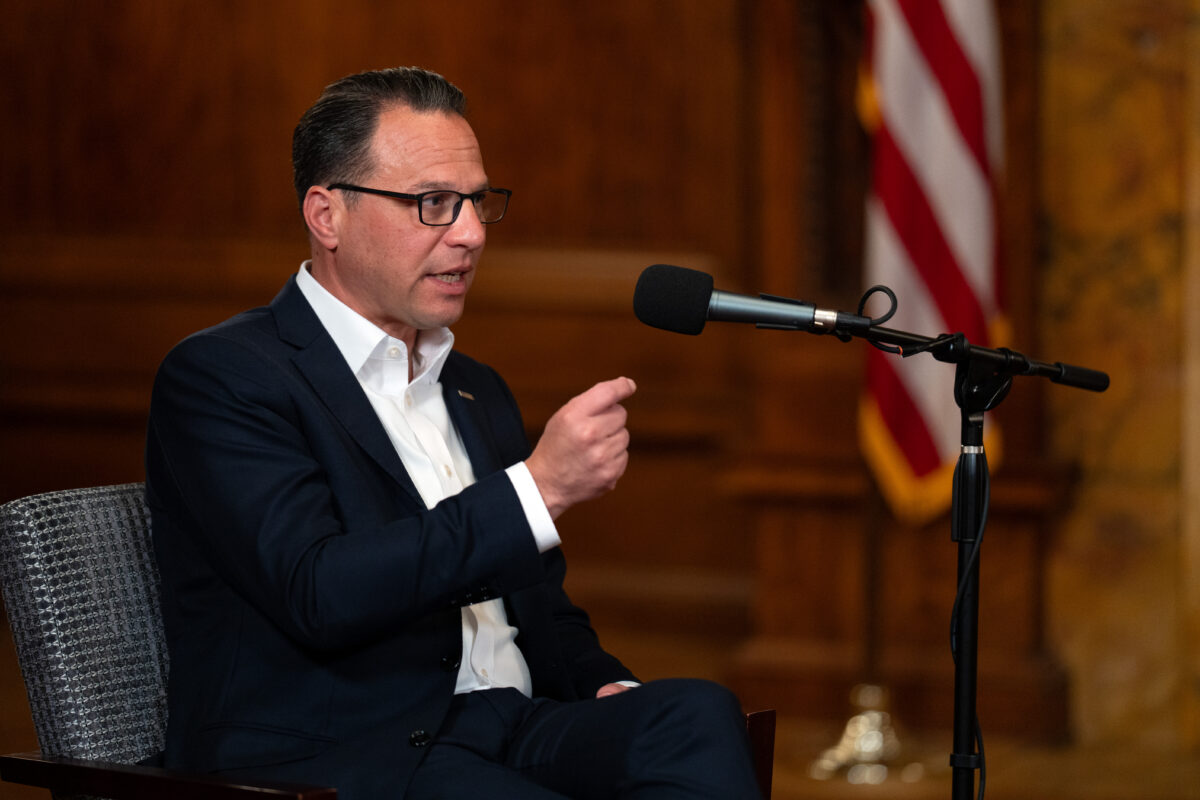
Illinois Gov. JB Pritzker has used the deal as a political talking point. He was asked by reporters on Monday and Tuesday to respond to a social media post where Trump called on Pritzker to seek his help in responding to gun violence in Chicago. In response, Pritzker referred to Trump’s Iran negotiations as a reason why he would never want to ask Trump for help.
“This is the president who wants to blame everybody else for algae that showed up at the Reflecting Pool in Washington, D.C.,” Pritzker told reporters during an event in Illinois on Tuesday, “the same president that thinks that after bombing Iran, that they should pick up the phone and call him, and indeed, who’s failing to put together an agreement that is anywhere near as good as the JCPOA [Joint Comprehensive Plan of Action], that was the agreement that he ripped up as president of the United States.”
Last week, he said at a Punchbowl News event that the deal sounds like it is “really just a cessation of hostilities and pushing off into the future negotiations about things.”
Some Democrats considering a 2028 run are avoiding the question entirely for now.
California Gov. Gavin Newsom, who on the day the U.S. began its campaign in Iran referred to the American actions as an “illegal, dangerous war,” has thus far not weighed on the MOU. Anthony Martinez, a spokesperson for Newsom, said that “Trump’s reckless war” has been costly to Americans. “That’s a bad deal for hardworking Americans, plain and simple,” Martinez said. He declined to comment on the MOU.
Kentucky Gov. Andy Beshear, Sen. Jon Ossoff (D-GA) and Rep. Alexandria Ocasio-Cortez (D-NY) have also criticized the war but so far refrained from discussing the agreement.
Most potential Democratic 2028 contenders view the Iran war as a hard-to-solve morass, with little offered in the way of alternatives to a war and deal that they oppose. Merely criticizing Trump for an unpopular war appears to be enough.
Shapiro acknowledged that he wants the U.S. to come out ahead in the war, but he said he doesn’t see how that will be possible with Trump leading the negotiations.
“I’m on Team USA. I want us to win, but this is the problem when you have a president who is just hell-bent on creating chaos around the world,” Shapiro said on CNBC. “What we need instead is steady-handed leadership, and we don’t have that right now.”
Pritzker pointed to the 2015 Obama nuclear deal as the best-case alternative, although that deal is now defunct.
“It’s a real question whether there’s any advancement at all of U.S. interests,” said Pritzker. “I think the question I think we’re all going to have to ask is, is this any better than the JCPOA that was already in place when Donald Trump tore it up in his first term?”
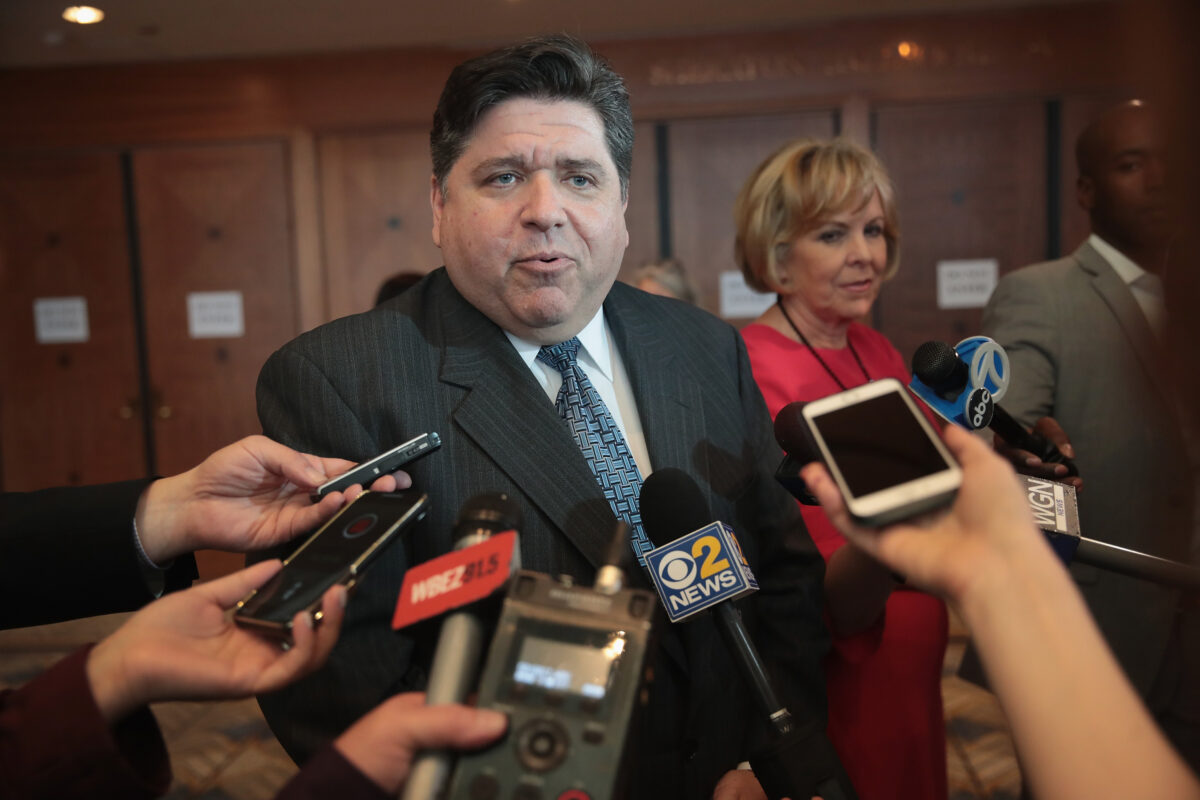
It was a line that former Vice President Kamala Harris, who is also mulling a presidential bid in 2028, echoed recently.
“This is a president who has proven himself to be entirely self-indulgent. And we will see what happens in the coming hours and days in terms of the negotiation. And really, it’s a concept of an agreement,” Harris said last week at a speech during a conference in Vienna. “Whatever is being negotiated, this president is going to declare victory, and we’ll end up where we were after the JCPOA and call that a victory.”
Far-left lawmaker Rep. Ro Khanna (D-CA), who has said he is considering a 2028 run, called the ceasefire between the U.S. and Iran “welcome news that Americans should support.” But he said it “delivers Iran a better deal” than the JCPOA that Trump “spent years ridiculing.” His message got a boost on X on Tuesday from former Secretary of State Tony Blinken.
“Wise words from my friend,” Blinken wrote.
The former director of the National Counterterrorism Center promoted a report from Drop Site News that the U.S. was trying to kill a servicemember whose plane was downed over Iran

AP Photo/Jenny Kane
Former congressional candidate and counterterrorism official Joe Kent speaks during a debate at KATU studios on Monday, Oct. 7, 2024, in Portland, Ore.
Joe Kent, the former director of the National Counterterrorism Center who resigned over his opposition to the Iran war, shared a post on social media spreading false claims from Iranian state-linked media and Drop Site News that the U.S. was attempting to kill the servicemember whose fighter jet was shot down over Iran over the weekend prior to him being rescued.
The initial statement on Saturday from Drop Site, a far-left news outlet sympathetic to Hamas and totalitarian regimes, cited a report by Tasnim News, which is linked to the Islamic Revolutionary Guard Corps, claiming that the U.S. had “lost hope” of recovering an airman whose jet was downed over Iran on Friday and was instead “attempting to kill him.”
The post was then amplified by Kent with the message: “Praying for the rescue of our downed pilot & the safe return of our Special Operators going in to get him back. [U.S. Air Force Pararescuemen and Combat Search and Rescue] Air crews are top notch.”
The Iranian-state media claim reposted by Kent came a day before President Donald Trump announced on Sunday that the lost crew member had been rescued following what he hailed as a “daring” operation by U.S. forces to retrieve him — contradicting the claim that Washington had been attempting to bomb and kill the missing servicemember.
In his post on Truth Social, Trump said that the servicemember’s location was being monitored “24 hours a day,” adding that the U.S. was “diligently planning for his rescue.”
Kent initially resigned from his post in March over the war in Iran, claiming that Tehran posed “no imminent threat to our nation” and accusing the U.S. of starting the war “due to pressure from Israel and its powerful American lobby.”
Support for the operation is highest among those who are the most connected to Israel and those who are most affiliated with Jewish institutions

Getty Images
A large plume of smoke rises over Tehran after explosions were reported in the city during the night on March 28, 2026 in Tehran, Iran.
Two new polls of Jewish voters released this week show broad opposition to the U.S. military action against Iran, with support for the operation highest among those who are the most connected to Israel and those who are most affiliated with Jewish institutions.
A Mellman Group poll on behalf of the Jewish Electoral Institute (JEI)found that 32% of Jewish voters back the current military action against Iran, while 55% disapprove and 13% remain undecided. Support tracked closely along partisan lines, with 83% of Republicans, 49% of independents and 13% of Democrats approving the war.
Among those who said they were very connected to Israel, the poll found nearly two-thirds of Jewish respondents supportive, with just 27% opposed. But among those only “somewhat” connected to Israel, 58% said they disapprove of the war with just 25% approving. Nearly all of those Jewish respondents unconnected to Israel said they disapprove of the military action against Iran.
Support also was strongest based on those who are more religiously observant. The vast majority of Orthodox Jews (83%) approve of President Donald Trump’s military action, with just 11% opposing. But among Conservative Jews, opinion is more evenly split, with 40% approving and 48% disapproving. And among Reform Jews, support is the lowest, with just 24% approving and 67% disapproving.
There’s also a pronounced gender divide within the Jewish community: 40% of Jewish men support the military action against Iran, with 49% opposing. But among women, only 26% approve of the war in Iran, with 59% opposing.
The poll also found a significant share of Jewish Democrats (28%) and independents (29%) who said they feel “torn” about the war — agreeing that Iran is a threat to peace but disagreeing with Trump’s handling of the operation.
The “torn” constituency, which makes up 23% of the Jewish vote, generally draws from those who said they were opposed to the war in the end. When the “torn” constituency is broken out, there’s a more even divide between those who support the war (31%) and those who oppose it (41%).
The Mellman Group poll surveyed 800 Jewish voters between March 13-22.
A separate poll of Jewish voters, conducted by GBAO for the progressive Israel advocacy group J Street, found a similar response towards the war in Iran: A 60% majority of Jewish voters disapprove of U.S. military action against Iran, while 40% support the war. Of note: A sizable 20% minority of Jewish Kamala Harris voters expressed support for Trump’s military action.
The J Street poll, notably, found higher support for the war among Conservative Jews, with 62% supporting and 38% opposing. It also found moderate Jews nearly evenly split, with 51% of self-described moderates in support, and 49% opposed.
The survey also asked whether U.S. military action makes Israel more or less secure, and found a 45% plurality agreeing that it helped Israel’s defense, with 36% concluding it made Israel less safe. But a 58% majority also said that the war weakened the United States, with only 30% believing it strengthened American national security.
The J Street poll also found that 77% of Jews don’t think Trump has a clear plan and mission for the war in Iran.
And it found that 70% of Jewish respondents said their sympathies are more with the Israelis, with 30% expressing more sympathy with the Palestinians. Asked about Israeli Prime Minister Benjamin Netanyahu, 28% of Jewish respondents said they viewed him favorably, with 66% viewing him unfavorably.
After resigning from the National Counterterrorism Center over the Iran conflict, Kent used an appearance on Tucker Carlson’s show to level accusations about Israeli influence on U.S. policy
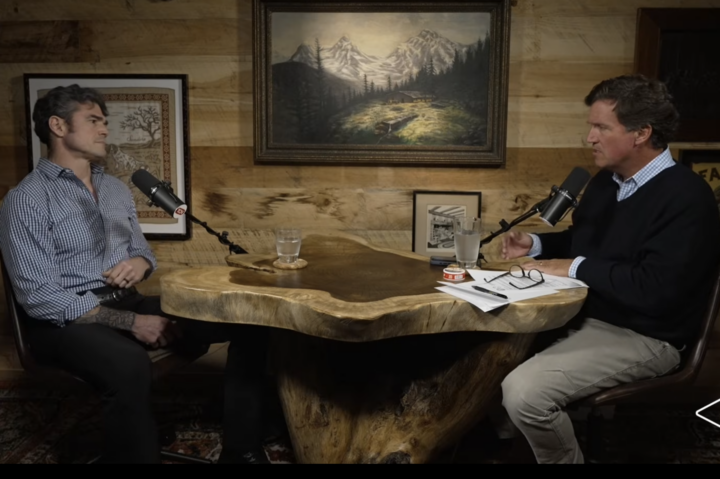
Screenshot
Joe Kent, who resigned earlier this week from his role as director of the National Counterterrorism Center over his opposition to the war in Iran, offered a litany of baseless accusations about Israel while defending the Iranian regime in an appearance on Tucker Carlson’s program on Wednesday.
Kent doubled down in the interview on an allegation made in his resignation statement that Israel coerced the U.S. into the war for its own benefit. As evidence, Kent and Carlson — a friend of Kent’s and a leading critic of the Trump administration’s approach to Iran in the conservative movement — pointed to Secretary of State Marco Rubio saying earlier this month that the “imminent threat” that prompted the U.S. to take action was the foreknowledge that Israel was going to strike, likely resulting in retaliation against American targets by the Iranian regime.
“So, the imminent threat that the secretary of state is describing is not from Iran,” Carlson mused. “It’s from Israel.”
“Exactly,” Kent replied. “And I think this speaks to the broader issue, who is in charge of our policy in the Middle East? Who’s in charge of when we decide to go to war or not?”
Kent argued that the Israelis “felt emboldened that no matter what they did, no matter what situation they put us in, they could go ahead and take this action and we just have to react.”
He suggested that the U.S. could have threatened to cut off Israel’s military aid, including defensive weapons, in order to prevent them from attacking Iran.
“We could have said to the Israelis: ‘No, you will not and if you do, we will take something away from you,'” Kent told Carlson. “It’s fine that we offer defense to Israel but when we’re providing the means for their defense, we get to dictate the terms of when they go on the offensive.”
Kent also raised questions during the interview about possible foreign ties to the assassination of conservative influencer Charlie Kirk last fall. He told Carlson he tried to investigate Kirk’s killing, at a Turning Point USA event at a Utah college, last fall because of the pressure Kirk was facing over backsliding GOP support for Israel, but was blocked by the Justice Department and FBI. Kent said that the last time he saw Kirk was last summer at the White House, and claimed that the final message Kirk gave him was to “stop us from getting into a war with Iran.”
“One of President [Donald] Trump’s closest advisors was vocally advocating for us to not go to war with Iran and for us to rethink, at least, our relationship with the Israelis. And then he’s suddenly publicly assassinated and we’re not allowed to ask any questions about that?” Kent said. “The investigation that I was a part of [with] the National Counterterrorism Center, we were stopped from continuing to investigate. And the FBI will say that they stopped it because they wanted to have everything turned over to the Utah state authorities. Everything is going to trial, it’s very sensitive. But there was still a lot for us to look into that I can’t really get into. There were still linkages for us to investigate that we needed to run down.”
Kent said that while he was “not making any conclusions … Charlie was under a lot of pressure from a lot of pro-Israel donors. And again, we know, because of the text messages that have been made public, that Charlie was advocating to President Trump against this war with Iran.”
On Iran, Kent alleged that the regime and assassinated Supreme Leader Ayatollah Ali Khamenei were not interested in acquiring a nuclear weapon, while acknowledging that Iran’s strategy had been “to not completely abandon the nuclear program.”
He cited Khamenei’s 2003 fatwa on the production or use of nuclear weapons, arguing that there is “zero U.S. intelligence suggesting it’s been lifted or ignored in a way that changes the posture. Iran knows what happens when you openly pursue or acquire nukes or even give them up.”
Kent went on to claim, despite reports to the contrary, that Khamenei was working to keep the regime from becoming a nuclear power.
“I’m no fan of the former supreme leader, Ali Khamenei, however, he was moderating their nuclear program. He was preventing them from getting a nuclear weapon,” Kent said. “If you take him out, if you kill him aggressively, people are going to rally around that regime.”
The former Trump administration official later told Carlson that “a good deal of key decision-makers were not allowed to come and express their opinion” to Trump prior to the start of joint U.S. and Israeli military operations targeting Iran.
“In the lead-up to this last iteration, a good deal of key decision-makers were not allowed to come and express their opinion to the president,” Kent said, arguing that this was a contrast from the “robust debate” that took place ahead of Trump’s decision to strike Iranian nuclear sites last June.
Kent said that efforts by the intelligence community to offer the president a “sanity check” during briefings “were largely stifled in this second iteration.”
“They had that discussion behind closed doors, and there wasn’t a chance for any dissenting voices to come,” Kent said.
Asked about his resignation, Kent told Carlson that he spoke to Trump prior to announcing his decision publicly and said he believes they “departed personally on good terms.”
“I spoke with him before I departed the administration,” Kent said. “It went great. I mean, not the best conversation ever. I told him why I was leaving. He heard me out.”
Kent’s appearance on Carlson’s show came as sources told Semafor that the FBI began investigating Kent weeks ago for allegedly leaking classified information.
The WH and FBI declined to comment when reached by Jewish Insider. The Office of the Director of National Intelligence did not respond to a request for comment on the matter.
In his resignation letter, Kent baselessly claimed Israel tricked President Trump into war with Iran and said U.S. operations in Syria were also 'manufactured by Israel'
AP Photo/Jenny Kane
Former congressional candidate and counterterrorism official Joe Kent speaks during a debate at KATU studios on Monday, Oct. 7, 2024, in Portland, Ore.
Joe Kent, director of the National Counterterrorism Center, resigned from his role on Tuesday over opposition to the war in Iran, baselessly alleging that Israel had coerced the United States into what he characterized as a misguided military conflict.
In a letter to President Donald Trump shared on social media, Kent, a former Green Beret who had reported to Director of National Intelligence Tulsi Gabbard, wrote that he “cannot in good conscience support the ongoing war in Iran,” claiming that the Islamic Republic “posed no imminent threat to our nation, and it is clear that we started this war due to pressure from Israel and its powerful American lobby.”
Kent, a hard-right former congressional candidate in Washington State who has pushed an isolationist foreign policy vision, has previously drawn scrutiny for promoting conspiracy theories, echoing pro-Russia messaging and associating with white supremacists and neo-Nazis, among other controversies.
During a failed House bid in 2022, Kent also said that accepting donations from pro-Israel lobbying groups like AIPAC puts Israel’s “interests ahead of ours” — invoking an antisemitic trope about foreign influence over American politics that is increasingly common on the far right.
Kent’s wife, Heather Kaiser, is a military veteran who has written for The Grayzone, an extremist outlet, authoring articles with its founder Max Blumenthal, a prominent conspiracy theorist who has published sympathetic coverage of Iran and spread misinformation about the Hamas terror attacks of Oct. 7, 2023.
In his letter, Kent claimed that Trump had been tricked into striking Iran by “high-ranking Israeli officials and influential members of the American media” who “deployed a misinformation campaign that wholly undermined” the president’s “America First platform and sowed pro-war sentiments to encourage war with Iran.”
“This echo chamber was used to deceive you into believing that Iran posed an imminent threat to the United States, and that should you strike now, there was a clear path to a swift victory,” Kent wrote to the president. “This was a lie and is the same tactic the Israelis used to draw us into the disastrous Iraq war that cost our nation the lives of thousands of our best men and women. We cannot make this mistake again.”
Kent, who served in Iraq, also claimed his first wife, Shannon Kent, a military cryptologist who died in an ISIS suicide bombing in Syria in 2019, had been killed “in a war manufactured by Israel.” Israel was not a member of the U.S.-led coalition combating ISIS at the time.
“I pray that you will reflect upon what we are doing in Iran, and who we are doing it for,” he concluded, telling the president that he can “reverse course and chart a new path for our nation” or “allow us to slip further toward decline and chaos.”
Karoline Leavitt, the White House press secretary, rejected Kent’s account. “As President Trump has clearly and explicitly stated, he had strong and compelling evidence that Iran was going to attack the United States first,” she wrote in a lengthy social media post.
She called Kent’s claim that Israel had duped Trump into joining the war “an absurd allegation” that “is both insulting and laughable,” arguing that “Trump has been remarkably consistent and has said for DECADES that Iran can NEVER possess a nuclear weapon.”
Speaking to reporters from the Oval Office on Tuesday, Trump said it was a “good thing” that Kent had resigned, calling him “very weak on security.”
“He said that Iran was not a threat. Iran was a threat. Every country realized what a threat Iran was. The question is whether or not they wanted to do something about it,” Trump added. “So when somebody is working with us that says they didn’t think Iran was the threat, we don’t want those people.”
Kent’s comments, which underscored deepening divisions in Trump’s MAGA coalition over the war, also drew criticism from Republican lawmakers.
Rep. Don Bacon (R-NE), a leading moderate voice in the House, accused Kent of fueling antisemitism. “Good riddance,” he said of Kent’s departure on social media. “Iran has murdered more than a thousand Americans. Their EFP land mines were the deadliest in Iraq. Anti-Semitism is an evil I detest, and we surely don’t want it in our government.”
House Speaker Mike Johnson (R-LA) said Kent’s claims about Israeli influence were “clearly wrong” and that “there was clearly an imminent threat” to the United States.
Sen. Lindsey Graham (R-SC) and Rep. Mike Lawler (R-NY) also criticized Kent’s letter and said they were glad to see him leave the administration — Lawler called him “a leaker who spent more time undermining our foreign policy than doing his job,” while Graham said, based on his claims, Kent “clearly … did not go to work enough.”
On the other side of the aisle, Sen. Mark Warner (D-VA), vice chairman of the Senate Intelligence Committee, said in a statement that Kent had been “right” to point out “there was no credible evidence of an imminent threat from Iran that would justify” an attack — even as he called Kent’s “record deeply troubling” and believed he “never should have been confirmed” to lead the counterterrorism office.
Meanwhile, Tucker Carlson, a close ally of Kent, praised his decision to resign. “Joe is the bravest man I know, and he can’t be dismissed as a nut,” Carlson told The New York Times on Tuesday.
Most Democrats are pushing for a war powers resolution next week, amid ongoing military operations
Win McNamee/Getty Images
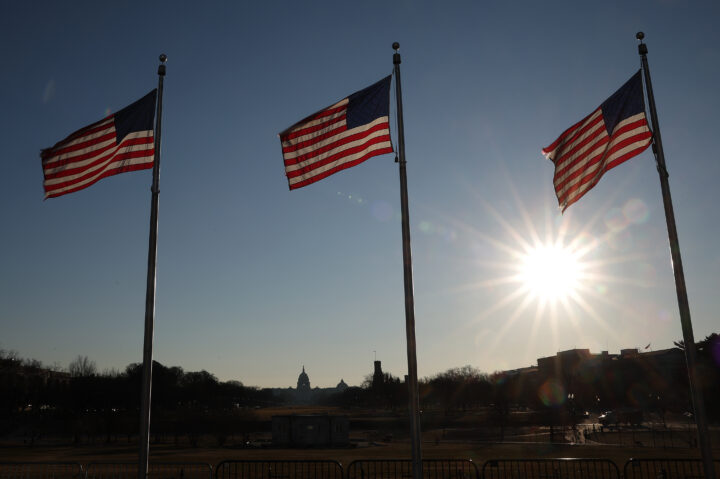
The American flag flies in front of the U.S. Capitol on February 28, 2026 in Washington, DC. U.S.
A number of Republican lawmakers rallied behind President Donald Trump’s military strikes against Iran on Saturday, while leading Democrats expressed quick and strident opposition to the administration’s decision to attack Iran.
Democrats are also demanding Congress reconvene promptly next week to vote on war powers resolutions to block further military operations in Iran without congressional approval. The resolutions were already expected to come up for votes in the coming week.
A few Democratic lawmakers sounded more open-minded about the attack against Tehran. Sen. John Fetterman (D-PA), one of the few foreign policy hawks in his party, said the president “was absolutely” correct to attack Iran in an appearance on Fox News. “God bless the United States, our great military, and Israel,” Fetterman said.
Rep. Greg Landsman (D-OH), who told Jewish Insider earlier this week that limited strikes on Iran could be necessary and productive, echoed that stance on Saturday. He said that he would oppose the war powers resolution.
“I hope these targeted strikes on the Iranian regime’s military assets end the regime’s mayhem and bloodshed and makes way for this lasting peace in the region,” Landsman said. “Thank you to our brave service members who are leading this effort, and I pray their work will finally free the people of Iran and those in the region from more violence or war. May peace emerge from all of this.”
Rep. Josh Gottheimer (D-NJ), who had been planning to oppose the war powers resolution, praised the attack while highlighting the administration’s obligations under the War Powers Act, which limits the duration for which the president can unilaterally commit forces to armed conflict without congressional approval.
“Today, the United States, with our key democratic ally Israel, took decisive action to defend our national security, fight terror, protect our allies and stand with the Iranian people who have been massacred in the streets for demanding freedom from the murderous Iranian regime,” Gottheimer said. “I applaud the extraordinary bravery and professionalism of our servicemembers and pray for their safety as Iran and its terrorist proxies retaliate against American bases and our partners in the region.”
“Confronting the Iranian threat is essential to America’s national security and to global stability. The world is safer because of the courage and skill of our service members. I am praying for their safety and the safety of all of our allies who have been targeted by Iranian retaliation,” he continued.
Sen. Jacky Rosen (D-NV) offered more muted support for the operation, praising U.S. servicemembers while saying she “stand[s] with the Iranian people in their hope for a better future and will continue to work in a bipartisan way in Congress to provide them the support they need.” She called for an immediate and detailed briefing on the administration’s plans, and highlighted Iran’s long record of malign activity and attacks on its own citizens.
But Rosen also warned against a protracted conflict and criticized the lack of congressional authorization.
Rep. Tom Suozzi (D-NY), among the most moderate Democrats in the House and a potential swing vote on the war powers resolution, said Trump needs to seek congressional authorization for the operation, while offering support for the administration’s goals.
“I agree with the President’s objectives that Iran can never be allowed to obtain nuclear capabilities. The President must now clearly define the national security objective and articulate his plan to avoid another costly, prolonged war in the Middle East,” Suozzi said. “Iran remains the leading state sponsor of terrorism in the region and must never be allowed to obtain a nuclear weapon. Preventing that outcome is vital to our national security, the safety of our allies, and the stability of the Middle East.”
Most of the leading voices in the Democratic Party, however, are rallying against the Iran attack.
Sen. Tim Kaine (D-VA), who is leading a war powers resolution in the Senate that he planned to call up for a vote next week, said in a statement, “Every single Senator needs to go on the record about this dangerous, unnecessary, and idiotic action,” calling the strikes a “colossal mistake,” accusing the president of having “learned nothing from decades of U.S. meddling in Iran and forever wars in the Middle East” and of being “mentally incapacitated.”
Rep. Ro Khanna (D-CA), who is leading similar legislation in the House, said that “the American people are tired of regime change wars that cost us billions of dollars and risk our lives. We don’t want to be at war with a country of 90 million people in the Middle East.”
Rep. Thomas Massie (R-KY), one of the few GOP isolationists in Congress and Khanna’s cosponsor on that resolution, also said he opposes the operation.
“This is not ‘America First,’” Massie said. “When Congress reconvenes, I will work with @RepRoKhanna to force a Congressional vote on war with Iran. The Constitution requires a vote, and your Representative needs to be on record as opposing or supporting this war.”
Rep. Warren Davidson (R-OH), another isolationist-minded Republican who indicated this week that he was leaning toward voting for the war powers resolution, sent similar signals on Saturday.
“We need a government small enough to fit within the Constitution. We need a government effective enough to solve problems and serve its own people. Or, we need a new Constitution,” Davidson said.
The House is not scheduled to reconvene until Wednesday.
Rep. Jim Himes (D-CT), the top Democrat on the House Intelligence Committee, who was one of the handful of congressional leaders briefed on the administration’s plans earlier this week, said that “everything I have heard from the administration before and after these strikes on Iran confirms this is a war of choice with no strategic endgame.”
He said he expressed his concerns to Secretary of State Marco Rubio during the briefing this week.
Republicans are largely lining up behind the administration, with the exception of Massie.
Sen. Lindsey Graham (R-SC), who had urged Trump to take action, praised the administration, saying Trump had “met the moment.”
“My mind is racing with the thought that the murderous ayatollah’s regime in Iran will soon be no more. The biggest change in the Middle East in a thousand years is upon us,” Graham said. “The likelihood of normalization between Saudi Arabia and Israel getting back on track is exceedingly high – a subject I brought up last week to the key players in the region who concurred if the ayatollah goes down, historic peace advances.”
Graham met with leaders in Israel, Saudi Arabia and the United Arab Emirates this month and said on Fox News on Saturday morning that he plans to return soon. Following retaliatory strikes by Iran on U.S. military facilities in several Arab states, Saudi Arabia issued a statement condemning Iran and offering its support for measures the Arab states may take in response.
“This operation has been well-planned,” Graham continued. “It will be violent, extensive and I believe, at the end of the day, successful. Again the demise of the ayatollah’s regime with American blood on its hands is necessary and more than justified.”
He later urged Arab and other allies to “get behind President Trump and go all in to ensure the ayatollah’s Iran, which has become the largest state sponsor of terrorism in the world is no more.”
Sen. Tom Cotton (R-AR), the chairman of the Senate Intelligence Committee, who was also briefed, said, “The butcher’s bill has finally come due for the ayatollahs. May God bless and protect our troops on this vital mission of vengeance, and justice, and safety,” highlighting the regime’s long record of attacks against Americans.
House Speaker Mike Johnson (R-LA) said Iran is “facing the severe consequences of its evil actions,” and said Trump had “made every effort” at diplomacy. “For decades, Iran has defiantly maintained its nuclear program while arming and funding Hamas, Hezbollah, and other internationally recognized terrorist organizations. Iran and its proxies have menaced America and American lives, undermined our core national interests, systematically destabilized the Middle East, and threatened the security of the entire West.”
“The Gang of 8 was briefed in detail earlier this week that military action may become necessary to protect American troops and American citizens in Iran. I received updates from Secretary Rubio thereafter, and I will remain in close contact with the President and the Department of War as this operation proceeds,” Johnson continued.
Other rank-and-file Democrats, including some moderates, drew parallels with the Bush administration’s war against Iraq in their criticism.
Sen. Mark Warner (D-VA), the top Democrat on the Senate Intelligence Committee, said that the strikes raise “serious legal and constitutional concerns.”
“The American people have seen this playbook before — claims of urgency, misrepresented intelligence, and military action that pulls the United States into regime change and prolonged, costly nation-building,” Warner continued. “We owe it to our service members, and to every American family, to ensure that we are not repeating the mistakes of the past. The president owes the country clear answers: What is the objective? What is the strategy to prevent escalation? And how does this make Americans safer?”
Sen. Ruben Gallego (D-AZ), an Iraq war veteran representing a GOP-leaning state, expressed concern for U.S. forces, who Trump acknowledged could be lost in the ensuing war.
“I lost friends in Iraq to an illegal war. Young working-class kids should not pay the ultimate price for regime change and a war that hasn’t been explained or justified to the American people,” Gallego said. “We can support the democracy movement and the Iranian people without sending our troops to die.”
Rep. Brad Schneider (D-IL), a co-chair of the House Jewish caucus and a key pro-Israel leader, criticized the administration’s move and said he would support the war powers resolution. “The President of the United States is not allowed to take our nation to war without authorization from Congress.”
“This is a moment of peril and opportunity,” Schneider said. “Congress must step up to meet the moment, fulfill its constitutional duties, and ensure American action — with our allies in the region and around the world — leads to a more stable and peaceful Middle East, not another generational entanglement ending in failure.”
Former Rep. Elaine Luria (D-VA), among the House’s most vocal Democratic Iran hawks while she was in office and who is now running to reclaim her former seat, also said Congress should “immediately return to Washington” to vote on Kaine’s war powers resolution.
Rep. Jake Auchincloss (D-MA) said that Trump has “no credibility on either the strategy or law guiding foreign policy” — pointing to the president’s delayed promise to Iranian protesters earlier this year that help would be coming — and said he plans to support the war powers resolution.
“I am ready to work across the aisle to craft congressionally directed strategy on Iran, especially for securing American air supremacy in the region and supporting the Iranian people’s right to self determination,” Auchincloss said. “But first congressional Republicans must call the question on this fundamental issue of war powers by voting against a reckless commander-in-chief and for the Constitution.”
The timing could be damaging, coming days before Saudi Crown Prince Mohammed bin Salman is set to visit the White House
Ronen Zvulun/Pool via AP
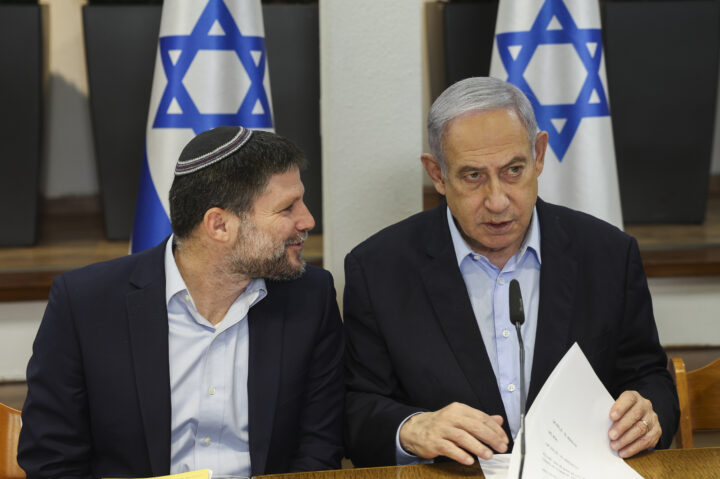
Israeli Prime Minister Benjamin Netanyahu, right, speaks with Minister of Finance Bezalel Smotrich during the weekly cabinet meeting at the Defence Ministry in Tel Aviv, Israel, Jan. 7, 2024.
The members of Israeli Prime Minister Benjamin Netanyahu’s governing coalition spent much of the weekend arguing over something on which they all ostensibly agree — opposition to a Palestinian state.
They may have been expressing their long and openly held opinions, but the timing could be damaging, coming days before Saudi Crown Prince Mohammed bin Salman is set to visit the White House. In the meeting, slated for Tuesday, President Donald Trump is expected to push for normalization between Riyadh and Jerusalem — something the Saudis have long conditioned on tangible steps towards a Palestinian state.
The latest debate started with far-right Israeli Finance Minister Bezalel Smotrich, who recently apologized for saying the Saudis can “keep riding camels” rather than normalize ties with Israel in exchange for a Palestinian state. On Saturday night, Smotrich said that Netanyahu was responsible for a “dangerous” increase in pressure on Israel, criticizing the prime minister for not speaking up more forcefully after nearly a dozen countries recognized a Palestinian state earlier this year. “Immediately come up with an appropriate and decisive response that will make clear to the entire world that a Palestinian state will not be established in our homeland,” Smotrich wrote on X.
Next came Likud ministers. “Israel will not agree to the establishment of a terror state in the heart of the Land of Israel,” Israeli Foreign Minister Gideon Sa’ar asserted. “Israel’s policy is clear: A Palestinian state will not be established,” chimed in Defense Minister Israel Katz.
The impetus for reiterating their position was the U.S.-proposed resolution at the United Nations Security Council backing Trump’s plan for Gaza and the formation of an International Stabilization Force, leading to a scenario in which “the conditions may finally be in place for a credible pathway to Palestinian self-determination and statehood.”
It’s unclear where these Cabinet ministers were in late September, when Netanyahu signed onto Trump’s 20-step plan, which uses the exact same language.
The Saudis saw Netanyahu’s agreement to a horizon for Palestinian statehood as satisfying their demand for a step in that direction, an Israeli diplomatic source who frequently advises Netanyahu said earlier this month.
But the pressure from the right was such that Netanyahu said at the opening of Sunday’s cabinet meeting that “our opposition to a Palestinian state in any territory west of the Jordan River exists and stands and has not changed at all.”
That apparent reversal of what Netanyahu agreed to less than two months ago could cause serious harm to Trump’s efforts to try to make Saudi Arabia the crown jewel of the Abraham Accords, a move that Netanyahu has long said would be greatly beneficial to Israel.
Elsewhere in Jerusalem, top opposition figures have sounded the alarm on the possibility of a Saudi domestic nuclear enrichment program and Riyadh purchasing F-35 planes. Former Prime Minister Naftali Bennett said that the government “lacks the ability to say ‘no.’ Faced with the initiative to establish a Palestinian state — silence. … Faced with those around us being armed with F-35s — silence.” Meanwhile, Israeli Ambassador to the U.S. Yechiel Leiter told The Jerusalem Post, “There’s no indication that Israel’s qualitative edge will be compromised.”
While Netanyahu and his ministers have been silent on other expected elements of MBS’ planned visit to Washington, there have been behind-the-scenes efforts to ensure Israel’s qualitative military edge is maintained.
The question remains, then, if these incentives are removed or downgraded, whether the Saudis will still want to normalize relations with Israel.
Amer Ghalib’s path to confirmation is unclear as at least four Republicans now oppose him becoming ambassador
Win McNamee/Getty Images
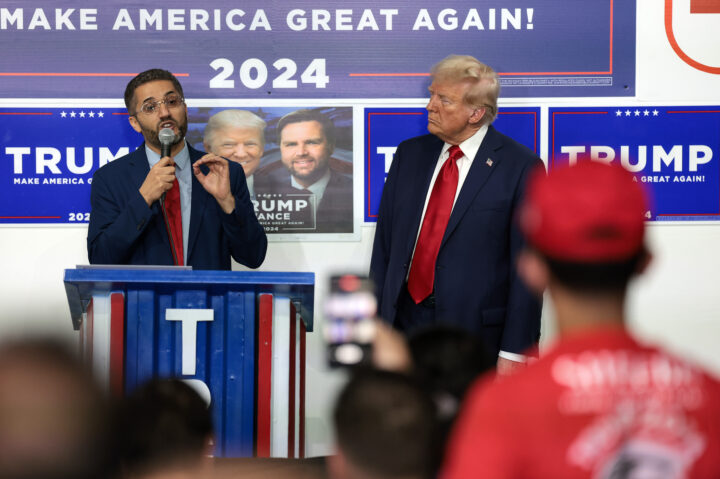
Hamtramck, Mich. Mayor Amer Ghalib introduces President Donald Trump, as Trump visits a campaign office on Oct. 18, 2024, in Hamtramck, Michigan.
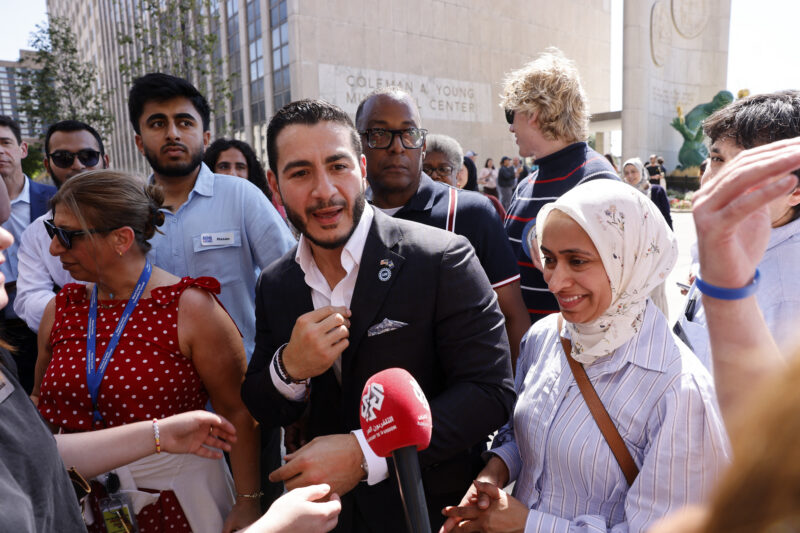
The nomination of Amer Ghalib, the mayor of Hamtramck, Mich., to be U.S. ambassador to Kuwait is facing what appear to be insurmountable odds as opposition to his confirmation grows among Senate Republicans.
No Republican or Democratic senators have come to Ghalib’s defense after his performance at his confirmation hearing before the Senate Foreign Relations Committee last week, when he faced a bipartisan grilling over his long record of promoting antisemitic ideas and his embrace of anti-Israel positions as an elected official.
Senators on both sides of the aisle had privately expressed reservations about Ghalib’s nomination prior to the hearing, but his attempts to evade responsibility for his record while under oath prompted several Republicans on the committee to go public.
Sen. Ted Cruz (R-TX) announced at the end of Ghalib’s hearing last Thursday that he would not be able to support moving his nomination out of committee to the Senate floor. Sens. John Curtis (R-UT), John Cornyn (R-TX) and Dave McCormick (R-PA) have since followed suit. Others on the panel, including Sen. Pete Ricketts (R-NE), have said they plan to raise their concerns about Ghalib with the committee chairman, Sen. Jim Risch (R-ID), and the White House.
“Based on the hearing that we had last week, I’m going to vote no against him,” McCormick told Punchbowl News on Tuesday. “I don’t think he demonstrated that he’s qualified for the role.”
Asked about Ghalib and the concerns surrounding his nomination while speaking to reporters on Tuesday morning, Senate Majority Leader John Thune (R-SD) said he was “vaguely familiar” with the Hamtramck mayor’s nomination but had not “examined” the matter closely.
The White House did not respond to Jewish Insider’s multiple requests for comment on the status of Ghalib’s nomination or the growing number of GOP senators coming forward to oppose him.
Ghalib is not believed to have any support on the Democratic side, reinforced by his lackluster answers to questions about his documented history of antisemitic remarks from Sens. Chris Murphy (D-CT), Tim Kaine (D-VA) and Jeanne Shaheen (D-NH), the top Democrat on the committee. He also has an embattled standing within the Democratic Party because of his decision to help President Donald Trump win the state of Michigan for Republicans last November.
“I think that you have dug your hole deeper today,” Murphy, who already opposed Ghalib prior to last week, told the nominee at his confirmation hearing.
Ingrassia pulled himself from consideration to be head of the Office of Special Counsel after three Republican senators vowed to oppose his embattled nomination
Pete Kiehart for The Washington Post via Getty Images
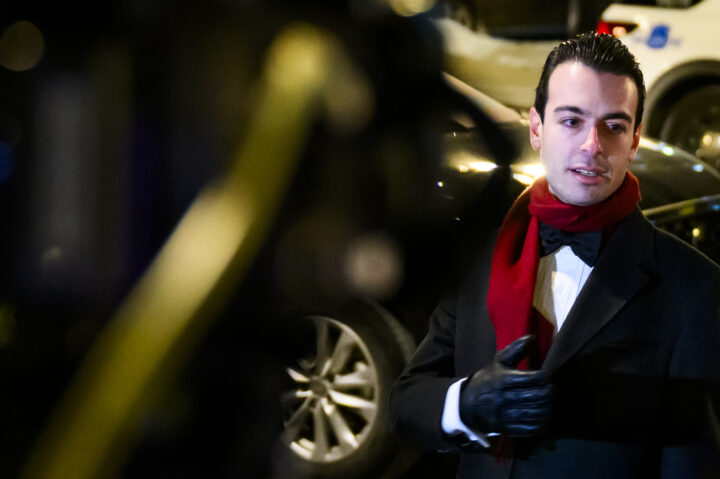
Paul Ingrassia, forer White House liaison to the Justice Department, left, announces the release of brothers Andrew and Matthew Valentin outside of the DC Central Detention Facility on January 20, 2025 in Washington, DC.
Paul Ingrassia announced on Tuesday he was withdrawing his embattled nomination to lead the Office of Special Counsel amid growing GOP opposition to his recently unearthed antisemitic and racist text messages.
Ingrassia, 30, currently serves as the White House liaison for the Department of Homeland Security. Prior to that role, he briefly served as the liaison to the Department of Justice at the beginning of President Donald Trump’s second term, but was reassigned after clashing with the DOJ’s chief of staff.
“I will be withdrawing myself from Thursday’s HSGAC [Senate Homeland Security & Governmental Affairs Committee] hearing to lead the Office of Special Counsel because unfortunately I do not have enough Republican votes at this time,” Ingrassia wrote in a post on Truth Social. “I appreciate the overwhelming support that I have received throughout this process and will continue to serve President Trump and this administration to Make America Great Again!”
Trump nominated Ingrassia in late May to lead the Office of Special Counsel, which is tasked with investigating and prosecuting whistleblower claims and accusations of corruption within the federal government. He was scheduled to receive a confirmation hearing in committee on Thursday.
The nomination was initially poorly received by some Republicans on the committee due to his past incendiary comments, including antisemitic conspiracy theories posted to social media. Two GOP committee members had privately expressed concerns to the White House about Ingrassia’s candidacy in recent months, those senators told Jewish Insider on condition of anonymity.
Ingrassia’s standing plummeted further after Politico reported on Monday that he had sent text messages in a group chat of Republican operatives stating that Martin Luther King Jr. Day should be “tossed into the seventh circle of hell” and described himself as having a “Nazi streak … from time to time.”
Ingrassia wrote in the text chain that he would “never trust a chinaman or Indian,” a comment made in reference to former Republican presidential candidate Vivek Ramaswamy. Another message stated that “We need competent white men in positions of leadership … The founding fathers were wrong that all men are created equal.”
The revelation prompted immediate outcry on Capitol Hill, with Democrats reiterating their prior calls to pull Ingrassia’s nomination and Republicans publicly and privately urging the White House to do the same. Three Republicans on the Homeland Security Committee — Sens. Ron Johnson (R-WI), Rick Scott (R-FL) and James Lankford (R-OK) — told reporters that they would vote against Ingrassia’s nomination at his confirmation hearing.
Johnson said that Ingrassia’s nomination “never should’ve gotten this far” and that the White House “ought to withdraw” his name from consideration.
“I don’t plan on voting for him. I can’t imagine how anybody can be antisemitic in this country,” Scott said, later adding that he had informed the White House of his decision after the most recent text messages were published.
Asked by reporters at the Capitol on Tuesday if the White House should pull Ingrassia’s nomination, Senate Majority Leader John Thune (R-SD) replied, “I hope so. He’s not going to pass.” He responded, “Yeah,” when asked if it’d be a mistake for Ingrassia to appear before the Homeland Security Committee on Thursday.
Ingrassia also lost the backing of the Zionist Organization of America, the sole Jewish group that was supporting Ingrassia’s nomination, over the texts. The group announced on Tuesday that they were pulling their endorsement as a result of the messages.
“In this age of Jew hatred, even a hint of antisemitism can’t be tolerated,” Mort Klein, the group’s president, told the Washington Post of the decision.
At a luncheon hosted by the White House on Tuesday for GOP senators, several Republicans took part in a discussion about Ingrassia’s nomination being “dead,” according to one senator who participated in the conversation.
“He’s going to be pulled,” the senator said of Ingrassia, citing several conversations this week with the White House.
Sen. Richard Blumenthal (D-CT), who also serves on the panel, similarly predicted the White House would withdraw his nomination, saying there was no reason to force the confirmation hearing to proceed on Thursday when he had no chance of being confirmed.
“I expect it because there’s no way he’ll be confirmed. I don’t know why anyone would put him through the gauntlet of questions that I would be asking him, along with others,” Blumenthal told JI. “They should mercifully spare him the ignominy of being overwhelmingly disapproved.”
Ingrassia’s nomination was already considered controversial prior to the leak of his text messages, the result of his ties to avowed white nationalists and antisemites like Kanye West and Nick Fuentes, his record of public statements embracing conspiracy theories and his already rocky tenure in the second Trump administration, which had seen him depart from two roles due to friction with colleagues in less than a year.
Ingrassia was also the subject of an internal investigation at the Department of Homeland Security this month after a sexual harassment complaint was filed against him, though the complaint was later withdrawn and no wrongdoing was found.
Ingrassia has also been consistently critical of the U.S.-Israel relationship and has repeatedly asserted since Hamas’ Oct. 7, 2023, attacks on Israel that the United States should not provide any aid to the Jewish state.
As the Hamas attacks were still underway, Ingrassia posted on X calling illegal immigration to the U.S. “comparable to the attack on Israel.” Days later, Ingrassia wrote in a since-deleted post on the platform that the Israel-Palestine conflict was a “psyop.”
Please log in if you already have a subscription, or subscribe to access the latest updates.
 Continue with Google
 Continue with Apple