


























Qatar applauded the gathering for its effort to ‘preserve [Jerusalem’s] Islamic and Christian identity’
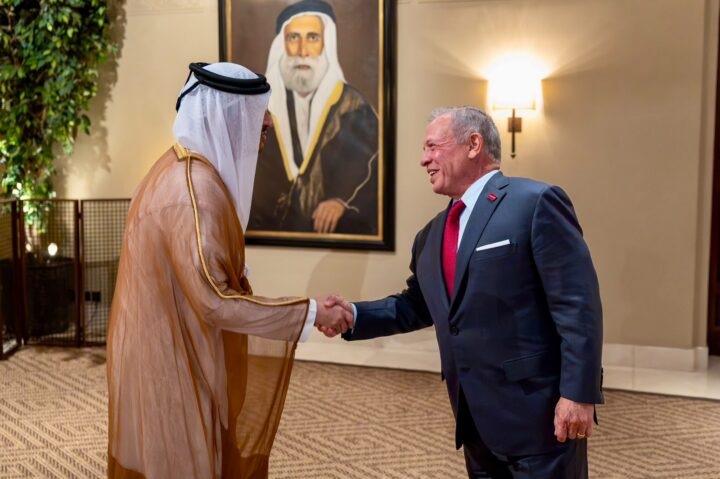
Government of Qatar
Qatari Prime Minister Sheikh Mohammed bin Abdulrahman Al Thani greets Jordanian King Abdullah at foreign ministers summit.


 Add JewishInsider on Google
A coalition of foreign ministers from Arab and Muslim countries met in Jordan on Wednesday to launch a coordinated campaign against Israeli policies in Jerusalem — a gathering marked both by the notable absence of key regional players and rhetoric that dismissed Jewish ties to the city.
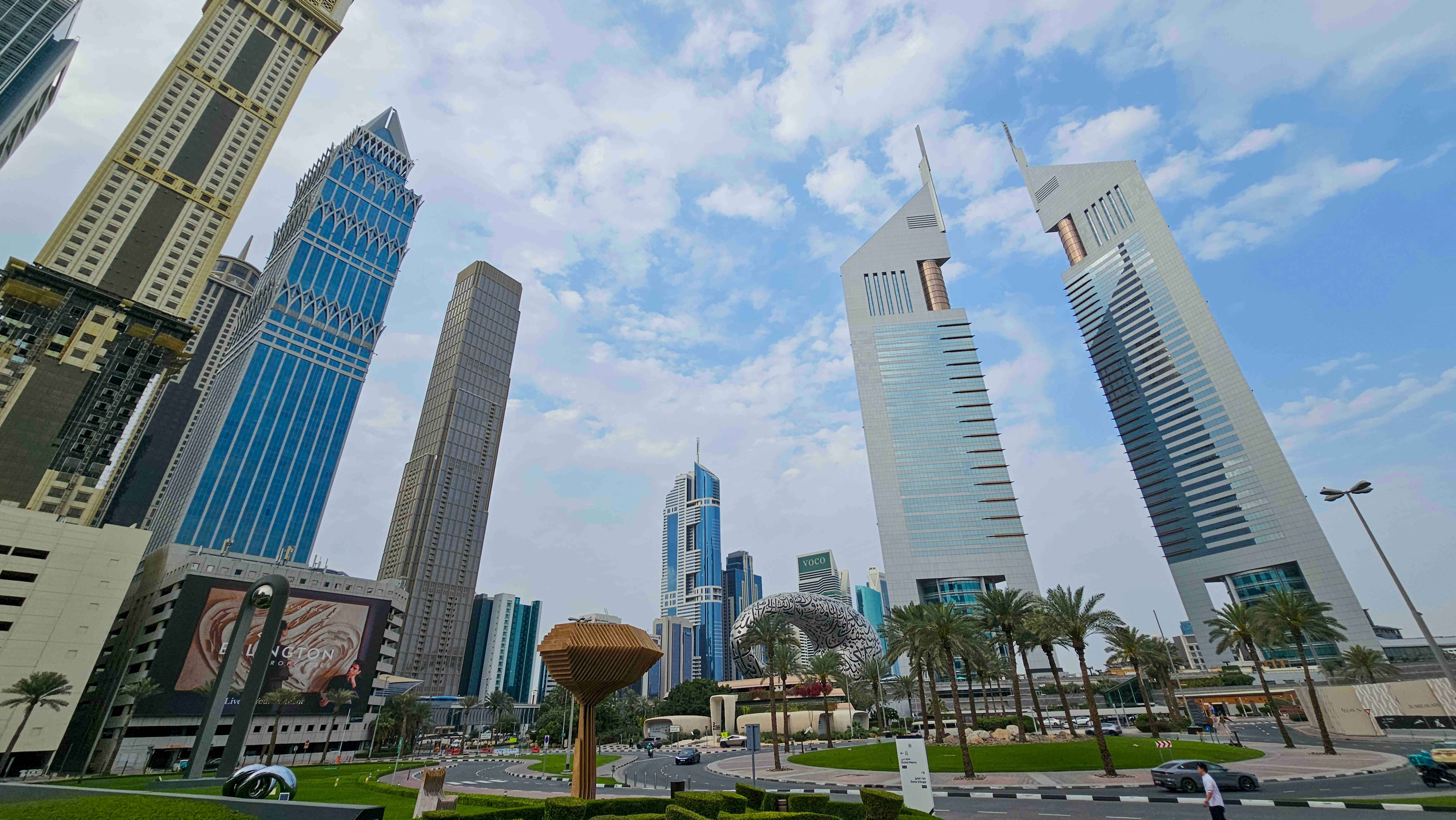
The meeting brought together diplomats from Jordan, Egypt, Saudi Arabia, Qatar, Algeria, Iraq, Tunisia, Somalia and Morocco, alongside representatives from the Arab League, Indonesia, Pakistan, Turkey and Malaysia. Missing from the Amman summit were several close U.S. allies including the United Arab Emirates, Bahrain and Kuwait.
In a joint statement, the group denounced what it called an “unprecedented Israeli escalation in occupied Jerusalem and its Islamic and Christian holy sites,” accusing Israel of trying to alter “the Arab Islamic and Christian identity of occupied Jerusalem and its legal and demographic status” — omitting any mention of Jewish historical or religious ties to the city.
The ministers also claimed that Israel “has no sovereignty” over east Jerusalem.
The statement accused Israel of discriminatory practices against Christians, including “restrictions on access to the Church of the Holy Sepulchre and the observance of religious rites therein; interference in the affairs of churches and restrictions imposed on their institutions and properties; and attacks targeting clergy, worshippers and religious symbols.”
The ministers also warned that “Israeli attacks against Islamic holy sites in occupied Jerusalem constitute a blatant provocation to the sentiments of around two billion Muslims worldwide, and push towards a religious conflict with repercussions that will extend beyond the region and threaten regional and international peace and security.”
To operationalize their response, the ministers announced a coordinated international campaign — including a dedicated media platform — to document alleged Israeli violations against holy sites with a plan to present them to international organizations.
Qatar’s Foreign Ministry lauded the meeting, where it said the countries discussed “the Israeli escalation in occupied Jerusalem, and the joint efforts to preserve its Islamic and Christian identity.”
Israel’s Foreign Ministry forcefully denounced the joint statement, noting its exclusion of Jewish ties to the city.
“The declaration endorsed by the Foreign Ministers of the Arab Ministerial Committee, convened by Jordan, is built on false accusations, historical distortions, and a complete disregard for the facts,” the ministry said.
“It is particularly cynical to accuse Israel of violating freedom of worship while declaring that the entire Temple Mount is a place of worship exclusively for Muslims, ignoring the Jewish people’s historic connection to Jerusalem and its holiest sites,” the statement continued. “Under Israeli sovereignty, Jerusalem, the eternal capital of the State of Israel, has never been more open and accessible to worshippers of all faiths. Israel remains committed to preserving freedom of worship, maintaining the status quo on the Temple Mount, and taking all necessary measures to ensure public order and the safety of all visitors.”
Shapiro, to CNN: ‘There are 46 majority Muslim nations, 23 of which have Islam as their official religion’
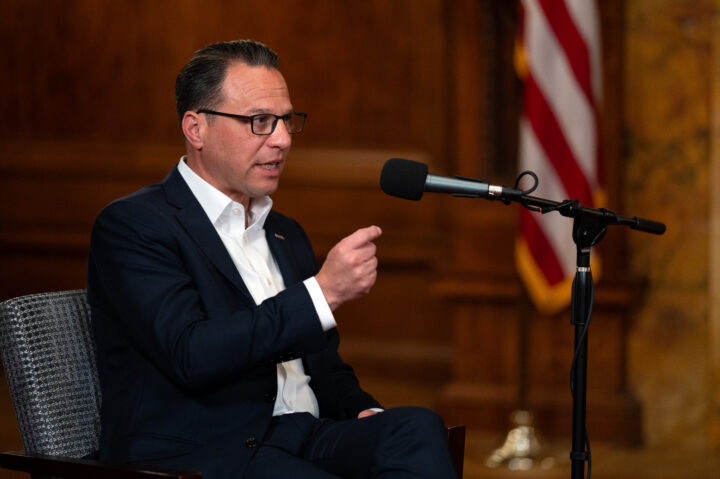
Peter W. Stevenson/The Washington Post via Getty Images
Pennsylvania Gov. Josh Shapiro sits for an interview at the Pennsylvania State Capitol on June 11, 2025.
Pennsylvania Gov. Josh Shapiro defended Israel’s standing as a Jewish state, telling CNN in an interview that the country faces a level of scrutiny and attack over its religious character not applied to the Muslim states throughout the region.
“For those who do not want there to be a Jewish state, oftentimes they will predicate their views on this notion that being grounded in a religion and being a democracy can’t coexist. I think it’s important to point out the hypocrisy of that view,” Shapiro said in an interview with CNN that aired on Monday. “When there are 46 majority Muslim nations, 23 of which have Islam as their official religion, either because of statute or their constitution, and only one has Judaism as their official religion, and yet we’re focused just on the Jewish state.”
Unlike countries that constitutionally declare an official religion, Israel has no official religion by law — though its 2018 Basic Law designates it as the nation-state of the Jewish people, and religious institutions play a significant role in civic life. Israel formally recognizes multiple religious communities, including Jewish, Muslim, Christian and Druze populations, and grants each its own religious courts for matters of personal status such as marriage and divorce.
The Democratic governor also said that he feels it’s important to stick to his convictions on the issue, rather than following trends or pressure.
“I think it is particularly important at this time to be open and vocal and honest about your views, and not put your finger in the wind and just cater to whoever is expressing their views the loudest,” Shapiro continued.
The comments come as attacks on Israel’s status as a Jewish state have become increasingly prevalent, particularly from the far left, including by at least one Democratic senate candidate.
State Sen. Sharif Street supports continued U.S. aid to Israel but calls Israeli PM Netanyahu a war criminal
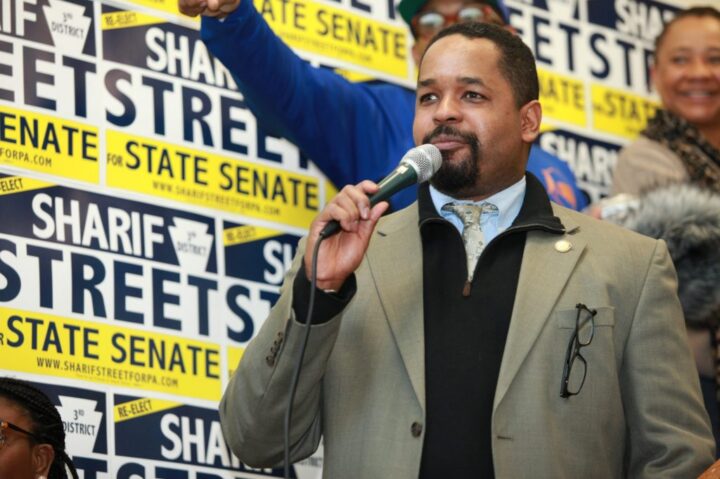
Sharif Street campaign page
Pennsylvania state Sen. Sharif Street
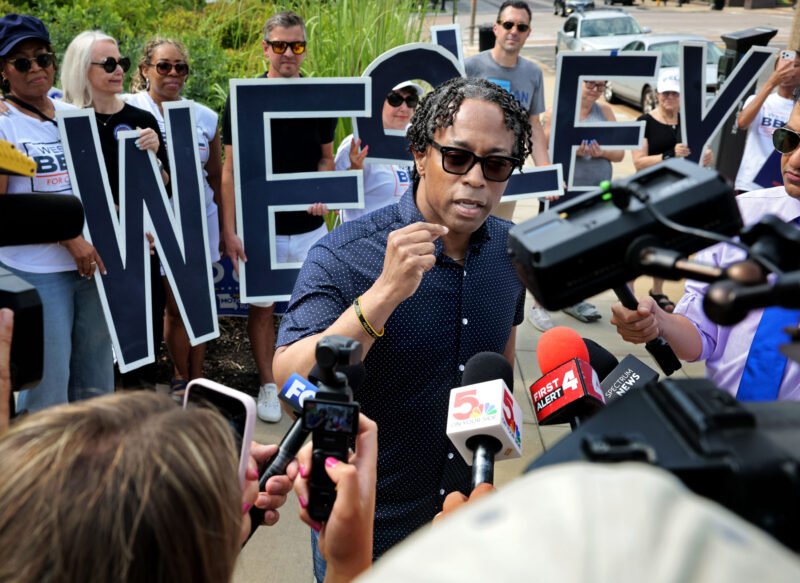
Sharif Street is walking a unique political path.
The Pennsylvania state senator running for a House seat in the heart of deep-blue Philadelphia is Black and Muslim, and has staked out positions largely supportive of Israel.
He traveled to Israel with the American Jewish Committee in 2017 “to gain some understanding” of the complexities facing Israelis and Palestinians.
He has indicated that he would not support conditions on U.S. aid to Israel, saying that the two allies need an “open dialogue,” yet he refers to Israeli Prime Minister Benjamin Netanyahu as a war criminal.
Street’s nuances on Israel — he backs a strong U.S.-Israel relationship, while also urging a compassionate approach to the Palestinians — offer a sharp contrast with his most prominent rival in the Democratic primary for Pennsylvania’s 3rd Congressional District, who is a strident antagonist of Israel.
Street’s friends and allies in the Jewish community insist his stances aren’t a matter of political convenience or calibrated to win him a congressional seat, but rather are borne of years of study on the issue, personal conviction and decades-long ties to members of the Jewish community.
The nuances Street evinces on Israel extend to his reading of the Muslim community, too. While political analyses over the past two years have seen the Jewish and Muslim communities as generally at odds over the war in Gaza — including the three current Muslim members of Congress who regularly stake out anti-Israel stances — Street argued in an interview with Jewish Insider that doesn’t tell the full story of his community.
“The Muslim community is much more diverse than I think the American press tends to think,” Street told JI in a recent interview. “I’m an African American. We have had, historically, pretty good relationships with the Jewish community. … There are over 2 billion Muslims in the world, a third of the world population. And American Muslims are from South Asia, they’re from Europe, they’re from Africa, they are from the Middle East.”
“I think the perspective of the press is always just Middle Eastern Muslims who come to this country with a very long, recent history of … concerns about Israel in the Middle East. That’s not all Muslims,” he said.
Muslims from other parts of the world “have various perspectives and their issues are diverse.” And he said the African American Muslim community of which he is a part “does not have [that] kind of entrenched negative history.”
Many African American Muslims, he said, are converts, and grew up in Christian communities, with different perspectives on Israel and the Jewish community. Of the nearly 500,000 Muslims in the Philadelphia area, 80% are African American, according to Street.
“Every time they want to talk about Muslim-Jewish relations, they just focus on a very small sector — probably less than 10% of the Muslim community, which happen to be Arab American,” Street said. “And their perspective is important, but it doesn’t represent all Muslims.”
Speaking to JI, Street cast himself as a supporter of the U.S.-Israel relationship, while also urging a compassionate approach to the Palestinians and a concerted effort to aid in the reconstruction of Gaza.
“Israel is one of the United States’ most important allies in the world and certainly in the region, and we need to make sure that we keep that relationship strong,” Street said. “We also need to understand that we have to rebuild Gaza for Palestinians.”
He argued that a failure to properly rebuild Gaza and provide it with the necessary resources will only fuel radicalization and help Hamas and other extremist groups grow. “That makes both Palestinians and Israelis less safe,” he said.
He said the U.S. should invest in rebuilding and use its influence to bring along Israel and a multinational coalition, including Arab states, to assist the reconstruction and ensure the security of Gaza and the region, which would improve trust and the chances of success.
“By investing in those communities, we increase the safety and security for Israelis and Palestinians,” he reiterated. “At the same time, we have to recognize their immediate challenges, and the United States has to continue to make sure Israel can deal with the immediate challenges, while we increase the long term safety and security for both Israeli and Palestinians as well.”
He also indicated that he wouldn’t support conditions on U.S. aid to Israel, saying that the two allies need an “open dialogue.” He said that the U.S. should “encourage peace and prosperity in the region,” something best done through a “partnership” rather than by “dictating to Israel.”
He emphasized that all sides suffered in the war, and said he believes both Israelis and Palestinians want change.
Street takes a more critical stance toward Netanyahu.
He was quoted by the Philadelphia Inquirer as saying, “Guess what? Benjamin Netanyahu is not the only leader of a major country in the world that’s committed war crimes, because Donald Trump has done the same thing. But none of us would talk about getting rid of the United States of America as a country.” He said at a recent candidate forum that Netanyahu should be prosecuted for war crimes.
Asked about the comments quoted by the Inquirer, he told JI that it is “possible” that Netanyahu was responsible for war crimes “and I certainly think that that needs to be investigated.” He highlighted that many Israelis are also concerned with and dissatisfied with Netanyahu’s leadership throughout the war, and want to see him out of office.
“Ultimately — and I think the Israeli people will do the right thing — but I think that the Israeli courts have to have a chance to really hear that and oversee those issues, and that’s not likely to happen while we’re still in an armed conflict,” he said.
About his trip with AJC to Israel alongside other Muslim leaders in 2017, Street said, “So often we oversimplify what’s going on in the Middle East,” Street said. “I don’t think Americans fully understand the depth and complexity of the issues. So I wanted to gain some understanding.”
David Hyman, a longtime attorney in Philadelphia who was an ally of Street’s father, former Philadelphia Mayor John Street, watched him grow up since he was a teenager. He said he remembers having a conversation with Street along similar lines following that trip.
“He said that what he really came away with on the trip [was] that slogans and simple answers are not what will help matters,” Hyman recounted.
Kevin Greenberg, an attorney who said he’s been friends with Street for 30 years, said he’s seen Street’s views on the Middle East grow and evolve over time, and the two had — prior to Street’s AJC trip — discussed visiting Israel together.
“I’ve seen a lot of politicians decide to be pro-Israel, pro-Jewish for contributions, and I’ve seen a lot of people be anti-Israel, pro-BDS … because you think there are votes there. That just doesn’t enter into his calculus on this issue,” Greenberg said. “It’s a core belief of who Sharif is. And he stands for the little guy in any situation.”
Hyman, a board member of AJC’s Philadelphia chapter, offered similar praise.
“He’ll speak about his support for Israel in a setting, in a context where there’s no political upside,” Hyman said. “For me, that’s the litmus test, because there’s so little political courage these days to say anything other than what’s politically expedient. He’s very upfront.”
Hyman said that, while Street may disagree with some of the Israeli government’s decisions, “in terms of standing behind the basic tenets of Zionism and the right for Israel to exist and defend itself, he distinguishes himself at a time where [other supporters are] peeling off.”
And he emphasized that Street will be accessible to groups across the Jewish community, who already have existing relationships with him. “When issues come up, it’ll be natural for us to talk to him and take his temperature.”
Robin Schatz, the director of government relations for the Jewish Federation of Greater Philadelphia, also said that Street has “always been a friend” well before his run for Congress, and that he has always been accessible to her and the Jewish community.
At the beginning of their friendship decades ago, Greenberg said Street did not know much about the Middle East but wanted to learn more, growing up in a household more focused on the needs of Philadelphia residents. “Sharif has evolved from a curious, but unknowing person, to somebody who has a deep understanding, and respect for Jews qua Jews.”
Greenberg also said that Street has always maintained a diverse group of friends, and that both his social and professional circles have included many Jewish people, and that he was a prominent participant in both of Greenberg’s daughters’ bat mitzvahs.
Hyman noted that Street worked for a time at a historically Jewish law firm, and said that he has been active in a local AJC initiative bringing together Jews and Muslims.
Street condemned those in the United States who have turned their grievances over the war in Gaza into violent action against Jewish Americans.
“I think one of the things that happens is silent complicity. When people don’t speak out against the antisemitism that exists, that fuels it,” Street said. “We also can’t allow people who are having concerns to then turn into calling for violence in the U.S. … I will use my voice, as I have done as a state senator, as a congressperson to speak out against this and use the platform to do it.”
He additionally emphasized the importance of hate crimes legislation and pointed to his support for legislation in Pennsylvania to provide funding to protect houses of worship, which he noted helps Jewish, Muslim and other communities. He said he would support similar efforts at the federal level.
Schatz said that having a devout Muslim lawmaker like Street with strong ties to the Jewish community in Congress could be good for the Jewish community, especially given tensions that have appeared between the two communities.
“I think it’s good for the Jewish community to hear that somebody from a different faith group, especially from Islam, where people have been somewhat leery because of terrorism and Israel, to see that we do have true allies,” she said. “He’s consistently there for the [Jewish] community.”
Street’s friends and allies praised him for consistently being among the first leaders to speak out against antisemitic incidents, with more than one highlighting that he was the first elected official to condemn a recent pro-Hamas rally in Philadelphia’s Rittenhouse Square last month.
“In 2024, when some of the far left were making antisemitic attacks on Josh Shapiro, when he was up to be nominated for vice president, Sharif basically went on a virtual tour of Black Muslims all over the country, saying, do not do that,” Greenberg recounted. “Josh is a perfectly good candidate. He doesn’t hate us. He’s great with us. He’s a great leader for us, and do not let people attack him because he’s Jewish. You don’t like him? You don’t like him. Say that.”
Street, at the time, was the chair of the Pennsylvania Democratic Party. Greenberg said that Shapiro had backed another candidate for the post, but said Street maintained no ill will towards him and was insistent that attacks on Shapiro for his religion were unacceptable.
Speaking to JI before the U.S. went to war with Iran, Street said that Iran shouldn’t be allowed to obtain nuclear weapons, and that the U.S. needs to work with all of its allies and partners to prevent that from happening, “but ultimately we want to [get there] in a way that avoids war, if possible.”
After the war began, in a statement shared on Facebook, Street condemned the Iranian regime and Ayatollah Ali Khamenei, who was killed in an Israeli strike, but said that the “chaotic situation in Iran is perilous for the Iranian people and the world” and that Trump lacks the capacity to “successfully manage this situation.”
He also emphasized that the Constitution gives Congress the authority to declare war, not the president. “I am calling on Congress to immediately return to vote on a more narrowly tailored measure that will allow the US to defend its interests while exercising its oversight over this President to stop him from unilaterally starting wars all over the world,” Street said.
He told JI was similarly concerned that the administration failed to brief Congress, particularly Democrats, about the strikes it carried out on Iran last summer. He said he couldn’t judge whether those strikes were the right decision because of the administration’s failure to explain and provide intelligence about them to Congress or the public.
“Democrats and Republicans have worked in a bipartisan way under Democratic and Republican administrations to deal with the threat of Iran,” Street said. “President Obama was very strong on this issue. I would be strong on this issue, but the president can’t act unilaterally without congressional oversight. That’s the problem. It shouldn’t be partisan. … The leaders in Congress have to have the right intelligence to make those decisions.”
Street’s main competitor in the primary race is far-left state Rep. Chris Rabb. A Rabb win would likely cause significant concern among the district’s sizable Jewish community, given his record of anti-Israel activism and accusations of genocide against Israel.
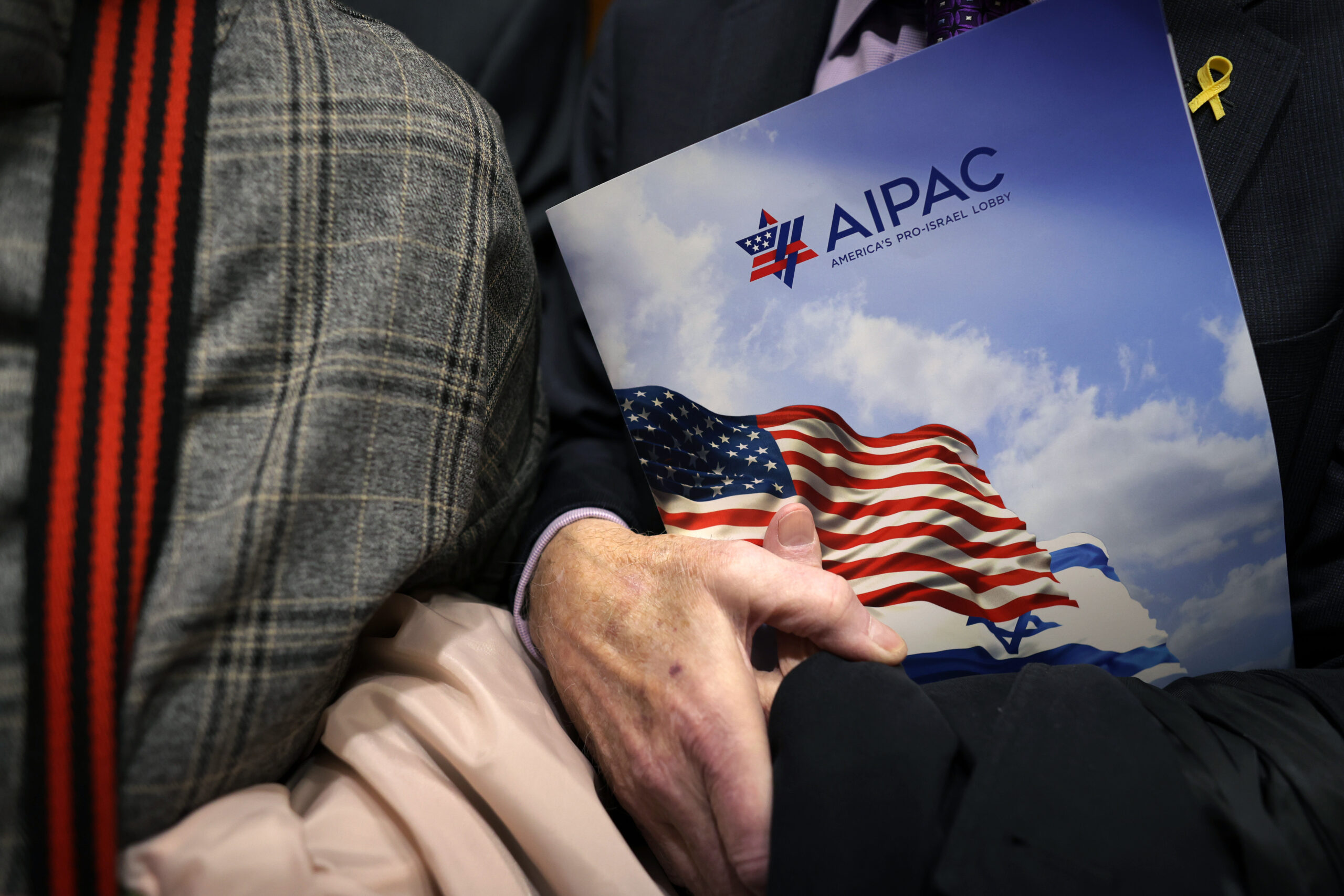
At a recent candidate forum, several major candidates offered criticism of Israel and AIPAC. “F— AIPAC. They are a racist organization and I will not meet with them,” Rabb said, accusing the group of “destroying candidates’ lives.” At another forum, Rabb said he would vote to block further U.S. aid to Israel, while other candidates avoided weighing in specifically on the legislation.
Another candidate, Ala Stanford, a physician and activist, said that she supports a two-state solution but that the U.S. should not support wars “that harm and kill children and families.” State Rep. Morgan Cephas indicated she would meet with AIPAC but suggested she disagrees with the group’s positions. David Oxman, a physician, called Netanyahu the worst Jewish leader in millennia and accused AIPAC of conflating criticism of Israel with antisemitism.
Schatz, the Federation official, said that Cephas is also “very good with the community,” Stanford is “learning about the community” and would likely be an ally and Oxman is Jewish himself. Rabb, she said, has been at odds with the Jewish community..
Street led the field in fundraising as of the end of 2025, with $701,000 raised and $527,000 on hand. He was followed by Oxman who has raised $498,000 and had $357,000 on hand; Stanford, who has raised $467,000 and had $392,000 on hand; and Rabb, who has raised $384,000 and had $99,000 on hand.
A Street campaign poll conducted by Lake Research Partners in mid-November found Street in the lead with 22%, followed by Rabb at 17%, Stanford at 11%, Cephas at 7% and Oxman at 2%, with 36% of voters undecided.
Street, a former chair of the state Democratic Party and the son of a former Philadelphia mayor, is seen as the establishment favorite, with an endorsement from former Gov. Ed Rendell, as well as endorsements from numerous labor unions and local elected officials.
Rep. Dwight Evans (D-PA), the retiring incumbent, endorsed Stanford.
Jerusalem’s recognition of Somaliland — strategically positioned across the Gulf of Aden from Houthi-controlled parts of Yemen — has left some regional governments on the defensive as Jerusalem moves first
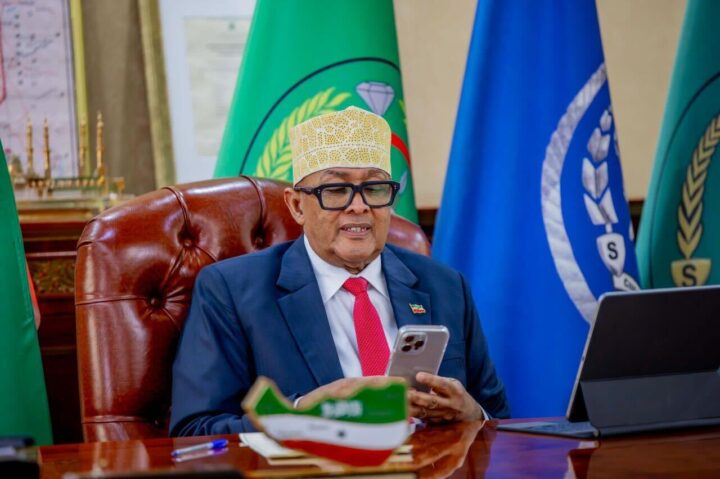
Amos Ben-Gershom (GPO)
Somaliland President Abdirahman Mohamed Abdullah speaks to Israel Prime Minister Benjamin Netanyahu, Dec. 26, 2025
Israel’s recognition of Somaliland has stirred unease across parts of the Arab and Muslim world, challenging regional power dynamics as Jerusalem moves first in a strategically sensitive corner of the Horn of Africa.
Israel became the first country to recognize Somaliland on Friday, 34 years after the democratic, pro-Western state declared its independence from Somalia. The move puts Israel at odds with a number of Arab and Muslim nations including Qatar, a major power broker in Somalia and a key mediator in regional conflicts, at a time when Washington is seeking to expand the Abraham Accords and manage competing Arab interests in the Horn of Africa.
Israeli Prime Minister Benjamin Netanyahu and Foreign Minister Gideon Sa’ar signed a document establishing full diplomatic relations between the countries which affirms that they have “shared values, strategic interests and the spirit of mutual respect that binds our peoples,” and that “this relationship will contribute to advancing peace, stability, and prosperity in the Horn of Africa, the Middle East and beyond.”
The Prime Minister’s Office described the recognition as being “in the spirit of the Abraham Accords, signed at the initiative of President [Donald] Trump,” and Netanyahu told Somaliland President Abdirahman Mohamed Abdullahi that he would “communicate to President Trump your willingness and desire to join the Abraham Accords.”
However, Trump has largely dismissed the idea that the U.S. would follow suit at this juncture, saying it is “under study.”
“Does anyone know what Somaliland is, really?” Trump told The New York Post.
Somalia is a member of the Arab League, joining in 1974 as the first non-Arab nation due to strong cultural, religious and historical ties. Somalia also holds a crucial geopolitical location for global trade.
Somalia has served as a proxy battleground for broader regional power struggles, with influential Middle Eastern states supporting different factions and projects.
Qatar has sought to establish itself as a dominant influence and key mediator in Somalia, supporting the central government and pouring resources into the country for over a decade.
“Want another reason to back Somaliland? Qatar — the Muslim Brotherhood’s biggest bankroller — backs the other side,” Foundation for Defense of Democracies CEO Mark Dubowitz said.
On Saturday, the Qatari government released a statement rejecting “the announcement of mutual recognition between the Israeli occupation authorities and the Somaliland region,” and “any attempts aimed at establishing or imposing parallel entities that would undermine the unity of Somalia.” Doha also said in the statement that it would be “more appropriate” for the Jewish state to “recognize the State of Palestine.”
Qatar also released a statement with 21 Arab and Muslim countries — including Jordan, Egypt, Iran, Pakistan and “the State of Palestine” — “stressing their unequivocal rejection of Israel’s recognition of the Somaliland region.”
Recognizing Somaliland is also a way of positioning Israel against Qatar, as Foundation for Defense of Democracies CEO Mark Dubowitz pointed out: “Want another reason to back Somaliland? Qatar — the Muslim Brotherhood’s biggest bankroller — backs the other side.”
An official Somaliland X account posted that “Doha has no business meddling in Somaliland’s affairs while bankrolling Muslim Brotherhood proxies to prop up Mogadishu’s failed regime. … Foreign powers parroting Mogadishu’s line can shove their hypocrisy. Our future is ours—not dictated by Qatar’s Islamist agenda.”
Egypt and Turkey, both close allies of Somalia, have also condemned Israel’s recognition of Somaliland. Saudi Arabia, a country that holds a more moderate posture toward the Jewish state but has expressed reticence to establish relations with it, is reportedly less likely to normalize ties with Israel due to the recognition of Somaliland, according to Israel’s Channel 12.
The UAE, in contrast, has nurtured a close relationship with Somaliland, a factor that may have encouraged Jerusalem in its move to recognize the African state, though Abu Dhabi has not yet recognized Somaliland, Asher Lubotzky, a researcher at the Israel-Africa Relations Institute, wrote.
Sa’ar said in a statement that relations between the two countries grew over the course of the last year, and that they will exchange ambassadors and open embassies. Israel and Somaliland also plan to cooperate in the fields of agriculture, health and technology, the Prime Minister’s Office stated.
Israeli and Somaliland officials have reportedly held secret meetings over the course of the past several months. The president of Somaliland has met with Netanyahu and Sa’ar, as well as Israeli Defense Minister Israel Katz, and Netanyahu invited him for another visit.
“Somaliland could serve as a forward base for a range of missions,” Asher Lubotzky, a researcher at the Israel-Africa Relations Institute, wrote in a paper published last month, “intelligence collection and monitoring of the Houthis and their military buildup; logistical support for Yemen’s internationally recognized government in its war against the Houthis; and direct operations, from offensive actions to intercepting Houthi attacks at sea or by UAVs.”
In a paper published by Tel Aviv University’s Institute for National Security Studies a month before Israel recognized Somaliland, Lubotzky wrote that the African state’s “security importance for Israel has become even more pronounced over the past two years.”
Somaliland is strategically located for Israel, across the Gulf of Aden from parts of Yemen controlled by the Houthis, who have frequently attacked Israel over the past two years.
“Somaliland could serve as a forward base for a range of missions,” Lubotzky wrote, “intelligence collection and monitoring of the Houthis and their military buildup; logistical support for Yemen’s internationally recognized government in its war against the Houthis; and direct operations, from offensive actions to intercepting Houthi attacks at sea or by UAVs.”
The growing number of countries recognizing a Palestinian state also may have curbed Israel’s former reluctance to recognize secessionist states out of a concern that it could set a precedent for supporting Palestinian statehood, Lubotzky noted.
Earlier this year, reports indicated that Somaliland could be open to accepting Palestinian refugees from Gaza, as President Donald Trump expressed support for relocation from the enclave to enable reconstruction efforts. Recent reports suggest this idea has resurfaced and may factor into any emerging arrangement between Israel and Somaliland.
The European Union released a statement that it “reaffirms the importance of respecting the unity, the sovereignty and the territorial integrity of the Federal Republic of Somalia … This is key for the peace and stability of the entire Horn of Africa region.”
The African Union has declined to formally recognize Somaliland in the past, citing concerns that doing so could set a precedent for secession across the continent and trigger wider instability.
At the event, a Muslim spiritual leader delivered an antisemitic tirade and expressed disgust to be in the same room with Jews
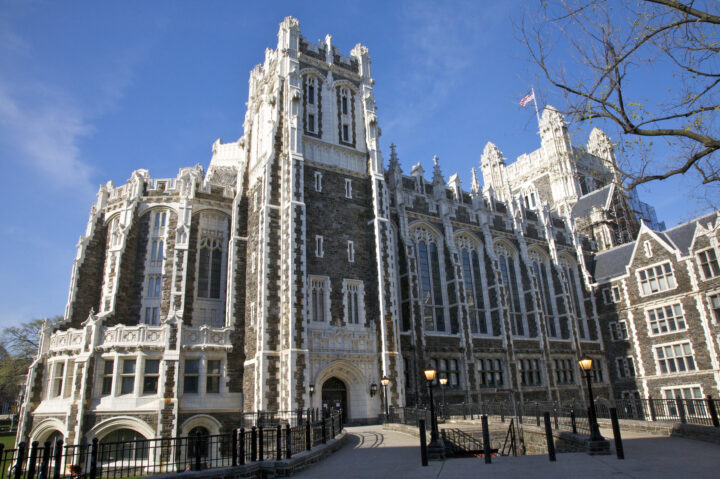
Getty Images
Shepard Hall, City College of the City University of New York (CCNY), Harlem, Washington Heights, New York, NY, USA
The City College of New York is facing scrutiny after a Muslim spiritual leader delivered an antisemitic tirade against a CUNY Hillel director during a university-sponsored interfaith dialogue program last week.
The panel featured CUNY Student Chaplain Joshua Medina; Muslim spiritual leader Abdullah Mady, a 2024 graduate of CCNY; and Ilya Bratman, executive director of Hillel at Baruch College, who became the focus of Mady’s hostile remarks, including an accusation that he is “responsible for the murder of his brothers in Gaza” and “disgust that a Zionist is here.”
Mady’s remarks were condemned on Wednesday by the U.S. Department of Justice and New York Gov. Kathy Hochul, who called it “antisemitism, plain and simple” in a post on X. But the university has not issued a public statement regarding the event, which was held last Thursday, nearly a week ago, and organized by CCNY Division of Student Affairs and Student Life and Leadership Development Office. An Instagram flier advertising the event did not include names of the speakers.
After several requests for comment from Jewish Insider, a university spokesperson said on Wednesday that the school “has zero tolerance for acts of hate or bigotry of any kind” and would “promptly take all necessary and appropriate actions to address any such discrimination and remedy its effects,” but did not respond to further questions, including the name of the Muslim speaker, which JI was able to confirm through sources familiar with the event. The school’s spokesperson also didn’t disclose whether there was any vetting process in the speaker selection.
Miriam Elman, executive director of the Academic Engagement Network, which works to fight campus antisemitism, told JI that the event was particularly egregious because it was hosted by an office of the university, rather than a campus student group.
“Universities can’t always control what comes out of a speaker’s mouth, but a university can distance itself from a guest speaker,” said Elman. “Here you have the university actually implicated in hosting the event. Why was it allowed to proceed with the speaker continuing to harangue and harass with his remarks? Why was that not handled better in the moment?”
“The university should have stood up and removed the offending speaker, but they didn’t do that, and then there’s no acknowledgement of what happened. It’s a pile-on of errors.”
“Speakers come and go but the issue is how university leadership responds,” Elman continued. “They should have immediately released a statement saying they were appalled. The process of this [is problematic] — the university didn’t want to share a name, didn’t want to admit this happened.”
The choice to hide speaker names comes as the interfaith event also drew confusion around its attendance — with only two Jewish students taking part alongside nearly 100 Muslim students.
Bratman, a faculty member of AEN who said he was unaware of Mady’s name during the panel, said the low turnout of Jewish students was due to another event at the university taking place at the same time to mark the anniversary of Kristallnacht.
“But why would you not ensure a diverse community of listeners?” said Elman. “This was supposed to be an interfaith workshop where people came together. It’s a shocking outcome for an event that should have been bringing people together.”
According to an audio recording obtained by JI, Mady told attendees he “came to this event not knowing that I would be sitting next to a Zionist and this is something that I am not going to accept,” he said, referring to Bratman.
“My people are being killed right now,” Mady continued, as he went on to urge students, “If you are a good Muslim, I ask you to exit this room immediately.” According to Bratman, all of the 100 Muslim students in attendance, most wearing keffiyehs, cheered, stood up and exited the event at Mady’s instruction, before the other panelists spoke. The other attendees — about 20 Christians and two Jews, remained. Eventually, Bratman was escorted out by campus security as a safety precaution.
Mady, who graduated in the spring with an undergraduate psychology degree from CCNY, was featured as an exemplary student on the university’s “Masters in Translational Medicine” Instagram page in May.
Mady’s antisemitic statements came after he delivered a 15-minute speech at the start of the event, telling students that Allah was responsible for their grades. He also chanted Arabic prayers and spoke in support of Sharia law, arguing that its severe penalties — including executions for major crimes and amputating “the tips of the hands of a thief” — serve as effective deterrents. “I’m talking about the elite, the filthy rich — those who continue to steal from people today,” he said. “They’re the ones who deserve to have their tips cut off.”
“That’s how interfaith goes at CCNY,” a student who remained in the room can be heard saying in the recording as Muslim students walked out at Mady’s request.
The incident was “not only exclusionary and scary,” Bratman told JI, “but leads to a climate that is antithetical to any kind of education or growth.”
“I am not a victim in this, I have no fear. The victims are the students of this university, and maybe the Muslim students even more than the Jewish students,” he said.
The New Jersey GOP gubernatorial nominee was honored at the Muslims 4 Jack event alongside Ibrar Nadeem
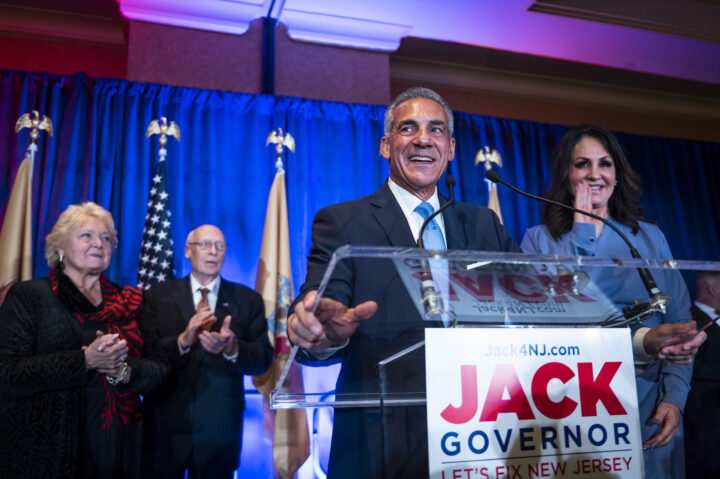
Mark Kauzlarich/Bloomberg via Getty Images
Jack Ciattarelli, Republican candidate for governor of New Jersey, speaks during an election night event in Bridgewater Township, N.J. on Wednesday, Nov. 3, 2021.
Ibrar Nadeem, a Muslim affairs advisor to New Jersey gubernatorial candidate Jack Ciattarelli, bragged that he wasn’t taking money from Jews at a campaign event last weekend organized by a group called Muslims 4 Jack.
Ciattarelli, the Republican nominee, appeared alongside Nadeem on Saturday evening at the event, held in Piscataway, N.J, where he called Nadeem one of his closest advisors. At the event, Nadeem alleged some Muslims in his community had accused him of “taking money from Jews” to support Ciattarelli, which he pointedly denied.
An invitation to the event, which described the gathering as a “community dinner honoring” the GOP gubernatorial hopeful, listed Nadeem’s official title as “executive director” of “New Jersey – Muslim relations.”
“Every time I got tired, people from my community — when I was blamed that — somebody said ‘You are taking money from Jews.’ I said, ‘I check my bank account every day, brother, it is not there,’” Nadeem told the crowd, after also having made remarks against same-sex marriage.
Rep. Mikie Sherrill (D-NJ), the state’s Democratic nominee for governor, criticized Ciattarelli in a social media post on Monday for not condemning Nadeem’s comments at the event.
“This blatant antisemitism is coming from a member of Jack’s inner circle. Jack could have condemned it but instead sang his praises. Absolutely disgraceful,” Sherrill wrote.
Reached for comment, a spokesperson for Ciattarelli’s campaign referred Jewish Insider to a post by Ciattarelli on X explaining Nadeem’s remarks and attacking Sherrill for her refusal to weigh in on the New York City mayoral race against Democratic nominee Zohran Mamdani.
“Do you ever get tired of lying @MikieSherrill? You know I support same sex marriage,” Ciattarelli wrote on X on Monday night. “You also know the full clip of Dr. Nadeem’s remarks are clear: He was talking about the grief he gets from some BECAUSE of my unwavering support for the Jewish community and Israel and his own efforts to build bridges between Muslim and non-Muslim communities.”
Nadeem defended his support of Ciattarelli’s candidacy during his remarks on Saturday, arguing that an embrace of his campaign could ensure that the Muslim community could have “a seat at the table” if he were elected.
“We want to have a seat at the table. We want to be in those rooms where decisions will be made. I do not necessarily mean me,” Nadeem explained, adding that he planned to collect resumes from some attendees in the room to recommend for positions in Ciattarelli’s potential administration. Nadeem also noted that he “wants to have a ban on same-sex marriage” in New Jersey.
In remarks delivered shortly after Nadeem’s speech, Ciattarelli embraced the local Arab leader as a close confidante without condemning his comments about Jews.
“Dr. Ibrar Nadeem: Just once, I wish you would say what’s exactly on your mind,” Ciattarelli said, prompting laughter from the crowd. The gubernatorial nominee went on to call for a round of applause for Nadeem to thank him for his political engagement.
“I am the first [Republican] gubernatorial candidate in history that has a Muslim as part of his inner circle of advisors, and that advisor is Dr. Ibrar Nadeem,” he later added.
Ciattarelli then detailed how he and Nadeem, whom he described as a “very, very impressive man,” were first introduced in February. “He said to me, eight months ago, ‘I am going to help you be the next governor of New Jersey,’ and that man hasn’t let me down one day since that very day,” Ciattarelli said of Nadeem.
Ciattarelli posted about the event on Sunday, writing on Instagram alongside several photos that featured Nadeem that it was “great to be in Piscataway last night for a Meet & Greet with members of New Jersey’s thriving Muslim community. Our state is built on respect for all faiths and traditions, and I remain committed to being a Governor for every New Jerseyan — ensuring every voice is heard and every family feels welcome.”
Please log in if you already have a subscription, or subscribe to access the latest updates.
 Continue with Google
 Continue with Apple