























The president said Netanyahu must be ‘more responsible’ on Lebanon and suggested Israel step back and let Syria confront Hezbollah

SAUL LOEB/AFP via Getty Images
President Donald Trump shakes hands with Israeli Prime Minister Benjamin Netanyahu during a meeting in the Oval Office of the White House in Washington, DC, on April 7, 2025.


 Add JewishInsider on Google
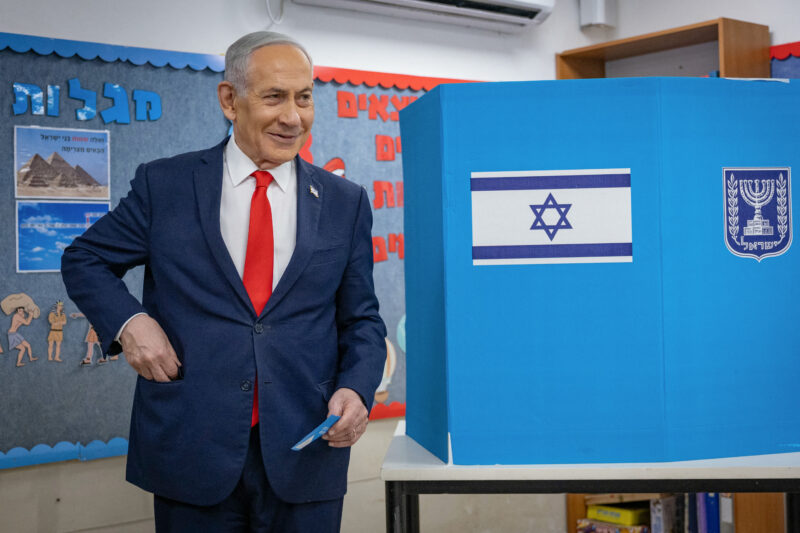
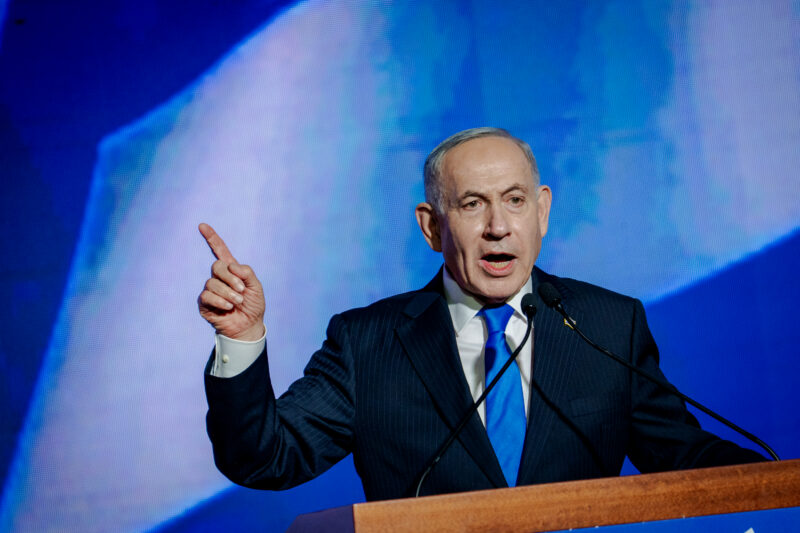
President Donald Trump expressed disappointment on Tuesday with Israel’s recent military actions in response to Hezbollah, criticizing a strike on a Hezbollah stronghold in Beirut as “vicious” and suggesting that Israel step back and let Syria handle the fight against the Iranian-backed terror group.
Speaking with the Qatari emir Sheikh Tamim bin Hamad Al Thani on the sidelines of the G7 summit in France, Trump criticized Israeli Prime Minister Benjamin Netanyahu’s handling of Israel’s northern front, suggesting that the IDF’s response was unnecessary and disproportionate.
“I didn’t like that he [Netanyahu] did an attack based on … a very minor little thing with some drones that were released,” Trump said, referring to a Hezbollah drone strike on northern Israeli communities on Sunday. “I saw that [Israeli] attack, I saw where that bomb went. That was vicious, that was too much.”
While Trump emphasized that he maintains an “unbelievable” and “great” relationship with Netanyahu, he insisted that the Israeli leader must exercise more restraint.
“Bibi has to be more responsible with respect to Lebanon,” Trump said. “I’m not happy with the way Israel has handled themselves with Lebanon and Hezbollah. They should have been able to do the job faster.”
“You don’t have to knock down an apartment house every time you’re looking for somebody, because there are a lot of people in those apartment houses and they’re not all Hezbollah,” he added.
The president added that the protracted fighting “goes on forever” and threatens to cast a “negative light” on the newly announced memorandum of understanding between the U.S. and Iran.
Despite ongoing Hezbollah attacks targeting northern Israel, Trump proposed that Israel step back and let the government in Syria confront the group.
“I suggested to Israel to let Syria take care of Hezbollah, because to be honest with you, I think they do a better job of doing it,” Trump said.
The diplomatic fallout highlights a growing disconnect over the parameters of the broader regional agreement. Senior U.S. officials confirmed that an Israeli military withdrawal from southern Lebanon is not a condition of the U.S.-Iran MOU, a position firmly backed by Netanyahu, who insists such a provision should not apply to Jerusalem.
However, Hezbollah’s media relations office claimed on Tuesday that the group received explicit assurances from Tehran that Iran would refuse to sign a final, permanent nuclear deal with Washington unless Israeli forces completely withdraw from Lebanese territory.
Trump also noted that he intends to submit any final agreement aimed at ending the war with Iran and restarting formal nuclear negotiations to Congress for review.
In an interview with JI, Sen. Lindsey Graham said Israel is ‘the most tolerant place in the region’ but must be careful to ‘maintain support’ in the U.S.

Amir Levy/Getty Images
Senator Lindsey Graham (R-SC) speaks at a press conference on US-Israel relations on February 17, 2025 at the Kempinski Hotel in Tel Aviv, Israel.
Sen. Lindsey Graham (R-SC) said that future military actions by Israel must be “conducted in a way to maintain support here at home” amid GOP backlash to the Jewish state’s most recent operations in Syria and the strike that killed three at a Catholic church in Gaza.
Speaking to Jewish Insider from the Capitol on Tuesday, Graham warned that Christians in the West Bank must not face the same fate as other Middle Eastern Christian communities, including in Syria, where as many as 1,000 Christians were killed between the fall of former Syrian leader Bashar al-Assad in November and March of this year under the new Syrian government.
“Support for Christians throughout the region is eroded, and we need to make sure that doesn’t happen in the West Bank,” Graham told JI when asked how Israel had handled the backlash against its recent military actions in Gaza, last week’s fatal strike on the Holy Family Catholic Church, the only Catholic church in Gaza, and reports of an arson attack in the area of the fifth-century Church of St. George in the West Bank town of Taybeh — which an Israeli police probe found to be unfounded, stating that the fire had been “in an adjacent open area, with no buildings, no crops, and no infrastructure of the site damaged.”
“I think it’s very important for us to stand up for Americans wherever they’re at, minority faiths, particularly the Christian faith. As to Israel, it is the most tolerant place in the region for minorities. They’re in a war for their lives, but we’ve got to make sure that the war is conducted in a way to maintain support here at home,” he continued.
His comments reflect recent unease within the Trump administration over Israel’s latest military actions. U.S. Ambassador to Israel Mike Huckabee visited the Church of St. George on Saturday, where he decried the attack as an “act of terror” and demanded “harsh consequences” for the perpetrators, while White House Press Secretary Karoline Leavitt said on Monday that President Donald Trump was “caught off guard” by the moves.
The strike on the church in Gaza killed three and injured 10, including a priest. Following a conversation between Trump and Israeli Prime Minister Benjamin Netanyahu, the latter publicly apologized and vowed to investigate what his office described in a statement as “stray ammunition” hitting the house of worship.
The South Carolina senator added that the Taybeh fire and the killing of 20-year-old Palestinian American Saifullah Musallet in the West Bank earlier this month, which the IDF is investigating as possibly being perpetrated by Israeli settlers, should be prosecuted to the fullest extent of the law.
“The attempted arson, whatever you want to call it, I don’t know who did it but I’m glad the church was saved. The Israeli police said that no damage was done. Just keep looking. The 20-year-old Palestinian American, keep investigating,” Graham said, going on to praise Netanyahu’s decision to call Pope Leo XIV after the church attack in Gaza.
Graham emphasized his continued support for Israel, which he argued should be differentiated as a state and a people from individual or small groups of Israelis committing acts of violence in the West Bank.
“There may be some rogue settlers, but they are not Israel. I think Israel, through its very founding, has demonstrated religious tolerance better than any country in the region, and, quite frankly, Israel is about as good as any place in the world. Do you have some aggressive settlers? Maybe so, I don’t know, but I’m not going to judge an entire country by some people,” Graham said.
“The issue is not whether Israel has abandoned Christians. It’s whether or not the damage that’s been done to the Christian community, will those responsible be held accountable?” he asked.
Graham said he hoped to be helpful to both sides as daylight between the White House and Netanyahu over Israel’s actions in Syria entered public view, explaining that he was amenable to the points of view of the Trump administration and the Israelis.
“As to Israel, their security concerns in Syria are legitimate. They’re very important to me, but I also want to help the president with his efforts to integrate the country. So there’s some tension, and I hope we can clear it up,” he said.
He explained that finding out which parties were responsible for the recent attacks on Druze minorities in the war-torn country was a critical next step, and would help establish whether the U.S. needs to reimpose sanctions on Syria.
“It has been the policy of the Trump administration to lift sanctions and give [Syrian leader Abu Mohammed al] Jolani a chance. This fight between the Druze and the Bedouins, what role did the Syrian army play? I don’t know. Israel has been making the argument that the Syrian regular army forces were part of the massacre, that’s very important to me. If that proves to be the case, we’ll reimpose sanctions. If it proves not to be the case, then I want to know that also,” Graham said.
“What role did the Syrian army regime forces play in all this and how much control do they have of this coalition that they formed? That, to me, is the most important question. Is Syria under the command and control of the government? If it’s not, what factions are outside their control? And let’s try to fix it,” he continued.
Please log in if you already have a subscription, or subscribe to access the latest updates.
 Continue with Google

 Continue with Apple