








































































Republicans look like they won’t gain more than several seats in a realistic redistricting scenario — which is far from the insurance they’d need to sustain a tough midterm election performance
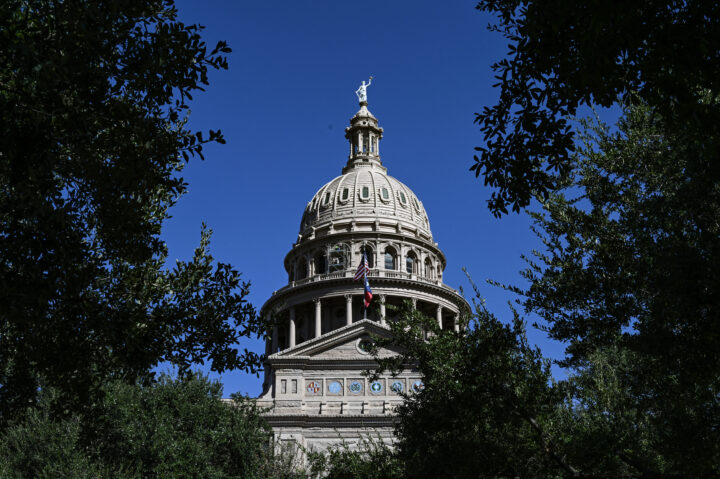
RONALDO SCHEMIDT/AFP via Getty Images
Outside view of the Texas State Capitol, in Austin, on November 5, 2025.


 Add JewishInsider on Google
Beware the law of unintended consequences: President Donald Trump’s zeal to aggressively redraw maps in GOP-friendly states is looking like it will bring less of a political advantage to Republicans than originally expected.
Indeed, if the overall political environment remains in the Democrats’ favor — which would be consistent with the historical precedent of the opposition party gaining seats in the first midterm election of a new president — the House is likely to flip back to the Democrats’ control in 2027.
Here’s the lowdown: California’s referendum on redistricting, which passed overwhelmingly on Election Day, will allow Democrats to gain as many as five seats with a new, more-partisan map — with three Republican-held seats (of GOP Reps. Doug LaMalfa, Kevin Kiley and Ken Calvert) all but guaranteed to flip.
That should offset the expected GOP gains in Texas, which started the whole redistricting gamesmanship off with a partisan redraw that guarantees Republicans to pick up at least three Democratic-held seats, with the hope that Republicans can win two additional seats that became more favorable to them.
But there’s a catch with the Texas map. Two of the redrawn districts — the seats of Democratic Reps. Vicente Gonzalez and Henry Cuellar — are in predominantly Hispanic areas along the U.S.-Mexico border that swung dramatically to Trump in 2024, but had a long tradition of voting Democratic before then. If Democrats rebound with Hispanic voters — as happened in New Jersey and Virginia on Election Day — and the national environment remains rough for Republicans, it’s not hard to see the two Democratic incumbents hanging on.
Adding another wrinkle to the GOP’s redistricting plans: A Utah judge rejected the preferred map drawn by Republican state lawmakers, and selected a new map that would guarantee a Democratic district in Salt Lake City. That would automatically flip one seat to the Democrats, given that the state’s current delegation is made up of four Republicans, all in solidly Republican districts.
Republicans managed to secure an additional seat for their party in Missouri — eliminating the solidly Democratic Kansas City-area seat of Rep. Emanuel Cleaver (D-MO), but that’s about it when it comes to automatic pickups.
The GOP’s partisan redraw in North Carolina means they will be favored to win Rep. Don Davis’ (D-NC) seat, but it’s not a fait accompli. And new lines in Ohio give Republicans a better shot to unseat Reps. Marcy Kaptur (D-OH) and Greg Landsman (D-OH) but those Democratic lawmakers will still have a good chance to win reelection.
As the Cook Political Report’s David Wasserman put it, Republicans would only gain between 0-1 seats as the maps stand now, with Florida, Indiana and Virginia the remaining wild cards.
In theory, Republicans could squeeze several additional seats in Florida, but like in Texas, would risk making some Republicans more vulnerable in an overly aggressive gerrymander. Meanwhile, if partisans overcome logistical hurdles in GOP-controlled Indiana and Democratic-controlled Virginia to gain seats, they would balance each other out.
All told, Republicans look like they won’t gain more than several seats in a realistic redistricting scenario — which is far from the insurance they’d need to sustain a tough midterm election performance.
Right now, Democrats only need to flip three seats to win back the House majority. Redistricting won’t be enough for Republicans to hold the line if there’s even a mild headwind at the Democrats’ back next year.
Please log in if you already have a subscription, or subscribe to access the latest updates.
 Continue with Google
 Continue with Apple