













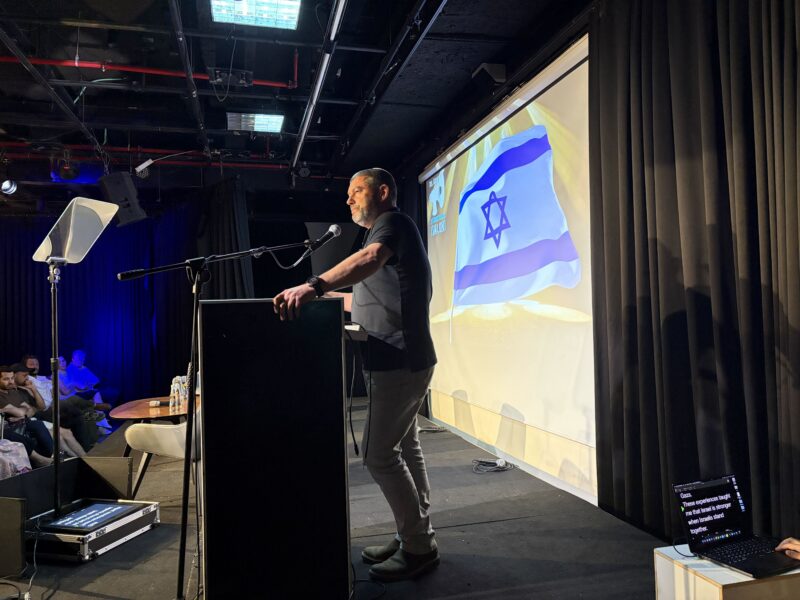













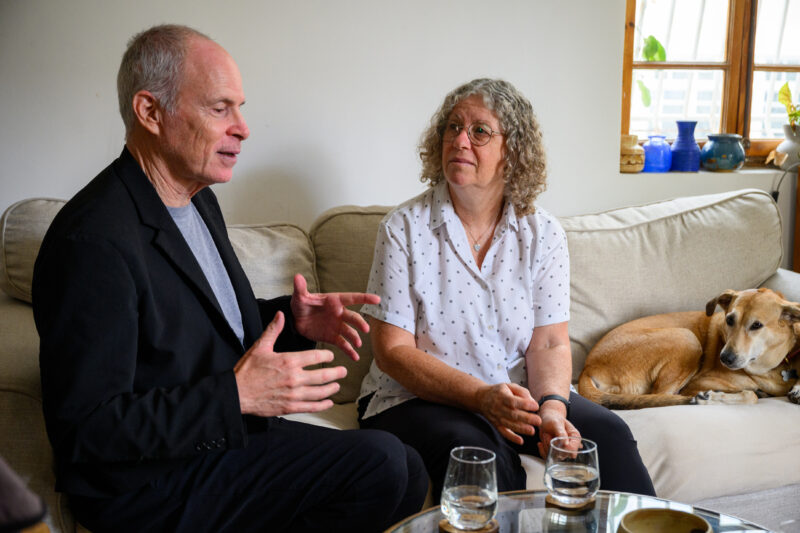











Professor Eric Cheyfitz, who is Jewish, has been involved with Students for Justice in Palestine and was a faculty advisor to the school’s Jewish Voice for Peace chapter

Matt Burkhartt/Getty Images
A man walks through the Cornell University campus on November 3, 2023 in Ithaca, New York.


 Add JewishInsider on Google
Cornell University placed a professor with a history of anti-Israel activism on leave this week following his attempt to exclude an Israeli student from participating in his course on Gaza, Jewish Insider has learned.
A Cornell spokesperson told JI that “a complaint was filed” against Eric Cheyfitz, a professor of American studies and humane letters, “who admitted to actions that violated federal civil rights laws and fell short of the university’s expectations for student interactions.”
“Based on the findings of this investigation, the faculty member is not teaching this semester and significant disciplinary action is being recommended,” the spokesperson said. A source familiar with the course told JI that Cheyfitz informed the Israeli student that he was not welcome in the class. Cheyfitz did not respond to a request for comment from JI.
Cheyfitz, who is Jewish, was previously involved with Cornell’s Students for Justice in Palestine chapter and has served as a faculty advisor to the campus chapter of Jewish Voice for Peace. He began teaching the course, titled “Gaza, Indigeneity, Resistance,” last spring semester.
The course description states that the class aims to teach students how to “analyze Indigenous perspectives on political, social, and environmental systems,” in the context of a “global war against an ongoing colonialism,” as well as explore themes such as “Indigeneity,” “Resistance,” “SettlerColonialism,” and “Genocide” in both “international law and Indigenous contexts.”
Three weeks after the Oct. 7, 2023 attacks in Israel, Cheyfitz also offered a “teach-in” titled “Gaza, Settler Colonialism, and the Global War Against Indigenous People.”
In May, Cornell President Michael Kotlikoff objected to the course. “Cornell courses should provoke thought and present multiple viewpoints, rather than transmit pre-formed views of a complex conflict, and I personally find the course description to represent a radical, factually inaccurate, and biased view of the formation of the State of Israel and the ongoing conflict,” Kotlikoff wrote in an email to faculty member Menachem Rosensaft after he raised concerns about the class.
Rosensaft, an adjunct professor of law at Cornell Law School, told JI on Friday that he is confident Cornell administration is “doing everything in their power to see to it that no Cornell students, including Israeli and Jewish students, are discriminated against, harassed or otherwise abused.”
The disciplinary action against Cheyfitz comes as some have criticized Cornell for its decision to allow Professor Russell Rickford, who in 2023 called the Oct. 7 terrorist attacks “exhilarating” and “energizing,” to return to Cornell earlier this year as an associate professor of history following a leave of absence. In an interview with JI in March, Kotlikoff said Rickford was allowed back because his statements were “not in [the] classroom and we have no evidence of Professor Rickford doing anything in the classroom.”
Cornell’s ongoing talks with the Trump administration to restore hundreds of millions in federal funds that were cut over an alleged failure to address campus antisemitism are currently stalled.
At a Capitol Hill hearing, Georgetown’s president announced Brown was placed on leave after calling for Iran to conduct a ‘symbolic strike’ against a U.S. military base
Celal Gunes/Anadolu via Getty Images
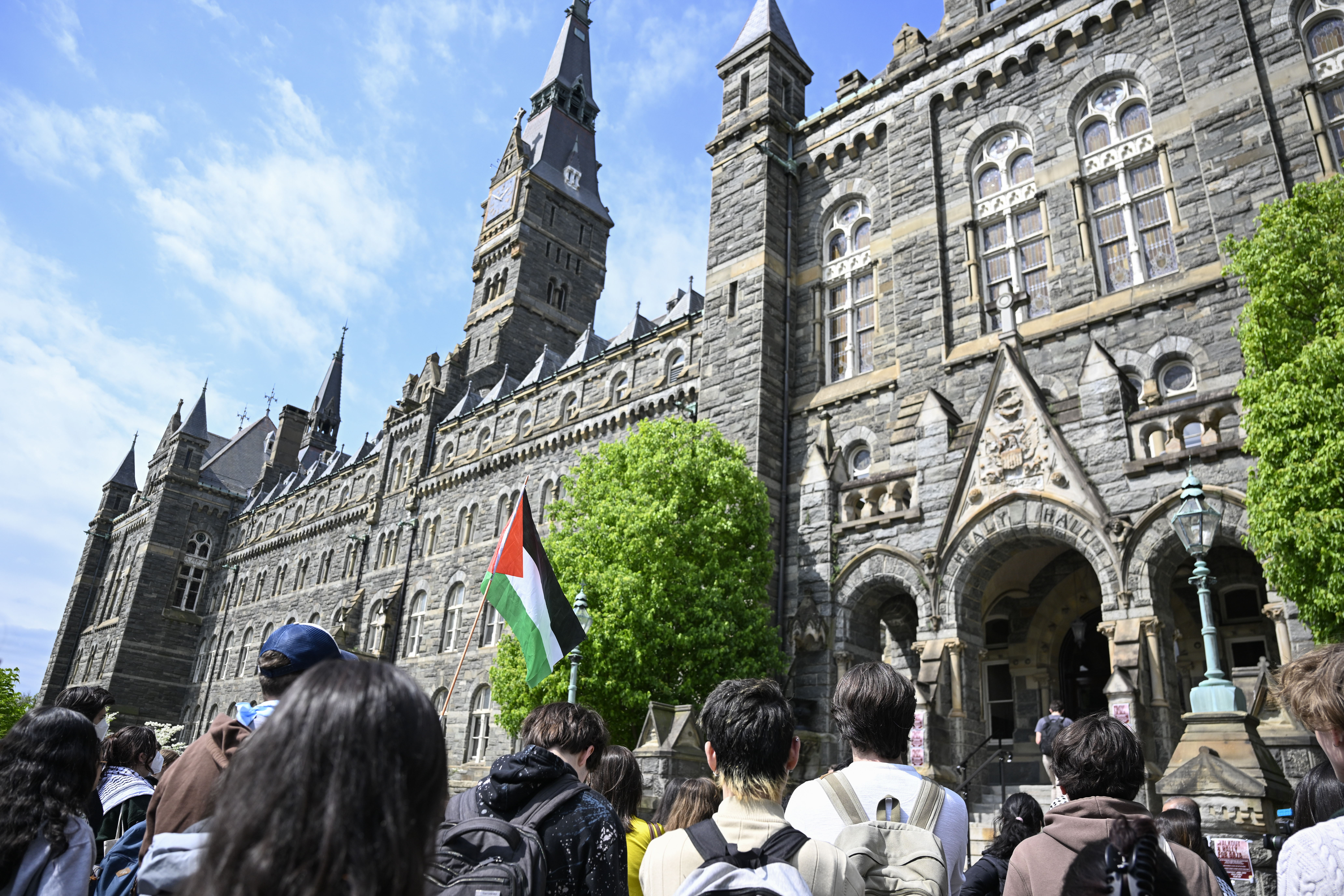
Georgetown University students take part in a campus protest against the Israel-Gaza war in Washington on April 25, 2024.
Jonathan Brown, a tenured Georgetown University professor who came under fire last month for a social media post in which he called for Iran to conduct a “symbolic strike” on a U.S. military base, has been placed on leave and removed as chair of the school’s Department of Arabic and Islamic Studies, Georgetown University interim President Robert M. Groves said Tuesday at a congressional hearing.
“Within minutes of our learning of that tweet, the dean contacted Professor Brown, the tweet was removed [and] we issued a statement condemning the tweet. Professor Brown is no longer chair of his department and he’s on leave, and we’re beginning a process of reviewing the case,” Groves said in response to a question from Rep. Virginia Foxx (R-NC) at a House Education and Workforce Committee hearing on campus antisemitism.
One day after the U.S. struck Iranian military targets in June, Brown posted on X: “I’m not an expert, but I assume Iran could still get a bomb easily. I hope Iran does some symbolic strike on a base, then everyone stops.”
Last month, a university spokesperson said that Georgetown administrators were reviewing Brown’s conduct and that Georgetown was “appalled” by his comments.
Brown, until recently the chair of the university’s Department of Arabic and Islamic Studies and Alwaleed bin Talal chair of Islamic civilization in the School of Foreign Service, has a lengthy history of anti-Israel commentary on social media.
A profile listing Brown as chair of Islamic civilization was still active on Georgetown’s website during the hearing.
Please log in if you already have a subscription, or subscribe to access the latest updates.
 Continue with Google
 Continue with Apple