














































































Many of the attendees at Temple Emanuel who listened to the congressman defend his position appeared critical of the stance he’d taken and unconvinced by his explanation, Jewish constituents said
Rep. Jake Auchincloss
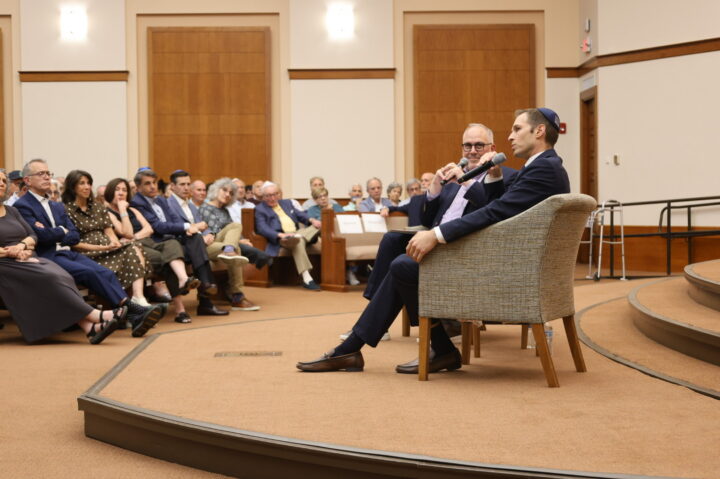
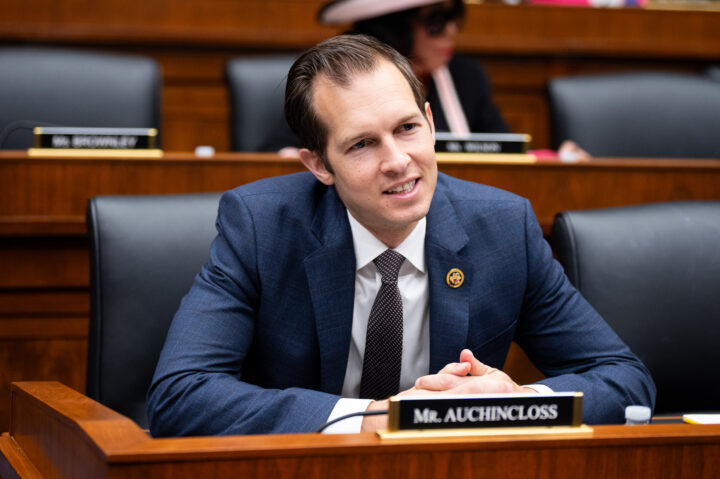
Rep. Jake Auchincloss (D-MA) appeared in conversation with Jeremy Burton, the CEO of the Jewish Community Relations Council of Greater Boston, at Temple Emanuel in Newton, Mass., July 27, 2026.


 Add JewishInsider on Google
Rep. Jake Auchincloss (D-MA) appeared before a packed house of more than 700 Jewish constituents at a major Conservative synagogue in the heart of his district on Monday evening, facing a barrage of questions from attendees skeptical over his vote to cut U.S. military aid to Israel.
Auchincloss appeared in conversation with Jeremy Burton, the CEO of the Jewish Community Relations Council of Greater Boston, at Temple Emanuel in Newton, Mass., before taking around two-dozen questions from the audience, attendees said.
Those in the audience said that most of the crowd was not supportive of Auchincloss’ vote and was not persuaded by his explanation, but most of those who spoke to Jewish Insider came away expecting that he’ll maintain significant Jewish community support and were appreciative of his engagement.
Auchincloss’s explanation for his vote, attendees said, was largely consistent with those he offered in statements and in an interview with Jewish Insider last week, that he viewed the vote as a way to block further taxpayer support for the Iran war he opposes. The congressman is expected to make similar appearances at other synagogues around the district in the coming weeks.
“I really think that there was worry and skepticism about the vote, about what it says about the future of support for Israel,” Barry Shrage, the longtime former president of the Combined Jewish Philanthropies of Greater Boston, the local Jewish federation, told JI.
He said that he and others in the crowd were concerned about the impact of the amendment on Israeli security. “A majority of people in that audience were very skeptical about what he did and worried about what he did.”
One attendee who requested anonymity to speak candidly estimated that between 70 and 80% of attendees opposed the stance Auchincloss had taken on the issue.
Auchincloss declined to comment.
Lisa Coll, a former board chair of Prizmah who said she’s known and supported Auchincloss for years, said she was “shocked and surprised and slightly hurt and a little angry,” having expected Auchincloss would vote against the amendment based on his pro-Israel record and the fact that the amendment was led by Rep. Thomas Massie (R-KY), an anti-Israel Republican who has a history of making antisemitic comments.
She said that Auchincloss offered a clear and reasoned explanation for his vote, but felt that he didn’t grasp the concerns in the Jewish community or why the community was so concerned. There’s “very much a lot of surprise and hurt going around,” Coll said.
Coll said that she emerged from the event still feeling the same shock and frustration with Auchincloss’s vote. “It was not an easy evening, it was a very uncomfortable evening for everyone,” Coll said. “Everyone was squirming at some point,” and attendees were “angry and sad.”
Lisa Danetz, who works as an expert and adviser in elections and voting rights, said that she felt, and remains, “conflicted” about Auchincloss’ vote and was surprised that Auchincloss supported the amendment, given his record. But she said she understood his reasoning.
“I ended up thinking, I’m not sure how I feel about this particular vote — but since the amendment didn’t pass and wasn’t going to pass, I didn’t feel like I was going to get too worked up about it and appreciated hearing the reasoning,” Danetz said.
“I think you have to respect him, he did what he thought was right,” she continued. “I don’t know if I agree with it or not. But overall I feel aligned with his underlying values.”
Coll said that she’s concerned that, as a Jewish member viewed as a serious, policy-oriented and pro-Israel lawmaker representing a large Jewish constituency, Auchincloss’s vote has the potential to influence and provide license for other members less engaged on the issue to take anti-Israel positions.
She said that Auchincloss did not share those concerns when she asked him a question on the subject. “I don’t think he is anti-Israel,” Coll said. “I don’t know if he is aware of what I perceive as the consequences of this vote.”
She said she also didn’t think Auchincloss fully understood the community’s concerns about how his vote and comments might perpetuate narratives framing the Iran war as “America fighting Netanyahu’s war” that have fueled antisemitism and antisemitic violence.
Shrage said that Auchincloss repeatedly emphasized that his vote was intended as a repudiation of the Iran war and of President Donald Trump and Israeli Prime Minister Benjamin Netanyahu — both unpopular figures in the district’s Jewish community.
“A bunch of people got up and said, ‘This actually threatens the people of Israel,’” Shrage said. He recounted that one woman said, “‘I have Israeli and American citizenship. I have family in Israel. Your vote endangered them.’ And of course she added … ‘I’ve demonstrated against both Netanyahu and Trump, I have no sympathy for them whatsoever.’”
According to Coll, another attendee, an Israeli-American woman, said that Auchincloss’s vote was punishing the people of Israel for the actions of Netanyahu, and questioned whether he would support other countries punishing Americans the same way over frustration with Trump. Coll said Auchincloss did not offer a clear answer to the question.
A small number of attendees offered thanks and support for Auchincloss’ position in their comments, according to attendees.
Michael Gardener, a prominent area attorney, said he came into the event without having made up his mind on the vote and wanting to know more, while noting that it was out of step with Auchincloss’s prior votes on Israel issues.
Coming out of the event, “I understood his position and I must say I agree with it,” Gardener said. He said that Auchincloss had made clear that he did not seek an arms embargo in Israel and wanted to allow it to continue buying American weapons, but felt that providing U.S. taxpayer money that would facilitate the Iran war was not appropriate at this juncture, “which I agree with.”
Gardener said that views in the room weren’t uniform, but acknowledged that a majority of attendees likely did not agree with Auchincloss “and at the end of the evening probably still didn’t,” but felt that everyone understood Auchincloss’ reasoning and respected him for coming to explain it.
Another attendee, who also requested anonymity to speak candidly, cast a mixed picture of the audience, emphasizing that views in the room were diverse and said that the “audience appreciated him coming out and sitting in the hot seat to answer all of their questions” and “that he gave a lot of thought to all the implications” of the vote.
But, the attendee added, every mainstream Jewish organization in the Boston area had had serious conversations with Auchincloss about the vote expressing a “unanimity of disappointment” with him about it and exploring what his approach to Israel will entail going forward.
Shrage said he’s skeptical of Auchincloss’ claims, repeated throughout the event, that the vote wasn’t motivated by politics, or concerns about shifting Democratic party trends on Israel. Auchincloss similarly denied to JI that the vote was motivated by political considerations.
But, in spite of the concerns he saw in the audience, Shrage said he doesn’t expect any major defections in Auchincloss’ Jewish support base or efforts to oust him from office, predicting that most will “hold their nose and vote for him.” Most of the Democratic party opposition to Auchincloss in the district has come from his left.
“I don’t think anybody’s going to be joining a move to to defeat him in any way, shape or form,” Shrage said. “As a congressman, he still has broad support, but there was a lot of fear, worry and anxiety in this audience about what that vote meant.”
Coll said she wants to maintain her relationship with Auchincloss, and said she believes he’s a “principled and good person” who “in his heart … is very pro-Israel [and] does understand the importance” of the U.S.-Israel relationship and preserving Israel’s security and qualitative military edge.
She predicted that some members of the community will rethink their past support for Auchincloss, but others will likely wait to assess future votes on Israel.
“I’m hoping that we can count on [Auchincloss] to continue his support for Israel in his other votes like he has in the past and I would encourage the congressman to reach out to his constituents more before votes like this to read the room,” Coll said.
Danetz also said that Auchincloss was clear in his remarks that he didn’t take this or any vote based on politics. Asked whether she believes that, she said, “I think he thinks that, I don’t know if that’s humanly possible. He came across as very authentic and honest and wanting to have dialogue and conversation and explain his thinking.”
“I trust in his honest conviction of Israel’s right to exist and in the need for defense and also in concern related to the current government of Israel, a concern I share,” she continued.
Attendees generally said they appreciated Auchincloss coming to address the community and explain his position, and praised Burton’s questioning and the leadership of and comments by the congregation’s rabbi.
“I really respected [Auchincloss] for coming to speak to people. … I thought it showed how important it is to him to engage with his constituents in the district and in understanding that people were upset about his vote and a desire to explain his thinking,” Danetz said. “It seemed to me that whether people agreed with him or not, it would be hard to walk out of there not at least understanding where he was coming from, or where he thought he was coming from.”
She said Auchincloss was clearly knowledgeable about the issue and explained his stance clearly, and that he’d been “emphatic” in his continued support for Israel’s existence and security.
Gardener said that the synagogue was as full as it traditionally is for high holiday services, highlighting the passion that the community has for the subject, which he said can only be a good thing for Israel and the Jewish population.
He said he thinks everyone in the room shares the same passion for Israel and support for its security as a Jewish and Democratic state and “I think the congressman feels the exact same way.”
But, he continued, “I think there are different viewpoints about how you get to that spot.”
Plus, Auchincloss on axing Israel aid

Win McNamee/Getty Images
President Donald Trump speaks during bilateral meeting at the Bestepe Presidential Compound, following his arrival to attend the annual NATO Summit on July 7, 2026 in Ankara, Turkey.
Good Friday morning.
In today’s Daily Kickoff, we talk to Rep. Jake Auchincloss about his vote in support of cutting U.S. aid to Israel, and report on yesterday’s attack in Manhattan in which a Jewish man was stabbed by an individual reportedly yelling “Allahu Akbar.” We cover President Donald Trump’s 11th-hour decision to link the just-signed civilian nuclear cooperation agreement with Saudi Arabia to Riyadh’s joining of the Abraham Accords, and report on the Trump administration’s withdrawal of its subpoena requesting information on Jewish staff at the University of Pennsylvania. Also in today’s Daily Kickoff: Alma Hernandez, Daryl Messinger, Tevi Troy and Dara Horn.
We have also launched a new on-demand Live Briefing that you can access throughout the day via our new app (on Apple and Android) and on our website.
Today’s Daily Kickoff was curated by JI Executive Editor Melissa Weiss and Israel Editor Tamara Zieve, with an assist from Danielle Cohen-Kanik. Have a tip? Email us here.
For less-distracted reading over the weekend, browse this week’s edition of The Weekly Print, a curated print-friendly PDF featuring a selection of recent Jewish Insider and eJewishPhilanthropy stories, including: Ed Miliband’s appointment as U.K. foreign secretary indicates tougher British policy toward Israel to come; Washington state’s Jewish Democrats fight for a place in a party they no longer recognize; and Bernie Sanders’ 2020 Jewish liaison says his old boss is promoting antisemitism. Print the latest edition here.
What We’re Watching
- We’ll be keeping a close eye over the weekend on the situation in the Middle East amid continued U.S. strikes on Iran and Iranian attacks across the region. President Donald Trump said last night that the U.S. would use frozen Iranian assets to pay for the damage caused to vessels transiting through the Strait of Hormuz that have come under attack by Iranian forces.
- The 125 members of the International Criminal Court are expected to vote today by secret ballot on whether to remove the body’s chief prosecutor, Karim Khan, over sexual misconduct allegations made against him by a former ICC subordinate. To oust Khan, 63 members — an absolute majority — will have to vote in favor. Khan had taken a leave of absence in May 2025 and was formally suspended by the court last month.
- The rescheduled White House Correspondents’ Dinner — postponed after the annual April event was interrupted by a gunman at the Washington Hilton — will be held tonight at the Waldorf Astoria (formerly the Trump International Hotel). Trump is expected to attend.
- In Maine tomorrow, Democratic delegates will gather in Bangor to formally select a candidate to challenge Sen. Susan Collins (R-ME) in November. Former state Sen. Troy Jackson is expected to handily win the nomination, which comes after former Senate candidate Graham Platner dropped his bid earlier this month.
What You Should Know
A QUICK WORD WITH JI’S GABBY DEUTCH AND JOSH KRAUSHAAR
President Donald Trump’s capture of the Republican Party did not happen at once, and was memorably met with resistance from some lawmakers who would later become his allies.
Many Republicans, during the rise of Trump, cast mostly party-line votes alongside the president and rarely spoke out publicly when they disagreed. But there were notable times when prominent party leaders used their political capital to stand up for their principles on key issues, such as then-Senate Majority Leader Mitch McConnell’s (R-KY) outspoken advocacy for Ukraine funding or Sen. Susan Collins’ (R-ME) decisive vote against repealing Obamacare.
There may be a similar political calculus at play for some typically pro-Israel Democrats, who are facing immense political pressure from loud activists in their party base to turn against the Jewish state. Nearly half of the House Democratic caucus voted to cut off aid to Israel last week, a record number that included 18 lawmakers who had previously been endorsed by AIPAC and were seen as strong allies of the U.S.-Israel relationship.
AIPAC cut off fundraising to their reelection campaigns after the vote, and how these lawmakers will position themselves on Israel policy going forward is now uncertain.
Not all of the Democrats who supported the amendment have adopted an anti-Israel worldview. Some said that they still support Israel, but wanted to make a statement, via a bill that was certain to fail, that they disagree with many recent actions of the Israeli government.
It’s also possible that some of them — especially those in districts where they face a credible primary threat from the left — took the vote to attempt to placate anti-Israel activists without making any real change in policy, like the Republicans who would offer an olive branch to their right-wing base by voting contrary to their longstanding beliefs.
DEM DEBATE

Of the 103 House Democrats who voted to cut off the $3.3 billion in U.S. aid to Israel last week, few came as more of a surprise than Rep. Jake Auchincloss (D-MA), a Jewish Democrat who has generally been a reliable pro-Israel vote in the House. Auchincloss, in an interview with Jewish Insider’s Marc Rod this week, said that he approached the vote as a protest of the war with Iran, and argued that the vote wasn’t anti-Israel.
War worries: “This president, in conjunction with Prime Minister [Benjamin] Netanyahu, has launched an illegal, catastrophic war that nine out of 10 Israelis think has led to Iranian gains, and that even fewer of my constituents support,” Auchincloss said. “And foreign military financing is a form of appropriations for a war I believe to be illegal and unwise.”
NEW YORK ATTACK

A Jewish man was stabbed on Thursday afternoon on Manhattan’s Upper West Side, along with one other victim, in what was potentially a hate crime, Jewish Insider’s Will Bredderman and Haley Cohen report. Jewish groups had warned a day earlier that a video released by New York City Mayor Zohran Mamdani on Tuesday night railing against Israeli Prime Minister Benjamin Netanyahu, in which he accused Israel of a litany of war crimes, put Jewish New Yorkers at risk.
Details: The NYPD press office told JI that police responded at 1:31 p.m. to a 911 call near West 84th Street and Central Park West and found a 57-year-old man conscious and alert with a stab wound to the back before attacking a second victim, who was not believed to be Jewish, two blocks away. NYPD Commissioner Jessica Tisch wrote on X, “Detectives are continuing to work the case and determine motive, but according to victim and witness statements, [the suspect] yelled ‘Allahu Akbar’ during both attacks.”
Bonus: The New York Times reports that Mamdani had already consulted with attorneys over Netanyahu’s potential arrest — who determined that Mamdani lacked the authority to order the Israeli leader’s arrest — prior to the mayor’s public comments that he was in “active conversation” over the legality of such a move.
U-TURN

The Trump administration withdrew its controversial subpoena requesting that the University of Pennsylvania provide lists of Jewish university affiliates and their personal contact information, according to a Thursday court filing, Jewish Insider’s Haley Cohen reports.
University statement: “With the support of many members of the community who have stood with Penn throughout, the University has been able to protect its employees’ rights and none of the subpoenaed personal contact information was disclosed,” a university spokesperson told JI. The Equal Employment Opportunity Commission had requested, as part of its investigation into antisemitism at Penn, lists of Jewish-related organizations on campus, their membership rosters and contact information for the employees involved, among other information.
TUCSON TUSSLE
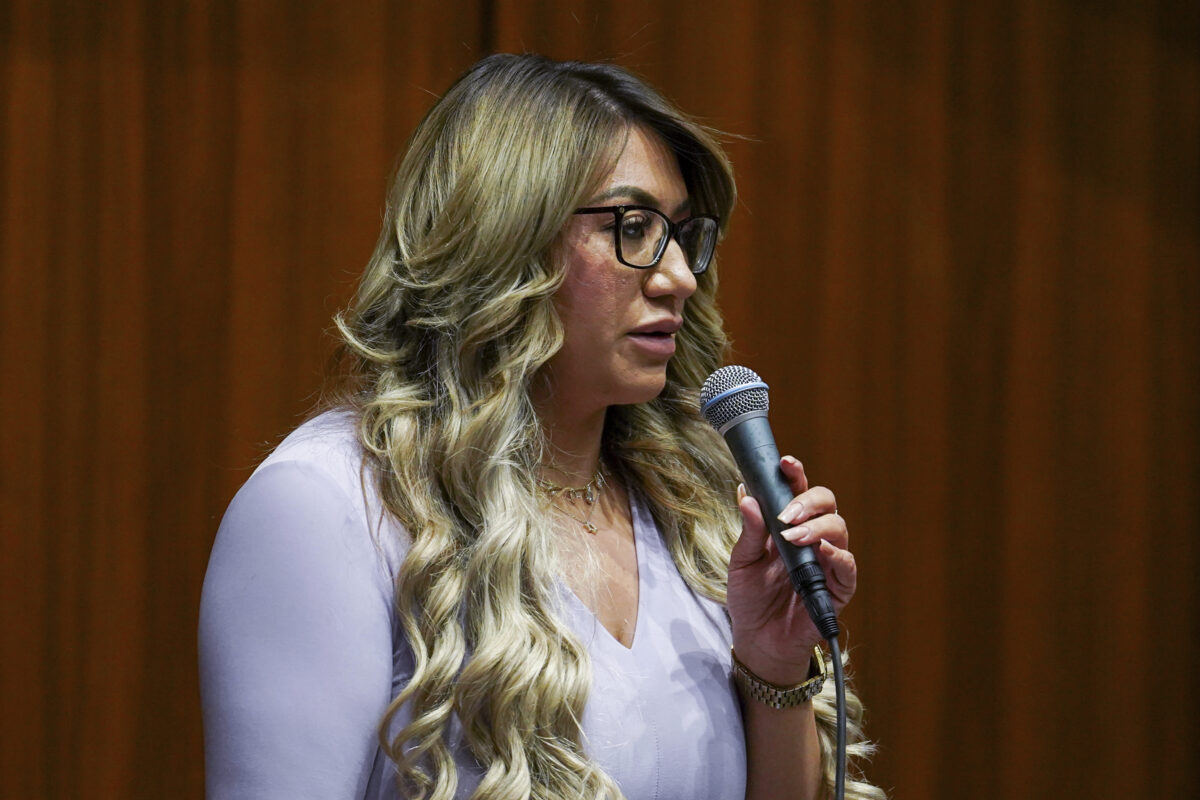
Alma Hernandez, a Jewish Democratic legislator in Arizona who is known as an outspoken supporter of Israel, claimed victory on Wednesday in a bitterly contested primary for an open state Senate seat in Tucson, hailing the win as a repudiation of the far left, Jewish Insider’s Matthew Kassel reports. With all votes counted in Arizona’s 20th Legislative District, Hernandez pulled in 54% of the vote share, defeating Perez by 8 points, according to unofficial results on the secretary of state’s website.
Victory message: “The voters in my district rejected antisemitism and rejected the DSA’s agenda, and clearly rejected what the mayor, the congresswoman and the county attorney wanted,” Hernandez, a term-limited House member, said in a statement to JI, referring to the Democratic Socialists of America. “We proved that elections are won by knocking on doors and talking to voters, not by social media or online outrage and your friends’ endorsements.”
Endorsement diaries: Connie Chan, a progressive member of the San Francisco board of supervisors running to succeed retiring Rep. Nancy Pelosi (D-CA), claimed an endorsement on Tuesday from Track AIPAC, a virulently anti-Israel group that has faced accusations of spreading antisemitism.
COOPERATION CLAIMS
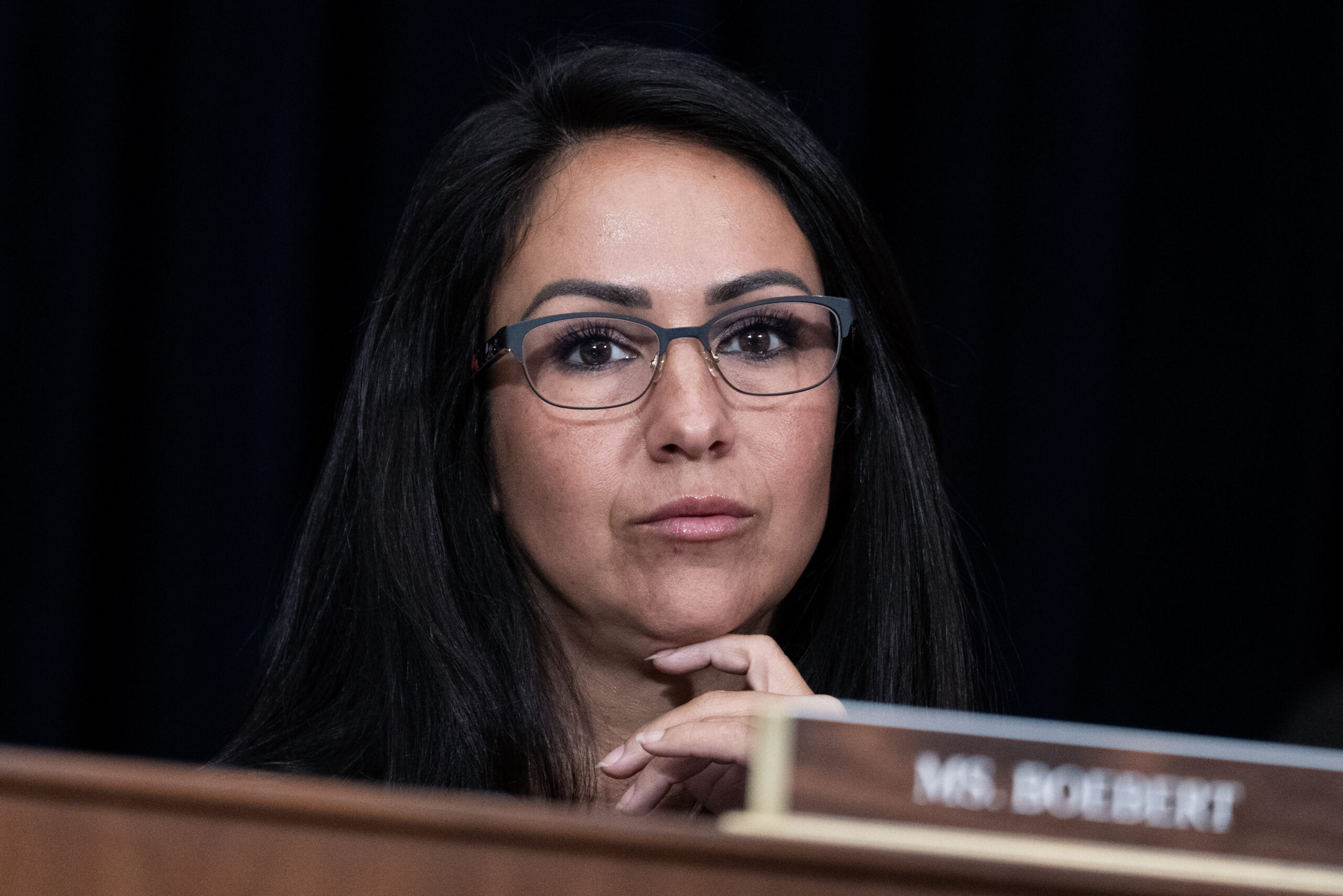
Rep. Lauren Boebert (R-CO) claimed this week that Secretary of Defense Pete Hegseth and the White House want to see a provision on U.S.-Israel defense technology cooperation stripped out of the 2027 National Defense Authorization Act. Neither the Pentagon nor the White House responded to requests for comment from Jewish Insider’s Marc Rod on whether such claims were accurate.
What she said: “Today, I was in a critical national security meeting with Secretary Hegseth where I helped secure his commitment that Section 219 would be stripped from the NDAA in conference. Protecting America’s intellectual property for future generations is non-negotiable,” Boebert said on X on Wednesday.
Trade tensions: Rep. Mike Lawler (R-NY), the top Republican on the House Foreign Affairs Committee’s Middle East subcommittee, insisted at a Wednesday hearing that Israel could not be excluded from the India-Middle East-Europe Corridor, and called out U.S. Ambassador to Turkey Tom Barrack for apparent efforts to advance an alternative trade corridor through Syria.
11th-hour addition

The new civilian nuclear cooperation agreement already signed between the U.S. and Saudi Arabia is now contingent on Riyadh joining the Abraham Accords, President Donald Trump announced on Thursday morning. The president’s Truth Social post — in which he said the deal is “totally subject” to Saudi Arabia normalizing relations with Israel, a provision not previously disclosed by the administration — was quickly affirmed by the White House, Jewish Insider’s Danielle Cohen-Kanik reports.
Confirmed condition: “Yes, this deal with Saudi Arabia, the energy deal, is contingent on this condition as far as the president is concerned,” White House Press Secretary Karoline Leavitt said during a press briefing on Thursday. “So we’ll continue to talk with our Saudi counterparts to get the deal finalized, and hopefully see them joining the Abraham Accords very soon.”
View from the Hill: Congressional Democrats are lining up in opposition to the Trump administration’s reported nuclear agreement with Saudi Arabia that could allow Riyadh to enrich uranium for civilian purposes, while Republicans are mostly supportive of the effort, JI’s Marc Rod and Christina Sher report.
Worthy Reads
Language Lesson: In The Wall Street Journal, Adam Louis Klein examines the parallels between those who accuse Israel of genocide in Gaza and the language employed by the Hutus as they conducted a genocide in Rwanda. “As in Rwanda, anticolonialism and genocide inversion have converged. Israel is imagined not only as a state accused of genocide, but as a people whose identity as foreign settlers makes genocide their destiny. … Whether directed against the Tutsis in Rwanda or against Israelis — now cast as genocidal colonizers by a cohort of anti-Zionist academics and nonprofit advocacy groups — portraying a people as foreign usurpers and inherent perpetrators isn’t neutral. It is a well-recognized prelude to violence.” [WSJ]
VP’s Vitriol: The Wall Street Journal‘s Kimberley Strassel reflects on the criticism she faced from both Vice President JD Vance’s office and his supporters following a column she wrote citing legislators in Washington discussing Vance’s absence from Capitol Hill. “One answer is simply that Mr. Vance is a sensitive bunny. If he wants to be president, he’ll need to get over that. But the other answer is that Mr. Vance knows his ‘national conservative’ ambitions for the GOP aren’t landing. Republicans are increasingly up in arms over a Vance agenda that sounds like Bernie Sanders. Hence his Vance team’s need to invalidate anyone who disagrees as a ‘RINO’ or a ‘tool’ of special interests or an ‘elite’ — the better to allow them to define what counts as a ‘real’ Republican.” [WSJ]
Going Nuclear: In his Substack, “It’s Noon in Israel,” Israeli journalist Amit Segal considers President Donald Trump’s decision to agree to a deal that would allow Saudi Arabia to have a civilian nuclear program. “Trump is a compartmental thinker. It has served Israel before — the Abraham Accords worked precisely because he declined to treat the Palestinian question as the gate through which everything else must pass. It has also cost Israel. In May 2025, he asked Syrian President Ahmed al-Sharaa to normalize relations with Jerusalem in exchange for sanctions relief, then lifted the sanctions anyway, squandering the leverage and ending the Israeli-Syrian talks that were ongoing.” [ItsNooninIsrael]
A larger selection of Worthy Reads is available in our Live Briefing.
Word on the Street
The Treasury Department announced sanctions on a U.K.-based Muslim Brotherhood official as well as several organizations based in Gaza, Indonesia and Turkey that provided financial support for Hamas…
The Defense Department lowered the number of U.S. service member fatalities during the war with Iran from 18 to 14, with officials telling The New York Times that the four soldiers killed last week were removed from the list because those troops were killed during the ceasefire with Tehran…
The House passed a second Iran war powers resolution on Thursday following the resumption of hostilities between the U.S. and Iran, with a handful of Republicans who have argued that continued operations violate the War Powers Act again siding with Democrats on the measure, JI’s Marc Rod reports…
The State Department summoned Malaysia’s ambassador in Washington over the decision by Kuala Lumpur to deport a dual Israeli American citizen traveling to the Southeast Asian nation for a digital nomad program; the meeting came after a group of House Democrats called on Secretary of State Marco Rubio to push back on Malaysia’s efforts to deport Israelis…
U.S. representatives to the United Nations slammed Francesca Albanese, the U.N. special rapporteur on the Palestinian territories who has faced repeated accusations of antisemitism, and said at a hearing on Wednesday that the next U.N. secretary-general will be faced with a choice of whether to turn the page on the institution’s antisemitic and anti-Israel bias, JI’s Marc Rod reports…
Reps. Chris Smith (R-NJ), Darrell Issa (R-CA), Mike Lawler (R-NY), Tom Kean Jr. (R-NJ), Andy Barr (R-KY), Gus Bilirakis (R-FL), Young Kim (R-CA), Maria Salazar (R-FL), Joe Wilson (R-SC) and Randy Fine (R-FL) reintroduced a bill to permanently prevent any U.S. contributions to the U.N. Relief and Works Agency…
Sen. Richard Blumenthal (D-CT) and 14 other Senate Democrats introduced a resolution demanding that the Senate’s legal counsel bring a lawsuit against the Trump administration, alleging that the gift of a Qatari 747 jet to serve as Air Force One constitutes an illegal foreign emolument banned by the constitution…
Senate Majority Leader John Thune (R-SD) named presidential historian Tevi Troy and author Dara Horn to a commission established to study the possible transfer of the Weitzman National Museum of American Jewish History to the Smithsonian Institution…
In The Wall Street Journal, former U.S. Ambassador to Japan Rahm Emanuel, who is mulling a 2028 presidential bid, warns of the damage that the rise of Democratic Socialists of America-affiliated candidates are doing to Democratic efforts to flip the House and Senate in November…
The Republican Jewish Coalition announced its endorsement of Sen. Darline Graham (R-SC) in the state’s upcoming special election to replace her brother, Sen. Lindsey Graham (R-SC), who died earlier this month, on the November ballot…
Sen. Tina Smith (D-MN) said she will back far-left Michigan Senate candidate Abdul El-Sayed in the state’s Democratic primary…
U.S. Ambassador to France Charles Kushner — who is currently residing in Paris — told the New York Post that he doesn’t want to “live in a city with a blatantly antisemitic mayor and his antisemitic wife” — in a reference to New York City Mayor Zohran Mamdani and First Lady Rama Duwaji — and planned to relocate his primary residence from New York City to Florida, while maintaining his Manhattan apartment…
The Louis D. Brandeis Center for Human Rights Under Law and the Anti-Defamation League reached a settlement with Reed College, in which the school agreed to adopt a range of measures, including an updated discrimination policy detailing how anti-Zionist conduct can constitute unlawful discrimination…
Hillel International is withdrawing an amicus brief it filed in support of Harvard University in the school’s legal fight against the Trump administration; a spokesperson for the group said the brief, which praised Harvard’s efforts to combat antisemitism as the university works to keep roughly $2.7 billion in federal funding that had previously been frozen by the government, was “filed without having gone through our internal review process”…
eJewishPhilanthropy’s Judah Ari Gross interviews Daryl Messinger, who last month was tapped as chair of the Israel Policy Forum, about shifting sentiment on Israel and efforts to advance the two-state solution…
The World Climbing Association blocked a motion to suspend Israel from the international climbing body following pushback from the climbing federations in the U.S., Australia, and Cyprus…
A Sydney man who wore a shirt with a swastika outside a hearing in which survivors of the Bondi Beach Hanukkah attack testified before Australia’s royal commission investigating antisemitism was fined $1,500, with a judge ruling that the man was “frustrated with the horrific events [in the Middle East] as he perceives them”…
A U.K. government spokesperson said the country was “ready 24/7 to defend itself” following threats from Tehran to target British military bases that London is allowing the U.S. to use for defensive attacks against Iran…
Satellite images obtained by The Wall Street Journal indicate that Iran is quickly rebuilding infrastructure damaged by the U.S. and Israel earlier this year…
Zehava Shaul, the mother of slain Israeli Staff Sgt. Oren Shaul, whose body was held by Hamas for more than a decade after he was killed in 2014, died at 71…
Wine of the Week

JI wine columnist Yitz Applbaum reviews the Alavida Malbec 2025:
Except for a small ownership stake in the Stuttgart Kickers, soccer never held much claim on me. Argentina changed that. Israel’s great friend and ally reignited my passion for the game this summer, and I watched nearly every match the team played, cheering as though they wore blue and white, which, come to think of it, they do. The final did not end the way I had hoped. But this year Tisha B’Av ended on a Thursday night, and with Shabbat around the corner, wine returned to my table early. The choice made itself: a great bottle from Argentina, to honor a friendship and to raise a glass to a team that fell just short, yet made a whole nation, and one distant admirer, proud.
The Alavida Malbec 2025 is equal to the moment. The opening is not a sip but a full meal: blueberries and raspberries pour across the palate and refuse to leave. The mid-palate mellows just enough to let you catch your breath. Then the finish arrives, deep, thunderous, and altogether alive. It will keep you up all night, and you will not mind at all. The wine will hold gracefully for several years yet. Pair it with a whole trout grilled over open flame, its skin crackling and bronzed, its flesh sweet and smoky with lemon and char, and let the evening unfold slowly.
Pic of the Day

Israelis gathered on Thursday at the Western Wall in Jerusalem on Tisha B’Av, the day that commemorates the destruction of the First and Second Temples and is marked by fasting and reading from the Book of Lamentations.
Birthdays
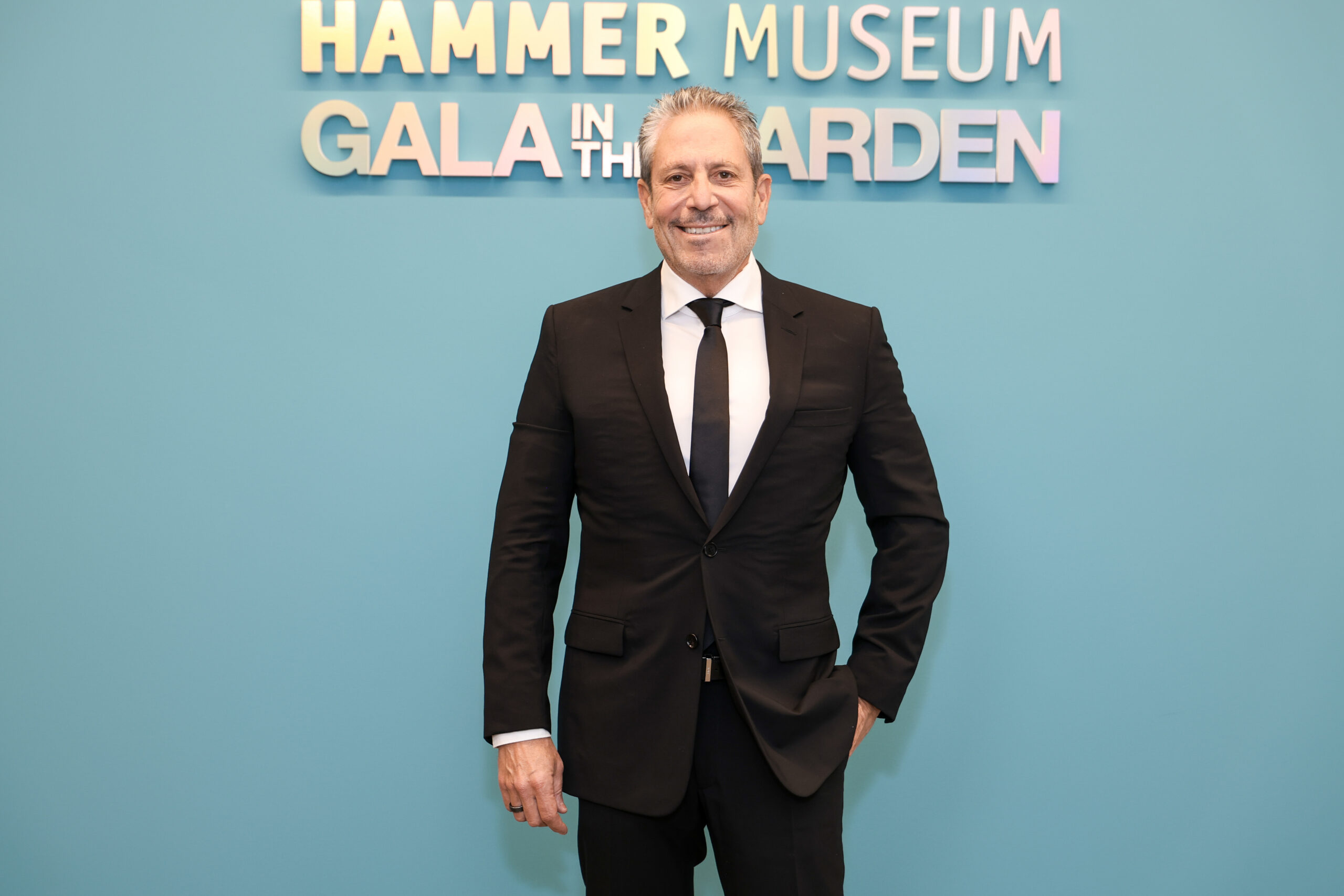
Screenwriter, director and producer, best known for creating “Beverly Hills, 90210” and “Sex and the City,” Darren Star turns 65 on Saturday…
FRIDAY: Former U.S. ambassador to Romania, now senior counsel at Covington and Burling, Alfred H. Moses turns 97… Pulitzer Prize-winning investigative reporter who worked for ABC News and CBS’ “60 Minutes,” Lowell Bergman turns 81… Israeli physician, author and playwright, he is the younger brother of PM Benjamin Netanyahu, Iddo Netanyahu turns 74… Political consultant known for his role in both of President Obama’s presidential campaigns, Joel Benenson turns 74… Retired Los Angeles-based business and real estate attorney, Michael Jeffrey Bordy… Radio anchor and reporter on both CBS nationally and NYC’s WCBS, Michael Sugerman… Member of Congress (D-FL) until 2022, he previously served as the governor of Florida, Charlie Crist turns 70… Russian businessman, one of the largest real estate investors in Russia, he is a member of the Board of Patrons of The Conference of European Rabbis, Boris Mints turns 68… Judge of the U.S. Court of Appeals for the Third Circuit, Judge Patty Shwartz turns 65… Presidential historian, professor at McGill and senior fellow in Zionist thought at the Jewish People Policy Institute, Gil Troy turns 65… Director of donor development for AIPAC, he is a retired NFL player who played for the Packers and the Cowboys where he won in Super Bowl XXVII, Alan “Shlomo” Veingrad turns 63… Founder of the Migdal Oz seminary for women in Gush Etzion, she is a granddaughter of Rabbi Joseph B. Soloveitchik, Esti Rosenberg turns 61… Film director and producer, Douglas Eric Liman turns 61… Partner in Frost Brown Todd and author of The Liberal Case for Israel, he was the first-ever Jewish statewide elected official in Kentucky (state treasurer), Jonathan Miller turns 59… Author, he wrote roughly 600 stories for the “My Ride” column on exotic cars for The Wall Street Journal, A.J. Baime turns 55… Mayor of Asheville, N.C., she was elected in 2013, 2017 and 2022, Esther E. Manheimer turns 55… Actor, writer, podcaster and comedian, Jamie Denbo turns 53… President of Access Computer Technology in West Bloomfield, Mich., he is a rabbi, entrepreneur and social media expert, Jason Miller turns 50… Member of Congress (D-MI) and a founding member of “The Squad,” Rashida Harbi Tlaib turns 50… President and CEO of the Jewish Federation of Greater Los Angeles, Rabbi Noah Zvi Farkas… EVP and CFO of Morgan Stanley, Sharon Yeshaya turns 47… Actor, screenwriter and director, she is married to Seth Rogen, Lauren Miller Rogen turns 44… Former member of the board of directors of the Jewish Federation of Greater Rochester, Aviva M. Futerman Schochat… Co-founder and partner at Orfin Ventures, an incubator and deep-tech venture fund, Adam Finkel… Public relations manager at The Avon Company, Sarah Citrenbaum… Actor, best known for her role as Nomi Segal on the Freeform comedy drama “Grown-ish,” Emily Taryn Arlook turns 36… 2020 graduate of Yale Law School, he is the CEO and founder of Learned Hand, building AI tools for judges, Shlomo Klapper…
SATURDAY: Warsaw Ghetto Uprising participant and Holocaust survivor, she is the subject of the 2021 documentary “I am Here,” Ella Blumenthal turns 105… Former publisher and editor-in-chief of Jewish Lights Publishing, he is an economist and religious scholar best known for his interfaith work, Stuart M. Matlins turns 86… Cinematographer, whose work includes “The Rocky Horror Picture Show” and “The Empire Strikes Back,” Peter Suschitzky turns 85… Member of the New York City Council from 2014 to 2021, Alan N. Maisel turns 80… Born in Casablanca, nightclub owner, entrepreneur and film producer, he produced “The Woman in Red” and “Weekend at Bernie’s,” Victor Drai turns 79… Former IDF brigadier general (he was part of Operation Entebbe in 1976), then a member of Knesset, Efraim “Effi” Eitam turns 74… Voiceover artist, he is also the writer, producer, director and narrator of a documentary about the restoration of a NYC synagogue, Peter Grossman… Chairman of Vibrant Capital Partners and chair emeritus of the Weitzman National Museum of American Jewish History in Philadelphia, Philip Darivoff… Pulitzer Prize winning author and journalist, she is a staff writer at The Atlantic, Anne Applebaum turns 62… Retired MLB pitcher from a small Jewish community in the Dominican Republic, he maintains a kosher home, José Bautista turns 62… Israeli journalist, former news anchor and author of a non-fiction book and a novel, Oshrat Kotler turns 61… Former CEO of Friends of the Israel Defense Forces, Rabbi Steven Weil… Born in Baku, Azerbaijan, he is a NYC-based criminal defense attorney in many high-profile cases, especially involving Russian-born defendants, Arkady L. Bukh turns 54… Head coach of the men’s basketball team at Kent State University since 2011, Rob Senderoff turns 53… Radio personality on Baltimore’s WBAL and 98 Rock, Josh Spiegel turns 51… Senior communications lead at the National Association for Healthcare Quality, Erin Seidler… Experimental electronic music producer, composer and singer, known professionally as Oneohtrix Point Never, Daniel Lopatin turns 44… Film and television actor, Michael Welch turns 39… Pitcher for Team Israel at the 2020 Olympics and at the 2023 World Baseball Classic, he is also a real estate broker at CBRE, Joseph “Joey” Samuel Wagman turns 35…
SUNDAY: Former mayor of Las Vegas for 12 years, where he was succeeded by his wife, Oscar Goodman turns 87… Former administrator at the University of Illinois and the University of Houston, chancellor of the California State University system and CEO of the J. Paul Getty Trust, Barry Munitz turns 85… Journalist and author or co-author of nearly two dozen books, both of her parents were killed in Auschwitz, Paulette Cooper turns 84… Author, podcaster, columnist and rabbi, Shammai Engelmayer turns 81… Member of the Florida House of Representatives from 2012 to 2020, Richard Stark turns 74… Chief medical officer at F|42, Alan H. Spiro, MD, MBA… Film and television director, she is best known for her work on the Showtime drama series “Homeland,” Lesli Linka Glatter turns 73… Sports columnist, author, television and radio personality, he works for ESPN’s Charlotte-based SEC Network, Paul Finebaum turns 71… Venture capitalist, until his wife died in 2024 he was a brother-in-law of Sen. Mitch McConnell, James W. Breyer turns 65… Actor, comedian and producer, Jeremy Samuel Piven turns 61… Former correspondent at ABC News for 23 years, now a founder at Ten Percent Media, Daniel B. “Dan” Harris turns 55… Physician and attorney, he is the founder and chairman of the D.C.-based consulting firm Stonington Global, Nicholas Muzin turns 51… Secretary of homeland security, Markwayne Mullin turns 49… Actor best known for her role in the Spider-Man trilogy, Mageina Tovah Begtrup turns 47… Partner of the D.C. office of ColdSpark, Nachama Soloveichik… Senior Reporter at CNN’s Jerusalem bureau, Tal Shalev… Israeli born classical music composer, Gilad Hochman turns 44… Israeli born R&B singer and songwriter, Hila Bronstein turns 43… Communications manager at Cetera Financial Group, Lauren Garfield-Herrin… Actor and filmmaker, Hallie Meyers-Shyer turns 39… Member of the comedy group “The Try Guys,” Zachary Andrew “Zach” Kornfeld turns 36… Associate policy director for complex care at United Healthcare , Drew Gerber… NFL running back who retired in 2024, despite his last name he is not an MOT, Tarik Cohen turns 31… Pitcher on the Israeli Women’s National Softball Team, now a curriculum designer at Great Hearts Academies, Tamara “T” Statman Schoen turns 29… President at B&B Digital Media, Tomer Barazani…
‘I represent a pro-Israel, anti-Netanyahu district and this is a pro-Israel, anti-Netanyahu vote,’ Rep. Jake Auchincloss told JI
Bill Clark/CQ-Roll Call, Inc via Getty Images
Rep. Jake Auchincloss (D-MA) participates in the House Transportation Committee hearing on Thursday, June 27, 2024.
Of the 103 House Democrats who voted to cut off the $3.3 billion in U.S. aid to Israel last week, few came as more of a surprise than Rep. Jake Auchincloss (D-MA), a Jewish Democrat who has generally been a reliable pro-Israel vote in the House.
Auchincloss, in an interview with Jewish Insider this week, said that he approached the vote as a protest of the war with Iran, and argued that the vote wasn’t anti-Israel.
“This president, in conjunction with Prime Minister Netanyahu, has launched an illegal, catastrophic war that nine out of 10 Israelis think has led to Iranian gains, and that even fewer of my constituents support,” Auchincloss said. “And foreign military financing is a form of appropriations for a war I believe to be illegal and unwise.”
He also pointed to comments by Israeli Prime Minister Benjamin Netanyahu calling for the U.S. to phase out aid to Israel over the next 10 years, arguing that Democrats can’t be expected to take a position on aid “to the right of Netanyahu” — though the Israeli prime minister hasn’t called for an immediate halt to aid.
“That grant of foreign military financing is a privilege that Congress grants annually to both our head of government and to counterparty heads of government,” Auchincloss said. “Every year, Congress has the right — Congress has the responsibility — to determine whether that privilege is warranted. Given Trump and Netanyahu’s decision-making about this debacle with Iran, I do not think it is warranted.”
He said he would evaluate his position on future FMF to Israel on a year-by-year basis depending on whether he believes such aid is deserved. “That’s not only my right as a member of Congress, that’s my responsibility — particularly when 18 Americans have died overseas.”
But he said that he continues to support the U.S-Israel relationship and said the U.S. should continue to work to preserve Israel’s qualitative military edge (QME), and suggested he would not, at this point, support a cutoff of support for Israeli missile-defense systems or an embargo on Israel buying U.S. systems with its own funds.
He said he also believes in continued U.S. support for the Abraham Accords and other efforts to bring Israel and the region closer together, including through the India-Middle East-Europe Corridor (IMEC).
Some observers have seen Auchincloss’ vote as a concession to left-wing Democrats in his suburban Massachusetts district, in light of the party’s shifting stance on Israel and primary challenges to other pro-Israel Democrats. The district includes a substantial Jewish population.
Auchincloss himself won his first primary in 2020 with 22% of the vote, scoring a narrow victory over a divided field that included several candidates to his left. Some on the left still see him as vulnerable to a one-on-one challenge in a future race — or as a potential candidate for higher office in deep-blue Massachusetts.
“I represent a pro-Israel, anti-Netanyahu district and this is a pro-Israel, anti-Netanyahu vote,” Auchincloss asserted, arguing that he’s “confident … a majority of my Jewish constituents would agree with me.”
“I hear why people see this vote through the lens of primaries and the national Democratic scene,” Auchincloss said. “I represent about 100,000 Jewish constituents. They are super smart and engaged on this issue. If I try to take political votes or symbolic votes or too-clever-by-half 4D-chess votes, it doesn’t hang together. I have to be able to defend the internal logic of each and every vote to this community, and I am confident that I can say to this community on this vote: This is a rejection of Trump and Netanyahu’s decision-making to take away the credit card.”
Asked whether the U.S.-Israel relationship can be sustained and repaired while Netanyahu continues to lead Israel — as some prominent U.S. figures have suggested that Netanyahu being ousted in the upcoming Israeli elections is necessary to continued bilateral relations — Auchincloss said that the relationship should be bigger than any one leader.
“The U.S.-Israel alliance is deeper than personalities,” he said. “Certainly, you know, Congress and our decisions about appropriations and policy need to be calibrated to the individuals who are going to be executing that policy, right? But the U.S.-Israel alliance is based on shared interests, on common values, and a long history.”
He suggested he was unconcerned by AIPAC’s decision to halt fundraising for him following the vote, explaining that his votes aren’t shaped by endorsements or contributions and that he’s taken votes both supported and opposed by AIPAC over the course of his career.
Though he diverged from House Minority Leader Hakeem Jeffries (D-NY) on the Israel aid vote, Auchincloss praised the Democratic leader’s approach to the issue and called it a model for how the party as a whole should approach Israel policy going forward.
“Hakeem is pointing the way with a steady hand, which is to say, ‘We’re a party that supports qualitative military edge for Israel, which is surrounded by terrorists and the world’s largest state sponsor of terrorism, and has a right to defend itself against those terrorists and needs QME to be able to do that, but we’re not a party that yields congressional oversight to Trump and Netanyahu as Republicans have,”’ Auchincloss said.
Asked about the possibility of conditions on further U.S. aid to Israel, Auchincloss said that the next U.S.-Israel memorandum of understanding should be crafted around supporting Israel’s QME, expanding and supporting normalization and, critically, provisions that can garner support from both chambers of Congress and both parties.
Even as he sided with progressives in the party on the Israel aid vote, Auchincloss has also found himself vocally at odds with the left over his criticisms of former Maine Senate candidate Graham Platner.
Auchincloss long opposed Platner and faced strong backlash from the party in late May for saying that Platner’s tattoo and comments about it were “disqualifying” and saying he would support another candidate in the primary if he were a Maine voter.
“Character should matter in politics,” Auchincloss told JI. “Ten years ago, Republicans decided that it doesn’t. They’ve become a cult of personality, and Platner demonstrates to Democrats the hazards of agreeing that character doesn’t matter.”
“And I think it’s a problem for the Democratic Party to wrestle with [the fact] that it would have been more politically damaging for him to have a Star of David tattoo than to have a Totenkopf tattoo,” Auchincloss continued, an apparent reference to comments from a Platner supporter on the campaign trail earlier this year.
Auchincloss also said he remains concerned about surging antisemitism globally, and continues to be involved in other efforts to combat antisemitism and anti-Israel sentiment, including as one of a handful of Democrats who signed a letter earlier this week condemning plans by Malaysia to round up and expel Israeli citizens.
He said he’s been in discussions with Jewish community groups about the role of social media in promulgating antisemitism and is working on legislation to combat it, while also arguing that it will require a “multifaceted approach.”
“Antisemitism tends to mushroom in failed societies, and social media has become a failed society as one big online toxic brew. And politics is downstream of media and information and culture,” Auchincloss said.
He said that even as political leadership is necessary to call out and reject antisemitic candidates, leaders also need to look “upstream to media and culture and information,” particularly on antisemitism.
Auchincloss is making his own efforts to steer the direction of the Democratic Party, including as the chair of Majority Democrats, a new campaign group backing moderate and liberal Democratic lawmakers and candidates around the country.
In his view, Auchincloss said that he sees himself and the group as occupying a third corner of the party, separate from the left and the establishment. “There is the opportunity for a faction that will redefine the center of American politics and be disruptive of the establishment without being socialist,” Auchincloss said.
He said he believes his faction and the party as a whole should be focused on “the new American dream” — a robust primary and secondary education, the ability to own a home by age 30 and retire by 65 — as “partners to help you achieve that economic security.” Auchincloss said the party should also be aggressive about confronting corruption across the political spectrum and should not yield “faith, family and the flag” to conservatives.
“I don’t think Americans are going to vote for Democrats to lead this country if they don’t think Democrats like this country,” Auchincloss said. “And so we have to be the party of patriotism — not of blood and soil nationalism, but of true constitutional patriotism. And then, finally, we need a cross-ideological governing platform that is willing, even self-consciously celebratory, of dragging and dropping good ideas from across factions of American life.”
He also said that Democrats should be strongly supportive of public safety, including cracking down on petty crime, and support a national wealth tax.
Auchincloss pointed to Sen. Jon Ossoff (D-GA), increasingly seen as a potential 2028 presidential candidate, as someone who he believes is a strong leader for the party, particularly on anticorruption issues.
He said that he sees an anti-establishment mood across the party — which he said will look different in deep-blue and purple seats, while emphasizing that Democratic Socialists of America members have won “about 1%” of Democratic Party primaries.” He said he believes that the extremism problem is much more severe on the GOP side, asserting that 2020 election deniers have won more than half of GOP primaries to date.
“American politics is horseshoeing, but it’s not horseshoeing symmetrically,” Auchincloss alleged.
Asked whether he’s comfortable being in the same political coalition as those DSA members, Auchincloss said that he’s “not a bouncer” and doesn’t have the capability to police who’s winning Democratic primaries.
“What I’m concerned about is less about being a bouncer at the door and more about do we have music at this party that people want to come and dance to? Like, are we filling the room? Because enrollments for Democratic Party are going down,” Auchincloss said.
He said that, as with Platner, character matters, but that Democrats also shouldn’t be fixated on a “checklist at the door” for who can and can’t be part of the party, and should instead concentrate on a “governing vision” that will attract voters.
‘I find that tattoo and his commentary about it to be personally disqualifying,’ Auchincloss told CNN
Bill Clark/CQ-Roll Call, Inc via Getty Images
Rep. Jake Auchincloss (D-MA) participates in the House Transportation Committee hearing on Thursday, June 27, 2024.
Rep. Jake Auchincloss (D-MA) said on Monday that Maine Democrat Graham Platner’s tattoo of a Nazi Totenkopf was “disqualifying,” weeks after Gov. Janet Mills’ departed from the Democratic primary race, leaving Platner as the party’s presumptive nominee challenging Sen. Susan Collins (R-ME).
“I find that tattoo and his commentary about it to be personally disqualifying,” Auchincloss told CNN. “I hope Maine voters agree with me. I think it would be a mistake for the Democratic Party to think that Graham Platner’s brand of the Democratic Party is what wins us durable majorities throughout this country.”
Jewish Insider reported last year that Platner had on at least one occasion identified the tattoo on his chest as a Nazi SS symbol, known as a “Totenkopf,” to a former acquaintance and had been fully aware of the tattoo and its meaning well before entering the race to replace Sen. Susan Collins (R-ME), even bragging about having it.
Platner has since covered up the tattoo and dismissed wrongdoing, claiming he had no idea the tattoo symbol was a Nazi insignia when he got it with fellow Marines while in Croatia in 2007.
Far-left Democrat Saikat Chakrabarti, a cofounder of Justice Democrats who is mounting a bid for the seat being vacated by Rep. Nancy Pelosi (D-CA), rebuked Auchincloss, writing on X, “Auchincloss is essentially endorsing Susan Collins in Maine. Absolutely no excuse for a Democrat in the House to back a Republican for Senate in a crucial swing seat. Auchincloss should be primaried. His primary election is September 1 in a safe, D+11 seat.”
Last year, Auchincloss became the first elected Democrat to call on Platner to drop out of the Senate race in Maine after news of his tattoo emerged.
Sen. Elizabeth Warren (D-MA) has campaigned with Platner, dismissing criticism of him and describing him as “my kind of man.” Sen. Chris Van Hollen (D-MD) has also defended Platner, saying “people should have second chances.”
Plus, Brad Lander considers congressional bid
Bill Clark/CQ-Roll Call, Inc via Getty Images
Rep. Jake Auchincloss (D-MA) participates in the House Transportation Committee hearing on Thursday, June 27, 2024.
Good Monday afternoon!
This P.M. briefing is reserved for our premium subscribers like you — offering a forward-focused read on what we’re tracking now and what’s coming next.
I’m Danielle Cohen-Kanik, U.S. editor at Jewish Insider and curator, along with assists from my colleagues, of the Daily Overtime briefing. Please don’t hesitate to share your thoughts and feedback by replying to this email.
📡On Our Radar
Notable developments and interesting tidbits we’re tracking
Secretary of State Marco Rubio said today that Israel’s airstrike in Gaza over the weekend, which the IDF said targeted a Palestinian Islamic Jihad member who was planning a terror attack, did not violate the ongoing ceasefire with Hamas.
Rubio, who visited Jerusalem last week, told reporters standing next to President Donald Trump aboard Air Force One, “Israel didn’t surrender its right to self-defense. … We don’t view that as a violation of the ceasefire. They have a right — if there’s an imminent threat to Israel — and all the mediators agree to that”…
On the campaign trail, Rep. Jake Auchincloss (D-MA) became the first elected Democrat to call for Democratic Maine Senate candidate Graham Platner to drop out of the race to replace Sen. Susan Collins (R-ME), saying he finds the candidate’s conduct “personally disqualifying,” Jewish Insider’s Matthew Shea reports.
“This is a man who criticized and mocked police, rural Americans, and then put a Nazi tattoo on his body,” Auchincloss said. He expressed dissatisfaction with Platner’s defenses, in which the progressive candidate has claimed his actions aren’t a “liability.”
“I think it’s a liability, and I think we should have high standards for United States senators and one of them is: you don’t have a Nazi tattoo on your body,” Auchincloss continued…
Kevin Brown, the campaign manager for Platner, is stepping down after starting the job just last week, Axios scooped today. Brown told the outlet, “I started this campaign Tuesday but found out Friday we have a baby on the way. Graham deserves someone who is 100% in on his race and we want to lean into this new experience as a family”…
More than 160,000 New Yorkers submitted their ballot for New York City mayor with the start of early voting over the weekend, five times higher than the first weekend of early voting in 2021, according to Gothamist. Voters over 55 made up the majority of ballots cast, in contrast with the Democratic primary when voters ages 25-34 were first to the polls…
New York City Comptroller Brad Lander, who also ran in the mayoral Democratic primary and has been backing nominee Zohran Mamdani, is advancing plans to challenge Rep. Dan Goldman (D-NY) for his congressional seat, City & State New York reports.
“I’m very focused on helping Zohran win next Tuesday, and I’ll focus on after that, after that,” Lander told the outlet. At a rally for Mamdani over the weekend, Lander said “it’s more important than ever that we have leaders who understand this moment and will be partners to Zohran” in “the halls of Congress,” potentially hinting at his desire to run. Read JI’s reporting last month of the dynamics of a possible Lander-Goldman matchup…
Former Sen. John E. Sununu (R-NH), the former New Hampshire senator and part of an influential Granite State political family, officially launched his bid last week to take over the Senate seat of retiring Sen. Jeanne Shaheen (D-NH).
Sununu’s candidacy ensures a hotly contested GOP primary against former Sen. Scott Brown (R-MA), who served as ambassador to New Zealand during the first Trump administration. Brown, who announced his candidacy in June, served a partial term representing Massachusetts in the Senate from 2010-2012, only holding the seat for two years before being bested by Sen. Elizabeth Warren (D-MA).
Brown and Sununu, both of whom had pro-Israel records when they served in the Senate, will battle it out before taking on Rep. Chris Pappas (D-NH), the expected Democratic nominee with a history of winning in a swing district…
In an interview with The New York Times, Pennsylvania Gov. Josh Shapiro said that he still believes the U.S. could elect a Jewish president in his lifetime, even in the face of frequent antisemitic violence like the Passover arson attack on his residence.
“Being open about my faith has opened me up to be able to have a deeper relationship with the people of Pennsylvania, allowed them to share their stories … We’re doing that in this ultimate swing state,” Shapiro, seen as a 2028 presidential contender, said…
Semafor reports on a new survey of hundreds of thousands of voters, conducted by a new center-left group called Welcome, that finds that 70% of voters think the Democratic Party over-prioritizes cultural issues. The report urges Democrats “to abandon some of the progressive language about race, abortion, and LGBTQ issues that Democrats began using after the 2012 election — and recommends the nomination of more candidates willing to vote with Republicans on conservative immigration and crime bills”…
⏩ Tomorrow’s Agenda, Today
An early look at tomorrow’s storylines and schedule to keep you a step ahead
Keep an eye on Jewish Insider tomorrow morning for reporting on Fairfax County Public Schools’ reaction to glorifications of violence by local Muslim Student Association chapters.
Tomorrow afternoon, the Senate Judiciary Committee’s Subcommittee on the Constitution will hold a hearing on “Politically Violent Attacks: A Threat to Our Constitutional Order.”
Jewish Federations of North America will hold a briefing tomorrow on how the deal that split off ownership of TikTok’s U.S. business may impact the social media platform’s treatment of antisemitic content.
The 39th World Zionist Congress kicks off in Jerusalem tomorrow with the largest U.S. delegation in history, made up of 155 delegates and approximately 100 alternates. U.S. Ambassador to Israel Mike Huckabee will address a luncheon hosted by the American Zionist Movement ahead of the Congress’ opening.
PEOPLE OF THE BOOK (CLUB)

The Jewish Book Council launched a new subscription service, Nu Reads, which provides six Jewish books per year, modeled on the success of PJ Library
QUAD CONTROL

In an interview with JI, the senior DOJ official said that while combating antisemitism is a priority, the Justice Department is focused on the Trump administration’s battle with DEI
The Massachusetts congressman is the first Democratic lawmaker to call on the scandal-plagued candidate to drop out

Courtesy
Rep. Jake Auchincloss (D-MA)
Rep. Jake Auchincloss (D-MA) became the first elected Democrat to call on scandal-plagued Democrat Graham Platner to drop out of the race for Senate in Maine amid controversy over a tattoo on his chest with Nazi origins and other controversies.
Jewish Insider earlier reported that Platner had on at least one occasion identified the tattoo on his chest as a Nazi SS symbol, known as a “Totenkopf,” to a former acquaintance and had been fully aware of the tattoo and its meaning well before jumping into the race to replace Sen. Susan Collins (R-ME), even bragging about having it.
Auchincloss urged Platner to abandon his Senate bid on Sunday, telling Politico that he finds the progressive candidate’s conduct “personally disqualifying.”
Platner has dismissed wrongdoing and claimed he had no idea the tattoo symbol was a Nazi insignia when he got it with fellow Marines while in Croatia in 2007.
“I am not a secret Nazi. Actually if you read through my Reddit comments, I think you can pretty much figure out where I stand on Nazism and antisemitism,” Platner said on the “Pod Save America” podcast last week.
Auchincloss expressed dissatisfaction with Platner’s defenses, in which the progressive candidate has said his actions aren’t a “liability.”
“I think it’s a liability, and I think we should have high standards for United States senators and one of them is: you don’t have a Nazi tattoo on your body,” Auchincloss told WCVB Channel 5 Boston on Sunday.
“I hope that Maine voters would agree with me,” Auchincloss said to Politico. “Democrats would be united in condemning a Republican candidate who has this episode, and we should be consistent.”
Platner is running against Gov. Janet Mills in the Democratic primary. The winner will face Collins in what is expected to be a hotly-contested race.
Some progressive members of Congress, led by Sen. Bernie Sanders (I-VT), have defended Platner amid his numerous scandals.
“He sounds like a human being to me,” Sen. Chris Murphy (D-CT) said of Platner’s tattoo in a CNN interview on Sunday. “A human being who made mistakes, recognizes them, and is very open about it.”
The Massachusetts Democrat said he’ll walk out of Netanyahu’s congressional speech if he attacks Biden, and discussed his concerns about the Antisemitism Awareness Act
Courtesy
Rep. Jake Auchincloss (D-MA)
Rep. Jake Auchincloss (D-MA), closing out his second term on Capitol Hill, has emerged as a prominent, pragmatic voice among younger members of the Democratic caucus, and is seen as a potential leader on key issues.
Jewish Insider’s Editor-in-Chief Josh Kraushaar and senior congressional correspondent Marc Rod sat down with Auchincloss, who is Jewish, for nearly an hour in his Capitol Hill office last week to discuss the state of the Democratic Party, the situation in the Middle East, antisemitism, Israeli Prime Minister Benjamin Netanyahu’s upcoming address to Congress — and more.
This interview has been edited for length and clarity.
Jewish Insider: What [lessons] do you read from that pretty decisive victory from George Latimer [over Rep. Jamaal Bowman] in New York?
Auchincloss: I would caution any pundit from extrapolating from that race to broader dynamics. There was a lot going in there that is idiosyncratic to that district. There is Jamaal’s break with the president on [the] bipartisan infrastructure [bill]. There’s obviously some of his own unforced errors in regards to both constituent communications and engagement, and also actions here on the Hill. It’s got a big Jewish community there, very engaged Jewish community. You’ve got Oct. 7 as a catalyzing agent, a challenger who is already very well-vested in the community. I know it’s an attractive proposition to take a single primary with — how many people voted, like 30,000? — I would caution against extrapolation.
JI: It seems like rock-solid support for Israel is at a low point in the Democratic Party, at least in [the time you’ve been on the Hill]. Is it possible to get back, in the Democratic Party, to the pre-Oct. 7 point and what would have to happen to make that happen?
JA: Joe Biden, Chuck Schumer, Hakeem Jeffries, the three most prominent Democrats on Capitol Hill, in Washington — strongly pro-Israel. The Democratic Party remains a pro-Israel party.
We have an under-30 problem, for sure. So I worry more about Congress 20 years from now than I do Congress today — you saw the vote tally for Israel … But I do worry about the next generation, and that is going to require addressing not just Gaza, but also the West Bank. And in some ways, the West Bank is going to be equally as important as Gaza, because much of Netanyahu’s strategy over the last decade was about destabilizing both … The Israelis need to stop with expansion of settlement activity … In terms of antisemitism, as I’ve said before, the Democratic Party can’t have double standards on antisemitism, and we should look at the Labour Party in Great Britain as a warning.
JI: Is the [Democratic] party headed in that direction?
JA: No, the mainstream of the party is not. And yet, I will say that your values are communicated by the fights that you’re willing to pick … Just because the mainstream of the Democratic Party, I believe, solidly understands and opposes antisemitism, does not mean that that value gets communicated effectively if we do not condemn, name, shame antisemitic elements, and that includes what’s happening on college campuses.
JI: Rashida Tlaib spoke at a conference where there was promotion of terrorism, PFLP affiliates in Michigan. Very few Democrats — a couple spoke out — but very few wanted to comment, that we talked to. Do Democrats need to speak out when there are these episodes within the party?
JA: It’s unacceptable, yes. And I think we also, though, have to be cautious that we are not injecting oxygen in a way that takes a spark and makes it into a fire, right?… Some things we’re going to say, ‘Hey, this is best just marginalized by silence.’ But I think other things, like when individuals are claiming that allegations of rape or sexual violence after Oct. 7 are propaganda — that’s unacceptable, that needs to be said.
JI: What are you looking at and thinking about ahead of [Israeli Prime Minister Benjamin Netanyahu’s] congressional speech? What are you hoping to hear from him? What are you afraid that [he’ll say]?
JA: What I’m hoping is that he’s going to tell us he’s going to call elections. That’s what I’m hoping for … What I want to hear is a concrete proposal for day-of governance to defeat Hamas. The president’s 10 points that he put forward a month ago, month and a half ago — [including bringing the] hostages home [and the] permanent defeat of Hamas — those two remain the objectives, and I think the prime minister needs to articulate how he does that and and not do hand-waving of ‘Military now, governance later.’ It’s got to be how we’re going to do military and governance intertwined.
JI: What is your sense of how [Netanyahu’s speech is] going to play on Capitol Hill, and could this hurt the cause of support for Israel, within your party especially?
JA: It’s up to how the prime minister addresses Congress. If it’s a repeat of 2015, yeah, it’s going to hurt. I’m attending out of respect for the U.S.-Israel relationship, which I think is critical … but if the prime minister criticizes Joe Biden directly, I’m walking out of that speech … and I would encourage Democrats broadly to make that our approach.
JI: Hamas has repeatedly turned down this [cease-fire] deal, has repeatedly shifted the goalposts … If there isn’t a deal that is achievable here, what does the path forward look like? Do you think that the administration should be supporting Israel continuing its military operations, at that point, until it feels that it’s done? Or do you think that there needs to be sort of a movement by Israel to unilaterally start winding things down at this point, regardless?
JA: I’m not sure it’s a binary like that. Actually, I would argue that they have to be synthesized. My criticism of Netanyahu has never been that he argues that military force is necessary in Israel. I have, to date, still not said that there should be a permanent cease-fire there, because I continue to believe that Israel needs to use military force to degrade Hamas’ capabilities, to control the security perimeter around Gaza, to put pressure on Hamas to negotiate, right? So I think all those things are true.
My criticism of Netanyahu has always been that he has not twinned that military pressure with a governance strategy. And people call it, oftentimes, the day-after approach. I actually reject that term because it implies a sequentiality that I don’t think exists. It is parallel. It is day-of. You’ve got to be attacking Hamas and, same day, in north, central, even south Gaza, empowering elements of — and it will be probably the Palestinian Authority — to provide security, economic development, infrastructure maintenance.
JI: Do you think Hamas can be, in the language of Netanyahu, defeated in Gaza?
JA: Yes, is the short answer. People like to say, ‘Oh, you can’t defeat an ideology,’ as though we should just all just throw up our hands and be like, ‘Yeah, you’re right. Hamas should just get to do whatever they want.’ No, we can. We can defeat Hamas. Does that mean that there is no human being in Gaza who subscribes to Islamist terrorism? No, of course, not … If you go back to the classic definition of a state as having a monopoly on the organized use of violence and depriving Hamas of the levers of statehood, of having a monopoly on the organized use of violence, 100% we can defeat Hamas. We will not defeat Hamas purely with [bullets] or [bombs]. We will defeat Hamas because there will be an alternative that the people of Gaza find more compelling.
Part of defeating them is also looking at the education system in Gaza, [which] I think is really critical. People are looking for this easy, knee-jerk bow tie: ‘Oh we’re going to recognize Palestinian statehood, be able to walk away and we’ve done it.’ I think it’s a lot harder. It’s incremental gains in security, infrastructure, economic development, education that just increase standards of living for Palestinians so that they are not being educated into or subscribe to a death cult’s ideology.
JI: This Saudi deal that’s being talked about, they’re apparently asking a lot of the U.S.: more advanced weapons, defense guarantees, domestic nuclear enrichment. Are those things that you’d be amenable to the U.S. providing, if it [helps achieve] regional normalization?
JA: I strongly support the Abraham Accords. I strongly support, obviously, Saudi recognition of Israel and Saudi entrance into the Abraham Accords. I am deeply skeptical of a defense guarantee [from] the United States for Saudi Arabia. I understand what Saudi Arabia gets out of that. I’m not totally sure [what] we get out of that, what Israel gets out of that … I would want to see, also, significant capital, both financial and political, from the Saudis for Gaza as well. The Arab states have done nothing for the Palestinian people for a century. It’s time for that to change, and that needs to be part of a deal.
JI: How are you looking at Qatar right now?
JA: A necessary evil. They’re the interlocutor, obviously, between us and Hamas. I’m not, obviously, in the conversations about the exact ways to calibrate pressure on Hamas’ political arm in Qatar; I agree that we should put more pressure on them, to the extent that we can, to accept the deal, the temporary cease-fire. I also understand that if you do it too much, and they end up in the Sahel [in Northern Africa], and we lose all contact with the political wing of Hamas, we don’t have an interlocutor. I’m not sure that serves the purposes of the hostages, either.
JI: The foreign funding from Qatar has been reported as sort of a leading driver for some of the problems of antisemitism on campus? Is there anything legislatively that can be done to address foreign interference or foreign money going into universities?
JA: I think that needs to be explored as part of the tax deal [in the] next Congress about tax treatment for universities that take significant amounts of or have significant connections to Islamist ideology.
JI: On the taxes issue — does the administration need to start really putting teeth into these investigations and start threatening or actually taking away tax-exempt status and federal funding from these schools?
JA: Obviously there’s a range of repercussions available as part of OCR investigations. Today, I couldn’t point to an example where I say, ‘Oh, the administration should have been tougher in this sense.’ And so I am reluctant to say that. I will say, as part of the tax deal, that needs to be part of the conversation … We benefit from immigration, we benefit from the fact that other countries want to invest in and send their students to our universities. I’m very liberal on this concept. We also have to recognize that in this there are a couple of bugs in that operating system, and one of them is that, in the same way that Saudi and Qatar are trying to launder their money through golf or through other outfits, they’re trying to do it through education as well, and we do have to be cognizant of that. The same way that I was a co-lead of the TikTok bill we can’t allow the next generation of Americans to be inculcated in a fundamentally anti-American ideology.
JI: You’ve got a lot of colleges and universities [near] your district … What do they need to be doing over the summer, proactively to prepare for [the fall semester] and to, you know, have better responses ready to go in the fall [to antisemitic activity]?
JA: At a high level, enforce their own rules and boundaries. And this was one of the reasons I voted against the Antisemitism Awareness Act. These colleges already have time, place and manner restrictions. They already have Title VI compliance rules that they just under-enforced or downright ignored. I talked about this with … a president of a prominent university who has done a good job. I was like, ‘What’s your secret?’ And he was like, ‘I just enforced what the rules are.’
JI: Your vote against the [Antisemitism Awareness Act] stood out — tell us a little bit about your thinking on that front?
Auchincloss: It opens a constitutional can of worms. It codifies cancel culture on campus. And I’m opposed to cancel culture. And it solves no problem … We don’t need to update congressional statute. We need these faculty and university leadership to enforce their own time, place and manner restrictions, and then we need to fund OCR at the Department of Education to prosecute universities that are failing…
I saw the potential downside of it being misappropriated to chill speech. And you can see that happening. No other protected class has a single and solitary definition … I think that facts and context and evolving societal understanding should matter in this … What we need these universities to be is ‘small l’ liberal. The Jews have thrived in liberal, open, meritocratic environments. What we do not want to do is double down on, I think, is identitarian politics. I do not think that in the long run, that is going to serve the Jewish people.
JI: That loops into this debate that is happening in the Jewish community about [Diversity, Equity and Inclusion programs], which is, do DEI programs need to be expanded to better include Jews, or should they be dismantled because they’ve been shown to have, it seems like, ingrained bias or failure to recognize the situation of Jewish people?
JA: I prefer the word pluralism, because it’s really what we’re talking about — at least how I interpret the intentions behind DEI. Pluralism is a very old American idea. If you read the 2018 Harvard statement on inclusion and belonging that [Harvard political science professor] Danielle Allen wrote — that version of I think she called it pluralism, but probably today would be called DEI — that version, to me, is conducive to a suitable learning environment.
JI: We saw in New York that the people who occupied Hamilton Hall [at Columbia University] were not charged, most of them at least, at the White House vandalizing statues — I don’t think any of them have been charged. Are you concerned about that?
JA: More broadly about property and violent crime being under-enforced — I’ve always been opposed to that. I disagreed with the decision by a previous Boston [district attorney] to blanket take 20 property crimes and say she proactively was not going to prosecute … I’m a law-and-order liberal. I believe that we should be prosecuting property and violent crime assertively, including this.
But unlike in Pennsylvania, leading Massachusetts Democrats aren’t giving Harvard’s Claudine Gay and MIT’s Sally Kornbluth votes of no confidence

Kevin Dietsch/Getty Images
Claudine Gay, president of Harvard University and Liz Magill, president of University of Pennsylvania, testify before the House Education and Workforce Committee at the Rayburn House Office Building on December 05, 2023, in Washington, D.C.
Following Elizabeth Magill’s resignation as the president of the University of Pennsylvania, public attention is now focusing on Harvard and the Massachusetts Institute of Technology, which are facing calls to unseat their own presidents. But Harvard’s Claudine Gay and MIT’s Sally Kornbluth are thus far facing less in-state political pressure for their resignations.
Pressure from Pennsylvania Gov. Josh Shapiro played a role in Magill’s ouster; other Pennsylvania political figures, such as Senate candidate David McCormick and Sens. Bob Casey (D-PA) and John Fetterman (D-PA) were also critical of the former Penn president. But such calls have been less prevalent so far from within Massachusetts.
“Strong, moral leadership should be qualification number one for the president of the world’s leading university, but as a tireless advocate for ending the ‘cancel culture’ so pervasive at Harvard over the past decade, I’m not going to rush to cancel the president,” Rep. Seth Moulton (D-MA), a Harvard alum, said in a statement to Jewish Insider on Monday. “That’s a decision the university’s governing boards should consider carefully.”
Rep. Jake Auchincloss (D-MA) said Friday, “I would say that in the last two months, Dr. Gay has been making a lot of second and third statements when she should have gotten it right the first time. Genocide is unacceptable, period,” but said he’d leave the decision of her resignation to the school’s board.
Sen. Elizabeth Warren (D-MA) said last week, “If you can’t lead, if you can’t stand up and say what’s right and wrong — very much in the extreme cases, and these are the extreme cases — then you’ve got a problem,” but didn’t respond to a question from JI on Monday about whether the schools’ boards should ask their presidents to resign.
Neither did Sen. Ed Markey (D-MA) or Massachusetts Gov. Maura Healey, a Democrat.
Gay came under increased scrutiny over the weekend over accusations she plagiarized portions of her doctoral thesis, which she has denied.
Several prominent Harvard alums in Congress, including Senate Majority Leader Chuck Schumer (D-NY), also did not respond to requests for comment.
Rep. Elise Stefanik (R-NY), who led the questioning at a House hearing last week that fueled outrage toward the three college leaders, renewed her calls on Monday for Gay and Kornbluth to be fired.
“As clear evidence of the vastness of the moral rot at every level of these schools, this earthquake has revealed that Harvard and MIT are totally unable to grasp this grave question of moral clarity at this historic moment as the world is watching in horror and disgust. It is pathetic and abhorrent,” Stefanik said in a statement. “The leadership at these universities is totally unfit and untenable.”
Sen. Ted Cruz (R-TX), who led a letter with Stefanik and other Republican Harvard alums in October raising concerns about the treatment of Jewish students on campus, said on his podcast on Monday, “I think we could easily see all three of these college presidents lose their jobs because of this testimony.”
“Both those institutions are hoping this just blows over,” Cruz continued. “They’re defending them in essence by not firing them right away after they witnessed this testimony.”
Bipartisan letter argued that not removing the presidents from their positions would constitute an ‘endorsement’ and ‘act of complicity’ in the presidents’ ‘antisemitic posture’
Kevin Dietsch/Getty Images
Claudine Gay, president of Harvard University and Liz Magill, president of University of Pennsylvania, testify before the House Education and Workforce Committee at the Rayburn House Office Building on December 05, 2023, in Washington, D.C.
Seventy-four House lawmakers wrote to the boards of Harvard, the Massachusetts Institute of Technology and the University of Pennsylvania on Friday demanding that they immediately fire their presidents in response to widely criticized congressional testimony they delivered on antisemitism on their campuses earlier this week.
The presidents of the three schools have come under increasing scrutiny this week amid growing speculation that their jobs could be on the line following their refusal to say earlier this week that calls for Jewish genocide would violate their schools’ codes of conduct.
“Testimony provided by presidents of your institutions showed a complete absence of moral clarity and illuminated the problematic double standards and dehumanization of the Jewish communities that your university presidents enabled,” the letter reads. “Given this moment of crisis, we demand that your boards immediately remove each of these presidents from their positions and that you provide an actionable plan” to ensure the safety of the Jewish community on campus.
“Anything less,” than the steps they requested, the lawmakers continued, “will be seen as your endorsement… and an act of complicity in their antisemitic posture.”
The letter was led by Rep. Elise Stefanik (R-NY), who questioned the presidents on the genocide issue, and Rep. Jared Moskowitz (D-FL). Rep. Josh Gottheimer (D-NJ) is the only other Democrat who signed the letter; the rest are Republicans.
The lawmakers said that the testimony makes it “hard to imagine” any Jewish or Israeli person feeling safe on their campuses when the presidents “could not say that calls for the genocide of Jews would have clear consequences on your campus.”
It adds that subsequent social media statements seeking to clarify or walk back those comments “offered little clarification on your campus’ true commitment to protecting vulnerable students in this moment of crisis,” describing them instead as “desperate attempts to try and save their jobs” and “too little too late.”
Shortly before the Stefanik-Moskowitz letter was released, a group of thirteen House Democrats wrote to the boards of the three schools urging them to re-examine their codes of conduct to make clear that calls for the genocide of Jews are not acceptable.
This second letter, led by Reps. Kathy Manning (D-NC), Jake Auchincloss (D-MA) and Susan Wild (D-PA), includes similar language to the bipartisan letter regarding the presidents’ testimony and how it would make Jewish campus members feel unsafe, but stops short of directly calling for the presidents to be fired.
The lawmakers wrote that they felt “compelled to ask” if the presidents’ responses “align with the values and policies of your respective institutions.”
“The presidents’ unwillingness to answer questions clearly or fully acknowledge appalling and unacceptable behavior — behavior that would not have been tolerated against other groups — illuminated the problematic double standards and dehumanization of the Jewish communities at your universities,” the letter continues. “The lack of moral clarity these presidents displayed is simply unacceptable.”
The lawmakers requested that the schools update their policies to “ensure that they protect students from hate” and describe their plans for protecting Jewish and Israeli community members.
“There is no context in which calls for the genocide of Jews is acceptable rhetoric,” the letter reads. “While Harvard and Penn subsequently issued clarifying statements which were appreciated, their failure to unequivocally condemn calls for the systematic murder of Jews during the public hearing is deeply alarming and stands in stark contrast to the principles we expect leaders of top academic institutions to uphold.”
The letter notes that federal civil rights law prohibits discrimination against Jews on campus, and that criminal law bans hate crimes, violence and incitement to violence.
“Students and faculty who threaten, harass, or incite violence towards Jews must be held accountable for their actions,” the lawmakers wrote. “If calls for genocide of the Jewish people are not in violation of your universities’ policies, then it is time for you to reexamine your policies and codes of conduct.”
Signatories to the Democratic letter include Manning, Wild, Auchincloss, Debbie Wasserman Schultz (D-FL), Lois Frankel (D-FL), Haley Stevens (D-MI), Greg Landsman (D-OH), Grace Meng (D-NY), Brad Schneider (D-IL), Dan Goldman (D-NY), Donald Norcross (D-NJ), Jerry Nadler (D-NY) and Elissa Slotkin (D-MI).
All of the signatories to the Democratic letter are either Jewish or deeply involved with Jewish community issues on the Hill.
Earlier this week, a third letter by six House Republicans from Pennsylvania — Reps. Guy Reschenthaler (R-PA), alongside Congressmen John Joyce, M.D. (R-PA), Mike Kelly (R-PA), Lloyd Smucker (R-PA), Brian Fitzpatrick (R-PA), and Dan Meuser (R-PA) — called for University of Pennsylvania President Liz Magill specifically to be fired.
Please log in if you already have a subscription, or subscribe to access the latest updates.
 Continue with Google

 Continue with Apple