


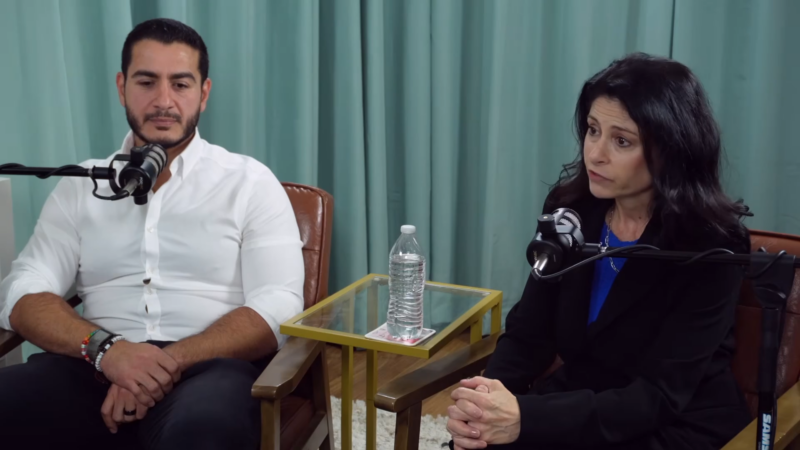

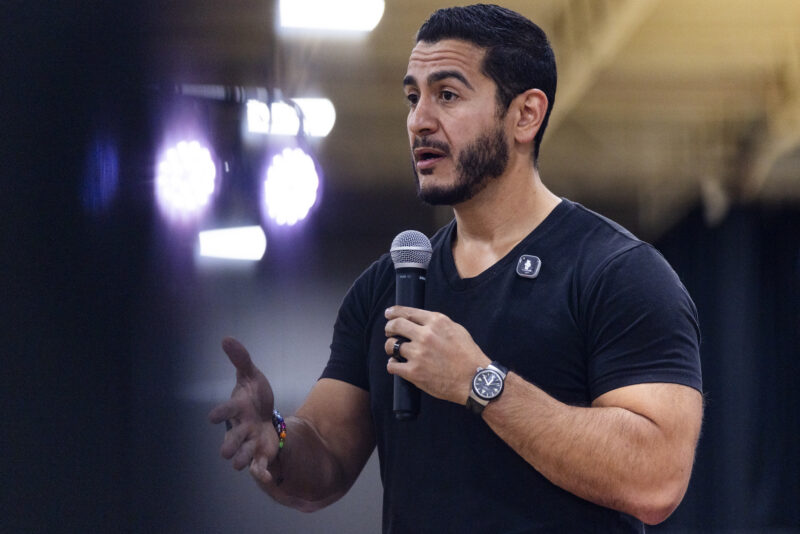

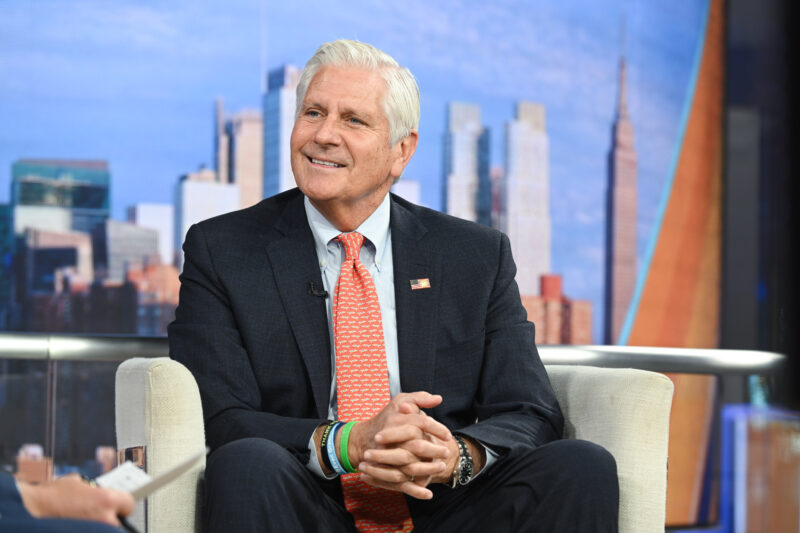
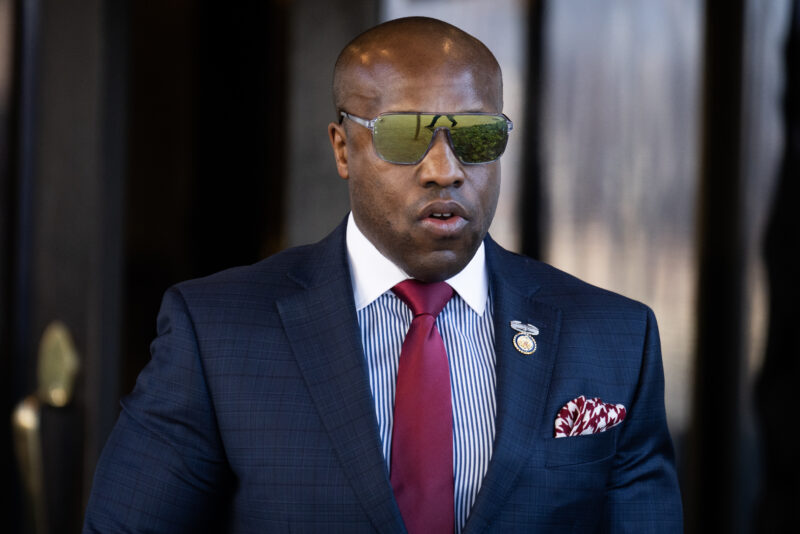
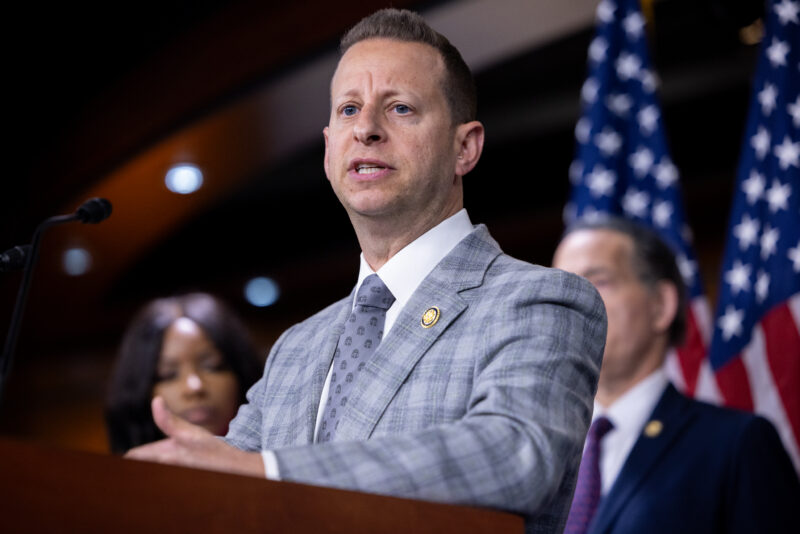






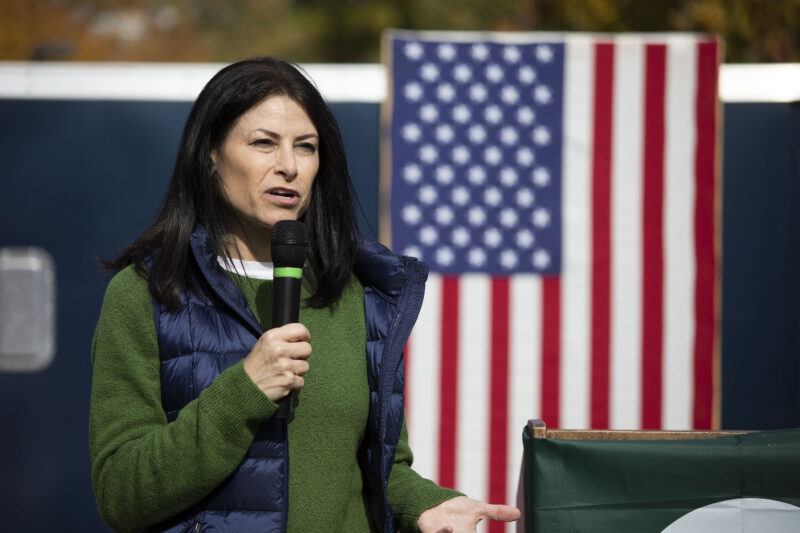
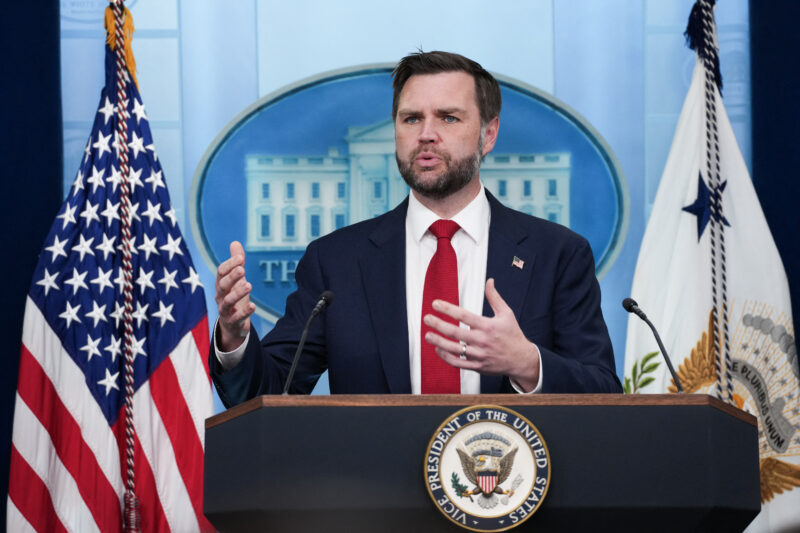


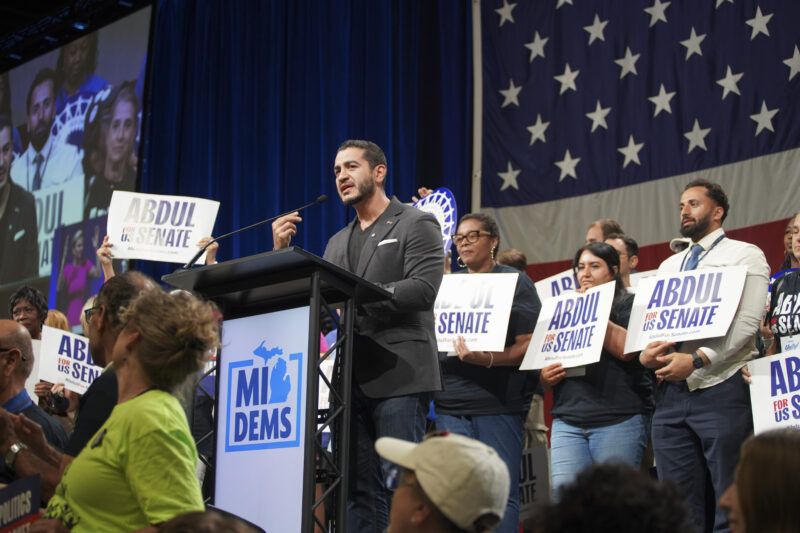
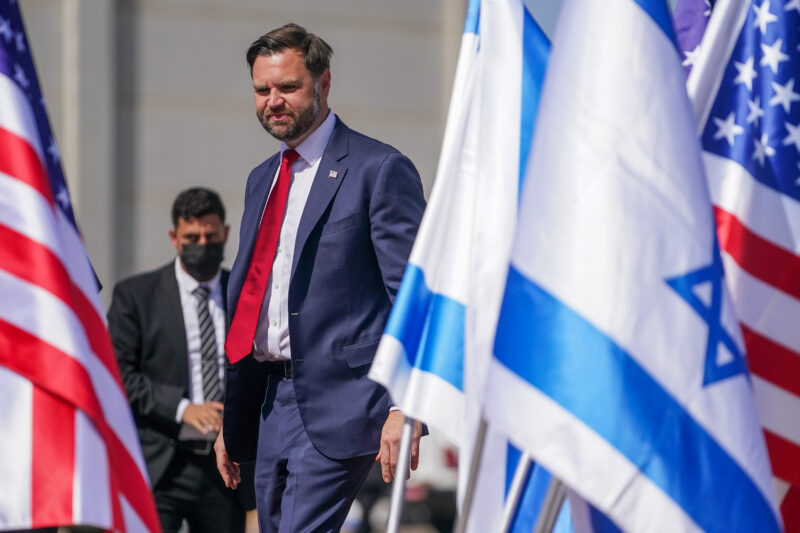


At a Dearborn church, El-Sayed declined to say whether he’d like to win an endorsement from state Sen. Jeremy Moss, a Jewish Democratic holdout
JEFF KOWALSKY / AFP via Getty Images
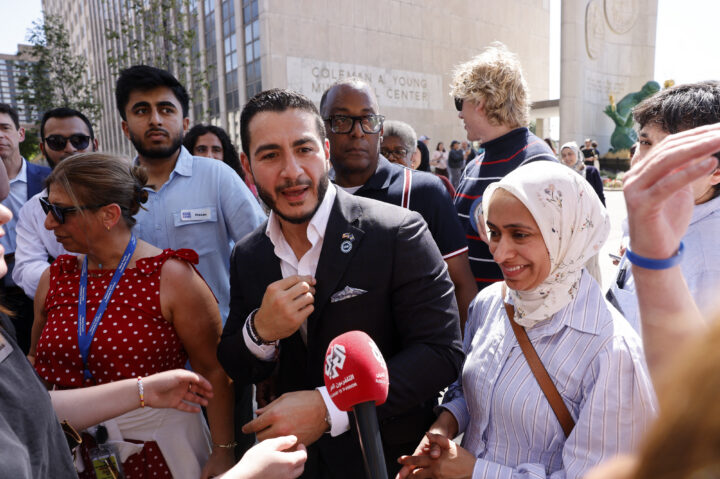
Michigan Democratic Senate candidate Abdul El-Sayed departs with his wife, Sarah Jukaku (R) after a press conference on August 5, 2026.


 Add JewishInsider on Google
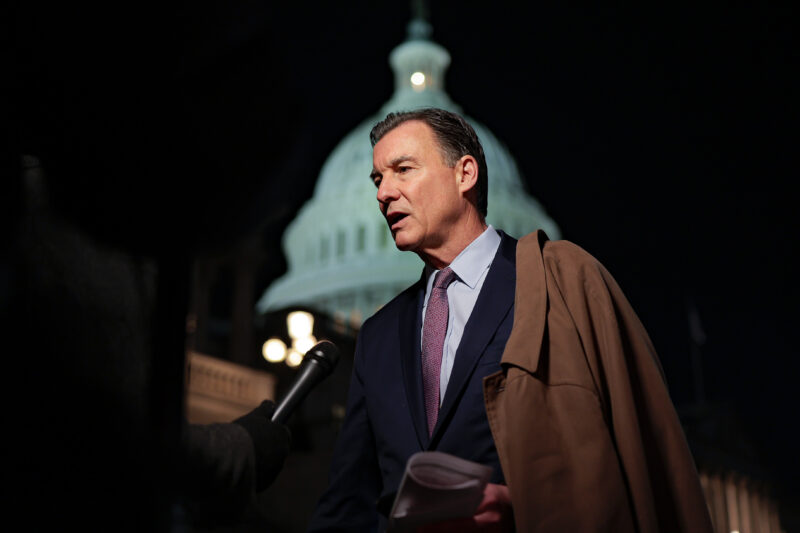
Abdul El-Sayed, Michigan’s Democratic Senate nominee, doubled down on his anti-Israel rhetoric on Tuesday — a day after he drew renewed scrutiny over his ongoing association with antisemitic streamer Hasan Piker.
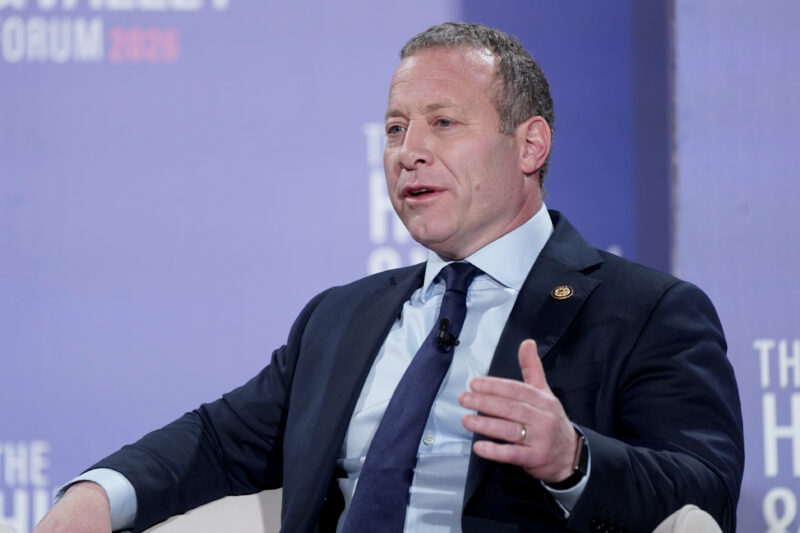
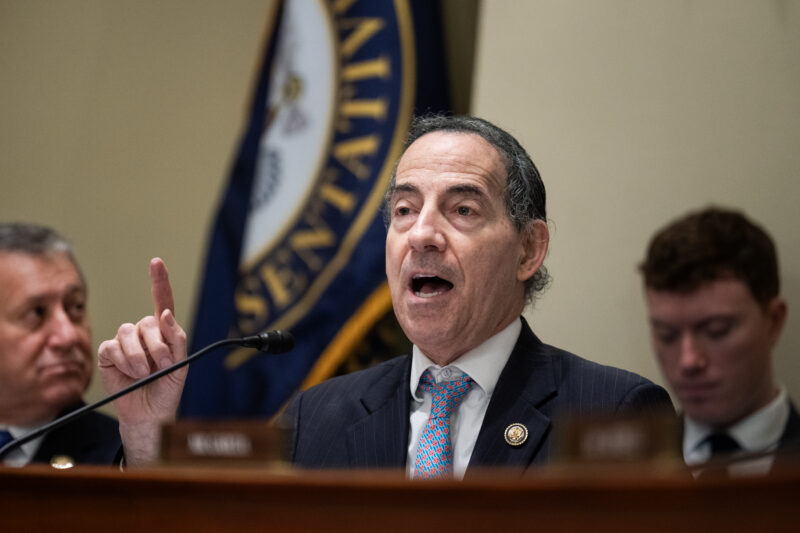
Speaking at a Dearborn church, El-Sayed declined to confirm if he hopes to win an endorsement from state Sen. Jeremy Moss, a Jewish Democratic nominee for a congressional seat in the Detroit area, whom Piker had recently targeted on his show while arguing that Jews who support Israel are inviting violence against themselves.
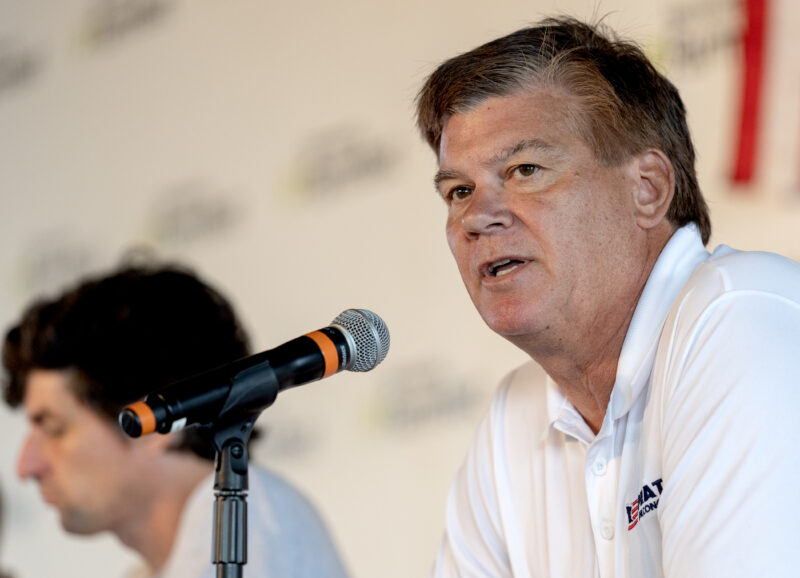
“I’m not going to sugarcoat that we have our disagreements, especially when it comes to foreign policy and the best use of our tax dollars,” El-Sayed said of Moss at the event on Tuesday, billed as “Hate Has No Home in Michigan.”
“And the plurality of Michigan Democratic primary voters nominated me to be the Democratic nominee,” he added.
While reiterating his opposition to antisemitism and appreciation for Judaism, he said that his support for ending aid to Israel is “about making sure that in our foreign policy, we substantiate equal rights to peace, dignity and self-determination for Palestinian folk.”
“I’d rather my tax dollars not get spent to take away some people’s self-determination that could be used to empower other folks here,” El-Sayed argued in his remarks.
The comments suggest El-Sayed is continuing to play to his far-left voting base, even as his hostile views on Israel have alienated Jewish Democrats whom he will likely need to win the competitive battleground state.
Moss, for his part, is among the most prominent Democratic holdouts on El-Sayed, whose modest effort to distance himself from Piker on Monday drove a wedge between the two nominees.
In a statement posted to X on Monday, El-Sayed made no mention of either Piker or Moss, omissions that drew backlash from critics. Instead, he said that “nobody speaks for this campaign besides me and my campaign spokespeople,” while downplaying Piker as a “Twitch steamer” who would not define the contest. He did not say if his relationship with Piker, who has been a top surrogate for his campaign, would change moving forward.
“My commitment to Jewish safety is the same as my commitment to the safety of my own daughters,” he went on in his statement. “Antisemitism is a scourge and we need to address it in all its forms. And I stand against any rhetoric that puts the community at risk.”
The statement reportedly disrupted a conversation between the two nominees regarding an endorsement from Moss that is now in question — even as the state senator has vowed not to back El-Sayed’s Republican rival, former Rep. Mike Rogers (R-MI), who has been courting Jewish Democrats.
Moss, in a statement released Monday, said that he and El-Sayed have been in “continual dialogue” about shared goals such as fighting “MAGA extremism” and “Jewish and Arab safety and security.”
“There is still work ahead to unite our ticket despite our differences,” Moss added, without confirming if he would back El-Sayed. “It won’t happen overnight, nor should it. It will require continuing outreach that is credible and authentic.”
Jessica “Decky” Alexander, the Michigan Democratic Jewish Caucus chair, said that several campaigns and Jewish voices had urged El-Sayed’s team to release a statement on Monday countering Piker’s comments. “Whether they would have or not” without such prompting, “I do not know, but there is a comment,” she told Jewish Insider, calling his response a sign of “definite forward movement.”
“Many caucus members have shared that they would like him to disavow Piker,” she clarified on Tuesday.
Mamdani’s antisemitism czar invited a cross-section of rabbis and Jewish leaders broadly sympathetic to the mayor for the candid conversation
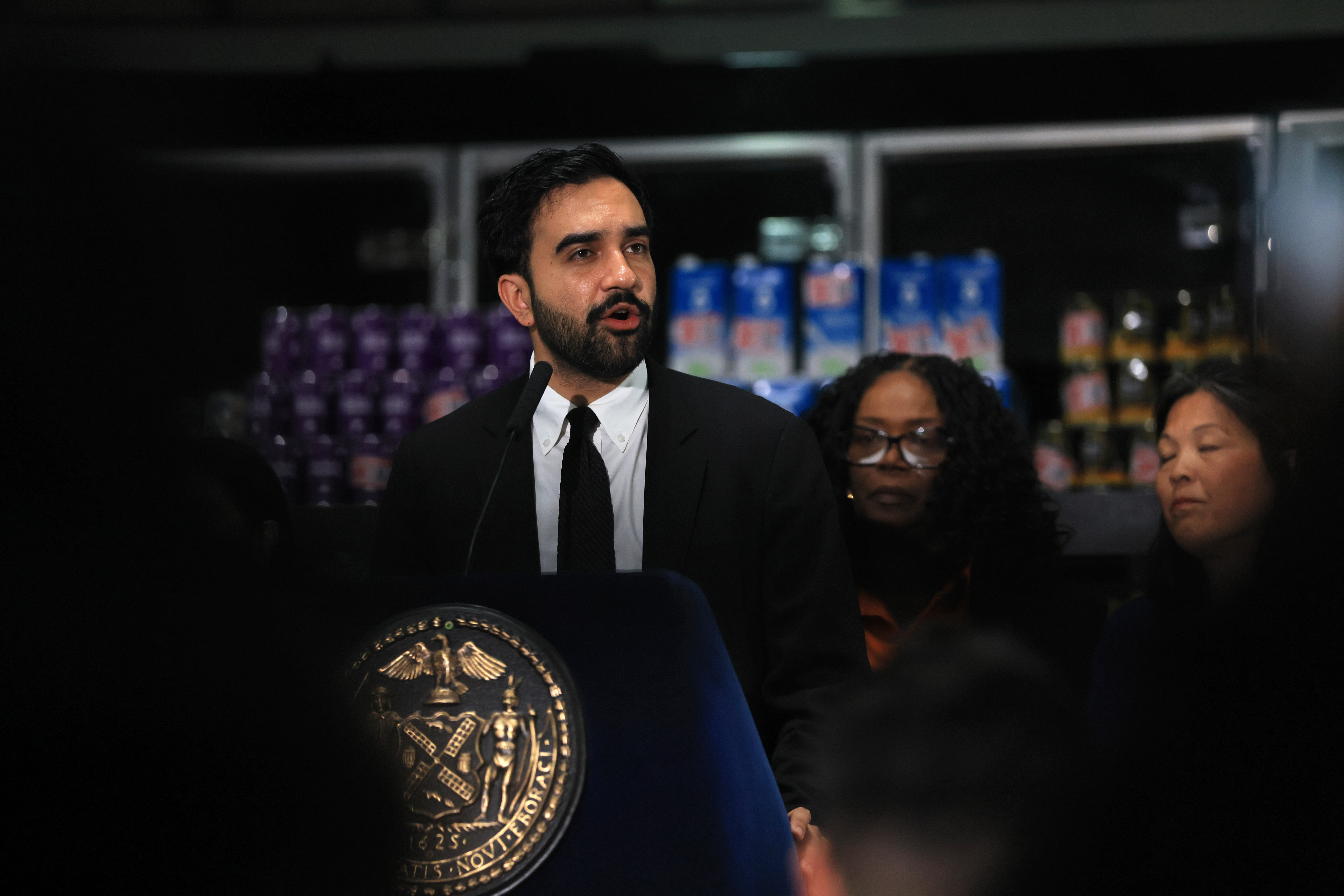
Spencer Platt/Getty Images
New York City Mayor Zohran Mamdani speaks at a food distribution center on July 27, 2026 in the Brooklyn borough of New York City.
A roundtable with New York City rabbis held at City Hall on Monday gave participants a chance to voice growing concerns about New York City Mayor Zohran Mamdani’s Israel rhetoric they felt had before gone unheard — with several attendees telling Jewish Insider the strong collective message, and Mamdani’s reaction, gave them hope he would change tack.
Multiple attendees of the meeting told JI that they had been in contact with Mamdani’s Office to Combat Antisemitism for months about his “single fixation” on Israel and his characterization of the Jewish state’s most politically active supporters as “monsters,” only to see the mayor dismiss such criticism. They said they viewed the gathering as an opportunity to bring their fears directly to him and to demonstrate communal unity amid a period of spiking antisemitic hate crimes.
“People talked about their own concerns, their families’ concerns, their congregations’ concerns. I think he heard them,” said one participant, who requested anonymity to speak freely about their ongoing contact with Mamdani’s antisemitism czar, Phylisa Wisdom, and her deputy, Josh Binderman. “When they framed the meeting, they said it was going to be an ‘open, honest dialogue.’”
A City Hall official said in a statement to JI that Mamdani’s team had “brought together a group of rabbis that reflects the diversity of New York’s Jewish community — including leaders from several major denominations and four of the city’s five boroughs who have leadership roles in some of the city’s largest congregations and denominations — so the mayor could hear directly from rabbis with a broad range of experiences and viewpoints.”
Several participants JI spoke with similarly remarked on the multi-denominational nature of the meeting, though one attendee noted the absence of more religiously conservative Orthodox leaders. The mayor met last week with leaders of Brooklyn’s anti-Zionist Satmar community.
Even as some critics of Mamdani said they were pleased he had taken the meeting on Monday, they expressed skepticism that the mayor would be open to acting on the message the group of rabbis shared.
The New York Board of Rabbis, the organization that has historically represented the city’s Jewish religious leadership, was not involved in planning the meeting, and an executive of the group suggested that Mamdani’s team had deliberately handpicked rabbis and Jewish leaders sympathetic to his political agenda.
Howard Wolfson, a longtime advisor to former New York City Mayor Michael Bloomberg, said that he was “glad” Mamdani had heard the feedback from Jewish leaders, but argued that “action, not just talk,” would help “create the conditions for a new relationship.”
“A good start would be to stop referring to American orgs that represent many Jews as monsters,” Wolfson said in a text message to JI, referring to controversial June remarks in which the mayor had singled out the pro-Israel group AIPAC while speaking at a campaign rally. Mamdani defended his rhetoric after it sparked an outcry from Jewish organizations that said he had invoked an antisemitic trope.
Meanwhile, Israeli Prime Minister Benjamin Netanyahu’s anticipated visit to New York City next month for the U.N. General Assembly “will be a big test,” Wolfson added of the mayor, who encouraged protests of the prime minister even as he acknowledged he cannot order his arrest. “How much does he want to focus on it? How much does he want to grandstand?”
Rabbi Ammiel Hirsch of the Stephen Wise Free Synagogue, a Reform congregation on Manhattan’s Upper West Side, who serves as the president of the New York Board of Rabbis, said he was not asked to attend the meeting on Monday but was encouraged by what he had heard about it. “If in fact it was a very frank conversation,” he told JI, “then that’s a good thing.”
“It’s not that the mayor is not aware of this. He’s heard it many times,” Hirsch added. “Hopefully it’ll make a difference,” he said, particularly ahead of the High Holy Days of Rosh Hashanah and Yom Kippur, when security concerns are top of mind for synagogues across the city. “It hasn’t made a difference so far.”
“He knows our fear, he is aware of our fear” and “he is pursuing it nonetheless,” Hirsch said.
One of the attendees, who asked for anonymity to talk openly, told JI that he came away suspecting that the Office to Combat Antisemitism had selected himself and his peers as a group that could communicate anxieties over the mayor’s heightened focus on Israel and its local repercussions in a manner Mamdani might be receptive and responsive to.
“The consistent message was, we have to address the mayor’s rhetoric around Israel, because that’s an obstacle to addressing anything else effectively,” said the attendee, who noted that the mayor’s team had told him they would be discussing an upcoming report on antisemitism in the city and initiatives to confront it at the meeting. “I shared similar sentiments to my colleagues about the desire to work together on so many issues of shared concern, and the feeling of alienation as a result of the mayor’s rhetoric, and the belief that it could be different.”
Both attendees who spoke to JI on the condition on anonymity praised Mamdani’s handling of the meeting, characterizing him as an active listener who asked thoughtful questions and took notes throughout the discussion, and who acknowledged synagogues’ charitable work assisting immigrants and feeding the needy. They admitted, however, that the gathering ended without any specific concessions or commitments.
“I’m suspending judgment and waiting to see,” one said.
Rabbi Rick Jacobs, president of the Union for Reform Judaism, came away from the gathering with similar impressions.
“Look, they picked a minyan of rabbis to come sit with the mayor, and I’m sure there are rabbis who just really would’ve just, you know, laid into him,” said Jacobs, known for both his pro-Israel record and outspoken criticism of the Israeli government. “Everybody was thoughtful, everybody was respectful, but everybody made sure that he knew that this is really deeply harmful to our community.”
Jacobs said he had brought his concerns to Mamdani personally in the past, but said he hoped that hearing the same message from so many rabbis would bring about change.
Wisdom said in a statement that the hourlong discussion had “focused on strategies to strengthen Jewish safety and belonging, maintain candid lines of communication and collaborate on issues where we have shared values and goals.”
“It was an open, positive and constructive conversation,” she added. “Mayor Mamdani has and will continue to engage with Jewish life in New York City in order to meet the needs of our communities and reaffirm his commitment to the thriving of Jewish communities across the five boroughs.”
The administration has been increasing its engagement with Jewish leaders ahead of the unveiling of the citywide strategy to combat antisemitism, expected next month.
One Jewish leader who was not invited to the Monday gathering, speaking on the condition of anonymity to address a sensitive issue, said he also met privately a few weeks ago with Wisdom and Binderman and raised concerns about Mamdani. “They listened,” he told JI. “They didn’t argue.”
After Mamdani shot a lengthy video last month in which he walked back his campaign vow to arrest Netanyahu while calling the prime minster a “war criminal” and “the architect of a horrific genocide,” the Jewish leader said he followed up with Wisdom and Binderman in a phone call to voice reservations. There was “not a lot of pushback,” he recalled of their conversation.
Rabbi Joseph Potasnik, executive vice president of the New York Board of Rabbis, lamented that the mayor had not reached out to his group and urged the mayor to engage more with the city’s longstanding Jewish communal organizations.
“When you’re the mayor of New York City, you have to be accustomed, or have to learn to deal with people who like you, don’t like you, agree with you, don’t agree with you. That comes with the territory,” he said. “I was glad to hear the people in the room pushed back on the rhetoric. That was heartening to hear.”
The reality is that these candidates are politically problematic to the overall public for reasons that go far beyond their views on Jews or Israel
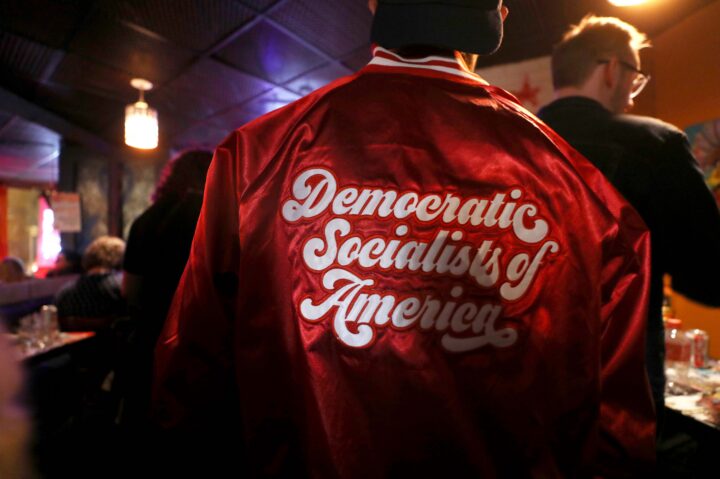
Mario Tama/Getty Images
An attendee wears a jacket at an Iowa caucus watch party organized by Metro D.C. Democratic Socialists of America, on February 3, 2020 in Washington, DC.
One of the unsettling realities that American Jews have been learning throughout this election cycle is that antisemitic behavior and virulently anti-Israel rhetoric has become so normalized that it doesn’t register all that much politically anymore.
The early tell was discovering that New York City Mayor Zohran Mamdani’s involvement throughout his life in extreme anti-Israel activism didn’t impact his ability to win an election in the city with the largest Jewish population in the world.
Then we learned that disgraced former Maine Senate candidate Graham Platner’s Nazi tattoo — which he later covered up — made very little difference in his political standing in the battleground Senate race. It wasn’t until he was accused of rape that rank-and-file Democrats began to reconsider their support of him.
And today we’re grappling with the possibility that Michigan Senate candidate Abdul El-Sayed, who won’t acknowledge Israel’s right to exist as a Jewish state (like Mamdani before him), could prevail in a Democratic primary in a swing state.
Jews find themselves in the news often these days, and for that reason it makes sense to want to dwell on the extreme, often-antisemitic positions that these radical candidates have espoused.
But as we head into a general election where several far-left candidates will be testing their political viability in competitive states and districts against strong Republican challengers, it’s important to remember that their biggest vulnerabilities are on issues that don’t directly impact the Jewish community.
The reality is that these candidates are politically problematic to the overall public for reasons that go far beyond their views on Jews or Israel. The same Democratic Socialists of America (DSA) platform that rejects a Jewish state and condones terrorism also is one that envisions abolishing prisons and defunding the police and backs open borders.
DSA co-chair Megan Romer’s interview on “Fox News Sunday” last week where she enthusiastically endorsed all the exotic positions of the group’s national platform went viral — well beyond conservative media — because it was such a direct encapsulation of the ideas that these candidates actually believe.
DSA-aligned Wisconsin gubernatorial front-runner Francesca Hong, whose insurgent primary campaign hasn’t faced much scrutiny until recently, similarly struggled under basic fact-gathering interviews from Fox News and CNN.
In a similar vein, El-Sayed’s recent stumble when asked on CNN about his past support for defunding the police didn’t hurt him much in the Democratic primary. But you can bet his past views will be aggressively litigated in the general election, if he emerges as the nominee.
Unlike the deep-blue districts where DSA-aligned members have won primaries, Michigan and Wisconsin are shaping up to be clear tests of whether normie general election voters have turned so anti-establishment that they’re willing to back socialists and other like-minded allies to send a message against the party in power.
And if Republicans end up prevailing in an otherwise rough environment for their party, it’s going to be because their opponents’ far-left views on crime, taxes and border security matter a whole lot more to the average voter than their views on foreign policy.
Rasoul will instead remain in the Virginia House of Delegates, where he is chair of the Education Committee
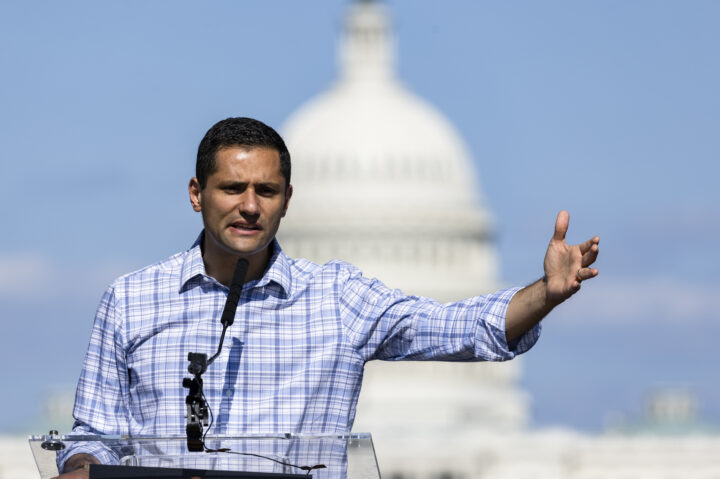
Samuel Corum/Getty Images
Sam Rasoul of the Virginia House of Delegates speaks during a rally on the National Mall on May 31, 2021 in Washington, DC.
A Virginia state lawmaker with a history of inflammatory anti-Israel rhetoric who had been exploring a congressional run announced on Friday that he would instead remain in the state’s House of Delegates.
Sam Rasoul, a Roanoke Democrat who is the son of Palestinian immigrants, said he would hold onto his seat in the state Legislature to continue focusing on his work chairing the Education Committee, a role that has garnered concern from the state’s Jewish community due to his heated comments.
The decision comes days after Virginia voters approved a new congressional map that is likely to deliver four additional House seats to Democrats, prompting a reshuffling as politicians in the state opt to run — or not to run — for the newly drawn Democratic-friendly seats.
“Over the past few months, I have been evaluating the best path forward for me to continue serving our communities as we witness the Trump administration use our taxpayer dollars to fund a genocide abroad and wage an illegal and immoral Middle East war, all while our infrastructure and education systems are left crumbling here at home,” Rasoul said in a statement. “After careful consideration, I have decided that I will not be running for Congress this year.”
He urged congressional leaders to “champion Medicare for All, tackle the affordability crisis, and fight for an arms embargo on Israel.”
Rasoul came under fire last year from Jewish leaders in the state after posting a series of anti-Israel messages on social media that critics say veered into antisemitism. “Zionism has proven how evil our society can be,” he wrote on Instagram last summer, in a post that also called Zionism a “supremacist ideology created to destroy and conquer everything and everyone in its way.”
The Jewish Community Relations Councils for the Washington metro area, Richmond, Virginia Beach and Newport News called last August for Rasoul to be removed from his position as chair of the Education Committee, but that push was not successful.
Riyadh is increasingly aligning itself with Islamist-oriented countries, like Qatar and Turkey
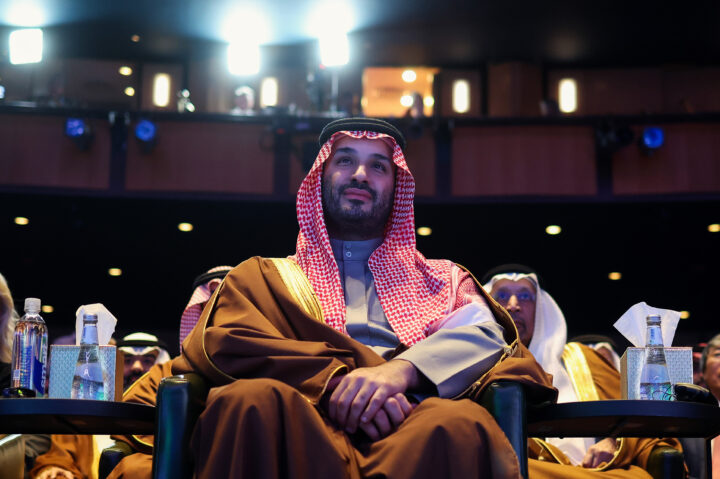
Win McNamee/Getty Images
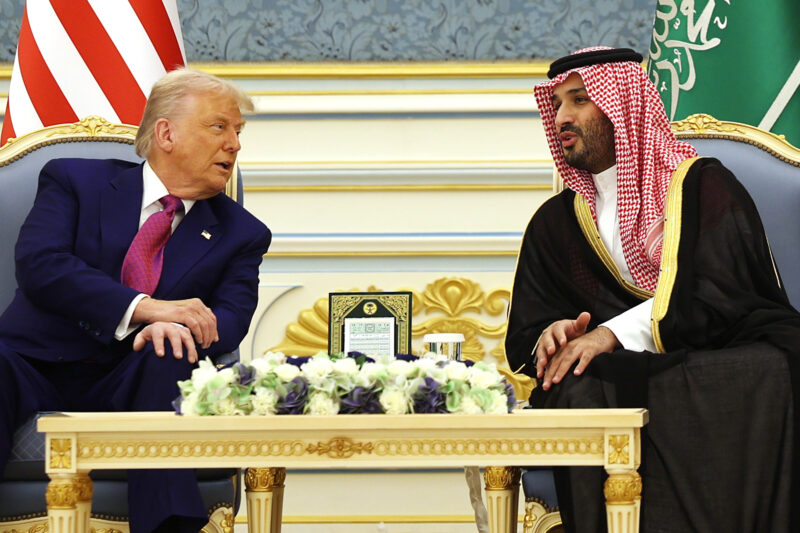
Crown Prince and Prime Minister Mohammed bin Salman of Saudi Arabia listens U.S. President Donald Trump deliver remarks at the U.S.-Saudi Investment Forum at the Kennedy Center on November 19, 2025 in Washington, DC.
Anti-Israel and antisemitic messages from Saudi regime mouthpieces and state-sanctioned media have increased in recent weeks, as Riyadh has pivoted away from a more moderate posture to an alignment with Islamist forces, such as Qatar and Turkey.
Over the weekend, prominent Saudi columnist Dr. Ahmed bin Othman Al-Tuwaijri wrote an article in a Saudi news site attacking the United Arab Emirates, with whom Saudi Arabia has been at odds in recent weeks, as “an Israeli Trojan horse in the Arab world … in betrayal of God, His Messenger and the entire nation.” He also wrote that “Israel is on a path to a rapid downfall and the umma will remain, God willing.”
The column, published after weeks of anti-Israel and antisemitic messaging from Saudi-backed channels, sparked an uproar from Western voices. The Anti-Defamation League condemned “the increasing frequency and volume of prominent Saudi voices … using openly antisemitic dog whistles and aggressively pushing anti-Abraham Accords rhetoric, often while peddling conspiracy theories about ‘Zionist plots.’”
The Saudi site then took the article down. But when there was a backlash in the Arab world, it went back online.
An editorial in the Saudi government newspaper Al-Riyadh earlier this month said that “wherever Israel is present, there is ruin and destruction,” and that Israel “do[es] not respect the sovereignty of states or the integrity of their territories, while working to exploit crises and conflicts to deepen divisions.”
A conspiracy theory that has gained steam on Saudi social media in recent weeks accuses the UAE of trying to push for a “New Abrahamic Religion” melding Judaism, Christianity and Islam, thus destroying Islam, an apparent reference to the Abrahamic Family House — meant to foster religious tolerance.
The shift in Saudi media comes after months in which imams at the Grand Mosque in Mecca, whose sermons are seen as reflecting official Saudi messages, have railed against Israel and the Jews. In a recent sermon, Sheikh Saleh bin Abdullah bin Humaid said, “Oh Allah, deal with the Jews who have seized and occupied, for they cannot escape your power. Oh Allah, send upon them your punishment and misery.”
“I’m ringing the alarm; I’m breaking the glass,” Hussain Abdul-Hussain, a research fellow at the Foundation for Defense of Democracies, said on the “Ask A Jew” podcast earlier this month. “I’m saying, listen, these guys are changing.”
Edy Cohen, a research fellow at the Israel Center for Grand Strategy, told Jewish Insider that the Saudi-backed Arabic news channel Al Arabiya is “very anti-Israel, they glorify the Palestinians,” though he stopped short of the characterization made by a prominent Israeli journalist last week that it has become worse than the Qatar-backed Al Jazeera.
Hussain Abdul-Hussain, a research fellow at the Foundation for Defense of Democracies, said on the “Ask A Jew” podcast earlier this month that the Trump administration needs “to have a serious talk with” the Saudis.
“I’m ringing the alarm; I’m breaking the glass,” he said. “I’m saying, listen, these guys are changing.”
In the past, “you only got these crazy terrorist clerics, the al-Qaida types … would be inciting against the Jews,” Abdul-Hussain said. “But this week, the [Saudi] state-owned media was inciting against the Zionist plan to partition the region and to divide the region. This is very new.”
Hussein Aboubakr Mansour, a researcher for the Z3 Project, noted in a recent interview on the “Tikvah Podcast” that the Saudi “interest is colliding with that of Israel in many places,” while “the interests of the Israeli and the Emiratis are converging in a lot of places,” leading Riyadh to lash out against both at the same time.
He noted a rise in “the Arabist discourse of Arab sovereignty, Arab unity, the Emiratis and Israelis want to fragment us.”
“[The Saudi leadership] heard [exiled Iranian Crown Prince Reza Pahlavi] said the new Iran will normalize relations with Israel, and this drove the leadership crazy,” Edy Cohen, a research fellow at the Israel Center for Grand Strategy, told JI. “Imagine Iran and Israel together … the Shi’a and the Jews together; it’s their biggest nightmare.”
One reason for the turn in Saudi messaging is that Riyadh is “very afraid of Israel,” Cohen said, noting that it views recent Israeli actions as going against Saudi interests.
Cohen noted that Saudi Arabia was mostly quiet about Tehran’s violent suppression of the recent nationwide demonstrations, but behind the scenes, “the Saudis and the Qataris led a campaign for Trump not to strike Iran.”
“[The Saudi leadership] heard [exiled Iranian Crown Prince Reza Pahlavi] said the new Iran will normalize relations with Israel, and this drove the leadership crazy,” Cohen posited. “Imagine Iran and Israel together … the Shi’a and the Jews together; it’s their biggest nightmare.”
Before that, Cohen said, Israel’s recognition of Somaliland, which put Jerusalem on the UAE’s side against Somalia, angered Riyadh, a move he said led a diplomatic push for Arab states to condemn Israel. At the time, Israel’s Channel 12 reported that Saudi sources said Israel recognizing Somaliland threatened its chances of normalization with Riyadh.
Israel and Saudi Arabia have also staked out opposing positions on Syria, where Riyadh supports President Ahmad al-Sharaa, while Israel has been much more hesitant to embrace the new Syrian leader and has acted militarily to protect the Druze Syrian minority near its border.
Cohen said Saudi Arabia would still be willing to establish diplomatic relations with Israel if it brought them a defense pact with the U.S., but “at a price no [Israeli] prime minister would be willing to pay.”
Abdul-Hussain put Saudi’s pivot in the context of its failed regional ambitions. Saudi Arabian Crown Prince Mohammed bin Salman, known as MBS, sought to move “from a country that has relied on oil for a living … to a country that looked like Dubai, where you have tourism and services, what they call a knowledge economy. … Israel is clearly one of the highest knowledge economies in the world.”
However, Abdul-Hussain said, “his experiment has just hit a wall and this transformation is not happening.” In an indicative development, MBS’ flagship project of a futuristic city on the Red Sea known as Neom has been scaled back following delays and budgetary limitations, the Financial Times reported on Sunday.
Now, Abdul-Hussain said, “the quickest tool that [MBS] can get is to reconnect with the Islamists. … Look at Turkey and Qatar using Islamism all the time to project influence, including in Gaza … Washington clearly likes them for some reason, so [MBS is] thinking, why not use Islamism … as a tool to project power at Saudi’s borders? This means they will have to bash the heck out of Israel.”
With the continued talk about a possible American attack on Iran amid the regime’s violent crackdown on protesters, Aboubakr Mansour’s prediction in JI last year after the Israeli and American strikes on Iran remains relevant: He argued that the success of the 12-day war would not bring Jerusalem and Riyadh closer together, nor would regime change in Iran. A less extreme government in Tehran could grow closer to Washington, threatening the Saudi-American relationship.
“They have an interest in Iran remaining the pariah that it is,” he said at the time. “The Saudis are in a place where they want to see neither the Israelis nor the Iranians win. [The Saudis] want them to put each other in check, which will give [the Saudis] more leverage.”
Aboubakr Mansour told the “Tikvah Podcast” this month that he was “still shocked” by the Saudis’ “unbelievable pivot in terms of rhetoric, domestically and regionally, against Israel and the UAE.”
“The easiest way for them to [pivot away from Israel] is to insist on a Palestinian state, but that did not entail that, all of a sudden, they will recall a lot of Muslim Brotherhood figures from abroad … using their online channels to denounce the Zionists … getting closer to Turkey and Qatar. That itself, I was definitely shocked by,” he said.
Now, Aboubakr Mansour said, after Saudi Arabia changed its messaging, “you saw a massive activation of this huge and colossal empire of narrative control that the Qataris run” — meaning Al Jazeera — “in favor of Saudi Arabia. …That’s a form of power, also, that has its own seduction, and I think the Saudis calculated that they have a very large symbolic comparative advantage that is best optimized to use this kind of populist anti-Zionist discourse in the Middle East.”
Plus, Vance draws difference between antisemitism and 'not liking Israel'
George Chan/Getty Images
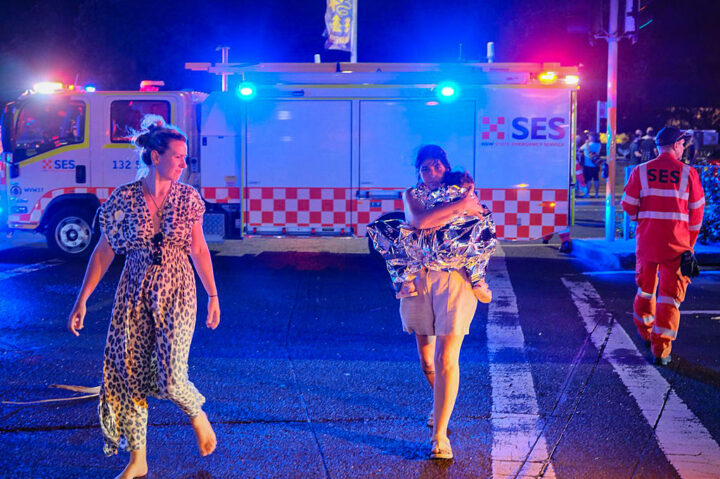
A member of the public leaves the scene with her child, who is covered in an emergency blanket, after a shooting at Bondi Beach on December 14, 2025 in Sydney, Australia.
👋 Good Tuesday morning!
In today’s Daily Kickoff, we look at how New York Democrats, in the wake of the Sydney attack, are addressing anti-Israel rhetoric that Jewish leaders warn encourages antisemitic violence, and report on Vice President JD Vance’s comments linking youth antisemitism to immigration and Gen Z demographics. We cover the ties between a group plotting a New Year’s terror attack in California and the recent violent protest at the Wilshire Boulevard Temple, and interview writer Izabella Tabarovsky about her new book on Soviet dissident Zionism. Also in today’s Daily Kickoff: Alan Garber, Steve Cohen and Stephanie Hallett.
Today’s Daily Kickoff was curated by Jewish Insider Executive Editor Melissa Weiss and Israel Editor Tamara Zieve, with assists from Danielle Cohen-Kanik, Matthew Kassel and Marc Rod. Have a tip? Email us here.
What We’re Watching
- We’re continuing to monitor the situation in Sydney, Australia. Earlier today, Australian Prime Minister Anthony Albanese said that authorities believed the two gunmen had been “motivated by Islamic State ideology,” and that two homemade ISIS flags had been found in their car along with unexploded devices.
- The funeral of Rabbi Eli Schlanger, who was killed in the attacks, will take place at 11 a.m. local time tomorrow in Australia, 7 p.m. ET tonight.
- The White House is hosting its annual Hanukkah reception tonight.
- Other Hanukkah happenings in and around Washington today: Rep. Debbie Wasserman Schultz’s (D-FL) annual Hanukkah party and the Israeli American Council Washington chapter Hanukkah party, featuring remarks by the Justice Department’s Leo Terrell.
- In New York, UJA-Federation of New York and Israel’s mission at the U.N. are holding a Hanukkah reception, while American Friends of Anu — the Museum of the Jewish People is holding its Hanukkah party, where Dr. Albert Bourla and Greek Health Minister Adonis Georgiadis are slated to speak.
- Boston’s Vilna Shul is hosting a live taping of the Shalom Hartman Institute’s “Identity/Crisis” podcast, with host Yehuda Kurtzer in conversation with Harvard President Alan Garber.
- And in Qatar, CENTCOM is holding a daylong conference focused on the Trump administration’s proposed International Stabilization Force in Gaza.
- During a two-day state visit to Jordan, Indian Prime Minister Narendra Modi addressed the India-Jordan Business Forum, which convened today in Amman.
What You Should Know
A QUICK WORD WITH JI’S MARC ROD
The massacre in which 15 people were killed at a Hanukkah celebration at Bondi Beach in Sydney, Australia, on Sunday has once again brought the Jewish community’s security vulnerabilities into stark focus.
But for the American Jewish community, the prospects for much-needed help from the federal government in the form of additional Nonprofit Security Grant Program funding remain unclear.
The Senate Appropriations Committee’s homeland security subcommittee still hasn’t released a draft bill for 2026, greatly increasing the chances of a full-year continuing resolution that would keep funding for the program flat, at $274.5 million, a level that advocates and proponents on the Hill and Jewish groups say is severely insufficient. The House has passed its own version of the bill with $335 million in funding for the program.
Eric Fingerhut, the CEO of the Jewish Federations of North America, told JI, “The events in Australia and California these past days are terrible reminders of the violent antisemitism Jewish communities face. We’ve worked to ensure that every Federation community has a professional security program and director, but at the end of the day it is the government’s responsibility to keep its citizens safe from terrorism, and that’s why it is critical to both ensure that the Nonprofit Security Grant Program is fully funded and not allowed to lapse.”
Multiple lawmakers on the committee and those who follow the NSGP funding process closely said they have little clarity on the state of play on the funding bill, including subcommittee ranking member Sen. Chris Murphy (D-CT) and Sen. James Lankford (R-OK), a co-chair of the Senate antisemitism task force.
SLOGAN UNDER SCRUTINY

The deadly terrorist attack during a Hanukkah celebration in Australia on Sunday is sparking a renewed debate within the Democratic Party over anti-Israel slogans including “globalize the intifada,” and whether such extreme rhetoric fuels antisemitic prejudice that can lead to violence against Jews. Some candidates and elected officials in New York City, where recent anti-Israel demonstrations have raised alarms within the largest Jewish community in the world, are tying such rhetoric directly to the carnage at Bondi Beach in Sydney — after two gunmen killed at least 15 people and wounded more than three dozen in the deadliest attack against the Jewish community in Australian history, Jewish Insider’s Matthew Kassel reports.
The politics of words: Micah Lasher, a Jewish state assemblyman who is running to succeed Rep. Jerry Nadler (D-NY), asked rhetorically in a social media post Sunday whether there was “any question” that “the spread of violence against Jews is intertwined with the social acceptability of violent rhetoric directed at Jews.” Erik Bottcher, a city councilman who is also mounting a bid for Nadler’s seat, said that in the wake of “an attack like Bondi Beach, we should be unequivocal: antisemitic violence is unacceptable, full stop. And we should also be honest that slogans like ‘globalize the intifada’ don’t advance justice, they escalate hostility and make Jewish communities feel targeted.”
Read the full story here with additional comments from New York Democrats including Mayor Eric Adams, state Assemblymember Alex Bores, Rep. Ritchie Torres (D-NY) and NY-6 candidate Chuck Park.
Standing in solidarity: Speaking at the White House Sunday night, President Donald Trump called the shooting a “purely antisemitic attack,” and praised Ahmed al Ahmed, a Muslim man and bystander who stepped in to disarm the gunman at Bondi Beach, Jewish Insider’s Matthew Shea reports.
VANCE’S VIEW

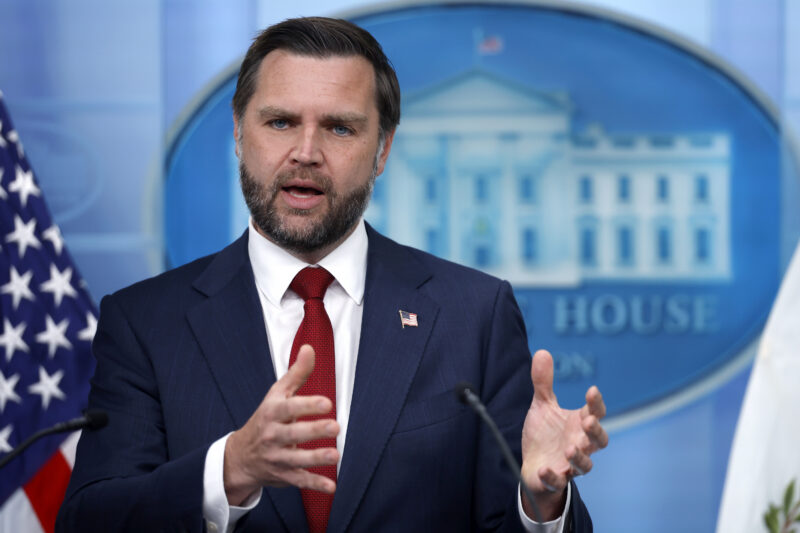
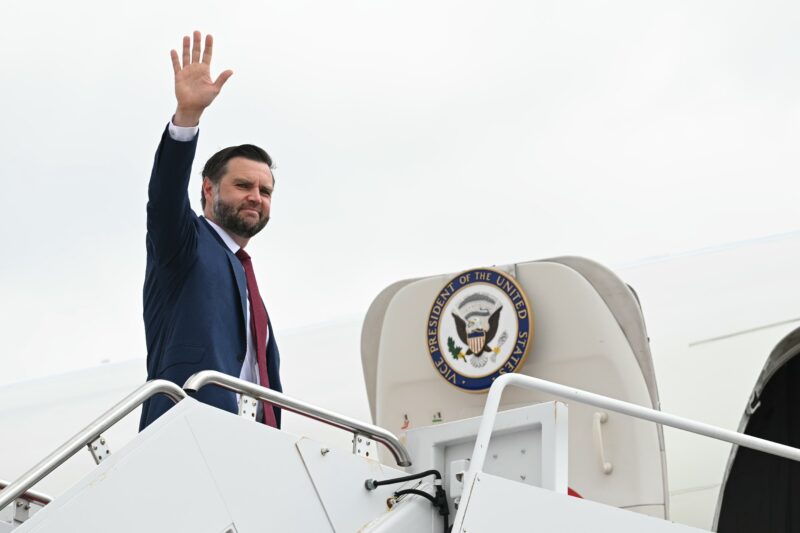
In a series of social media posts, Vice President JD Vance linked data finding increased antisemitism among young people on both sides of the aisle to immigration, and said that there is a difference between “not liking Israel” and being antisemitic, Jewish Insider’s Marc Rod reports.
What he said: “To write an article about the ‘generational divide’ in anti-semitism without discussing the demographics of the various generations is mind boggling,” Vance wrote, referencing an Atlantic piece by Yair Rosenberg that looked at polling data indicating higher levels of antisemitism among younger Americans. Vance blamed the increase in antisemitism on immigration and the demographic makeup of younger Americans, adding “the most significant single thing you could do to eliminate anti-semitism and any other kind of ethnic hatred is to support our efforts to lower immigration and promote assimilation.” The vice president also wrote, “I would say there’s a difference between not liking Israel (or disagreeing with a given Israeli policy) and anti-semitism.”
PLOT PREVENTED

Federal authorities foiled an alleged terror plot by an anti-Israel, anti-American extremist group, officials announced on Monday. The group — the Turtle Island Liberation Front — appears to also be one of the organizers of an anti-Israel protest that targeted a Los Angeles synagogue this month, Jewish Insider’s Gabby Deutch reports.
Plan for midnight: Four members of TILF were arrested over the weekend in the Mojave Desert, where they had allegedly gathered to attempt to construct improvised explosive devices. According to Bill Essayli, the first assistant U.S. attorney for the Central District of California, they planned to set off the pipe bombs in a coordinated attack at midnight on New Year’s Eve targeting U.S. companies in Los Angeles and Orange County, Calif.
FRIENDS IN HIGH PLACES

A senior State Department official and two GOP members of Congress met Friday with members of Germany’s far-right Alternative for Germany (AfD) party, which has long faced accusations of extremism and pro-Nazi sympathies, Jewish Insider’s Marc Rod reports.
Meeting minutes: “My exchange with Under Secretary [of State for Public Diplomacy] Sarah Rogers on the new national security strategy of the Trump Administration has made it clear that Washington is seeking a strong German partner who is willing to take on responsibility,” Bundestag member Markus Frohnmaier posted after the meeting. Responding to a critic who noted that leaked Russian documents allegedly described Frohnmaier as a Russian asset, Rogers praised the AfD. The AfD delegation also met with Reps. Anna Paulina Luna (R-FL) and Tim Burchett (R-TN) and attended a New York Young Republican Club event.
STATE-SANCTIONED SERMON?

During a Friday sermon at the Grand Mosque in Mecca, Saudi Arabia, Sheikh Saleh bin Abdullah bin Humaid — one of the nine imams of the mosque — urged Muslims to view Palestinian children as role models in the face of what he described as an “oppressive and brutal Zionist enemy,” Jewish Insider’s Matthew Shea reports.
What this means: Sermons delivered at the Grand Mosque are closely watched across the Muslim world and are widely seen as reflective of official Saudi religious and political messaging, making it notable that the senior Saudi cleric used the address at Islam’s holiest site to condemn Israel as President Donald Trump continues to promote normalization between the two countries. Hussain Abdul-Hussain, a research fellow at the Foundation for Defense of Democracies, said the remarks point to broader political implications. “Preachers in most Gulf countries are government employees, and their sermons often reflect official talking points,” Abdul-Hussain said.
BOOKSHELF

Writer and activist Izabella Tabarovsky has heard from many Jewish students that large Jewish organizations advised them to keep their heads down and try not to attract attention as a strategy to weather the anti-Israel and antisemitic storms that have raged on campus since Oct. 7, 2023. Tabarovsky’s counter-message: Don’t hide. Reclaim your Zionism. And take inspiration from the Soviet refuseniks of the 1980s, who stared down Communist Party strongman Leonid Brezhnev, held fast to their Judaism and eventually won their freedom. Tabarovsky lays out some of these strategies for college students in a new book, Be a Refusenik: A Jewish Student’s Survival Guide, Jewish Insider’s Lahav Harkov reports.
Identifying a need: “We’re in a bleak moment, and a lot of books diagnose the bleakness. … I saw a hunger for an inspirational message,” Tabarovsky told JI. In the near-decade that she has been writing about the subject, it has become “widely accepted among scholars and people involved in this [activism] that the patterns of anti-Zionist demonization and erasure are some of what Soviet Jews experienced in [former Soviet Union leader Leonid] Brezhnev’s USSR,” she said.
Worthy Reads
Gathering Storm: In The Free Press, Rabbi David Wolpe and former U.S. antisemitism envoy Deborah Lipstadt consider how antisemitic rhetoric and protests are affecting public Jewish life. “These chants, attacks, and endorsements from public personalities are designed to make Jews think twice about gathering with other Jews, going to kosher restaurants, putting a mezuzah on the doorpost of their apartments or dorm rooms, or even wearing a Jewish star around their necks. … We are a people too wise to be hysterical but too experienced to be naive. The greatest enemy we face now is indifference. If the moral people of the world do not stand with us to denounce and expunge this kind of behavior so destructive to the fabric of any healthy society, especially one founded on the promise of freedom and equality, the consequences will not only be dire for the Jewish people — they will be dire for democracies, the rule of law, and the civilization we cherish.” [FreePress]
Hints of Humanity: In The New York Times, Rabbi Sharon Brous reflects on the instances of humanity that have appeared in times of darkness and despair. “I’m tired of looking for the silver lining after such tragedies. I no longer want to hear, after a mass shooting, of the remarkable ways a community came together. I don’t want platitudes and pieties. I want justice. … I don’t want to celebrate resiliency; I want to see reform. But as a spiritual matter, I urgently need the silver lining. I need the hints of humanity that remind us that what is is not what must be. The quiet insistence that there is more light than darkness in this world, that tenderness and love can prevail over even the most virulent hatred. Give me the counterfactual that makes it impossible to fall into despair, that will keep me from slipping into the self-defeating certainty of our impending doom.” [NYTimes]
Remembering Rabbi Eli: In The Atlantic, Zalman Rothschild reflects on his friendship with Rabbi Eli Schlanger and the lessons he learned from the rabbi, who was killed in the Bondi Beach attack. “Hanukkah does not commemorate despair or isolation. It marks rededication — to Jewish life, Jewish practice, and Jewish responsibility. As Schlanger himself put it earlier this year, the way forward in the face of darkness is to ‘be more Jewish, act more Jewish, and appear more Jewish.’ After October 7, 2023, my sister joined a synagogue for the first time and enrolled her daughters in Hebrew school — as did many others. On the road in Paris, I had no plans to light a menorah, but after learning of Schlanger’s murder, I felt compelled to attend a synagogue gathering and light a Hanukkah candle. … The story of Hanukkah is about political power and self-defense, but it is also about Judaism’s spirit and moral commitment. The words of the prophet Zechariah have been recited in synagogues for centuries on the Shabbat that falls on Hanukkah: ‘Not by might, nor by power, but by my spirit.’” [TheAtlantic]
Keep an Eye on Iran: In The Wall Street Journal, former National Security Advisor John Bolton warns that Iran is working to rebuild its proxy network as the U.S. and allies have their attention focused on other global and domestic events. “The Gaza cease-fire diverts Western attention from the real threat — Tehran and its surrogates — and benefits these bad actors. … The “axis of resistance” isn’t yet a well-oiled machine again, but it could be soon if the U.S. is inattentive. Washington’s frequent distractions must not prevent it from developing an effective long-term strategy. Now is the time not to negotiate with the ayatollahs but to resume serious enforcement of economic sanctions while adding new ones. When Supreme Leader Ali Khamenei dies, the leadership vacuum will provide Iran’s resistance a critical opportunity for regime change, and the opposition deserves U.S. assistance. Ignoring Iran until it fully regains its strength will only make matters worse.” [WSJ]
Word on the Street
President Donald Trump said the administration was “looking into” whether Israel’s targeted drone strike on a senior Hamas official in Gaza over the weekend violated the ceasefire that went into effect in October…
Israeli Prime Minister Benjamin Netanyahu met on Monday with U.S. Ambassador to Turkey Tom Barrack in Jerusalem as the U.S. works to alleviate tensions between Israel and both Lebanon and Syria; others present included Israeli Foreign Minister Gideon Sa’ar, incoming Mossad head Maj. Gen. Roman Gofman, U.S. Ambassador to Israel Mike Huckabee and White House Middle East advisor Aryeh Lightstone…
DMFI PAC is rolling out its first round of 2026 House endorsements in a list first shared first with JI, backing several Democratic incumbents facing challenges from the left including Reps. Ritchie Torres (D-NY), Dan Goldman (D-NY), Wesley Bell (D-MO), Shri Thanedar (D-MI) and Steve Cohen (D-TN)…
Harvard University’s governing board announced that Alan Garber, who had initially been tapped to lead the school on an interim basis through June 2027, will continue as the school’s president indefinitely…
Jared Kushner’s Affinity Partners is dropping out of a plan to turn a former army complex in Belgrade, Serbia, into a Trump-branded property; the redevelopment of the site, which had been bombed by NATO in 1999, had prompted protests as well as government investigations into efforts to strip the complex of its status as a protected cultural-heritage site…
Police in Redlands, Calif., are investigating as a possible hate crime an incident in which assailants fired 20 shots at a home with Hanukkah decorations…
Nick Reiner, the son of Rob Reiner, was arrested and booked on suspicion of murder charges after the bodies of his parents were found at their Los Angeles home on Sunday…
A crowdfunding campaign for Ahmed al Ahmed, a Sydney shopkeeper who was filmed restraining one of the gunmen in the Bondi Beach attack, has raised $1.5 million, eJewishPhilanthropy’s Judah Ari Gross reports; contributors to the campaign include Bill Ackman, who gave $66,000, as well as thousands of small-dollar donors…
New York Mets owner Steve Cohen received approval for the construction of his $8 billion Metropolitan Park casino project next to the team’s Citi Field stadium…
The International Criminal Court rejected an Israeli appeal for the court to end its investigation into Israel’s conduct in Gaza, which Israeli representatives said falls outside of the court’s jurisdiction…
Archeologists in Jerusalem discovered a 1,400-year-old pendant believed to date to the late Byzantine era; the discovery, made near the Western Wall complex…
Stephanie Hallett was sworn in as U.S. ambassador to Bahrain…
Alyssa Katz, the executive editor of The City, was tapped as the new editor-in-chief of The Forward…
Rachel Gorsky Bombach, previously a foreign policy advisor to former Sen. Dianne Feinstein (D-CA) and director of the National Security Council in the Obama administration, is joining Democratic Majority for Israel as chief policy officer…
Philanthropist Martin Rosen, an attorney and founding trustee of the Simon Wiesenthal Center, died at 100, eJewishPhilanthropy’s Jay Deitcher reports…
Columnist Robert Samuelson, whose work appeared in Newsweek, The Washington Post and the New York Sun, died at 87…
Pic of the Day

U.S. Ambassador to Israel Mike Huckabee and his wife, Janet Huckabee, Israeli Prime Minister Benjamin Netanyahu and Sara Netanyahu posed for a photo after lighting the second Hanukkah candle on Monday night at the Western Wall in Jerusalem. They were joined by IDF soldiers, Rabbi Shmuel Rabinowitz, who oversees the Western Wall and holy sites, as well as Western Wall Heritage Foundation Director Mordechai (Soli) Eliav.
Birthdays

Attorney, professor and author, she was the first woman to serve as president of the Harvard Law Review, Susan Estrich turns 73…
CBS News journalist who has won 13 Emmy Awards, she has reported for CBS’ “60 Minutes” since 1991, Lesley Stahl turns 84… Numismatist specializing in ancient Jewish and biblical coins and their archaeology, David Bruce Hendin turns 80… British chemist and research professor at the University of Nottingham, Sir Martyn Poliakoff turns 78… Litigator in Denver, Craig Alan Silverman… Novelist, journalist and lecturer, Allen Kurzweil turns 65… President and co-founder of The New Agenda, Amy Siskind… First OMB director in the Obama administration, now CEO of Lazard, Peter R. Orszag turns 57… Astrophysicist and professor at Johns Hopkins University and the Space Telescope Science Institute, he was a winner of the 2011 Nobel Prize in Physics, Adam Guy Riess turns 56… National campaign director in the northeast for the Jewish National Fund, Rabbi Eric Stark… Director of public affairs at Charles Schwab, Adam Bromberg… Mexican singer, she has toured individually and in bands in Central America, the U.S. and Europe, Alix Bauer Tapuach turns 54… Activist, writer, farmer and punk rock musician, Sascha Altman DuBrul turns 51… Rabbi at Congregation Beth Shalom in Clifton Park, N.Y., Shara Siegfeld… Principal at Elm City Strategies, Melissa Wisner… Former chief of staff for U.S. Attorney General Merrick Garland, Matthew Bennett Klapper turns 43… Middle East analyst at Christians United For Israel, Kasim Hafeez turns 42… Founder of Punchbowl News, Jake Sherman… Actress known for her role on The CW’s teen drama “Gossip Girl” and more recently ABC’s “General Hospital,” Amanda Setton turns 40… Congressional reporter at Bloomberg Tax, Zachary C. Cohen turns 34… Product manager at the Ignyte Group, Drew Liquerman…
Please log in if you already have a subscription, or subscribe to access the latest updates.
 Continue with Google
 Continue with Apple