


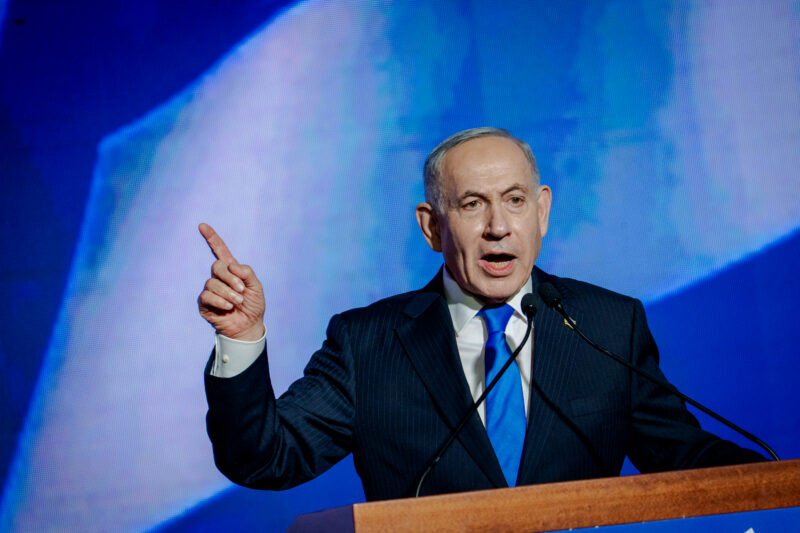


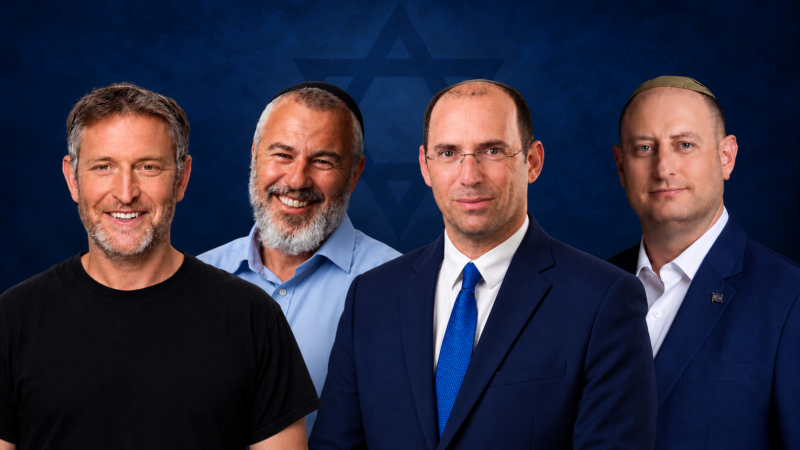





















































Jerry Nadler protege Micah Lasher: ‘The spread of violence against Jews is intertwined with the social acceptability of violent rhetoric directed at Jews’
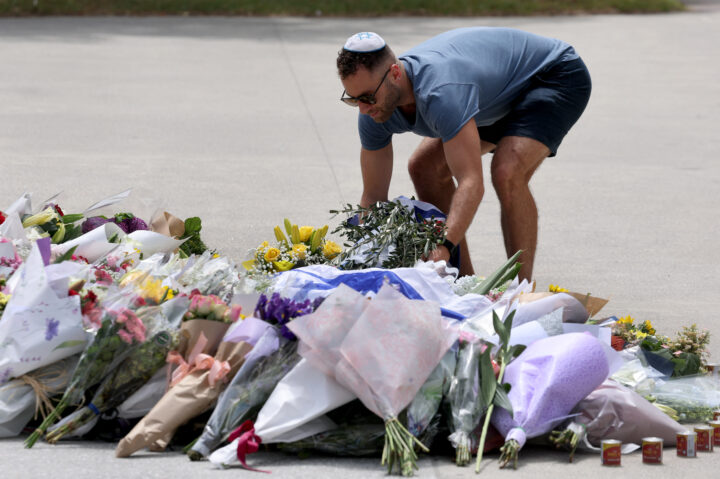
(Photo by DAVID GRAY / AFP via Getty Images)
A man lays flowers at the Bondi Pavillion in memory of the victims of a shooting at Bondi Beach, in Sydney on December 15, 2025.


 Add JewishInsider on Google
The deadly terrorist attack during a Hanukkah celebration in Australia on Sunday is sparking a renewed debate within the Democratic Party over anti-Israel slogans including “globalize the intifada,” and whether such extreme rhetoric fuels antisemitic prejudice that can lead to violence against Jews.
Some candidates and elected officials in New York City, where recent anti-Israel demonstrations have raised alarms within the largest Jewish community in the world, are tying such rhetoric directly to the carnage at Bondi Beach in Sydney — after two gunmen killed at least 15 people and wounded more than three dozen in the deadliest attack against the Jewish community in Australian history.
Eric Adams, the outgoing mayor, said on Sunday that “the attack in Sydney is exactly what it means to ‘globalize the intifada,’” and cast the shooting as “the real-world application of that call to violence.”
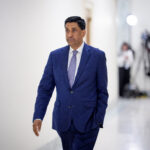
Erik Bottcher, a city councilman who is among several Democrats now competing to succeed Rep. Jerry Nadler (D-NY) in a heavily Jewish district in Manhattan, said that, in the wake of “an attack like Bondi Beach, we should be unequivocal: antisemitic violence is unacceptable, full stop.”
“And we should also be honest that slogans like ‘globalize the intifada’ don’t advance justice, they escalate hostility and make Jewish communities feel targeted,” Bottcher continued in a statement shared with Jewish Insider on Monday. “Leaders should be lowering the temperature.”
Alex Bores, a state assemblyman also seeking to replace Nadler, called the attack “horrifying and despicable” and said “antisemitism is a growing threat around the world,” while noting that “New York City has a special responsibility to confront it head‑on.”
“Any rhetoric or actions that dehumanize Jews, incite violence or put Jewish communities at risk must be called out and stopped, without exceptions. I have repeatedly condemned the use of the slogan ‘globalize the intifada,’” Bores told JI. “I believe that phrase, regardless of a specific speaker’s intent, has been tied inextricably to violent attacks, strikes fear in many New Yorkers and has no place in our city.”
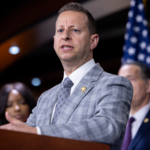
Micah Lasher, a Jewish state assemblyman and another Democrat in the race, asked rhetorically in a social media post Sunday whether there was “any question” that “the spread of violence against Jews is intertwined with the social acceptability of violent rhetoric directed at Jews.”
“People of good will must confront this reality,” he concluded.
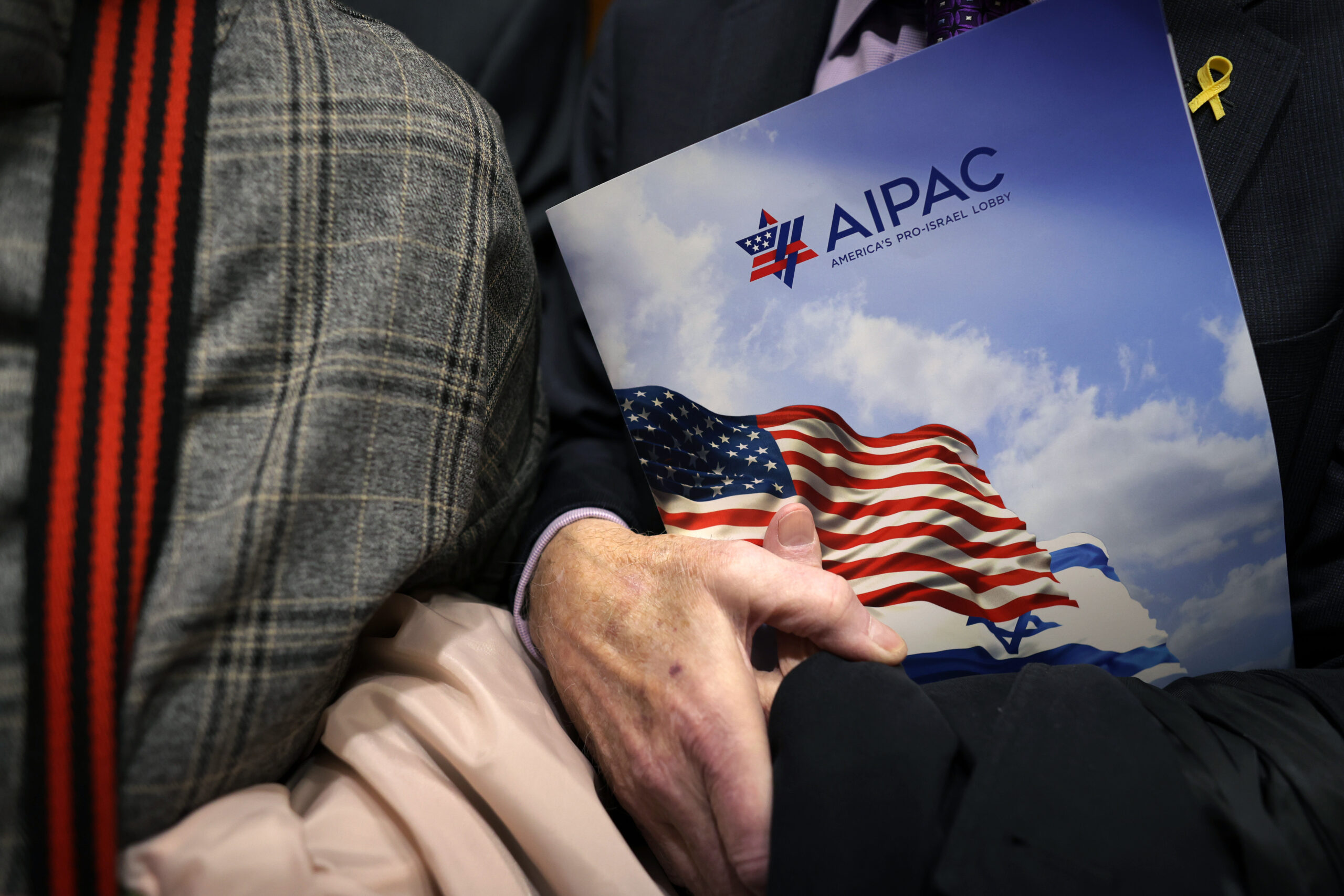
Such discourse is likely to intensify in next year’s primaries, where several anti-Israel candidates in New York City are seeking to challenge incumbent Democrats over their positions on Gaza and ties to AIPAC, the pro-Israel advocacy group increasingly demonized by the far left.
For now, however, those challengers were largely reluctant to weigh in on the heated rhetoric used by anti-Israel protesters — including just last month at at a synagogue in Manhattan where demonstrators chanted such phrases as “globalize the intifada” and “death to the IDF” — and if such language deserves further scrutiny amid heightened security concerns in the Jewish community following the Bondi Beach attack.
Darializa Avila Chevalier, an organizer in Harlem who helped to lead anti-Israel protests at Columbia University and recently launched a bid to challenge Rep. Adriano Espaillat (D-NY), did not respond to a request for comment.
Michael Blake, a former state assemblyman who is now challenging Rep. Ritchie Torres (D-NY) in the Bronx and who has drawn charges of hypocrisy for pivoting from his past outspoken support for Israel and close relations with AIPAC, also did not return a request for comment — even as he condemned the shooting in Australia.
For his part, Torres, a pro-Israel stalwart and top ally of the Jewish community, described the attack as “part of a global surge in antisemitism fueled by an ever-escalating campaign of demonization and dehumanization.”
A spokesperson for Brad Lander, the outgoing city comptroller mounting a newly launched bid to unseat Rep. Dan Goldman (D-NY) in a left-leaning district covering Lower Manhattan as well as parts of Brooklyn, likewise declined to comment, instead referring to his “several public comments about the Sydney shooting.”
The spokesperson also cited previous remarks in which Lander voiced reservations about calls to “globalize the intifada,” shortly after Zohran Mamdani, who is now the mayor-elect of New York City, had faced widespread backlash for refusing to denounce the slogan.
“Maybe you don’t mean to be saying it’s open season on Jews everywhere in the world, but that’s what I hear,” Lander, a top Jewish ally of Mamdani, said in comments in June. “And I’d like to hear that from other people.”
A spokesperson for Goldman, a pro-Israel Jewish Democrat, also declined to weigh in on the matter.
Mamdani, who condemned the Bondi Beach attack as a “vile act of antisemitic terror” in a social media post on Sunday, has refused to denounce the phrase “globalize the intifada,” but has vowed to discourage its usage.
In a Friday interview with WCBS in New York, Mamdani responded to feedback from a prominent local rabbi, Ammiel Hirsch, who expressed concern about the mayor-elect’s “ideological hostility to the very existence of Israel” and said that “anti-Zionist rhetoric and anti-Israel policies will threaten Jewish safety” in the city.
“Rabbi Hirsch is entitled to his opinions,” Mamdani stated. “The positions that I’ve made clear on Israel and on Palestine, these are part of universal beliefs of equal rights and the necessity of it for all people everywhere.”
A spokesperson for Mamdani did not respond to a request for comment.
Despite reluctance among Mamdani and some of his allies to now more openly grapple with rhetoric many Jews have found threatening, one progressive challenger to Rep. Grace Meng (D-NY), a pro-Israel incumbent in Queens endorsed by AIPAC, said that he has come to view phrases such as “globalize the intifada” as harmful, thanks to conversations with his Jewish friends.
Chuck Park, a former City Council aide and foreign service officer who has criticized Meng’s donations from AIPAC, said “Jewish people around the world — from Bondi Beach to Bushwick — are very scared right now,” while adding “it is the job of non-Jewish leaders like myself to listen to them.”
“When I listen to my Jewish friends,” he said in an interview with JI on Monday, “they tell me that they hear” the phrase particularly “as a call to violence against them.”
“The swastika is no longer a Buddhist symbol of good fortune, right?” Park added. “The pointed white hood is no longer a Catholic symbol of penance. And in a very similar way, that phrase is not a call for the liberation of an oppressed people, and I think it has instilled and maybe even inspired dangerous attacks on Jewish people around the world.”
A DNC advisor told JI that Martin made clear to Jewish leaders that he 'is aligned with the community and that frankly people want full-throated leadership'

Aaron J. Thornton/Getty Images for One Fair Wage
Ken Martin, DNC chair candidate, speaks at the "Win With Workers" Rally and Press Conference at the DNC Midwestern Candidate Forum on January 16, 2025 in Detroit, Michigan.
Ken Martin, the chair of the Democratic National Committee, spent Friday calling Jewish leaders, seeking to reassure them that he does not condone the phrase “globalize the intifada,” two sources with knowledge of the meetings told Jewish Insider. Among the leaders he called were senior officials at the Anti-Defamation League and the American Israel Public Affairs Committee.
The meetings came shortly after a clip of Martin discussing New York City Democratic mayoral nominee Zohran Mamdani went viral online. PBS NewsHour anchor Amna Nawaz asked Martin to respond to concerns from Jewish colleagues that Mamdani’s refusal to condemn the phrase “globalize the intifada” was “very disturbing, potentially dangerous” — and asked Martin outright whether he agreed.
“There’s no candidate in this party that I agree 100 percent of the time with, to be honest with you. There’s things that I don’t agree with Mamdani that he said,” Martin told Nawaz. In the interview, he did not specifically address the “globalize the intifada” language.
The clip quickly garnered backlash, and on Friday morning Martin began doing damage control.
“I’ve never supported or condoned the phrase ‘globalize the intifada’, a phrase which is reckless and dangerous, as it can been [sic] seen as a green light to terror, and it should be unequivocally condemned,” Martin wrote in a Friday morning post on X. “Let me be clear, at a time of rising antisemitism, there’s no place for rhetoric that can be seen as a call to violence.”
In the Friday phone calls, Martin faced criticism from the Jewish leaders, the two sources confirmed. But a DNC senior advisor told JI that Martin made clear he stood with them against the harmful rhetoric.
“By the end of it there was an understanding that Ken does understand and is aligned with the community and that frankly people want full-throated leadership,” the advisor said. “This language isn’t about Democrats. This is just not acceptable, period, and as a party it’s not acceptable.”
But Martin still held his fire against Mamdani because Mamdani himself did not utter the phrase “globalize the intifada,” the DNC advisor explained. Rather, Mamdani defended its use by others.
In the PBS interview, Martin said he is committed to leading a “big tent” party.
“You win by bringing people into your coalition. We have conservative Democrats. We have centrist Democrats. We have labor progressives like me, and we have this new brand of Democrat, which is the leftist,” Martin said.
Martin said the Democratic Party should be a ‘big tent’ that includes ‘new’ leftists

Rod Lamkey, Jr./AP
Democratic National Committee chairman Ken Martin speaks after winning the vote at the Democratic National Committee winter meeting at the Gaylord National Resort and Convention Center in National Harbor, Md., Feb. 1, 2025.
Democratic National Committee Chairman Ken Martin declined on Wednesday to criticize New York City Democratic mayoral nominee Zohran Mamdani’s refusal to condemn the “globalize the intifada” slogan. The DNC chair, who was elected earlier this year, praised the party for being a “big tent” comprising different ideologies, including “leftists” such as Mamdani.
Asked during a “PBS NewsHour” interview about concerns from Jewish Democrats regarding Mamdani’s refusal to condemn the phrase, Martin replied, “There’s no candidate in this party that I agree 100 percent of the time with, to be honest with you. There’s things that I don’t agree with Mamdani that he said.”
Martin said that he had learned through his 14 years as chairman of the Minnesota Democratic Party and his tenure at the DNC “that you win through addition. You win by bringing people into your coalition. We have conservative Democrats. We have centrist Democrats. We have labor progressives like me, and we have this new brand of Democrat, which is the leftist.”
“We win by bringing people into that coalition. And at the end of the day, for me, that’s the type of party we’re going to lead. We are a big tent party. Yes, it leads to dissent and debate, and there’s differences of opinions on a whole host of issues. But we should celebrate that as a party and recognize, at the end of the day, we’re better because of it,” Martin said.
Martin also argued that national Democrats could learn from Mamdani’s primary campaign performance in terms of focusing their message away from President Donald Trump and toward a forward-looking vision.
“He campaigned for something. And this is a critical piece. We can’t just be in a perpetual state of resisting Donald Trump. Of course, we have to resist Donald Trump. There’s no doubt about it for all the reasons we just talked about. But we also have to give people a sense of what we’re for, what the Democratic Party is fighting for, and what we would do if they put us back in power,” Martin said.
“One of the lessons from Mamdani’s campaign is that he focused on affordability. He focused on a message that was resonant with voters and he campaigned for something, not against other people or against other things. He campaigned on a vision of how he was going to make New York City a better place to live,” he continued.
Martin praised the methods by which Mamdani’s campaign got its message out.
“The other lessons, of course, is the tactics he used to get his message out, both a very aggressive in-person campaigning, meeting voters where they’re at, and then also in those digital spaces, using very creative messaging to cut through the noise and to get to voters in an inexpensive but authentic way,” he said.
Schumer condemns the phrase and ‘believes it should not be used because it has such dangerous implications’

HANNA LEKA/Middle East Images/AFP via Getty Images
Protesters hold a banner reading "Globalize the Student Intifada" during a demonstration outside the ICE building in Washington, DC, on March 15, 2025.
Several Senate Democrats told Jewish Insider on Monday that calls to “globalize the intifada” are unacceptable and must be condemned, amid concerns from Jewish leaders and organizations over presumptive New York City Democratic mayoral nominee Zohran Mamdani’s defense of the slogan.
Senate Minority Leader Chuck Schumer (D-NY), who has thus far not endorsed Mamdani, told JI he plans to meet with Mamdani in a few weeks, when asked about Mamdani’s refusal to condemn the slogan.
“Sen. Schumer condemns the phrase ‘Globalize the Intifada’ and believes it should not be used because it has such dangerous implications. As Senator Schumer said after the death of Karen Diamond, the attack in Boulder continues to serve as a grave reminder of the deadly consequences of the rise in antisemitism,” a spokesperson for Schumer told JI.
“I don’t know what [Mamdani’s] position is on it, but I certainly think that the call to spread the intifada is the kind of incitement that can lead to extremist violence,” Sen. Richard Blumenthal (D-CT) told JI.
Blumenthal added that he is “an advocate of increasing the Nonprofit Security Grant Program, which protects against terrorist hate crimes to synagogues, mosques, churches and similar community institutions, and so I’m deeply concerned about incitement and hate speech that can lead to hate crimes.”
Sen. Jacky Rosen (D-NV) said calls to globalize the intifada must be condemned.
“At a time when antisemitism is rising at alarming rates in the U.S., leaders of both parties have an obligation to stand up, speak clearly, and unequivocally condemn hatred and bigotry in every form,” Rosen said in a statement to JI. “The intifadas were periods marked by unspeakable violence and terror against innocent Israelis, and it should not be a difficult decision for anyone to condemn the antisemitic call to globalize these violent attacks. Our words matter — and in moments like this, silence is not an option.”
“I’m not a member of the Jewish community or a NYC voter. Personally, I would never use or defend this deeply troubling phrase,” Sen. John Fetterman (D-PA) said in a statement to JI.
Some other Senate Democrats declined to comment or said they hadn’t been following Mamdani’s remarks.
Sen. Kirsten Gillibrand (D-NY), who thus far has declined to endorse Mamdani, said in response to a listener call on WNYC last week that constituents she has spoken to are “alarmed” by Mamdani’s past comments.
“They are alarmed by past public statements. They are alarmed by past positions, particularly references to global jihad,” Gillibrand said. “This is a very serious issue because people that glorify the slaughter of Jews create fear in our communities. The global intifada is a statement that means ‘destroy Israel and kill all the Jews.’”
She emphasized that Mamdani needs to understand and accept that “globalize the intifada” is viewed by the Jewish community as, inherently, a call for violence against Jews.
“It doesn’t matter what meaning you have in your brain,” Gillibrand said, when pressed on Mamdani’s claims that he does not view the statement as a call for violence. “It is not how the word is received. When you use a word like ‘intifada’ to many Jewish Americans and Jewish New Yorkers, that means you are permissive for violence against Jews.”
“It is a harmful, hurtful, inappropriate word for anyone who wants to represent a city as diverse as New York City with 8 million people, and I would be very specific in these words, and I would say, ‘You may not use them again if you expect to represent everyone ever again because they are received as hateful and divisive and harmful, and that’s it,’” she continued.
She said that Mamdani, if elected, will “need to assure all New Yorkers that he will protect all Jews and protect houses of worship and protect funding for not-for-profits that meet the needs of these communities.”
She said she had spoken to Mamdani about Jewish community security issues last week, and said that he “agreed to work with me on this and to protect all residents. … I will work with him when he gets elected, if he gets elected, to make sure everyone is protected.”
Speaking on CNN on Monday, Rep. Ritchie Torres (D-NY) called the intifada slogan “deeply offensive” and said that “every elected official, without exception, should condemn it.”
Torres said that condemning the language was not the same as criminalizing it, responding to Mamdani’s own comments saying he did not believe he should “police” speech: “No one‘s advocating for imprisonment. I mean, every elected official has an obligation to condemn hatred, whether it‘s antisemitism or Islamophobia,” the New York congressman said.
‘‘Globalizing the intifada,’ by way of example, is not an acceptable phrase,’ the House minority leader said

(Photo by Drew Angerer/Getty Images)
House Minority Leader Hakeem Jeffries (D-NY) speaks during the March for Israel on the National Mall November 14, 2023 in Washington, DC.
House Minority Leader Hakeem Jeffries (D-NY), in some of his first comments on presumptive Democratic New York City mayoral candidate Zohran Mamdani’s controversial remarks, said on Sunday that the state legislator will “have to clarify” his position on the slogan “globalize the intifada,” which Mamdani has defended in recent weeks.
“‘Globalizing the intifada,’ by way of example, is not an acceptable phrase, and he’s going to have to clarify his position on that as he moves forward,” Jeffries said on ABC’s “This Week.” “With respect to the Jewish communities that I represent, I think our nominee is going to have to convince folks that he is prepared to aggressively address the rise of antisemitism in the city of New York.”
Jeffries made clear that he was not yet endorsing Mamdani.
The highest-ranking House Democrat added that the mayor of New York City, regardless of party, needs to “commit to the safety and well-being of all of the people of the city of New York, and when there are moments of crisis and a rise in anti-Jewish hate, that’s a threshold that, of course, needs to be crossed.”
Mamdani said on NBC’s “Meet the Press” that he doesn’t personally use the phrase “globalize the intifada,” but declined to condemn it, arguing that it’s not the mayor’s place to police speech.
“The language that I use and the language that I will continue to use to lead this city is that which speaks clearly to my intent, which is an intent grounded in a belief in universal human rights,” Mamdani said.
“I’ve heard from many Jewish New Yorkers who have shared their concerns with me, especially in light of the horrific attacks that we saw in Washington, D.C., and in Boulder, Colo., about this moment of antisemitism in our country and in our city,” Mamdani continued. “And I’ve heard those fears, and I’ve had those conversations, and ultimately, they are part and parcel of why, in my campaign, I’ve put forward a commitment to increase funding for anti-hate crime programming by 800%. I don’t believe that the role of the mayor is to police speech in the manner, especially, of [President] Donald Trump, who has put one New Yorker in jail who has just returned to his family, Mahmoud Khalil, for that very supposed crime of speech.”
Mamdani said that action is more important than discussing the issue.
“What I think I need to show is the ability to not only talk about something but to tackle it and to make clear that there’s no room for antisemitism in this city,” Mamdani said. “And we have to root out that bigotry, and ultimately, we do that through the actions. And that is the mayor I will be, one that protects Jewish New Yorkers and lives up to that commitment through the work that I do.”
Please log in if you already have a subscription, or subscribe to access the latest updates.
 Continue with Google
 Continue with Apple