







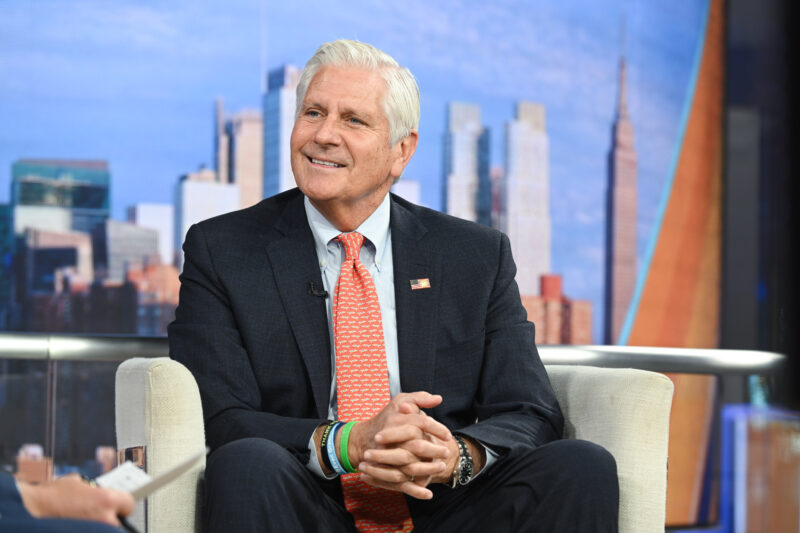

























JFNA CEO Eric Fingerhut: ‘There's no other religious faith that has to incur this kind of expense just to protect itself in its places of worship and communal gathering’

Tom Brenner For The Washington Post via Getty Images
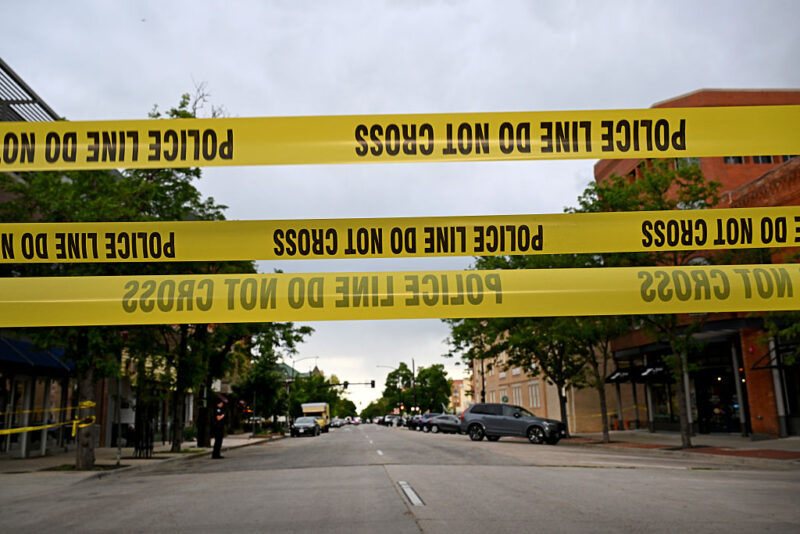
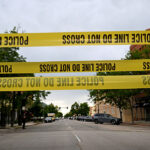
Metropolitan Police Department and Federal Bureau of Investigation officers stand guard at a perimeter near the Capital Jewish Museum on May 22, 2025 in Washington.


 Add JewishInsider on Google
The American Jewish community spent over $1 billion on security in 2025, according to a new Jewish Federations of North America study — a record high and a 33% increase over 2024. The results, published today, showed that on average, Jewish communal organizations, including Jewish community centers, synagogues, schools, summer camps and nonprofits, spend roughly $225,000 on security per institution.
“Even the old number, $765 million [spent in 2024], was just a demonstration of the impossible situation that the Jewish community is being put in,” Eric Fingerhut, JFNA’s president and CEO said. “To have to raise extraordinary sums of money and dedicate extraordinary sums of money to security just to be able to fully live a flourishing Jewish life in this great and free country,”
Fingerhut said the statistics didn’t shock him. According to the Anti-Defamation League, last year was the deadliest year for Jews in three decades. The security threats had grown, alongside the necessary precautionary measures.
“This is just not the way America is supposed to work,” Fingerhut said. “There’s no other religious faith that has to incur this kind of expense just to protect itself in its places of worship and communal gathering.”
According to the latest FBI Hate Crime data, Jews remain the most targeted religious group in America — making up 64% of all religiously motivated hate crimes. While the numbers of antisemitic hate crimes have decreased since 2024 — from 1,938 to 1,528 — last year remains the third highest year on record.
The statistics arrive as Fingerhut and other leaders are pushing Congress to pass the bipartisan Jewish American Security Act, legislation which would fund the nonprofit security grant program at a billion dollars and better address antisemitism online, on campus and across the country.
Although the U.S. government has “been on our side,” Fingerhut said, “they have to do more to address this crisis of terror that’s directed at the Jewish community.”
The nonprofit security grants would be available to other nonprofits, but would have a disproportionate impact on the Jewish world, Fingerhut said. “Given that we’re 2% of the population and over 50% of all the hate crimes, it obviously is going to make a significant difference in our institutions.”
The study only looked at Jewish nonprofits, leaving out the cost incurred by the privately-owned businesses including over 1,600 kosher restaurants, 500 markets and Judaica shops and bookstores.
This funding spent on security could be used towards other initiatives, Fingerhut said, with the JFNA estimating that it would be able to send 44,000 kids to Jewish day schools and cover the costs of every attendee at Jewish camp.
Members of synagogues and schools understand the need for increased security and have stepped up, Fingerhut said. “There’s been extraordinary generosity in the Jewish community with regard to security [but] clearly there are limits.”
The majority of the cost for security goes towards personnel, including security guards, with additional funding goes towards protecting windows and doors, improving security cameras and putting bollards in front of buildings.
“Those are capital expenses, which largely occur one time, and the personnel costs are ongoing and growing expenses,” Fingerhut said. “Demand for security guards is growing … Maybe there was a time a few years ago, you thought, ‘Well, we only have to have [security] if we’re having high holidays or big crowds or a special event.’ Now, it’s a necessity anytime there are people coming in and out of the building.”
Needing constant security is the reality the Jewish world lives in now, Fingerhut said, and it’s not going to change in the foreseeable future.
“There’s not a synagogue in America that isn’t spending money on security for the high holidays,” he said. “It’s an extraordinary expense, and so … it’s on everybody’s mind. But … this is a year-round crisis, this isn’t just a high holiday crisis. It’s affecting our ability to live full and complete Jewish lives because every time a synagogue or a school or a camp or JCC is planning a program, they have to factor in this extraordinary cost of security for that program, and that may mean that the programs don’t go forward because you can’t afford the cost of security.”
Still, Fingerhut said, not practicing Judaism, not celebrating, not coming together — that isn’t an option. “We’re not going to let Jewish life be curtailed because of the cost of security.”
Fingerhut called on states to opt in to a tax credit that would provide funds for Jewish day school and yeshiva education
JFNA
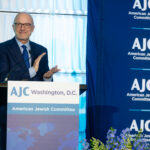
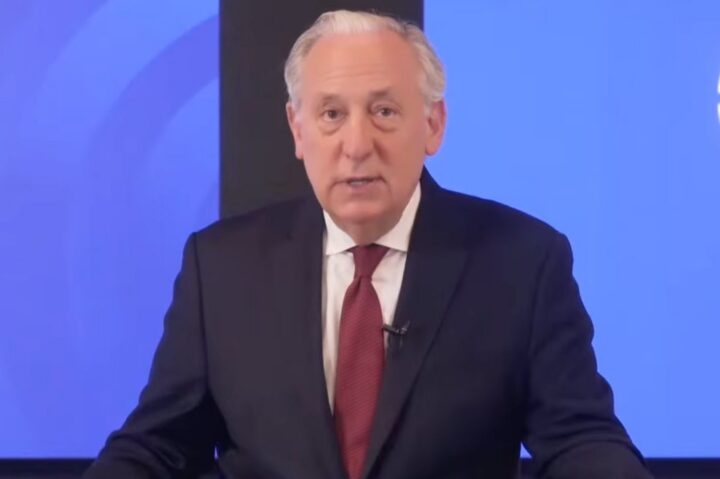
JFNA CEO Eric Fingerhut delivers the inaugural State of the Jewish Union address in Washington, Feb. 19, 2026.
As antisemitic incidents continue to roil Jewish communities nationwide, Jewish Federations of North America CEO Eric Fingerhut called on Congress to increase funding for the Nonprofit Security Grant Program to $1 billion annually and to “make the program more flexible and simpler to use.”
Fingerhut also called on governors to support an educational tax credit on Thursday during JFNA’s inaugural “State of the Jewish Union” address at the organization’s Washington headquarters.
Fingerhut urged lawmakers to provide federal support for security personnel so that schools and synagogues don’t need to cover the costs; expand the FBI’s capabilities to detect and disrupt domestic terrorism; increase support for state and local law enforcement protecting Jewish institutions; hold social media companies accountable for antisemitic hate and incitement to violence through their platforms; and prosecute hate crimes “aggressively.”
The call for increased security comes as American Jews have faced several high-profile hate crimes in the past year, including the recent arson attack at Mississippi’s largest synagogue. Less than two weeks after the attack on Congregation Beth Israel in Jackson, Congress put forward a budget of $300 million for NSGP for 2026. While that figure is a small increase from the funding provided in 2024 and 2025, it is lower than the allocations initially proposed by both the House and Senate and the amount requested by Jewish leaders.
American Jews have responded to the increase of hate and the Oct. 7 Hamas attacks in what JFNA coined as “the surge,” describing a rise in Jews engaging or seeking to engage more in communal life.
According to the organization, enrollment in Jewish schools and camps remains high. “This is why we strongly support the new federal education scholarship tax credit and urge all 50 states to opt in so the funds can reach the families and schools in every community,” Fingerhut said on Thursday.
JFNA confirmed to Jewish Insider that the group plans to hold sideline meetings with state leaders on Friday during the National Governors Association summit in Washington to encourage Democratic governors to participate in the education tax credit, which would create supplemental funding for scholarships for Jewish day school and yeshiva education.
Though the anti-Israel encampments and disruptive protests that plagued college campuses in the immediate aftermath of Oct. 7 and the ensuing Israel-Hamas war have largely died down, a larger percentage of Jewish college students report having experienced antisemitism than ever before. Fingerhut encouraged passage of the bipartisan Protecting Students on Campus Act, which would require federally funded colleges and universities to inform students of their civil rights under Title VI and provide accessible information on how to file discrimination complaints.
“The state of the Jewish union in America is strong, but it is being tested,” said Fingerhut. “We are united in our commitment to America and to Jewish life, even as we worry about the real threats of violence and the growing acceptance of antisemitic rhetoric.”
Following Fingerhut’s address, three heads of local federations shared challenges in addressing security and social needs in their communities. Rabbi Noah Farkas, president and CEO of the Jewish Federation of Greater Los Angeles; Scott Kaufman, president and CEO of the Greater Miami Jewish Federation; and Miryam Rosenzweig, president and CEO of the Milwaukee Jewish Federation echoed that — despite varying degrees of antisemitism in their communities — there is a significant “antisemitism tax,” an increased financial burden to protect Jewish institutions.
“Every dollar we’re spending [on security] we can’t spend on the ‘joy’ part of being Jewish,” said Kaufman.
To mark the second anniversary of the Oct. 7 attacks in Israel, the Jewish Insider team asked leading thinkers and practitioners to reflect on how that day has changed the world. Here, we look at how Oct. 7 changed Jewish advocacy
Courtesy Orthodox Union
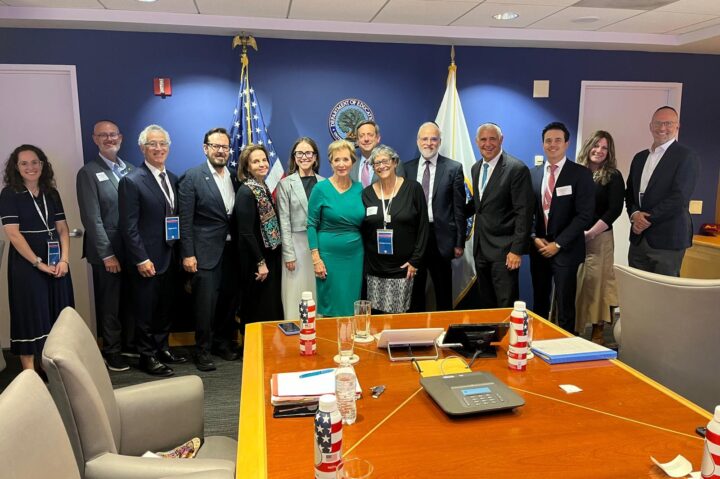
Members of the Orthodox Union Advocacy Center met with Education Secretary Linda McMahon on Wednesday to discuss federal efforts to counter antisemitism and new legislation promoting school choice, Sept. 17th, 2025
Please log in if you already have a subscription, or subscribe to access the latest updates.
 Continue with Google
 Continue with Apple