



























The agency said state administrative agencies and the extended DHS shutdown caused the lengthy delay in issuing the grants
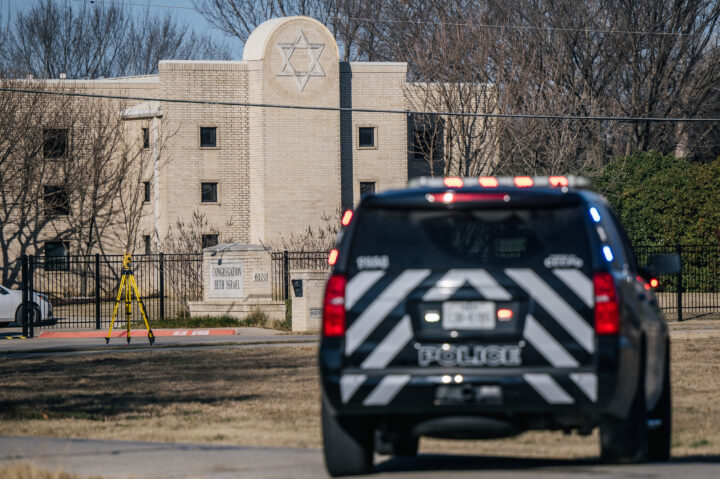
Brandon Bell/Getty Images
A law enforcement vehicle sits near the Congregation Beth Israel synagogue on January 16, 2022 in Colleyville, Texas.


 Add JewishInsider on Google
The Federal Emergency Management Agency announced on Wednesday that 1,600 out of 6,000 applications received for the long-delayed 2025 Nonprofit Security Grant Program cycle were approved, meaning that under 27% of organizations that applied received any funding — a significant dip from previous years.
The grants were approved nearly a year after applications opened for the 2025 cycle on Aug. 13, 2025, and after applications for 2026 NSGP funding were already due last week. FEMA indicated that state agencies responsible for administering the grants on the state level and repeated Department of Homeland Security shutdowns relating to immigration enforcement disputes were responsible for the delays.
FEMA said it had provided initial allocations to state agencies in September of last year and subsequently received the applications from individual nonprofits from the state agencies, which the agency did not finish reviewing until earlier this month.
FEMA said that more than 60% of the grant funding had been provided to houses of worship, including Christian, Muslim, Hindu, Buddhist, Sikh and Jewish institutions.
The program was funded at $274.5 million in 2025, with $266 million of that being provided to nonprofit institutions. The grant awards represent a significant drop in application acceptances, as well as a moderate dip in applications received as compared to 2024. In 2024, 3,288 applications were approved, around 40% of the 7,584 applications received, with $454.5 million made available overall.
More applications were also approved in 2023 and 2022 than in this grant cycle. In 2023, with $305 million available, FEMA approved 2,201 applications out of 5,257, and in 2022, FEMA approved 1,821 applications out of 3,470, with $250 million available.
The administration distributed an additional $220 million in supplemental funding in two tranches last year, from emergency funding passed by Congress in 2024.
FEMA did not respond to a request for comment on how much total funding had been requested in 2025, nor how many Jewish institutions had received funding.
Lauren Wolman, senior director of government relations and strategy for the Anti-Defamation League, expressed gratitude that the grants had been released but emphasized that “many vulnerable organizations remain without the support they need.”
“Congress must pass the Jewish American Security Act, which would authorize $1 billion annually for this critical program,” Wolman continued. “We also hope future application timelines provide organizations with the opportunity to incorporate prior award decisions into their planning.”
The application period for 2026 grants closed before the administration announced the 2025 awards, which lawmakers and advocates said complicated the 2026 application process for institutions that did not yet know if they would be receiving funding under the previous year’s program.
“It was troubling that government disputes that led to shutdowns of DHS delayed the 2025 NSGP grants,” Nathan Diament, the executive director of the Orthodox Union Advocacy Center said. “We are thankful for [Homeland Security] Sec. [Markwayne] Mullin and his team at DHS — as well as the White House Faith Office — working to get these funds finally awarded. “
Eric Fingerhut, the CEO of the Jewish Federations of North America, said JFNA is “relieved and grateful” that the grants have been finalized.
“These grants will allow synagogues and Jewish institutions to get the vital security upgrades necessary to protect our community and support flourishing Jewish life,” Fingerhut said. “We also know the need continues to outpace the availability, which is why we continue to call on Congress to increase funding for this vital program and [pass] the Jewish American Security Act.”
Rabbi A.D. Motzen, national director of government affairs for Agudath Israel of America, also expressed thanks for the grant announcement, while noting the significant shortfall in funding.
“Every grant means another institution and community that is better prepared to prevent a terror attack,” Motzen said in a statement. “The fact that nearly three quarters of grant applicants were turned away due to lack of funds, however, highlights the need for additional funding, especially with the terror attack at a West Bloomfield [Mich.] synagogue still fresh in our minds.”
The funding marks an increase over 2025 levels but is far short of the $1 billion advocates have sought

David Dee Delgado/Getty Images
A Department of Homeland Security officer stands guard at 26 Federal plaza as protestors gather to demand the release of Mahmoud Khalil at Foley Square on March 10, 2025 in New York City.
House Democrats and Jewish groups welcomed the passage of $300 million for the Nonprofit Security Grant Program (NSGP) on Thursday, while warning that funding for the program remains insufficient to fully protect the Jewish community and places of worship amid a surge in antisemitism.
The appropriation was passed through a bill funding most of the Department of Homeland Security, approved in the House on Thursday after receiving approval in the Senate. The move ends the monthslong shutdown of agencies including the Coast Guard, Transportation Security Administration and the Federal Emergency Management Agency, which operates NSGP.
While lawmakers welcomed the fact that funding marks an increase from the $274.5 million provided in fiscal year 2025, they cautioned that the $300 million still falls short of the need within the Jewish community, given the threat level. The grants are used to harden institutions, including synagogues and day schools, against physical attacks.
Rep. Debbie Wasserman Schultz (D-FL) told Jewish Insider that $300 million is “nowhere near enough.”
“It is just unacceptable that we are going in the wrong direction,” Wasserman Schultz said. “$300 million is backwards. We need a billion dollars with the explosive growth in antisemitism and antisemitic attacks.”
Jewish communal groups as well as a bipartisan group of 150 House members called for an increase in funding for the program of up to $1 billion following several attacks including the car-ramming and shooting attack on Temple Israel in West Bloomfield, Mich., in March.
“We need to make sure that every person who attends not just a Jewish institution, but any religious or community organization — that no one should have to fear being attacked in a public space like that,” Wasserman Schultz added. “We need to make sure that the funding is adequate to keep people safe.”
The Florida lawmaker noted that she hopes Congress can unlock more funding for the program, saying that there is an “appropriations process that is ongoing, so hopefully we’ll be able to.”
Rep. Josh Gottheimer (D-NJ) told JI that the development is “good news,” adding that “hopefully we [Congress] will get these resources out the door as quickly as possible to protect our religious institutions.”
“It’s better than nothing, right?” Gottheimer said. “It’s good news to get these resources out the door, and we certainly need to get them out the door, and so this is an important step.”
Still, Gottheimer said the amount is not enough. He stated that he plans to “push for a lot more for next year” and that he has “already taken action, written letters and laid down clear markers that we need a lot more.”
“I think we need more because right now we’re running less than 50% fulfilled in terms of [grant] requests,” Gottheimer said. “So, obviously it’s not enough, especially with the threats out there. When you look at antisemitism and the surge in the rates, we obviously need to get a lot more help for our religious institutions so we can ensure religious freedom and protect our synagogues.”
Gottheimer also expressed frustration with what he described as former DHS Secretary Kristi Noem “holding up the resources.” However, he said he hoped that the department’s newly installed secretary, former Oklahoma Sen. Markwayne Mullin, would mark an improvement.
“She [Noem] had put a review on all of the resources, so a lot of the money didn’t get out the door because they were looking at all the procedures and so the money was being held up,” Gottheimer said. “I’m optimistic that our new secretary, and I spoke to him, will get these resources out the door.”
Rep. George Latimer (D-NY) said he was unsure whether the newly allocated amount was the “right number,” but stated that he believed it could have a “positive effect.”
“The synagogues and the Jewish day schools in my district and around me are really concerned about the rise of antisemitism,” Latimer said. “I’m not Jewish myself, but I can see that there’s a pointed effort to try and make people feel afraid in doing things that we believe everybody should be able to do.”
“I suppose you could always use more [funding],” Latimer added. “But if it’s going to go to the right purpose and it’s done without extra strings attached, as you never know how this administration will operate — but I would certainly say that Jewish communities should have this extra support and protection.”
Jewish communal organizations similarly applauded the funding, but urged for more down the line.
“This increase over last year’s funding level is an important and very welcome step,” Nathan Diament, executive director of the Orthodox Union Advocacy Center, said in a statement. “While sadly even more funding is needed for Jewish community security, this increased level of funding will surely help. We will continue working with members of Congress and our allies to fund NSGP at even higher levels in 2027 to meet demand.”
Lauren Wolman, senior director of government relations and strategy at the Anti-Defamation League, called the funding “an important step in protecting vulnerable communities amid evolving threats.”
“NSGP is a proven, lifesaving program, but demand continues to far outpace resources. As antisemitic threats reach record highs, funding must keep pace. Turning our attention to FY27, we urge Congress to fund NSGP at $1 billion,” Wolman continued. “Now that DHS has reopened, we urge the Administration to ensure FY25 funds are disbursed promptly and [open applications for 2026 grants] in a timely manner.”
The Jewish Federations of North America also welcomed the move, saying in a statement that the funding will “restore critical operations at a moment when threats facing Jewish communities and other vulnerable populations remain alarmingly high.” It also encouraged the administration to release funds allocated for 2025 and open applications for 2026, and indicated that the organization would “fight for $1 billion for FY2027.”
Matthew Kozma, under secretary for intelligence and analysis, spoke at a briefing for the Secure Community Network, a leading Jewish security organization
Emily Elconin/Getty Images
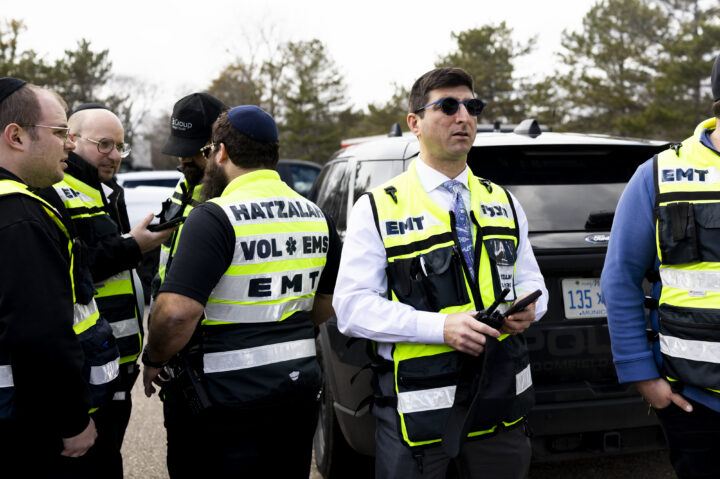
Members of Hatzalah of Michigan, a Jewish volunteer emergency medical service survey the area near Temple Israel following reports of an active shooter on March 12, 2026 in West Bloomfield, Michigan.
Extensive security “preparations, training and practice” that had taken place prior to an attack on a Detroit-area synagogue earlier this month “greatly helped to dramatically mitigate what could have been so much worse in Michigan,” a Trump administration intelligence official said on Tuesday.
During a security briefing webinar hosted by the Secure Community Network, a leading Jewish security organization, ahead of the Passover holiday, Matthew Kozma, under secretary for intelligence and analysis at the Department of Homeland Security, called for continued vigilance “given the threat that’s stemming from Iran, particularly in the Middle East, but also here at home.”
He said that Americans should remain cautious of threats from “malicious actors, particularly ones encouraged by or empathetic to Iran,” as two upcoming events in the country — the 2026 FIFA World Cup and America’s 250th anniversary — bring an influx of visitors into the U.S.
The briefing was held during what Michael Masters, CEO of SCN, described as “an elevated threat environment from Iran and its proxies,” ahead of the start of the Passover holiday next week.
Since the U.S.-Israeli war with Iran started nearly one month ago, Jewish institutions have seen a surge in attacks, including the one targeting Temple Israel in West Bloomfield Township, Mich. — one of the country’s largest Reform congregations — and three shootings outside of Toronto synagogues.
Masters said SCN monitored over 8,000 direct calls for violence against the Jewish community in North America over a six-day period this month, marking a 137% increase over the average tracked and “the highest number we’ve ever tallied in that timeframe.”
Oakland County, Mich., Sheriff Michael Bouchard, who was on the scene following the Temple Israel attack, shared with attendees that he himself has been the target of death threats for supporting the Jewish community.
Still, Bouchard doubled down on his support. “Something that I’ve said before, and I believe, is that if you target our Jewish community, we’re going to stand in front of them to protect them. And we’re coming for you.”
The briefing concluded with Eric Fingerhut, CEO of the Jewish Federations of North America, calling for “more resources at this time.”
“Temple Israel was one of the best, most secured buildings, having spent a significant amount of money of their dues budget and of their donors’ budgets on security, and yet we need additional levels of security,” Fingerhut said. “Our federations are committed to generating those additional resources, bringing those resources to our communities. But in addition, I have to mention that it’s the government’s responsibility, first and foremost, to protect its citizens in their places of worship, in their places of communal gathering.”
Last week, in a letter to the leaders of the House Appropriations Committee, a bipartisan group of 150 House members asked the committee to provide $1 billion in funding for the Nonprofit Security Grant Program in 2027, a massive expansion of the program that marks the first time lawmakers’ request aligns with the $1 billion that some Jewish groups have been advocating for. The program received $274.5 million in funding in 2025, but that funding has still not been distributed, according to the letter, which cited delays at FEMA, and lawmakers have not been provided customary data about supplemental funding rounds awarded last year.
“We need more resources and support from the government,” continued Fingerhut, who announced that JFNA will hold an advocacy fly-in in Washington in mid-May.
“We will be visiting every member of Congress, asking them for their support. We’ll be visiting the members of the administration, as well … to make sure that [they] know that every one of us has the right in this country to practice our faith and to gather together as a community in safety and security.”
The Trump administration has been working to deport Mahdawi over his alleged involvement in terrorist violence
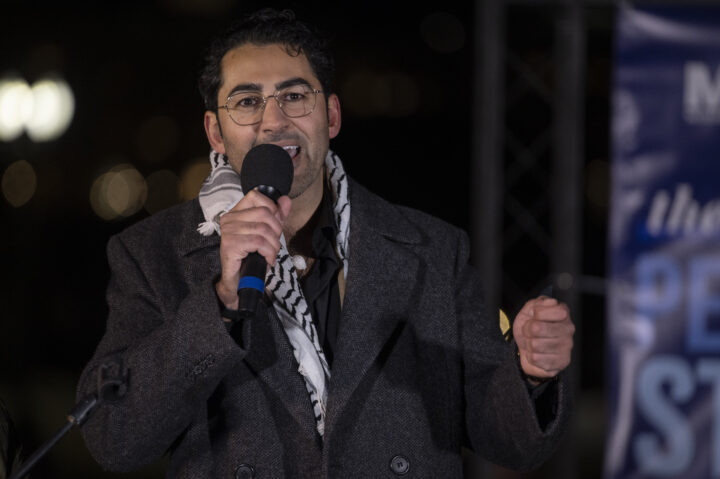
Celal Gunes/Anadolu via Getty Images
Palestinian activist Mohsen Mahdawi speaks during a rally at the National Mall in Washington, D.C. as President Donald Trump delivers his State of the Union address inside Congress on February 24, 2026.
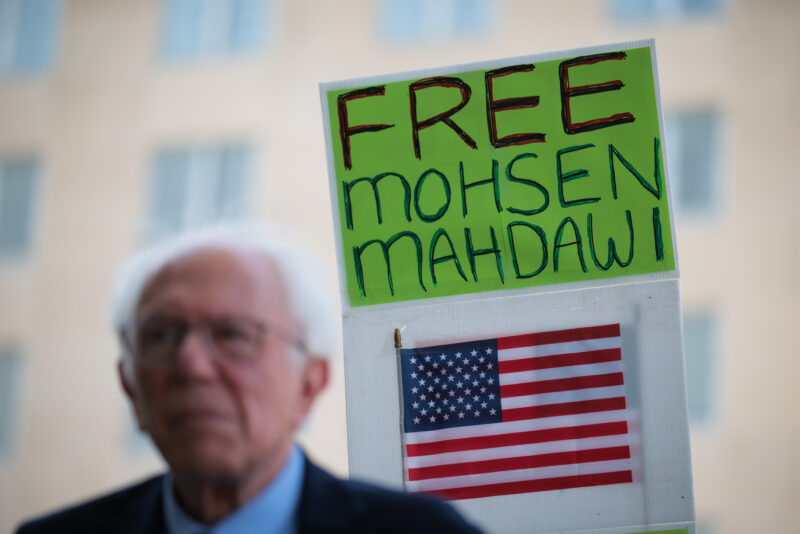
The Congressional Progressive Staff Association, a congressional employee group for progressive staffers and prospective staffers, hosted a happy hour this week with Columbia University protest leader Mohsen Mahdawi, whom the administration has been trying for months to deport.
The Department of Homeland Security has characterized Mahdawi as a “ringleader” in anti-Israel protests at Columbia and accused him of using “threatening rhetoric and intimidation” against Jewish students.
The administration has also claimed that Mahdawi admitted to being involved in and supporting terrorist violence, including telling a gun shop owner more than a decade ago that he had “considerable firearm experience” and used guns to “kill Jews while he was in Palestine,” that he attempted to purchase a rifle and a machine gun, that he claimed to have made guns for Hezbollah and that he said that he enjoyed killing Jews.
Mahdawi’s lawyers have denied those claims and noted that they were dismissed by law enforcement at the time.
In a “60 Minutes” interview in December 2023, Mahdawi said he could “empathize” with Hamas and its Oct. 7, 2023, attacks. “To empathize is to understand the root cause and to not look at any event or situation in a vacuum. This is for me that path moving forward.”
On his Instagram page, Mahdawi shared photos honoring what he called the “martyrdom” of his “cousin,” Maysara Masharqa, a field commander in the Al-Aqsa Martyrs Brigade — designated as a terrorist organization by the U.S., Israel, the E.U. and others — calling him a “fierce resistance fighter.”
He also called Hamas a “product of the Israeli occupation” and reportedly helped craft a statement justifying the Oct. 7 attacks as “rooted in international law.”
In its advertisement for the event on Instagram, CPSA described Mahdawi as “the student activist from Columbia University arrested by ICE at his immigration hearing and detained for protesting the Palestinian genocide.”
Jewish Democratic staffers have told Jewish Insider that increasing anti-Israel and antisemitic sentiment has made them feel afraid, uncomfortable and shunned among fellow progressive staff on Capitol Hill since the Oct. 7 attacks.
CPSA did not respond to a request for comment.
For the first time, the lawmakers’ request aligns with the $1 billion that some Jewish groups have been advocating for amid a surge in antisemitism
Emily Elconin/Getty Images
Members of Hatzalah of Michigan, a Jewish volunteer emergency medical service survey the area near Temple Israel following reports of an active shooter on March 12, 2026 in West Bloomfield, Michigan.
In a letter to the leaders of the House Appropriations Committee, a bipartisan group of 150 House members asked the committee to provide $1 billion in funding for the Department of Homeland Security’s Nonprofit Security Grant Program in 2027, a massive expansion of the program and an unprecedented increase in their request level.
The request letter, which has been sent annually for the last several years at the start of the House’ appropriations process, comes this year in the immediate aftermath of an attack at Temple Israel in West Bloomfield, Mich., and its early childhood center.
For the first time, the lawmakers’ request aligns with the $1 billion that some Jewish groups have been advocating for for the program, amid a surge in antisemitism in recent years.
“The fact of the matter is, around this country, we’ve all experienced a rise in antisemitism, xenophobia, Islamophobia, hatred of all types,” Rep. Gabe Amo (D-RI), who again co-led the request with Rep. Michael McCaul (R-TX), told Jewish Insider on Thursday. “This is a response that’s proportional to the demand, and right now, we need to act swiftly.”
Last year, a group of 130 lawmakers asked for $500 million, but ultimately were not able to secure a substantial increase in funding; the current DHS funding bill for 2026 contains $300 million for the program, a marginal increase from 2025 levels but below the high-water mark in 2023 of $305 million. The bill has not yet passed, waylaid by ongoing disputes over immigration policy and funding. Immigration issues have made the DHS bill difficult to finalize in recent years, and have strained resources for other DHS programs.
“The threat of violence is unfortunately increasing at places of worship across our country at alarming rates,” the House letter reads. “There has been an increase in hoax bomb and active shooter threats against houses of worship to interrupt services and intimidate the worshippers. There has also been an increase in antisemitic incidents across the country following the October 7th attack in Israel. … Unfortunately, it is easy to see that the need for the NSGP is quickly outpacing the funding.”
The significantly increased request also has more signatories this year than in other recent years, underscoring the degree to which bipartisan support for the program has grown.
“There is strong, robust and meaningful support for this program, because people have seen the realities, and it’s a priority to ensure that all of our communities can worship, celebrate and exist with the safety that they deserve,” Amo told JI on Thursday.
The letter outlines a series of attacks on Jewish institutions, including the Capital Jewish Museum shooting in Washington, the firebombing of a hostage awareness march in Boulder, Colo., an attempted attack on a Florida Jewish nonprofit, the arson attack at Beth Israel Congregation in Jackson, Miss. and the car ramming attack at Chabad-Lubavitch World Headquarters in Brooklyn, as well as attacks on Christian, Mormon and Muslim institutions.
The lawmakers highlighted that need has significantly outpaced the available funding, noting that in 2024 — the most recent year for which data is publicly available — applicants requested $978 million in federal funding, and less than half of applications were funded, even with a pool of $454.5 million available.
The program received $274.5 million in funding in 2025, but that funding has still not been distributed, according to the letter, due to delays at FEMA, and lawmakers have not been provided with customary data about supplemental funding rounds awarded last year.
The $1 billion request, Amo said, is “actually where the demand is.” Though funding allocations haven’t kept pace with demand or with the requests that lawmakers have made, “you can’t get what you don’t ask for. We requested $500 million last year … this year we’re going higher because the need as measured by applications [is there]. We want to get as many as possible.”
He acknowledged that the final allocation may be lower than the $1 billion requested, “but if you look across the board, you want to ask relative to the need, and the need is there.”
Amo said it’s not likely, at this point, that advocates will seek to revise the funding allocation in the stalled 2026 DHS funding bill, despite recent incidents.
He also said that a series of inquiries by lawmakers to the administration about a range of administrative issues and slowdowns for the program in 2025 have gone largely unanswered and unaddressed by administration officials, but vowed to continue to engage with DHS officials to ensure the program remains a priority.
Sen. Markwayne Mullin (R-OK), the Trump administration’s nominee to head the DHS, said at his confirmation hearing on Wednesday that he’d work with lawmakers on both sides of the aisle to try to reduce the bureaucracy around the program and ensure that funding is moving where it is needed quickly.
Lauren Wolman, the Anti-Defamation League’s senior director of government relations and strategy, told JI, “ADL is grateful to Reps. Amo and McCaul for their leadership in spearheading a bipartisan congressional effort calling for a historic $1 billion in funding for the Nonprofit Security Grant Program. At a time of rising antisemitism and continued threats to houses of worship, this program provides critical resources that help communities protect themselves. The need is clear, demand continues to far outpace available funding, and we urge Congress to act to ensure NSGP is funded at a level that reflects the reality on the ground.”
Eric Fingerhut, the CEO of the Jewish Federations of North America, highlighted that the Jewish community spends more than $765 million a year on security efforts and that security costs are the largest expenditure for every Jewish institution.
“We are in the middle of the most serious, violent antisemitic threat environment against the Jewish community in the history of the United States,” Fingerhut said in a statement. “It is the government’s responsibility to protect its citizens in their places of worship, in their places of communal gathering, and the government of the United States must step up to this responsibility now, before we have another tragedy of a kind that we almost had in Detroit last week.”
Nathan Diament, the executive director of the Orthodox Union Advocacy Center, said OU is also “supportive of [Amo’s] leadership and his letter.”
Plus, Iranian missile injures dozens in northern Israel
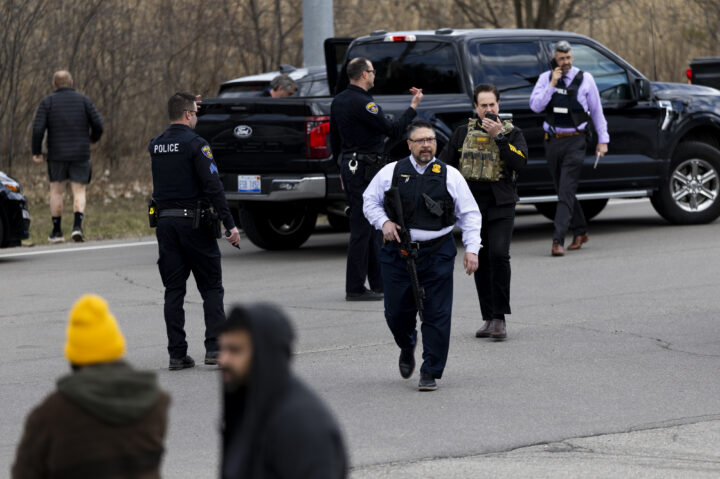
Emily Elconin/Getty Images
Law enforcement respond near Temple Israel following reports of an active shooter on March 12, 2026 in West Bloomfield, Mich.
👋 Good Friday morning!
In today’s Daily Kickoff, we report on yesterday’s attack on the Temple Israel congregation in West Bloomfield Township, Mich., and talk to Senate leaders about how the incident, in which one person was injured, could affect the ongoing stalemate over Department of Homeland Security funding. We cover the clash between the center-left think tank Third Way and Rep. Ro Khanna over the Democratic Party’s approach to antisemitism, and talk to experts about Iran’s degraded missile launch capabilities. Also in today’s Daily Kickoff: former Mayor Michael Bloomberg, Sarah Rogers and Jeff Miller.
Today’s Daily Kickoff was curated by JI Executive Editor Melissa Weiss and Israel Editor Tamara Zieve, with assists from Danielle Cohen-Kanik, Emily Jacobs and Marc Rod. Have a tip? Email us here.
For less-distracted reading over the weekend, browse this week’s edition of The Weekly Print, a curated print-friendly PDF featuring a selection of recent Jewish Insider and eJewishPhilanthropy stories, including: The Amodei siblings leading Anthropic clash with the White House over AI safety; Conservative students alarmed about College Republicans leader with Nick Fuentes ties; and Will Iranian attacks push Qatar to expel Hamas leaders? Print the latest edition here.
What We’re Watching
- We’ll be keeping an eye out in the coming days on how yesterday’s attack on a Michigan synagogue is playing out on the national stage, from Jewish communal conversations to debates in Washington and in state capitals about antisemitism, security funding and safety measures.
- We’ll also be monitoring the ongoing military operations in the Middle East. Overnight, dozens were injured in an Iranian strike on the northern Israeli Arab town of Zarzir. Earlier this morning, CENTCOM confirmed that four of the six crew members of a U.S. KC-135 that crashed during a refueling mission in western Iraq on Thursday were killed, with an investigation underway.
- In Iran, a large explosion was reported this afternoon local time at a Quds Day demonstration in Tehran. The IDF had previously warned against congregating in the area.
- SXSW continues today, with Tech Tribe hosting its annual Shabbat dinner this evening.
- On Sunday, Jewish philanthropists are convening in San Diego for the three-day annual Jewish Funders Network conference. eJewishPhilanthropy’s Jay Deitcher and Rachel Kohn will be on the ground at JFN — sign up for eJP’s Your Daily Phil for the latest on the conference, and say hello if you see Jay and Rachel in San Diego.
- The Zionist Organization of America is hosting a gala in South Florida on Sunday night, where the group will honor Sen. Rick Scott (R-FL), Rep. Randy Fine (R-FL) and the Justice Department’s Leo Terrell.
- In New York on Sunday, HaZamir: The International Jewish Teen Choir, is slated to perform at Lincoln Center.
- And across the country, the Oscars are taking place Sunday night in Los Angeles.
What You Should Know
A QUICK WORD WITH JI’S JOSH KRAUSHAAR
It’s a testament to the level of security, staff preparation and good fortune that a potential terrorist attack against Temple Israel in suburban Detroit was foiled yesterday. The fact that no one other than the heavily armed perpetrator was killed after driving a vehicle filled with explosives into a synagogue filled with preschoolers, counts as something of a miracle.
It’s also a reminder of the consequences of what can happen when antisemitism is allowed to become normalized in our society, moving unchecked through our social media feeds and political discourse, all amid the record levels of hate crimes committed against Jews simply for their identity.
Even as politicians are reflexively speaking out against antisemitism in the aftermath of the attack, it’s hard to forget the poisonous rhetoric many on the extremes have advanced that could easily activate a lone-wolf extremist to commit an unspeakable crime.
On the hard left, opposition to Israel’s war in Gaza has morphed into accusations of genocide, attacks against AIPAC as a uniquely sinister organization, conspiracy theories that Israel tricked the U.S. into war with Iran and euphemizing the support of terrorism as merely being “pro-Palestinian.”
Rep. Ro Khanna (D-CA), who has emerged as one of his party’s leading anti-Israel voices as he mulls a presidential campaign, had the audacity to say he “stands with” antisemitic streamer Hasan Piker — along with New York City Mayor Zohran Mamdani, who has refused to condemn “globalize the intifada” rhetoric and anti-Israel Democratic Senate candidate Graham Platner — during the Michigan synagogue terror attack.
Former Obama deputy national security advisor Ben Rhodes and his “Pod Save America” colleagues are now declaring that anyone who supports the Iran war — a group that may well include some Jewish Democrats in Congress who are sympathetic to the operation’s aims, even if they have reservations — should be primaried, and have no place within the Democratic Party.
On the hard right, extremist podcasters are broadcasting the most undiluted antisemitism in media since the days of Father Coughlin in the 1930s. Tucker Carlson has devoted much of his show to promoting conspiracy theories about Jews, while other social media influencers have found that attacking Israel and questioning Jewish influence is a ticket to building a niche audience in online spaces. Gatherings of young right-wingers have all too often become cesspools of anti-Jewish hate.
TEMPLE ISRAEL ATTACK
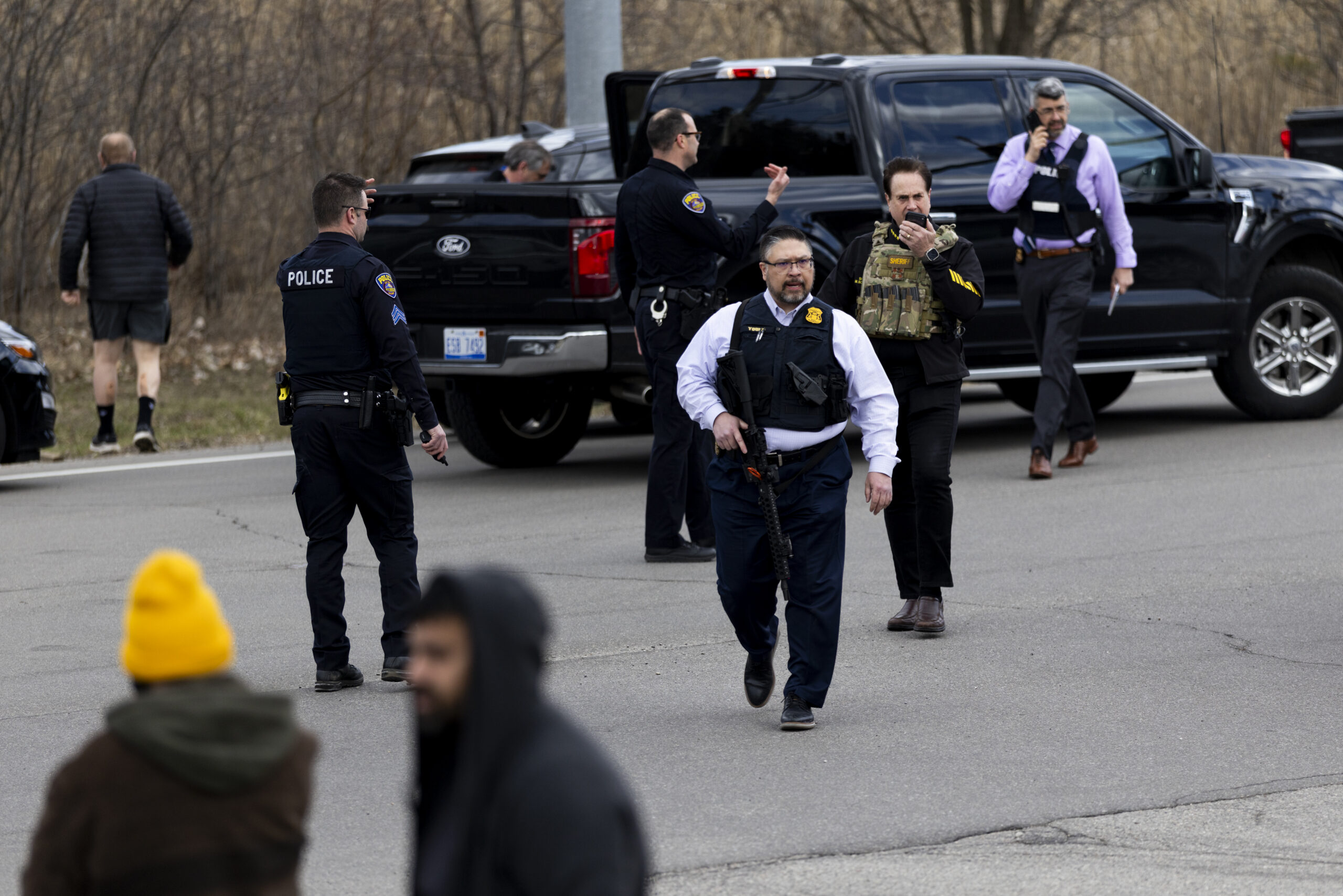
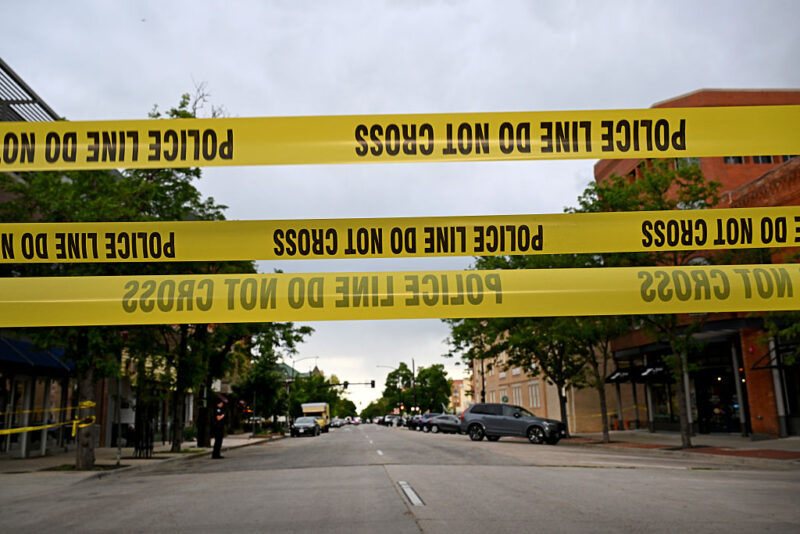
An assailant was killed during an active shooter situation at Temple Israel in West Bloomfield Township, Mich., law enforcement officials confirmed on Thursday afternoon. One other person, a security guard, was injured, Jewish Insider’s Haley Cohen reports.
Probe details: The attack is being investigated as a “targeted act of violence against the Jewish community,” Jennifer Runyan, the special agent in charge of the FBI’s Detroit field office, confirmed in a Thursday evening press conference. A Department of Homeland Security spokesperson confirmed to JI that the attack was carried out by Ayman Mohamad Ghazali. Ghazali, 41, was born in Lebanon and entered the U.S. in 2011 on an IR1 immigrant visa as the spouse of a U.S. citizen. He was granted U.S. citizenship in 2016, according to DHS. Law enforcement officials did not release information on a possible motive.
SECURITY RECKONING

The car ramming and shooting attack at Temple Israel in West Bloomfield Township, Mich., on Thursday seems unlikely to break the congressional stalemate over funding for the Department of Homeland Security, which has been in a partial shutdown for weeks, Jewish Insider’s Marc Rod reports. Among other programs, the Federal Emergency Management Agency and the Nonprofit Security Grant Program fall under the DHS funding bill, which Democrats have sought to renegotiate to implement new restrictions on Immigration and Customs Enforcement, following the deadly shootings of two U.S. citizens in Minneapolis.
Not shifting: Senate Majority Leader John Thune (R-SD) said that Republicans have tried to fund DHS through a short term stopgap bill as negotiations continue, but Democrats have refused. “It’s a dangerous game, and people are going to get hurt,” Thune said. Senate Minority Leader Chuck Schumer (D-NY) pointed blame for the lack of NSGP funding toward Republicans, highlighting that they had blocked passage of legislation by Democrats on Thursday to fund and reopen portions of DHS, including FEMA. “Leader Schumer is an ardent supporter of NSGP funding, and this week, Republicans rejected Democratic efforts to fund the program through FEMA, along with the TSA, CISA, and the Coast Guard,” a spokesperson for Schumer told JI.
TAKING A STAND
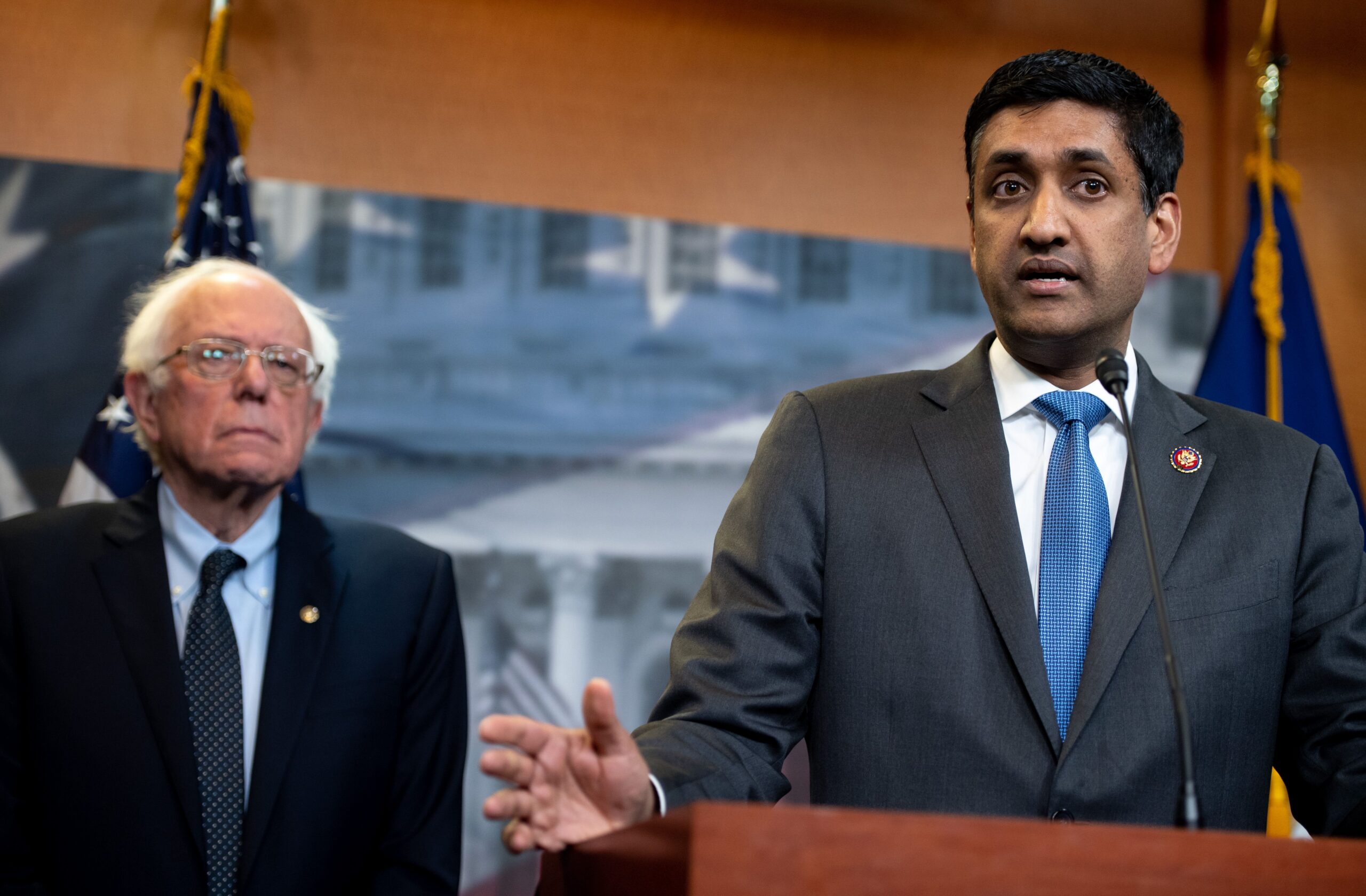
Following a Republican convening this week focused on combating right-wing antisemitism, a prominent moderate Democratic group urged fellow Democrats to follow the lead of Sen. Ted Cruz (R-TX) in calling out antisemitism within their own party. “We certainly believe that Cruz was right and our side has a real antisemitism problem too that too many Democrats are failing to face squarely,” Matt Bennett, executive vice president for public affairs at the center-left think tank Third Way, told Jewish Insider’s Gabby Deutch on Thursday.
Speaking out: His comments came after Lily Cohen, a press advisor at the organization, shared a post highlighting Cruz’s comments at the Republican Jewish Coalition confab and said she “would love to see more Dems calling out antisemitism on their own side with the same fervor.” Cohen specifically mentioned Maine Senate candidate Graham Platner, New York City Mayor Zohran Mamdani and the far-left, antisemitic streamer Hasan Piker. “We do believe that Platner has not remotely done enough to explain why he had a Nazi tattoo for 20 years,” said Bennett. Rep. Ro Khanna (D-CA), a progressive lawmaker who has been a frequent critic of Israel and pro-Israel activists in the U.S., responded to Cohen’s post by saying he stands with Platner, Mamdani and even Piker.
ISRAEL UNDER FIRE

An Iranian missile struck northern Israel early Friday, injuring 58 residents and damaging 300 homes in Zarzir, a Bedouin town near Nazareth, Jewish Insider’s Lahav Harkov reports. A woman in her 30s was moderately injured by shrapnel in her back; the rest of the injuries were minor, according to Magen David Adom emergency services.
Threats from all sides: Soon after the attack, President Donald Trump issued a threat to Iran: “Watch what happens to these deranged scumbags today,” the president wrote on Truth Social. “They’ve been killing innocent people all over the world for 47 years, and now I, as the 47th president of the United States of America, am killing them. What a great honor it is to do so!” Iranian state TV said that new Supreme Leader Mojtaba Khamenei released his first statement since being named to the position earlier this week, after his father, Ayatollah Ali Khamenei, was killed in the initial strikes of the ongoing war with Iran, which began on Feb. 28. In the statement, Khamenei vowed that Iran “will not neglect avenging the blood of [the] martyrs.”
MISSOURI BREAKS

Both of Missouri’s Republican senators, Josh Hawley and Eric Schmitt, argued that the administration seems to have largely achieved its key objectives for the war in Iran — a posture that distinguishes him from most GOP colleagues and highlights subtle but emerging divisions among Republicans on the proper scope and duration of the war, Jewish Insider’s Marc Rod reports.
What he said: “I assume our overriding national security objective when it comes to Iran is to prevent them from getting nukes. And between our bombing last June and in the last … 12 days, I don’t know how they’re going to reconstitute their nuclear program anytime in, maybe, our lifetimes,” Hawley told JI on Thursday. “My point is just that I think the military has achieved a tremendous amount. It has ended [Iran’s] nuclear program for all intents and purposes. It has destroyed their navy. It has eliminated most of their ballistic missiles — those are good things. I’d be glad to take that [win].” Eric Schmitt, who is also aligned with the populist wing of the party, likewise emphasized the progress the U.S. has made and pushed for a quick conclusion to the war.
DOWN BUT NOT OUT

Despite a recent escalation in Iranian missile attacks targeting Israel, experts remain confident that Tehran’s military capabilities have been significantly degraded by the U.S. and Israel. U.S. and Israeli officials have touted that Iran’s missile capabilities have been severely reduced, with CENTCOM Commander Adm. Brad Cooper saying Wednesday that Iran’s ballistic missile attacks have “dropped drastically,” Jewish Insider’s Matthew Shea reports.
State of play: That may not feel like the reality for Israelis — after four consecutive days of declining missile fire, Iran briefly increased its launches to 46 missiles on Wednesday, a roughly 70% percent increase from the 27 missiles fired the previous day. But the data shows and analysts remain confident that Iran’s stockpiles are being degraded. Ari Cicurel, the associate director of foreign policy at the Jewish Institute for National Security of America, told JI that the escalated attacks might actually be a “reflection of Iran’s degrading capabilities.”
Worthy Reads
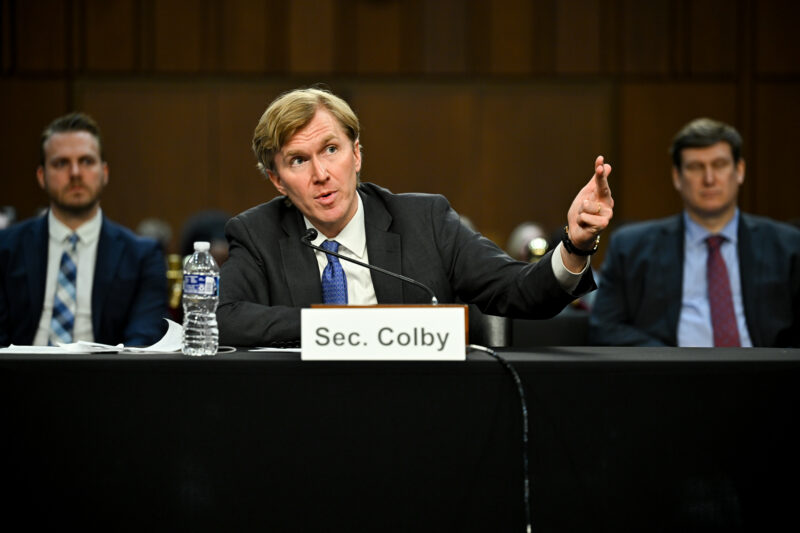
A Bridge Too Far: Puck’s Julia Ioffe looks at the catch-22 facing Elbridge Colby, the Trump administration’s under secretary of war for policy, as the U.S. engages militarily with Iran — a strategy that Colby has long personally opposed. “Colby isn’t the first to strike this kind of Faustian — or simply Washingtonian — bargain over the past decade. But for him, as for everyone else, the MAGAfication cuts both ways. On one hand, he has political power and the kind of job that NatSec types dream of. On the other, that power is entirely subject to Trump’s whims. ‘He’s an ideological actor in an administration that has no ideology,’ a Democratic member of Congress told me.” [Puck]
Van Hollen’s Venom: In the Jewish News Syndicate, Betsy Berns Korn, chair of the Conference of Presidents of Major American Jewish Organizations, raises concerns about Sen. Chris Van Hollen’s (D-MD) allegation that AIPAC is “neither” a pro-American nor a pro-Israel organization. “Citizens advocate for stronger alliances with NATO partners, support Taiwan’s democracy, promote human-rights abroad, defend labor interests, protect the environment and work to expand trade relationships. That tradition of civic participation is a hallmark of American democracy. Advocacy for a strong relationship between the United States and Israel belongs squarely within that tradition. … Support for this partnership does not make Americans less loyal to their country. On the contrary, it reflects their judgment about what best serves American security, democratic values and global stability.” [JNS]
Regime Unchanged: The Washington Post’s David Ignatius warns that the U.S.’ strategy in Iran runs the risk of allowing the regime to stay in place. “If the conflict ends tomorrow, Iran will have lost nearly all its nuclear facilities and scientists, most of its missiles and missile launchers, most of its weapons factories, most of its navy, and much of the command and control for its military, intelligence and security forces. But the regime survives. It has taken America’s best punch, and it’s still standing. Tiers of senior military, intelligence and political leaders are dead, but they have been replaced by others. There’s no sign of a popular uprising. The cadres of the Islamic Revolutionary Guard Corps hide among piles of rubble, but they haven’t been eliminated.” [WashPost]
Kurds Force: In New Lines Magazine, Laurent Perpigna Iban spotlights the Kurdish factions that had until recent days been under consideration by the U.S. to lead a ground incursion into Iran. “For the first time in their history, the various Iranian Kurdish factions have found common ground and established a platform for cooperation. … The project is more political than military, laying the groundwork for the protection of Iran’s Kurdish population. According to converging sources, discussions about a potential ground incursion do exist, even if such a scenario has not formally been placed on the table.” [NewLines]
Mind Meld on Iran: The Financial Times’ Neri Zilber reports on the close coordination between Washington and Jerusalem on the joint attack on Iran. “The speed and ferocity of the aerial campaign has required extraordinary levels of coordination — from the initial war plan that was put together to the thousands of phone conversations every day between the two militaries. ‘It’s a mind meld,’ said Dan Shapiro, a former senior US defence official and ambassador to Israel. … The close coordination, across the entire chain of command, has involved some 4,000 to 5,000 calls per day — from the chief of staff level down to the hundreds of pilots in the air at any given time, according to the senior Israeli military official.” [FT]
Word on the Street
Politico reports on Vice President JD Vance’s skepticism ahead of U.S. strikes on Iran; Vance reportedly privately conveyed his opposition to military action to senior administration officials…
President Donald Trump officially removed Carrie Prejean Boller from the Religious Liberties Commission, weeks after Prejean Boller vociferously defended antisemitic conspiracy theorist Candace Owens at a commission hearing…
Religious Liberties Commissionadvisory board member Sameerah Munshi, who had allied herself with Prejean Boller, announced her resignation from the board…
Trump nominated Sarah Rogers, the State Department’s undersecretary of state for public diplomacy, to lead the U.S. Agency for Global Media, days after a federal judge voided the actions undertaken at the agency under Kari Lake, who was serving as acting CEO; Rogers will maintain her State Department role in addition to leading USAGM…
The president also nominated United States Holocaust Memorial Museum Governing Council member Jeff Miller to serve as the body’s chair; Miller, who also serves on the board of the Republican Jewish Coalition, was first appointed to the USHMM’s governing council by Trump in 2021…
Sen. Ted Cruz (R-TX) on Thursday introduced legislation, co-sponsored by Sens. Rick Scott (R-FL) and Tom Cotton (R-AR), designating the Polisario Front, the terrorist group that claims sovereignty over parts of the Western Sahara, as a foreign terrorist organization; “This bill will ensure that America’s most powerful anti-terrorism sanctions can be used to counter those threats and, once a designation is secured, the Polisario Front and its leaders will be cut off from access to the global financial system, international travel, and the resources they rely upon to conduct their terrorism,” Cruz told JI…
Following the Michigan synagogue attack, Rep. Max Miller (R-OH) shared on X an antisemitic death threat that he received, saying that they are a daily occurrence for him and other Jewish members of Congress…
Rep. Tom Suozzi (D-NY) raised concerns about the status of Kamran Hekmati, an Iranian-American Jewish constituent in Suozzi’s district who has been jailed in Iran for nearly a year after being arrested for having visited Israel more than a decade ago for his son’s bar mitzvah…
Reps. Sara Jacobs (D-CA), Jason Crow (D-CO) and Yassamin Anasari (D-AZ) led 121 House Democrats in a letter questioning the administration over a strike on an Iranian girls’ school reportedly executed by the U.S….
Rep. Jim Clyburn (D-SC), who is 85, announced that he will seek an 18th House term, two years after the South Carolina Democrat stepped down from his Democratic leadership role…
Former New York City Mayor Michael Bloomberg endorsed New York state Assemblymember Micah Lasher, who had served as a mayoral aide to Bloombergin the Democratic primary to succeed Rep. Jerry Nadler (D-NY); Bloomberg is preparing to spend up to $5 million on an ad campaign boosting Lasher in the crowded 12th Congressional District primary…
The Treasury Department announced on Thursday that it was imposing sanctions on four “sham charity” groups in Turkey and Indonesia that it said are funnelling money and resources to Hamas, JI’s Marc Rod reports…
The Trump administration is temporarily lifting sanctions on Russian oil that is already at sea in an effort to lower prices as Iran maintains control over the Strait of Hormuz; Treasury Secretary Scott Bessent said on Thursday that it was “unfortunate” that Moscow would benefit in the short term from the conflict with Iran…
The White House intervened to water down a broadly bipartisan sanctions bill targeting Iran’s oil exports to China, sources told Jewish Insider’s Marc Rod…
Turkish elites have reportedly begun circulating claims that Israel could turn its military attention toward Ankara should Iran emerge from the war depleted — a belief analysts say reflects growing mistrust and conspiratorial thinking in Turkey rather than any actual Israeli intent, JI’s Matthew Shea reports…
The Wall Street Journal gives a play-by-play accounting of the defection of six members of the Iranian women’s national soccer team, who sought asylum in Australia while playing in a tournament in the country…
Palestinian scholar Walid Khalidi, a co-founder of Beirut’s Institute for Palestine Studies, died at 100…
Pic of the Day

Birthdays

Four-time Israeli national champion in the skeleton event and pilot of Israel’s first-ever Olympic bobsled team in Milan, Adam “AJ” Edelman turns 35 on Saturday…
FRIDAY: Editor of Avotaynu Magazine, a journal of Jewish genealogy and scholarship, Sallyann Amdur Sack-Pikus turns 90… Former mayor of Miami Beach, Fla., and author of Destiny: From Shoeshine Boy to Mayor, Norman Ciment turns 90… Israeli singer, he won the 1978 Eurovision Song Contest, Izhar Cohen turns 75… Psychotherapist in private practice in Manhattan and Teaneck, N.J., Shana Yocheved Schacter… U.S. Sen. John Hoeven (R-ND) turns 69… Founder of the Drug Policy Alliance, a NYC-based organization working to end the war on drugs, Ethan Nadelmann turns 69… Professor of applied mathematics at Imperial College London, he is also a chess grandmaster, Jonathan Mestel turns 69… Former Florida congressman, Alan Grayson turns 68… Teacher of rabbinic literature and author of The Jewish Family Ethics Textbook, Rabbi Neal S. Scheindlin turns 66… Founder and CEO of MediaBistro which she sold in 2007, now managing director of Supernode Ventures, Laurel Touby turns 63… Heavy metal songwriter, vocalist for the band Disturbed as well as for the band Device, he is a former yeshiva student, David Draiman turns 53… Member of the California state Senate since 2014, Benjamin Allen turns 48… Former member of Knesset for the Jewish Home party and decorated IDF reservist, Yonatan “Yoni” Chetboun turns 47… Deputy campaign manager on Sen. Bernie Sanders’ (I-VT) 2020 presidential campaign, now host of radio show “The Agenda,” Ari Rabin-Havt… Television and film actor, Emile Hirsch turns 41… President and CEO of Nefco, a distributor of construction and industrial supplies, Matthew Gelles… Television and film actor, Emory Isaac Cohen 36… Senior director of social marketing at NBC Universal, Jessie Hannah Rubin… Former Formula 3 racing driver, his mother is Houda Nonoo, the first Jewish woman to serve as an ambassador of Bahrain, Menasheh Idafar turns 35… Gabriel Romano…
SATURDAY: Professor emeritus of chemistry at Tel Aviv University, winner of the 1982 Israel Prize, Joshua Jortner turns 93… Founder and retired president of Los Angeles-based Skirball Cultural Center, Rabbi Dr. Uri Herscher turns 85… Dean of Yeshiva Toras Moshe in Jerusalem, Rabbi Moshe Meiselman turns 84… Senior lecturer at the Kennedy School of Government at Harvard, Marshall Ganz turns 83… Canadian criminal defense attorney, Brian Greenspan turns 79… Actor, writer, producer, director and comedian, Billy Crystal turns 78… Former member of the Maryland House of Delegates for 28 years, Shane Elizabeth Pendergrass turns 76… One-half of the eponymous Ben & Jerry’s ice cream (Ben is four days younger), Jerry Greenfield turns 75… Retired Hebrew teacher, Eliezer Cohen Barak… Co-founder of the Adam and Gila Milstein Family Foundation, she is the president of Stand By Me, an organization that supports cancer patients, Gila Milstein… Partner at Hefter, Leshem, Margolis Capital Management Group of Wells Fargo Advisors in Highland Park, Ill., Steven Hefter… Founder and leader of ChangeCommunications, Jo-Ann Mort… NYC-based restaurateur and CEO of Union Square Hospitality Group, Danny Meyer turns 68… Professor in the department of Jewish philosophy at Tel Aviv University, Menachem Lorberbaum turns 68… Minneapolis-based attorney, Jonathan S. Parritz… Past president of the Central Conference of American Rabbis, Denise L. Eger turns 66… Owner of Baltimore’s Tov Pizza, which he founded in 1984, Ronnie Rosenbluth… Owner and COO of EJM Development Company, he also heads its lending division, New Frontier Capital, Jon Monkarsh… Microgrid architect at Urban Ingenuity and lecturer at Georgetown University, Shalom Flank, Ph.D… Film and television actress, she is best known for her title role in the 1985 film “The Journey of Natty Gann,” Meredith Salenger turns 56… Entrepreneur, musician, songwriter and record company executive, Josh Gruss turns 52… Screenwriter and film director, Etan Cohen turns 52… Canadian fashion stylist, publicist and close friend of Meghan Markle (her children were in the royal wedding as page boys and flower girl), Jessica Brownstein Mulroney turns 46… Heiress, together with her brother and cousins, to the Hyatt Hotels fortune, philanthropist, former child actress, Liesel Pritzker Simmons turns 42… Oldest of three sisters who are members of the rock band Haim, Este Arielle Haim turns 40… Former NASCAR driver, he is the sole inductee into the National Jewish Sports Hall of Fame and Museum in the “Auto Racing” category, Jon Denning turns 39… Former point guard at the University of Pennsylvania, where he was the Ivy League player of the year in 2012, Zack Rosen turns 37… Director, screenwriter and actor, known for his work on “The Intern,” “Big Time Adolescence” and “I Want You Back,” Jason Orley turns 37… Product quality specialist at The Topps Company, Philip Liebman… Coach for first-time founders, Sophie Galant… CEO of Prizmah, Paul Bernstein…
SUNDAY: Emmy, Golden Globe and Tony Award-winning actor, active in film, television and on the stage, Judd Hirsch turns 91… UCLA professor, biochemist and biophysicist, David S. Eisenberg turns 87… First-ever NYC Public Advocate starting in 1994, he is an author of 23 books, Mark J. Green turns 81… British billionaire and philanthropist, former chairman of retail conglomerate Arcadia Group, Sir Philip Nigel Ross Green turns 74… Former managing member at Buena Vista Fund Management in San Francisco, now owner of a homemade bread business, Robert Mendel Rosner… Animator and director of numerous episodes of “The Simpsons,” David Silverman turns 69… Real estate agent at Signature Realty Associates in the Tampa and Florida Gulf Coast market, Ze’ev “Wolf” Bar-El… White House special envoy leading diplomatic efforts around the world, Steve Witkoff turns 69… Freelance writer and consultant, Bathsheva Gladstone… Executive director of the Jewish Culture Center at Indiana University Bloomington, Debra Barton Grant… Member of the Knesset for the Likud party, currently serving as speaker of the Knesset, Amir Ohana turns 50… Retired MLB infielder, he now owns Loma Brewing, a brew pub in Los Gatos, Calif., he was Team Israel’s batting coach in the 2023 World Baseball Classic, Kevin Youkilis turns 47… Global business editor for Defense One, where he writes about the intersection of business and national security, Marcus Weisgerber… Psychotherapist based in Raleigh, N.C., Mindy Beth Reinstein Brodsky… Born in Jerusalem, she is a member of the New York state Assembly for the northeast portions of Queens, Nily Rozic turns 40… Rapper, comedian and actor, better known by his stage name Lil Dicky, David Andrew Burd turns 38… Board chair at the African Middle Eastern Leadership (AMEL) Project and executive director of the 30 Birds Foundation, Justin Hefter… Co-founder of Punchbowl News, Rachel Schindler… and Rachel’s twin brother, college admissions consultant and SAT/ACT tutor, Max J. Schindler… Zach Shartiag… Professional wrestler, Maxwell Jacob Friedman turns 30…
Jewish groups urged congressional leaders after the attack to reach a deal to secure funding for the Nonprofit Security Grant Program

Emily Elconin/Getty Images
Parents carry their children to their cars as enforcement escorts families following an active shooter near Temple Israel on March 12, 2026 in West Bloomfield, Michigan.
The car ramming and shooting attack at Temple Israel in West Bloomfield Township, Mich., on Thursday seems unlikely to break the congressional stalemate over funding for the Department of Homeland Security, which has been in a partial shutdown for weeks.
Among other programs, the Federal Emergency Management Agency and the Nonprofit Security Grant Program fall under the DHS funding bill, which Democrats have sought to renegotiate to implement new restrictions on Immigration and Customs Enforcement, following the deadly shootings of two U.S. citizens in Minneapolis.
The bill, as originally drafted, would have provided $300 million for the NSGP, well below the $1 billion many Jewish community groups have said is necessary and the $500 million that many supporters of the program on the Hill have been advocating for.
“The consequences, impacts of not funding DHS are real, and they’re in an unsustainable position. [It’s] now been 14 days [that Democrats have] had the latest offer from the White House and haven’t responded to it,” Senate Majority Leader John Thune (R-SD) said on Thursday.
Thune also said that Republicans have tried to pass a stopgap funding measure, known as a continuing resolution (CR), to restore funding to DHS while negotiations continue, but Democrats rejected it.
“They’re trying to get up here and blame Republicans, and we’ve tried through a continuing resolution to fund the government to allow for the negotiations to continue, but our offer has been out there. They have yet to respond to it,” Thune continued. “We’re trying to fund everything with a CR to allow for those negotiations to continue, and they consistently block it. So it’s, I’m not sure, but it’s a dangerous game, and people are going to get hurt.”
But Senate Minority Leader Chuck Schumer (D-NY) pointed blame for the lack of NSGP funding toward Republicans, highlighting that they had blocked passage of legislation by Democrats on Thursday to fund and reopen portions of DHS, including FEMA.
“Leader Schumer is an ardent supporter of NSGP funding, and this week, Republicans rejected Democratic efforts to fund the program through FEMA, along with the TSA, CISA, and the Coast Guard,” a spokesperson for Schumer told Jewish Insider. “Democrats continue pushing for common-sense solutions Americans demand: to rein in ICE and make sure no more Americans are killed by unaccountable and masked individuals.”
Schumer had called for $500 million in funding for the program this year.
Multiple Jewish community groups urged lawmakers to move the DHS bill forward in light of Thursday’s attack.
“This latest attack shows the security crisis the Jewish community is facing & the need for more resources for our protection,” Nathan Diament, the executive director of the Orthodox Union Advocacy Center, wrote in a post on X. “The main source of security funding, the Nonprofit Security Grant Program, is bogged down in the DHS funding bill fight[.] Congress needs to act on this now.”
Diament added to JI that lawmakers “need to act — with urgency. We don’t care if the funding comes through a DHS appropriations agreement, the war supplemental or some other legislation — but it’s urgent and must be done.”
A spokesperson for the Jewish Federations of North America told JI, “Our position remains that there are vitally important programs for Jewish communal safety in the Homeland Security bill and that both sides must work to fund them as quickly as possible.”
Sydney Altfield, CEO of the Teach Coalition, which supports Jewish schools, also highlighted the DHS funding gridlock, and urged Congress to support a significant increase in NSGP funding.
“Right now the Nonprofit Security Grant Program, the main funding source protecting institutions like this one, is caught in the middle of a DHS funding fight in Congress. The government’s first responsibility is to protect its citizens,” Altfield said in a statement. “That is why Congress needs to bring NSGP funding levels to $1 billion before the next attack happens. Jewish families have been forced to pay an antisemitism tax for too long.”
Rabbi A.D. Motzen, the national director of government affairs for Agudath Israel of America, wrote on X, “Hopefully Congress will fund [DHS] soon so we can do more to stop these attacks from happening.”
The Anti-Defamation League also urged Congress to boost NSGP funding to $1 billion, without making direct mention of the stalled DHS funding talks.
“Today’s attack in Michigan is a painful reminder that Jewish communities remain targets of violent hate. At a time when threats are rising, at-risk communities must have the resources they need to protect themselves,” ADL CEO Jonathan Greenblatt said. “The Nonprofit Security Grant Program has been a lifeline for synagogues, schools, and community centers seeking to strengthen their security.”
“Yet demand for this lifesaving program continues to far outpace available funding. We urge Congress to significantly increase funding for the Nonprofit Security Grant Program to $1 billion. The safety of American communities must remain a bipartisan priority,” he continued.
In a longer statement issued publicly, JFNA said that the attack at the suburban Detroit synagogue — and the actions of security guards in preventing deaths — highlights the need for additional government support.
“We cannot do it alone. Protecting citizens is the primary responsibility of the government. The Jewish community is forced to spend over $765 million a year to simply protect itself, and there is more the government should do to ensure every vulnerable Jewish institution has the resources to keep safe,” JFNA said in the statement.
“Today’s events prove once again that the investments our community have made in security play a critical role in keeping us safe, even in the face of the intolerable antisemitic violence around us,” the statement continued.
The group has been pushing for $1 billion in funding for the NSGP as part of a six-point plan for protecting the Jewish community, which is facing record levels of antisemitism, which have been exacerbated by the war in Iran.
The Temple Israel attack follows the January firebombing that left a historic Jackson, Miss., synagogue severely damaged.
Noem said the department is ‘revetting’ some immigrations and working ‘to make sure that we’re preventing the next attack’
Graeme Sloan/Bloomberg via Getty Images
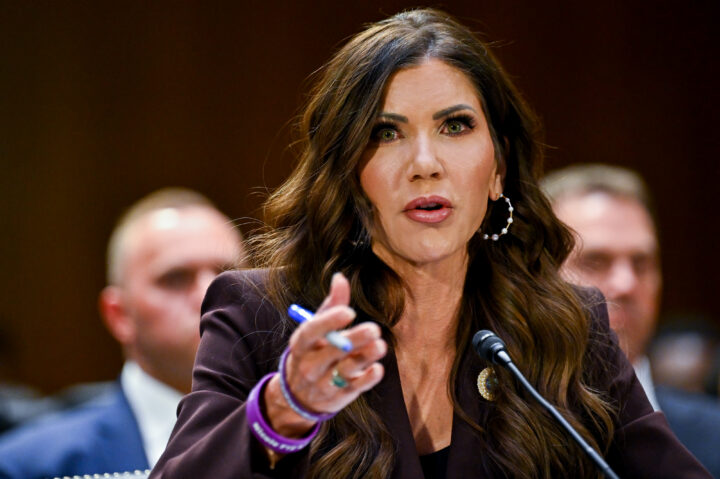
Homeland Security Secretary Kristi Noem speaks during a Senate Judiciary Committee hearing in Washington, DC, US, on Tuesday, March 3, 2026.
Facing concerns from Senate Republicans over her agency’s preparedness, Homeland Security Secretary Kristi Noem on Tuesday defended the department’s ability to respond against potential Iranian sleeper-cell threats as the Department of Homeland Security remains unfunded and under a partial shutdown amid an escalating conflict with Tehran.
“We work every single day with our intelligence agencies and law enforcement partners to make sure that we are investigating and finding any threats to the homeland here within our borders,” Noem said at an oversight hearing before the Senate Judiciary Committee. “Not only that — we are revetting some of the individuals and some of the programs that we may have concerns about, looking at social media, also going through those interviews that are necessary for some of our programs that the Biden administration abused and perverted under their time there as well.”
“We don’t necessarily know who all came into our country,” Noem added. “We know that we have many dangerous individuals that came in unvetted, and we are working every single day to find them and to make sure that we’re preventing the next attack and preventing the next crime perpetrated against the American people.”
The hearing unfolded as DHS has continued to operate without full appropriations since Feb. 14, after lawmakers failed to reach a funding deal, largely over disagreements about the Trump administration’s immigration strategy.
Congressional Republicans have warned that the DHS shutdown poses a national security risk and impacts the agency’s ability to conduct counterterrorism and domestic security operations against Iranian-backed threats at a crucial moment of conflict.
Those concerns intensified over the weekend after a shooting in Austin, Texas, left three people dead and 13 wounded. Authorities said a Senegalese man opened fire inside a bar while wearing a hoodie that read “property of Allah.” According to reports, investigators later found photos of Iranian leaders at his residence.
“I wonder how many people are like that here, waiting to pounce, and DHS doesn’t have appropriated funds,” said Sen. Lindsey Graham (R-SC) during the hearing, referring to the incident in Texas. “This is insane. There are more people like this.”
Asked by Graham whether the threat level from “radical Islamist terrorists” is increased amid the ongoing military confrontation with Tehran, Noem responded: “Yep.”
Congressional Democrats said Monday they have no plans to end the funding standoff, but that they are willing to fund DHS agencies that do not handle immigration enforcement. However, Republicans have largely opposed splitting up DHS funding.
“Can we not understand America is under siege, now likely to be attacked because radical Islam is under siege and they’re going to hit back and we’re sitting here looking at each other and not funding DHS?” said Graham.
More than 30 House Democrats criticized the management of the 2025 Nonprofit Security Grant Program, saying that a lack of information provided by DHS is severely hampering applications
JIM WATSON/AFP via Getty Images

Committee ranking member Representative Bennie Thompson, Democrat from Mississippi, speaks during a House Committee on Homeland Security hearing with testimony from US Secretary of Homeland Security Kristi Noem on fiscal year 2026 budget requests, on Capitol Hill in Washington, DC, May 14, 2025.
A group of more than 30 House Democrats wrote to leaders at the Department of Homeland Security on Tuesday criticizing their management of the 2025 Nonprofit Security Grant Program, saying that a lack of information provided by DHS is severely hampering applications to and implementation of the critical program.
The lawmakers criticized DHS and the Federal Emergency Management Agency for publishing the application for the grants months behind schedule, and, they allege, failing to provide “basic information necessary to move the application process forward and to fruition,” including specific timelines for the grants and applications, which the Democrats said still have not been provided.
“States have repeatedly asked FEMA for this information, and they have received no response,” the lawmakers continued. “This has also created a chilling effect on faith-based and nonprofit organizations that are hesitant to participate in an opaque application process.”
The lawmakers stated that the delays in allocating 2025 funding are concerning given the ongoing spate of attacks on religious institutions across the country, including a Catholic church in Minneapolis, a Latter-day Saints church in Michigan and the Capital Jewish Museum in Washington.
They also said that FEMA has failed to engage in educational and outreach programs to prospective applicants about the grants and the application process — programs that are required under law.
“Because of FEMA’s delays and lack of coordination and communication with States, many States have already opened and closed the application period for nonprofit organizations, meaning that any outreach from FEMA at this point would be too late,” the letter continues. “Other States have not opened the application process and have not communicated with faith-based and nonprofit stakeholders, leaving the process and the potential applicants in limbo.”
The Democrats criticized DHS for ignoring bipartisan requests from Congress to share the names of organizations awarded NSGP funding under a supplemental funding round earlier this year, which had been standard procedure in the past.
They also said DHS has added burdensome new requirements on state administrators for nonprofits that are seeking reimbursements for security costs from grants that have already been provided, slowing down reimbursements, increasing administrative costs and discouraging further applications.
The letter also raises concerns about language included in some NSGP materials suggesting that the grants could be conditioned on compliance with immigration enforcement efforts and alleges that DHS may be attempting to ban Muslim organizations from receiving security funding. The administration has already pulled funding from some Muslim groups with alleged ties to terrorism.
“FEMA must take immediate steps to get the FY 2025 NSGP back on track so that FY 2026 can proceed without the present delays, inconsistencies and uncertainties, and lack of uniformity and predictability that have previously been the hallmarks and guardrails for a program serving several thousand faith-based and nonprofit applicants each grant cycle,” the letter concludes.
The lawmakers urged DHS and FEMA to take immediate action to rectify the series of concerns they outlined and move the 2025 grant process ahead quickly.
The letter was led by Rep. Bennie Thompson (D-MS), the ranking member of the House Homeland Security Committee, and co-signed by Reps. Eric Swalwell (D-CA), Lou Correa (D-CA), Shri Thanedar (D-MI), Seth Magaziner (D-RI), Dan Goldman (D-NY), Delia Ramirez (D-IL), Tim Kennedy (D-NY), LaMonica McIver (D-NJ), Julie Johson (D-TX), Nellie Pou (D-NJ), Troy Carter (D-LA), Al Green (D-TX), James Walkinshaw (D-VA), Bobby Scott (D-VA), Nydia Velazquez (D-NY), Lloyd Doggett (D-TX), Ed Case (D-HI), Debbie Wasserman Schultz (D-FL), Yvette Clarke (D-NY), Andre Carson (D-IN), Dina Titus (D-NV), Tom Suozzi (D-NY), Lizzie Fletcher (D-TX), Sylvia Garcia (D-TX), Shontel Brown (D-OH), Gabe Amo (D-RI), Greg Landsman (D-OH), Jennifer McClellan (D-VA), Laura Friedman (D-CA) and Dave Min (D-CA), and Dels. Pablo Hernandez (D-PR) and Eleanor Holmes Norton (D-DC).
“It is absolutely unacceptable that the Trump administration is dragging its feet on the awarding of these vital security grants,” Pou said in a separate statement. “As domestic extremism and terrorist threats to synagogues and other religious and community centers explode, Congress appropriated these grant funds to help support readiness. Americans have an unshakeable right to worship in peace and security. Congress deserves answers and our nation deserves action from this administration.”
Shortly after pulling his own nomination to lead the Office of Special Counsel, Ingrassia has now been appointed to serve as deputy general counsel at the GSA
AP Photo/Alex Brandon
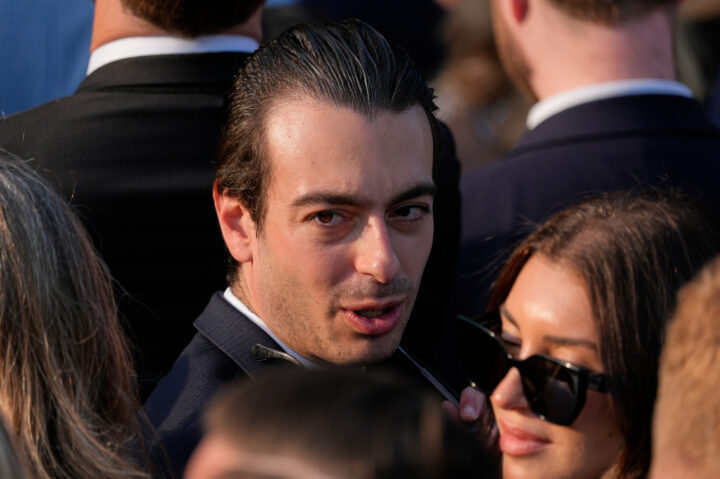
Paul Ingrassia arrives before Trump speaks during a summer soiree on the South Lawn of the White House, June 4, 2025, in Washington.
Paul Ingrassia, the Department of Homeland Security’s White House liaison who withdrew his nomination to lead the Office of Special Counsel late last month after antisemitic and racist text messages of his were unearthed, has been appointed to serve as deputy general counsel at the General Services Administration.
Ingrassia, 30, has served in multiple roles in the second Trump administration. Prior to his most recent role at DHS, Ingrassia briefly served as the liaison to the Department of Justice but was reassigned after clashing with the DOJ’s chief of staff.
The conservative activist revealed his new position in an email to fellow DHS staff on Thursday announcing his departure. Ingrassia wrote in the email, obtained by Politico, that Trump had called him into the Oval Office on Wednesday evening to offer him the job.
Reached by Jewish Insider, a White House official confirmed that Ingrassia had taken on the deputy general counsel role at GSA, but did not provide additional comment. The official told Politico that Ingrassia was a “very helpful addition to GSA and will successfully execute President Trump’s America First policies.”
The new position comes less than a month after Ingrassia pulled himself from consideration to lead the Office of Special Counsel, which is tasked with investigating and prosecuting whistleblower claims and accusations of corruption within the federal government.
The nomination was initially poorly received by some Republicans on the committee due to his past incendiary comments, including antisemitic conspiracy theories posted to social media. Two GOP committee members had privately expressed concerns to the White House about Ingrassia’s candidacy in recent months, those senators told JI on condition of anonymity at the time.
Ingrassia’s standing plummeted further after it emerged that he had sent incendiary and racist text messages in a group chat of Republican operatives, including statements that Martin Luther King Jr. Day should be “tossed into the seventh circle of hell” and described himself as having a “Nazi streak … from time to time.”
The revelation prompted immediate outcry on Capitol Hill, with Democrats reiterating their prior calls to pull Ingrassia’s nomination and Republicans publicly and privately urging the White House to do the same.
Ingrassia pulled himself from consideration to be head of the Office of Special Counsel after three Republican senators vowed to oppose his embattled nomination
Pete Kiehart for The Washington Post via Getty Images
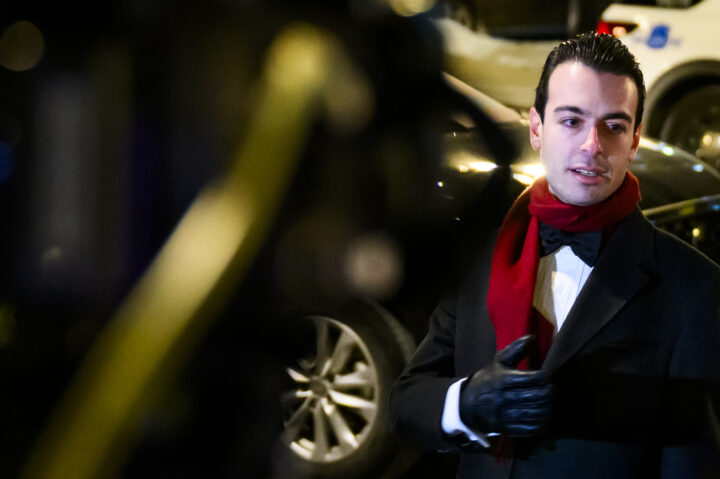
Paul Ingrassia, forer White House liaison to the Justice Department, left, announces the release of brothers Andrew and Matthew Valentin outside of the DC Central Detention Facility on January 20, 2025 in Washington, DC.
Paul Ingrassia announced on Tuesday he was withdrawing his embattled nomination to lead the Office of Special Counsel amid growing GOP opposition to his recently unearthed antisemitic and racist text messages.
Ingrassia, 30, currently serves as the White House liaison for the Department of Homeland Security. Prior to that role, he briefly served as the liaison to the Department of Justice at the beginning of President Donald Trump’s second term, but was reassigned after clashing with the DOJ’s chief of staff.
“I will be withdrawing myself from Thursday’s HSGAC [Senate Homeland Security & Governmental Affairs Committee] hearing to lead the Office of Special Counsel because unfortunately I do not have enough Republican votes at this time,” Ingrassia wrote in a post on Truth Social. “I appreciate the overwhelming support that I have received throughout this process and will continue to serve President Trump and this administration to Make America Great Again!”
Trump nominated Ingrassia in late May to lead the Office of Special Counsel, which is tasked with investigating and prosecuting whistleblower claims and accusations of corruption within the federal government. He was scheduled to receive a confirmation hearing in committee on Thursday.
The nomination was initially poorly received by some Republicans on the committee due to his past incendiary comments, including antisemitic conspiracy theories posted to social media. Two GOP committee members had privately expressed concerns to the White House about Ingrassia’s candidacy in recent months, those senators told Jewish Insider on condition of anonymity.
Ingrassia’s standing plummeted further after Politico reported on Monday that he had sent text messages in a group chat of Republican operatives stating that Martin Luther King Jr. Day should be “tossed into the seventh circle of hell” and described himself as having a “Nazi streak … from time to time.”
Ingrassia wrote in the text chain that he would “never trust a chinaman or Indian,” a comment made in reference to former Republican presidential candidate Vivek Ramaswamy. Another message stated that “We need competent white men in positions of leadership … The founding fathers were wrong that all men are created equal.”
The revelation prompted immediate outcry on Capitol Hill, with Democrats reiterating their prior calls to pull Ingrassia’s nomination and Republicans publicly and privately urging the White House to do the same. Three Republicans on the Homeland Security Committee — Sens. Ron Johnson (R-WI), Rick Scott (R-FL) and James Lankford (R-OK) — told reporters that they would vote against Ingrassia’s nomination at his confirmation hearing.
Johnson said that Ingrassia’s nomination “never should’ve gotten this far” and that the White House “ought to withdraw” his name from consideration.
“I don’t plan on voting for him. I can’t imagine how anybody can be antisemitic in this country,” Scott said, later adding that he had informed the White House of his decision after the most recent text messages were published.
Asked by reporters at the Capitol on Tuesday if the White House should pull Ingrassia’s nomination, Senate Majority Leader John Thune (R-SD) replied, “I hope so. He’s not going to pass.” He responded, “Yeah,” when asked if it’d be a mistake for Ingrassia to appear before the Homeland Security Committee on Thursday.
Ingrassia also lost the backing of the Zionist Organization of America, the sole Jewish group that was supporting Ingrassia’s nomination, over the texts. The group announced on Tuesday that they were pulling their endorsement as a result of the messages.
“In this age of Jew hatred, even a hint of antisemitism can’t be tolerated,” Mort Klein, the group’s president, told the Washington Post of the decision.
At a luncheon hosted by the White House on Tuesday for GOP senators, several Republicans took part in a discussion about Ingrassia’s nomination being “dead,” according to one senator who participated in the conversation.
“He’s going to be pulled,” the senator said of Ingrassia, citing several conversations this week with the White House.
Sen. Richard Blumenthal (D-CT), who also serves on the panel, similarly predicted the White House would withdraw his nomination, saying there was no reason to force the confirmation hearing to proceed on Thursday when he had no chance of being confirmed.
“I expect it because there’s no way he’ll be confirmed. I don’t know why anyone would put him through the gauntlet of questions that I would be asking him, along with others,” Blumenthal told JI. “They should mercifully spare him the ignominy of being overwhelmingly disapproved.”
Ingrassia’s nomination was already considered controversial prior to the leak of his text messages, the result of his ties to avowed white nationalists and antisemites like Kanye West and Nick Fuentes, his record of public statements embracing conspiracy theories and his already rocky tenure in the second Trump administration, which had seen him depart from two roles due to friction with colleagues in less than a year.
Ingrassia was also the subject of an internal investigation at the Department of Homeland Security this month after a sexual harassment complaint was filed against him, though the complaint was later withdrawn and no wrongdoing was found.
Ingrassia has also been consistently critical of the U.S.-Israel relationship and has repeatedly asserted since Hamas’ Oct. 7, 2023, attacks on Israel that the United States should not provide any aid to the Jewish state.
As the Hamas attacks were still underway, Ingrassia posted on X calling illegal immigration to the U.S. “comparable to the attack on Israel.” Days later, Ingrassia wrote in a since-deleted post on the platform that the Israel-Palestine conflict was a “psyop.”
The DHS Office of Intelligence and Analysis, responsible for a variety of information-sharing functions, plans to shed 75% of its staff
JIM WATSON/AFP via Getty Images
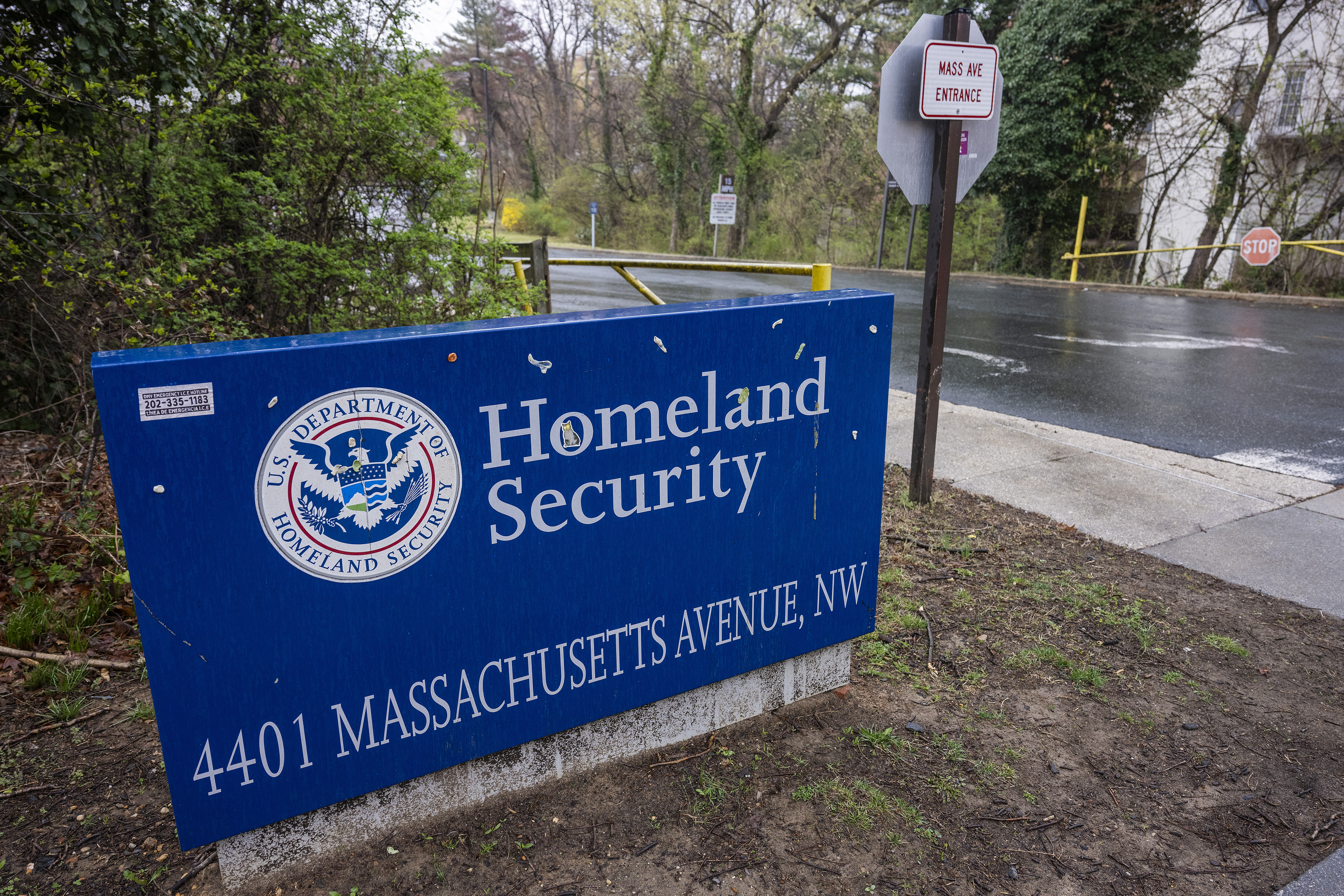
A sign for the US Department of Homeland Security in Washington, DC, March 24, 2025.
Jewish community groups and congressional Democrats are raising concerns about the Department of Homeland Security’s plans to slash 75% of the staff for the department’s Office of Intelligence and Analysis (I&A).
NextGov reported that the cuts — totaling 725 of the office’s 1,000 staff — had been in progress for months but were temporarily paused following the U.S. strikes on Iran’s nuclear facilities, which federal officials warned could prompt domestic attacks.
I&A plays a role in collecting and disseminating to local law enforcement and private partners intelligence to counter threats including terrorism and foreign adversaries. But the office has also come under criticism from various fronts in recent years over alleged domestic surveillance abuses and failures to investigate threats, and faced questions over its scope, capabilities and mission, which have prompted calls for reform.
Top congressional Democrats wrote to the administration last week criticizing the expected cuts.
“Hollowing out the office risks leaving the homeland dangerously exposed to these threats, especially at a time when the FBI’s budget is being substantially reduced,” Sen. Gary Peters (D-MI), the ranking member of Senate Homeland Security and Governmental Affairs Committee, and Reps. Bennie Thompson (D-MS) and Jim Himes (D-CT), the ranking members of the Homeland Security and Intelligence committees, said in a letter to Secretary of Homeland Security Kristi Noem and Director of National Intelligence Tulsi Gabbard.
“Radically reducing I&A’s workforce at headquarters or in the field would create dangerous and unnecessary security gaps and could again leave us in the dark about the threats that lie ahead,” the lawmakers continued.
They emphasized that, despite issues at I&A in the past, it has made progress and fills critical gaps in the intelligence infrastructure.
A coalition of Jewish community groups — the American Jewish Committee, the Anti-Defamation League and the Secure Community Network — wrote to the top lawmakers on the Senate and House Intelligence Committees last week raising similar concerns.
“We are deeply concerned that any wholesale changes to the operations of I&A will have an adverse effect on countering antisemitism and ensuring the safety of the Jewish community in the United States,” the Jewish groups wrote. “With the historic rise in antisemitic incidents and threats both targeting and impacting the American Jewish community, I&A’s role has never been more important.”
The groups highlighted the office’s mission in sharing information with partners, including state and local law enforcement, and said that they “rely on I&A to provide accurate and timely updates on behalf of the intelligence community to inform efforts for our community’s safety and security.”
The groups urged the lawmakers to work to halt changes that would jeopardize Jewish community security.
Michael Masters, SCN’s CEO, wrote separately to Noem on Monday to offer recommendations for the future of I&A, emphasizing, “as the only Intelligence Community entity statutorily mandated to share threat information with state, local, tribal, and territorial (SLTT) partners, and a key information sharing partner of a non-profit entity such as ours, it is critical that we at SCN, as well as our law enforcement partners, have an effective, credible, and efficient partner in DHS I&A.”
Masters said that, while the office is a critical resource, there have been issues with I&A’s output in the past, some of which have impacted the Jewish community: “When we have received information and support from I&A, we have faced issues with the timely and credible nature of the information itself,” Masters said.
He recommended that I&A’s mission be focused in part on collaboration and information-sharing with nonprofits such as SCN and on open-source intelligence collection and coordinating with other federal intelligence agencies.
A DHS spokesperson said in a statement to JI that DHS has identified some roles and programs inside I&A as unnecessary.
“Under President Trump’s leadership, we focused on getting the Department of Homeland Security back to its core mission of prioritizing American safety and enforcing our laws. DHS component leads have identified redundant positions and non-critical programs within the Office of Intelligence and Analysis,” the statement reads. “The Department is actively working to identify other wasteful positions and programs that do not align with DHS’s mission to prioritize American safety and enforce our laws.”
Groups representing state and local law enforcement officials, including the Major Cities Chiefs Association, County Sheriffs of America, the Association of State Criminal Investigative Agencies, the National Fusion Center Association and the National Sheriffs’ Association, have also warned against gutting the office.
“[I&A] is the only component of the U.S. intelligence community with a statutory mandate to share threat information with state and local partners,” a letter from the Major Cities Chiefs Association, County Sheriffs of America and the Association of State Criminal Investigative Agencies, reads. “The current threat landscape makes our partnership with [I&A] more critical than ever. Ongoing Middle East conflicts heighten risks of foreign-directed and homegrown violent extremism, as demonstrated by the recent antisemitic attack in Boulder, Colorado.”
Community Security Initiative director Mitch Silber said antisemitic rhetoric online is ‘happening at a much higher run rate than before D.C. and Boulder’

Tom Brenner For The Washington Post via Getty Images
Metropolitan Police Department and Federal Bureau of Investigation officers stand guard at a perimeter near the Capital Jewish Museum on May 22, 2025 in Washington.
The American Jewish community is facing an “elevated threat” following a surge of violent antisemitic attacks across the country in recent weeks, the FBI and Department of Homeland Security warned last week.
In a joint statement, the FBI and DHS called for increased vigilance among Jewish communities, noting the possibility of copycat attacks after a shooting in Washington in which two Israeli Embassy employees were killed and an attack in Boulder, Colo., in which 15 people were injured in a firebombing targeting advocates calling for the release of hostages in Gaza. “The ongoing Israel-HAMAS conflict may motivate other violent extremists and hate crime perpetrators with similar grievances to conduct violence against Jewish and Israeli communities and their supporters. Foreign terrorist organizations also may try to exploit narratives related to the conflict to inspire attacks in the United States,” the agencies warned.
Jewish organizations that track threats to the community are similarly concerned about online rhetoric following the attacks.
The Anti-Defamation League highlighted that, one day after the incident in Boulder, videos allegedly recorded by the assailant shortly before the assault began circulated on a Telegram channel called Taufan al-Ummah, which translates to “Flood of the Ummah,” a reference to the Al-Aqsa Flood, Hamas’ name for its Oct. 7, 2023, terror attack on Israel. The circulated posts celebrated Soliman’s actions.
The ADL also noted that extremists responded to the attack by spreading conspiracy theories which blamed Jews for the firebombing. Additionally, the Bronx Anti-War Coalition posted a threat shortly after the attack: “May all Zionists live in perpetual fear and paranoia until the day the criminal entity crumbles.”
“The volume of alerts when our social media web scraping tools highlight postings that may be real threats is happening at a much higher run rate than before D.C. and Boulder,” Mitch Silber, director of the Community Security Initiative, which coordinates security for Jewish communities in the New York region, told Jewish Insider.
“I would say it’s unprecedented,” Silber said of the threat Jews are confronting.
Silber also called it “unprecedented that American Jews are being targeted because of Israel’s actions,” referring to the Boulder attack, the killing of the two Israeli Embassy staffers, and an attempted arson attack on the home of Pennsylvania Gov. Josh Shapiro during the holiday of Passover. The suspect in the Boulder attack told investigators he “wanted to kill all Zionist people” and had planned the attack for a year. The shooter in Washington yelled “Free Palestine” shortly after the attack and the arsonist cited Shapiro’s support for Israel as his motive.
These attacks, according to Silber, are distinct from other antisemitic incidents that have occurred in recent years, such as the 2018 Tree of Life synagogue shooting in Pittsburgh — which remains the deadliest attack on Jews on U.S. soil — and the 2022 hostage-taking at Congregation Beth Israel in Colleyville, Texas.
“The key element that’s different here is the motivation of the attacks,” Silber said. The Tree of Life shooter was motivated by HIAS immigration actions and the Colleyville shooter was looking to get an al-Qaida fighter freed. “Of course, antisemitism is the broad brush,” he continued, “but if you look at recent attacks, they are really attacks against Jewish communities in the U.S. because American Jews are stand-ins for the Israelis that these attackers can’t reach.”
CSI is responding in “a multitude of different ways,” Silber said. “It’s been a tsunami of requests from organizations.”
“We’re encouraging any Jewish institution or organization to let us know if they are having an event and that way we can let local law enforcement know,” Silber continued, adding that the group’s new plans include subsidizing armed guards to complement law enforcement at outdoor events hosted by Jewish organizations, as well as expanding its team of analysts searching on social media, surface web and dark web for threats.
“We have more hands on keyboards to give ourselves a better chance of detecting a Boulder or D.C. before it happens,” Silber said.
Community Security Service, a group that provides self-defense and safety training to Jewish institutions, also told JI it is beefing up services in light of the recent attacks.
“Both of the attacks within a two-week timespan have been accompanied by the same kind of slogans that we’ve been hearing on college campuses and yelled at synagogues,” said Richard Priem, CEO of CSS. “That is a new manifestation. Of course we are concerned.”
Following Hamas’ Oct. 7, 2023, attack on Israel and ensuing war in Gaza, CSS saw a dramatic increase in Jewish communities requesting security support, which lasted for about a year, according to Priem. “But over the last two weeks, we’ve had dozens of inquiries from organizations,” he said.
“We are making sure that more quarters of the community use the training that we have for them,” Priem said. “Not just by deploying volunteers for large- or small-scale events but also just giving them guidance and training on how to organize themselves in a way that makes them less vulnerable.”
“We will open some community-wide training sessions in the coming weeks that are open to anyone to give awareness to pre-attack indicators,” he continued. “We have to get out of this mindset that the only way we’re going to solve this is by outsourcing to more companies. We’re not going to get out of this situation unless we as a community start taking ownership and realize we have to do training. We have to pay attention. Whether there’s an increased threat or not, people should do preventative training now.”
Marc Calcano, a former NYPD officer who runs a New York City-based private security firm with several high-profile Jewish clients, echoed that “the level of terror” American Jews face is “extremely high right now” and warned that the Boulder attack, in particular, could be easily replicated.
“I instruct individuals and large groups but I think it’s time for us to do this on a larger scale, which is creating an institution where many can come, here in New York and other states to learn how to physically defend yourself,” Calcano said.
The Jewish community can use fear “to its advantage,” he continued. “We have to learn how to protect ourselves.”
Over 150 Israeli students at Harvard will be impacted by the move; they must transfer schools or lose their visas

Scott Eisen/Getty Images
An entrance gate on Harvard Yard at the Harvard University campus on June 29, 2023 in Cambridge, Massachusetts.
The Trump administration on Thursday stripped Harvard University of its ability to enroll foreign students, citing Harvard’s collaboration with the Chinese Communist Party, in what the Department of Homeland Security described as an act of accountability for the university “fostering violence, antisemitism and pro-terrorist conduct from students on its campus.”
The move is an escalation in President Donald Trump’s battle with Harvard, just one front in his war with elite higher education institutions. He has already revoked billions of dollars in federal funding from Harvard, as well as several other universities. Trump has also sought the deportation of hundreds of foreign students on college campuses over their alleged support for terrorism and antisemitism.
But this is the first instance of the White House completely cutting off a university’s ability to admit international students. Harvard currently hosts more than 10,000 international students, according to university data. 160 of them are from Israel. Current students must transfer schools or lose their visa.
“It is a privilege, not a right, for universities to enroll foreign students and benefit from their higher tuition payments to help pad their multibillion-dollar endowments. Harvard had plenty of opportunity to do the right thing. It refused,” Homeland Security Secretary Kristi Noem said in a statement.
Last month, Noem asked Harvard to provide data on the disciplinary records of foreign students on campus and their record of participating in protests. Noem said the information shared by Harvard in response was “insufficient.”
Harvard Hillel’s executive director, Rabbi Jason Rubenstein, expressed concern about the impact on Israeli students at Harvard.
“The current, escalating federal assault against Harvard — shuttering apolitical, life-saving research; threatening the university’s tax-exempt status; and revoking all student visas, including those of Israeli students who are proud veterans of the Israel Defense Forces and forceful advocates for Israel on campus — is neither focused nor measured, and stands to substantially harm the very Jewish students and scholars it purports to protect,” Rubenstein told Jewish Insider.
A university spokesperson did not immediately respond to a request for comment.
Barak Sella, an Israeli educator and researcher who earned a master’s degree from the Harvard Kennedy School in 2024, said the action will “be detrimental for the entire higher education system.”
“Never did any Jewish [organization] ask to ban the ability to accept foreign students, especially when a lot of the antisemitism is perpetrated by American citizens — aka the shooting last night,” Sella told JI, referring to the killing of two Israeli Embassy officials outside the Capital Jewish Museum in Washington. The alleged perpetrator is an American citizen.
Harvard is likely to take legal action in response, according to The Crimson.
Jewish Insider reporter Haley Cohen contributed to this report.
Mahdawi voiced empathy for Hamas’ Oct. 7 terror attacks on ‘60 Minutes’ and honored his cousin, a commander in the Al-Aqsa Martyrs' Brigade

Adam Gray/Getty Images
Pro-Palestinian activists rally for Mohsen Mahdawi and protest against deportations outside of ICE Headquarters on April 15, 2025 in New York City.
The arrest on Monday of a Palestinian student at Columbia University who helped organize campus anti-Israel demonstrations was the latest front in the Trump administration’s closely scrutinized crackdown on foreign activists who have expressed sympathy for Hamas and other Palestinian terrorist groups.
Mohsen Mahdawi, a 34-year-old green card holder born and raised in the West Bank, was arrested and detained by federal immigration officers on Monday after he appeared at a U.S. citizenship interview in Vermont, where he resides.
Tricia McLaughlin, a Department of Homeland Security spokesperson, said in an email to Jewish Insider on Tuesday that Mahdawi “was a ringleader in the Columbia protests,” sharing a New York Post article citing anonymous State Department sources claiming that he had used “threatening rhetoric and intimidation” against Jewish students.
“Due to privacy and other considerations, and visa confidentiality, we generally will not comment on Department actions with respect to specific cases,” a State Department spokesperson told JI on Tuesday.
Mahdawi’s lawyers filed a habeas corpus petition on Monday calling his detention unlawful. “This case concerns the government’s retaliatory and targeted detention and attempted removal of Mr. Mahdawi for his constitutionally protected speech,” the petition said.
Representatives for Columbia declined to comment on Mahdawi’s arrest, citing federal student privacy law.
Like Mahmoud Khalil, a Palestinian green card holder and recent Columbia University graduate arrested by federal immigration agents last month, Mahdawi has not yet been charged with a crime. Instead, he appears to have been detained on a provision of the Immigration and Nationality Act cited by Secretary of State Marco Rubio to justify expelling foreigners who are seen as a threat to U.S. foreign policy and national security, which the petition also challenges.
Last week, a federal judge in Louisiana ordered that Khalil can be deported, determining such arguments are sufficient grounds for his removal, in a decision that is expected to face further challenges.
A federal judge in Vermont ruled on Monday that Mahdawi must be held in the state and cannot be removed from the country for now.
Mahdawi’s legal team did not respond to a request for comment on Tuesday.
Mahdawi had been a key organizer of anti-Israel protests at Columbia that roiled the campus after Hamas’ Oct. 7, 2023, attacks. He helped to found Columbia University Apartheid Divest and was a member of the university’s Students for Justice in Palestine chapter, which has expressed pro-Hamas rhetoric, among other student anti-Israel groups.
For his part, Mahdawi, who moved to the U.S. from a refugee camp in the West Bank in 2014, called Hamas a “product of the Israeli occupation” shortly after the attacks and reportedly helped to write a statement released by Columbia student groups on Oct. 14, 2023, claiming that the “Palestinian struggle for freedom is rooted in international law, under which occupied peoples have the right to resist the occupation of their land.”
He also appeared at a rally a month after the attack alongside Nerdeen Kiswani of Within Our Lifetime, a radical group that advocates for armed resistance against Israel.
In an interview on “60 Minutes” in December 2023, Mahdawi voiced sympathy for Hamas’ terror attacks.
“I did not say that I justify what Hamas has done. I said I can empathize,” he said. “To empathize is to understand the root cause and to not look at any event or situation in a vacuum. This is for me that path moving forward.”
On his Instagram page in August, meanwhile, Mahdawi posted photos commemorating what he called the “martyrdom” of his “cousin,” Maysara Masharqa, a field commander in the Al-Aqsa Martyrs Brigade, the armed wing of Fatah, describing him as a “fierce resistance fighter,” according to The Washington Free Beacon.
“Here is Mesra who offers his soul as a sacrifice for the homeland and for the blood of the martyrs as a gift for the victory of Gaza and in defense of the dignity of his homeland and his people against the vicious Israeli occupation in the West Bank,” Mahdawi wrote.
While the petition filed by his legal team notes that he stepped back from such activism in March 2024, Mahdawi’s public statements drew intense scrutiny from several antisemitism watchdog groups that are pushing the Trump administration to target campus protest leaders.
Mahdawi, who was an undergraduate at Columbia University, was planning to pursue a master’s degree in the fall, according to the petition.
His arrest drew criticism on Monday from Sens. Bernie Sanders (I-VT), Peter Welch (D-VT) and Rep. Becca Balint (D-VT), who said in a statement that “he must be afforded due process under the law and immediately released from detention.”
Please log in if you already have a subscription, or subscribe to access the latest updates.
 Continue with Google
 Continue with Apple