








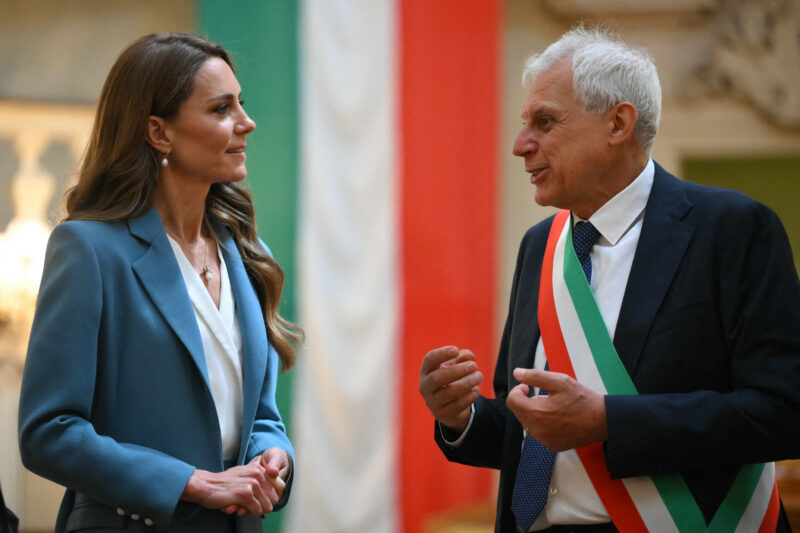




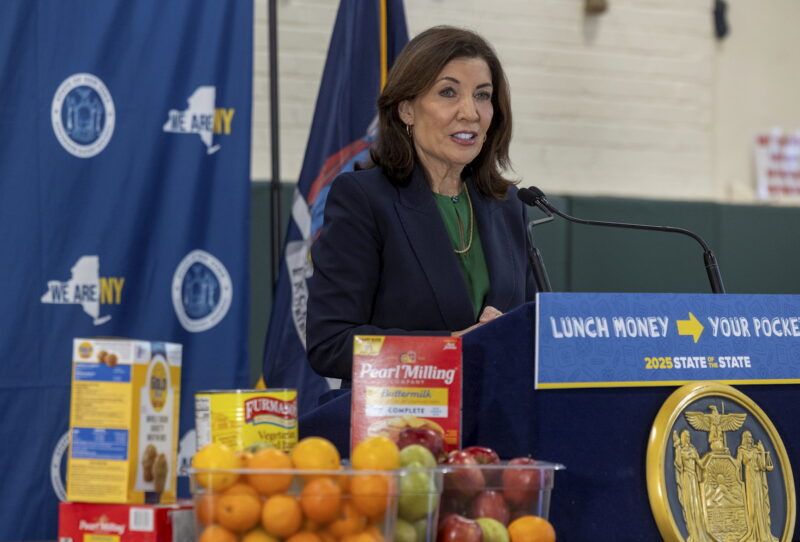
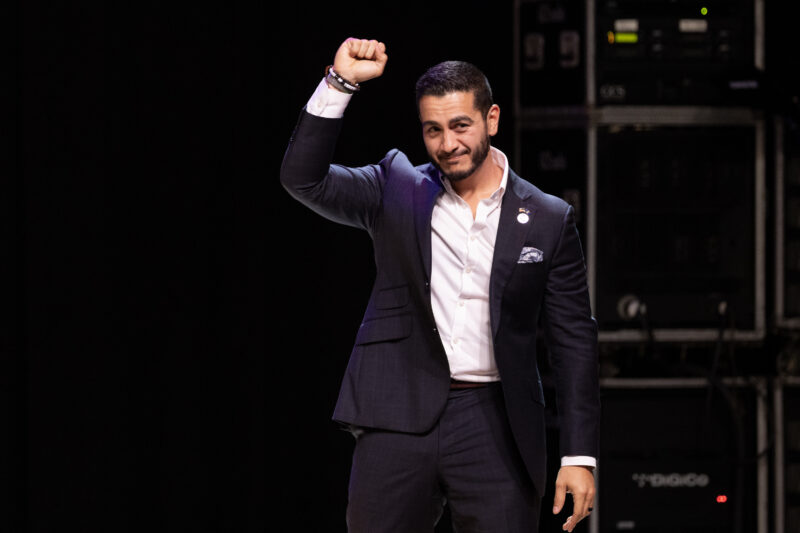
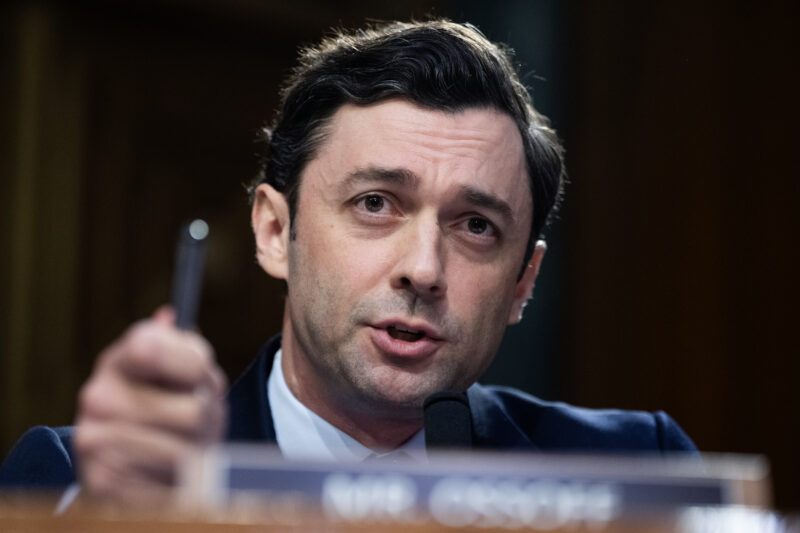
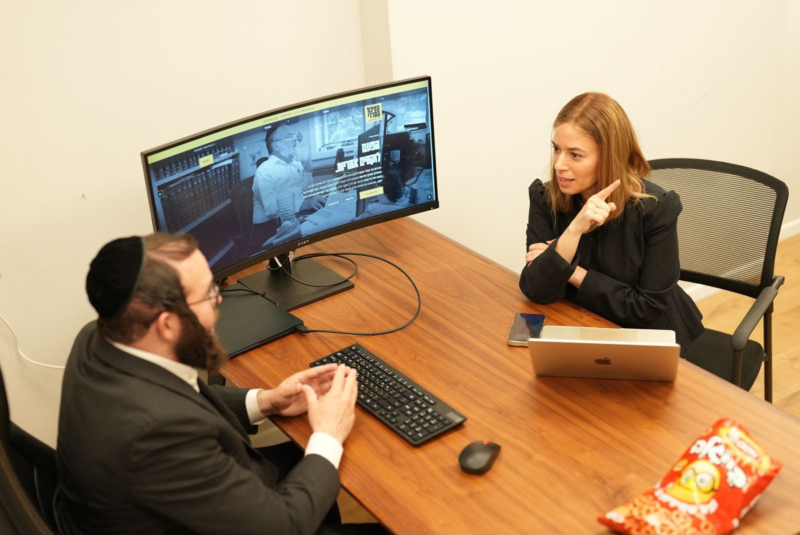

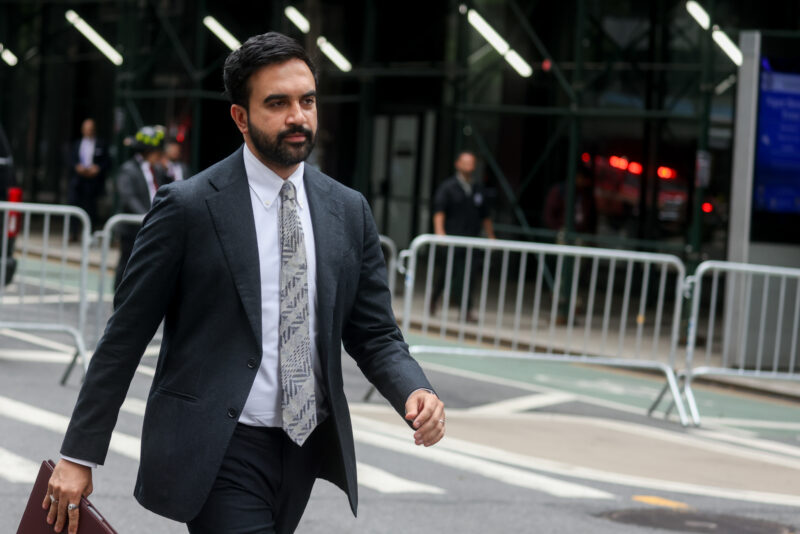







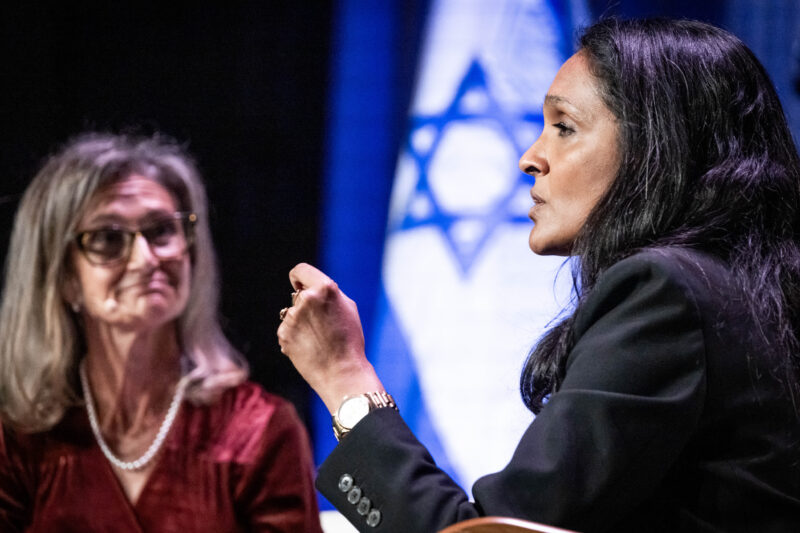


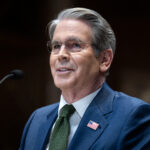





Kaploun also met with parliamentary leaders to discuss bilateral efforts to counter extremism
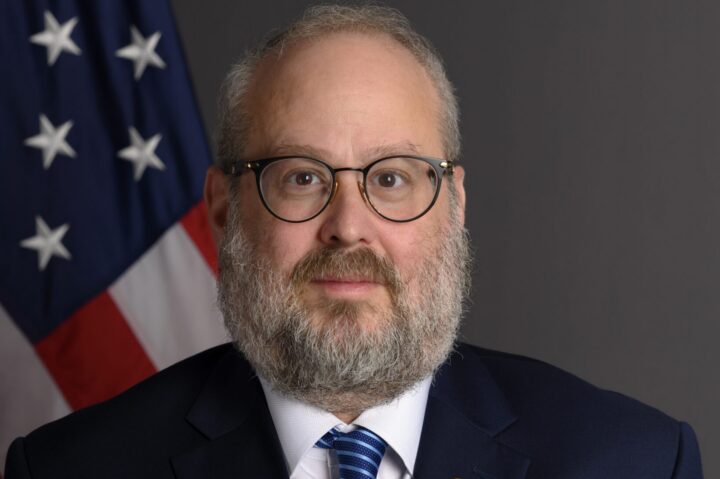
State Department
Special Envoy to Monitor and Combat Antisemitism Yehuda Kaploun


 Add JewishInsider on Google
Rabbi Yehuda Kaploun, the Trump administration’s special envoy to monitor and combat antisemitism, visited the United Arab Emirates this week for his first official visit, taking part in high-level meetings that culminated in a Thursday morning discussion with UAE President Sheikh Mohamed bin Zayed Al Nahyan.
During his trip, the envoy also held meetings with senior government officials and rulers, including Ali Rashid Al Nuaimi, chairman of the Defence, Interior and Foreign Affairs Committee at the Federal National Council, the UAE’s parliament.
The meetings focused on bolstering the strategic U.S.-UAE partnership, advancing regional stability and strengthening bilateral efforts to counter extremism, hate speech, and religious intolerance, according to the FNC.
The UAE has long positioned itself as a hub for regional tolerance, having normalized diplomatic ties with Israel through the 2020 Abraham Accords and established the Abrahamic Family House — an interfaith complex in Abu Dhabi featuring a synagogue, church and mosque.
Kaploun previously met with Emirati Foreign Minister Abdullah bin Zayed in Washington in February.
The State Department declined to comment.
Cohanim served as deputy special envoy to monitor and combat antisemitism in the first Trump administration
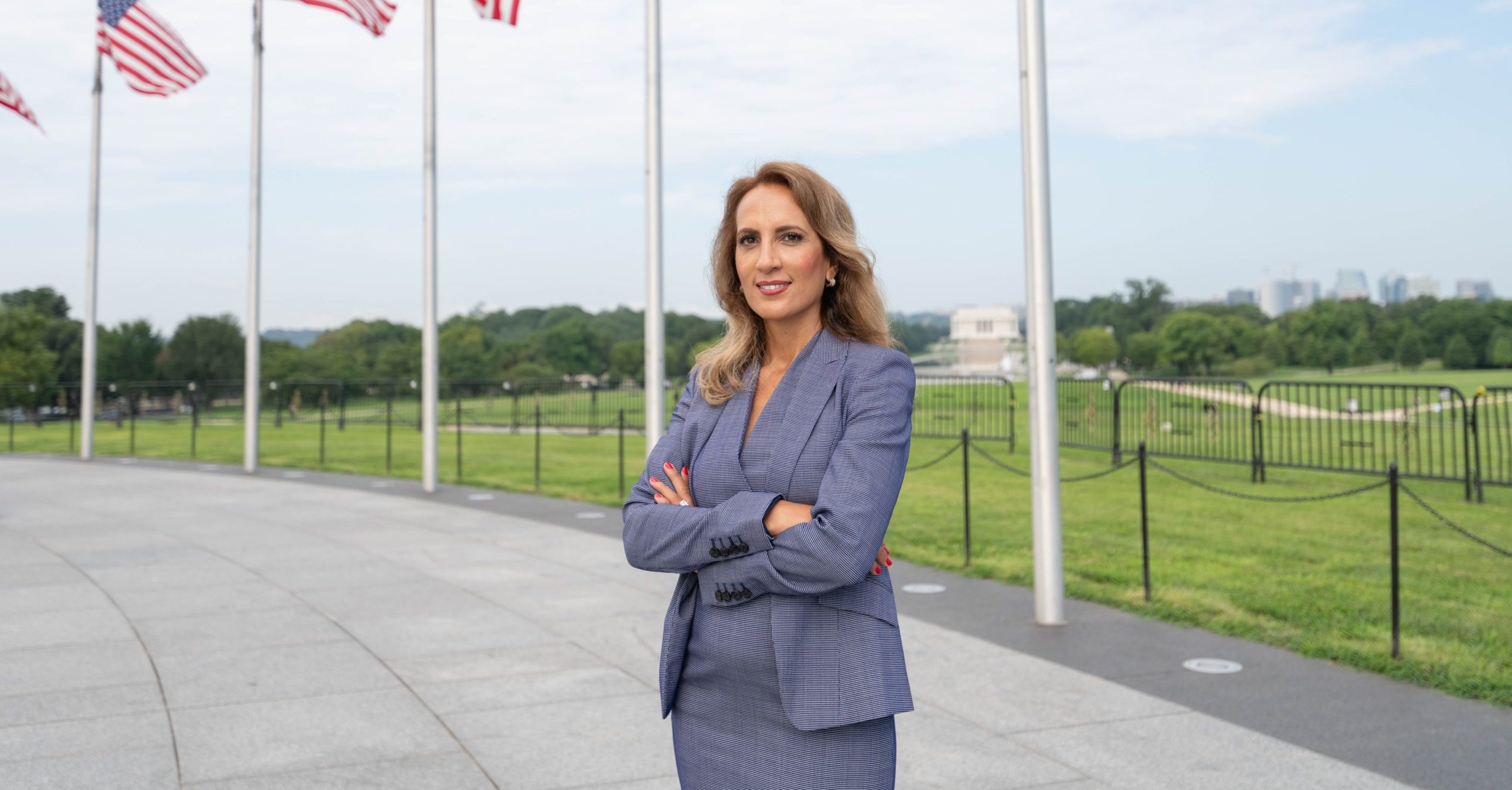
Courtesy
Ellie Cohanim, who served as deputy special envoy to monitor and combat antisemitism in President Donald Trump’s first term, recently joined his administration as a senior policy advisor to U.S. Ambassador to the U.N. Mike Waltz, Waltz announced on Tuesday.
Cohanim was born in Tehran and left Iran as a child in 1979, following the Islamic Revolution. She came with her family to New York.
“Ellie’s story is the American story,” Waltz said in a statement. “Her family fled persecution in Iran, built a life in New York, and she has spent her career looking for ways to serve America, fighting for freedom, standing with the persecuted, and calling out antisemitism wherever it hides. That is exactly the kind of conviction and courage we need at the United Nations.”
Cohanim regularly appears on Fox News as a booster of Trump’s foreign policy, and the announcement of her hiring described her as an advocate of “America First foreign policy.”
Cohanim served as co-chair of the National Task Force to Combat Antisemitism, a group created in 2023 to help the Heritage Foundation draft a conservative framework to combat antisemitism.
Last fall, the task force disaffiliated from Heritage after its president, Kevin Roberts, came to the defense of Tucker Carlson following the far-right podcaster’s interview with neo-Nazi provocateur Nick Fuentes. Since then, Cohanim and her co-chairs have been outspoken about antisemitism on the political right.
Kaploun said his office’s remit had been expanded under the Trump administration; ‘Every agency in Washington was told to work with me to combat the scourge of antisemitism,’ he said
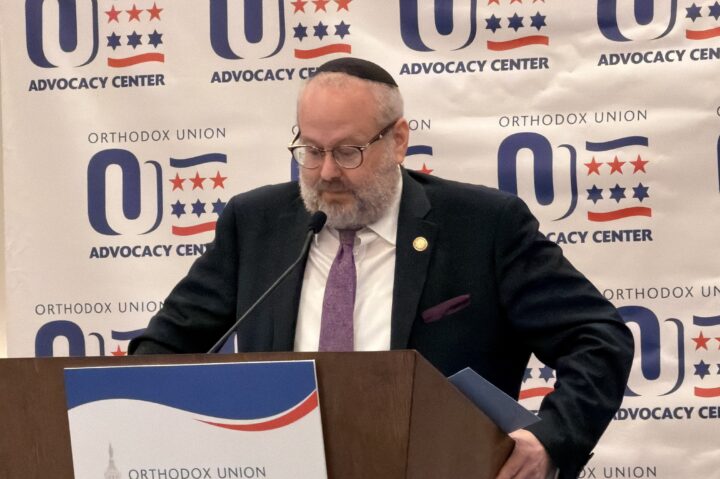
Marc Rod
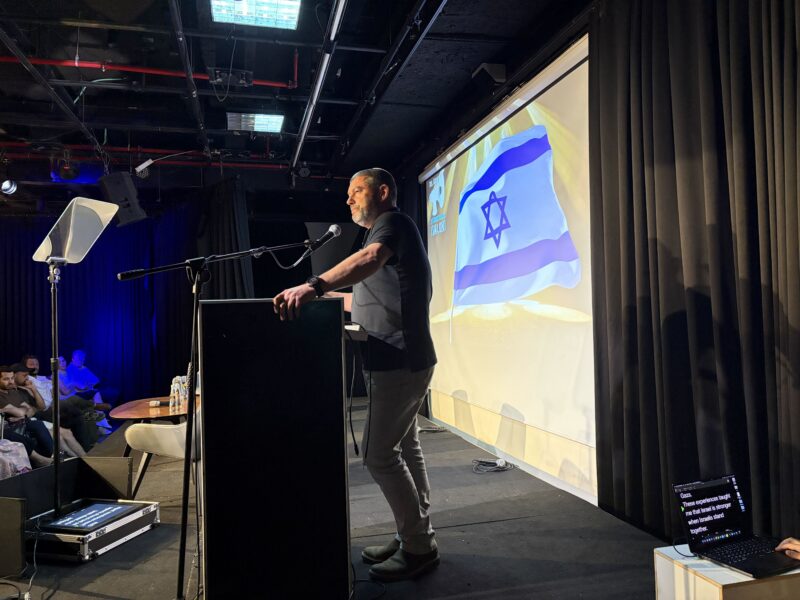
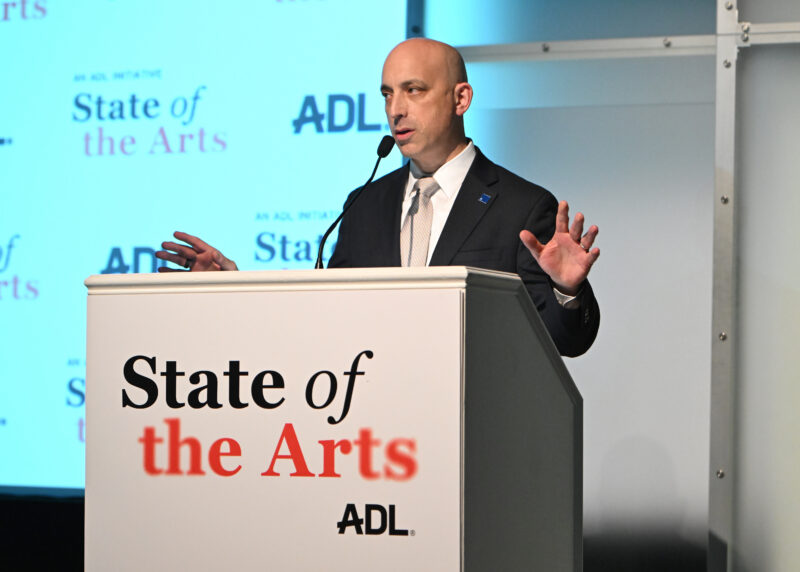
Ambassador Yehuda Kaploun, the Trump administration’s special envoy to monitor and combat antisemitism, speaks at an Orthodox Union conference, June 22, 2026
Ambassador Yehuda Kaploun, the Trump administration’s special envoy to monitor and combat antisemitism, said on Monday that his office, under President Donald Trump, had been given a broader remit across the federal government, including assisting in the recent arrest and indictment of an alleged mastermind of attacks on Jewish communities in Europe and the U.S.
Kaploun said at an Orthodox Union conference that his office had worked with the Department of Justice, FBI, intelligence community and the White House to help bring to justice Mohammed Al-Saadi, an Iranian Iraqi Kata-ib Hizballah operative allegedly involved in more than two dozen attacks and attempted attacks across Europe and the U.S.
“That is not the role of the previous ambassadors that had this role, but the president made certain that when I took the job, that every agency in Washington was told to work with me to combat the scourge of antisemitism,” Kaploun said. “Antisemitism has to have consequences.”
Kaploun emphasized that the threat of antisemitism is global — describing an attack in a Jewish neighborhood in Montreal on Monday as an antisemitic terrorist incident — and comes from international organizations, foreign terrorist organizations, “unchecked mass migration,” online radicalization and “hateful rhetoric from all sides.”
Montreal police said on Monday they were still investigating the shooting suspect’s motive and had not yet deemed it a terrorist attack.
Kaploun said that a new approach to antisemitism is needed, because the old “script” — more conferences, more groups, more “empty commitments from different governments around the world” — has clearly failed.
“America’s response to antisemitism has to be a collective response and a united response. Let’s face this moment and realize that it’s not slogans that are going to make a difference,” Kaploun said. “It’s real action, it’s real education, and we have to go back to Jewish unity, about teaching our children to be proud of being Jewish, to understand our Jewish history, to understand what makes our Jewish nation unique and to restore the pride that people have in being Jewish.”
He said the Trump administration is “leading by example and taking very decisive actions to protect Jewish communities worldwide.” He pointed to the administration’s moves against universities, hate crimes prosecutions by the Department of Justice, an “extremely tight visa vetting program,” the U.S. withdrawal from various international bodies that have demonstrated antisemitism and its push for other countries to adopt the International Holocaust Remembrance Alliance’s working definition of antisemitism.
“These are benchmarks that every country should really be doing the exact same thing,” Kaploun said.
He also touted his work on a trip to Belgium after a synagogue had been firebombed. He said that he began the visit by meeting with members of the Jewish community, who expressed their fear, only to go next to a meeting with Belgium’s foreign minister, who insisted that the country did not have an antisemitism problem.
He said he left the meeting having secured a commitment for Belgium’s military to protect the Jewish community — an effort that just two days later caught a group of Iranians trying to set fire to a Jewish grocery story in Antwerp.
“Because that happened, the Belgian government had to designate the Iranian terrorist group as a terrorist group. Little things matter,” Kaploun said.
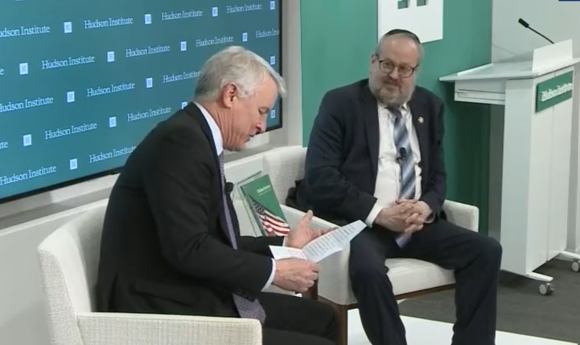
Speaking at the Hudson Institute, Kaploun gave his view of the state of the international and domestic fights to combat antisemitism
C-SPAN
Rabbi Yehuda Kaploun speaks at the Hudson Institute on Feb. 5, 2026.
Rabbi Yehuda Kaploun, the newly confirmed U.S. special envoy to monitor and combat antisemitism, was interrupted three times during a Thursday afternoon think tank event about his new role.
The first was a phone call from Harmeet Dhillon, the Justice Department’s assistant attorney general for civil rights, which he sent to voicemail. The next two were protesters who had somehow made it through security at the conservative Hudson Institute to loudly chant “free Palestine” in the midst of Kaploun’s remarks before being escorted out.
Those unexpected interruptions framed Kaploun’s pitch as he settles into his new role at the State Department: First, that he will be successful because he is working on behalf of an administration that is committed to fighting antisemitism (“If you want to know how the administration works together, that was Harmeet Dhillon,” he said as he silenced his phone). And second, that education — and pushing back on false narratives about Israel and the Holocaust — is the most important way to combat antisemitism.
“The hardest job that I have is how you effect a change in education across the board, by teaching people not to hate, and that’s the battle,” Kaploun said in a conversation moderated by Hudson senior fellow Michael Doran.
Kaploun, a businessman and Chabad-trained rabbi, was confirmed by the Senate in December, must now build out a staff at the State Department and figure out how to make an impact diplomatically.
“The task is a daunting task, but we are blessed that this administration has really made antisemitism a priority, and how to combat and deal with antisemitism is something that the president and the secretary of state have made it perfectly clear that this is one of the priorities of the administration, is holding people accountable,” said Kaploun.
He said most countries in the world have a problem with antisemitism, and his message to leaders in those countries comes back to President Donald Trump: “You start with the concrete policy that antisemitism isn’t tolerated by this administration, period,” said Kaploun. Then, he said you turn to “quiet diplomacy to get results.”
For instance, he said Armenia has indicated to his office that its leaders are willing to join the International Holocaust Remembrance Alliance, an international organization that drafted a working definition of antisemitism that has been adopted by dozens of nations, including the U.S.. Kaploun also said he worked with U.S. Ambassador to Belgium Bill White to pressure Brussels to reverse its decision to end a federal police security presence in Antwerp’s Jewish quarter.
Kaploun identified Hungary, Romania, Albania and Armenia as countries that are “making sincere efforts in dealing with antisemitism.” He said Turkey and Pakistan both leave “a lot to be desired currently,” and that “England is a particular concern” because of “the rise of mass migration.”
The ambassador-level position has a global remit, but Kaploun was not afraid to weigh in on domestic antisemitism, too.
“I think the best argument right now in this country to combat antisemitism and combat Holocaust denial is, you’re treading on the memories of every American soldier who fought tyranny, fought to liberate Europe from the Nazis and liberated the death camps,” said Kaploun, who also argued that ignorance about American Jewish history contributes to antisemitism — and called for people to argue that anti-Jewish hate is anti-American.
“It really is a lack of knowledge about the contributions of Jewish Americans to America, that people fled here for religious freedom,” Kaploun said. “That’s something that this country stands for. So when you are going against the same groups that have the same values, Judeo-Christian values, you are anti-American, because you’re going against what our founding fathers wanted for us.”
Kaploun has not yet announced any international trips. But his goal for all countries, he said, is a “basic human morality.”
“We’re far from getting every country on board,” said Kaploun.
With Gvili’s return, no Israeli hostage — living or deceased — is being held in the enclave for the first time since 2014

Amir Levy/Getty Images
Israeli tanks stationed near the border with the Gaza Strip on September 17, 2025 in southern Israel.
The IDF announced on Monday that it had uncovered the remains of deceased hostage Ran Gvili at a Muslim cemetery in eastern Gaza City and would be bringing them back to Israel for burial — recovering the final hostage of the Gaza war and marking the first time since 2014 that no Israeli captive, alive or deceased, is being held in the enclave.
Gvili, a 24-year-old member of the Israeli Police Special Forces, died in combat while protecting Kibbutz Alumim in southern Israel during the morning of the Oct. 7, 2023 terrorist attacks. His body was then abducted by Hamas and taken into the Gaza Strip where he was buried by the terrorist group.
Dentists and forensic experts deployed to the cemetery were able to identify Gvili’s remains after the IDF had tested hundreds of bodies, according to The Times of Israel. In return, Israel is prepared to hand over at least 15 Palestinian bodies to Gaza’s Health Ministry.
“Following the completion of the identification process by the National Institute of Forensic Medicine, in cooperation with the Israel Police and the Military Rabbinate, IDF representatives informed the family of the deceased hostage Sergeant First Class Ran Gvili, that their loved one has been identified and will be returned for burial,” the IDF said in a statement.
Addressing members of the Knesset on Monday, Israeli Prime Minister Benjamin Netanyahu declared, “My friends, members of the Knesset, a short while ago we returned Ran Gvili, a hero of Israel. I commend the commanders and soldiers of the IDF and the ISA [Shin Bet intelligence agency] for the perfect execution of this sacred mission … We all wore the [hostage] pin, and now that the mission is complete, the time has come to remove it.”
Israeli President Isaac Herzog also thanked those “involved in the operation,” adding that the people of Israel are “moved to tears” and removed his own yellow hostage pin in a video.
“Finally, Ran has been returned home to his family in Israel,” said Herzog. “After many difficult years, for the first time since 2014, there are no Israeli hostages in Gaza. An entire nation prayed and waited for this moment.”
Hamas had held several Israeli hostages for over a decade, including Avera Mengistu and Hisham al-Sayed, who crossed into the Gaza Strip in 2014 and 2015, respectively, and were held alive by the terror group, as well as the remains of IDF soldiers Hadar Goldin and Oron Shaul, who were killed during the 2014 war between Israel and Hamas. All four were returned to Israel in the aftermath of Oct. 7, either through hostage-release deals or recovery efforts by the IDF.
Prior to Gvili’s return, Hamas had been accused of intentionally delaying the release of the Israeli hostages in order to prolong its survival and gain leverage. However, Trump told Axios that the terrorist group helped locate Gvili’s remains.
“[Hamas] worked very hard to get the body back,” Trump said in an interview on Monday. “They were working with Israel on it. You can imagine how hard it was.”
Hamas spokesman Hazem Qassem said that the recovery of the final hostage body proves the group is committed to the terms of the Gaza ceasefire.
“The discovery of the body of the last Israeli captive in Gaza confirms Hamas’s commitment to all the requirements of the ceasefire agreement in the Gaza Strip, including the prisoner exchange,” Qassem said in a statement. “Hamas will continue to adhere to all aspects of the agreement, including facilitating the work of the National Committee for the Administration of Gaza and ensuring its success.”
White House Special Envoy Steve Witkoff announced earlier this month that President Donald Trump’s Gaza peace plan is moving into Phase 2, a shift from a ceasefire and hostage release to the demilitarization of Hamas and reconstruction of the Gaza Strip — a pivot that could be accelerated by the recovery of the last hostage.
Senate Minority Leader Chuck Schumer (D-NY) said in a statement to Jewish Insider, “At long last, after 843 days, the body of Ran Gvili, the last Israeli hostage held by Hamas, is home. It has taken far too long, but finally, all those who fought of the release of hostages can breathe a sigh of relief.”
“I will never forget meeting with the hostage families for the first time in Israel just days after Oct. 7. They have fought bravely and tirelessly for the return of hostages and did not give up until every single hostage was brought home. Today my heart is with all of the hostages, their families, and those who advocated for their return who can finally begin on the path to recovery and healing,” Schumer continued.
Sen. Lindsey Graham (R-SC) also expressed relief for Gvili’s return on social media, noting that the former policeman “epitomizes the heart and soul of Israel.”
“It is with joy and deep sadness that the body of Ran Gvili has been recovered by the Israeli government, allowing him to go home and receive a dignified burial,” Graham wrote. “He fought like a tiger and to the death, taking terrorists down with him. His love for Israel, the one and only Jewish state, consumed his being, and he made the ultimate sacrifice.”
Ted Deutch, CEO of the American Jewish Committee, also welcomed Gvili’s return in a post on X, adding that “healing can begin.”
“This is the moment we’ve prayed and fought for over the last agonizing 843 days,” Deutch wrote. “I’ve come to know so many families of the hostages over the past two years and I hold them all in my heart today.”
Kraft’s organization is also launching ad blitz against antisemitism on ‘Sunday Night Football’
Lester Cohen/Getty Images for The Recording Academy
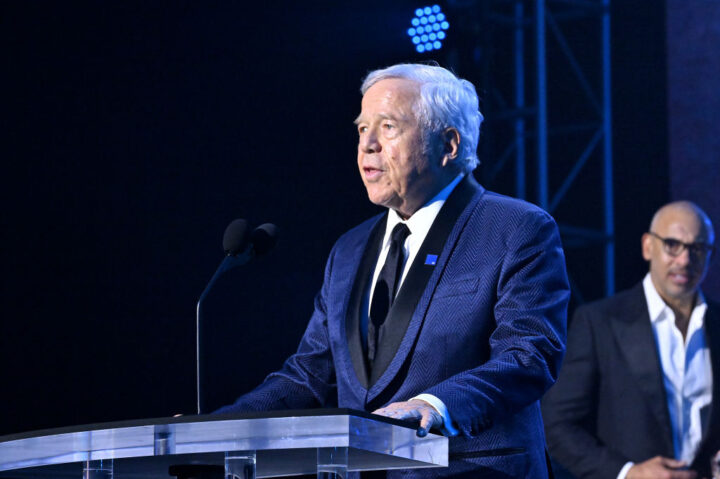
Robert Kraft speaks onstage during the 2024 MusiCares Person of the Year Honoring Jon Bon Jovi during the 66th GRAMMY Awards on February 2, 2024 in Los Angeles, California.
New England Patriots owner Robert Kraft’s Foundation to Combat Antisemitism is rebranding under the name Blue Square Alliance Against Hate and launching a new advertisement focused on antisemitism that’s slated to debut on “Sunday Night Football” this weekend, Jewish Insider has learned.
The rebranded group, whose blue square pins have become a ubiquitous symbol in the fight against antisemitism, is airing the “Sunday Night Football” ad as part of a $10 million media campaign designed to redouble awareness of the steep rise of anti-Jewish hate.
The new ad campaign, titled “When There Are No Words,” will be airing on one of the most watched shows on broadcast television — during a game between the AFC champion Kansas City Chiefs and Detroit Lions. Taylor Swift, engaged to Chiefs tight end Travis Kelce, is also expected to be in attendance and to draw her own fans to the broadcast, expanding the audience for the advertisement’s debut.
“What do you say when a Jewish boy is kicked on a New York city sidewalk?” a voice asks as the 30-second commercial begins. “What do you say when a Holocaust survivor is firebombed in the streets of Colorado? What do you say when one in three Jewish Americans were victims of hate last year? When there are no words, there’s still a symbol to show you care. The blue square.”
The name change and advertisement campaign — which will be supplemented by billboards and social media posts — are an extension to the foundation’s “Blue Square” campaign, which launched in March 2023, aiming to turn the blue square into the symbol for Jewish solidarity and opposition to hatred against Jewish people. The organization has since debuted a blue square pin and bracelet for allies against Jewish hate to wear publicly.
“This campaign is laser-focused on building recognition and appreciation for what the Blue Square represents and the importance it has in cultivating allies against antisemitism,” Adam Katz, the organization’s newly minted president, told Jewish Insider.
Katz said a primary goal of the campaign — and the organization overall — is “to awaken people” to antisemitism, particularly to those outside of the Jewish community. While the foundation is not maintaining “antisemitism” in its name, it spotlights in its commercial the rate of antisemitic incidents that have spiked around the U.S. in the aftermath of Hamas’ Oct. 7, 2023 terrorist attacks in Israel. That focus on violence against Jews is distinct from some of its previous, high-profile ads.
“[The name change] is meant to be inviting and bring people in and also not to feel off-putting to someone who is not part of the Jewish community but wants to participate — that’s who our target audience is, the 47% of Americans who are apathetic on the topic of antisemitism. They’re not doing anything of substance either positive or negative. This is about reaching them,” Katz said.
“The purpose of it is to raise broader cultural awareness about the magnitude and severity of antisemitism. I wish every person in this country knew [about the shooting of Israeli Embassy staffers] in D.C. in May or knew about [the firebombing at a walk advocating for the release of Israeli hostages held by Hamas] in Boulder a few weeks later. Even more than that, I wish they knew about the smaller but much more frequent transgressions that take place every day.”
Most recently, the organization’s 30-second commercial titled “No Reason to Hate,” sparked criticism from some Jewish activists for not focusing on — or even mentioning — antisemitism when it ran during the Super Bowl earlier this year. The ad featured rapper Snoop Dogg and NFL legend Tom Brady exchanging deliberately vague insults.
“The challenge is that we just can’t explain the complexity of Judaism or antisemitism in a 30-second ad. But what we can do is invite Americans into a conversation about something they do have experience with: hate,” Kraft told JI at the time.
But Katz, who in May was tapped to lead the organization, said that the group is trying something different now to ensure that awareness of rising antisemitism is widespread, while still attempting to appeal to a wide audience. “It’s different from our other television work in that it’s a little bit more emotionally raw and jarring,” he said. “We need the wake up call.”
“Our mission of ultimately creating allies against antisemitism has not changed,” Katz told JI. “That’s why it was so important with this campaign and future campaigns to make antisemitism as prominent as it should be.”
“We’re trying to bring people in with a low-barrier-to-entry activity. That’s what digitally sharing the blue square is. When there are no words, at a minimum, you can show your support with a blue square.”
Bennett is a former Navy helicopter and test pilot who served in the Middle East

Rebecca Bennett for Congress website
Rebecca Bennett
Rebecca Bennett is the kind of Democrat — combat-tested, pragmatic, pro-Israel — who moderates hope can be a balm to a battered Democratic brand, especially in competitive swing districts. The Navy veteran is hoping that her military background — which included stints as a helicopter pilot over the Strait of Hormuz and as a test pilot — will help her clinch victory over incumbent Rep. Tom Kean Jr. (R-NJ) in New Jersey’s 7th Congressional District, one of those purple districts.
Bennett, a Democrat, told Jewish Insider in a recent interview that national security, alongside affordability and health care, would be one of her core focuses if she’s elected.
“There’s two key areas in this bucket that I think about,” Bennett said. “One is, how are we preparing the United States and our allies for 21st-century conflicts? … And then the other piece of it is, what are we doing to support our veterans and military families, both when they’re serving and then when they come home?”
Bennett, 37, brings a personal perspective to the ongoing conflicts in the Middle East, having flown missions over the Strait of Hormuz to ensure the safe travel of an aircraft carrier strike group through the region.
“I really felt like I just needed to do everything I could to really fight for this country, because I love it, and I took an oath to support and defend the Constitution,” Bennett said.
While she was in the Navy, Bennett deployed to the Middle East with an aircraft carrier strike group in support of the war in Afghanistan, an experience she said showed her “how important Israel is as an ally, both from an intelligence perspective, but just how important Israel is as an ally for the United States. And so I will say it’s really shaped my worldview.”
She said she also worked with the Israeli military and Israeli contractors while serving as a test pilot. Bennett has never visited the Jewish state, but said she wants to.
“I just feel very strongly that Israel has a right to defend itself and has a right to exist, and that the United States needs to be able to support Israel, and it shouldn’t be partisan,” Bennett continued. “I think we should be supporting Israel as an ally, regardless of political party.”
Bennett said she supports continuing U.S. aid to Israel without restrictions or conditions.
Speaking to JI shortly after ceasefire talks between Israel and Hamas fell apart last month, Bennett said she was disappointed by the development, emphasizing the need to free the hostages and end the war in Gaza.
“I think this is why it’s so important that we have serious, experienced leaders that are at the table having these conversations,” she continued.
In the long term, Bennett said she supports a two-state solution, adding, “it’s incredibly important that we make sure that Israel is safe and secure.”
Asked about the U.S. strikes on Iran, Bennett said that she believes that Iran cannot have a nuclear weapon, but said that she didn’t want to weigh in directly on the U.S. strikes without having access to the intelligence that prompted them. She added that the strikes highlight the need for “serious people” in power who understand the consequences of U.S. policies.
Going forward, she said the U.S. should lean on diplomacy when possible to de-escalate the conflict with Iran and move it further away from nuclear weapons capacity, “but it’s also necessary to make sure that we have all options on the table when we’re having these types of conversations.”
In her own district, Bennett said she’s seen and heard about the impact of rising antisemitism. The day before her interview with JI, Bennett said she had spoken to a mother who was worried about sending her children to a Holocaust museum after the deadly shooting at the Capital Jewish Museum in Washington in May.
“It is just unacceptable that this is what’s happening in our country,” Bennett said. “I just want to make sure that is very clear.”
She said that leaders have an “obligation to try to bring down the temperature” on the rhetoric in this country, pointing as well to the shootings of Democratic state lawmakers in Minnesota. She said that such rhetoric must be taken seriously and denounced without hesitation.
“That’s something that I do feel very strongly about, because I think everyone has the right to feel free in this country,” she continued. “And I never want a mom to be worried about sending their kid to a Holocaust museum.”
Bennett told JI she joined the Navy to give back and noted that her husband is also a veteran. After her time in the military, she earned her MBA and worked in the healthcare field. She became politically active as a volunteer after her military service, and said she felt called to step up after the 2024 election.
“I really felt like I just needed to do everything I could to really fight for this country, because I love it, and I took an oath to support and defend the Constitution,” Bennett said.
Bennett said she’s running for Congress to “to stand up and fight for the version of the country that we want to live in and the version that I want to leave for my daughters in the next generation” as another form of service to the country.
She said her military background and experience with leadership in difficult environments it conveyed — as well as her role as a mother of two, and her time in the private sector — gives her the right profile to take on Kean.
She argued that military veterans like herself are “uniquely positioned” to win over independent voters — who she said make up around a third of the district — who might not otherwise vote for a Democrat.
During her interview with JI, Bennett made reference during to a group of Democratic women from the national security field who helped Democrats flip seats in the 2018 election, including Sen. Elissa Slotkin (D-MI), Rep. Mikie Sherrill (D-NJ) and former Rep. Abigail Spanberger (D-VA).
Bennett is reportedly a member of a group chat, the “Hellcats,” of Democratic women veterans running for competitive House seats.
New Jersey’s 7th is a swing district, represented by Rep. Tom Malinowski (D-NJ) prior to Kean. President Donald Trump won the district over Kamala Harris by two points, 50-48%, in the 2024 presidential election.
Bennett led the Democratic field in fundraising as of the close of the second quarter, with close to $1 million raised and $670,000 on hand. She’s trailed by businessman and political activist Brian Varela, who raised $693,000 and has $622,000 on hand; former Biden administration official Michael Roth who raised $302,000 and has $225,000 on hand; and Democratic activist Greg Vartan, who raised $150,000 and had $79,000 on hand.
All of them have a gap to close with Kean, who has raised nearly $2 million this cycle and has $1.5 million left on hand.
Please log in if you already have a subscription, or subscribe to access the latest updates.
 Continue with Google
 Continue with Apple