































The bill is supported by a bipartisan group of 26 lawmakers
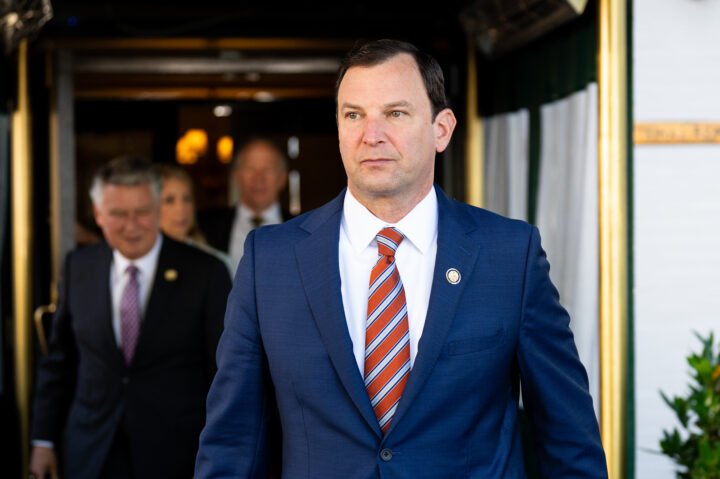
Bill Clark/CQ-Roll Call, Inc via Getty Images
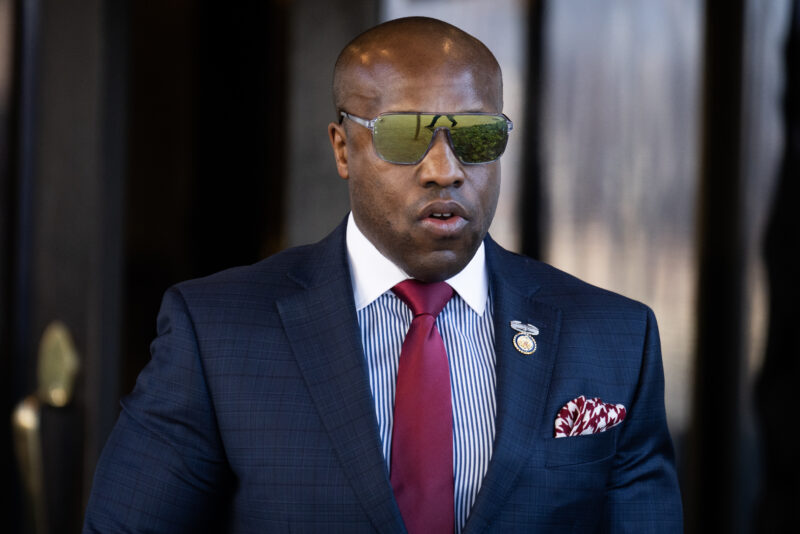
Rep. Craig Goldman, R-Texas, leaves the House Republican Conference caucus meeting at the Capitol Hill Club in Washington on Wednesday, May 13, 2026.


 Add JewishInsider on Google
A new bill introduced by the House Abraham Accords Caucus instructs the administration to work to expand the Abraham Accords to include nations in Central Asia and the South Caucasus.
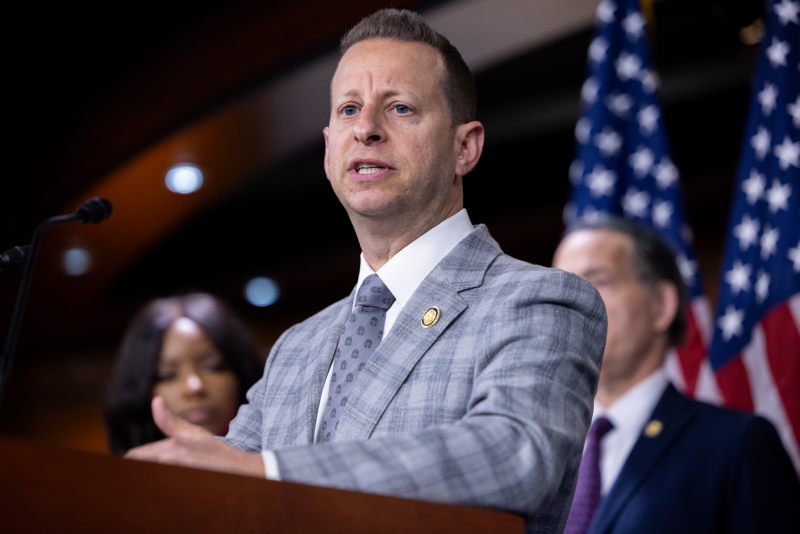
The bill is supported by a bipartisan group of 26 lawmakers, including the co-chairs of the caucus, Reps. Craig Goldman (R-TX), Ann Wagner (R-MO), Brad Schneider (D-IL) and Debbie Wasserman Schultz (D-FL). It follows an announcement earlier this year that Kazakhstan, which has for decades maintained relations with Israel, would be joining the Abraham Accords.
“The more countries that are involved with Abraham Accords … then the more opportunity we [have] to guarantee peace in the Middle East,” Goldman told Jewish Insider. “That’s the overall goal, is to have peace, less war and more peace in the Middle East.”
Goldman said the push was inspired by Trump’s efforts and comments about expanding the agreements into that region, “so we’re following the president’s lead on this” with the goal of providing further momentum, though he said it’s also a “truly bipartisan piece of legislation” that should not be controversial on either side of the aisle.
The legislation is co-sponsored by Reps. Mike Lawler (R-NY), Joe Wilson (R-SC), Earl “Buddy” Carter (R-GA), Don Bacon (R-NE), Dan Newhouse (R-WA), Maria Elvira Salazar (R-FL), Rudy Yakym (R-IN), Randy Weber (R-TX), Addison McDowell (R-NC), Gus Bilirakis (R-FL), Brian Fitzpatrick (R-PA), Claudia Tenney (R-NY), Darrell Issa (R-CA), Mark Messmer (R-IN), Derrick Van Orden (R-WI), Pete Stauber (R-MN), Don Davis (R-NC), Josh Gottheimer (D-NJ), Jimmy Panetta (D-CA), Jared Moskowitz (D-FL), Dan Goldman (D-NY) and Lois Frankel (D-FL).
In addition to the provisions urging the expansion of the Abraham Accords into a new region, the legislation authorizes the ambassador-level special envoy for the Abraham Accords — a position created several years ago by Congress that has not yet been filled — to designate a deputy special envoy with relevant regional expertise, and bring on other necessary staff.
Lawmakers have urged President Donald Trump to fill the still-vacant ambassador post. Goldman, the Republican, said he hopes that the nomination comes “sooner rather than later.”
Trump administration officials made early promises of quick expansion of the agreements, and Trump briefly called for Saudi Arabia and the Gulf states to join the Abraham Accords as a condition for ending the war with Iran. Gulf states have demanded progress toward a Palestinian state before joining the Abraham Accords.
Goldman firmly rejected the idea that looking at other regions for potential expansion of the Abraham Accords was an acknowledgement that Saudi Arabia or other Arab states were unlikely to join in the near future.
He said that the caucus has spoken to ambassadors from some of those countries, and said that expanding the agreements further would trigger a “domino” effect. “The more we can reach out, the more countries will join, we think other countries then will be able to — and will.”
Goldman also said that, coming into Congress, he wasn’t expecting to join many or any caucuses — following the precedent he established during his dozen years in the Texas Statehouse — but he was recruited early on by Wagner to be a co-chair of the caucus, and has ultimately dedicated a significant amount of time and attention to it.
“The Abraham Accords Caucus has been absolutely unbelievable, completely bipartisan, incredibly educational,” Goldman said. “The amount of knowledge — what I know now compared to what I knew a year and a half ago is like night and day.”
He said he’s also prioritized working to grow the caucus, which has picked up more than 30 new members.
Bipartisan group of experts urges members of the Senate Foreign Relations Near East, South Asia, Central Asia and Counterterrorism subcommittee to keeping engaging with Mideast allies

Leigh Vogel/Getty Images for Concordia Summit
Brian Hook, former U.S. special representative for Iran and senior advisor to the U.S. secretary of state, speaks onstage during the 2021 Concordia Annual Summit at Sheraton New York on September 21, 2021, in New York City.
Members of the Senate Foreign Relations Near East, South Asia, Central Asia and Counterterrorism subcommittee were urged by a bipartisan group of experts on Wednesday to support efforts to keep the U.S. engaged with Israel and other allies in the Middle East. The experts, including former Trump and Biden administration officials, warned that a U.S. retreat from the region would create a vacuum quickly filled by American adversaries.
Wednesday’s proceedings, which marked the subcommittee’s first hearing of this Congress, focused on “U.S. diplomatic strategies for a dynamic Middle East,” and was organized by Sen. Dave McCormick (R-PA), the subcommittee chairman, and Sen. Jacky Rosen (D-NV), the top Democrat on the panel.
Brian Hook, who served as U.S. special representative for Iran in the first Trump administration; Daniel Shapiro, who served as former U.S. ambassador to Israel under President Barack Obama and then as special liaison to Israel in the Biden administration; and Shelly Culbertson, a senior policy researcher at RAND focused on disaster and post-conflict recovery appeared as witnesses. All three concurred that U.S. diplomatic and military engagement was critical for ensuring that mistakes of the past are not repeated.
“The old order in the Middle East is passing away, and a new, better order is coming into view. We have too much proof of a better order to return to the failed strategies that perpetuated the old order. American diplomacy should support the new and dynamic Middle East,” Hook said. “In broad strokes, I think this means diplomacy that stands by our allies in good times and in bad. It means deterring our adversaries, and it means sustaining the incredible gains made over the last two years, especially during the recent 12-day war against the Iranian regime.”
“The United States can help midwife a regional dynamic of sovereign states anchored by Israel and Arab Gulf nations, who together counter extremism, invest in their own citizens and recognize the right of the Jewish people to live in peace alongside their neighbors. President Trump described this vision in his 2017 Riyadh speech. He deserves great credit for realizing this vision across his first term and into the second term,” he continued.
Hook went on to say that the U.S. “should help organize our allies around shared interests.”
“For example, countering Iran’s threats to the U.S. and the region, advancing the peace process through the Abraham Accords and deepening economic and cultural ties. But continued success in the region is not inevitable. American leadership coupled with burden sharing by our partners is essential for this vision to become a reality. We should convert the recent military gains into an enduring balance of power that favors America and her regional allies. The U.S. and its partners should continue resisting Iran’s expansionist, antisemitic designs in the region,” he argued.
Shapiro offered a similar message, telling senators that the U.S. has “a once-in-a-generation opportunity to help reshape the region in ways that will bring more peace and prosperity and less conflict and violence to those who live there and significant benefit to the interests of the United States.”
“President Trump was right to seek a nuclear deal with Iran through diplomacy, but given how close Iran was to a nuclear weapon and its proven willingness to attack Israel directly, I believe a military confrontation was necessary and inevitable,” Shapiro said, praising the president’s handling of the nuclear issue.
“Israeli and U.S. operations caused severe damage to Iran’s nuclear facilities. They’ll be unusable for a significant period of time, and that’s time we can perhaps extend through a range of means. Now, none of this means the threats posed by Iran and its proxies are eliminated. But the significant gains produced by military power now give us the opportunity to use all the tools at our disposal – deterrence, but also diplomacy – to consolidate those gains,” Shapiro continued.
Shapiro urged members to capitalize “on the damage to Iran’s nuclear program and the weakening of the Iranian allied access to secure a long-term improvement in the regional security environment.”
“That means seeking renewed negotiations with Iran to sustain the gains of the military strikes, prevent the nuclear programs reconstitution, secure full access for IEA inspectors, locate and remove Iran’s enriched uranium stockpile, assure zero enrichment going forward, and achieve meaningful limits on Iran’s ballistic missile inventory. It also means maintaining pressure on Iran by coordinating with European partners on the snapback of JCPOA sanctions, increasing efforts to scale back Iranian oil exports to China, and making clear that additional military strikes by Israel or the United States are possible,” he said.
Shapiro warned, however, that no progress could be made “until the Gaza war ends” and encouraged all parties to work toward a 60-day ceasefire that “really must transition directly into the end of the war.”
“That will require Israeli agreement to certain terms, but also intense pressure on Hamas by Qatar and other actors,” Shapiro explained.
Hook told senators he had “never been more optimistic about the future of the Middle East than I am now,” following the degradation of Iran’s nuclear program, while cautioning that he hoped that Israel’s actions to ensure Hamas “is uprooted from Gaza” could be conducted “in a way to maintain support here in the United States.”
Culbertson similarly praised the U.S. and Israel’s operations against Iran’s proxies and the regime’s nuclear program, while arguing that an emphasis on diplomatic efforts was necessary to “set a new course for the Middle East” and allow the U.S. to “reestablish itself as the partner of choice” in the region.
“This means rethinking what constitutes U.S. interests. Civilian displacement, state collapse and economic despair are not peripheral. They’re central to long-term global stability. These are, of course, primarily the responsibility of regional governments, but the United States has powerful tools to support progress. Doing so is not charity, it’s strategy,” Culbertson explained.
“The U.S. has repeatedly sought to reduce its footprint in the Middle East, only to be drawn back in again and again. Every administration since Jimmy Carter has launched new military operations there in response to threats to American interests. This has meant chasing symptoms instead of solving underlying problems. We now have an opportunity to break that cycle,” she added.
Culbertson also said the U.S. should mediate the ends of the conflicts in Gaza, Syria, Lebanon, Yemen and Libya, address the region’s long-term humanitarian and refugee crisis, support and facilitate post-war recovery efforts, help improve governance and job prospects in these countries, and focus on “strategic priority locations” such as Iraq, Syria, the West Bank and Gaza that “could become a model of recovery and partnership.”
Culbertson presented two potential futures, one where “conflicts grind on, economies remain stagnant, Iran, Russia and China fill the vacuum, extremist groups like Hamas and ISIS exploit social gaps, refugees flee and the United States is pulled back in again and again,” and another where “the United States steps forward with strategic leadership. We help end wars. We support governments in rebuilding. Cities recover. Youths find work. The region stabilizes and draws closer to us and our allies.”
“We can choose, at least in part, which future unfolds,” Culbertson argued.
Please log in if you already have a subscription, or subscribe to access the latest updates.
 Continue with Google
 Continue with Apple