




































































The defense secretary also alluded to targeting energy infrastructure if Iran doesn’t agree to concessions in order to end the war

AUL LOEB / AFP via Getty Images
(L/R) Secretary of Defense Pete Hegseth speaks alongside Chairman of the Joint Chiefs of Staff General Dan Caine during a press briefing at the Pentagon in Washington, DC, on April 16, 2026.


 Add JewishInsider on Google
Defense Secretary Pete Hegseth warned on Thursday that U.S. forces are “maximally postured” to resume military operations in Iran, and specifically target energy infrastructure, should the country’s current leaders not agree to a negotiated settlement to end the war.
Hegseth made the comments during a press briefing at the Pentagon on Thursday morning alongside Joint Chiefs of Staff Chairman Gen. Dan Caine and Admiral Brad Cooper, the commander of U.S. Central Command. The defense secretary spoke directly to Iranian leadership in his opening remarks, cautioning that while President Donald Trump would “rather not have to” resume operations and go after Iran’s energy industry, the U.S. was prepared to do so if negotiations failed.
“There is an alternative, as our negotiators have said. You, Iran, can choose a prosperous future, a golden bridge, and we hope that you do for the people of Iran. In the meantime, and for as long as it takes, we will maintain this successful blockade,” Hegseth said. “But if Iran chooses poorly, then they will have a blockade and bombs dropping on infrastructure, power and energy.”
Hegseth said that CENTCOM was continuing “to implement an ironclad blockade” and ensuring “that our forces are maximally postured to restart combat operations should this new Iranian regime choose poorly and not agree to a deal. That is what we urge this morning, that this new Iranian regime choose wisely.”
“To the KH [Kataib Hezbollah] leadership and IRGC leadership: We’re watching you. Our capabilities are not the same, our military and yours,” Hegseth said. “Remember, this is not a fair fight, and we know what military assets you are moving and where you are moving them to. While you are digging out — and this is exactly what you’re doing, digging out of bombed out and devastated facilities — we are only getting stronger.”
Caine clarified during his remarks that the U.S. is not blockading the Strait of Hormuz in its entirety; rather, “the U.S. action is a blockade of Iran’s ports and coastline.”
“Let me be clear, this blockade applies to all ships regardless of nationality heading into or from Iranian ports,” Caine said. “Enforcement will occur inside Iran’s territorial seas and in international waters.”
In his message to Iranian leaders, Hegseth emphasized the work U.S. military and intelligence forces have done since the start of the ceasefire to ensure their readiness in the event of diplomatic efforts failing.
“You have no defense industry, no ability to replenish your offensive or defensive capabilities. You only have what you have. You know that and we know that. You can move things around but you can’t actually rebuild. You can dig out for now but you can’t reconstitute,” Hegseth said to the Iranians. “But we can. We are reloading with more power than ever before, and better intelligence, even more importantly better intelligence, than ever before.”
“As you expose yourself with your movement to our watchful eye, we are locked and loaded on your critical dual-use infrastructure, on your remaining power generation and on your energy industry,” he continued. “We would rather not have to do it, but we are ready to go at the command of our president.”
Plus, Ciattarelli stumps in Israel

Melissa Sue Gerrits/Getty Images/Bill Clark/CQ-Roll Call, Inc via Getty Images
Reps. Valerie Foushee (NC-D) and Maxine Dexter (D-OR)
Good Monday morning.
In today’s Daily Kickoff, we report on Israel’s new war plan following its adoption by Israel’s Security Cabinet, and the backlash Prime Minister Benjamin Netanyahu is facing. We have the scoop on New Jersey GOP gubernatorial candidate Jack Ciattarelli’s trip to Israel this week, and report on the condemnation of recent anti-Israel rhetoric from a top Virginia lawmaker by Democratic lieutenant governor nominee Ghazala Hashmi. Also in today’s Daily Kickoff: CENTCOM head Adm. Brad Cooper, Tal Shalev and Jonathan Greenblatt.
What We’re Watching
- Palantir cofounder and CEO Alex Karp is slated to address House Speaker Mike Johnson’s (R-LA) two-day donor retreat in Jackson Hole, Wyo., which kicks off today.
- In Washington, President Donald Trump is holding a press conference this morning on crime in the nation’s capital.
- The deputy head of the International Atomic Energy Agency is in Tehran today for meetings with Iranian officials aimed at restarting the nuclear watchdog’s inspections in the country. Iranian Foreign Minister Abbas Araghchi said that no inspections would take place during this week’s visit, the first after the 12-day war between Israel and Iran in June.
What You Should Know
A QUICK WORD WITH ji’s josh kraushaar
One of the biggest slurs coming from anti-Israel influencers and other crankish extremists is that outside pro-Israel advocacy groups, such as AIPAC, somehow play an inordinate role in the reason so many lawmakers support a close U.S.-Israel alliance.
Their misguided belief is that the donations from pro-Israel donors drive lawmakers’ behavior. The reality is that such financial support has reflected the strong public support Israel has long enjoyed — within both parties.
But as that public support drops within the Democratic Party (and to a lesser extent, among independents), all the resources in the world won’t be able to prevent progressive-minded elected officials from putting their finger in the wind and reneging on their past backing for the Jewish state.
We’re already seeing the consequences of Israeli Prime Minister Benjamin Netanyahu’s decision to expand the war in Gaza by taking control of Gaza City — a decision that has limited support in Israel, and has been drawing criticism even from some of Israel’s stalwart Democratic party supporters at home.
But what should be doubly concerning to the Jewish state and its supporters is that several of the Democrats championed by AIPAC’s super PAC in the last two congressional elections — Reps. Valerie Foushee (D-NC), Maxine Dexter (D-OR), and Robert Garcia (D-CA) — have lately become more hostile to Israel, with the former two calling for a cutoff in military aid.
And as we documented last Friday, Rep. Maxwell Frost (D-FL), whose initial candidacy was boosted by commitments he made to Jewish leaders amid skepticism about his record on Israel, is now reneging on many of those promises, joining a handful of progressives in calling for a Palestinian state.
Some important context: All these Democrats represent some of the most progressive turf in the country, with deep-blue constituencies in Portland, Ore.; Durham, N.C.; and Long Beach, Calif. AIPAC’s engagement in these primaries, electing more mainstream Democratic candidates, was a key marker of the group’s success, given the sizable anti-Israel constituency in all these districts.
But ultimately, the overall progressive turn against Israel proved more consequential than these lawmakers’ relationships with AIPAC or the amount of financial support they received in their primaries. It’s hard enough for mainstream Democrats to run against the left-wing tide that’s been gaining ground in their party. In these activist-minded districts, it’s become nearly impossible.
GAZA GAMBIT

Israel’s decision to take control of Gaza City is meant to prevent further prolonging the war, Israeli Prime Minister Benjamin Netanyahu said on Sunday. The prime minister’s comments come as elements of the Israeli right and nearly all of the left have railed against the decision, further destabilizing the prime minister’s hold on Israel’s leadership. In a video statement on Saturday night, Israeli Finance Minister Bezalel Smotrich said he had “lost trust that the prime minister can and wants to lead the IDF to a decisive victory.” At the same time, tens of thousands of Israelis took to the streets of Tel Aviv to protest against the Cabinet’s decision, calling for an immediate hostage deal, Jewish Insider’s Lahav Harkov reports.
Defending the decision: Speaking Sunday at a press conference for foreign media in Jerusalem, Netanyahu said that “Hamas still has thousands of terrorists in Gaza … Hamas is refusing to lay down its arms, so Israel has no choice but to finish the job. Contrary to false claims,” the prime minister argued, “this is the best way to end the war and to end it speedily.” As to whether Israel’s new plan puts hostages in further danger, Netanyahu said that “the option of just doing a war of attrition from a defensive position has not proved itself. It won’t bring [the hostages] out … [It will lead to a] protracted conflict that won’t bring the war to an end.”
POLICY FLIP

Reps. Maxine Dexter (D-OR) and Valerie Foushee (D-NC), two House Democrats who received significant backing from the AIPAC-aligned United Democracy Project super PAC in their primary races against far-left opponents, announced this week that they would support efforts to block offensive weapons to Israel, Jewish Insider’s Marc Rod reports.
State of play: They join a third UDP-supported Democrat, Rep. Robert Garcia (D-CA), who indicated his support for such a policy more than a year ago. The latest moves highlight the growing anger among Democrats with Israel’s continued war operations in Gaza — and the limited efficacy in advocating for a strong U.S.-Israel relationship towards liberals at a time when public support for the Jewish state within the Democratic party is declining.
BREAKING WITH BIBI

Additional pro-Israel Democrats joined colleagues on Friday in criticizing Israel’s plans to take over Gaza City, which were approved Friday after Israeli Prime Minister Benjamin Netanyahu said Israel intends to take over Gaza City as part of an expanded military operation. It’s a further sign that Israel’s ongoing war plans are causing growing gaps between the Jewish state and some of the country’s most critical left-of-center allies in Washington, Jewish Insider’s Marc Rod reports.
Words of warning: Rep. Brad Schneider (D-IL), a co-chair of the House Jewish caucus and pro-Israel stalwart who is currently visiting Israel, said in a statement that the plan to take over Gaza City “is tactically questionable and strategically self-defeating.” Sen. Adam Schiff (D-CA) noted in a statement that Israeli military officials oppose the Gaza occupation effort and warned that it “could extend [the war] for years, will only result in further loss of life among the hostages, Palestinian civilians, and the members of the IDF required to undertake such a calamitous task. The situation in Gaza is unendurable; this will make it worse. This war must end, not escalate.”
Read the full story here with additional comments from Sen. Mark Warner (D-VA) and Rep. Josh Gottheimer (D-NJ).
Friendly concern: The American Jewish Committee expressed its “deep apprehension” over the Israeli Security Cabinet’s vote to move forward with a military takeover of Gaza City, in a statement released by the organization on Friday, Jewish Insider’s Danielle Cohen-Kanik reports.
SCOOP

Former New Jersey state Rep. Jack Ciattarelli, the Garden State’s Republican nominee for governor, traveled to Israel on Sunday for his first visit during the campaign, his campaign revealed to Jewish Insider’s Emily Jacobs. Ciattarelli is running against Rep. Mikie Sherrill (D-NJ) in the race to succeed New Jersey Democratic Gov. Phil Murphy, who is term-limited. He was New Jersey’s GOP gubernatorial nominee in 2021 against Murphy, narrowly losing to the sitting governor.
Trip talk: Speaking to JI in an interview ahead of his trip, the New Jersey Republican said he expects to have “five very, very productive days in Israel.” Ciattarelli said that the goal of the visit was to find opportunities for economic investment in New Jersey from leading Israeli companies in the technology and medical sectors and to show his solidarity with the Garden State’s Jewish community. New Jersey has the second-largest Jewish population in the country.
CANDIDATE COMMITMENTS

The Democratic and Republican nominees for governor of New Jersey spoke last week at an event organized by the New Jersey Jewish Business Alliance about their plans to combat antisemitism across the Garden State, Jewish Insider’s Marc Rod reports.
What they’re saying: “I vow to be an ally in the governor’s office. I’ll put the full force of law behind combating antisemitism and making sure that everyone can thrive here in the Garden State,” Rep. Mikie Sherrill (D-NJ) said. Republican Jack Ciattarelli said that his entire administration “will be sensitive to the needs and worries of the Jewish community across this state,” and that he’d launch a Jewish advisory council. “It’s not complicated. Anybody who’s violating university policy should be expelled. Anybody who’s broken the law should be arrested, and anybody here on academic visa that’s done either those two things should go back to where the hell they came from,” he continued.
SPEAKING OUT

Virginia state Sen. Ghazala Hashmi, the Democratic nominee for lieutenant governor, on Thursday became the latest Virginia politician to weigh in on antisemitic comments by state lawmaker Sam Rasoul. Without naming Rasoul directly, Hashmi appeared to criticize his language, which has been described as antisemitic by several leading Jewish organizations in the state, Jewish Insider’s Gabby Deutch reports.
What she said: “The rise in antisemitism has created real fear in communities across Virginia — and it cannot be ignored or dismissed; instead it must be condemned clearly, consistently and without caveat,” Hashmi wrote in a post on X on Thursday. “As a Muslim, I know what it feels like when an entire community is scapegoated for the actions of a few. No group should be vilified, targeted, or dehumanized. Antisemitism, Islamophobia, racism and all forms of hate have no place in our communities — they are an affront to our shared values.”
Worthy Reads
Churchill’s Legacy: In The Wall Street Journal, Winston Churchill biographer Andrew Roberts considers why the wartime British leader is reviled by far-right, revisionist podcasters who have engaged in historical revisionism around Churchill’s legacy. “So why is the ultraright targeting Churchill? In the simplest terms, it is because his practical aims and principles as a leader of the West were directly opposed to the new strain of isolationism in America and Britain. Today’s revisionists project their views about Iraq, Afghanistan and now Iran backward through history and denounce the leading global interventionists of yesteryear. They blame Churchill (along with Franklin Roosevelt) for ‘escalating’ the conflict with Hitler and thus associate him with any effort to confront today’s aggressive tyrants.” [WSJ]
Cyber Conflict: The Financial Times’ James Shotter and Bita Ghaffari look at the ongoing cyberconflict between Israel and Iran that preceded the 12-day June war and remains ongoing. “But while physical fighting ended after 12 days, the digital warfare has not. ‘It heated up after the start of the war, and it’s still going on,’ one Israeli official said of the texts. ‘I’m still getting them.’ Since the ceasefire, for example, Iranian-aligned groups have attempted to use a vulnerability recently identified in a global breach of Microsoft server software to attack Israeli companies, according to Boaz Dolev, chief executive of the Israeli cyber threat intelligence company ClearSky. ‘Although there is a ceasefire in the physical world, in the cyber arena, [the attacks] did not stop,’ Dolev said.” [FT]
Word on the Street
White House Middle East envoy Steve Witkoff met on Saturday in Ibiza, Spain with Qatari Prime Minister Sheikh Mohammed bin Abdul Rahman al-Thani to discuss a potential ceasefire and hostage-release deal that would end the war…
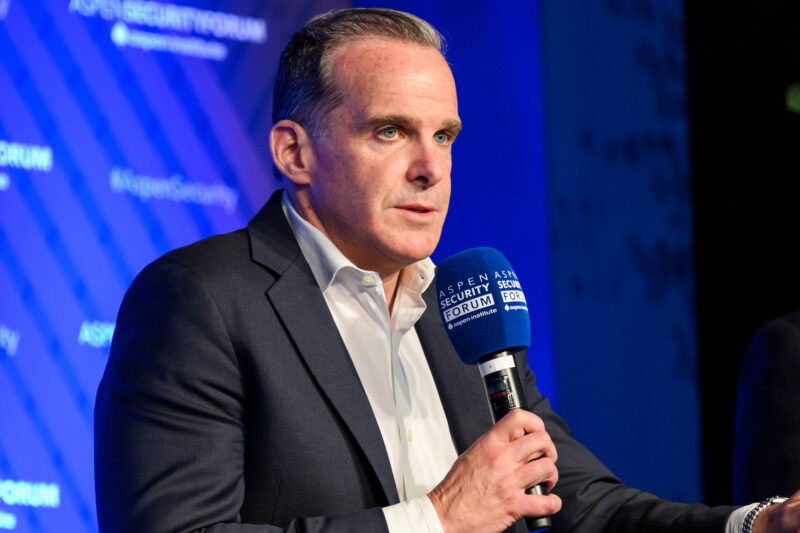
Former CENTCOM head Gen. Erik Kurilla departed his posting over the weekend; Kurilla is being succeeded by Adm. Brad Cooper, who served as Kurilla’s deputy…
In a feisty interview with The New York Times’ Lula Garcia-Navarro, ADL CEO Jonathan Greenblatt explains why he considers much of anti-Zionism to be antisemitism, saying, “Let me tell you what anti-Zionism doesn’t mean to me but what it results in: It’s a lunatic trying to burn down the governor’s mansion with his family sleeping in it because of his, quote, position on Palestine. It is, again, firebombing elderly people because you want to “end all Zionists”…
Police in Montreal are investigating an attack on a Jewish man in the city’s Villeray–Saint-Michel–Parc-Extension neighborhood; Canadian Prime Minister Mark Carney called the incident “an appalling act of violence”…
German Ambassador to Israel Steffen Seibert expounded on Berlin’s decision last week to halt offensive weapons sales to Israel in light of Israel’s plan to expand operations in Gaza, listing Germany’s priorities as “hostage release, ceasefire, humanitarian aid and no future role for Hamas,” and saying it was “[u]nclear how intensified military op’s will help achieve them”…
The New York Times looks at the conversations and meetings that led British, French and German leaders to take more critical approaches to Israel…
Australian Prime Minister Anthony Albanese said Canberra would recognize a Palestinian state at the United Nations General Assembly next month…
U.S. Ambassador to Israel Mike Huckabee slammed U.K. Prime Minister Keir Starmer’s recent comments opposing Israel’s planned offensive in Gaza City, suggesting that England would have lost World War II under Starmer’s leadership…
More than 450 people were arrested in London during a demonstration in support of the Palestine Action group, which the U.K. last month proscribed as a terror group…
Seyed Hossein Mousavian, a former senior Iranian official who had been teaching at Princeton since 2010, retired from the school, where he taught in the Program on Science and Global Security at the Princeton School of Public and International Affairs…
Elon Musk’s Starlink internet service launched its services to the general public in Israel…
Al Jazeera said five of its staffers were killed in an Israeli strike in Gaza City; Israel said Anas Al-Sharif, who was killed in the strike, was a Hamas cell leader…
Former Israeli hostage Shlomi Ziv, who spent nearly 250 in captivity in Gaza, responded to the report of Al-Sharif’s death, saying, “I was held by a journalist in captivity and his father was a Doctor!!!!!!!!”…
A section of the Western Wall near the site’s egalitarian section was vandalized with graffiti reading, “There is a Holocaust in Gaza”…
A Holocaust survivor who was injured in an Iranian ballistic missile strike in June died on Saturday at her home in Rehovot…
Iran’s judiciary said that authorities had arrested 20 people in recent months alleged to have been working with Israel’s Mossad…
In an excerpt from their upcoming book, The Wall Street Journal’s Drew Hinshaw and Joe Parkinson detail an effort to free Russian opposition leader Alexei Navalny, who died in prison in February 2024, noting that discussions to free Navalny began with a meeting in Tel Aviv between Russian-Israeli businessman Roman Abramovich and former U.S. hostage envoy Roger Carstens…
Tal Shalev is now an Israel correspondent for CNN…
Max Eden is joining the America First Policy Institute as director of federal education policy…
Dancer and Martha Graham protogee Linda Hodes, who spent 13 years teaching at Israel’s Batsheva Music Company and whose daughters were held hostage during a PFLP hijacking in 1970, died at 94…
Texas businessman Morton Meyerson, who advised Ross Perot on his 1992 presidential campaign, died at 87…
Boxing promoter Don Elbaum, who worked with Don King, Sugar Ray Robinson and Muhammed Ali, died at 84…
Pic of the Day

Shir Siegel (center), the daughter of former hostages Keith and Aviva Siegel (pictured), married Yuval Bar On on Thursday, after having postponed their wedding until after both of her parents were freed from captivity.
Birthdays

Co-founder and partner of MizMaa Ventures and wine columnist for Jewish Insider, Isaac “Yitz” Applbaum…
Longtime Democratic Party activist in N.Y.’s Orange and Rockland Counties, Doris Feder turns 93… Architect best known for the Holocaust Memorial in Berlin and the State Farm Stadium in Glendale, Ariz., Peter David Eisenman turns 93… Former member of the House of Representatives, she also served as Brooklyn DA and NYC comptroller, Elizabeth Holtzman turns 84… Principal of Investors Research Group based in Los Angeles, Jacob S. Segal… Former SVP for international affairs at the Jewish Federation Los Angeles, Lois Weinsaft… Co-founder of The Carlyle Group, in 2024 he became the principal owner of MLB’s Baltimore Orioles, David Rubenstein turns 76… U.S. trade representative during the Clinton administration, she retired in 2021 as the chair of the international trade group at WilmerHale, Ambassador Charlene Barshefsky turns 75… Senior counsel for benefits and employment at the Wagner Law Group, Linda E. Rosenzweig… Lenore Solomon… Artistic director and choreographer of an eponymous dance company based in Union, N.J., Carolyn Dorfman… CEO, chairman and major shareholder of the Russian gas company Novatek, Leonid Mikhelson turns 70… Board member emeritus of AIPAC, Jeffrey Snyder… Former member of the Massachusetts Senate, he is the founder of Cape Air (an airline started on Cape Cod but that now has 37 domestic and international destinations), Daniel A. “Dan” Wolf turns 68… Publisher of Yated Ne’eman, Rabbi Pinchos Lipschutz turns 67… Member of Knesset since 2015 for the Likud party, he serves as minister of regional cooperation, David “Dudi” Amsalem turns 65… Chairman at Duty Free Americas, he owns Israel’s Psagot Winery, Simon Falic… Former chief of the Shin Bet, Nadav Argaman turns 65… Political, cultural and social science commentator for The New York Times, David Brooks turns 64… Host of “The Joe Rogan Experience,” one of the most popular podcasts in the world with 6.1 billion views on YouTube, Joe Rogan turns 58… Senior advisor for communications and engagement at The Aspen Institute, Ilana Marcus Drimmer… Clarinetist who performs internationally as a soloist, Sharon Kam turns 54… MLB pitcher for seven teams, he has also been the pitching coach for Team Israel, Andrew Lorraine turns 53… NFL offensive lineman for four seasons, he is now the managing partner of Oakland-based North Venture Partners, Alex Bernstein turns 50… Co-founder and CEO of Israeli interactive video firm Eko, Yoni Bloch turns 44… Chief investment officer and CEO of Toronto-based investment firm Murchinson, Marc Bistricer… NFL punter for seven seasons with the Jaguars and Bears, he was then a broker in the Jacksonville office of Merrill Lynch, Adam Podlesh turns 42… Reporter for Mishpacha Magazine, known as Jake Turx, Avraham Yaakov Tarkieltaub turns 39… Ukrainian-born and San Francisco-raised journalist and copywriter, Yelena Shuster… Complex general surgical oncology fellow at the University of Texas MD Anderson Cancer Center, Sara Ginzberg, M.D…. Daniel Weitz…
Please log in if you already have a subscription, or subscribe to access the latest updates.
 Continue with Google

 Continue with Apple