





































At Virginia Jewish Advocacy Day in Richmond, new AG Jones pledged to continue antisemitism task force started by GOP predecessor
Gabby Deutch
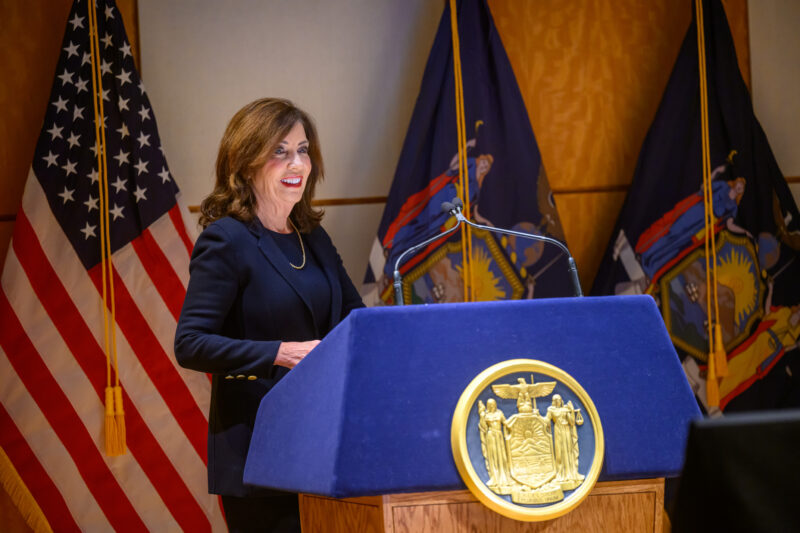
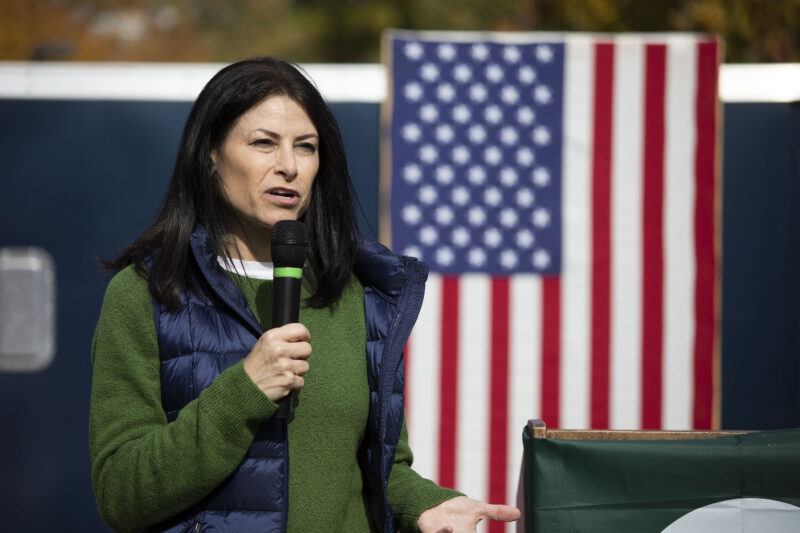
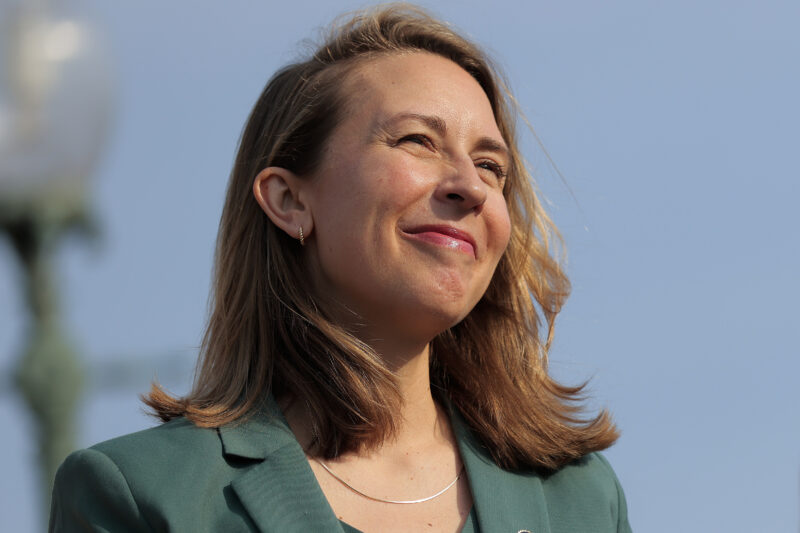
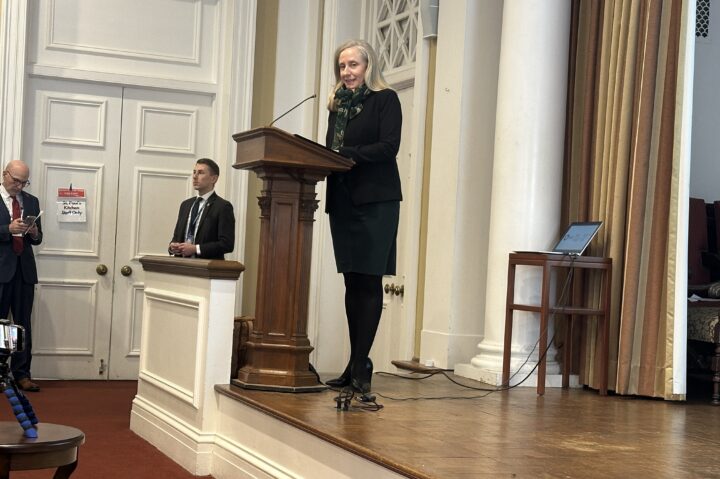
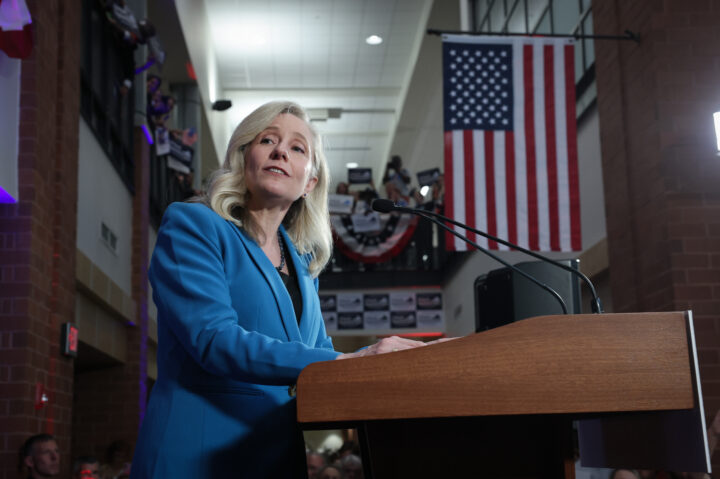
Gov. Abigail Spanberger addresses Virginia Jewish Advocacy Day in Richmond, Va. on Feb. 10, 2026.


 Add JewishInsider on Google
RICHMOND, Va. — Less than a month after taking office as Virginia’s first female governor, Abigail Spanberger told a group of 250 Jewish advocates that she would work to combat antisemitism, celebrate the Jewish community and stand by Israel in her new role.
“As governor, I will continue to stand up to antisemitism, to work to protect our Jewish neighbors, friends and family, and I will show up for the Jewish community in times of commemoration, remembrance and, importantly, celebration,” Spanberger said in a speech on Tuesday at Virginia Jewish Advocacy Day, an annual event organized by the state’s four Jewish federations that brought activists from across the state to Richmond for lobbying meetings with state lawmakers.
Spanberger, a former member of the U.S. House who represented central Virginia, was greeted enthusiastically by the crowd and swarmed with requests for photos at the end of the event. During her speech, she turned often to a group of teenagers at the front of the room, who were at the meetings urging legislators to sign a petition for BBYO’s “Spread cream cheese, not hate” initiative.
“It’s important to me in particular that young people feel pride in who they are, pride in the things that make them who they are,” said Spanberger. “To all of the parents in the room, I want your kids to feel safe and proud at school, whatever portions of their identity they choose to lead with. When they go off to college, I want them to feel proud putting a mezuzah on their door.”
Spanberger was elected to Congress in 2018 after a career as a spy at the CIA, and she referred to that background in her speech on Tuesday when she discussed her views on Israel.
“I remain a strong supporter of the relationship between the United States and Israel, and that support comes from a background in the intelligence community, where I understand that Israel is our strongest security partner in the region,” she said.
She touted her votes in Congress for supplemental security funding for Israel following the Oct. 7, 2023, terror attacks and funding for Israel’s Iron Dome missile-defense systems. She also discussed her support for measures that brought additional humanitarian aid to civilians in Gaza, while noting that concern about the “suffering of civilians and the continued humanitarian crisis that exists in Gaza” does not excuse antisemitic behavior.
“I would say that a moral requirement to end humanitarian crises is never and should never be at odds with the moral requirement to denounce hateful, antisemitic language and attacks that they can so frequently breed,” Spanberger said.
In discussing the Oct. 7 attacks, Spanberger addressed that day’s lingering impact on the Jewish community.
“For more than two years, Americans, Israelis and global citizens have advocated for the release of men, women and children who were taken hostage that day. So many of the stories are deeply personal [for] many people in the room for a variety of reasons, and after a long and horrific push to free all of them, we just saw the release of the last hostage to be returned home and laid to rest,” Spanberger said.
Her new role in Richmond does not include a distinct foreign policy focus, unlike her job in Congress. But she indicated a willingness to remain active on global issues.
“I hope that the memory of those who did not return home will be a blessing to those who remember them, those who miss them, but importantly, a reminder that there is still so, so much work to do throughout the world,” the governor said.
As a member of Congress, Spanberger added, she supported efforts to target antisemitic hate crimes at the federal level and to provide security funding and support to vulnerable nonprofits.
“I will make sure that across my administration — in particular, my secretary of public safety and homeland security — is well positioned to coordinate with state and federal partners, and that you know that through my administration, you have a partner in ensuring that the communities that you represent, serve or are a part of feel safe,” she said. “I will make sure that the Office of the Governor is an active partner in combating antisemitism.”
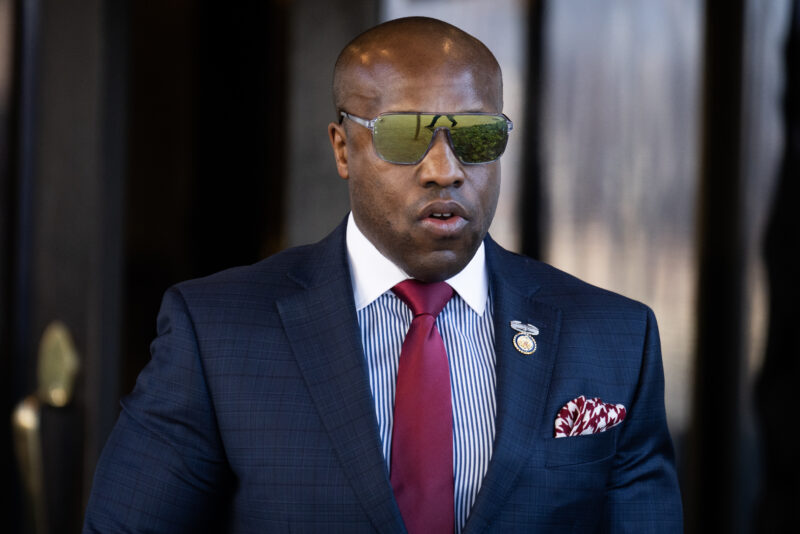
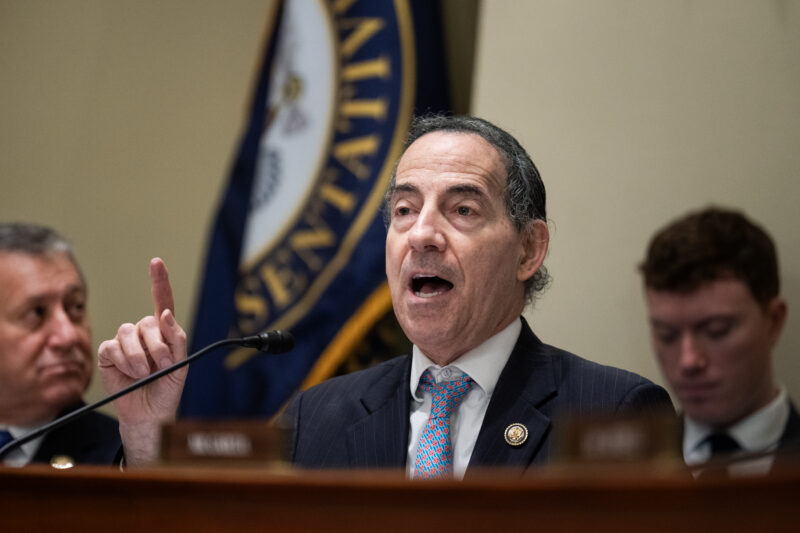
Attorney General Jay Jones and Lt. Gov. Ghazala Hashmi, Democrats who also took office last month, addressed the event before Spanberger. Both of them pledged to work to fight antisemitism in the state.
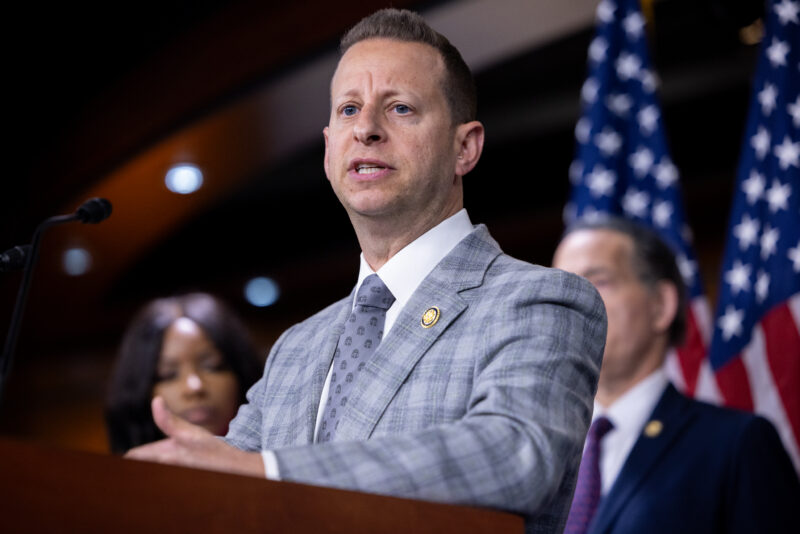
Jones said in the address that he intends to continue to operate the statewide antisemitism task force that his predecessor, Republican Jason Miyares, created in 2023. It was the first time Jones had publicly discussed his plans for the task force.
“The Attorney General’s Antisemitism Task Force is an important tool to keep an open line of communication between my office and your communities,” said Jones. “We look forward to working with you to build out the scope of that task force to ensure an ongoing dialogue, accountability and collaboration.”
Moran, a former longtime congressman now lobbying for Qatar, has an extensive record of using antisemitic tropes and hostility to Israel
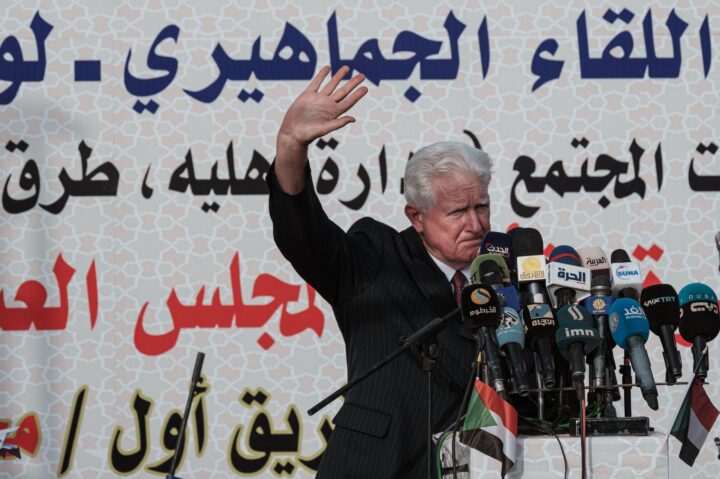
ASUYOSHI CHIBA/AFP via Getty Images
Former Rep. Jim Moran (D-VA) speaks at a rally attended by supporters of Sudan's ruling Transitional Military Council (TMC) in the village of Abraq, about 60 kilometers northwest of Khartoum, on June 23, 2019.
Days after assuming office, Virginia Gov. Abigail Spanberger is facing scrutiny from Jewish leaders over her decision to appoint Jim Moran, a former congressman representing northern Virginia now working as a lobbyist for clients including Qatar, to the George Mason University board of visitors, despite his extensive record of using antisemitic tropes and hostility to Israel.
The appointment, which Spanberger announced on Saturday hours after she had been sworn into office, came as part of a broader leadership shake-up of the state’s three public universities — as the Democratic governor seeks to assert her influence in the wake of a Republican administration whose university board oversight she had criticized during the campaign as politically meddlesome.
But her nomination of Moran, whose incendiary rhetoric has long been a subject of controversy, is raising questions about her approach to countering anti-Jewish harassment at public universities such as George Mason, which last July was the subject of a federal Title VI investigation related to its handling of several high-profile incidents of antisemitism and anti-Israel extremism.
Moran, a Democrat who retired from Congress in 2015, faced widespread criticism as well as calls for his resignation over comments in 2003 in which he blamed the Jewish community for pushing the U.S. into war with Iraq, a remark he reiterated four years later while singling out the pro-Israel group AIPAC.
Even as he has voiced regret for some of his past remarks, Moran, who is now 80, has downplayed accusations of antisemitism and has continued to echo such rhetoric in recent years while appearing on panel discussions with a London-based NGO led by a former Hamas activist. In one virtual event in 2023, for example, Moran attributed Washington’s support for “apartheid” in Gaza to Jewish control of American politics.
“It’s about domestic politics and it always has been,” Moran insisted. “The majority of people who contribute to the Democratic Party in America have Jewish surnames. Now think about that,” he added, arguing that their “principal reason for contributing has been the sine qua non of support for Israel, and unqualified support for Israel.”
Moran’s recent lobbying for the Qatari government, meanwhile, has likewise drawn attention as the Gulf state has increasingly sought to burnish its image in the United States through funding higher education and ongoing outreach to federal lawmakers, among other efforts.
His work has included “outreach on Qatar’s higher education funding,” according to recent disclosures, pointing to possible conflicts of interest in his board appointment. Qatar, a major non-NATO U.S. ally that has frequently drawn criticism for hosting Hamas, has donated $5.9 million to George Mason.
Jewish leaders voiced befuddlement over the controversial appointment.
Cookie Hymer Blitz, a Jewish and Democratic activist in Northern Virginia, called Moran’s nomination “very concerning, disappointing and surprising.”
“His long history of anti-Israel bias and antisemitic comments seem to make his appointment to this board ill-advised at best,” she told Jewish Insider.
Another prominent Jewish leader, who spoke on condition of anonymity to avoid antagonizing Spanberger, told JI: “It is concerning to hear of anyone who has shared, or continues to share, antisemitic tropes or messages being appointed to leadership roles. I imagine the vast majority of Virginians would take pause.”
The local organized Jewish community is currently weighing a response to Spanberger’s decision in order to help raise awareness about Moran’s views as he prepares to seek confirmation from the state legislature, where he could face questions about his rhetoric and lobbying, according to a Jewish leader involved in government outreach.
Spanberger’s office did not respond to a request for comment from JI on Wednesday regarding the new appointment.
In an email to JI on Wednesday, Moran said that “Qatar has asked only three things of me but they’re a prerequisite for representing them: 1) always tell the truth, 2) always obey U.S. law and 3) always do what you feel is right.”
George Mason University, he added, “is committed to maintaining a diverse student body where every student feels secure and valued, and it aspires to provide the highest possible quality of educational experience.”
As for his opposition to Israel, he called himself “a longtime supporter of Israel’s Labor Party, although it’s a mere shadow of its former self.” He said he had “shared many meals with” former Israeli Prime Minister Shimon Peres and was “confident” that his “views on Israel today specifically and the Middle East in general are wholly consistent with Shimon’s worldview.”
He did not address his past antisemitic rhetoric, only saying that, “for what it’s worth, I’m a subscriber to the Jewish Insider.”
During the gubernatorial election, Spanberger touted her efforts to combat anti-Jewish prejudice as a former congresswoman and said that working to confront antisemitism in higher education would be “a top priority” for her. “My administration will not tolerate antisemitism in any form,” she vowed.
But Kenneth Marcus, a leading expert on antisemitism and the founder and chairman of the Louis D. Brandeis Center for Human Rights Under Law, questioned Spanberger’s commitment to such pledges as she now moves to elevate Moran to a key role in Virginia’s public university system.
Marcus, whose appointment by former Gov. Glenn Youngkin to George Mason’s board of advisors was rejected by Democratic lawmakers last year, called the nomination “hardly an auspicious start for Gov. Spanberger.”
“Given the lengthy trail of antisemitism accusations that Mr. Moran has faced for a long period of years,” Marcus told JI, “it is surprising that Gov. Spanberger has tapped him for leadership at an institution where so many questions have arisen about antisemitism.”
The Virginia governor-elect wants to play a role in picking UVA’s new president and will be filling numerous board vacancies at the state’s public universities
Win McNamee/Getty Images
Virginia Democratic gubernatorial candidate, former Rep. Abigail Spanberger speaks to supporters during a rally on June 16, 2025 in Henrico County, Virginia.
Conservative Jewish legal and education experts in Virginia are voicing concern over a request made by Gov.-elect Abigail Spanberger, a Democrat, for the University of Virginia to pause its presidential search until she takes office in January — and how such a move could impact campus climate for Jewish students.
The issue of selecting board members at the state’s leading public universities has been a politically charged one since Gov. Glenn Youngkin took office in 2021. Several board seats remain unfilled at George Mason University after Democrats in the state legislature blocked Youngkin’s nominees, including Ken Marcus, founder of the Louis D. Brandeis Center for Human Rights Under Law, whom Youngkin appointed in 2024.
Earlier this week, the Supreme Court of Virginia upheld the ruling in favor of Virginia Senate Democrats blocking more than 20 of Youngkin’s university board appointments at several schools, including UVA and GMU.
Spanberger has spoken out against government interference at the University of Virginia over several of the Trump administration’s civil rights investigations into the university’s diversity, equity and inclusion program and over its alleged failure to address antisemitism. The university reached a deal with the federal government in October to pause the investigations, which led its president, Jim Ryan, to resign under pressure.
Youngkin, in turn, attacked Spanberger for getting involved in university governance before she assumes office in January, criticizing a letter she wrote to the board as “riddled with hyperbole and factual errors and impugns both the Board of Visitors and the presidential search underway.” There are currently five vacancies on the UVa Board of Visitors, which Spanberger is looking to fill in order to put her own stamp on the school’s academic future.
Historically, such intraparty skirmishing over university governance and board appointments wouldn’t have a major impact on the Jewish community. But at a time when dealing with antisemitism has become tinged with partisanship — with Democrats accused of being less aggressive in dealing with some prominent antisemitic incidents — the makeup of these key leadership roles and appointments carries high stakes.
As a gubernatorial candidate, Spanberger’s campaign declined to comment when asked by Jewish Insider last year about reaction to news of a GMU student arrested for plotting a terror attack against the Israeli consulate in New York City.
“Democrats [may be] less interested in addressing campus antisemitism and associate allegations of it with the Trump administration’s so-called ‘assault on higher education’ and feel like acknowledging antisemitism may be playing into Trump’s hands,” David Bernstein, a law professor at George Mason University’s Antonin Scalia Law School, told Jewish Insider.
“Democratic-elected prosecutors in Albemarle County [where UVA is located] told universities that even if students violate the state’s anti-mask law, which is a felony, they’re not going to prosecute them. That’s evidence of Democrats in general not taking campus antisemitism seriously,” continued Bernstein, referencing the tendency of anti-Israel activists to wear masks to conceal their identities at protests.
Marcus told JI his expectations for new UVA leadership include “moving forward with stronger policies to address antisemitism, [for example] more forceful use of the International Holocaust Remembrance Alliance’s working definition of antisemitism. I’d like to see that be followed at UVA as it has been at George Mason [University].”
“But that’s now in question,” continued Marcus. “It certainly will make a difference whether the current board selects the president or whether they wait for Gov.-elect Spanberger to have a say in the matter. Issues driving selection of the president are unlikely to focus on antisemitism, but they certainly might include adjacent issues like DEI.”
Jason Torchinsky, a partner at Holtzman Vogel who has filed several lawsuits on behalf of Jewish students alleging campus antisemitism, also expressed worry that “if new board members that the governor-elect appoints are not committed to combating antisemitism on campus, the tide is going to turn and it will get worse at UVA.”
In Virginia, state university board appointees are typically former legislators of the governor’s party or an alum who donates to the school. Torchinsky said he “suspects Spanberger will follow that pattern.”
Torchinsky represented Matan Goldstein, a Jewish UVA student who sued the school in 2024 over allegations that he was “a victim of hate-based, intentional discrimination, severe harassment and abuse and illegal retaliation.” As a result of the lawsuit and an anti-Israel encampment that spring, “UVA made a lot of good changes at that time,” including enforcing an anti-mask law at protests, Torchinsky told JI.
“If the board reverses those policies or fails to enforce them, it could be bad for Jewish students,” continued Torchinsky. “I’m just hoping those don’t get reversed.”
Spanberger: ‘One can and must denounce these tragedies without using antisemitic language, whether intentional or not’
Win McNamee/Getty Images
Virginia Democratic gubernatorial candidate, former Rep. Abigail Spanberger speaks to supporters during a rally on June 16, 2025 in Henrico County, Virginia.
Facing pressure from the Virginia Jewish community to speak out against recent anti-Zionist social media posts from state Del. Sam Rasoul, former Rep. Abigail Spanberger, the Democratic gubernatorial nominee, addressed concerns about antisemitism without specifically referencing Rasoul.
“This war continues to unleash heartbreak and tragedy as we witness civilian deaths, starving families, and hostages still held by Hamas. These horrors rightly compel so many to advocate for the mass delivery of aid, the release of all Israeli hostages, and a ceasefire between Hamas and Israel,” Spanberger told the Virginia Scope, a political newsletter, in response to a question about Rasoul, who chairs the Education Committee in the House of Delegates. “However, one can and must denounce these tragedies without using antisemitic language, whether intentional or not.”
She did not specify whether she identified Rasoul’s rhetoric as antisemitic. Spanberger’s campaign did not respond to multiple requests for comment from Jewish Insider.
Rasoul, a Palestinian-American legislator who represents Roanoke, has in recent weeks taken to social media to call Zionism “evil” and said that it is “making the world less safe for my Jewish friends.”
In her statement to the Virginia Scope, Spanberger acknowledged the recent rise of antisemitic violence in America.
“Just recently, antisemitic language led to attacks on peaceful protestors in Colorado and the murder of two Israeli Embassy staff members — as well as a growing, pervasive sentiment of fear among our Jewish neighbors. We must recognize our shared commitment to peace and work to rebuild trust in our communities,” she said.
Rasoul’s rhetoric has drawn criticism from some other Virginia Democrats, including former House Speaker Eileen Filler-Corn and Sen. Tim Kaine (D-VA), who told JI this week that he “forcefully reject[s] any claim that Zionism — the desire of Jewish people to have a state of Israel — is inherently racist or evil.”
State Sen. Schuyler VanValkenbuerg, a Democrat from the Richmond area, echoed Kaine’s sentiments.
“The current Israeli government deserves condemnation for its actions in Gaza. But the claim that Zionism is inherently evil deserves to be forcefully rejected. It’s wrong and it’s dangerous,” VanValkenburg posted on X on Thursday.
Please log in if you already have a subscription, or subscribe to access the latest updates.
 Continue with Google
 Continue with Apple