
















































Gryspan maintains lead in U.N. secretary-general straw poll, but faces bloc of opposition
The Costa Rican is the only contender to hit the nine-vote threshold in every poll since September
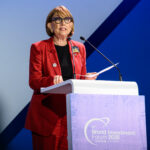
Noushad Thekkayil/NurPhoto via Getty Images
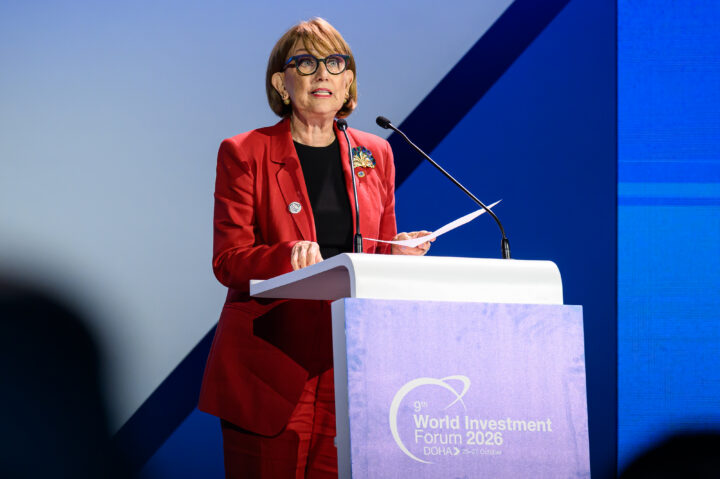
Rebeca Grynspan, speaks during the opening ceremony of the 9th World Investment Forum (WIF 2026) in Doha, Qatar, on October 25, 2026.


 Add JewishInsider on Google
Costa Rican economist Rebeca Grynspan maintained her lead in the race to become the next United Nations secretary-general in Friday’s ninth Security Council straw poll, but the first color-coded ballot since October showed that she and the other leading candidates continue to face opposition from veto-wielding permanent members.
Unlike the previous two rounds, which used undifferentiated ballots, Friday’s color-coded poll distinguished votes cast by the council’s five permanent members — the U.S., U.K., France, Russia and China — from those of its 10 elected members. While earlier polls showed several candidates emerging as front-runners, they obscured whether those contenders faced opposition from countries capable of blocking a formal recommendation. The last color-coded ballot, held Oct. 16, showed that no candidate had avoided discouragement votes from permanent members, a pattern that continued Friday.
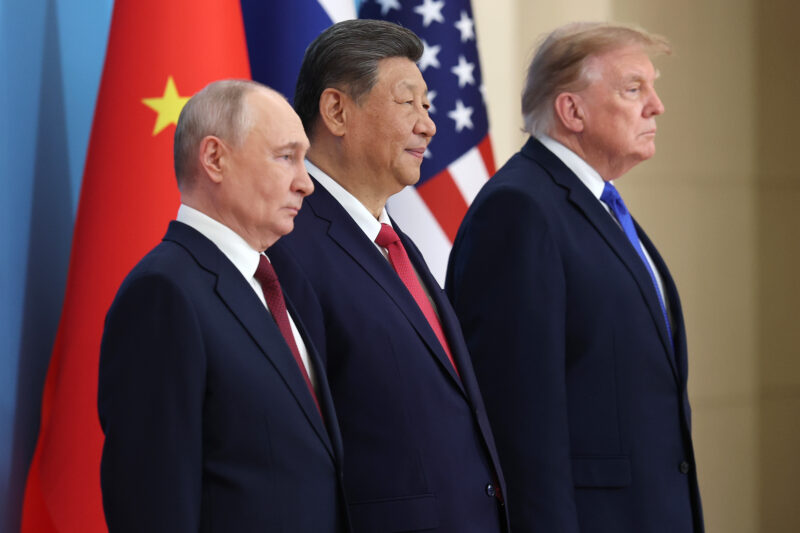
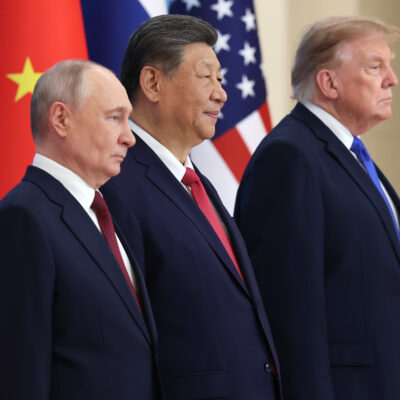
The vote came one day after President Donald Trump, Chinese President Xi Jinping and Russian President Vladimir Putin held an unprecedented trilateral summit on the sidelines of the Asia-Pacific Economic Cooperation gathering in Shenzhen, China. While the three leaders issued a joint declaration agreeing broadly on the need for U.N. reform, Friday’s fractured straw poll underscored that Washington, Beijing and Moscow don’t agree on who should lead the institution.
The results, however, appeared to reinforce Grynspan’s position as the clear front-runner in the race. To secure the Security Council’s formal recommendation, a candidate must receive at least nine votes and avoid a negative vote from any of the five permanent members. Grynspan has led eight of the nine straw polls held since August and is the only contender to have reached the nine-vote threshold in every poll since September.
Grynspan was also the only candidate to clear nine encouragement votes on Friday, finishing two votes ahead of her nearest rival with 10 encouragement votes, four discouragement votes and one “no opinion” vote — down from 12 encouragement votes and three discouragement votes in the eighth round on Nov. 5. Additionally, she was the only contender to receive encouragement votes from a majority of both council blocs, earning support from three of the five permanent members and seven of the 10 elected members.
Still, two of Grynspan’s discouragement votes came from permanent members, leaving her with the challenge of overcoming opposition from two countries with veto power. Her candidacy has drawn criticism from pro-Israel groups over her tenure leading the U.N. Conference on Trade and Development, which under her leadership has issued reports sharply critical of the impact of Israeli policies on the Palestinian economy.
Meanwhile, International Atomic Energy Agency Director General Rafael Grossi finished second overall with eight encouragement votes and six discouragement votes, including three discouragement votes from permanent members — a decline from the nine encouragement votes he received in both the seventh and eighth rounds.
Lana Nusseibeh, the United Arab Emirates’ former ambassador to the U.N., received seven encouragement votes, six discouragement votes and two “no opinion” votes, matching her tally from the previous two rounds. Her late entry into the race on Oct. 21 fueled diplomatic speculation that major powers might coalesce around her as a consensus pick. But in her first color-coded poll since entering the contest, three of the five permanent members discouraged her candidacy, while two encouraged her, indicating that she faces resistance from the P5 as well as a more limited base of support among elected members.
Nusseibeh’s bid has also faced scrutiny over allegations that the UAE has supplied the Rapid Support Forces paramilitary group in Sudan’s civil war, a charge Abu Dhabi denies. Nusseibeh has condemned atrocities committed by the RSF and pledged to serve independently of the Emirati government if selected.
Guyana’s Carolyn Rodrigues Birkett, who had ranked among the top three contenders in earlier rounds, saw her support slip to six encouragement votes and six discouragement votes, including two from permanent members — down from eight encouragement votes in the previous round. Rodrigues Birkett has faced scrutiny over her strongly critical positions on Israel.
Feridun Sinirlioğlu, Turkey’s newly nominated candidate, received five encouragement votes and 10 discouragement votes, four of which came from permanent members. Ankara entered Sinirlioğlu, a former foreign minister and U.N. ambassador, into the race on Nov. 1 after the selection process had stalled. But he has struggled to gain traction in his first two straw polls, having debuted with just three encouragement votes in the Nov. 5 round, and faces stiff opposition from permanent members.
Speaking to reporters on Friday following leaked reports of the straw poll, Mike Waltz, U.S. ambassador to the U.N. said Washington would “welcome and encourage a candidate from Latin America to emerge,” showing support for the council’s informal regional rotation, which this year has included a push for a secretary general from Latin America and the Caribbean.
“There is this informal rotation to the Western hemisphere. Of course, that’s the ‘United States’ hemisphere,’” Waltz said. “We also want the best candidate to emerge. Unfortunately, there hasn’t been consensus yet.”
Waltz called on candidates that are “receiving very little encouragement” to “step aside.”
“We certainly appreciate those who have stepped forward, put their vision forward, sought the support of the council and the broader membership here. But if they haven’t received it, we think it’s probably time to step aside and let the council consider a narrower field for those who are receiving some level of support,” he continued.
The latest straw poll comes as the Security Council faces mounting pressure to recommend a successor before Secretary-General António Guterres’ second five-year term expires on Dec. 31. With no consensus yet among the five permanent members, the U.N. confronts the unprecedented prospect of entering 2027 without an appointed leader.
Reuters reported Thursday that U.N. officials are drafting contingency plans in case no successor is selected by year’s end. Because the U.N. Charter does not specify how to handle a leadership vacuum, potential stopgaps include briefly extending Guterres’ term or naming one of his deputies to serve in an acting capacity.
A former U.N. official told Reuters that while the Security Council and General Assembly could continue meeting without a secretary-general, key administrative functions — including senior appointments and budget decisions — would be disrupted.
More Stories
War Powers
Senate again rejects resolution calling for end to Iran war
SHENZHEN SHADOW
What the Trump-Xi-Putin summit means for Israel
PENTAGON PITCH
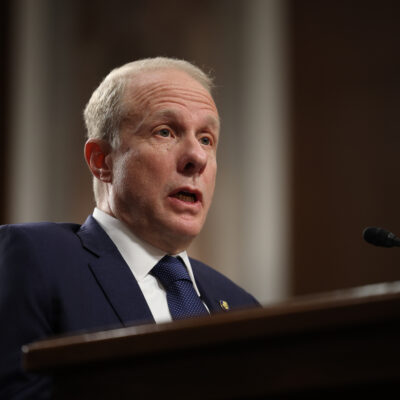
Deputy Defense Secretary Feinberg to brief Republicans on defense funding playbook
analysis
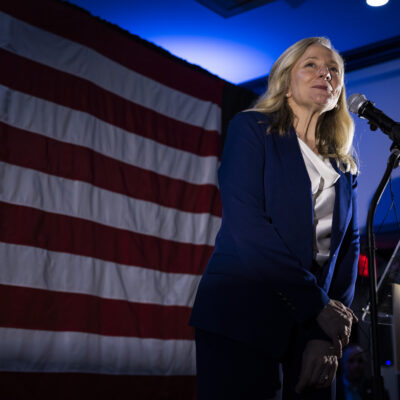
Success of federal education tax credit program hanging in the balance
CLOSING RANKS
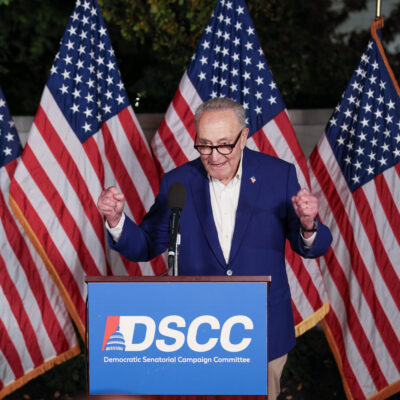
Schumer allies shrug off Van Hollen’s attack over 2015 Iran deal vote

Daily Overtime
Van Hollen’s Iran playbook for leader
Please log in if you already have a subscription, or subscribe to access the latest updates.
 Continue with Google

 Continue with Apple