




















































Republican Jewish Coalition rallies bipartisan audience behind Mike Rogers
The fiancé of Rep. Haley Stevens and two lifelong Democrats from the Temple Israel community joined Mike Rogers and Ted Cruz for the RJC event
Marc Rod


 Add JewishInsider on Google
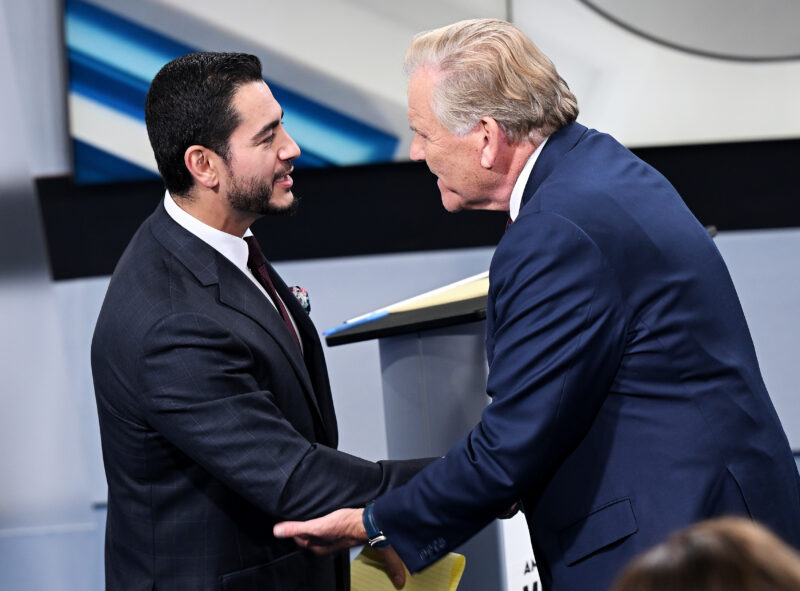
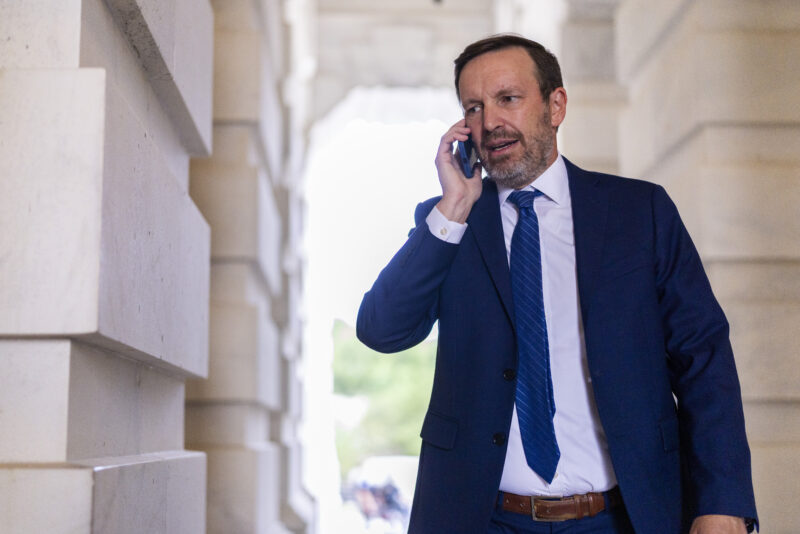
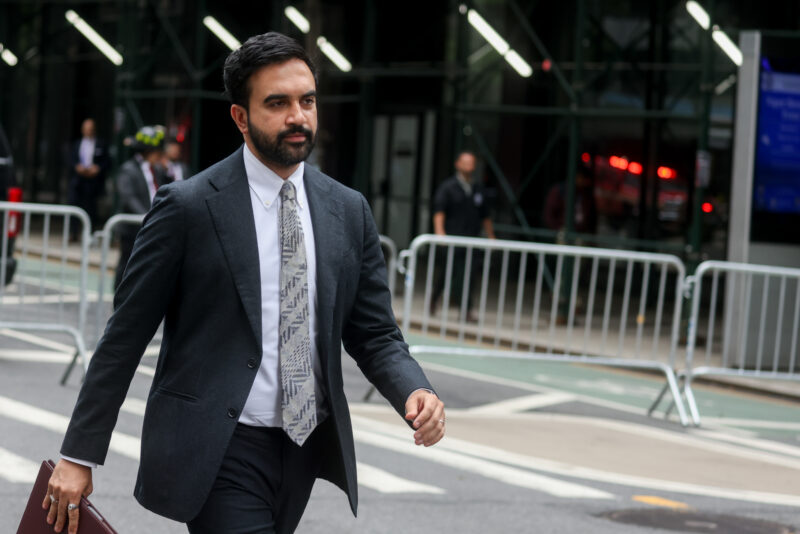
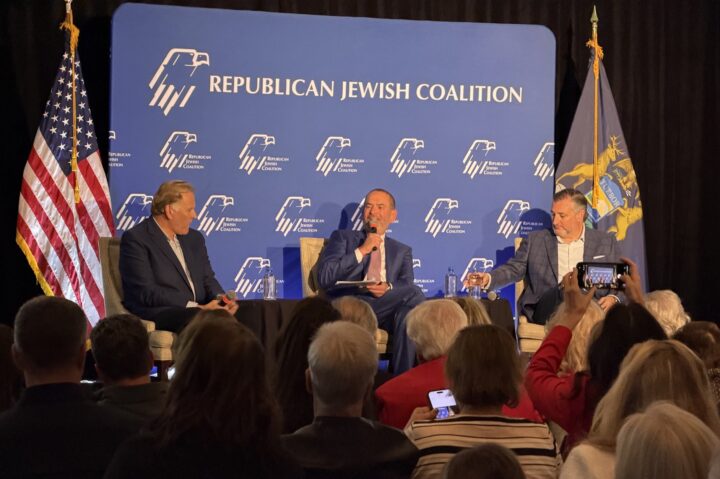
BIRMINGHAM, Mich. — Sen. Ted Cruz (R-TX) argued at an event alongside former Rep. Mike Rogers (R-MI) on Wednesday that electing Democratic Senate nominee Abdul El-Sayed and giving him access to classified intelligence could lead to the deaths of Americans.
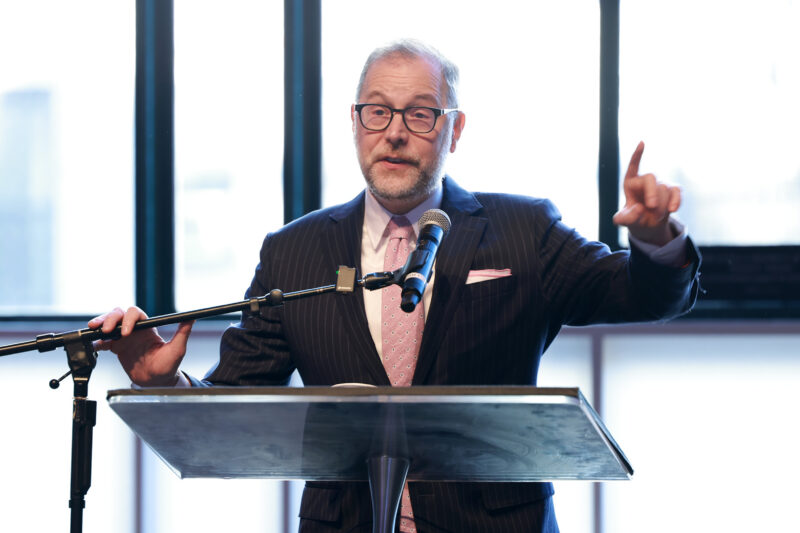
Before an audience of around 600 organized by the Republican Jewish Coalition, joined by U.S. Holocaust Memorial Museum Chair Jeff Miller, two lifelong Democrats from the Temple Israel community supporting Rogers and Republican National Committee Chairman Joe Gruters, Cruz and Rogers hammered El-Sayed with now-well-established attacks over his ties to extremist figures and groups.
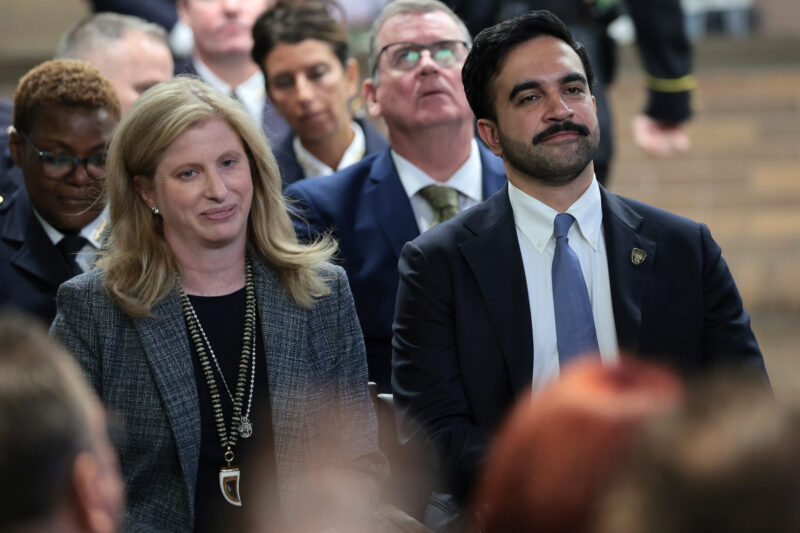
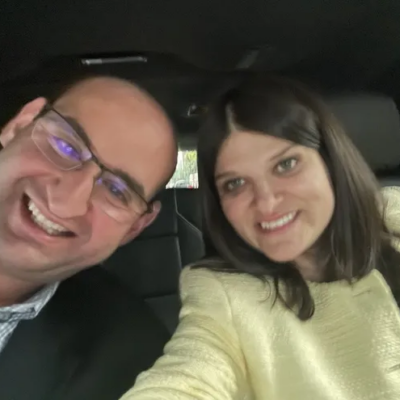
Perhaps the most remarkable element of the event wasn’t just those on stage, but also someone in the audience, whose appearance was the subject of many murmured conversations on the sidelines of the event: Jason Turkish, the Democratic fundraiser and fiancé of Rep. Haley Stevens (D-MI) who announced publicly that he planned to vote for Rogers shortly before the event began.
Rogers told Jewish Insider after the event that the growing number of defections among prominent Jewish Democrats, including Turkish, are a notable and under-covered trend. “I cannot tell you how many Jewish mothers are in tears when we meet with them about what the future of their children is when there is somebody who is such an antisemite … If he got elected, he’s going to destroy the Democrat[ic] Party, that’s why our outreach with Democrat[ic] voters is going exceptionally well.”
The RJC held a similar event two years ago when Rogers ran against Sen. Elissa Slotkin (D-MI). Organizers said that turnout this time was higher, and that they had to add extra seats to accommodate all who arrived.
Throughout the event, both Rogers and Cruz highlighted links between El-Sayed and the Muslim Brotherhood and other terrorist entities — which El-Sayed has denied — including comments by family members expressing alignment with the Muslim Brotherhood and support for terrorism; his 2012 letter expressing support for Muslim Brotherhood-backed Egyptian President Mohammed Morsi; his leadership in the Muslim Students Association in college; and his father-in-law’s leadership in the Islamic Society of North America, which has been linked to a Hamas financing case.
They also noted that his mother — by whom El-Sayed was not raised — worked for a group that was shuttered for terrorist ties.
“You have to try not to find connections,” Rogers said. Rogers said that El-Sayed would be unable to receive a security clearance through normal federal procedures, something from which lawmakers are exempt.
Cruz warned that El-Sayed would gain access to a host of classified secrets if he’s appointed to the Senate Foreign Relations Committee or other national security committees. “I believe — this is no hyperbole — that there would be a serious risk that Americans would die as a result of that” because El-Sayed might “share sensitive information with the Muslim Brotherhood.”
El-Sayed has expressed interest in serving on the Foreign Relations Committee.
Cruz argued that El-Sayed would “move the entire Democratic Conference massively left on Israel” and pave the path to making Rep. Alexandria Ocasio-Cortez (D-NY) the 2028 Democratic presidential nominee.
He called El-Sayed a “jihadist leprechaun” and said that El-Sayed’s responses to scrutiny ring hollow.
“Every one of us has a right to pray, and I will fight to defend your right to religious liberty, your right to pray as you see fit,” Cruz said. “I will fight to my dying breath to defend that nowhere in that litany I laid out did I mention how he prayed. What I talked about is his radical ideology and his explicit, repeated support for terrorists who are murdering Americans. That’s not how you pray. That is your actions that are endangering Americans.”
Rogers, during the event, asserted that El-Sayed “hates Jews.” He also said that a recent Rebellion PAC ad linking U.S. aid to Israel to high grocery prices is “the most bigoted thing I’ve ever seen.”
Rogers warned that the language and rhetoric from his opponents is dangerous, noting that a Jewish member of his communications team is receiving death threats directed at her personal account.
But he said he was also gobsmacked repeatedly when encountering young conservative men on college campuses who asked him to pledge not to take “Jewish money.”
Cruz said that Qatar and China are fueling and putting funding behind antisemitism in the United States, and that federal law enforcement needs to crack down both on those involved in antisemitic violence and those funding it.
Rogers said that “the first thing that I hope we can do is get the Qatari money out of our colleges.”
Cruz said that he thinks the country is facing an “existential crisis” with the “hostile takeover of the Democrat[ic] Party” but also “more antisemitism on the right than at any time in my lifetime. … It is vicious, it is nasty, it is growing.”
He said that, privately, nearly all of his Senate GOP colleagues denounce “the most dangerous demagogue in America,” Tucker Carlson, but are afraid to do so publicly. Carlson has vehemently opposed Rogers and praised El-Sayed.
“I don’t want to wake up in five years and find both parties absolutely anti-Israel and unapologetically antisemitic, and so if we don’t kill it, it will take over both parties, and we cannot let that happen,” Cruz said.
After the event, Rogers told reporters that, despite recent accusations of Islamophobia, his campaign is receiving strong support from the Arab and Muslim community, and that the community is “not monolithic.” He noted that five Muslim countries have banned the Muslim Brotherhood and said many immigrants to the U.S. don’t want that ideology to come to the United States.
Taylor Weintraub, the mother of a 5-year-old student at Temple Israel — which was the site of a terrorist attack earlier this year — said on stage, through tears, that El-Sayed’s response to the attack was “deeply painful to me. … There is no political grievance or ideological disagreement that can ever excuse terrorism, and this goes beyond one statement.”
El-Sayed backpedaled on those comments after the primary, apologizing for the timing of his remarks.
She said that Rogers’ support for the Jewish community and condemnation of antisemitism “really mattered to me,” and that this would be the first time she had ever voted for a Republican.
Lauren Slutsky, a lifelong Temple Israel member and Democrat, highlighted that El-Sayed had failed to address the requests of the Nonnegotiable Michigan campaign to agree to basic tenets including Israel’s right to exist and the security of the Jewish community.
“Why should anyone in our community give him our vote? I do not make this decision lightly. I have been a Democrat my entire life, but I will not put party loyalty ahead of my conscience and my Jewish identity,” Slutsky said.
She said her grandmother, a Holocaust survivor, “taught us what can happen when hatred goes unchallenged and people remain silent,” urging fellow Jews not to leave their ballots blank.
Rogers and Cruz also discussed the war in Iran.
Cruz highlighted that he was the first Republican senator to oppose the “terrible” U.S.-Iran memorandum of understanding that collapsed earlier this year. He expressed support for the ongoing blockade, but lamented that President Donald Trump hasn’t provided arms to Iranian dissidents in order to bring about the collapse of the regime.
“I think that it is an ultimate way to resolve this. I can tell you, I spent all day with the president yesterday. He wants this resolved, and I think it will come to an end. But at least so far, it has not,” Cruz said.
Rogers said that, in order to end the war — an outcome he has called for — Iran can’t be left with the ability to hurt U.S. allies, by degrading its conventional military capacity. He said that the Iranian nuclear program has been set back sufficiently that the U.S. can pursue a containment strategy while continuing to take other action against the regime, including enlisting Israel and other U.S. allies to take out key Iranian officials.
More Stories
POLL POSITION
U.S. experts split on Netanyahu’s prospects ahead of Israel’s election
TWO PATHS DIVERGED
Haley Stevens fiancé says he’s voting for Mike Rogers
CALLING IT OUT
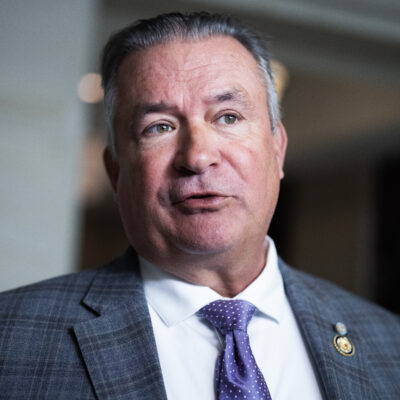
Rep. Don Bacon blasts Dan Osborn over ‘anti-Jewish’ ad
SCOOP
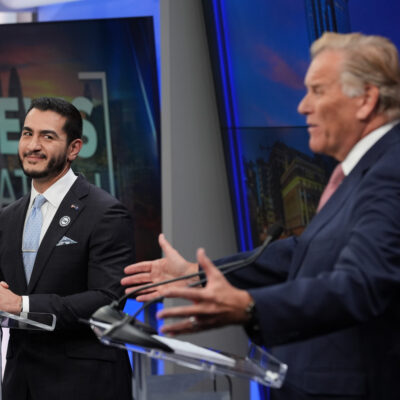
Former Haley Stevens campaign chair and prominent Democratic fundraiser says he plans to vote for Rogers
REPORTED RIFT
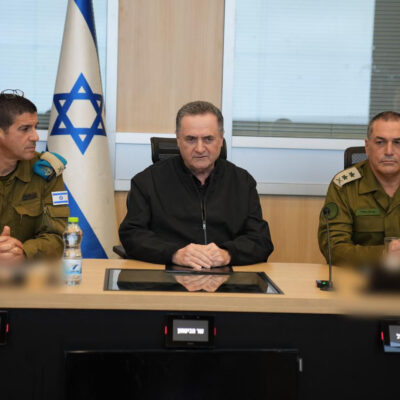
‘Israel had no plan to attack Iran before election,’ defense minister says

common cause
At MDA gala, Van Jones calls antisemitism ‘poison that is being put in’ the Black community
Please log in if you already have a subscription, or subscribe to access the latest updates.
 Continue with Google

 Continue with Apple