



































































House Democrats introduce sanctions bill targeting settlement expansion
The bill would also ban trade with all Israeli settlements, mirroring the approach taken by European and other allies
Kent Nishimura/Getty Images
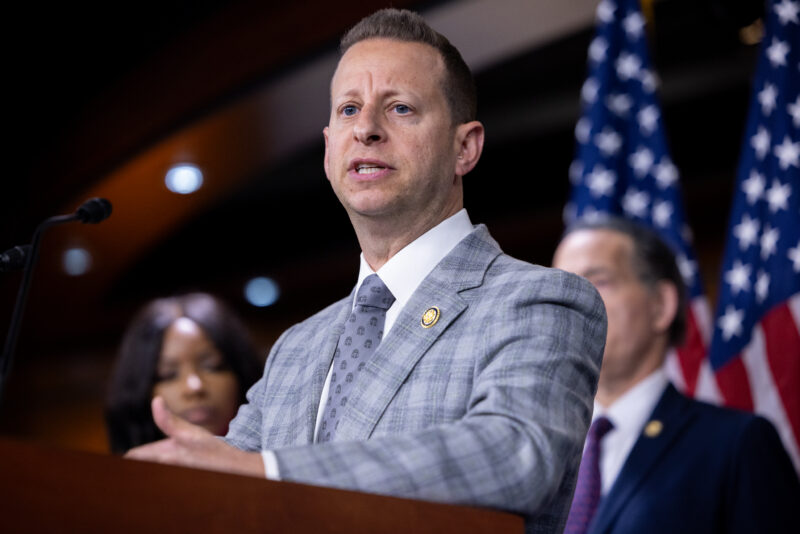
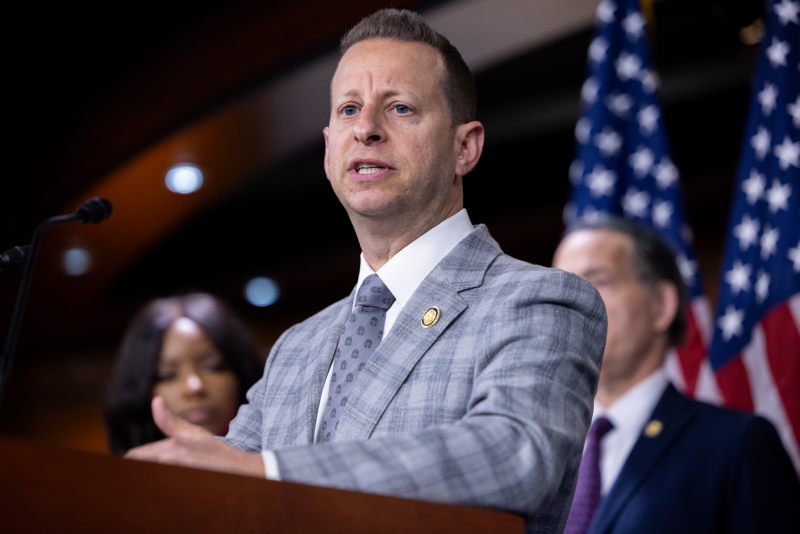
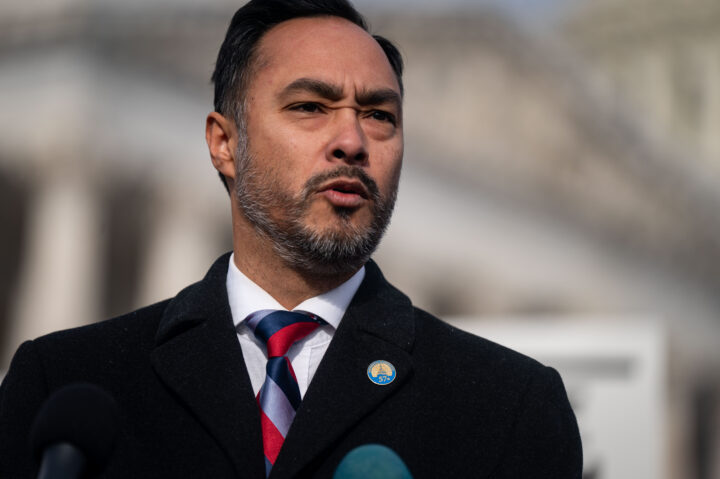
Rep. Joaquin Castro (D-TX) speaks during a news conference outside of the U.S. Capitol on January 18, 2024 in Washington, DC.


 Add JewishInsider on Google
A group of more than 40 House Democrats introduced the Stop the Settlements Act on Wednesday, which would place sanctions on anyone involved in further settlement expansion in the West Bank or Gaza and ban imports from Israeli settlements.
The bill is another signal of a significant appetite among congressional Democrats to take a hard line toward Israeli settlements and Israeli policy in the West Bank, which would likely be a focus of Democrats’ Israel policy if they retake the majority in either chamber in November.
The new legislation, backed by J Street, New Jewish Narrative, some former Biden administration officials and IMEU Policy Project, is significantly broader than a sanctions bill targeting settler violence and officials involved in enabling it that House Minority Leader Hakeem Jeffries (D-NY) said could come up for a vote under a Democratic majority.
The bill is being led by Reps. Joaquin Castro (D-TX), Madeleine Dean (D-PA), Don Beyer (D-VA), Greg Casar (D-TX), Sara Jacobs (D-CA) and Veronica Escobar (D-TX), joined by a number of progressive colleagues, including House Appropriations Committee ranking member Rep. Rosa DeLauro (D-CT) and presidential hopeful Rep. Ro Khanna (D-CA).
The legislation would impose mandatory sanctions on anyone “responsible for or complicit in” or determined to have “directly or indirectly engaged or attempted to engage in” any expansion of settlements in the West Bank after Sept. 30, including investing or assisting the transfer of Israeli civilians into such settlements. The sanctions also target Israeli government officials connected to such activity.
The bill would ban any imports of goods produced “wholly or in part in any Israeli settlements or outposts in the West Bank or Gaza” into the United States, though it would exempt items personally carried in baggage by individuals for personal use or gifts. The lack of such an exemption in import bans applied by some European countries has led to searches of passengers’ baggage when flying into the Netherlands from Tel Aviv.
In a release, Castro’s office said the import ban “would mirror and complement efforts” by U.S. allies.
The bill also provides for discretionary sanctions on anyone involved in “Israeli settlements or outposts that the president determines undermines the viability of a future Palestinian state,” or anyone who has provided financing or other support or assistance to people and individuals subject to mandatory sanctions.
In targeting any new settlement construction, the bill takes a broader aim than a recent Senate bill that takes a similar approach but specifically targets construction in the so-called E1 area.
The president could waive the sanctions for a maximum of two years, before being forced to implement them. The legislation would expire 10 years after its enactment.
“The record expansion of Israeli settlements in the West Bank continues to be one of the greatest impediments to peace. Democrats must face this with urgency — act now or watch the prospect of Palestinian self-determination slip away forever. Congress should and can be using every tool we have available, including sanctions,” Castro said in a statement. “The Stop the Settlements Act gives any person or company looking to take Palestinian land in the West Bank or Gaza a choice: pursue settlements or do business with the United States.”
Hady Amr, who served as the special representative for Palestinian affairs during the Biden administration, said, “A half-century of the U.S. asking nicely has failed to stop ISRAELI settlement expansion,” and said the bill would “finally impose consequences” and is “long overdue.”
Ilan Goldenberg, J Street’s chief policy officer, said in a statement that stopping settlement expansion requires a new sanctions approach, starting with “organizations and entities supporting the tremendous boom in farming outposts over the past few years” and officials such as Finance Minister Bezalel Smotrich and National Security Minister Itamar Ben-Gvir.
“Then give other companies and financial institutions a deadline to wind down activities that support settlement construction. What you would likely get relatively quickly is a de facto settlement freeze on Israeli construction in the West Bank,” Goldenberg predicted, suggesting that Israeli banks would quickly pull out from any settlement projects.
He said that with a crackdown on construction, financial hardship and business withdrawals, some settlers will leave. He called the approach “distinctly different than the [Boycott, Divestment and Sanctions] movement” because it only targets settlements.
“This is bigger than [Israeli Prime Minister Benjamin] Netanyahu. Settlement growth has continued under Israeli governments across the political spectrum,” Goldenberg added.
More Stories

TAKING AIM
Netanyahu targets Mamdani, Macron and foreign critics in UNGA address

BOOKSHELF SHOWDOWN
New York Public Library hosts author mocking Jewish concerns of antisemitism

michigan mishpacha's ask
Michigan state lawmaker, Jewish Dem leaders join call for El-Sayed to affirm commitment to Jewish safety

exclusive
Gottheimer urges DOJ to investigate N.J. city for antisemitic discrimination

printing pressure
Inside New York magazine’s anti-Israel shift — and the Jewish staffers left behind
WAR POWERS WOES
Senate narrowly rejects Iran war powers resolution, as Tillis joins Democrats to oppose war
Please log in if you already have a subscription, or subscribe to access the latest updates.
 Continue with Google
 Continue with Apple