









































University of Michigan regent race revives campus fight over Israel
Anti-Israel activists are singling out regent Jordan Acker, hoping to unseat him with attorney Amir Makled who represented a member of the school’s encampment

JEFF KOWALSKY/AFP via Getty Images
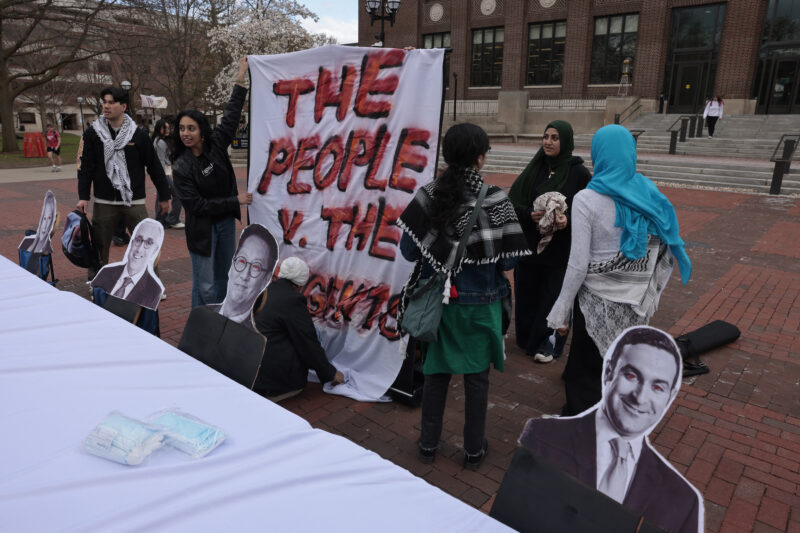
Anti-Israel demonstrators set up a mock trial against the University of Michigan's Board of Regents on the university's campus in Ann Arbor, Michigan, on April 21, 2025.


 Add JewishInsider on Google
When Jordan Acker ran for the University of Michigan Board of Regents in 2018 — a statewide elected office — he presented himself as a young alumnus eager to bring a fresh energy to the governing board of Michigan’s flagship public university.
But since the Oct. 7 Hamas attacks in Israel in 2023, Acker has become the target of the university’s anti-Israel activists, facing harassment and vandalism that Michigan leaders have called plainly antisemitic.
Acker, who is Jewish, has been a staunch opponent of efforts to divest university funds from Israel, along with other members of the Board of Regents, which has reiterated that it will not divest from Israeli companies. In November, the president of Michigan’s student government vetoed a divestment resolution.
In May 2024, a stranger wearing a keffiyeh came to Acker’s house in the middle of the night and placed papers on the door, described as a list of demands from the “UMich Gaza Solidarity Encampment.” In December of that year, his front windows were smashed and his wife’s car was vandalized with pro-Hamas graffiti. The university called it “a clear act of antisemitic intimidation.”
Now Acker is up for reelection, along with regent Paul Brown. Both of them are Democrats who were elected to the board in 2018, and they each oppose divestment.
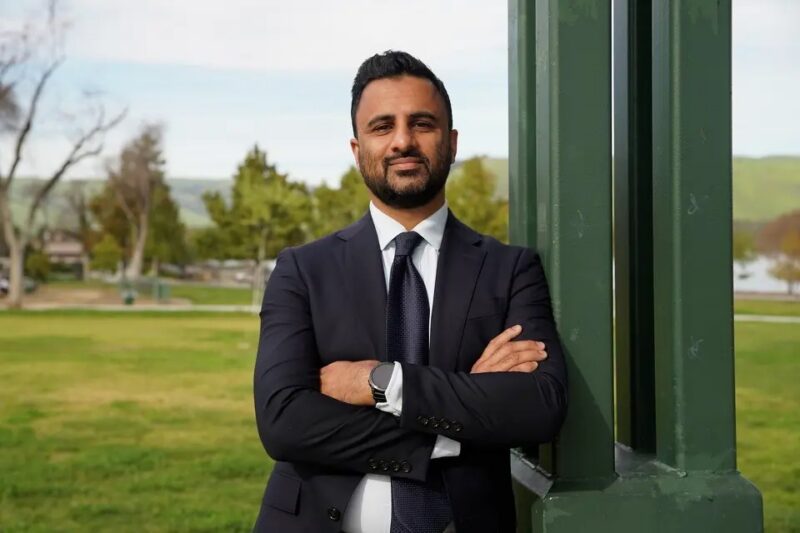
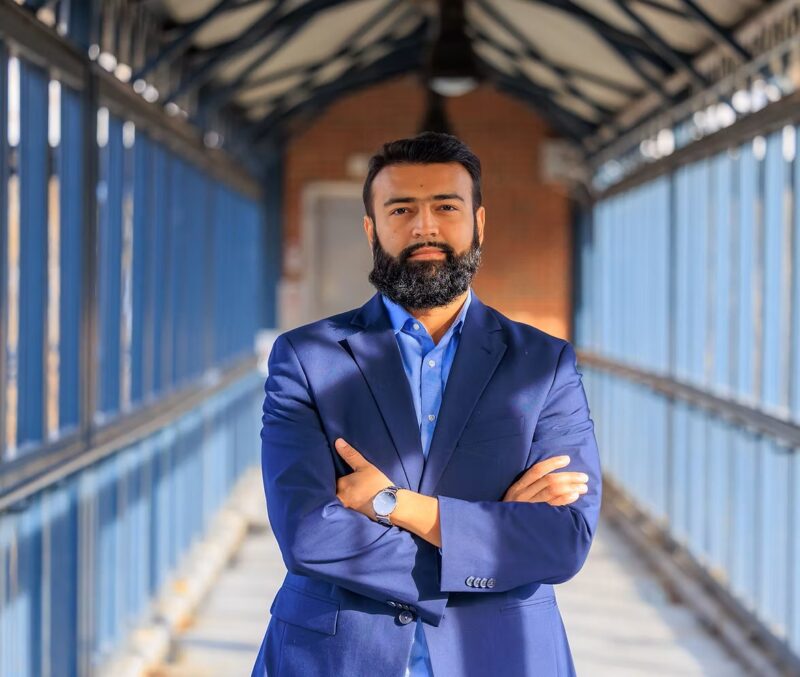
But the university’s anti-Israel activists are targeting only Acker. This time, they are advocating for voters to unseat him and to vote instead for Amir Makled, a candidate who has aligned himself with anti-Israel activists and advocated for the university to divest from Israel. Only two of the three candidates will proceed to the general election, where they’ll go up against two Republicans.
A flyer that was distributed at a recent Washtenaw County Democrats meeting in support of Makled called out only Acker for his support of Israel. (Brown told Jewish Insider that he and Acker are running on a ticket, and they are doing events together as well as joint fundraising.)
“UM Regent Jordan Acker is up for re-election this year, and as one of the most vocally zionist regents who has personally advocated for the repression of pro Palestine voices at the university, we are mobilizing to unseat him from his position on the Board of Regents,” read the flyer, which featured a photo of Acker’s face crossed out with a red X. “Together we can replace him with pro-Palestine regental candidate Amir Makled who helped successfully defend the UM Encampment 11 against charges from MI attorney general Dana Nessel.”
The flyer encouraged Michigan students to sign up to attend the Michigan Democratic Party convention in Detroit on April 19, where delegates will nominate the two candidates for Board of Regents.
Nearly two decades ago, Makled helped pass a measure calling on the University of Michigan’s Dearborn campus to divest from Israel when he was a student there in the late 2000s. It was one of the first universities in the nation to vote in support of the Boycott, Divestment and Sanctions movement.
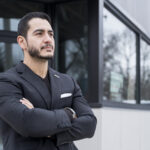
Makled, a Dearborn trial lawyer who represented an anti-Israel protester who was arrested during the 2024 University of Michigan encampments, is basing his pitch to voters in part on the idea that the state’s flagship public university should divest from Israel. Makled has been endorsed by Rep. Rashida Tlaib (D-MI), one of the most vocal critics of Israel in Congress.
“Investment in entities that are not ethical and don’t represent the values of this institution aren’t in the best interest of the university,” Makled recently told The Michigan Daily, the campus newspaper. “[Investment] should be based off ethical dollars and ethical approaches to investment. And so we shouldn’t be profiting from entities that are supporting a genocide.”
And while Acker and Brown might prefer that the race not be used to relitigate the messy 2023-2024 academic year that followed the Oct. 7 Hamas attacks — other issues like tuition affordability and the university’s response to President Donald Trump are expected to be a focus for all three candidates — the election is already shaping up to be a referendum on the university’s handling of anti-Israel protests that year.
“We made mistakes. I think there’s no question about it. And I think a lot of these decisions were made from a place of real stress and real personal fear and real trying to do what was right based on the information we knew at the time,” Acker told JI on Wednesday. “You have to be realistic and protect the rights, yes, of pro-Palestine protesters. I think that’s one of our most sacred rights. But we can’t do so at the expense of other people’s rights.”
Brown is also opposed to divestment, and he, like Acker, had to deal with a protester showing up at his home in the middle of the night. But it did not change his stance on divestment.
“I had a masked person come to my home at 3 a.m. and nail a demand letter onto my door that said, Do these I think, four things by Thursday or else, and every one of them was, in essence, a form of punishment to the people in the nation of Israel,” Brown said. “My feeling is that I’m just fundamentally opposed to using the university as a mechanism, as a weapon, to punish any group or nation.”
Makled, who is the child of Lebanese immigrants, received a burst of national media attention early last year when he was detained at the Detroit airport on his way home from a family vacation. He claimed he was being questioned because he was representing a University of Michigan student who was facing felony charges of resisting arrest during a police raid on the anti-Israel encampment in 2024. He told the Michigan College Democrats that the Board of Regents’ handling of the protests was part of his reason for deciding to run.
“We have to support students, and we have to have the right to speak out, because that’s at the core of what we do when we’re going through the process of higher education,” Makled said at the meeting.
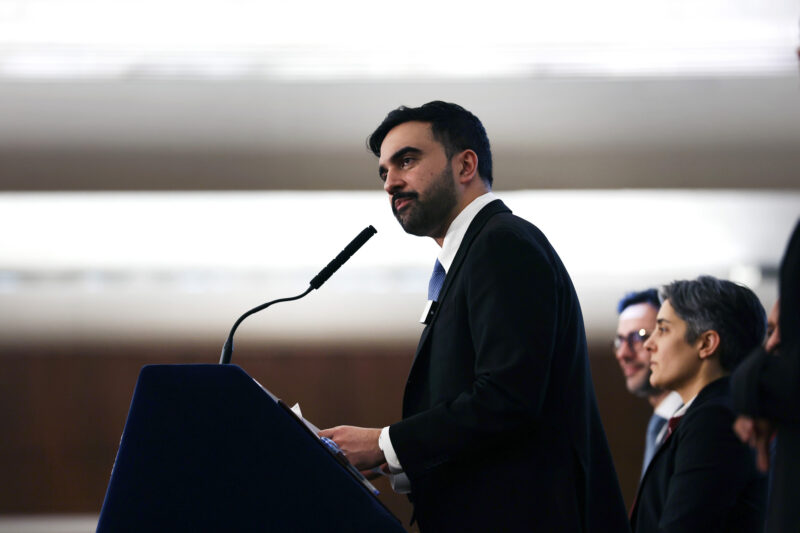
The charges against the protesters, including his client, were dropped last year. Afterward, in the courtroom, he made an impromptu speech.
“This was not about trespass. This was not about felony conduct. This was the criminalization of free speech and today the state of Michigan agrees,” said Makled. “There is still a genocide that is happening in Palestine. And we should never forget that today, we still get to stand firm and say, free Palestine.”
Makled did not respond to a request for comment.
More Stories
senator says
Lindsey Graham calls on Saudi Arabia to ‘knock it off’
NEBRASKA NOS
Most Democratic candidates in key Nebraska swing seat say they’ll reject pro-Israel support

Fashion Faux Pas?
Anna Wintour mingles with Qatari royal who glorified Hamas’ slain leader
SAUDI SPOTLIGHT
Lawmakers concerned by White House moves to allow Saudi nuclear enrichment

TERROR TAG
EU designates IRGC as terror organization in policy reversal

ALLIES ASSEMBLE
Western allies close ranks behind U.S. as Iran strikes across Middle East
Please log in if you already have a subscription, or subscribe to access the latest updates.
 Continue with Google
 Continue with Apple