









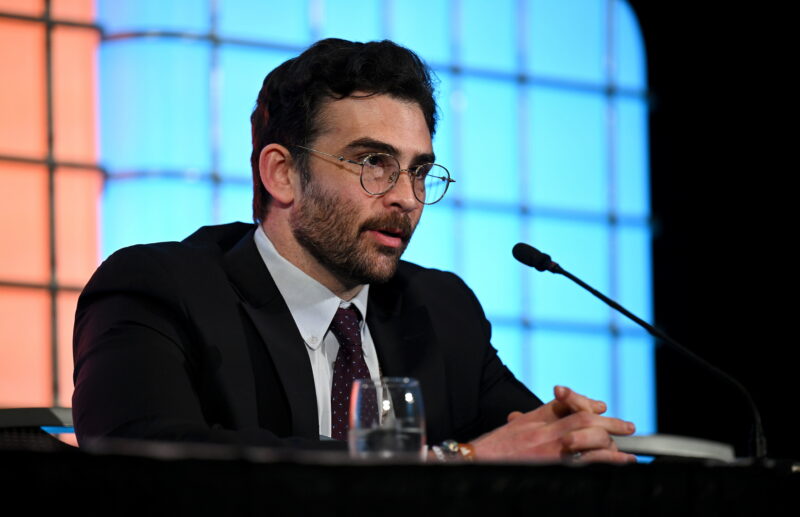

















Speaking at Web Summit Qatar, the creator of a new social media app surging in popularity after TikTok’s acquisition evoked a classic antisemitic trope from the mainstage in Doha
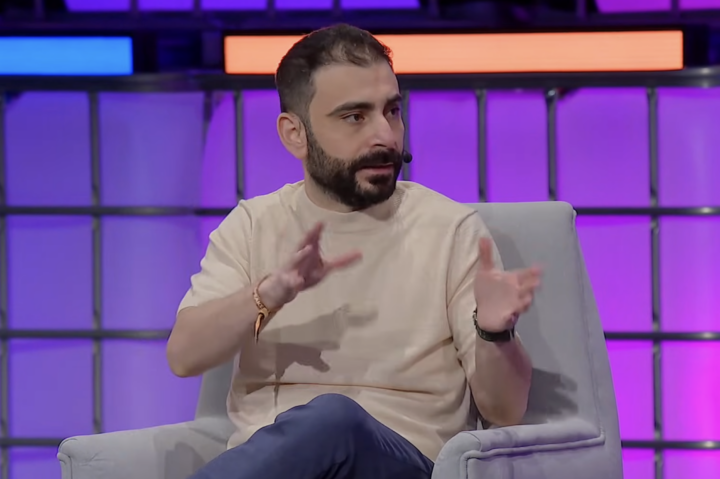
Screenshot
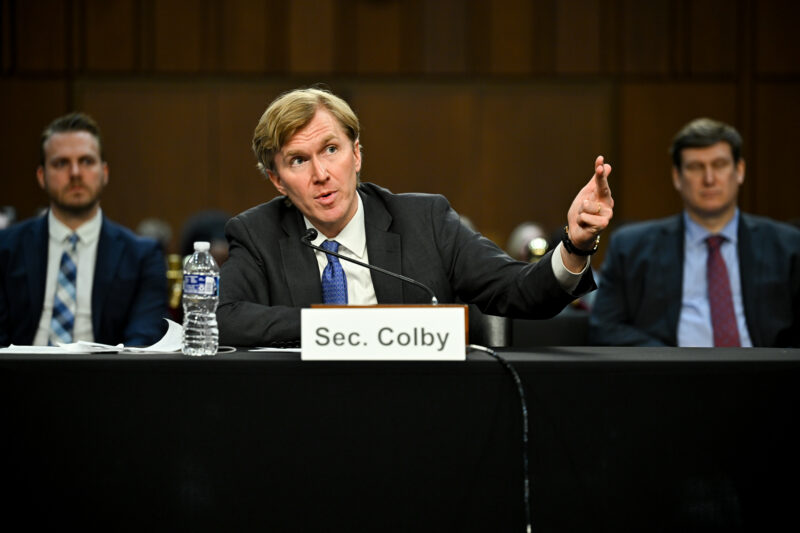
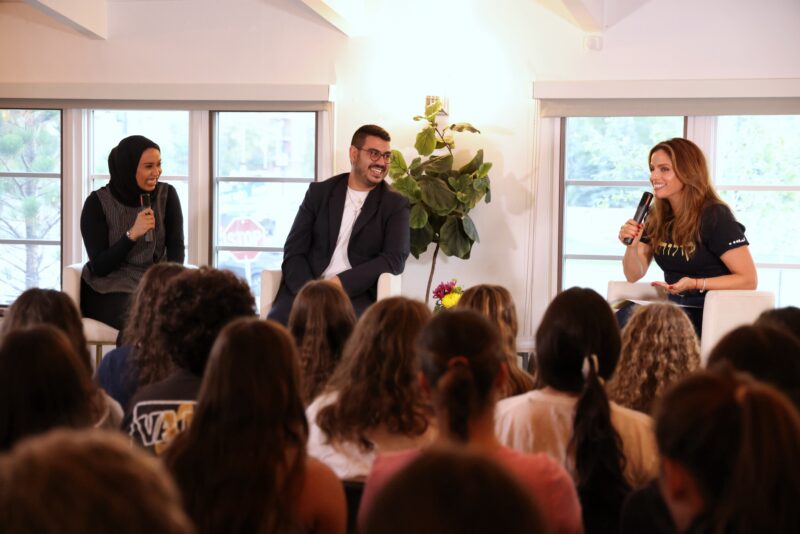
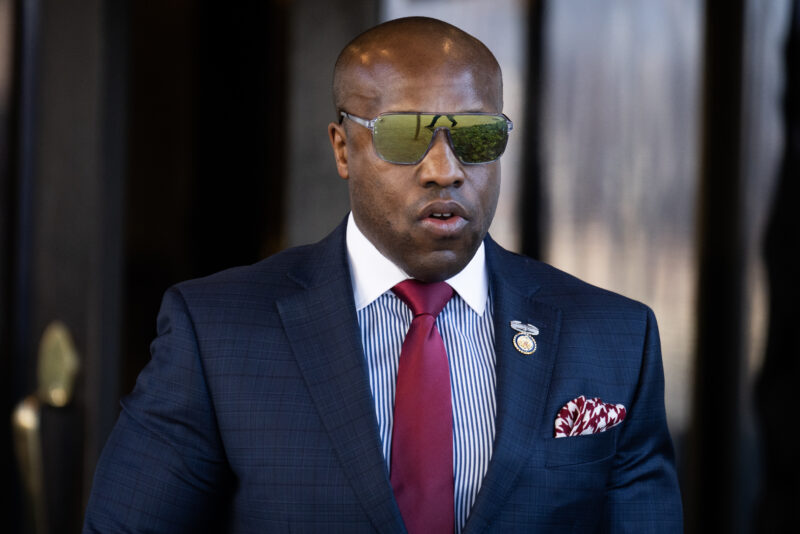
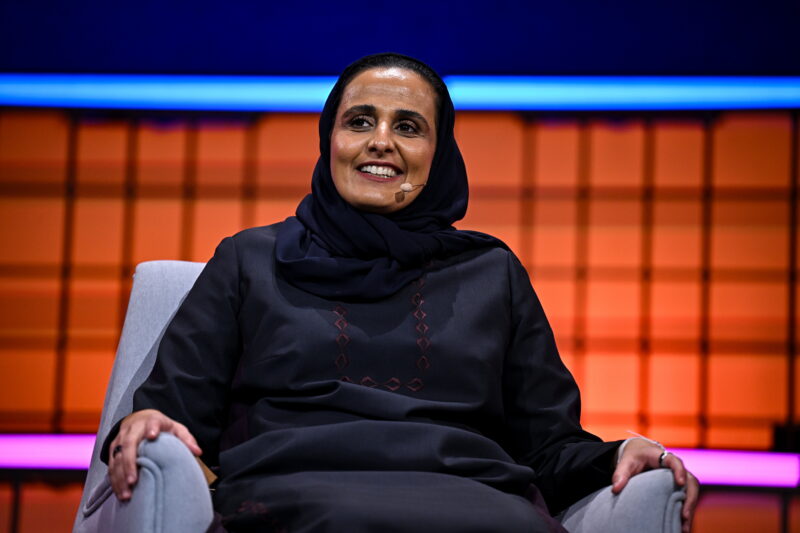
Issam Hijazi, creator of social media platform UpScrolled, speaking at Web Summit Qatar, Feb 1, 2026


 Add JewishInsider on Google
Issam Hijazi, creator of the new social media platform UpScrolled, presented his app as a way to escape “control [of] the narrative” by pro-Israel figures and said that he doesn’t need to rely on “Zionist money,” in his remarks at Web Summit Qatar in Doha on Sunday night.
UpScrolled topped the charts in Apple’s app store in recent days, after an American investor group finalized a deal to buy part of TikTok from its Chinese owners.
Hijazi, a Jordan-born Australian citizen who identifies as Palestinian, said in an onstage interview that “we cannot keep blaming the algorithm or tech” for censorious social media, “because there are people who are gilding this tech … who train this algorithm to flag things that don’t really go well with their propaganda or agendas.”
“It became very obvious from the latest acquisition of TikTok by Larry Ellison and [Michael] Dell, and [Ellison] is one of the biggest donators [sic] for the Friends of the IDF. I mean, that tells you a lot,” Hijazi said.
The UpScrolled founder then evoked a classic antisemitic trope to describe the Jewish tech entrepreneurs: “They’ve been controlling the media, as in the TV news outlets, for the past, I don’t know, six years, and now they understand social media is the new way to get information out, so they want to control the narrative again. … They don’t want the free flow of data across the globe.”
The moderator, The Economist’s Gregg Carlstrom, challenged Hijazi’s claims, asking if he had evidence of the broad censorship of anti-Israel views. Hijazi responded by asking the audience for a show of hands if they had ever had such posts taken down; many in the Qatari audience raised their hands.
“I’m speaking from experience about what’s happening to us in Gaza,” said Hijazi, who has claimed to have had 60 relatives killed in the war that began when Hamas invaded Israel on Oct. 7, 2023.
Hijazi later spoke about how his app does not downgrade or amplify posts based on their content, and is not made to be maximally addictive like other social media algorithms.
When Carlstrom asked Hijazi if he had trouble raising money for his product as a result, he responded: “There’s always ugly and there’s always good. We are fortunate to have a lot of good people reaching out to us and wanting to be part of our mission. … We don’t have to rely on Zionist money — I’ll put it out there — or on Silicon Valley money in order to become big.”
Asked if he is positioning UpScrolled as a pro-Palestinian network, Hijazi said: “We’re pro-humanity.”
Since UpScrolled launched last year, users have expressly moved to the app in order to post antisemitic and anti-Israel content. One anti-Israel influencer posted on TikTok that the app “has fallen officially under the control of Zionist billionaire and MAGA oligarch Larry Ellison … I need you to switch apps. At least download this app called UpScrolled.”
While Hijazi claimed that UpScrolled does not boost content, a Jewish Telegraph Agency reporter found posts on the app’s “discover” page, recommending new accounts, with messages such as “all kikes face the wall #fuckthejews” and “I stand with Khamenei, Hezbollah, Houthis & Hamas.”
Web Summit has held an annual conference in Qatar, a key Hamas sponsor, in recent years. The events are organized in cooperation with the Qatari government. Web Summit CEO Paddy Cosgrave has come under fire since the Oct. 7 attacks for accusing Israel of war crimes, and Israeli companies, followed by Google, Intel, Meta and others, withdrew from past Web Summits in Europe.
Cosgrave wrote enthusiastically about UpScrolled on LinkedIn last week, calling it “the first breakout app of 2026,” and a social media platform that lacks “some of the infuriating censorship and shadow banning you find on other apps.” He called Hijazi the “star attraction” at Web Summit Qatar, in a post on X, one of several about UpScrolled in the past week.
Hijazi had been listed as a speaker at the upcoming Al Jazeera Forum, which begins this weekend, but no longer appears on the public list of speakers.
An analysis by the JCPA found that antisemitic influencers are flourishing on the platform, and using it to make money while promoting hate
Klaudia Radecka/NurPhoto via Getty Images
The X logo displays on a screen.
Antisemitism is “thriving in plain sight” on Elon Musk’s social media platform X (formerly Twitter), according to a new study by the Center for Countering Digital Hate and the Jewish Council for Public Affairs.
The study, first shared with CNN, conducted an analysis of over 679,000 antisemitic posts made over a year on the site and found that, despite the platform’s own anti-hate policies and commitment to reduce visibility of hateful content, X “not only tolerates” antisemitic conduct “but allows users to monetize it, giving antisemitic influencers both reach and revenue.”
With the assistance of ChatGPT, the study categorized the posts into Jewish control or power conspiracies, Jewish satanic conspiracies and Holocaust denial, with control or power conspiracies accounting for the plurality (44%) of the total likes and views. All posts included were viewed 193 million times in total.
Musk has touted the platform’s “community notes” feature — where users can add context to false or misleading posts that remain attached to the post if enough verified users vote them as “helpful” — as an antidote to conspiratorial and harmful content instead of increased content moderation. But of the 300 most viewed posts — 100 from each category — only four of them were given a publicly visible community note. Compounding the issue, only 22% of users who viewed the original post viewed the attached community note, likely due to the delay in writing and voting on the note before it was made widely visible.
X says it may restrict posts that violate its policies, which include attacking others on the basis of race, ethnicity, national origin or religion, “inciting behavior,” reinforcing stereotypes, dehumanizing a group of people and denying mass casualty events like the Holocaust. But the study found X took action — including limiting visibility, removing the post, displaying a community note or deleting or suspending the account — on only 36 out of the 300 most-viewed posts.
Individual “antisemitism influencers,” as the study refers to them, find unique success on X. Thirty-two percent of the total likes among all the posts included in the study came from only 10 accounts; for nine of these influencers, their X accounts have the largest number of followers of all their social media platforms. Three of these accounts offer paid subscriptions to their followers, meaning they can profit from their content.
Despite their posts violating X’s own hate speech policies, six of the 10 are subscribed to X Premium and have a verified checkmark next to their name, providing them increased visibility on the site and more opportunities to monetize their messages.
Amy Spitalnick, CEO of JCPA, told Jewish Insider, “Antisemitic conspiracy theories and hate that were once fringe have been wholly normalized — thriving in plain sight and amplified by X’s failure to live up to its own policies. At a time when polarization, extremism, and violence are rising at home and abroad, the unchecked spread of antisemitism online is a direct threat not only Jewish safety, but to the safety of all communities and our core democratic values.”
The Trump administration’s move to allow for U.S. ownership of TikTok’s American business could also help curtail extremist content on the social media platform
PATRICK T. FALLON/AFP via Getty Images
The TikTok logo is displayed on signage outside TikTok social media app company offices in Culver City, California, on March 16, 2023.
A new set of American powerplayers appears set to take over ownership of TikTok’s U.S. business from the Chinese company that made the short-form video app the most widely used social media platform in the world.
It is also likely the most controversial one, due to national security concerns over TikTok parent company ByteDance’s ties to the Chinese government and broader societal concerns with extremist, divisive and harmful content often funneled to users through the app’s powerful algorithm.
That algorithm is now expected to be licensed by the American software company Oracle, which would also manage the app’s security. With new ownership comes one key question about the transfer of TikTok from Chinese to American control: Will American owners, with no ties to the Chinese Community Party, be more responsive to concerns about the proliferation of antisemitism, hate and extremism on the platform?
Anti-hate experts cautioned that it’s too soon to know, and that new ownership does not necessarily mean a major change in policy — or that a change would necessarily be in the direction of more content moderation. After all, TikTok’s algorithm, which feeds users personalized content it expects them to like via the app’s For You Page, is the source of the company’s success, because the more that users enjoy the content being recommended to them, the more time they spend on the app.
“I think it’s broadly understood that TikTok has a more powerful algorithm than other platforms,” said Hannah Rose, senior research and policy manager at the Institute for Strategic Dialogue, a British organization that researches online extremism. “What’s happening now is that extremist content is being served to you, even if you don’t go looking for it. And so what we need to see from TikTok, and from many platforms I should say, is the ability to identify and mitigate that at scale. Users shouldn’t be served antisemitic content.”
But there are changes new owners could put in place if they see content moderation as a priority.
“I’d be looking towards how they’re implementing their terms of service, what kind of mitigation measures they’re looking to put in place,” said Rose. “There’s a lack of transparency from social media platforms on how their algorithms are curated, how content is served to users, and when it has such a significant impact on public safety and public life, greater transparency in that effect would certainly be beneficial to be able to understand what is going on.”
Antisemitism has been an ongoing concern about TikTok for years. Fears that antisemitic content was spreading unchecked on the platform increased after the Oct. 7 Hamas attacks on Israel two years ago, when Jewish content creators asserted that they were facing a barrage of hate and that the company was not doing enough to protect them. The likely sale of TikTok already has some anti-Israel content creators worried that their posts will not spread as widely due to a possible algorithmic change.
In a November 2023 report, the Anti-Defamation League found that “bad actors” were able to sidestep TikTok’s content moderation policies to spread antisemitic content on the platform. Now, the organization is sounding a more positive note about TikTok.
Daniel Kelley, director of strategy and operations at the ADL’s Center for Technology and Society, said the company has since taken steps to address the problem — a move that he said is particularly notable, since other tech giants, like Meta and YouTube, have recently stepped back from prioritizing content moderation.
“I know that there’s been a lot of scrutiny of TikTok, especially around the Jewish community relative to Oct. 7,” said Kelley. “But from where I’m sitting, where we’re sitting, we’ve seen TikTok lean in on fighting hate and fighting antisemitism, where Meta and all their platforms, YouTube and others, X among them, formerly Twitter, are taking huge, huge, huge steps back.”
Meta decided early this year to loosen its guidelines around hate speech. YouTube, which is owned by Google, announced this week that content creators who had previously been banned for spreading COVID-19 or election-related misinformation could now apply to be reinstated. Elon Musk fired X’s content moderation chief when he bought the platform in 2022, and hate speech has proliferated on the site since.
Last year, TikTok officials attended a symposium to combat online antisemitism, alongside executives from Google, Meta, Microsoft and X. The gathering was hosted by Deborah Lipstadt, then the U.S. special envoy to monitor and combat antisemitism. One of her former staffers, Erica Mindel, joined TikTok this year to work on antisemitism policy.
“Content moderation at scale is incredibly hard, and every platform has its issues. But we see that TikTok hired somebody who is going to be their antisemitism liaison,” Kelley said. “They meet with us regularly. We see no evidence of them backtracking on their commitment to fighting antisemitism.”
What the ADL will be waiting to see from TikTok’s new owners is whether they follow the trend of other American tech companies in moving away from content moderation.
“The concern that we have, if the ownership of TikTok shifts, [is] we would want to ensure that we aren’t seeing a backtracking on content moderation as a result of the change of ownership,” said Kelley. “Anytime there’s a massive change in a social media company, there’s going to be a question of, what’s their continued posture going to be relative to fighting antisemitism, fighting extremism?”
TikTok has disputed that the Chinese government can access user data, and the company has said it isn’t spreading Chinese propaganda. That claim will be put to the test when the company comes under the control of American owners.
A TikTok spokesperson did not respond to a request for comment.
The social media app hired Erica Mindel, a former Jewish communal professional, to lead the company’s hate speech policy, with a focus on antisemitic content

Photo Illustration by Mateusz Slodkowski/SOPA Images/LightRocket via Getty Images
In this photo illustration a TikTok logo is seen displayed on a smartphone.
TikTok recently hired a new hate speech manager with long-standing ties to the Jewish community, the company confirmed to Jewish Insider, as the social media platform faces growing pressure to confront a sharp rise in antisemitic content.
The streaming platform enlisted Erica Mindel, a former State Department contractor who worked for Ambassador Deborah Lipstadt, the Biden administration’s special envoy to monitor and combat antisemitism, to join TikTok’s global public policy and government affairs team.
The hire comes as TikTok has drawn accusations that it has failed to address a spike in antisemitic and anti-Israel content in the wake of Hamas’ Oct. 7, 2023, terror attacks and amid the ensuing war in Gaza.
In her newly created role, Mindel will “develop and drive the company’s positions on hate speech,” seek to “influence legislative and regulatory frameworks” and “analyze hate speech trends,” with a particular focus on “antisemitic content,” among other duties cited in an official job description shared by TikTok.
Mindel, who previously served as an assistant director of program development at the American Jewish Committee, according to her LinkedIn profile, had briefly worked for the special envoy’s office in the second Trump administration before she was hired by TikTok, the company told JI.
Mindel declined to comment on her new position, which was first reported by The Washington Free Beacon.
The role was initiated after a “high-level convening” the Anti-Defamation League “helped organize last year,” said Dan Granot, the ADL’s national director of antisemitism policy, who in a statement to JI on Sunday said the position was raised as “a key recommendation for all social media platforms” during the meeting.
“In a moment when too many social media platforms are scaling back efforts to fight hate, ADL welcomes TikTok’s establishment of a role focused specifically on hate speech and antisemitism,” Granot added, praising Mindel as a “trusted partner who understands the issue and the stakes, and someone we’ve worked with closely in the fight against online hate.”
TikTok, a popular video app owned by ByteDance, the Chinese technology company, has been facing a looming U.S. ban that President Donald Trump has continued to delay in a series of executive orders. In the interim, the app has worked to address criticism over its handling of antisemitic content — which had become a public relations crisis in the aftermath of the Oct. 7 attacks.
The platform has drawn widespread accusations that it has enabled a surge of misinformation and hateful messaging targeting Jews. The actor Sacha Baron Cohen — who was among a group of Jewish celebrities and content creators that met privately with TikTok in 2023 — said the app was “creating the biggest antisemitic movement since the Nazis.”
The Jewish Federations of North America, meanwhile, last year called TikTok “the most popular social media platform driving antisemitism and anti-Israel sentiments,” arguing the company “has helped fuel a horrific spike in antisemitism” in the aftermath of Oct. 7.
While research has indicated that some TikTok users who amplify antisemitic rhetoric have been able to sidestep the company’s moderation policies, other findings suggest messaging that is contrary to the Chinese government’s positions — such as posts supporting Israel after Oct. 7 — is generally suppressed on the platform.
The U.S. ban, which passed in Congress last year amid national security concerns over the Chinese-owned app and would require the streaming company to find a new buyer or shut down, even fueled its own antisemitic conspiracy theory on TikTok alleging Jews were behind the ban and had outsized control of American politics.
TikTok says it has worked on efforts that have “strengthened policies against hate speech and hateful behavior” amid the war in Gaza, according to a statement issued on the one-year anniversary of Hamas’ attacks.
In materials shared with JI by TikTok, the company said it has implemented “some of the strictest rules against hate, including antisemitism,” citing, among other things, its decision to “name antisemitism as a hateful ideology” in community guidelines, its “zero tolerance policy for antisemitic conspiracy theories and narratives” and efforts to “block searches” for “blood libel,” ‘holohoax” and other terms used on the app.
Despite such efforts, TikTok has continued to face scrutiny. Last month, a bipartisan group of 41 lawmakers wrote to the CEOs of TikTok, Meta and X pressing them to take action “regarding disturbing and inflammatory content circulating” on their platforms “in support of violence and terrorism” following a recent series of antisemitic attacks in Washington and Boulder.
Last week, Reps. Josh Gottheimer (D-NJ) and Don Bacon (R-NE), alongside ADL CEO Jonathan Greenblatt, announced the reintroduction of the STOP HATE Act, which seeks to crack down on antisemitism spreading on social media platforms such as TikTok.
Still, Granot, the ADL’s national policy director, said that the group looks “forward to continued collaboration” with TikTok as the streaming app works with its newly hired hate speech manager.
“While the impact of this role will ultimately be measured by what it delivers,” Granot told JI, “its creation is a promising sign of TikTok’s willingness to take these challenges seriously.”
Jewish Insider’s U.S. editor Danielle Cohen-Kanik contributed reporting.
Please log in if you already have a subscription, or subscribe to access the latest updates.
 Continue with Google
 Continue with Apple