

















Rabbi Ronald Kaplan, who volunteered as a spiritual first responder after 9/11, was diagnosed with laryngeal cancer traced to his time on the pile — a battle he’s still fighting on the 25th anniversary of the attacks
Jonah and Ronald Kaplan
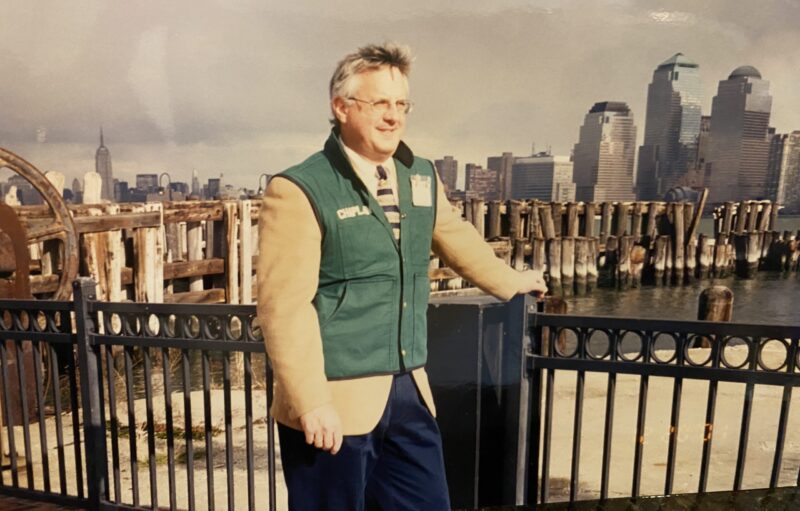
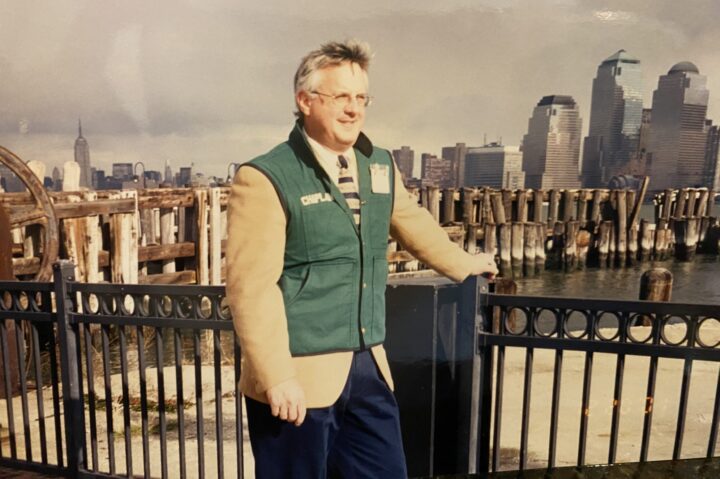
Rabbi Ronald Kaplan on Dec. 20, 2001, at Liberty State Park, NJ, before boarding the ferry to Lower Manhattan.


 Add JewishInsider on Google
For more than four decades, Rabbi Ronald Kaplan’s primary tool for his work was his voice. It was the instrument he relied on every Shabbat and holiday on the bimah, in the classroom, under the chuppah, at the cemetery and in the hospital — guiding congregants through both moments of celebration and grief. As he puts it, a rabbi’s task is to “pray, to teach, to inspire, to counsel and to lead” — and the voice is the means to do it.
But this year, as the nation marks the 25th anniversary of the 9/11 attacks — a commemoration that falls as the major Jewish holiday of Rosh Hashanah begins on Friday night — that work of speaking and remembering holds particular resonance for Kaplan, whose service as a spiritual first responder at Ground Zero during the aftermath of the attacks ultimately cost him his “greatest sacrifice” — his voice.
In the late 1990s, the American Red Cross and the National Association of Jewish Chaplains sought to prepare clergy for disasters that were not acts of nature. In the wake of the 1997 crash of TWA Flight 800 off Long Island, they piloted a program for “spiritual first responders” to support survivors, bereaved families and recovery workers. Kaplan, then a congregational rabbi living in northern New Jersey, enrolled in what became known as the Spiritual Air Disaster Intervention Response (SAIR) program in the fall of 2000.
“When the program was offered, I was energized by its content and thought it would add to my chaplaincy skills,” Kaplan wrote in a recollection to Jewish Insider. “I never assumed nor expected to be mobilized so quickly.”
Kaplan said the call to serve at Ground Zero came just days after the attacks. “It was nearly as startling as the attacks themselves, for I felt so ill-prepared and inadequate with any experience,” he said. His instructor’s chilling hypothetical — what if a plane hit the World Trade Center? — “immediately came to mind.”
Starting on Sept. 19, 2001, Kaplan began making regular journeys from New Jersey to Lower Manhattan, returning weekly through the spring of 2002. At the staging area at Liberty State Park, he donned a green vest emblazoned with the word “CHAPLAIN” and introduced himself to grieving families and exhausted rescue workers.
“Who would I meet? Who or what would be recovered? What will I say, what will I learn, and where could we see any source of light in this darkness,” Kaplan recalled in a personal reflection he wrote this week titled “Pain in the Neck: Speaking Up Without the Voice 9/11 Took From Me.”
“I was tasked with meeting with many of the grieving family members and rescue workers, identifying myself as a chaplain,” Kaplan told JI. “I explained what they would witness, encouraged them to hold on to each other and gain strength as a group.”
From there, he joined New Jersey state troopers and families on the ferry across the Hudson, heading toward an elevated wooden platform overlooking the ruins that recovery workers called simply “The Pile.”
Kaplan describes the scene as “ancient liturgy for modern horror”: the acrid air, pulverized concrete, twisted steel and battered office furniture strewn amid the rubble, punctuated by sudden cries when recovery teams found human remains or fragments of clothing.
“I can vividly picture the walk to the pile, seeing the flames, feeling the intense heat and hearing the deafening noise from the machinery,” Kaplan said. “The horrific scene was incomprehensible. I could not process what my eyes were seeing and my ears were hearing.”
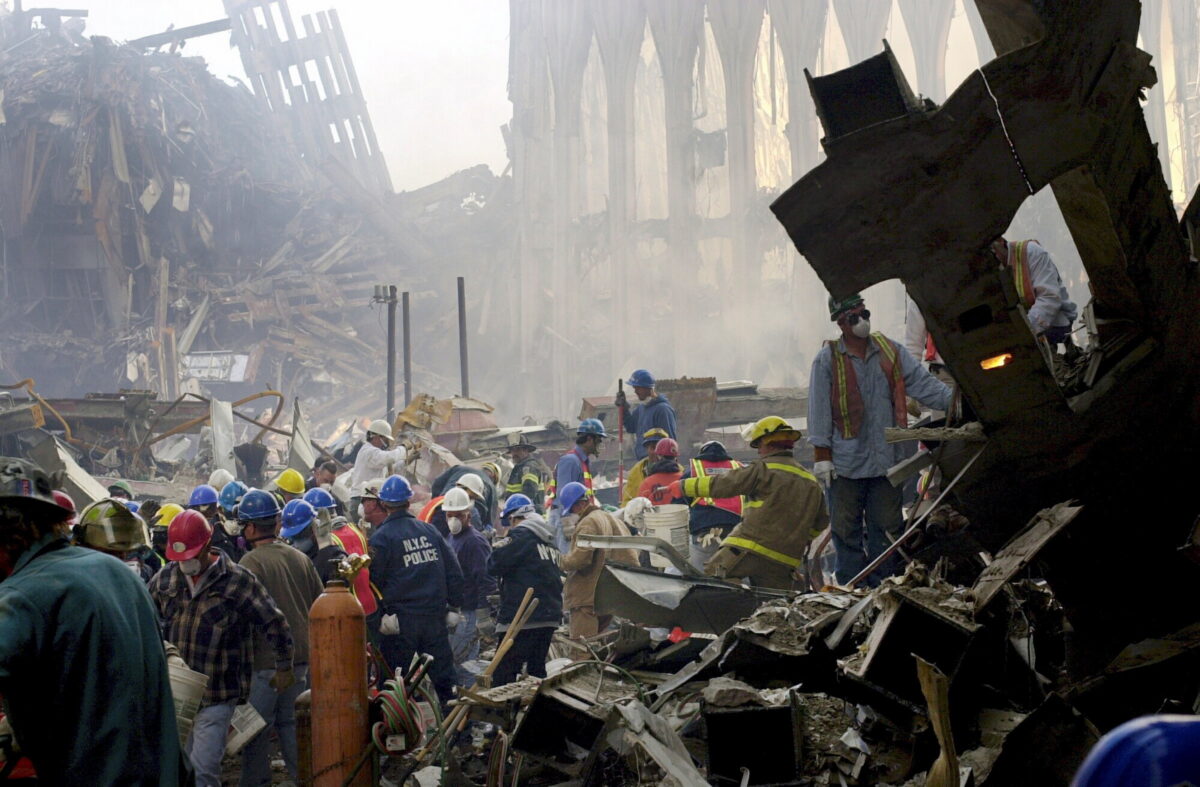
Many of those he accompanied instinctively covered their mouths and noses because “it was so difficult to breathe,” he added. “There were no masks, nor equipment for protection. There were no hard hats and no protective gear. Just my kippah served as my protection.”
Kaplan’s training as a congregational rabbi and chaplain — decades spent at hospital bedsides, cemeteries and shiva houses — shaped how he approached those walks to the platform and the moments of stunned silence that followed.
“As a congregational rabbi, a chaplain and a spiritual leader, I learned how to listen, knowing that I was there to reflect their stories and focus on others,” he said. “My personal feelings needed to be bracketed. I needed to be directed and focused on those who needed my presence.”
Many of the people who poured out their grief to him “spoke to me not wanting nor waiting for an answer,” he added. “My presence was their support. This is a lesson I carry to this day. What I represented to them as a clergy with a connection to God and faith was more important than any words I could offer.”
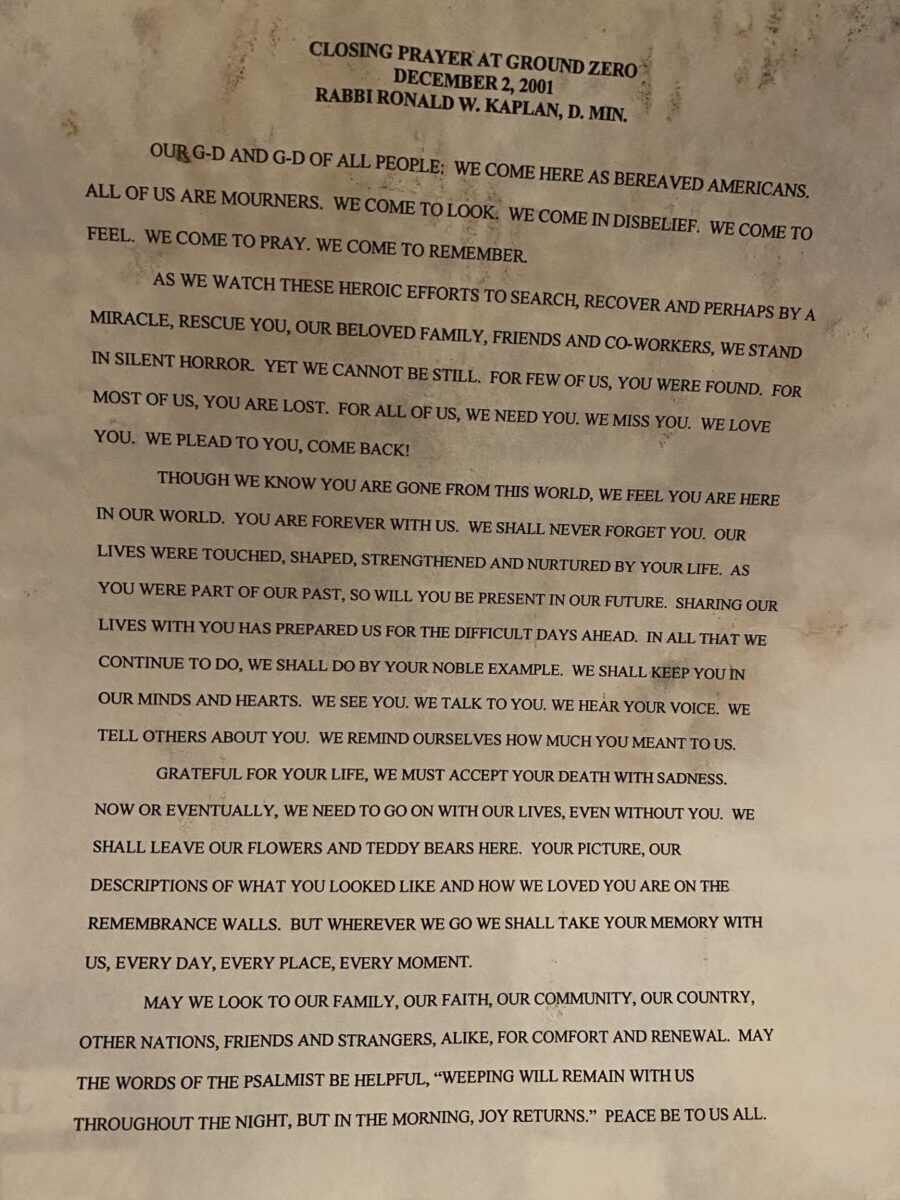
When recovery operations abruptly halted upon the discovery of human remains, Kaplan broke the stillness with an ecumenical prayer in English and Hebrew — “a tribute to the loss of one life, nearly three thousand times,” as he wrote. In his files from that period, he still keeps a sheet of paper he used on Dec. 2, 2001, titled “Closing Prayer at Ground Zero,” still stained with World Trade Center soot. When he rubs his thumb along the page, the dust still smudges his skin — “the same dust of history,” he writes, “and the dust of my voice’s demise.”
For years after 9/11, Kaplan did not directly connect his Ground Zero service to his health. He first began experiencing symptoms — “a persistent deep cough and hoarse voice” — in late 2019. He was diagnosed with laryngeal cancer in 2020.
“I never made the connection,” he said. During an early consultation, Kaplan’s physician ran through the usual risk factors — smoking, heavy drinking and HPV. “When my answers were all in the negative, he looked at me and asked: ‘Did you ever work at Ground Zero?’” Kaplan recalled. “He immediately connected my rare cancer to my exposure on the pile.”
New York City Mayor Zohran Mamdani this week released more than 170,000 pages of previously undisclosed documents indicating that city officials misled the public about air quality at Ground Zero — assuring people the fallout was harmless even as they knew it was unsafe to inhale. Asked whether these efforts to hold the city accountable distract from the terrorists’ responsibility for his suffering, Kaplan said both “can be done simultaneously, and both need the attention.”
“At first I did not fully comprehend [the cancer’s] ramifications and only wanted to know if [it] was treatable and curable,” he said. What followed was a long journey back to health “as chaotic and unpredictable as my work on the pile”: nine full rounds of chemotherapy, 35 sessions of radiation and, in 2023, a 12-hour throat reconstruction surgery, along with a total laryngectomy.
“My greatest challenge is my frustration and difficulty in communicating verbally with people since my laryngectomy,” Kaplan said. “This has isolated me from my family and community in deep and profound ways.” Yet even so, he insists, “it has not lessened my faith and I do not question why.”
Today, a quarter-century after his weekly journeys to Lower Manhattan, Kaplan’s sacrifice remains an active, daily reality. Following his diagnosis and years of treatment, the cancer has returned and he is once again undergoing treatment at Memorial Sloan Kettering’s satellite clinic in Basking Ridge, with another major surgery scheduled for next month.
“I don’t ask why,” Kaplan wrote. “I just say thank you — for my wife, for my sons and daughter-in-law, for my grandchildren, and to my Creator, for the ultimate gift of life.”
As the 9/11 generation ages, Kaplan worries about how the story of that day — and the moral obligations it created — will be remembered by those who were not yet born.
“Fortunately, the annual memorial commemoration at the reflecting pools and in large and small communities throughout the nation help us all to remember,” Kaplan said. “But with each passing year the crowds diminish and a new generation has not yet been taught the story and the ramifications of this singular event. Our world is as broken today as it was on 9/11.”
This year, as the anniversary of the 9/11 attacks coincides with erev Rosh Hashanah, Kaplan said he hopes synagogues and Jewish communities will lean into the calendar convergence.
“I deeply hope that congregations will add appropriate mention through liturgy and ritual in marking 9/11 on erev Rosh Hashanah,” he said. “After all, Rosh Hashanah is also known as Yom Hazikaron, the day of Remembrance. The kesher (the bond) is too obvious to ignore!”
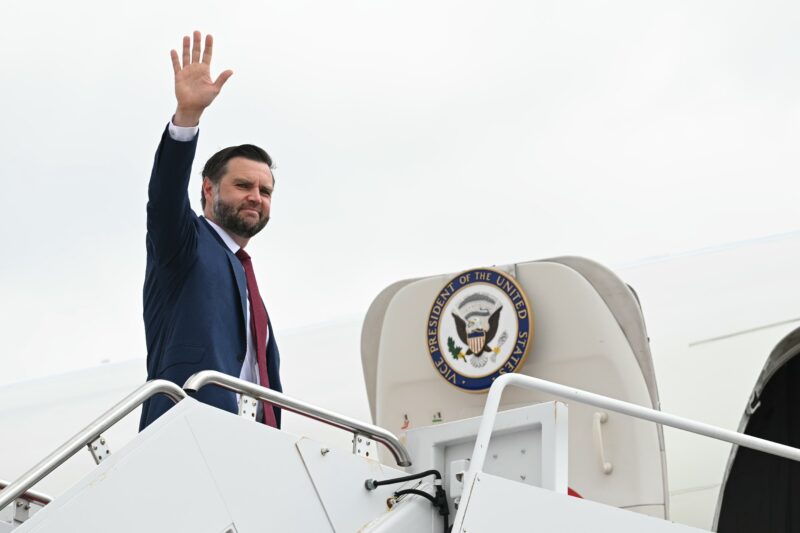
The group was joined by Jared Kushner, VP Vance and Rep. Mike Lawler
Abraham McNatt
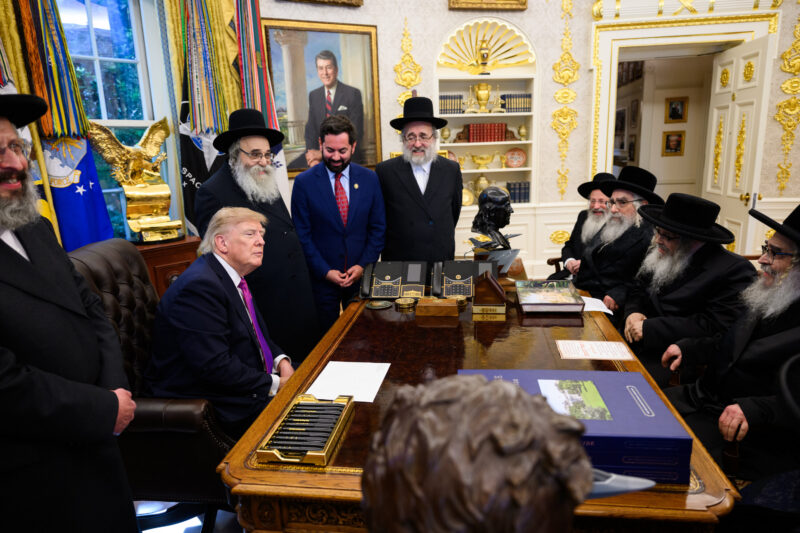
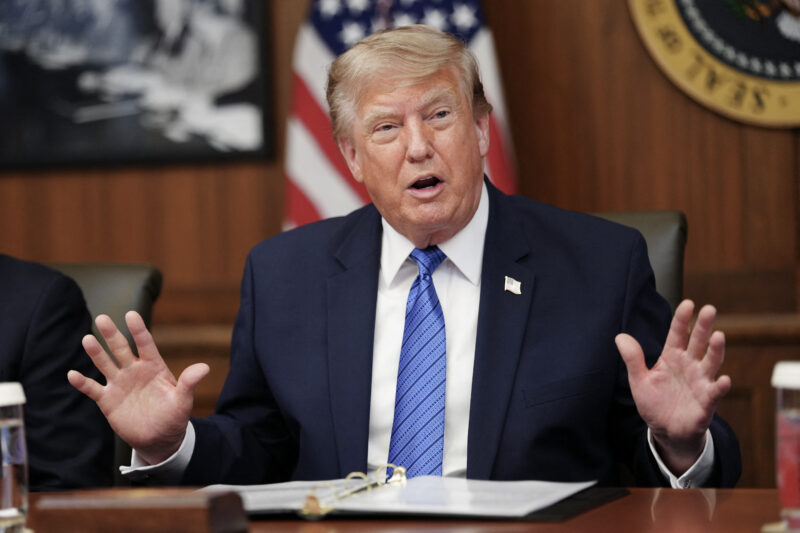
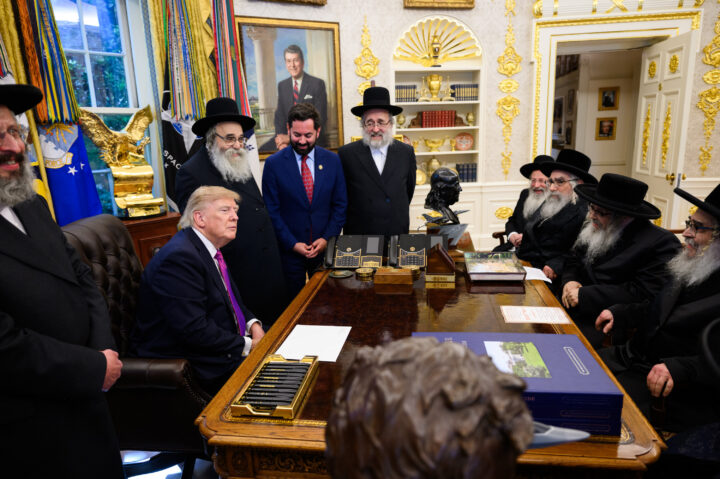
President Donald Trump meets with Hasidic rabbis in the Oval Office on Sept. 3, 2026.
President Donald Trump met with several Hasidic rabbis at the White House on Thursday ahead of Rosh Hashanah, a gathering his office called the first of its kind in nearly 50 years.
The rabbis, many of whom were pictured in photos that circulated on social media ahead of the meeting flying to Washington on private jets, hailed from a range of leading Hasidic communities in New York — including the two rival Satmar sects in Brooklyn and Kiryas Joel; the Bobov sect in Brooklyn; the Vizhnitz sect in Monsey; and the Skver sect in New Square.
The 85-year-old Skver rebbe, David Twersky, whose endorsements in congressional races have long been highly coveted, sent one of his sons to the meeting in his place. Rabbi Malkiel Kotler, dean of Beth Medrash Govoha in Lakewood, N.J., the largest yeshiva in the United States, also joined.
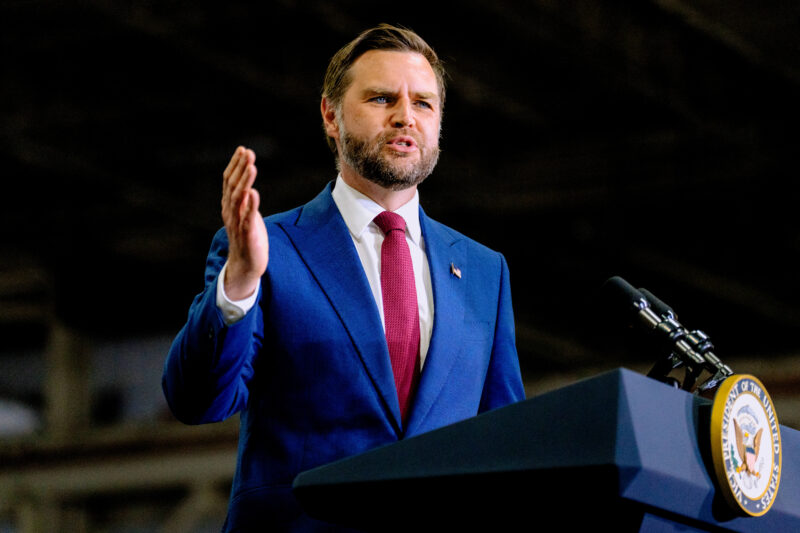
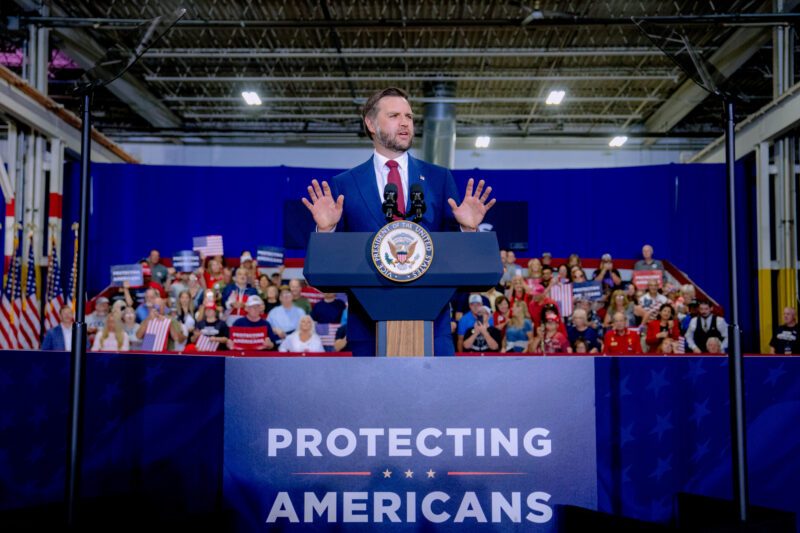
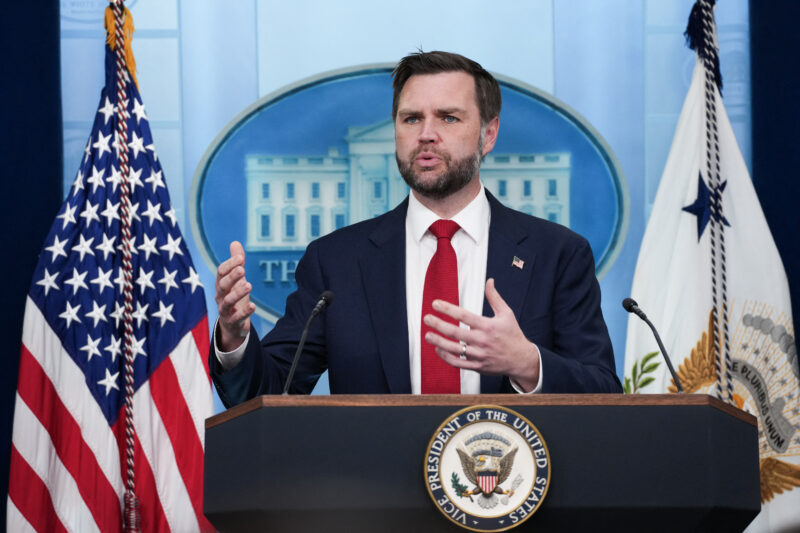
The meeting, according to sources, was attended by Jared Kushner, the president’s son-in-law and key outside advisor, who is Jewish; Vice President JD Vance; and Rep. Mike Lawler (R-NY), who is among the most vulnerable House Republicans running this cycle. The congressman — whose district includes the Hasidic village of New Square — has depended on the politically powerful Skver endorsement in past races.
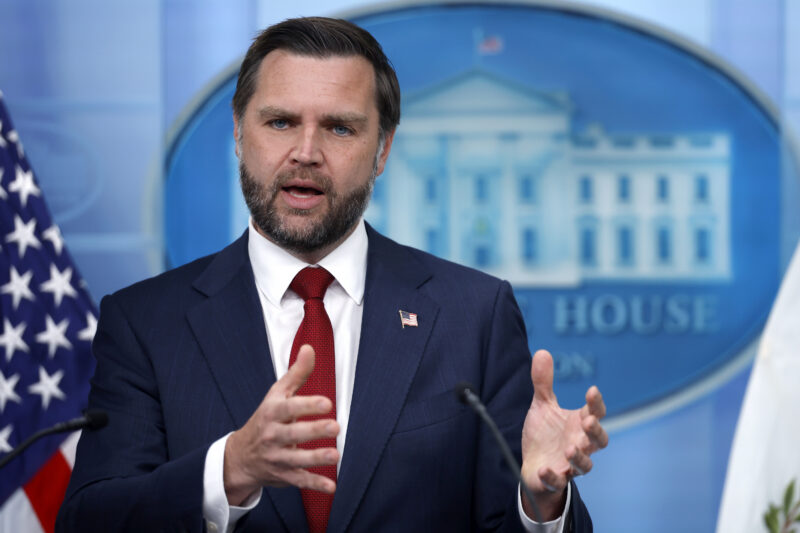
Vance paid a visit to the Roosevelt Room during the gathering, according to two sources familiar with the matter granted anonymity because they had not been authorized to discuss the private reception. He joked to the attendees that the “Hasidim are the only ones who have larger families than him,” the sources told Jewish Insider afterward.
A spokesperson for Vance, who welcomed his fourth child in July, did not dispute that account but told JI it might have been “a joke one of the rabbis made to” the vice president.
Beforehand, sources familiar with the meeting framed it as a chance for Trump to convey Rosh Hashanah greetings ahead of the Jewish new year marking the beginning of the High Holy Days next week — in a demonstration of mutual respect for a community whose rank and file have shown strong support for his campaigns.
But some more substantive issues were also raised, according to the sources, including topics like “large families” as well as housing concerns, prison reform and “expanding earned income tax credits” for those with more than three children.
One source who attended the meeting also said that Trump, for his part, talked “about pardoning Jewish prisoners” including Sholom Rubashkin — the kosher meatpacking executive convicted of financial fraud in 2009. His 27-year prison sentence was commuted by Trump in 2017.
The president also spoke privately with Rabbi Aaron Teitelbaum, the Satmar leader in Kiryas Joel, another person informed of their exclusive discussion told JI.
A White House official told JI the president and top administration officials “met with the leading Hasidic Rabbis in the United States,” saying it was the first of such gatherings “at the White House since 1979.”
The Hasidic leaders “thanked the president for all he had done in combatting antisemitism, advocating for school choice with the middle-class tax credit and for fighting for peoples of faith,” the White House official added.
In recognition of Rosh Hashanah, the delegation of rabbis “said blessings to the president, and thanked the entire administration for all they had done for all Americans,” according to the official.
The meeting had faced some resistance from a few far-right Trump allies over its inclusion of the Satmar community, an anti-Zionist Hasidic sect that believes only the messiah is supposed to bring about a Jewish state.
But the Trump administration indicated that it was unmoved by such protestations, proceeding with the scheduled meeting on Thursday.
Broadly speaking, the rabbis who joined the meeting “focused on issues important to the community,” one source said of the visit. “It mostly went as planned.”
President Trump intends to convey Rosh Hashanah greetings ahead of the new year
Kevin Dietsch/Getty Images
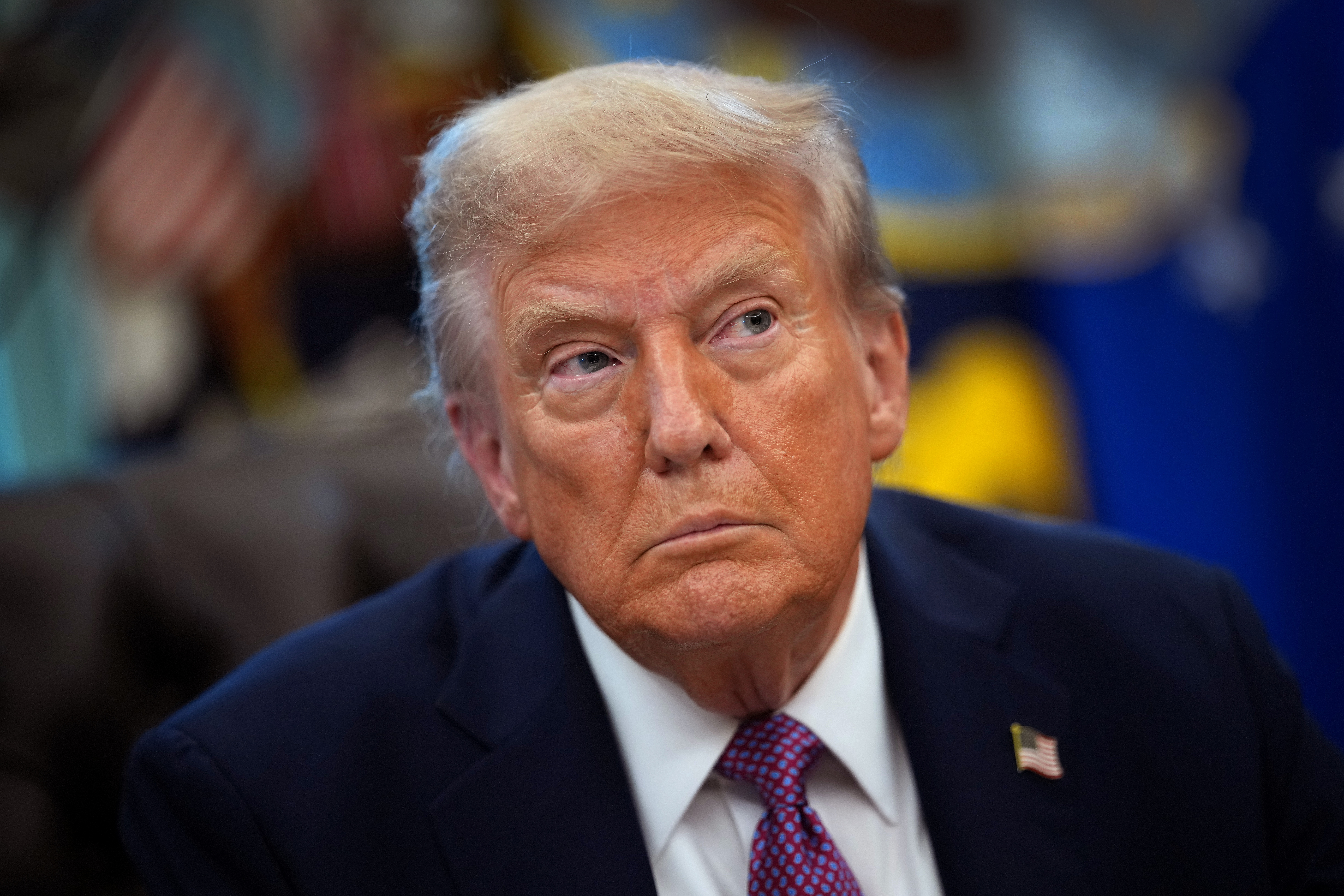
President Donald Trump in the Oval Office of the White House on Sept. 5, 2025 in Washington, DC.
President Donald Trump is expected to meet with several Hasidic Jewish rabbis at the White House on Thursday ahead of Rosh Hashanah, according to people familiar with the matter.
The planned Oval Office meeting was initiated by Martin Marks, the White House Jewish liaison, one source told Jewish Insider, speaking on condition of anonymity to discuss private outreach. Marks did not respond to a text message seeking comment Monday.
A White House official confirmed the meeting to JI. “Before the Rosh Hashanah holidays, President Trump looks forward to greeting rabbis representing some of the largest Hasidic communities in the United States,” the official said. “President Trump has consistently won nearly 100% of the votes in these Hassidic enclaves, and the last time they were gathered at the White House was in 1979.”
The White House has not publicly announced the gathering, which has drawn some resistance from a few Trump allies over reports the meeting will include members of the Satmar community, an anti-Zionist Hasidic sect that believes only the messiah is supposed to bring about a Jewish state.
According to two sources, several leaders from Hasidic communities in New York confirmed their attendance at the meeting, including the two rival Satmar sects in Brooklyn as well as Kiryas Joel; the Bobov sect in Brooklyn; the Vizhnitz sect in Monsey; and the Skver sect in New Square.
The 85-year-old Skver Rebbe, David Twersky, whose endorsements in House elections are highly coveted, will send his son to the meeting in his place, according to a Satmar source.
“As of now it is happening,” one Bobov leader told JI on Monday, but added a caveat that with the Trump administration “things move very quickly” and could change.
Shlomo Schorr, the director of legislative affairs at Agudath Israel of America’s New Jersey office, said he also heard that Rabbi Malkiel Kotler, a dean of Beth Medrash Govoha in Lakewood, N.J., the largest yeshiva in the United States, had been invited to the meeting and planned to attend.
Schorr’s understanding, he told JI, was that the meeting would be “a quick photo op” and provide Trump a chance to wish the Jewish leaders a happy Rosh Hashanah in advance of the Jewish new year next week that marks the start of the High Holy Days.
The Satmar source said that the meeting had “no purpose” aside from a broad recognition of mutual respect. “The president knows this community was strongly supportive of him,” he explained to JI.
Rabbi Aaron Teitelbaum, who leads the Satmar community in Kiryas Joel, reportedly told followers on Saturday night he planned to ask for Trump’s help opposing the politically divisive Israeli military draft for yeshiva students.
Laura Loomer, the far-right activist who is a close ally of Trump, cited such comments on social media over the weekend while raising her objections to the meeting.
“These are anti-Israel pro-Mamdani rabbis who are being hosted with open arms in the Oval Office,” she said of the Satmar leaders, arguing that the meeting “is going to severely piss off the Jewish Republicans in the MAGA base who voted for President Trump.”
While neither of the Satmar rebbes endorsed Zohran Mamdani for New York City mayor, a prominent representative of one sect backed his general election campaign. Leaders of the Satmar community, which frequently endorses Democrats, have also met privately with Mamdani, and Zalman Teitelbaum, the Satmar rebbe in Williamsburg, recently defended the mayor amid accusations of promoting antisemitism.
Sid Rosenberg, a conservative radio host in New York, agreed with Loomer, calling the meeting a “huge mistake” and criticizing the Kiryas Joel Satmar leader as “a terrible guy” who “has no right being anywhere near” the president.
The Satmar source clarified that he would not raise the draft in the meeting. “He doesn’t plan to bring it up,” he told JI, noting that the rabbi “always shoots from the hip.”
Kolot Chayeinu has drawn criticism for its anti-Israel Hebrew school curriculum, and one of its rabbis meeting with the Iranian president last year
Michael M. Santiago/Getty Images
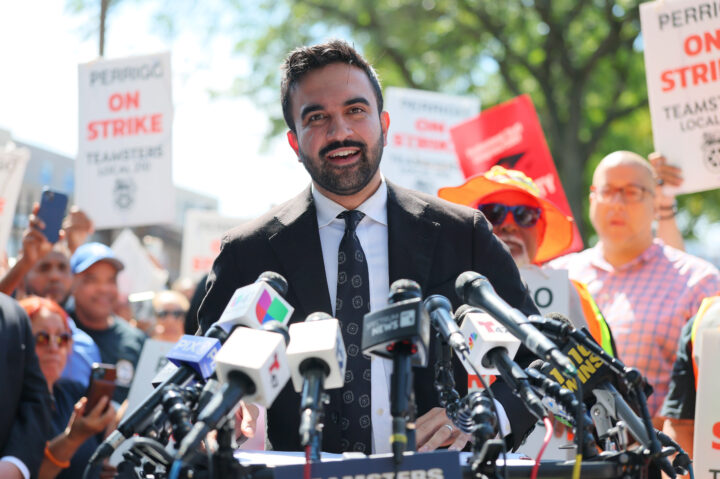
New York City Zohran Mamdani speaks on Sept. 15, 2025 in New York City.
Zohran Mamdani, the Democratic nominee for mayor of New York City, attended his first Rosh Hashanah service on Monday night at a Brooklyn synagogue well-known for its anti-Zionist activism.
The visit to Kolot Chayeinu, a nondenominational synagogue in Park Slope that has drawn controversy over its anti-Zionist orientation, comes as Mamdani is seeking to engage in increased outreach to Jewish voters ahead of the November election.
But the venue choice also underscores his polarizing position in the broader Jewish community — where many Jewish leaders have continued to raise alarms over his anti-Israel policies and refusal to condemn calls to “globalize the intifada,” among other issues.
Mamdani, an outspoken critic of Israel who has identified as anti-Zionist, was warmly received at the Monday service, where he sat in the front row in a mask and a yarmulke beside Brad Lander, the city comptroller who is a member of Kolot Chayeinu.
Lander, a close ally of Mamdani, recently described the congregation, which was one of the first to call for an early ceasefire in October 2023, as a meeting point for anti-Zionist Jews and progressive Zionists like himself.
The synagogue, which maintains an “open tent” policy on Israel and Palestine, has faced criticism for promoting anti-Israel views in its Hebrew school curriculum in the aftermath of Hamas’ Oct. 7, 2023, attacks.
In one particularly controversial lesson, students were instructed to write a letter of apology rebuking their Jewish “ancestors” for taking Palestinian land, fueling concerns among parents who objected to the politicized assignment.
A rabbi at Kolot Chayeinu, Abby Stein, who is a member of the anti-Zionist group Jewish Voice for Peace, also drew scrutiny for attending a meeting in New York City last year with Iranian President Masoud Pezeshkian, days before the Islamic Republic launched a missile attack against Israel.
Mamdani, a 33-year-old democratic socialist and assemblyman from Queens, did not deliver remarks at the Monday evening service. During his sermon, the rabbi accused Israel of committing genocide in Gaza, a claim that Mamdani has frequently made.
Mamdani is now expected to appear at other Jewish institutions during the High Holidays, including a mainstream congregation on Manhattan’s Upper West Side — where he could face a less welcoming audience skeptical of his hostile views toward Israel.
A spokesperson for Mamdani did not respond to a request for comment about his planned outreach to the Jewish community.
English translation, commentary by former U.K. chief rabbi seeks to ‘make Torah relevant to us today’
Blake Ezra Photography Ltd.
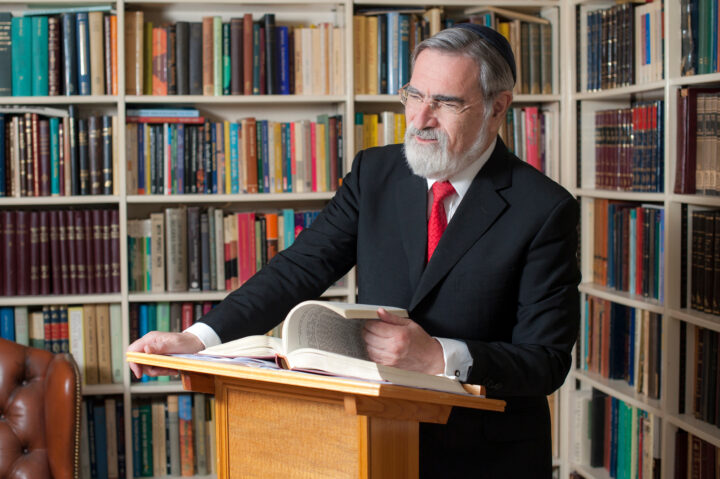
Former British Chief Rabbi Lord Jonathan Sacks
Former British Chief Rabbi Lord Jonathan Sacks was a towering figure in Jewish life whose unique blend of Torah and Western wisdom attracted adherents around the world for many years before his death in 2020.
Now, with Rosh Hashanah, the Jewish new year, approaching later this month, and the restarting of the cycle of reading the weekly Torah portion a few weeks later, Rabbi Sacks’ longtime Jerusalem-based publisher, Koren, is releasing a posthumously completed Koren Shalem Humash, with a new translation and insights to encourage deeper understanding of the Five Books of Moses.
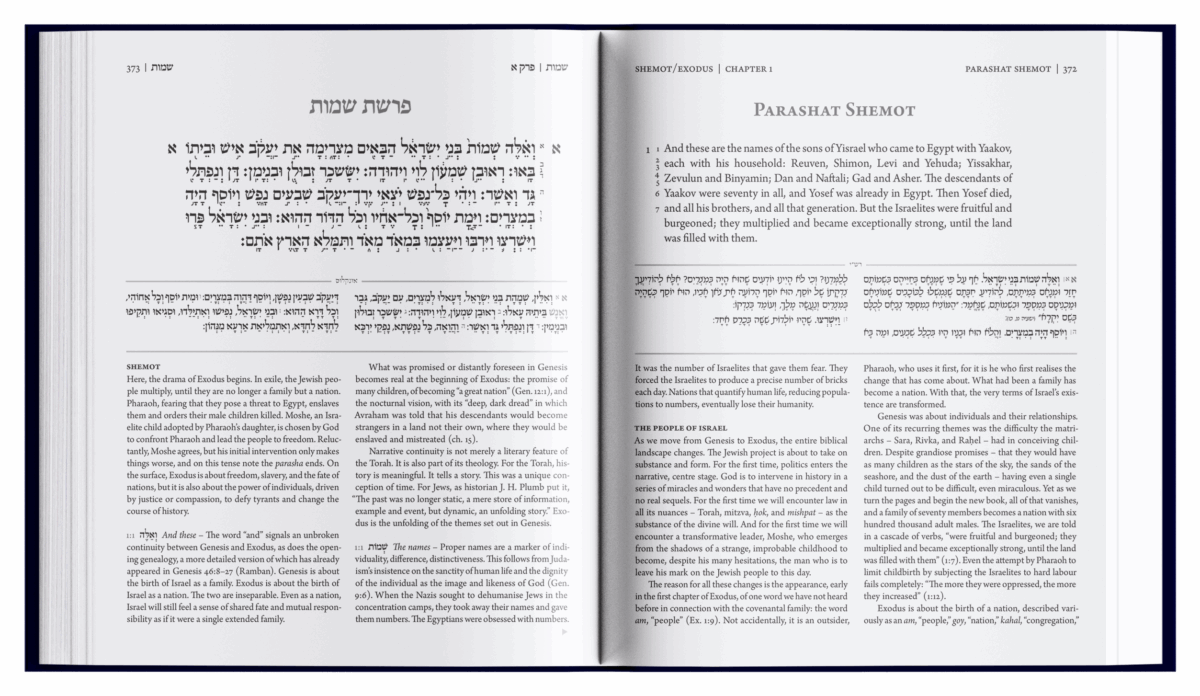
Each spread features the words of the Humash in Hebrew — written in the clear Koren font, recognizable to users of the publisher’s popular prayer books — on one side. On the other side there is a new, modern English translation that Sacks completed in 2018. Below there are two of the standard commentaries: from the 11th-century French rabbi Rashi and second-century sage Onkelos, who translated the Torah into Aramaic.
On the bottom half of the pages is Sacks’ own commentary, which he began writing before his death, after which The Rabbi Sacks Legacy continued his work based on his writings and speeches.
The story of the Koren Shalem Humash begins in 2006, Joanna Benarroch, president of The Rabbi Sacks Legacy, told Jewish Insider last week. At that time, Sacks began working on his popular series of books about the weekly Torah portion, Covenant and Conversation.
“He started writing it online every week,” Benarroch recalled. “He was the chief rabbi of the United Kingdom and the Commonwealth, based in London, but he started to build a global audience.”
Sacks’ goals for Covenant and Conversation were “to make Torah relevant to us today, so it’s not just wisdom from 2,000-3,000 years ago today, but wisdom we can also take with us. It was very important to him for us to be proud, knowledgeable Jews and to share that with the next generation … to create new leaders who were proud, knowledgeable Jews. These were the things permeating his mind when he was writing,” Benarroch said.
After Rabbi Sacks’ death, Koren brought scholars, including the rabbi’s niece, Jessica Sacks, to compile elements of Covenant and Conversation, his many other books, his BBC Radio “Thought for the Day” segments and other essays and speeches to complete Sacks’ commentary on the Humash.
“The scholars beautifully weaved his ideas from each parasha [Torah portion] into detailed commentary,” Benarroch said. “It’s his words, very carefully crafted to give a whole picture of each parasha. The ideas are woven together in a way they had never before been [presented]. You have 15 years of writing and speaking on Bereishit [Genesis] crafted in this way.”
In his Passover Haggadah, quoted in the editor’s note of the Humash, Sacks wrote that “traditional commentaries are usually close readings of individual words and phrases rather than reflections on the meaning of the whole. That is a classic Jewish response and I have not hesitated to do likewise … But it is the great themes, the overarching principles, that are often neglected or taken for granted.”
Sacks’ commentary combines both, in some places referring to specific words and phrases, and in others sharing insights on broader stories and ideas, which gives, Benarroch said, “an overview of what you can learn from the parasha. You’re coming out with a clear understanding of what it is about, with relevant ideas for today.”
Benarroch recounted recently being in synagogue and sitting near a non-Jewish visitor who was reading along to the Torah portion in English.
“I was mortified, because it was a parasha that was quite difficult, with a lot of blood and gore,” Benarroch said. “I wished at that point that the Rabbi Sacks Humash was available, because he would have given her a sense of what is going on and an understanding of the battles in the time of the Humash … He wanted people to understand the whole picture, to read it as a narrative.”
She paid tribute to Sacks’ ability to “make very complicated things accessible.”
In addition, the Humash features detailed references, such that if there is an idea a reader seeks to explore further, he or she can find the full essay, book or radio program it came from.
Benarroch worked for Sacks for 24 years, as executive director of the Office of the Chief Rabbi and then of his private office, and was key to establishing The Rabbi Sacks Legacy after his death. She said that the greatest lesson she’s taken from him is the importance of listening to and learning from one another.
“He felt active listening was absolutely imperative for all of us. We talk a lot, but we don’t listen enough,” she said. “When he was writing his Humash, he felt he was connecting to God through it, and that for us to listen to the words and the messages, we must also listen closely to one another. Judaism is a religion of listening … in terms of unity, community, being part of the Jewish people.”

Then-Vice President Biden meets with Prime Minister Benjamin Netanyahu in Jerusalem on January 13, 2014. (U.S. Embassy)
In a Rosh Hashanah statement first obtained by Jewish Insider, former Vice President Joe Biden reaffirmed his “unshakable commitment to the Jewish and democratic State of Israel.”
The former vice president had a strong pro-Israel voting record during his 36-year tenure in the Senate and served as an emissary from the Obama Administration to the pro-Israel community during the lead up to the Iran deal.
In the holiday greeting, Biden also made note of the antisemitic attacks at synagogues in Pittsburgh, Pennsylvania and Poway, California. “This last year was marked by horrific tragedies, but it was defined by the strength and resilience of the Jewish community,” said the former vice president.
The Democratic presidential hopeful, whose campaign has centered around what he sees as the unique threat to American values posed by Donald Trump’s presidency, tied Jewish values to that basic theme.
“As our first president declared unequivocally to the Hebrew Congregation of Newport, Rhode Island: ‘the Government of the United States gives to bigotry no sanction, to persecution no assistance.’ At a moment when that basic premise is being questioned by too many here at home and around the world, when we are in a battle for the very soul of this nation, the mission of Tikkun Olam bears renewed urgency,” wrote Biden.
The full statement is below:
On behalf of Jill and myself and the entire Biden family, Shanah Tovah to all celebrating the Jewish High Holidays. This time of year offers a moment to pause and reflect on all that has passed, to consider the new year of possibilities that lies ahead, and to reaffirm the values that unite family, friends, and all who strive to spark justice in the world.
This last year was marked by horrific tragedies, but it was defined by the strength and resilience of the Jewish community. In the wake of Pittsburgh and Poway, Americans across the country–Jewish and non-Jewish alike–challenged ourselves to reach for our highest ideals and recommit to fighting hatred wherever in the world we find it.
As our first president declared unequivocally to the Hebrew Congregation of Newport, Rhode Island: “the Government of the United States gives to bigotry no sanction, to persecution no assistance.”
At a moment when that basic premise is being questioned by too many here at home and around the world, when we are in a battle for the very soul of this nation, the mission of Tikkun Olam bears renewed urgency. This is a time to reawaken to our moral responsibilities, change our ways, and renew our commitments to our faith and fundamental values. We must come together and care for one another. In the year ahead, we must reconfirm our deepest-held democratic values and the idea that the American Dream is big enough for all of us.
Those shared values are also what unite us with the people of Israel and ground our unshakable commitment to the Jewish and democratic State of Israel–and to a future that is both peaceful and secure.
To everyone in the Jewish community, We wish you a very happy, healthy, and sweet New Year. May the sound of the shofar call each of us to do justice, impart kindness, and walk humbly with our God in the year ahead.
Please log in if you already have a subscription, or subscribe to access the latest updates.
 Continue with Google
 Continue with Apple