

































‘Bibi is telling me that because he wants me to stay involved,’ Trump said of reported Israeli intelligence about Iran’s Pickaxe Mountain, ahead his Oval Office meeting with Netanyahu
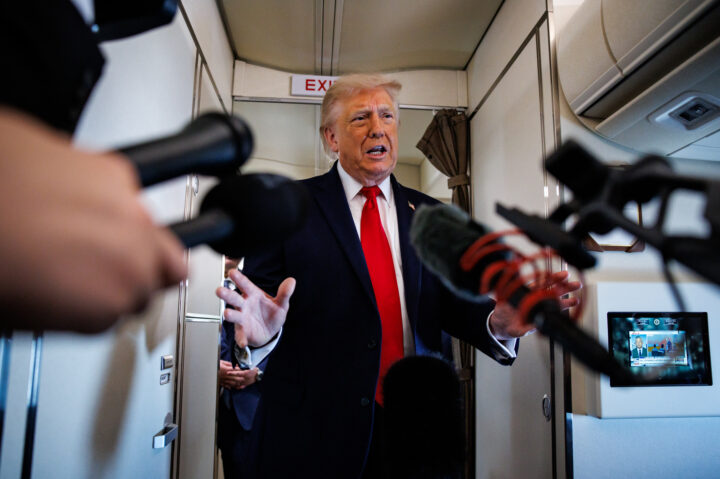
Samuel Corum/Getty Images
President Donald Trump speaks with reporters while aboard Air Force One on June 5, 2026 en route to Chippewa Falls, Wisconsin.


 Add JewishInsider on Google
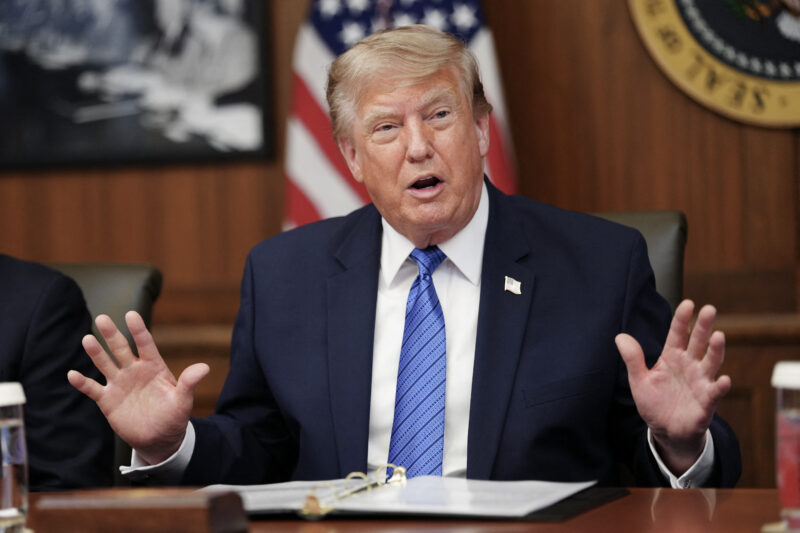
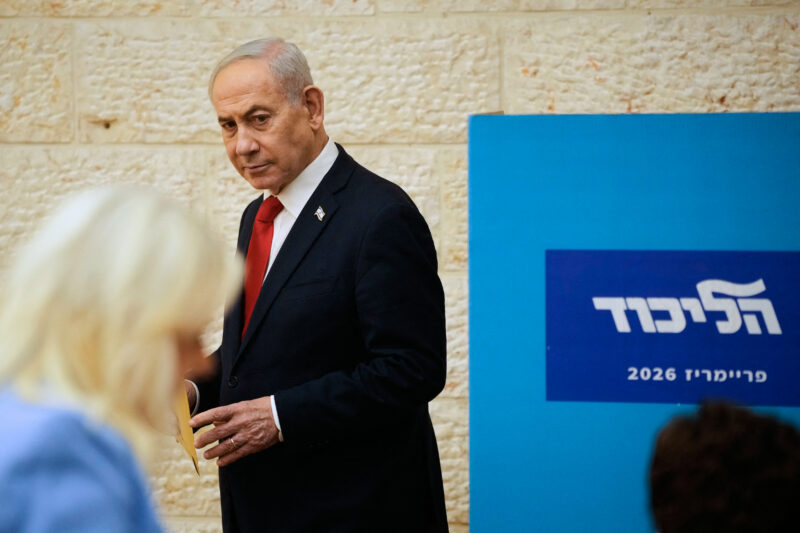
President Donald Trump expressed discontent with Israeli Prime Minister Benjamin Netanyahu’s reported forthcoming warnings regarding Iranian nuclear activity at Pickaxe Mountain, dismissing the issue as “not a big problem” in a sharp public split hours ahead of their high-stakes Oval Office meeting.
“I don’t need Bibi to tell me that. Bibi is telling me that because he wants me to stay involved [in Iran],” Trump alleged in an interview on Fox News on Tuesday morning.
Netanyahu is reportedly expected to brief Trump on Iran’s activities at Pickaxe Mountain during their meeting, attempting to demonstrate that Tehran is undermining diplomatic talks by relocating its nuclear infrastructure underground.
Commenting on reports that Netanyahu intends to raise with him Israeli intelligence demonstrating that Iran moved nuclear centrifuges into Pickaxe following the 12-day war in June 2025, Trump said: “Why don’t you [Netanyahu] just tell it to me? Why do you have to announce it to the world? I know exactly what’s happening at Pickaxe, it’s not a big problem.” Trump has previously downplayed such reports, saying earlier this month that the U.S. has not seen evidence of nuclear activity at the site.
Trump insisted on Tuesday that U.S. intelligence is monitoring Pickaxe Mountain closely, while renewing threats to launch military strikes if a diplomatic agreement falls through.
“We have the greatest cameras in the world focused on it,” Trump said. “We took out their nuclear sites, and we’ll have to take out Pickaxe if we don’t make a deal … We’ll take it out very easily.”
The complex, which Tehran is believed to have begun constructing in 2020, is located roughly a mile south of Iran’s primary Natanz nuclear facility, a site struck multiple times during the 12-day war.
While Trump has previously noted that Pickaxe Mountain was spared amid the current U.S.-Iran war due to a lack of evidence that nuclear enrichment was taking place there, he warned during a meeting last week with Lebanese President Joseph Aoun that the U.S. could target the area “pretty soon.”
Tuesday’s Oval Office meeting marks the eighth between Trump and Netanyahu during Trump’s second term, and their first face-to-face sit-down since the current Iran war began in February. Once closely aligned, the two leaders enter the talks divided over key strategic decisions, including how to conclude the war and Trump’s proposed sale of F-35 fighter jets to Turkey.
The defense secretary indicated at a Senate Appropriations Committee hearing that the U.S. has the capability to destroy the deeply buried site, which experts say may be beyond the reach of even the most powerful conventional weapons
Anna Moneymaker/Getty Images
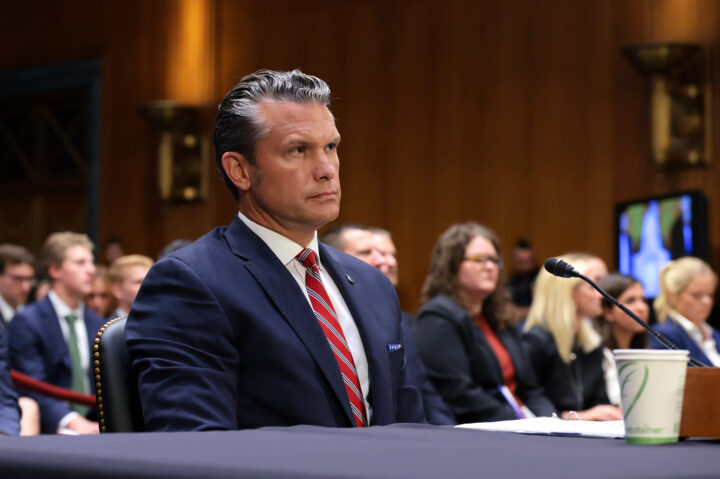
Secretary of Defense Pete Hegseth testifies during a Senate Appropriations Committee hearing in the Dirksen Senate Office Building on Capitol Hill on July 21, 2026 in Washington, DC.
Secretary of Defense Pete Hegseth indicated at a Senate Appropriations Committee hearing on Tuesday that the U.S. military has the capacity to destroy Iran’s Pickaxe Mountain, the underground site suspected of housing elements of Tehran’s nuclear program, following a series of threats by President Donald Trump to strike the site.
The facility is buried inside a mountain in a manner that experts believe would be difficult to fully destroy, even with the heavy munitions used by the U.S. to target Iran’s Fordow and Natanz facilities last summer.
“A lot of our capabilities are classified,” Hegseth said, in response to a question about whether the U.S. has the capacity to destroy the facility. “But if anybody in the world can reach anything on God’s green earth, it’s the United States military, the most powerful military in the world. It’s all about options and trade-offs.”
"If anybody in the world can reach anything on God’s green earth, it’s the United States military."
— Jewish Insider (@jewishinsider) July 22, 2026
Pete Hegseth indicated the U.S. military can destroy Pickaxe Mountain, suspected of housing elements of Iran's nuclear program.
Read more: https://t.co/wxqcuGwu2t pic.twitter.com/an5VEFu4aZ
Hegseth, during a hearing focused on a nearly $90 billion supplemental funding request to recoup costs from the war, estimated the current costs of the Iran war at $37.5 billion, up from a $29 billion estimate provided by another Pentagon official in mid-May. He said that estimate includes certain expenses such as troop pay through the end of the fiscal year, but does not incorporate other expenditures related to the war.
He did not directly address a question about whether the Pentagon would put forward another supplemental request to repair or rebuild damaged U.S. bases and facilities, which were excluded from the previous Pentagon estimate.
Asked whether China and Russia were assisting Iran in its military operations against the U.S., Hegseth suggested that they were, but declined to discuss the extent of the cooperation.
“There’s definitely adversary alignment — attempts to do so — and there are many ways that we deter that,” Hegseth said. “Some of which are — and the depth and extent of it ought to remain — classified, and it should. But there are ways in which both of those countries are, at different levels, enabling some of the things Iran is doing.”
Sen. Mike Rounds (R-SD) pressed Gen. Dan Caine, the chairman of the Joint Chiefs of Staff, on whether the supplemental would provide sufficient resources to “appropriately end this war favorable to the United States and to take care of this problem permanently.”
Caine responded that such a scenario would be dependent on how Iran responds and behaves.
“I can’t answer the question on what it will cost because the enemy has a vote. What I’ll commit to you as this plays out, we’ll make sure that the Congress is informed,” Caine said. “But because I’m not quite sure how this is going to play out yet, it would be unwise for me to comment on what a future cost may or may not be depending on what they choose.”
Hegseth said that the administration continues to believe it has the authorities necessary to continue the war without congressional authorization, but said he would defer to legal experts on whether passing the supplemental would constitute a congressional authorization for use of military force — an argument made by the Clinton administration during operations against Yugoslavia in the 1990s.
Throughout the hearing, Hegseth insisted that Iran’s capabilities had been significantly degraded, despite its continued attacks on commercial shipping and U.S. bases around the region, several of which have recently resulted in the deaths and injuries of U.S. service members. Hegseth also called the U.S. blockade of Iranian ports “effectively impenetrable.”
“Iran is at the weakest point militarily it has ever been in in the past decade, certainly — maybe in 47 years,” Hegseth said. He said the Iranian regime had built thousands of ballistic missiles to defend its nuclear program “many of which we have destroyed, others of which they have hidden in underground facilities.”
“So I acknowledge they still have capabilities, no doubt,” Hegseth continued. “But the amount of damage that we’ve done to them over the course of these series of operations has put them in the worst place they’ve ever been.”
He didn’t answer questions about whether the U.S. would attempt to impose tolls on the Strait of Hormuz, as Trump recently floated and then walked back.
Caine acknowledged that air power has “limits, and we always have to be mindful of those,” but argued that the U.S. has other capabilities in the diplomatic, informational, economic and military realms. He declined to discuss the possibility of U.S. ground forces being deployed to Iran, but said that his job involves developing a range of options and laying out their risks.
Though the hearing was principally focused on the supplemental request that the administration put forward to cover the Iran war, Hegseth and Caine both repeatedly argued for the full $1.5 trillion military funding request the administration has put forward for 2027.
It’s unclear at this point if or how that request will be fulfilled. Lawmakers had planned to include $1.15 trillion in the base defense budget and an additional $350 billion in a partisan reconciliation bill, but both of those are currently in limbo.
Senate Democrats have largely rejected the $1.15 trillion topline, particularly in the midst of the Iran war, and the House’s third reconciliation bill aims to cover just the Iran supplemental request.
Republicans are now floating the idea of a fourth reconciliation bill — but many Senate Republicans have been skeptical that the current third package can pass, so it’s not clear how realistic another reconciliation bill would be ahead of the midterm elections.
“This request is an urgent, necessary injection of resources to address the immediate needs of our department. The supplemental funding request is not a substitute for the president’s full $1.5 trillion base budget request,” Hegseth said, amid repeated interruptions of his opening statement by anti-war protesters in the chamber. “$1.5 trillion is what the president seeks and what we need to defend the country. The members of this committee understand better than most that long-term strategic dominance cannot be funded through one-off supplementals.”
Hegseth lambasted what he alleged was neglect and gross negligence by the Biden administration, as well as blaming U.S. aid to Ukraine for some of the current deficits, and said that without additional funding, the U.S. would face “critical shortfalls” that would imperil its ability to pay service members, replenish supplies and continue critical operations.
The president said Iran ‘desperately’ wants to meet with the U.S. but ‘until they're ready to meet in a meaningful way, we have no interest in meeting with them’
Aaron Schwartz/CNP/Bloomberg via Getty Images
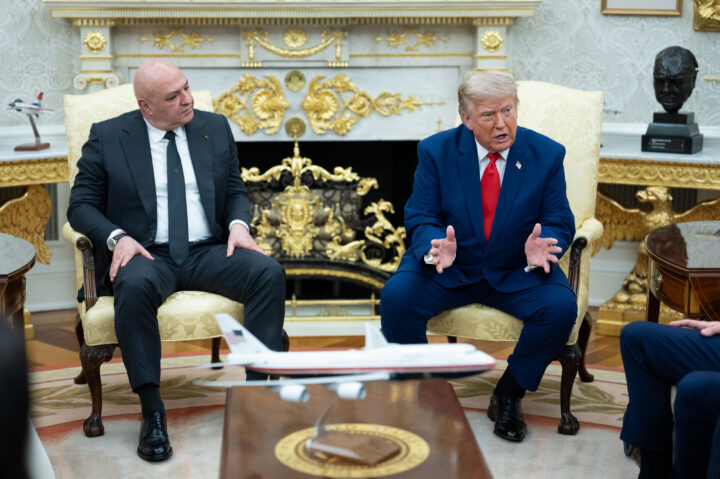
Joseph Aoun, Lebanon's president, left, and President Donald Trump during a meeting in the Oval Office of the White House on July 21, 2026.
President Donald Trump warned on Tuesday that the U.S. would “pretty soon” strike Iran’s Pickaxe Mountain, the underground facility suspected of housing components of Tehran’s nuclear program.
The president made the comments from the Oval Office while welcoming Lebanese President Joseph Aoun for a meeting about the ongoing U.S.-led talks between Israel and Lebanon. Trump was asked about a Wall Street Journal report that Israeli intelligence shared with the U.S. indicated that Iran moved thousands of centrifuges into its clandestine Pickaxe Mountain site last fall.
“I think that they may have [moved the centrifuges],” Trump said. “It doesn’t mean anything unless they have the [nuclear] material. They don’t have it. We follow the material. That’s where the action is.”
“We’ll be hitting that area probably pretty soon. There’s not a thing they can do about it,” he continued. “Normally, I wouldn’t say that. If I thought they could do something about it, I would never say that, but we’ll be hitting that area pretty soon, and very heavily.”
The president predicted that it would take Iran between 20 to 25 years to rebuild its nuclear program if U.S. forces immediately ceased striking Iranian nuclear targets, though he noted that the U.S. was “not finished at all” in Iran and was “not leaving right now.”
He added that Iran “wants to meet desperately” with the U.S. to end the war “because they’re getting decimated,” but “until they’re ready to meet in a meaningful way, we have no interest in meeting with them.”
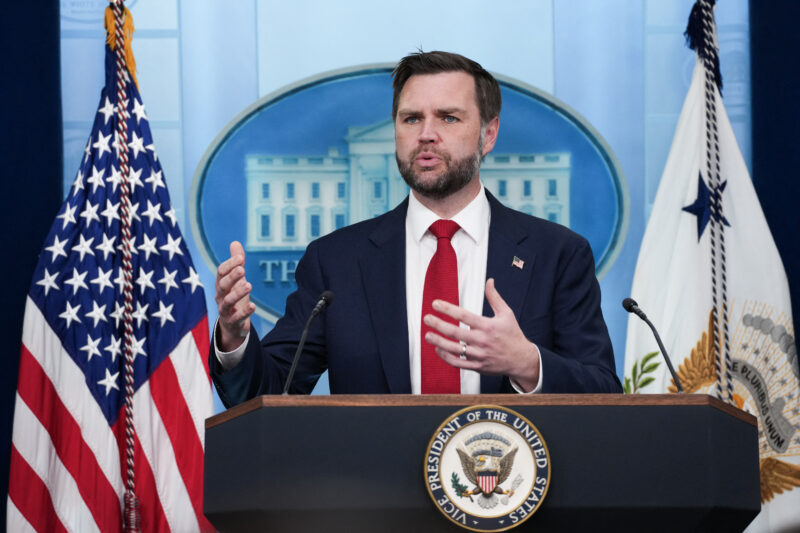
Joining Trump for his meeting with Aoun were Vice President JD Vance, Defense Secretary Pete Hegseth, Treasury Secretary Scott Bessent and White House Chief of Staff Susie Wiles.
On the subject of Lebanon, Trump told reporters that he was willing to speak to Hezbollah’s leaders directly to advance peacemaking efforts with Israel.
“I would speak to Hezbollah. I speak to everybody. I’ll speak to people that a lot of people think I shouldn’t be speaking to and things work out,” Trump said. “If [Aoun] wanted me to speak to Hezbollah, you know he’s lived with Hezbollah for a long time, and if the president wanted me to speak to Hezbollah, I would.”
Trump praised Aoun directly and detailed his own affinity for Lebanon, telling reporters that the U.S. is “going to help [the country] a lot” and describing the U.S.-Lebanese relationship as “very good.”
“I think that Lebanon has been a very mistreated country for a long period of time,” Trump said.
The president said that he planned to discuss with Aoun Israel’s ongoing troop withdrawal from southern Lebanon and ways to empower the Lebanese Armed Forces.
“We’ll be speaking about that today with the president, and we have some very concrete plans already in store for that with others going in and helping,” Trump said. “But they’re also becoming much more self-sufficient, and we will be speaking about that.”
The lower-profile nuclear facility was reportedly among those targeted by the U.S. in its strikes against the Iranian nuclear program but the damage is unclear
Satellite image (c) 2019 Maxar Technologies/Getty Images
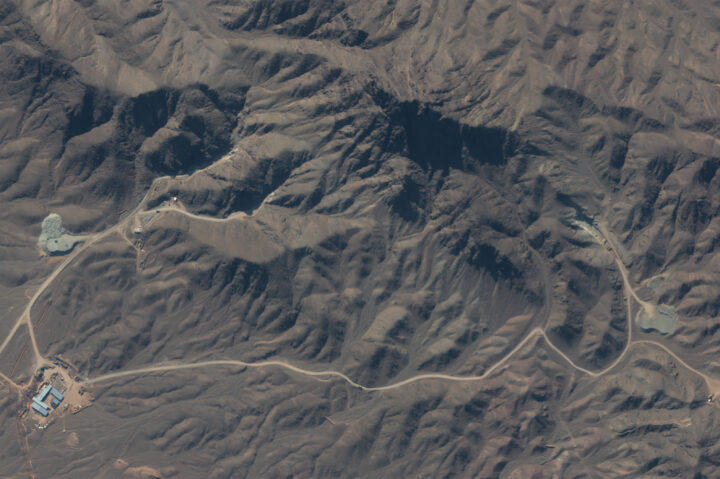
An overview of the construction area related to the underground centrifuge assembly facility in the mountainous area south of the Natanz uranium enrichment site.
Among the Iranian nuclear facilities the U.S. reportedly targeted in Sunday morning’s attack was the Pickaxe Mountain Facility. Iran has not acknowledged the site’s development or construction and it has retained a lower public profile, with the Institute for Science and International Security first discovering its existence in 2023.
The facility, just south of the Natanz nuclear facility and buried roughly 330 feet below the mountain itself, was particularly concerning to experts due to its depth, which is between 30 to 70 feet deeper than Fordow. This is said to exceed the striking depth of the most powerful bunker-busting weapons in the U.S. arsenal.
Recent Iranian announcements stating the government planned to open a new facility heightened fears that Iran could take the site online in the near future, according to Andrea Stricker, the deputy director of the nonproliferation and biodefense program at the Foundation for Defense of Democracies.
“There’s concern that Iran was creating the floor space for another secret enrichment facility,” Stricker told Jewish Insider. “And so when the [International Atomic Energy Agency] Board of Governors passed a resolution finding Iran in non-compliance with the Nuclear Non-Proliferation Treaty a couple of weeks ago, the Iranians threatened to build another or to open another enrichment facility, and people immediately feared that this would be the site of it.”
An additional concern over the potential opening of Pickaxe Mountain was that Iran had previously refused to give notice of new nuclear facilities, as required by agreements Iran had signed with the IAEA. According to Stricker, this meant that Iran might begin operations at the plant without notifying the international community, which may have been a factor in Israel’s decision to launch its current operation against Iranian nuclear and military facilities.
Please log in if you already have a subscription, or subscribe to access the latest updates.
 Continue with Google
 Continue with Apple