








































There’s widespread interest within the Jewish community to develop efforts to counter the growing populist rage and anti-Jewish hate, city by city

Getty Images
Human crowd forming a big David's star on blue background.


 Add JewishInsider on Google
Until recently, the political strategy of the American Jewish establishment could be summed up in two ways: Elect pro-Israel lawmakers to Congress and, at a much smaller scale, educate state and local officials about Jewish values and causes.
But a new model of Jewish political engagement is emerging to counter growing populist angst and surging antisemitism across the political spectrum: local efforts focused on school boards and city councils and statehouses.
These Jewish activists are not shying away from the messy reality of politics: They aren’t here to make friends with everyone, acknowledging that not everyone is an ally. Their goal is to offer support — through door-knocking, organizing and their checkbooks — to candidates who have stood by the Jewish community in the post-Oct. 7 political firestorm, and to try to unseat those who have not.
If you want to make a difference in the actual day-to-day lives of Jewish Americans, these activists argue, the place to do so is not Congress. It’s Sacramento, or Harrisburg, or the local Democratic Party committee meeting up the street.
“All of these groups are starting to pop up because we realize that the infrastructure that the community has had in the past isn’t enough and isn’t working,” said Stefanie Clarke, a political strategist in Colorado who co-founded the Colorado Jewish Action Alliance.
Like nearly all of the groups now operating in local politics, COJAA was born after the Oct. 7, 2023, Hamas terror attacks, when municipal governments in the U.S. became the newest front in Israeli-Palestinian culture wars. Anti-Israel rhetoric that often veered into outright antisemitism could suddenly be heard regularly in city halls and state legislatures. People who were elected to office because of their views on bike lanes or the environment were suddenly being pressured to weigh in on a contentious issue that originated thousands of miles away.
By law, tax-exempt nonprofits cannot engage in the political system. But a growing consensus is emerging that the apolitical approach necessarily adopted by the Jewish philanthropic world is not enough to address the intense partisanship of the moment, where incendiary antisemitic rhetoric has seeped into all levels of the political system.
In places including Atlanta, Denver and Pittsburgh, first-time Jewish activists such as Clarke are responding with grassroots initiatives like COJAA. Elsewhere, existing Jewish communal institutions are incubating new political organizations that they are spinning off as independent entities — for example, in San Francisco, where the local Jewish Community Relations Council created an affiliated advocacy organization called Bay Area Jewish Action (BAJA).
“We are seeing an increasingly unhinged and violent-prone mob challenging elected officials for standing with the Jewish community, and so there is a risk in standing with us, however unacceptable that reality is,” said Tyler Gregory, the CEO of JCRC and executive director of BAJA. “We need to be able to do more than just verbally say thank you in a situation like that.”
What that looks like in practice differs from place to place. BAJA created a political network where members commit to donating a certain amount throughout the election cycle, and have opportunities to meet candidates in BAJA-organized forums.
Other efforts are bipartisan. COJAA endorsed 13 candidates in Colorado’s primaries this year, a mix of Democrats and Republicans. (The primary results were themselves mixed; seven of COJAA’s preferred candidates won.) Georgia Solidarity Network, based in Atlanta, sees its mission as educating lawmakers about the state’s Jewish community.
“Part of our theory of change is that you cannot meet the moment by just showing up in an election cycle and trying to get messaging out there,” Beacon Coalition founder Jeremy Kazzaz explained. “It requires people on the ground, and it requires conversations going all the time.”
“Our legislators are incredible. But our legislators are blueberry farmers and used car sales lot owners and small-time lawyers in tiny towns who have no familiarity at all with the Jewish community,” Georgia Solidarity Network co-founder Alli Medof told Jewish Insider. “We really recognized that there was a need for us as a community to have a strong voice and presence in the legislature and to represent the concerns of Jewish Georgians.”
In Pittsburgh, a group called the Beacon Coalition spent the past year recruiting moderate Democrats to run for local volunteer positions in official Democratic groups throughout Allegheny County. Forty aligned Democrats won their races for small neighborhood seats that play an outsized role in party endorsements.
“Part of our theory of change is that you cannot meet the moment by just showing up in an election cycle and trying to get messaging out there,” Beacon Coalition founder Jeremy Kazzaz explained. “It requires people on the ground, and it requires conversations going all the time.”
Each of these groups is independent, created and operated — and funded (for the most part) — locally. But they see an opportunity to connect with and learn from each other.
Schusterman Family Philanthropies, the philanthropic behemoth that supports liberal causes and pro-Israel groups, convened a gathering earlier this year that brought together dozens of activists in the burgeoning local Jewish political ecosystem.
“I’m deeply concerned about the rise in extremism that’s playing out in local politics,” the foundation’s senior director for U.S. Jewish grantmaking, David Rittberg, told JI. “I do think that Jewish community leaders as well as everyday Americans are waking up to the challenges that these dynamics are creating in a local political context.”
Schusterman’s involvement in this space is an indication that Jewish philanthropists are taking problems at the local level seriously. Rittberg declined to comment on whether Schusterman has given grants to any of the groups, but said the foundation sees its role as being “a connector.”
Many emerging local activists have looked to a group called New York Solidarity Network for advice. NYSN was formed in 2022 after New York City’s Democratic Socialists of America chapter began pressuring local candidates to pledge not to travel to Israel, a request that at the time was seen as radical but has since become the norm in many Democratic primaries in liberal urban areas.
Sara Forman, the group’s founding executive director, advises them that money is not enough — a pointed message at a moment when, at the national level, AIPAC’s super PAC just spent tens of millions of dollars backing Rep. Haley Stevens (D-MI) in a failed Michigan Senate primary bid, and further damaged its image with Democrats in the process.
“DSA has been incredibly successful at organizing community and at making people feel like they are part of something,” said Sara Forman, founding executive director of NYSN. “I think in the Jewish community, having local organizations mimic some of the same practices of DSA is a good thing. Make people feel included. Make people feel like their voice counts.”
“You can’t build something inorganically. There has to be a reason for people to want to come out and attend events, and want to knock on doors and make phone calls and organize their synagogues,” said Forman, who stepped down from NYSN in January. “Check-writing isn’t what’s going to make the difference here.”
The goal, instead, is building up American Jews’ appetite for grassroots political organizing in support of Jewish causes and candidates who support them. That’s a different position than the one taken by AIPAC in recent years, which has invested at the federal level in high-dollar political fundraising. But when groups such as DSA are able to recruit eager volunteers to campaign for far-left officials and show up to public meetings to voice support for anti-Israel measures, Jewish activists increasingly see a need to fight fire with fire.
“DSA has been incredibly successful at organizing community and at making people feel like they are part of something,” said Forman. “I think in the Jewish community, having local organizations mimic some of the same practices of DSA is a good thing. Make people feel included. Make people feel like their voice counts.”
The success of a DSA-aligned faction in several major Democratic primaries this year has led many of these Jewish activists to now see their fight for communal safety as part of a larger battle within the party, about whether it will move left or to the center ahead of the 2028 presidential election.
“I think the overlap between folks who are concerned about fighting illiberalism, extremism, antisemitism and virulent anti-Zionism deeply intersects with those of us who want to strengthen moderate factions on both sides of the aisle, in particular for us on the Democratic side,” Third Way President Jon Cowan told JI. “A lot of folks are coming to realize that those fights deeply overlap.”
“We know that the next phase for us is focusing more on the creeping threat of DSA,” Medof, from Georgia, said. “The way we think about this work is that the sorts of things that we’re fighting for are not just about what’s good for Jewish Georgians. They’re good for Georgia overall.”
Last week, The New York Times outlined a new effort by the centrist Democratic group Third Way to push back against the growing appeal of DSA-aligned groups and policies within the party. Third Way President Jon Cowan told JI that the organization is, for the first time in its history, working with groups at the local level. Third Way gave a grant to the Beacon Coalition this year to support its work and help the organization expand to Cleveland.
“I think the overlap between folks who are concerned about fighting illiberalism, extremism, antisemitism and virulent anti-Zionism deeply intersects with those of us who want to strengthen moderate factions on both sides of the aisle, in particular for us on the Democratic side,” Cowan said. “A lot of folks are coming to realize that those fights deeply overlap.”
Building support for Israel is not what most of these groups see as their focus. They want efforts targeting Israel — like Boycott, Divestment and Sanctions campaigns — to fail, and for local governments to otherwise stay mum on one of the most intractable foreign policy issues in the world.
“We are about Jewish safety, security and engagement in civil life. We really don’t talk about Israel other than how the rhetoric around it endangers our community,” said Mindy Miller, a co-founder of the Colorado group.
Not that that has stopped opponents from trying to tar the groups as, essentially, mini-AIPACs.
“We’ve seen a trend with a very similar pattern of behavior targeting groups like Beacon, where there are Jewish Americans who are showing up in spaces as Jewish Americans and saying our community is important,” said Pittsburgh-based Kazzaz. “It’s a lot of boogeyman-ing, just name calling, ‘You’re a secret Republican.’”
Mostly, though, the new Jewish activists are finding curiosity, not animosity. People who are eyeing local positions are generally not running with Israel or Palestine as their top issue. But that doesn’t mean they don’t understand how thorny the discourse can be.
“One of the things we say is we will never cancel you. There are no stupid questions,” said Miller, from Colorado.
She wants to be a guide to help local politicians learn about the issues. And with financial and manpower resources that can help candidates in their campaigns, Miller hopes the Jewish community will now have a shot of being the first to reach those politicians.
The American Eagle CEO is building a legacy in business — and in Jewish giving
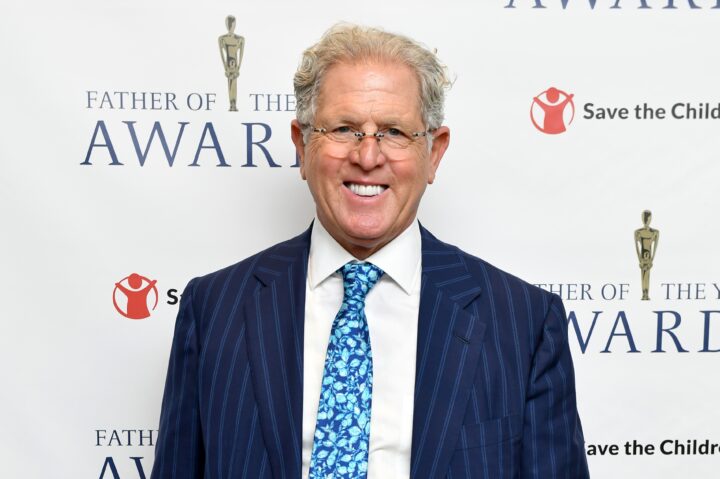
NEW YORK, NEW YORK - JUNE 14: Jay Schottenstein attends the 80th Annual Father of the Year Awards on June 14, 2022 in New York City. (Photo by Noam Galai/Getty Images)
In the recent viral debate surrounding American Eagle’s “great jeans” ad campaign with Sydney Sweeney, which used a double entendre that drew accusations of promoting eugenics, it seemed many critics overlooked that the clothing retailer’s chief executive is a leading Jewish philanthropist who has long been committed to fighting antisemitism.
It was the sort of irony befitting Jay Schottenstein, 71, a mild-mannered billionaire entrepreneur from Columbus, Ohio, who oversees a sprawling business network that, in addition to American Eagle, includes DSW, the designer shoe chain he leads as executive chairman, among other holdings in wine, real estate and furniture.
But outside of philanthropic circles — where he is widely recognized as one of the most consequential sponsors of Jewish causes in the United States and Israel — his relatively private lifestyle has otherwise obscured his long-standing dedication to a range of issues including educational efforts, archeological research and translations of ancient Jewish texts.

“I think most people really don’t know who he is,” said Brad Kastan, a Jewish Republican donor who lives in Columbus and has long been friendly with Schottenstein. “He kind of keeps a low profile.”
Still, Schottenstein, who is Modern Orthodox, remains “accessible,” according to Kastan. The retail mogul, he told Jewish Insider, often can be seen walking to synagogue on Shabbat from his home in Bexley, a Columbus suburb, to attend Congregation Torat Emet, which he has endowed. “Because he’s a proud observant Jew,” Kastan added, Schottenstein “literally walks from Bexley to Ohio State, which has got to be six or seven miles, to go to football games on Shabbos.”
Meanwhile, Schottenstein, whose family is friendly with President Donald Trump, is a major player in Ohio politics, contributing to candidates from both parties, even as he largely favors Republicans. Most recently, he has donated to Vivek Ramaswamy, who is the likely GOP nominee in next year’s Ohio governor’s race.
For years, Schottenstein, who was instrumental in lobbying for legislation to allow Ohio to buy Israel bonds, has been a go-to resource among pro-Israel candidates looking for guidance on key issues about the Middle East. “If you support Israel and you’re running for office and you’re looking for advice or support in the Jewish community in central Ohio,” said Kastan, “you’re going to find your way to Jay’s office.”
The Ohio benefactor has built deep ties to Israel, where the National Campus for the Archaeology of Israel, which is under construction, bears his name. Ehud Olmert, the former Israeli prime minister, has called him a friend, and he was a top contributor to Israeli Prime Minister Benjamin Netanyahu’s 2015 reelection bid. American Eagle also operates dozens of stores in Israel.
Schottenstein, who has said he was in Israel during the Oct. 7, 2023, Hamas attacks, has stepped up his efforts to support the Jewish state in the aftermath of the incursion. He has led donations to victims of the attacks and co-founded a fund to lend financial support to families of IDF soldiers killed in the war in Gaza, among other things.
“You watch what’s going on in Israel, how everyone’s pulling together, and there’s a lot of pain,” Schottenstein said in a podcast interview last year. “I mean, this is real pain to the Jewish people. In my lifetime, I don’t think we’ve ever experienced a war like this — never experienced a time like this. But thank God, we have a strong Israel. We have a strong sense of being.”
Through his foundation, which he leads with his wife, Jeanie, whom he met at Hillel as an undergrad at Indiana University, Schottenstein has supported a growing number of Jewish institutions. These include Chabad, Agudath Israel, Hillel, Hadassah, Yeshiva University and United Hatzalah, the latter of which honored him with a humanitarian award last year.
Howie Beigelman, president and CEO of Ohio Jewish Communities, which represents the state’s eight Jewish Federations and affiliated nonprofit agencies, said that the “Schottensteins broadly are among the most generous and committed givers today,” adding that “their giving also now includes their children and grandchildren in an unmatched dedication to Jewish causes close to home and across the globe.”
Eli Beer, the founder of United Hatzalah, an Israeli emergency medical services volunteer organization, told JI that he has known Schottenstein and his wife for 18 years.
“I can say with certainty that the most important value for them is tikkun olam, repairing the world and making it a better place,” Beer explained. “Eighty percent of our conversations and time together, whether at their home for a weekend or just visiting, revolve around charity and how they can help more people in education, health and even sports, especially those who are underprivileged.”
Howie Beigelman, president and CEO of Ohio Jewish Communities, which represents the state’s eight Jewish Federations and affiliated nonprofit agencies, said that the “Schottensteins broadly are among the most generous and committed givers today,” adding that “their giving also now includes their children and grandchildren in an unmatched dedication to Jewish causes close to home and across the globe.”
“Where they stand out, of course, is in transformation projects that are charitable moonshots,” Beigelman told JI. “But they also work to find leaders they believe in and work with them to ensure the mission and the cause they champion has what it needs to succeed. And despite the reach of their generosity, and the significant amounts, they also remain deeply connected to each cause and each organization.”
Schottenstein, a descendant of Lithuanian immigrants who inherited his family’s retail business in the early 1990s, credits his late father, Jerome, a prominent supporter of Jewish causes, with fueling his continued devotion to philanthropy.
For some religious Jews, the Schottenstein name is all but synonymous with the eponymous, 73-book English translation of the Babylonian Talmud that the family sponsored over 15 years at an estimated cost of $250,000 to produce each volume.
“I think the Schottenstein name, the tradition established by his father and his grandfather, they have established a worldwide brand not just in their stores, but in Torah learning,” Malcolm Hoenlein, executive vice chairman emeritus of the Conference of Presidents of Major American Jewish Organizations, told JI. “In many cases they are models of philanthropy — and really exemplify impact giving.”
Schottenstein, who calls the translation one of his proudest achievements, took over the project from his father when he died in 1992. Published by ArtScroll, it was completed in 2005 and has since “revolutionized the study of the texts,” Malcolm Hoenlein, executive vice chairman emeritus of the Conference of Presidents of Major American Jewish Organizations, told JI recently.
Earlier this year, Schottenstein, speaking at a gathering of the Mesorah Heritage Foundation, which supports ArtScroll, said the organization, where he serves as board chair, had distributed paperback copies of the Talmud to Israeli soldiers fighting in the war. “Nobody could have imagined how the Gemaras would be used, on the battlefield, in tanks, in bunkers, in buildings,” he said in a speech in February. “Every rest period, you’d see guys studying.”
“I think the Schottenstein name, the tradition established by his father and his grandfather, they have established a worldwide brand not just in their stores, but in Torah learning,” Hoenlein told JI. “In many cases they are models of philanthropy — and really exemplify impact giving.”
Schottenstein’s passion for Jewish causes has on occasion intersected with his business. In 2024, for instance, he chose to mark the 30-year anniversary of American Eagle as a publicly traded company on the New York Stock Exchange by blowing a shofar rather than ringing the opening bell. Months before the Oct. 7 attacks, meanwhile, American Eagle placed a mezuzah on the front door of its flagship location in Times Square.
And the fashion company itself has partnered with the Anti-Defamation League on initiatives to help raise awareness about rising antisemitism, an American Eagle spokesperson confirmed to JI.
“My affinity for philanthropy is guided by faith, family and caring for others,” Schottenstein said in a statement to JI on Monday. “One’s value is not determined by possessions, rather by the number of people we have positively impacted. Of all the accomplishments in my life, the most rewarding have been giving back to those who need it most.”
He declined to comment on his company’s recent jeans ads.
Please log in if you already have a subscription, or subscribe to access the latest updates.
 Continue with Google

 Continue with Apple