













































































The anti-Israel activists have certainly captured a faction of the Democratic Party, but their ties to so many unpopular views and causes make the whole movement politically toxic in middle America
(Sarah Rice/Getty Images)
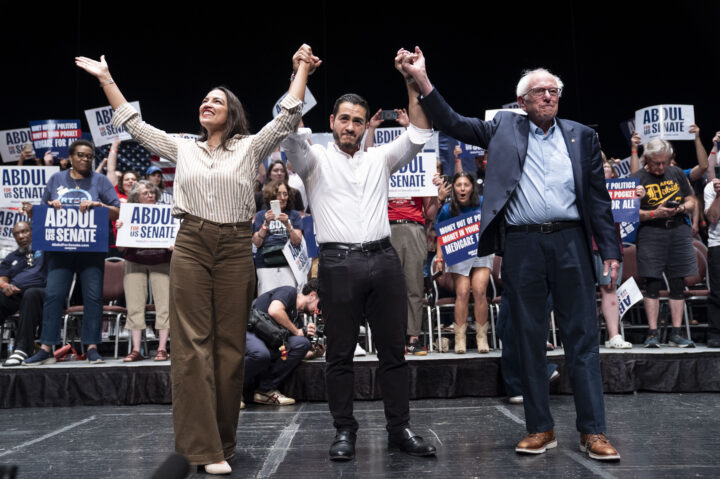
U.S. Rep. Alexandria Ocasio-Cortez (D-NY), Michigan Democratic candidate for Senate Abdul El-Sayed and U.S. Sen. Bernie Sanders (I-VT) greet the crowd after El-Sayed spoke at The People V. The Powerful rally at the Detroit Opera House on July 18, 2026 in Detroit, Michigan.


 Add JewishInsider on Google
So far, the success of far-left, anti-Israel candidates has been confined to Democratic primaries in deep-blue districts largely in big cities or college towns. The biggest test ahead for the socialist movement is whether it can prevail in primaries outside its geographic base, and more importantly, if such candidates can win general elections in battleground states or districts.
All of the available evidence and recent history suggests that nominating extreme candidates in enough key races would threaten Democrats’ chances of winning a Senate majority and would dampen the party’s pickup potential in the House.
Indeed, the victories by radical nominees in recent House primaries — combined with the high-profile collapse of the like-minded Graham Platner’s Maine Senate campaign — are already doing damage to the Democratic Party’s brand.
Looking at the big picture: In poll after poll, Democrats are now underperforming expectations on the generic congressional ballot — and have lost notable ground over Republicans in the last month alone.
In his analysis of congressional polling, Nate Silver documented that the Democrats’ advantage on the generic ballot in the polling average declined by one point since June, from seven points to six. At this point in the 2018 cycle, the Democrats’ generic ballot advantage was close to eight points, according to Silver’s analysis.
Democrats still hold a decided edge, but the massive blue wave that could have emerged in this year’s midterms is now looking a bit more modest. That means it’s much more difficult for Democrats to overcome their partisan disadvantage in the red states they need to retake the Senate, while Republicans may have some outside hope that redistricting and enough flawed Democratic candidates could keep the House majority in play.
CNN political analyst Ron Brownstein also notes that Democrats are failing to win over as many voters who disapprove of President Donald Trump as they did during the 2018 midterms — another signal that the party’s negative image and leftward lurch is costing them among the swing-voting suburbanites who formed a critical mass of the anti-Trump movement in the president’s first term.
Recent history also points to candidates significantly underperforming if they are ideologically out of step with their constituents. In the 2018 midterms, Democrats swept the vast majority of competitive battlegrounds, riding the wave of anti-Trump sentiment even in some districts that had long been held by Republicans.
There were two notable outliers in that year’s Democratic wave — very winnable races that Democrats lost because they nominated progressives in swing districts. In that election, Rep. Don Bacon (R-NE) faced a challenger (Kara Eastman) who ran what Politico called a “Brooklyn-style campaign” in the Omaha-based district that former President Joe Biden comfortably carried. Bacon prevailed by three points.
The other missed opportunity that year for Democrats was in a Syracuse-area district that favored their party. Despite the blue wave, the party’s decision to nominate an outspoken progressive (Dana Balter) cost them a victory against a vulnerable House Republican, former Rep. John Katko.
This year, the party has lurched further to the left and is likely to nominate more ideologically extreme candidates in even bigger races.
Michigan is a swing state, but Democrats are at risk of handing their Senate nomination to Abdul El-Sayed, a Bernie Sanders acolyte whose incessant animus against Israel has defined his campaign message. If he’s the nominee, some Democrats believe their shot at a Senate majority could be lost. (The RealClearPolitics polling average shows that El-Sayed, in a general election, is statistically tied with expected GOP nominee Mike Rogers — a notable underperformance given the national environment.)
In the state’s biggest swing district, which is currently held by Rep. Tom Barrett (R-MI), Democrats are so concerned about the far-left candidacy of Will Lawrence that even Rep. Alexandria Ocasio-Cortez (D-NY) snubbed him at the El-Sayed rally this past weekend. Two other mainstream candidates — former U.S. Ambassador to Ukraine Bridget Brink and former Navy SEAL Matt Maasdam — are splitting the moderate vote.
And there are numerous other contests, from the Senate races in Maine and Minnesota to House races in California, Colorado and Maine, where left-wing candidates threaten to jeopardize the party’s prospects.
Ultimately, the most consequential political test of the anti-Israel movement will come in this November’s general election. The anti-Israel activists have certainly captured a faction of the Democratic Party, but their ties to so many unpopular views and causes make the whole movement politically toxic in middle America.
In our decentralized political environment, it’s easier than ever for a critical mass of ideologically committed small-dollar donors to power insurgent, ideologically driven campaigns

GETTY IMAGES
Large amount of US dollar cash
The second-quarter congressional fundraising reports, which were posted on Wednesday, paint a picture of far-left, anti-Israel candidates drawing financial fuel from a growing small-dollar donor network of like-minded individuals.
Nearly all of the Democratic Socialists of America-aligned or virulently anti-Israel candidates were among the Democrats’ leading fundraisers, including lawmakers (like Reps. Rashida Tlaib [D-MI] and Ilhan Omar [D-MN]) who are not facing particularly competitive races.
The highlights: Abdul El-Sayed raised $4.6 million between April and June in the Michigan Senate primary, more than double the $2.1 million that Rep. Haley Stevens (D-MI) brought in. Disgraced former Maine Senate candidate Graham Platner took in a whopping $9.1 million before dropping out amid allegations of rape, outpacing Sen. Susan Collins’ (R-ME) $5.7 million haul.
On the House side, the DSA duo who won New York City congressional nominations last month — doctoral student Darializa Avila Chevalier and state Assemblywoman Claire Valdez — nearly hit the million-dollar mark in fundraising.
Avila Chevalier raised $952,000 in the run-up to her primary against Rep. Adriano Espaillat (D-NY), coming close to matching the Congressional Hispanic Caucus chairman’s fundraising. Meanwhile, Valdez brought in $942,000 for the quarter, significantly more than the party-backed progressive favorite Antonio Reynoso, the Brooklyn borough president.
The list goes on: Adam Hamawy’s past ties to Islamist radicals didn’t prevent him from winning the nomination in New Jersey’s 12th District, and certainly didn’t stunt his fundraising. Hamawy raised $987,000 in the second quarter, a staggering sum for a low-profile open-seat race. That’s well more than double the total of his nearest fundraising rival.
Melat Kiros, the 29-year-old DSA-backed insurgent who ousted Rep. Diana DeGette (D-CO), also outraised the longtime lawmaker in the homestretch of the campaign. Kiros brought in $712,000 between April and June, while DeGette only raised $694,000.
What does this say about the state of our politics?
In the recent past, radical candidates faced significant hurdles, not just because their message generally turned off moderate-minded voters but because they lacked institutional support, which limited their ability to raise money and be financially viable.
It was once common for party leaders and other aligned outside groups to flood favored candidates with donations and leverage their financial advantage to create institutional guardrails.
But in our decentralized political environment, it’s easier than ever for a critical mass of ideologically committed small-dollar donors to power insurgent, ideologically driven campaigns. And with party-aligned organizations (like labor unions and EMILY’s List) atrophied and the impact of pro-Israel money diminished in Democratic primaries as the party turns against the Jewish state in the wake of the war in Gaza, the establishment has lost a lot of its juice.
As important, the victory of Mayor Zohran Mamdani in New York City opened up the pocketbooks of a growing roster of Muslim and Arab donors whose top political issues include their deep antipathy towards Israel.
The notion of a socialist, anti-Israel candidate winning in New York City sounded fanciful before the rise of Mamdani. His victory proved that if like-minded individuals mobilize behind favored candidates, they can have an outsized impact in the political process — especially given the Democratic public’s declining support for the Jewish state.
The rise of an anti-Israel super PAC like American Priorities to compete against AIPAC in Democratic primaries wouldn’t have been possible without Mamdani’s victory. The time when pro-Israel groups could rely on their financial firepower — without facing a countering force in competitive primaries — is now over.
It’s a reminder that money alone can only go so far in politics, and that strategy, tactics and message are just as important in determining electoral success. If the far-left forces face their comeuppance, it’s going to be because their message is unappealing to average Americans, not because they’re going to be outspent by the establishment.
State Sen. Laura Fine, former Rep. Melissa Bean and Cook County Commissioner Donna Miller are getting a big bump for their respective campaigns

State Sen. Laura Fine/Facebook
State Sen. Laura Fine
A pair of well-financed groups, whose origin is currently unknown, is set to begin running ads boosting moderate pro-Israel candidates in a series of open House seats in Chicago, each of whom is facing off against vocal anti-Israel opponents.
The ads — being run by newly formed super PACs Elect Chicago Women and Affordable Chicago Now — boost state Sen. Laura Fine, running in the 9th Congressional District, former Rep. Melissa Bean (D-IL), running in the 8th District and Cook County Commissioner Donna Miller, running in the 2nd District.
The ad buys for the two groups add up to millions of dollars across the three races.
Given that the groups were just launched, FEC filing policies will not require them to disclose their donors until close to Election Day. But the ads, which do not focus on Israel policy, are widely rumored to be connected to the United Democracy Project, the AIPAC-affiliated super PAC.
UDP did not immediately respond to a request for comment, and AIPAC has not made formal endorsements in any of the races in question.
Fine has established herself as a supporter of Israel during her campaign, and Bean had a pro-Israel record in office. Miller’s public record on the issue is less established.
A spokesperson for Evanston, Ill. Mayor Daniel Biss, running in the 9th, declared that ads were being run by “a right-wing dark money super PAC” and that Fine “is being propped up by Trump supporters, AIPAC donors, and right-wing super PACs.”
Biss has called for a ban on offensive weapons transfers to Israel and far-left influencer Kat Abughazaleh, another leading candidate in the race, has taken even stronger anti-Israel positions.
State Sen. Robert Peters, a 2nd District candidate who also strongly condemned Israel during the war in Gaza, posted a video earlier this week accusing “AIPAC and Trump donors” of “pouring cash” into Miller’s campaign, warning that “AIPAC and Trump allies” are “trying to buy this seat.”
One of Bean’s leading challengers in the 8th is Junaid Ahmed, who supports an arms embargo and an end to all military aid to Israel.
In several progressive-minded districts across the country, UDP has utilized similar pop-up groups and not disclosed its involvement until after Election Day.
The pro-Fine ad praises her record in office on issues like health insurance and gun control, as well as points to her support for a ban on Immigration and Customs Enforcement agents in Chicago. It calls her “the fighter we need to stop Donald Trump.”
ICE has become a major issue in the race, with both Biss and Abughazaleh attending anti-ICE demonstrations. Abughazaleh is under indictment for allegedly conspiring to injure ICE officers during a protest.
The pro-Bean ad highlights her support for the Affordable Care Act in her previous service in Congress, even though she “knew it might cost her an election,” and includes a photo of her with former President Barack Obama. It frames her new run for Congress as a continued effort to protect healthcare access from GOP attacks.
The pro-Miller ad highlights her work with Planned Parenthood and her work to protect pregnant mothers and combat domestic violence on the Cook County Commission. It also frames her as a fighter against President Donald Trump.
All three moderates — Fine, Miller and Bean — solidified their places as leading contenders in their respective races this week by leading in fundraising in the fourth quarter of 2025.
Fine also released an internal poll this week showing herself and Biss tied for the lead in her race, with Abughazaleh in third and other candidates trailing.
Bean is seen as the front-runner in her race, given her established record. Miller, in spite of her strong fundraising, could face headwinds running against former Rep. Jesse Jackson, Jr. (D-IL), who has strong local and institutional support but struggled to raise money last quarter.
Former Rep. Melissa Bean emerged as the clear frontrunner in her old suburban Chicago district, while state Sen. Laura Fine looking formidable in race to succeed Rep. Jan Schakowsky
Melissa Bean campaign page
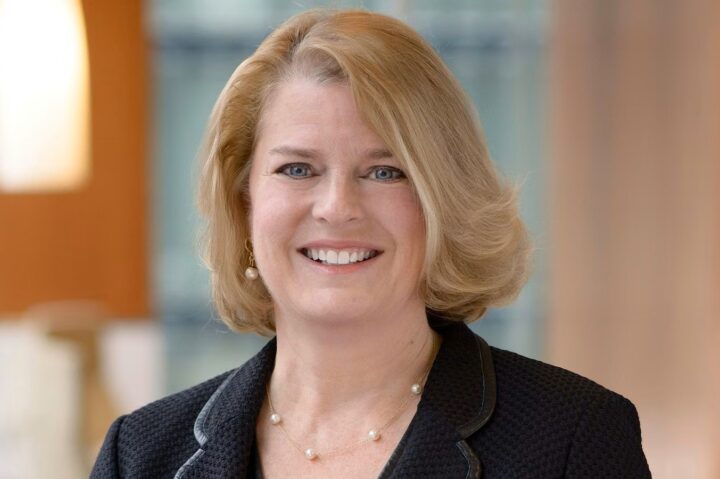
Former Rep. Melissa Bean (D-IL)
Fundraising reports for the fourth quarter of 2025, released on Sunday, brought the state of the race in several hotly contested Chicago-area Democratic congressional primaries into focus, with pro-Israel candidates putting up strong showings in several seats.
In the 9th District, state Sen. Laura Fine led the field with $1.2 million raised and ended the quarter with a narrow cash-on-hand lead, at $1.4 million in the bank. Evanston Mayor Daniel Biss, an Israel critic, raised $659,000 and had $1.37 million on hand at the end of the quarter, and far-left influencer Kat Abugazaleh raised $1.1 million, but spent $1.4 million, leaving her with $811,000 in her war chest.
With her substantial fundraising, Fine has been the only candidate in the district to air advertisements on network television, while other candidates are advertising on cable.
Though publicly released polling has shown Biss and Abugazaleh at the top of the field and Fine trailing, Chicago political strategist Frank Calabrese emphasized to Jewish Insider that — with the large number of candidates in the race and Fine’s fundraising and momentum — she remains a leading contender.
On the other hand, he said that Biss, who previously ran for governor, and Abugazaleh, with her substantial online presence, are likely the most recognizable candidates, giving them a built-in advantage in a crowded field.
Calabrese also stressed that the fundraising data shows Abugazaleh is a serious and competitive candidate — despite some having written her off earlier in the race — and she is likely to pick up significant support among younger and more transient voters.
Calabrese predicted that an ad blitz against Biss — which the AIPAC-linked United Democracy Project is rumored to be considering — could ultimately redound to Abughazaleh’s benefit, rather than sending Biss voters toward Fine’s campaign.
UDP has said it has not yet made any decisions about the race.
One Jewish community activist in the district expressed concerns to JI in recent weeks about such a scenario, arguing that AIPAC and other Jewish community affiliated groups should be focused on stopping Abughazaleh above all else, and that they should agree to get behind either Biss or Fine, depending on which candidate polling shows has the best chance of beating Abughazaleh.
But others in the pro-Israel community have raised significant concerns about Biss’ own stance on Israel policy, which includes support for an offensive weapons ban on Israel.
Calabrese said that Phil Andrew, a former FBI hostage negotiator who closed the quarter with almost $1 million on hand — including $400,000 in self-funding — could be a wild-card candidate.
Calabrese explained that Bruce Leon, a prominent member of the local Orthodox Jewish community community who recently left the race, had thrown his support behind Andrew, following a spat with Fine and AIPAC, potentially pushing the Orthodox Jewish community toward Andrew and away from Fine.
In the 8th Congressional District, former Rep. Melissa Bean (D-IL) solidified her spot as front-runner by raising $772,000, ending the quarter with more than $1 million on hand, followed by anti-Israel challenger Junaid Ahmed, who raised $360,000 and ended the quarter with $836,000 on hand.
Businessman Neil Khot finished the quarter with $573,000 on hand, having provided $765,000 to his own campaign during the cycle, which has made him the only candidate in that race to run network television ads. But he received just $58,000 in the last quarter in donations.
Others, including Cook County Commissioner Kevin Morrison and Hanover Park Trustee Yasmeen Bankole, an Israel critic, trailed further behind, with $233,000 and $170,000 on hand, respectively, though Calabrese emphasized that Morrison enjoys substantial support from local officials. Veteran Dan Tully ended the quarter with $412,00 on hand, but may see a boost from outside spending by pro-veteran groups.
Calabrese said that Bean, given her defined public image and name recognition, is the front-runner, but noted that Ahmed has been building a strong base of support in the Muslim community. He said Bean, as a conventional moderate Democrat, also stands out among a series of other candidates trying to define themselves as more liberal or progressive, and will likely benefit from those other candidates dividing the field.
“Everyone agrees the favorite is Melissa Bean, and if someone tells you otherwise, they’re lying to you,” Calabrese said.
In the 7th Congressional District, Jason Friedman, a real estate developer and leader in the local Jewish community, cemented his place as a leading candidate, ending the quarter with $1.3 million on hand and $1.8 million raised over the course of the race, including $296,000 in the quarter.
Calabrese said that Friedman “has a very decent shot at winning” if he’s able to lock down the upper-income downtown area, while other candidates compete for votes in the district’s Black community. Friedman also has substantial support from the Jewish community, Calabrese added.
He said that Friedman’s chances have been underestimated by some in the area who have failed to recognize the demographic changes in the once Black-dominated district over time, but also said the race could be a “jump ball” among any of several candidates in the running.
Friedman’s war chest gives him a substantial lead over the rest of the field, but his fourth quarter fundraising was comparable to that of Dr. Thomas Fisher, an emergency medicine doctor, who raised $243,000 and finished with $455,000 on hand.
State Rep. LaShawn Ford, the handpicked successor of retiring Rep. Danny Davis (D-IL), raised $145,000 and closed the quarter with $308,000 on hand, and Chicago Treasurer Melissa Conyears-Ervin raised $112,000 and finished with $217,000 on hand. Anthony Driver, a former leader of the Chicago police oversight board and a local union leader, raised just $73,000 in the quarter, but is likely to receive significant outside backing from union groups, Calabrese said.
Anti-Israel progressive Kina Collins, making her third run for the seat, still had not filed her quarterly report as of Monday evening, leaving her status somewhat unclear.
In the 2nd Congressional District, Cook County Commissioner Donna Miller dominated the field in fundraising, raising $1.1 million and closing the quarter with nearly $1 million on hand, followed by anti-Israel state Sen. Robert Peters, who raised $210,000 and closed the quarter with $263,000 on hand. Peters has raised $900,000 over the course of the race, but burned through the majority of his reserves and outspent what he raised in the last quarter.
Calabrese said he was “extremely surprised” by the poor fundraising performance of former Rep. Jesse Jackson, Jr. (D-IL), who raised $85,000 in the fourth quarter and finished the quarter with just $90,000 on hand, despite being a local political celebrity and enjoying substantial institutional support.
Nevertheless, internal polling by other campaigns has shown Jackson in the lead with around 25% support, and Calabrese argued that it’s still his race to lose. With his local reputation and endorsements, he may not need to spend as much to get his message out, Calabrese noted.
“Donna Miller has the money advantage. But is it enough? I don’t think so, but I could be wrong,” Calabrese said.
The progressive Peters is a poor fit for the district, Calabrese argued. “He’s trying to run as a university, campus-centric progressive, and it’s just not the district,” he said. “It’s a very work-a-day district.”
Former Rep. Melissa Bean, who compiled a solidly pro-Israel record when in Congress last decade, is facing opposition from the far left in the Democratic primary
Melissa Bean campaign page
Former Rep. Melissa Bean (D-IL)
Former Rep. Melissa Bean (D-IL) has emerged as an early front-runner in the Illinois 8th Congressional District primary, though she’s facing off against a number of anti-Israel candidates.
Bean, who maintained a pro-Israel record in office, is running as a relative moderate. One of her leading challengers is likely to be Junaid Ahmed, who supports an arms embargo and end to all military aid to Israel, making a second run for the seat, with another candidate who has expressed support for policies cutting off aid to Israel, Yasmin Bankole, also showing some early strength in polling.
“Coming into it, you’d say Melissa would probably be the one to beat. The question is, has the party changed a lot, especially in primaries, since she was in the House last?” Pete Giangreco, a longtime Chicago-based Democratic political strategist, told Jewish Insider. “Has the party moved — or at least Democratic primary voters, have they moved to the left more than where Melissa is, is sort of an open question.”
Internal polling by the Bean campaign last September showed her with a narrow lead but only polling at 10%, followed by Ahmed at 8%, Cook County Commissioner Kevin Morrison at 5% and Bankole, a Hanover Park trustee, at 3%, with more than two-thirds of respondents undecided.
A late November poll by the campaign of military veteran and attorney Dan Tully found Bean leading at 20%, followed by Morrison at 10%, Bankole at 7% and Ahmed at 5%, with 46% undecided.
Businessman Neil Khot, who is self-funding his campaign, is also a wild card assuming he spends enough money to build name recognition ahead of the primary campaign.
The seat, in Chicago’s western suburbs, is currently held by Rep. Raja Krishnamoorthi (D-IL), who is running for the Senate.
Frank Calabrese, a Chicago political analyst, said he anticipates Bean will have a significant fundraising advantage in the next filing period, given her history in Congress and her post-congressional career as a banker. He named Bankole, Morrison and Ahmed as other top Democratic candidates.
Ahmed was endorsed last June by Rep. Ro Khanna (D-CA), and has also been backed by Reps. Delia Ramirez (D-IL) and Pramila Jayapal (D-WA) and the Congressional Progressive Caucus PAC, Justice Democrats, Track AIPAC and IfNotNow Chicago.
He has a degree of name recognition and an established fundraising base — particularly among progressive and Arab-American voters — from an unsuccessful run for the same seat in 2022, a political strategist involved in the race said. The strategist rated him as Bean’s strongest competitor.
As of the end of September, Ahmed led the race in fundraising, with $838,000, fueled by small-dollar donations from Arab-Americans.
Bean, who did not join the race until mid-September, raised $530,000 in her first few weeks in the race. Morrison raised $382,000 and Bankole $293,000 during the last fundraising quarter.
Khot was the first candidate to go on air with television advertisements, which Giangreco said could give him early momentum.
“I think you’d have to say Melissa is the favorite here, but she’s got to raise money and make her pitch, and I imagine that she’ll be on the air soon,” Giangreco said. “She got a little bit of a late start, so I think that’s probably why she’s not quite there yet on resources, and it’ll be interesting to see what the early spending for Neil Khot does.”
Morrison has a record as a local official and backing from various local leaders, as well as Reps. Eric Sorensen (D-IL), Mike Quigley (D-IL), Becca Balint (D-VT), Mark Takano (D-CA), Ritchie Torres (D-NY) and Jan Schakowsky (D-IL) and Equality PAC, the campaign arm of the Congressional Equality Caucus, which supports LGBTQ+ candidates.
Bankole is backed by Sen. Dick Durbin (D-IL), but Giangreco was skeptical that she’ll be able to put together a winning coalition.
“There are a number of candidates who are trying to kind of reinvent the Raja coalition. And you do have a large South Asian population there,” he said. “How many will vote in a Democratic primary is an open question, and there are multiple candidates who are going after Raja’s base, so I don’t know if that feels like a winning strategy.”
The strategist involved in the race noted that it has received significantly less attention than several of the other open-seat races in the Chicago area. The strategist characterized Bean and Ahmed as the candidates to beat at this point.
Bean, who served from 2005-2011 is likely to highlight her work in Congress, particularly her support for the Affordable Care Act, as she works to build up support. But the strategist said that Bean could be vulnerable, among the liberal base, to attacks on her as a banker, linking her to Wall Street.
They predicted that Ahmed and his backers will work to rally support from progressives like Sen. Bernie Sanders (I-VT) and to turn out support among the socialist-leaning left.
Giangreco was more skeptical of Ahmed’s chances running on a progressive platform.
“Unlike [in Illinois’s 9th Congressional District] and [5th Congressional District], that are far more progressive, or even [the 2nd Congressional District] … there isn’t a liberal bastion like those other places have, where there’s a well-grounded progressive round structure,” Giangreco said. “It doesn’t mean there aren’t progressive voters. It’s just less part of the culture of the Democratic primary electorate there.”
Though the Tully campaign polling put Ahmed behind other progressive candidates in the race, the strategist said that Ahmed’s fundraising has been strong and should be sufficient to help him pull ahead into the top tier of the race, and he will be best positioned to capture progressive left voters.
Other candidates currently polling lower, like Tully — who raised $630,000 as of the end of the previous quarter — are hoping that a heated battle between some of those more prominent candidates will push voters away and give them a chance to capture a share of the voters.
“Dan Tully is a really interesting candidate, veteran and all that, but — not to put everybody into a box — but veterans usually have a tough time raising primary money, they actually tend not to do as well in primaries,” Giangreco said.
Please log in if you already have a subscription, or subscribe to access the latest updates.
 Continue with Google

 Continue with Apple