
















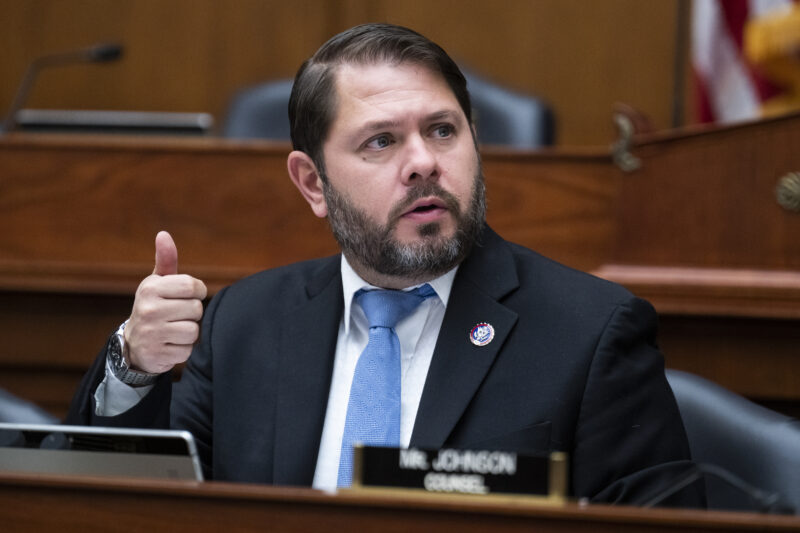

















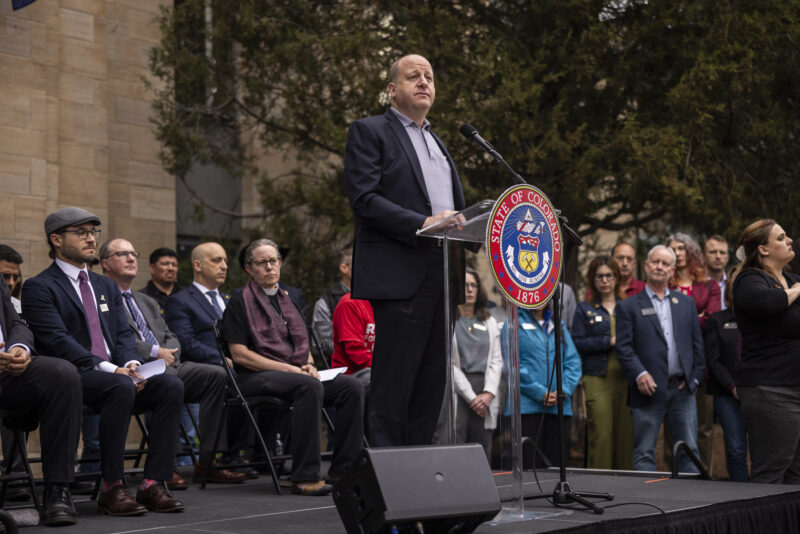














Biss reportedly told the committee ‘the great majority of his Jewish friends in the Northwestern community had no concerns,’ contrary to comments from Jewish community members and groups
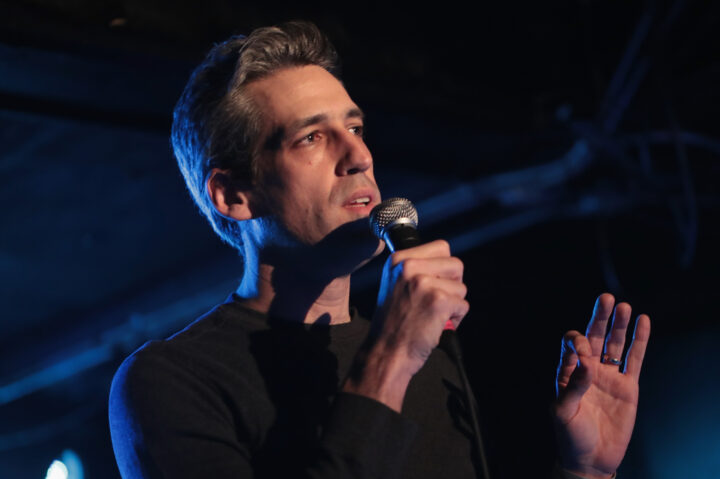
Scott Olson/Getty Images
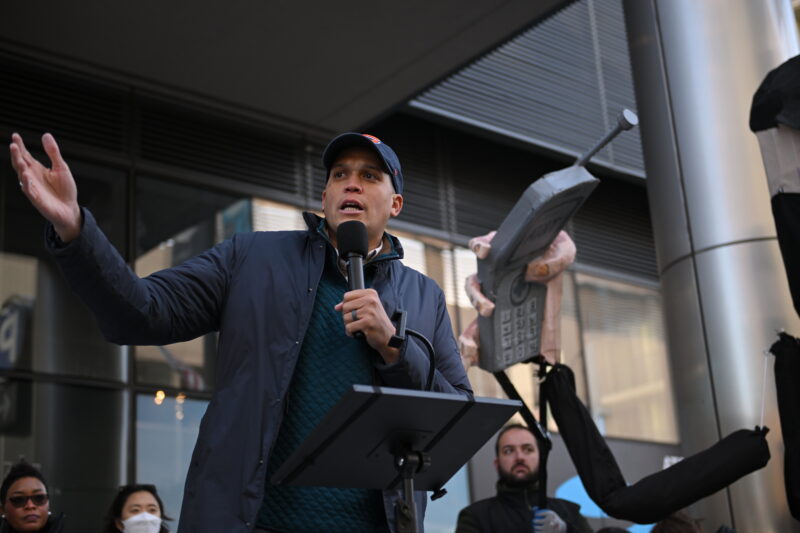
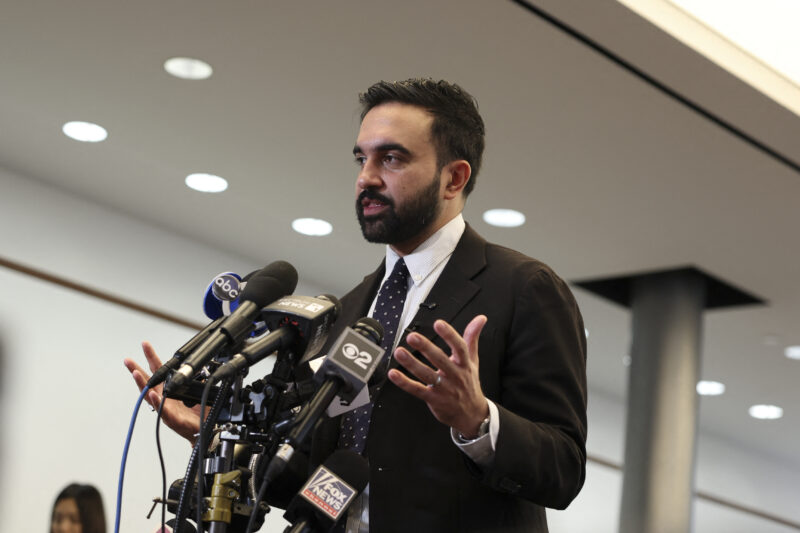
Evanston, Ill. Mayor Daniel Biss on March 6, 2018 in Chicago, Illinois.


 Add JewishInsider on Google
In a briefing for the House Education & Workforce Committee on his response to the anti-Israel protest encampment at Northwestern University in 2024, Evanston, Ill., Mayor Daniel Biss “severely downplayed” the situation on that campus and antisemitism across the country, the committee said.
The committee asked Biss, who is a congressional candidate in the race to succeed retiring Rep. Jan Schakowsky (D-IL), to brief them on his decision to withhold Evanston police support from Northwestern University when requested by the school to help clear the encampment.
The lack of external law enforcement support prompted Northwestern to make a deal, widely criticized in the Jewish community, with the encampment members to disband voluntarily, according to internal Northwestern communications released by the committee.
“In his briefing with the Committee today, Mr. Biss severely downplayed antisemitism at Northwestern after October 7th. He told the Committee that the great majority of his Jewish friends in the Northwestern community had no concerns about it,” a committee spokesperson told Jewish Insider.
That’s at odds with comments from Jewish Northwestern community members and local Jewish groups about the encampment.
“He further stated that Northwestern should not have received an F on the Anti-Defamation League’s college report card. He even accused the Committee of alarmism that is not warranted by the facts when it comes to antisemitism at the university after the October 7th attacks,” the spokesperson continued. “The countless Jewish Northwestern students, faculty, and community members that the Committee has interviewed would say otherwise.”
The school reached an agreement with the Department of Justice last year, paying $75 million and making policy changes to address antisemitism on its campus.
Biss, meanwhile, has dismissed the committee’s questioning of him as a smear campaign orchestrated by AIPAC and one of his primary opponents, state Sen. Laura Fine, to hurt his congressional campaign.
“From the start, this ‘briefing’ was a flimsy attempt to weaponize the very real threat of antisemitism to attack me and support my opponent. It failed,” Biss said in a statement.
“I’m proud of my record of protecting peaceful protest and combating antisemitism, including my decision to decline the unnecessary and undemocratic request to clear the Northwestern encampment in 2024. As the Trump administration increasingly attacks our fundamental democratic rights, it’s more important than ever to back our commitment to peaceful protest with action. I hope the committee learned something today.”
Biss’ campaign also noted that only House staff attended the briefing, rather than lawmakers themselves.
Biss, who is running for Congress, accused Walberg in response of attempting to sabotage his primary campaign at the behest of AIPAC
Scott Olson/Getty Images
Evanston, Ill. Mayor Daniel Biss on March 6, 2018 in Chicago, Illinois.
Rep. Tim Walberg (R-MI), the chairman of the House Education and Workforce Committee, accused Evanston, Ill., Mayor Daniel Biss on Wednesday of blocking city police from assisting Northwestern University in responding to the 2024 anti-Israel encampment on the campus protesting the war in Gaza — against the school’s request.
Biss, who is running in a competitive race for an open Illinois House seat, pushed back, accusing Walberg of attempting to sabotage his primary campaign at the behest of AIPAC.
“I write with grave concern regarding your failure to protect Jewish students at Northwestern University by refusing to give the university the police support it desperately needed to clear its violent and antisemitic encampment in April 2024,” Walberg said in a letter to Biss. “Just recently you touted this failure in a letter to Secretary of Education Linda McMahon, describing the individuals at the encampment as ‘peaceful.’”
Walberg also released internal communications by top Northwestern officials, including former President Michael Schill, about their communications with Biss and efforts to clear the encampment and conduct arrests.
Schill indicated to colleagues that more police would be needed than the school had available to successfully clear the encampment, but the school had to halt plans to do so after Biss communicated to the school that his position on the situation would not change.
Trustee Michael J. Sacks said in one message to Schill, “I know Biss well. If the winds blow in the wrong way he will throw you under the bus. No hesitation.”
Schill told other colleagues that Sacks and another trustee had said that Biss was untrustworthy and that Sacks had told him in a phone call that Biss was likely to publicize his refusal to provide police support “to shore up his progressive credentials.”
Northwestern, which is located in Evanston, ultimately signed a deal with student leaders of the encampment, acceding to several of the demonstrators’ demands in exchange for ending the encampment.
Walberg further denounced Biss for criticizing an agreement between Northwestern and the federal government. He requested that Biss brief the committee “on, in your words, ‘local law-enforcement coordination’ when it comes to antisemitic activity on college campuses in Evanston.”
Biss fired back, accusing Walberg of doing the bidding of AIPAC, which has formally taken no position in his primary race.
“Rep. Walberg’s inquiry is nothing more than a baseless political attack fueled by his top political patron, AIPAC,” Biss said in a statement. “It’s no coincidence that Rep. Walberg’s letter arrived just eight days before the beginning of early voting in the March primary election. They’re playing cheap political games in service to AIPAC’s right wing agenda. It is shameful.”
Biss added in a separate statement on X, “Trump and his Republican allies are attacking me for defending free speech. Let’s be clear: the GOP is trying to criminalize dissent and pressure local officials to silence peaceful protest. I won’t let that happen in our communities.”
The professional organization has faced accusations of being non-responsive to members’ complaints of antisemitism for months, including in a previous letter by Rep. Ritchie Torres

Bill Clark/CQ-Roll Call, Inc via Getty Images
Chairman Tim Walberg (R-MI) attends the House Education and Workforce Committee hearing on "The State of American Education" in the Ryaburn House Office Building on Wednesday, February 5, 2025.
The House Education and Workforce Committee announced on Friday that it’s opening an investigation into antisemitism in the American Psychological Association, a move that follows mounting reports of antisemitism and unaddressed discrimination inside the organization, which represents more than 170,000 individuals in the psychology field and is responsible for the accreditation of psychology professionals.
“The Committee is gravely concerned about antisemitism at the APA,” Committee Chairman Tim Walberg (R-MI) wrote in a letter to APA President Debra Kawahara on Friday informing the organization of the investigation.
“Jewish APA members have reported being harassed and ostracized by their colleagues within the APA and at APA events because of their Jewish identity, their efforts to speak out against antisemitism, and their Zionist beliefs. Members have also stated that their complaints to the association have gone unanswered, raising significant concerns about the APA’s commitment to addressing harassment.”
Walberg’s letter highlights that Jewish members raised a series of concerns about antisemitism in an open letter in February, including antisemitic and pro-Hamas statements in APA listservs and by APA leaders which have gone unaddressed by organization leadership.
According to Jewish Insider’s reporting, that letter went unacknowledged for months, prior to outreach from Rep. Ritchie Torres (D-NY) who called on the APA to address a “persistent and pernicious pattern of antisemitism” in its ranks. And when the APA did organize a Zoom meeting to address the concerns raised, some vocal antisemitic and anti-Israel members and groups were included in the conversation.
The APA also allegedly offered educational credit to members for attending conferences where speakers have expressed antisemitism, supported violence against Jews and Israelis, minimized Jewish suffering and “patholgiz[ed] Jewish people’s connection to their indigenous homeland,” Walberg’s letter states.
“More broadly, the rampant antisemitism in [one] division has led to members resigning,” Walberg wrote.
He also noted that some internal APA groups are attempting to repeal the APA’s adoption of the International Holocaust Remembrance Alliance’s working definition of antisemitism, claiming that antisemitism is being “weaponized” to “silence and punish people of color.”
Walberg’s letter requests the APA provide to the committee a range of internal documentation and communications relating to Jews, antisemitism and the Israeli-Palestinian conflict since Oct. 7, 2023.
The follow-up letters come weeks after the presidents of Haverford College, California Polytechnic State University and DePaul University testified before the committee about campus antisemitism
Bill Clark/CQ-Roll Call, Inc via Getty Images
Chairman Tim Walberg (R-MI) attends the House Education and Workforce Committee hearing on "The State of American Education" in the Ryaburn House Office Building on Wednesday, February 5, 2025.
The House Education and Workforce Committee requested additional information about campus antisemitism from DePaul University, California Polytechnic State University (San Luis Obispo) and Haverford College on Thursday, weeks after bringing their presidents before the committee for a hearing on campus antisemitism.
Rep. Tim Walberg’s (R-MI) letter to Haverford President Wendy Raymond — who repeatedly dodged questions from committee members throughout the hearing, refusing to discuss specifics — called out those evasive responses.
“While the Committee appreciates your appearance on May 7th to discuss these concerns, your lack of transparency about how, if at all, Haverford has responded to antisemitic incidents on its campus was very disappointing,” Walberg wrote. “Among other things, despite repeated requests, you failed to share any data, even in the aggregate, on faculty and student disciplinary actions taken in response to antisemitic incidents on your campus.”
The Michigan Republican requested information on the school’s policy against sharing disciplinary information, action taken against a Faculty and Staff for Justice in Palestine group that praised terrorists, details surrounding an alleged boycott of a donut shop, information about a Haverford professor who celebrated the Oct. 7, 2023, Hamas terrorist attacks on Israel and details about other professors who have made antisemitic and anti-Zionist comments.
In his letter to Cal Poly president Jeffrey Armstrong, Walberg highlighted that anti-Israel activists had recently vandalized a school building, as well as asked for information about how the school is updating its orientation and employee training materials, how it’s putting together an antisemitism task force and the school’s plans to endow a chair in Jewish studies and create an interfaith center.
Writing to DePaul President Robert Manuel, Walberg asked about the status of a college disciplinary process regarding Students for Justice in Palestine, including the status of a hearing on the group’s conduct and any recent communications regarding disciplinary action taken.
Walberg also asked for information about security improvements and changes to DePaul’s campus that Manuel had discussed during the hearing.
Claire Shipman, a former ABC News correspondent, was elevated to the school’s top job at a time of historic turmoil

Alex Wong/Getty Images
Acting Columbia University President Claire Shipman testifies before the House Committee on Education & the Workforce at Rayburn House Office Building on April 17, 2024 in Washington, DC.
After Columbia interim President Katrina Armstrong’s abrupt resignation on Friday, several of the university’s congressional antagonists quickly jumped in to criticize Armstrong’s successor, former ABC News journalist Claire Shipman, the co-chair of Columbia’s board.
Rep. Virginia Foxx (R-NC), the former chair of the House Education Committee, said that Shipman’s tenure as interim president would be “short-lived.” Rep. Elise Stefanik (R-NY), freshly returned to Capitol Hill after President Donald Trump withdrew her nomination to be U.N. ambassador, called the choice of Shipman “untenable.”
But a different reaction came from the White House: subtle praise. The Trump administration’s antisemitism task force called Columbia’s Friday night actions an “important step,” which an administration official confirmed to Jewish Insider was in reaction to Shipman’s appointment. News reports last week indicated that days before her resignation, Armstrong had promised the Trump administration she would enforce a mask ban on campus while telling faculty privately that she would not.
On Columbia’s campus, the news of Shipman’s hiring was met with cautious optimism from pro-Israel student leaders.
“We’re in desperate need of strong leadership willing to make the deep-seated reforms necessary to save the university at this pivotal moment,” said Eden Yadegar, a senior studying Middle East studies and modern Jewish studies who last year testified before Congress about the antisemitism she has faced on Columbia’s campus. Yadegar declined to elaborate on whether she believes Shipman will bring about those reforms.
Lishi Baker, a junior studying Middle East history and co-chair of the campus Israel advocacy group Aryeh, also said he would take a wait-and-see approach to Shipman. Baker expects university leadership to bring “deep structural and cultural changes at Columbia [that] are necessary to restore our campus to its primary mission of teaching, learning, and research,” he said.
“Some of these changes can happen immediately and some will take longer,” Baker told JI.
The university’s Hillel director, Brian Cohen, praised Shipman in a statement to JI, saying that she “is deeply committed to Columbia University and has consistently demonstrated concern for the well-being and needs of its Jewish community.”
“I look forward to working with her in this new role,” Cohen said.
Major Jewish organizations have largely avoided weighing in on Shipman’s appointment. The Anti-Defamation League told JI that it was “too early.”
Shipman, a veteran reporter and author with no academic leadership experience, has publicly stood by the university’s leadership as co-chair of Columbia’s board of trustees in response to the antisemitism that exploded on campus after the Oct. 7, 2023, Hamas attacks and ensuing war in Gaza.
From the beginning of her tenure, Shipman will be contending with a complex campus landscape: Many liberal faculty and students are angry about the university’s decision to acquiesce to Trump’s demands as a way to regain access to $400 million in federal funding that his administration pulled in March, citing Columbia’s failure to properly address antisemitism.
She will also face a tough negotiating partner in Washington, and pressure from Jewish students and alumni to take a stronger stance against a campus culture in which anti-Israel protests have thrived, with little consequences for rule-breaking activists until recently.
“In an existential crisis, they need to collaborate and to be candid in the exchanges with the Trump administration and what they’ll do, and they need to stick with that,” Mark Yudof, former president of the University of California, offered as advice for Shipman. “You need good faith implementation of what you agree with with the administration, that you’re not looking for loopholes.”
In a message sent to the Columbia community on Monday, Shipman expressed a desire to meet with people across Columbia’s campus as she navigates this “precarious moment” for the university. She did not reference the circumstances of her appointment, nor did she discuss antisemitism on campus, although she hinted at the seriousness of the task before her.
“My request, right now, is that we all — students, faculty, staff and everyone in this remarkable place — come together and work to protect and support this invaluable repository of knowledge, this home to the next generation of intellectual explorers, and this place of great and continuing promise,” Shipman wrote.
Last April, Shipman testified at a congressional hearing about antisemitism at Columbia alongside then-Columbia President Minouche Shafik, who resigned from her role in August, and board Co-Chair David Greenwald. Shipman told members of the House Committee on Education and Workforce that she knows Columbia has “significant and important work to do to address antisemitism and to ensure that our Jewish community is safe and welcome.”
The hearing generally avoided the splashy headlines that followed testimony from the presidents of Harvard and the University of Pennsylvania in December 2023. (Shipman reportedly described that hearing as “capital [sic] hill nonsense,” according to a congressional report published in October.)
But her Capitol Hill appearance with Shafik and Greenwald was followed by the erecting of Columbia’s anti-Israel encampment — the first such protest in the country, which touched off dozens of others. Columbia’s response to the encampment earned criticism from bipartisan lawmakers, even as Shipman and her fellow board members stood by Shafik’s handling of the protests, which turned violent when students occupied a campus building.
Choosing a university president from outside of academia is an unusual choice, even for an interim position. Shipman, who grew up in Columbus, Ohio, graduated from Columbia College in 1986 and returned to earn a master’s degree from Columbia’s School of International and Public Affairs in 1994. She reported from Moscow for CNN, covered the Clinton administration at NBC News and spent 15 years covering politics and international affairs at ABC News.
Shipman, notably, also spent time earlier in her career covering the Israeli-Palestinian conflict on assignment in the Middle East.
Rep. Tim Walberg said that the Trump administration should seek to alter the agreements recently finalized by the Department of Education
Bill Clark/CQ-Roll Call, Inc via Getty Images

Rep. Tim Walberg (R-MI) speaks during the House Republicans' news conference in the Capitol on Wednesday, Dec. 6, 2023.
Rep. Tim Walberg (R-MI), the new chair of the House Committee on Education and the Workforce, blasted the Biden administration’s Department of Education for a series of recent settlement agreements with colleges and universities over antisemitism complaints — and suggested that the incoming Trump administration should seek to alter those agreements.
The Department of Education, Walberg noted in a statement on Thursday, reached settlement agreements in recent weeks with Rutgers University, five University of California campuses and Johns Hopkins University, which Walberg described as failing to provide sufficient accountability.
“It’s disgraceful that in the final days of the Biden-Harris administration, the Department of Education is letting universities, including Rutgers, five University of California system campuses including UCLA, and Johns Hopkins, off the hook for their failures to address campus antisemitism,” Walberg, who took over leadership of the committee this year, said. “The toothless agreements shield schools from real accountability.”
The statement described the agreements as “an obvious effort to shield universities from real accountability by the incoming Trump administration.”
Walberg said that the agreements “utterly fail to resolve the civil rights complaints they purport to address” and accused the department of “shamefully abandoning its obligation to protect Jewish students, faculty, and staff and undermining the incoming administration.”
He demanded that the Department of Education not sign any further agreements in the remaining days of the Biden administration, and urged the incoming Trump team to “closely examine these agreements and explore options to impose real consequences on schools, which could include giving complainants the opportunity to appeal these weak settlements.”
Walberg’s statement, one of his first as chairman, indicates that antisemitism will continue to be a focus for the committee in the new Congress.
The committee’s lengthy report illustrates the extent to which many elite campuses have become rife with antisemitism

Alex Kent/Getty Images
NEW YORK, NEW YORK - OCTOBER 7: Columbia students organize dueling memorials and rallies on the one-year anniversary of the October 7th Hamas attack, on October 7, 2024 in New York City (Photo by Alex Kent/Getty Images)
Two days after the Oct. 7 Hamas attack, Harvard administrators had drafted a statement condemning the terror group and expressing condolences for those taken hostage. Those key elements of the statement were softened or removed.
At Columbia, the current and past board chairs said in private messages that they hoped that Democrats would win back the House of Representatives to avoid continued investigations.
And at Northwestern University, a professor told a colleague he was hoping to secure “some amazing wins” for the student demonstrators in his role as a negotiator for Northwestern.
The above examples, culled from the just-released House Committee on Education and the Workforce’s more than 100-page report on its year-long probe of antisemitism on U.S. college campuses, paint a vivid portrait of missteps at some of the country’s leading universities as antisemitism and anti-Zionism mounted.
The report comes after months of hearings, transcribed interviews, document requests and unprecedented subpoenas targeting some of the country’s most prestigious colleges and universities.
The committee said that the incidents investigated reflect “a broader environment on these campuses that is hostile to Jewish students,” in violation of Title VI of the Civil Rights Act.
“Instead of fulfilling these legal obligations, in numerous cases, university leaders turned their backs on their campuses’ Jewish communities, intentionally withholding support in a time of need,” the report states. “And while university leaders publicly projected a commitment toward combating antisemitism and respect for congressional efforts on the subject, in their private communications they viewed antisemitism as a PR issue rather than a campus problem.”
The report also accuses the Department of Education of failing to adequately respond to these violations.
“The Committee’s findings indicate the need for a fundamental reassessment of federal support for postsecondary institutions that have failed to meet their obligations to protect Jewish students, faculty, and staff, and to maintain a safe and uninterrupted learning environment for all students,” the report concludes.
The report summarizes that the “overwhelming majority” of students involved in antisemitic activity at each of the schools the committee investigated faced minimal, if any, discipline. Of the 11 schools investigated, six have so far imposed no penalties for antisemitic conduct and none have expelled any students.
The committee’s report also addresses some of the measures schools have taken in response to such events, including new policies on institutional neutrality, which the committee said are being used as excuses to avoid speaking out on matters on their campuses.
“While it is sensible that universities maintain institutional neutrality, these policies should not serve as excuses for academic leaders to remain silent in the face of antisemitic harassment, discrimination, or support for terrorism on their campuses,” the report declares.
At Harvard, the committee’s report reveals new details about an Oct. 9 statement in which the school failed to explicitly condemn the Hamas attack and drew equivalences between the attack and Israel’s response.
Internal communications and draft versions of the statement show that school leaders considered, and ultimately removed, language specifically condemning Hamas’ attack on Israel and expressing condolences for those taken hostage.
Administrators also decided not to include language disavowing a statement by Harvard student groups blaming Israel for the Hamas attack.
One leader, Medical School Dean George Q. Daley, objected to a reference to the Hamas attack as “violent” because it “sounded like assigning blame when it’s best we express horror at the carnage that is unfolding.”
Former Harvard President Claudine Gay and current President Alan Garber (who was then serving as provost) both agreed to remove the word, with Garber expressing concern that Daley would issue his own comment that drew moral equivalence between Israel and Hamas if they did not agree.
In a transcribed interview with the committee in August, Harvard Corporation Senior Fellow Penny Pritzker called the Harvard administration’s statement, “massively inappropriate at the time and insufficient.”
Internal communications show that Pritzker also pressed Gay on the use of the “river to the sea” slogan on a sign at a campus protest, calling it “clearly an anti Semitic sign which calls for the annihilation of the Jewish state and the Jews,” comparing it to “signage calling for Lynchings by the KKK.”
Garber responded that it’s “not as simple as some of our friends would have it,” and that there is “not consensus that the phrase itself is always antisemitic.”
Pritzker pushed back, saying that she was “struggling with why it isn’t hate speech and why that is acceptable on our campus and why we don’t condemn it.”
Gay later weighed in, saying that Pritzker should not concede, in an email to a fellow alumnus, that the phrase is inherently antisemitic because “it then prompts the question of what we’re doing about it, i.e. discipline.”
Her response came despite texts to her from Rabbi David Wolpe describing the phrase as antisemitic and a call for a “Judenrein future.”
Pritzker told the committee that Harvard has now clarified its rules such that use of the phrase would prompt discipline.
No Harvard students have been suspended for antisemitic activity; in some cases, students who were initially suspended had their suspensions downgraded to probation.
And the vast majority of students placed on probation for their involvement with an encampment at Harvard had their probation periods shortened. Harvard’s Graduate School of Education refused to discipline any of the students, instead praising them for participating in “civic activities” and “encourag[ing] [them] to continue engaging meaningful discourse.”
Students who occupied Harvard’s University Hall and interrupted classes with bullhorns received no formal punishment.
Internal communications indicate that the lax penalties are due to administrative boards responsible for assigning penalties at Harvard, which repeatedly downgraded the punishments assigned to students, or assigned punishments less than those which administrators expected and thought appropriate.
Pritzker said in her interview with the committee that the Harvard Corporation had found “uneven” enforcement by administrative boards to be a “very serious issue,” which had not yet fully been resolved. She said that administrators understand, however, that they need to address the situation.
The report also details how some faculty effectively hijacked a meeting of the Faculty Council at Harvard’s Faculty of Arts and Sciences in an attempt to override punishments for some students involved in the encampment, and later intervened to demand more lenient punishments for some students.
The report also includes official notes from a Harvard meeting during which Harvard President Claudine Gay allegedly personally attacked Rep. Elise Stefanik (R-NY), who had questioned her at a disastrous December hearing.
At Columbia, then-President Minouche Shafik revealed in internal communications with the chairs of the Board of Trustees that she had spoken with Senate Majority Leader Chuck Schumer (D-NY), who, according to Shafik, said that “the universities[‘] political problems are really only among Republicans.”
Schumer’s staff had advised that “the best strategy is to keep heads down” and the senator and his staff suggested that the school’s leaders did not need to meet with Republicans, Shafik added.
Schumer spokesperson Angelo Roefaro denied this characterization of his conversations with Columbia leaders.
“The report is not accurate. Senator Schumer regularly and forcefully condemned anti-Semitic acts at Columbia and elsewhere saying ‘when protests shift to antisemitism, verbal abuse, intimidation, or glorification of Oct. 7 violence against Jewish people, that crosses the line,’” Roefaro said. “He conveyed this point publicly and to administrators privately.”
David Greenwald and Jonathan Lavine, the current and past board chairs, said in private messages that they hoped that Democrats would win back the House of Representatives, responding to a report that the committee was expanding its investigation.
The report also lambastes Columbia’s handling of an anti-Israel encampment and occupation of Columbia’s Hamilton Hall.
Of the 22 students the school arrested for occupying the building, none have been expelled, despite previous statements from the school saying that they likely would be. Instead, the majority were allowed to graduate or remain in good standing, with just one on probation and three suspended. All of the other students arrested in connection to the Hamilton Hall incident received no punishment.
The report largely blames the University Senate, made up of faculty, students, administrators, staff and alumni, for pressuring administrators to agree to an alternative adjudication process known to be more lenient, in spite of initial pressure from Greenwald and other trustees for strict penalties.
Private communications suggest that a key University Senate leader who acted as a liaison to the administration repeatedly sided with and assisted antisemitic demonstrators while silencing Jewish and pro-Israel voices on the Senate.
Lax punishments were not limited to the Hamilton Hall occupation: a student who infamously declared that “Zionists don’t deserve to live” received only probation for those comments. Two students who organized an event at which members of terrorist groups spoke received conditional probation — a low-level punishment — and three others received only warnings.
The University Senate also compelled Columbia to abandon new rules on campus protest, instead approving a more permissive set of policies, with fewer restrictions and penalties, overruling the previous ones instituted in response to demonstrations in the previous academic year.
In private communications, Lavine described Senate members as “antisemites” and warned Greenwald that they could undermine efforts to impose a new protest policy.
A Columbia University spokesperson said in a statement to JI: “Columbia strongly condemns antisemitism and all forms of discrimination, and we are resolute that calls for violence or harm have no place at our University. Since assuming her role in August, Interim President Armstrong and her leadership team have taken decisive actions to reinforce Columbia’s academic mission, make our community safe, and address the Committee’s concerns, including by strengthening and clarifying our disciplinary processes.”
“Under the University’s new leadership, we have established a centralized Office of Institutional Equity to address all reports of discrimination and harassment, appointed a new Rules Administrator, and strengthened the capabilities of our Public Safety Office,” the statement continued. “We are committed to applying the rules fairly, consistently, and efficiently.”
Though Columbia did not ultimately reach a deal with members of the campus encampment, internal documents show that it considered doing so and proposed to the demonstrators a “menu” of potential concessions.
Those included reviewing divestment proposals, considering a joint program with a West Bank university that has been the site of repeated pro-Hamas activity, granting amnesty and/or favorable judicial procedures to those involved with the encampment and reinstating banned anti-Israel student groups.
The report also condemns Columbia for failing to correct its own public statements about an incident in which pro-Israel demonstrators sprayed non-toxic fart spray toward anti-Israel demonstrators. Anti-Israel demonstrators characterized this as an attack using a military-grade chemical, and a Columbia administrator said it was potentially a serious crime and a hate crime.
The school later suspended the Jewish students responsible for the incident for a year and a half, longer than any student was suspended for antisemitic activity; it was forced to reduce the punishment, issue a public statement and pay nearly $400,000 in compensation when one student sued.
Shafik also rejected repeated requests from Jewish leaders and fellow administrators to express public support for students in Colubmia’s dual degree program with Tel Aviv University, who were harassed by anti-Israel demonstrators.
In internal communications, Columbia Board of Trustees co-chair Claire Shipman derided congressional scrutiny of campus antisemitism as “nonsense.” Shipman also pushed to unsuspend anti-Israel groups and proposed holding events with a prominent anti-Israel professor.
At Northwestern University, the committee focused on the school’s negotiations and deal with anti-Israel demonstrators to disband their encampment.
The report names two Northwestern professors as particular concerns, Jessica Winegar and Nour Kteily, who were part of negotiations with the encampment, as well as members of Northwestern’s antisemitism task force — despite being openly critical of the idea of such a task force.
Text messages obtained by the committee show that Kteily told a colleague he was hoping to secure “some amazing wins” for the student demonstrators in his role as a Northwestern negotiator.
Northwestern Provost Kathleen Hagerty said in another text message she was trying to “help” the students and supported Kteily proposing to the demonstrators methods for pressuring school trustees.
Hagerty told another colleague that Kteily had “spent an incredible number of hours teaching a very disorganized and upset groups of students how to organize themselves.”
Kteily later celebrated that Northwestern’s agreement with protesters had inspired similar agreements elsewhere.
In text messages between Kteily and Hagerty, they discussed the possibility of conceding to demonstrators’ demand that they boycott Sabra, as a bargaining chip to avoid having to address issues like the school’s investments.
Citing text messages, vague language in the final deal between Northwestern and the encampment members and comments from members of the encampment, the report accuses Northwestern President Michael Schill of considering hiring an anti-Zionist rabbi, something Schill denied was on the table. The committee called his testimony on this question to Congress “misleading at best.”
Northwestern has not suspended any students for antisemitic activity since Oct. 7, issued disciplinary probation to seven and a warning to one. No students have been penalized for their involvement in the campus encampment.
At the University of Pennsylvania, only three students have been suspended, for a semester each, and 14 were placed on probation, despite a range of incidents including theft, an encampment that resulted in 21 arrests, a break-in at the Penn president’s house and other disruptions of campus business.
In emails, Penn leaders largely brushed off pressure and criticism of Penn’s response to antisemitism, with then-Board of Trustees Chairman Scott Bok dismissing former New Jersey Gov. Chris Christie and other critics of antisemitism at Penn as “so easily purchased” in an email to then-President Liz Magill.
Penn leaders also coordinated with a local media outlet to arrange for sympathetic coverage of Magill’s testimony before Congress, deriding lawmakers’questioning in private messages as “bullying and grandstanding.”
At the University of California, Los Angeles, the report states that university police were instructed not to intervene as demonstrators assembled an encampment, and that leadership was aware of, but failed to intervene, in response to a series of violations as well as sent misleading or inaccurate messages to the school community about the encampment.
Ultimately, 96 students were arrested at the encampment, 92 of whom signed “resolution agreements” and were not punished by UCLA. Three others are being held back from graduation and one is still enrolled.
The school said it was not able to identify or punish anyone who blocked Jewish students from accessing parts of UCLA’s campus.
At Rutgers University, just three students were suspended for their involvement in encampments across two Rutgers campuses, with an additional four placed on probation and two facing other reprimands. And a student who encouraged others to murder an Israeli student was allowed to remain on campus during disciplinary proceedings and was suspended for just one semester.
Meanwhile, several Jewish students were disciplined for speaking out publicly and filing campus reports about antisemitism.
The University of California, Berkeley, has placed just one student on probation, with two other cases in progress, and no suspensions issued, in relation to antisemitic activity including an encampment, occupation of a building and a break-in at an event which forced students to evacuate under police protection.
Yale has also not suspended any students, placed two on probation and reprimanded 23 individuals. Some cases are ongoing, but only one student of 45 has been placed on probation after being arrested at an encampment. A student who Yale found attempted to incite violence was placed on probation, while students who raised money for “Palestinian anarchist fighters” were not penalized.
George Washington University has suspended one student, placed 16 on probation and issued formal admonishments to three.
The Massachusetts Institute of Technology has placed 29 students on probation and issued warnings to another 18, with three cases pending and no suspensions issued.
‘Rutgers stands out for the intensity and pervasiveness of antisemitism on its campuses,’ Rep. Virginia Foxx said in a letter to the school’s leaders

Bill Clark/CQ-Roll Call, Inc via Getty Images
Rep. Virginia Foxx (R-NC) walks to the House floor for a vote in the Capitol on Friday, September 29, 2023.
The House Education and Workforce Committee on Wednesday requested documents from Rutgers University on its handling of antisemitism on its campuses, the sixth school and the second public college targeted under the committee’s antisemitism probe.
Rep. Virginia Foxx (R-NC), the committee’s chair, wrote on Wednesday to Rutgers President Jonathan Holloway, Board of Governors Chair William E. Best and the chancellors of Rutgers’ Newark, Camden and New Brunswick campuses about antisemitic incidents across the university system.
“Rutgers stands out for the intensity and pervasiveness of antisemitism on its campuses,” Foxx said. “Rutgers senior administrators, faculty, staff, academic departments and centers, and student organizations have contributed to the development of a pervasive climate of antisemitism.”
The letter highlights concerns about the Rutgers Center for Security, Race and Rights (CSRR), which Foxx described as “notorious as a hotbed of radical antisemitic, anti-American, anti-Israel, and pro-terrorist activity,” pointing to statements by the center, its leadership and its affiliates, as well as events and speakers it has sponsored.
She also pointed to antisemitic and anti-Israel activity by other Rutgers faculty, staff and institutions, and Rutgers Students for Justice in Palestine, as well as other incidents of vandalism.
The letter accuses Rutgers SJP of “a history of violation of university rules,” and notes that the group has received significant support from the student government and was only briefly suspended on the New Brunswick campus.
The letter further blasts then-Rutgers New Brunswick Chancellor Christopher Malloy for apologizing for a statement condemning antisemitism and other forms of bigotry, and notes that Rutgers Newark’s Jewish population falls well below the state’s overall Jewish population.
Foxx requested, by April 10, documents relating to antisemitism and anti-Israel activity on Rutgers’ campuses and its responses to it; internal communications and meeting minutes from Board of Governors meetings; all documents relating to the CSRR; documents on funding for Rutgers SJP; documents relating to Boycott, Divestment and Sanctions efforts at Rutgers; documents on the school’s diversity, equity and inclusion offices and programs; and information on foreign donations, particularly from Qatar.
“Rutgers takes claims of antisemitism, and all forms of bias and intolerance, very seriously. The university received the committee’s letter and will respond directly to the chairwoman,” Rutgers said in a statement.
Rutgers, and the CSRR in particular, have also come under scrutiny from Republicans of the Senate Judiciary Committee. Local Rep. Josh Gottheimer (D-NJ) has also raised concerns about events on Rutgers’ campuses.
This story was updated on March 27 at 4:40 p.m. to include a statement from Rutgers.
Please log in if you already have a subscription, or subscribe to access the latest updates.
 Continue with Google
 Continue with Apple