










































Both objectives — 'total victory' over Hamas and Palestinian statehood — are at present incompatible with the realities on the ground

Elke Scholiers/Getty Images
IDF soldiers prepare tanks on August 18, 2025 near the Gaza Strip's northern borders, Israel.


 Add JewishInsider on Google
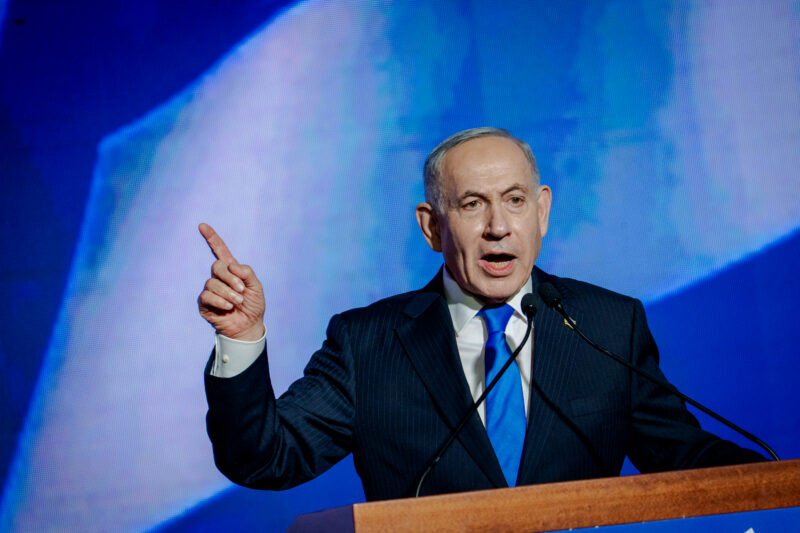
Israel is finalizing plans this week for a ground offensive into Gaza City, with the goal of having fully evacuated the city by the symbolic date of Oct. 7, 2025. Speaking at his weekly Sunday meeting, Israeli Prime Minister Benjamin Netanyahu said that Israel would “complete the victory” over Hamas. Tens of thousands of IDF reservists will begin receiving call-up notices today in preparation for the offensive.
The plans come amid a renewed push for Palestinian statehood, led by France and Saudi Arabia, that has seen a surge in support from global heads of state, including Canadian Prime Minister Mark Carney and Australian Prime Minister Anthony Albanese.
Palestinian statehood efforts also have support in Congress, where Rep. Ro Khanna (D-CA) is leading a group of House Democrats in calling on President Donald Trump to recognize a Palestinian state.
But both objectives — “total victory” over Hamas and Palestinian statehood — are at present incompatible with the realities on the ground.
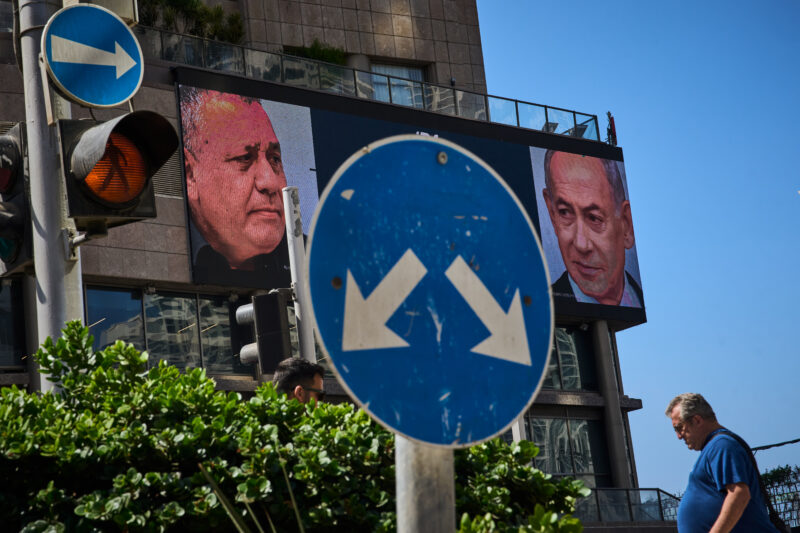
Netanyahu has not wavered from his stated objective of “total victory” — even as he has yet to articulate, in practical terms, what that looks like — or how the Gaza City offensive will achieve it.
The goal of “total victory” over Hamas also runs into the challenge that the U.S. and Western allies faced amid the spread of ISIS a decade ago — that eliminating a group’s top leadership (as Israel has done in its targeting of Yahya and Mohammed Sinwar, Mohammed Deif and Marwan Issa, among others), but not its ideology, will attract new recruits to swell the ranks left empty by those who came before them.
Outside of Israel, efforts to unilaterally recognize Palestinian statehood have ignored core challenges facing both Palestinian society and government, the former of which was plagued by antisemitic and anti-Israel rhetoric long before Oct. 7, 2023, and the latter of which has for decades been mired in corruption and nepotism and lacks the ground support needed for long-term stability.
Further, leading Israeli officials have described the renewed Palestinian statehood push as a reward for Hamas’ Oct. 7 attacks and view a path to statehood rooted in the deadliest attack in Israeli history as obscene — and one that ignores the long path of deradicalization and reforms necessary before such measures are discussed.
Marcus Sheff, the executive director of IMPACT-se, an NGO that monitors and provides recommendations for curricula and educational materials across the Arab world, noted that many of the European governments that back unilateral Palestinian statehood are the same nations that “directly or indirectly” fund Palestinian curricula that incite violence against Jews and Israelis, damaging efforts to prepare a population for statehood.
“To talk about any Palestinian state without taking on, headfirst, the necessity of deradicalizing Palestinians through the education system, and even worse, being a party to their radicalization by financing it, is actually quite bizarre,” Sheff added.
The limitations of reality are a reminder that wars are fought in clashes and not catchphrases, in policies rather than platitudes. It’s easier to declare a Palestinian state than to do the work of nation-building, just as it is easier to pledge “total victory” over a deeply entrenched ideology than to strategically chart the course of its defeat.
Please log in if you already have a subscription, or subscribe to access the latest updates.
 Continue with Google
 Continue with Apple