


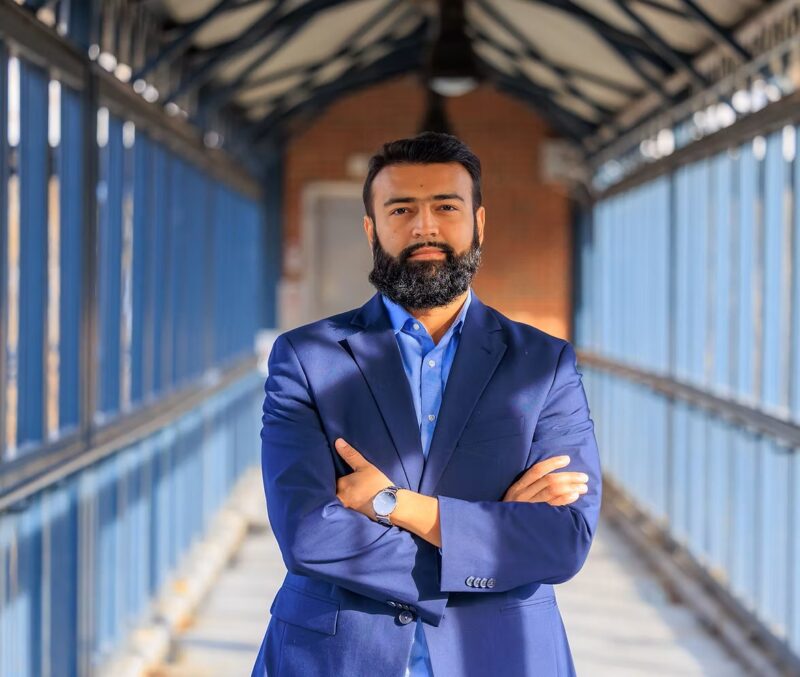
























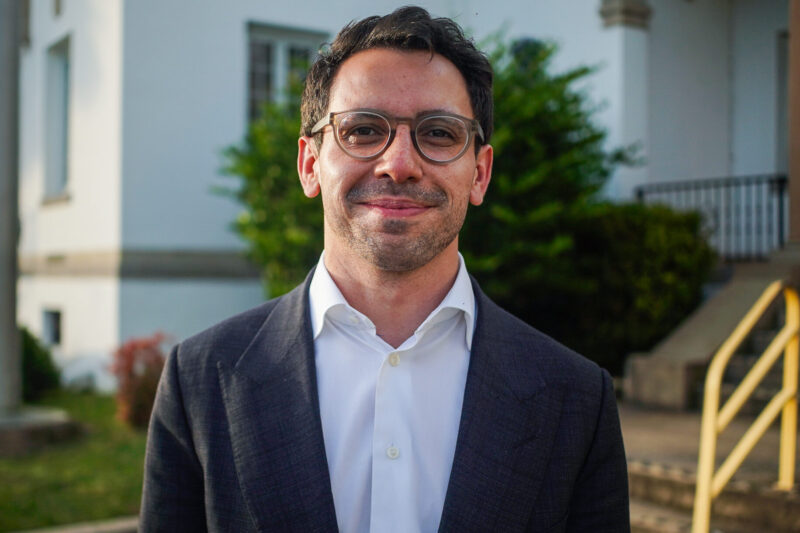
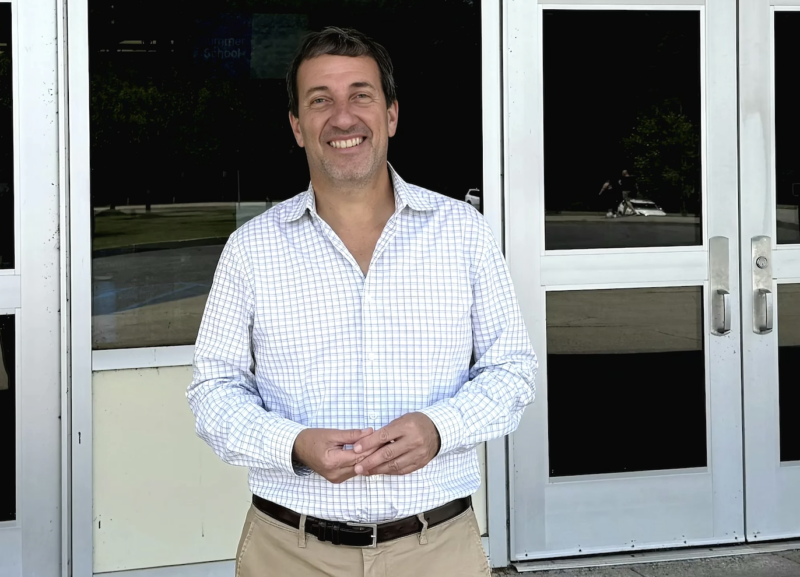


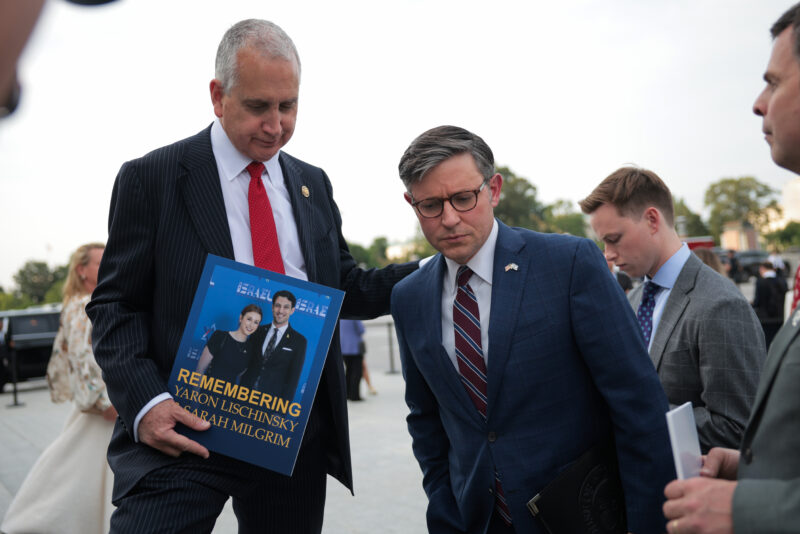
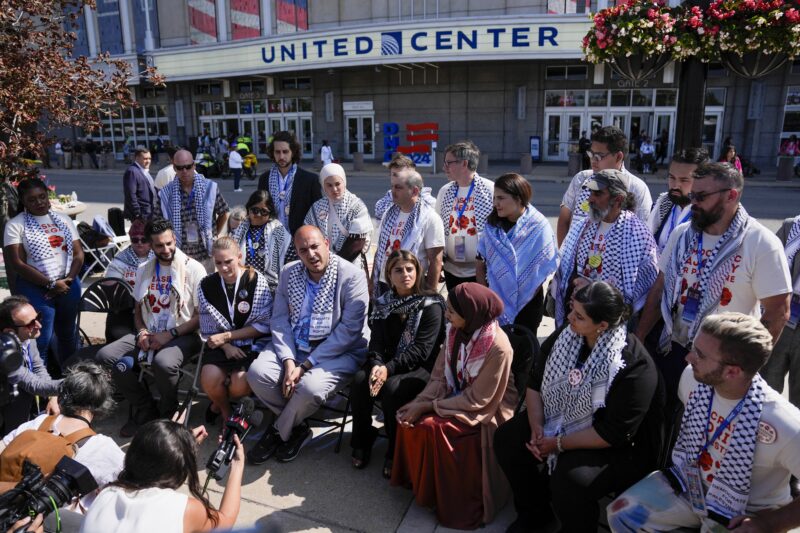
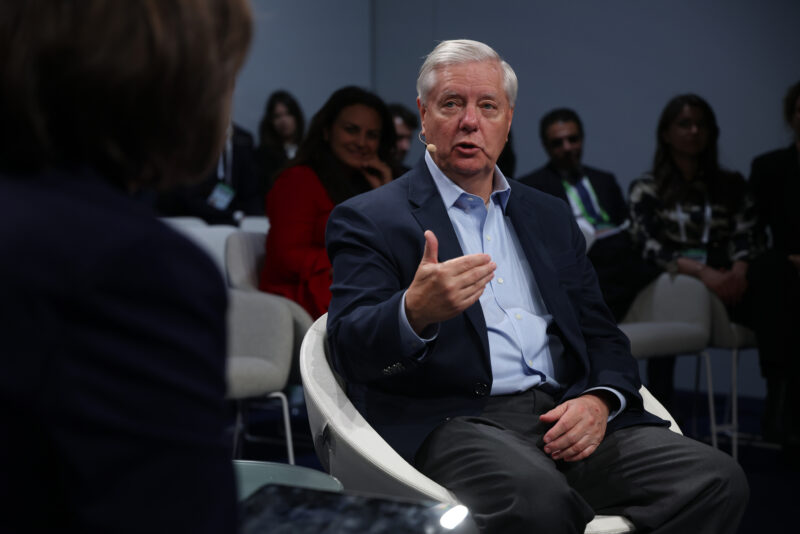
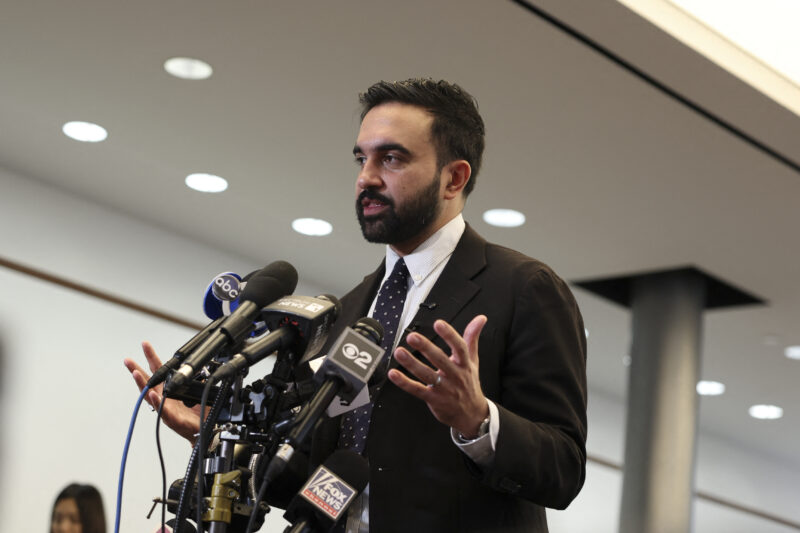









Kaploun, who was nominated in April for the role, will appear before the Senate Foreign Relations Committee on Wednesday

Joe Raedle/Getty Images
President Donald Trump and Rabbi Yehuda Kaploun light a candle during an Oct. 7th remembrance event at the Trump National Doral Golf Club on Oct. 7, 2024 in Doral, Florida.


 Add JewishInsider on Google
Rabbi Yehuda Kaploun is scheduled for a confirmation hearing to be the Trump administration’s antisemitism envoy on Wednesday, a last-minute addition to the Senate Foreign Relations Committee schedule.
Kaploun, an Orthodox Jewish businessman and Chabad rabbi, was a Trump campaign surrogate during the 2024 campaign and, though he has not yet been confirmed, has been a frequent fixture at D.C.-area events focused on combating antisemitism since he was first nominated for the post in April and has met with other Trump administration officials.
The previous special envoy to monitor and combat antisemitism, Ambassador Deborah Lipstadt, told Jewish Insider on Tuesday, “I wish him great good luck, for his sake and for ours. He has a challenging task in front of him as we witness antisemitism emanating from all ends of the political spectrum. Irrespective of one’s politics, we should all hope for his success.”
Kaploun co-authored an op-ed in the Jewish Telegraphic Agency in May with his two predecessors, Lipstadt and Elan Carr, following the killing of two Israeli Embassy staffers outside the Capital Jewish Museum in Washington — a show of bipartisan alignment on the issue of combating antisemitism.
“Above all, irrespective of where you stand on the political spectrum — left, right, center — do not use antisemitism as a political weapon to achieve other goals. That will only serve to debase and weaken our fight against this terrible scourge. This fight must be bipartisan and non-political,” the piece reads. “Now is the time for all to rise to the occasion in the face of a grave threat to us all. Our collective future depends on our success.”
The op-ed endorses the Global Guidelines to Counter Antisemitism, an international compact promulgated under Lipstadt’s leadership, and indicates that the current administration plans to continue that effort.
It goes on to describe antisemitism as a threat to the rule of law, security and society, and raises concerns about the “normalization of antisemitic rhetoric” on both sides of the aisle, and in anti-Israel activism.
The leaders of various mainstream Jewish organizations including the Jewish Federations of North America, the Conference of Presidents of Major American Jewish Organizations, the Anti-Defamation League and the American Jewish Committee have urged Senate leaders to move ahead with the confirmation process and move quickly to fill the post.
But Kaploun’s nomination is likely to encounter at least some resistance among Democrats: Rep. Jerry Nadler (D-NY), a co-chair of the Congressional Jewish Caucus, urged Senate Democrats not to support Kaploun earlier this year, describing him as “divisive.”
State Department civil servants have continued to operate the office during the time that the ambassador role has been vacant, since the end of the Biden administration.
Several other nominees are also scheduled to appear at the hearing, including State Department spokesperson Tammy Bruce, nominated to be the deputy U.S. representative to the United Nations.
Senators on both sides of the aisle again accused Colby and his office of failing to communicate with them at a nomination hearing for Colby deputy Alex Velez-Green
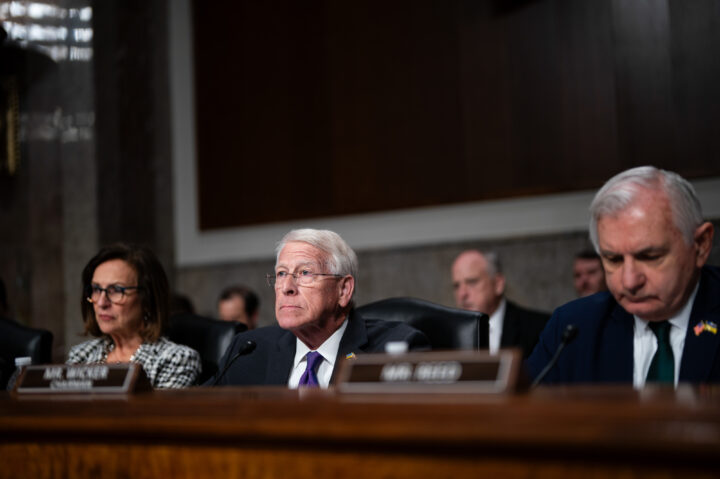
Al Drago/Bloomberg via Getty Images
Sen. Roger Wicker (R-MS), chairman of the Senate Armed Services Committee, and Sen. Jack Reed (D-RI), ranking member of the Senate Armed Services Committee, during a confirmation hearing in Washington, DC, US, on Tuesday, April 1, 2025.
Members of the Senate Armed Services Committee from both parties voiced concerns with Elbridge Colby, under secretary of defense for policy, and his office at the Pentagon, at a committee hearing — for the second time this week.
While Thursday’s proceedings, a confirmation hearing for Alex Velez-Green, nominated to be Colby’s top deputy and who has been a senior advisor to him in an interim capacity, were generally less heated than a Tuesday hearing with nominee Austin Dahmer, lawmakers reiterated concerns with a lack of consultation by Colby’s team and alleged rogue decision-making on a range of issues by the office.
“Many of this committee have serious concerns about the Pentagon’s policy office and how it is serving the president of the United States and the Congress,” Sen. Roger Wicker (R-MS), the chairman of the committee, said in his opening statement. “In many of these conversations, we hear that the Pentagon policy office seems to be doing what it pleases without coordinating, even inside the U.S. executive branch.”
Wicker, pushing back on a defense offered earlier this week by Dahmer — who dismissed many concerns as fallacious and based on inaccurate media reporting — said that the issues raised by committee members were based on their own conversations with other administration officials and United States allies.
“Either all of these other administration officials and senior foreign officials are deliberately misleading us or we have a problem coming from this office,” he continued.
He said that the policy office can begin to rectify those issues by meeting “its statutory requirement to consult with this committee … rather than simply informing us of a decision after the fact.”
“We need a process that works for the president and the [Congress]. Unfortunately, we do not have such a process at this moment,” Wicker said, adding that progress will require a “change in a mindset” from the policy office.
Sen. Rick Scott (R-FL) added that, “the perception is that there’s some disagreement between what has been put out [by the policy office] and what the president wants. And I think it’s pretty important that you guys figure out how to stop that.”
Velez-Green generally took a conciliatory posture, pledging to communicate and consult with lawmakers whenever possible and appropriate. He also insisted that the policy office and the entire Department of Defense have been diligent in ensuring they are fully aligned with the president’s policy.
But Velez-Green also insisted that the policy office had not directed a pause in U.S. arms transfers to Ukraine, which was later publicly overridden by President Donald Trump, who said he had not been aware of or instructed any such moves. Multiple Senate Republicans pointed to a news release from the Pentagon that specifically stated that such a pause had been implemented.
Velez-Green also denied media reports that Colby had opposed the deployment of additional U.S. forces to the Middle East during the war between Israel and Iran.
Lawmakers again raised concerns that they and U.S. allies in Romania had been notified only days ahead of time that the U.S. would be withdrawing troops from Romania, and that lawmakers were only provided a notification after the decision had been made rather than consulted ahead of time.
“Congress was not consulted about this. I think I can say with certainty about that,” Wicker said.
Sen. Eric Schmitt (R-MO) was the only lawmaker to offer an unequivocal defense of Colby and his office, accusing those criticizing Colby over both policy decisions and communication issues of attempting to block his policy preferences.
“I think much of the criticism, which is cloaked in terms of transparency and communication, really is just an effort to undermine a shift in our foreign policy orientation, which I support, which is to realism, as opposed to some of the failed points of view that have dominated permanent Washington over the last 30 years,” Schmitt said, adding that criticisms of Colby and his team reflect “resistance from those invested in maintaining the foreign policy status quo that has repeatedly failed the American people.”
Amer Ghalib’s path to confirmation is unclear as at least four Republicans now oppose him becoming ambassador
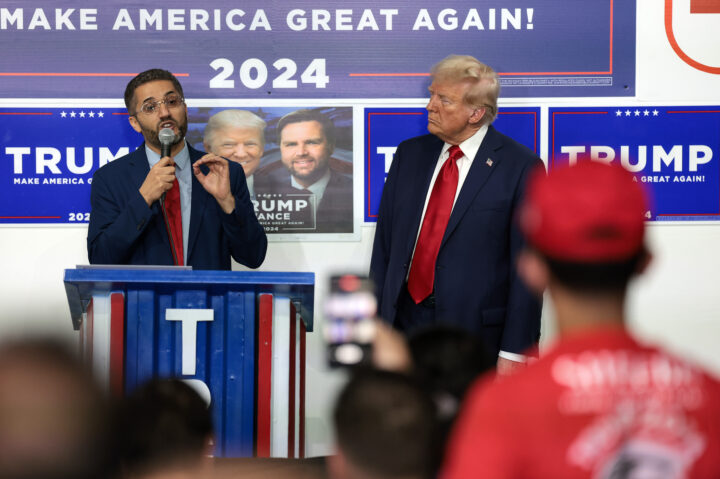
Win McNamee/Getty Images
Hamtramck, Mich. Mayor Amer Ghalib introduces President Donald Trump, as Trump visits a campaign office on Oct. 18, 2024, in Hamtramck, Michigan.
The nomination of Amer Ghalib, the mayor of Hamtramck, Mich., to be U.S. ambassador to Kuwait is facing what appear to be insurmountable odds as opposition to his confirmation grows among Senate Republicans.
No Republican or Democratic senators have come to Ghalib’s defense after his performance at his confirmation hearing before the Senate Foreign Relations Committee last week, when he faced a bipartisan grilling over his long record of promoting antisemitic ideas and his embrace of anti-Israel positions as an elected official.
Senators on both sides of the aisle had privately expressed reservations about Ghalib’s nomination prior to the hearing, but his attempts to evade responsibility for his record while under oath prompted several Republicans on the committee to go public.
Sen. Ted Cruz (R-TX) announced at the end of Ghalib’s hearing last Thursday that he would not be able to support moving his nomination out of committee to the Senate floor. Sens. John Curtis (R-UT), John Cornyn (R-TX) and Dave McCormick (R-PA) have since followed suit. Others on the panel, including Sen. Pete Ricketts (R-NE), have said they plan to raise their concerns about Ghalib with the committee chairman, Sen. Jim Risch (R-ID), and the White House.
“Based on the hearing that we had last week, I’m going to vote no against him,” McCormick told Punchbowl News on Tuesday. “I don’t think he demonstrated that he’s qualified for the role.”
Asked about Ghalib and the concerns surrounding his nomination while speaking to reporters on Tuesday morning, Senate Majority Leader John Thune (R-SD) said he was “vaguely familiar” with the Hamtramck mayor’s nomination but had not “examined” the matter closely.
The White House did not respond to Jewish Insider’s multiple requests for comment on the status of Ghalib’s nomination or the growing number of GOP senators coming forward to oppose him.
Ghalib is not believed to have any support on the Democratic side, reinforced by his lackluster answers to questions about his documented history of antisemitic remarks from Sens. Chris Murphy (D-CT), Tim Kaine (D-VA) and Jeanne Shaheen (D-NH), the top Democrat on the committee. He also has an embattled standing within the Democratic Party because of his decision to help President Donald Trump win the state of Michigan for Republicans last November.
“I think that you have dug your hole deeper today,” Murphy, who already opposed Ghalib prior to last week, told the nominee at his confirmation hearing.
Paul Ingrassia has a record of conspiratorial comments, including calling the the Oct. 7 Hamas attacks a ‘psyop’ and defending prominent antisemites
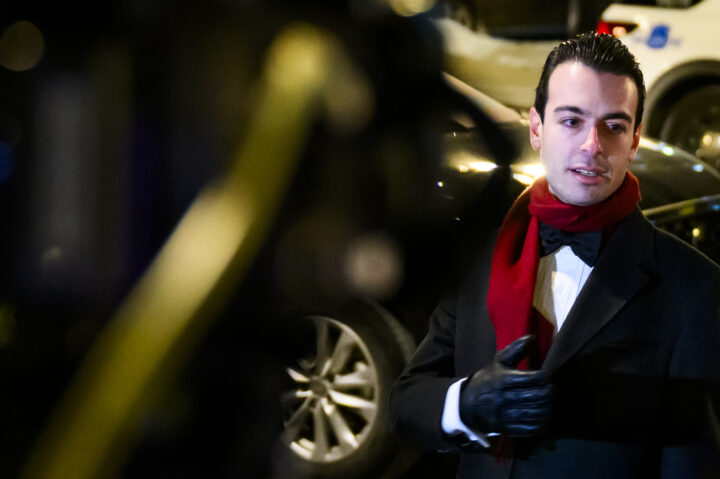
Pete Kiehart for The Washington Post via Getty Images
Paul Ingrassia, forer White House liaison to the Justice Department, left, announces the release of brothers Andrew and Matthew Valentin outside of the DC Central Detention Facility on January 20, 2025 in Washington, DC.
The Senate Homeland Security and Government Affairs Committee on Thursday delayed a confirmation hearing for Paul Ingrassia, the Trump administration’s nominee for a government ethics oversight role, amid questions about his record from some Senate Republicans.
Ingrassia has been tapped to lead the Office of Special Counsel, which is responsible for whistleblower protection and other federal personnel oversight matters. He has a record of conspiratorial comments, including describing the Oct. 7, 2023, Hamas attacks on Israel and the ensuing war as a “psyop” and defending prominent antisemites, among other issues.
Sen. James Lankford (R-OK) told Jewish Insider he had more questions he wanted to ask Ingrassia and that the hearing had been delayed because “he had not met with a lot of members” and the lawmakers wanted the chance to do so. He said that the hearing will now likely happen in “September or later,” after the Senate’s August recess, to provide more time for these meetings.
Asked about his specific questions for Ingrassia, Lankford said, “There’s a lot of posts that he’s made that I think we just need an answer to,” adding that he also wants to know about Ingrassia’s vision for leadership and for the office. “He’s been an attorney for one year,” Lankford added, noting that Ingrassia would be leading hundreds of other attorneys if he’s confirmed.
“We have a big Jewish population in our state. He’s had some comments with regard to antisemitism, so I wanted to understand that,” Sen. Rick Scott (R-FL), a member of the committee, told JI.
Sen. Thom Tillis (R-NC), who told JI shortly after Ingrassia was nominated that he planned to closely scrutinize the nomination, told NBC News this week that he would oppose Ingrassia due to concerns about the nominee’s past comments defending the Jan. 6, 2021, attack on the U.S. Capitol, among other issues.
“I think he’s one of these people that’s checked all the boxes and they’re all the wrong boxes,” Tillis, who is not a member of the committee, said.
Sen. Gary Peters (D-MI), the ranking member of the Homeland Security Committee, told JI, “he’s simply unqualified.”
Peters said at the hearing that he was “relieved to see that Paul Ingrassia … has been pulled” from the schedule.
“The Office of Special Counsel is an independent, nonpartisan agency that investigates allegations of prohibited personnel practices involving federal employees including whistleblower retaliation,” Peters said. “Mr. Ingrassia is unqualified for the position, both in terms of legal experience and given his long record of bigoted statements. And I urge the administration to formally withdraw his nomination.”
The Senate Foreign Relations Committee declined to bring his nomination to a vote and there are no apparent plans to call a vote on the Senate floor

KHALIL MAZRAAWI/AFP via Getty Images
Joel Rayburn, then-deputy assistant secretary for Levant affairs and special envoy for Syria, speaks during a session on reconciliation and reconstruction at the 2019 World Economic Forum on the Middle East and North Africa in Jordan on April 6, 2019.
This week brought more signs that progress on Joel Rayburn’s nomination to be assistant secretary of state for Near Eastern affairs has ground to a halt, more than a month after his confirmation hearing in mid-May, with the Senate Foreign Relations Committee declining to call up Rayburn’s nomination for a vote on Thursday and no apparent plans to move the process to the Senate floor.
Rayburn served in President Donald Trump’s first administration and is seen as less aligned with the isolationist figures who have taken other senior roles in the second Trump administration.
The nominee was set for a vote in the Senate Foreign Relations Committee in early June, but postponed after an unidentified senator requested that the vote be “held over” until the committee’s next business meeting.
It also emerged at that time, and in the ensuing weeks, that Sen. Rand Paul (R-KY) opposes Rayburn’s confirmation, as do all of the Democrats in the Senate Foreign Relations Committee, leaving the vote tied — a failure in committee.
The committee held another business meeting on Wednesday to vote on 10 Trump nominees and could have called up the Rayburn nomination again — but Rayburn, this time, was left off of the schedule, a further indication that he lacks the support to advance.
Senate Republicans could still call a vote on the Senate floor to discharge Rayburn’s nomination from the committee and move him to a full floor vote — which would likely be successful — but Sen. John Barrasso (R-WY), the No. 2 Senate Republican, told Jewish Insider earlier this week that he’s not aware of any discussions about doing so.
Barrasso referred questions to Sen Jim Risch (R-ID), the chairman of the Senate Foreign Relations Committee, who did not respond to a request for comment.
With just one more week in session remaining until the July Fourth recess and all eyes on the budget reconciliation bill that Republicans hope to pass before the holiday, it appears unlikely that such a vote will occur in the immediate term.
Rayburn’s nomination was first submitted to Congress in early February.
The State Department did not respond to a request for comment on whether the administration is considering withdrawing Rayburn’s nomination.
Black will serve as chief executive officer of the DFC, which acts as the federal government’s primary lender and investor in development projects abroad, if confirmed

Screenshot: Truth Social
President Donald Trump nominates Ben Black to lead U.S. IDFC
Ben Black, President Donald Trump’s nominee to lead the U.S. International Development Finance Corporation, had his confirmation hearing before the Senate Foreign Relations Committee on Tuesday.
Black will serve as chief executive officer of the DFC, which acts as the federal government’s primary lender and investor in development projects abroad, if confirmed. The DFC was created during the first Trump administration, the result of merging the Overseas Private Investment Corporation and the Development Credit Authority of the United States Agency for International Development (USAID).
Black was introduced at the start of the hearing by Sen. Tom Cotton (R-AR), who described Black in opening remarks as a “true America First patriot” who “will bring a wide range of experience and expertise to this job.”
“I’m here today to offer my full support for Mr. Black’s nomination to serve in this position. Created during the first Trump administration, the International Development Finance Corporation facilitates overseas investment projects that better position us to compete with Communist China’s global infrastructure pursuits,” Cotton said.
“This position requires a person with expertise in strategic investment opportunities, an understanding of America’s foreign policy priorities, and tested leadership capabilities. For these reasons, I am confident that President Trump made the right choice in selecting Mr. Black for the job,” he continued.
Black said during his opening statement that if confirmed, “I look forward to working with Congress to shape and to continue to grow DFC’s capabilities and capacity, so that it can properly fulfill the responsibilities it has been given. The challenges facing our nation and the world today can seem overwhelming, but the opportunity for DFC to be part of meaningful solutions is enormous.”
Black is a managing director of Fortinbras Enterprises, a credit investment fund, and CEO and director of Osiris Acquisition Corp, another investment firm. He was a term member at the Council on Foreign Relations from 2015 to 2020. Black previously worked at Apollo Global Management, the firm founded by his father, Leon Black, and was a senior portfolio manager at Knowledge Universe Holdings.
Black is an alumni of Harvard’s John F. Kennedy School of Government, Harvard Business School and Harvard Law School. He also studied taxation at the New York University School of Law and received his BA in history from the University of Pennsylvania, where he graduated with honors.
The former Arkansas governor downplayed his support for Israeli annexation of the West Bank, saying he would follow the lead of President Trump

Kevin Dietsch/Getty Images
Former Arkansas Gov. Mike Huckabee, U.S. President Donald Trump's nominee to be ambassador to Israel, testifies during his Senate Foreign Relations Committee confirmation hearing at the Dirksen Senate Office Building on March 25, 2025 in Washington, DC.
Former Arkansas Gov. Mike Huckabee said he would work to support President Donald Trump’s “maximum pressure” campaign to prevent Iran from obtaining a nuclear weapon during his confirmation hearing to be U.S. ambassador to Israel on Tuesday, saying that he believes “it is better to bankrupt them than it is to bomb them.”
Huckabee made the comments before the Senate Foreign Relations Committee after being asked by Sen. Pete Ricketts (R-NE) if he agreed with the president that Iran must be prevented from having a nuclear weapon, pointing to reports that Trump told Iranian Supreme Leader Ayatollah Ali Khamenei in a recent letter on restarting nuclear talks that the Iranian leader would have two months to reach an agreement “or risk severe consequences.”
“I absolutely believe that the president is taking the right course of action. He did it in his first term. The maximum pressure bankrupted the Iranians. It made it impossible for them to fund the Houthis, Hezbollah, Hamas. They didn’t have the money,” Huckabee said.
“When his term ended and President Biden took office, unfortunately they relaxed some of those pressures and the result was Iran had money again. They didn’t use it to help their people, they used it to murder people in Israel through the Houthis, through Hezbollah and through Hamas. I’m grateful to serve a president who recognizes that Iran cannot have a nuclear weapon and that it is better to bankrupt them than it is to bomb them.”
The former governor received a chilly reaction from Democrats on the committee, who pressed him over his past expressions of support for Israeli annexation of the West Bank and opposition to a Palestinian state. Sen. Jacky Rosen (D-NV), pressed Huckabee on how he reconciled his opposition to a two-state solution when the Saudis have conditioned any normalization deal with Israel on Israeli recognition of a Palestinian state.
Huckabee said a “cultural shift” was necessary on the Palestinian side to allow for lasting peace in the region.
“To see people who are raised up with an irrational hatred toward Jewish people, that cannot lead to any level of peaceful coexistence, whether it’s here, there or anywhere else on the planet,” Huckabee told Rosen.
“There can be no peace and two-state solution if there continues to be education from the time a child is five and six years old, living under the Palestinian Authority that says it’s OK, in fact, it’s desirable to murder Jews and to reward them for it.”
Asked again about expanding the Abraham Accords without a commitment from Israel to support a two-state solution, Huckabee replied that this would occur “through the long process of seeing the culture change.”
“There has to be an admission that Israel has a right to exist. There has to be some recognition that there will be a change in the policy of educating children to hate Jews. That does not lead toward a peaceful coexistence anywhere at any time,” he said.
"We're seeing the results of that antisemitism here in our homeland, which is very distressing to me… To see people who are raised up with an irrational toward Jewish people. And that cannot lead to any level of peaceful coexistence, whether it's here, there or anywhere else on… pic.twitter.com/RFeRqUY8CS
— Jewish Insider (@J_Insider) March 25, 2025
Rosen acknowledged that Huckabee “care[s] deeply about the bonds between the United States and Israel. I have no doubt that if confirmed, you will work tirelessly to strengthen the U.S.-Israel relationship, meet Israel’s defense needs and free all the remaining hostages held by Hamas.”
The Nevada senator added that she was concerned, though, about his willingness to work toward maintaining bipartisan support for Israel in Congress and “encourage steps that could one day lead to a durable, lasting peace in the region, that finally provides Israel with long-term security.”
“To have any chance of achieving what I just laid out, Israel cannot turn into a partisan football here on Capitol Hill,” Rosen said.
Huckabee vowed, in response, to maintain equal lines of communication with Democratic and Republican offices.
Sen. Cory Booker (D-NJ) told Huckabee that he believed his top priority as ambassador needed to be getting the remaining hostages home, pointing to New Jersey native Edan Alexander being the last remaining American in Hamas captivity. Asked by Booker what Huckabee thought he could do in his role to help facilitate his constituent’s release, Huckabee replied that getting Alexander home “has to be the first item of business before anything else.”
Multiple Democrats on the committee pressed Huckabee on his long-standing support for Israeli settlement annexation, with Sen. Chris Van Hollen (D-MD) calling him a “big hero of the Jewish settler movement on the West Bank.” While Huckabee acknowledged that he remains a supporter of annexation efforts, he noted that he recognized his role would not be to create policy but to enforce it.
“If confirmed, it’ll be my duty to carry out the president’s policies, not mine. One of the things that I will recognize — an ambassador doesn’t create the policy, he carries the policy of his country and his president,” Huckabee said in response to a question from Sen. Jeff Merkley (D-OR). “I have previously supported it, Judea and Samaria, but it would not be my prerogative to make that the policy of the president.”
Asked by Merkley if he was supportive of forcibly displacing Palestinians from Gaza, Huckabee said no.
Huckabee acknowledged the concerns of Democrats in his opening statement, telling the panel, “I have no illusion that everyone on this committee agrees with President Trump’s policies or his choices for roles in his administration. It is simply my hope that we will be able to engage in a meaningful discussion. I am not here to articulate or defend my own views or policies, but to present myself as one who will respect and represent the president.”
The former governor received a more receptive tone from committee Republicans, who engaged with Huckabee on his long-standing support for Israel.
Sen. John Boozman (R-AR) praised Huckabee in introductory remarks as “the right person to be our representative to Israel at this critical moment, and I’m thankful to President Trump for selecting such a staunch and passionate advocate for the Jewish state.”
“Mike is not only qualified to serve as our ambassador to Israel, but he is uniquely suited for this role given the way he has championed Israel throughout his entire life, including as a steadfast supporter of Israel’s right to exist and defend itself.”
Asked by Sen. Bill Hagerty (R-TN) to share “how important it is to you that the United States stand arm-in-arm with Israel and not show any daylight between ourselves and our ally,” Huckabee replied: “Right now, Israel needs an ally and the Jewish people need to know that they have friends. And I am proud to have the right, as a Christian, to say to the Jews: You are not alone. We will not walk behind you but alongside you.”
Please log in if you already have a subscription, or subscribe to access the latest updates.
 Continue with Google
 Continue with Apple